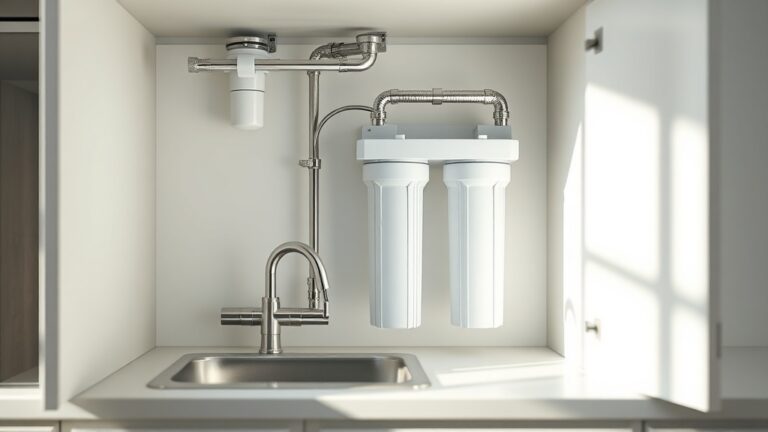
Best Air Purifier Melbourne 2026
6 min read“`html
This article contains affiliate links. We may earn a commission at no extra cost to you.
Best Air Purifier Melbourne 2026
Melbourne’s air quality is genuinely variable — some days pristine, others hazardous. If you’re choosing an air purifier for a Melbourne home in 2026, the unit needs to handle wood heater smoke in winter, bushfire events that push AQI above 200, and the city’s notorious temperature inversions that trap particulates close to ground level. This guide cuts through the marketing and focuses on what actually works for Melbourne conditions.
Melbourne Air Quality Challenges You Should Know
Melbourne sits in a bowl geography that concentrates pollutants during temperature inversions, particularly in autumn and winter. The EPA Victoria monitors air quality through its AirWatch network, which records PM2.5 and PM10 readings across stations from Alphington to Footscray. During the 2019–2020 Black Summer fires, Melbourne’s AQI exceeded 200 on multiple days — well into the hazardous range — with PM2.5 readings spiking above 150 µg/m³ at suburban monitoring stations.
Beyond bushfire season, the inner north and west of Melbourne carry elevated baseline pollution from traffic corridors, industrial precincts, and residential wood heaters. EPA Victoria data consistently shows that Alphington and Footscray record higher annual PM2.5 averages than eastern suburbs. Melbourne also sits in a region prone to grass pollen events from the surrounding paddocks, with thunderstorm asthma — as tragically demonstrated in November 2016 — representing a genuine and severe risk for respiratory health.
What this means practically: a Melbourne air purifier needs credible HEPA filtration for particles, sufficient activated carbon for smoke VOCs and ozone, and a Clean Air Delivery Rate (CADR) high enough to cycle air in your living space at least four to five times per hour during peak events. Undersized units or those relying on ionisers alone won’t cut it. For more on understanding local pollution sources, see our guide to indoor air quality across Australia.
Top Rated Air Purifiers for Melbourne Homes
Two units consistently stand out for serious Melbourne conditions: the Austin Air HealthMate Plus and the IQAir HealthPro Plus. Both are manufactured to genuine medical-grade standards, backed by independent testing, and suited to Australian conditions.
The Austin Air HealthMate Plus uses a 360-degree intake with a 15-pound activated carbon and zeolite blend, HEPA filtration rated to 0.3 microns at 99.97%, and a five-year filter life under normal use. It’s a solid workhorse — no Wi-Fi gimmicks, no app dependency, just reliable filtration. The CADR is rated at approximately 250 CFM, making it appropriate for rooms up to around 55–60 m². It’s made in the USA and available through Australian distributors with local warranty support.
The IQAir HealthPro Plus goes further, using HyperHEPA filtration certified to 0.003 microns — capturing ultrafine particles that standard HEPA misses. Its V5-Cell gas and odour filter combines activated carbon with potassium permanganate for enhanced VOC capture. It’s the unit of choice for hospital rooms and clean rooms internationally, and it’s well suited to Melbourne homes that experience repeated smoke events. CADR sits around 300 m³/h.
Both units are significantly more expensive than mass-market options, but filter replacement costs are lower per year due to longer service intervals. For a full side-by-side breakdown, visit our air purifier comparison for Australian homes.
| Feature | Austin Air HealthMate Plus | IQAir HealthPro Plus |
|---|---|---|
| HEPA Grade | True HEPA (0.3 µm, 99.97%) | HyperHEPA (0.003 µm, 99.5%) |
| Activated Carbon Weight | ~6.8 kg blend | ~5 kg V5-Cell blend |
| Room Coverage | Up to ~55 m² | Up to ~62 m² |
| Filter Life | 5 years typical | 2–4 years (varies by filter) |
| Approx. RRP (AUD) | $1,200–$1,400 | $1,800–$2,200 |
| Smart Features | None (manual controls) | Digital controls, remote |
| Best For | Value, simplicity, smoke | Ultrafine particles, VOCs |
HEPA vs Carbon Filters for Melbourne Conditions
Most people buying an air purifier focus on HEPA, but for Melbourne’s specific conditions, the carbon filter matters equally — possibly more during bushfire events. Here’s why: HEPA captures particulate matter (PM2.5 and PM10), but bushfire smoke and wood heater exhaust carry significant loads of volatile organic compounds (VOCs), carbon monoxide precursors, and acrolein. These gases pass straight through HEPA media. A thick activated carbon bed is what absorbs them.
Standard consumer purifiers often include a thin carbon pre-filter — typically 50–100 grams of carbon — which saturates within weeks during a smoke event. Both the Austin Air and IQAir units carry several kilograms of carbon, which is what’s required for sustained Melbourne conditions. The Austin Air’s zeolite blend also targets ammonia and formaldehyde specifically, which is relevant if you’re dealing with new building materials or gas appliances.
For pollen and thunderstorm asthma risk, HEPA is the critical layer — pollen grains range from 10–100 microns, well within standard HEPA capture range. The 2016 Melbourne thunderstorm asthma event released fractured ryegrass pollen in sub-micron fragments, which behave more like fine particles. A true HEPA filter at 99.97% efficiency at 0.3 microns handles this effectively.
One thing to avoid: ionisers and ozone generators marketed as air purifiers. ARPANSA and EPA Victoria both note that ozone-generating devices can worsen indoor air quality, particularly for people with asthma. Stick to mechanical filtration. For broader guidance on choosing non-toxic home products for Australian conditions, we’ve covered this in detail elsewhere on the site.
Frequently Asked Questions
How do I know when Melbourne’s air quality is bad enough to run my purifier?
EPA Victoria’s AirWatch website (epa.vic.gov.au/airwatch) provides real-time AQI data for Melbourne monitoring stations. When PM2.5 readings exceed 25 µg/m³ (the Australian 24-hour standard under NEPM guidelines), it’s worth running your purifier on a higher setting and keeping windows closed. During bushfire smoke events where AQI exceeds 100, run the unit continuously and seal gap around doors and windows where possible.
What room size should I buy for?
Size your purifier for the room where you spend the most time, typically the bedroom or main living area. Calculate the room volume (length × width × height in metres), then choose a unit with a CADR sufficient to achieve 4–5 air changes per hour. For a standard 20 m² Melbourne bedroom with 2.7 m ceilings, you need a CADR of around 225 m³/h minimum. Both units reviewed here exceed this for typical room sizes.
How often do I need to replace filters in Melbourne’s conditions?
Filter life depends heavily on how often pollution events occur in your area and how many hours you run the unit. In Melbourne’s inner west or north, where baseline PM2.5 is elevated year-round, expect shorter intervals than manufacturer estimates, which are typically based on average conditions. Austin Air’s five-year filter claim is realistic in low-pollution suburbs; in Footscray or during a heavy smoke season, budget for replacement closer to three years. IQAir’s filters are modular — the carbon cell often needs replacement before the HEPA.
Is there an air purifier better suited to renters who can’t modify the home?
Both Austin Air and IQAir units are freestanding and require no installation — they plug into a standard Australian 240V outlet and can be moved between
FREE CHECKLIST
Get the Australian Home Environment Checklist
30 checks across water, air and EMF. Free PDF. No spam.
Former Royal Australian Navy Clearance Diver and TAG-E counter-terrorism operator. Founded Clean and Native to apply the same rigorous thinking to the home environment.
Full biography →