Affiliate disclosure: Clean and Native earns a commission if you purchase through links on this page. Every product here has been researched and selected based on performance data — not commission rates.

Every product on this page

Tested. Measured. Worth the money.

This page covers the six products I actually use or have tested with calibrated instruments in an Australian home. No padding. No filler picks to make the page look fuller. If it is not here, I did not think it was worth your money.

95.7%
TDS reduction measured
Palm Beach tap -> post-RO
90%
RF reduction at bed head
by moving router 4m away
6
Products selected
across 3 pillars

Water Filtration

Water filters

Three categories cover the full range of what Australian homes actually need: under-sink reverse osmosis for comprehensive contaminant removal (PFAS, fluoride, lead, TDS), countertop RO for renters or those who can’t modify under-sink plumbing, and inline tap filters for chlorine and taste improvement without full mineralisation removal.

Top pick

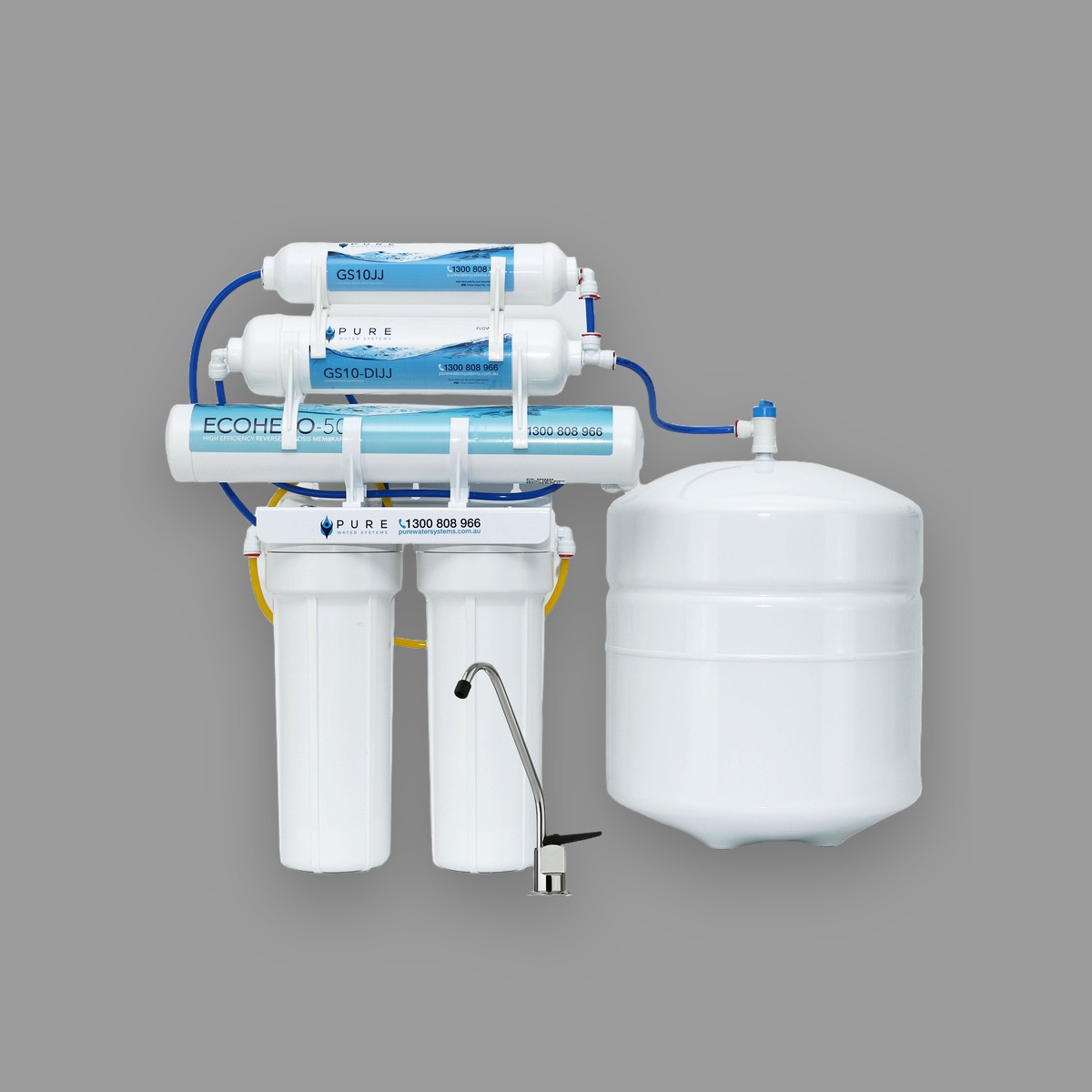
EcoHero 5-Stage Reverse Osmosis System

★★★★★

The under-sink RO system installed in this house. Palm Beach tap water tests at 69 ppm TDS. Post-filter: 3 ppm. That 95.7% reduction is a real measurement from a calibrated TDS meter, not a manufacturer claim. NSF 58 certified with independently verified removal rates across 12 contaminants.

Fluoride: 93.6% removal
Lead: 98.6% removal
PFAS: >99% removal
TDS measured: 95.7%

Who this is for: Owner-occupiers who want the most comprehensive water filtration available in an Australian home. Best for households near PFAS-contaminated sites, those concerned about fluoride, or anyone wanting to eliminate dissolved contaminants rather than just improve taste.

Who should look elsewhere: Renters who can’t modify under-sink plumbing. See the Waterdrop CoreRO countertop below.

Cost breakdown

Upfront~$400-500
Annual filters~$80-120
5-year total~$900-1,100
vs bottled waterSaves $3,000+

vs $4/day bottled water habit over 5 years = $7,300. RO at $1,000 total saves $6,300.

Best for renters

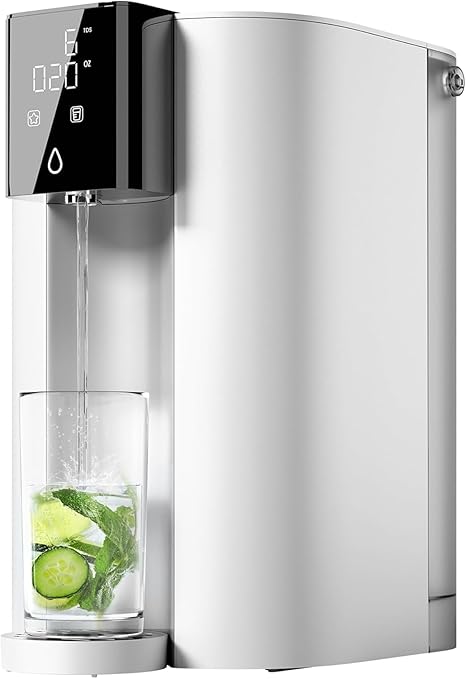
Waterdrop CoreRO Countertop RO System

★★★★½

No plumbing modification. Sits on the benchtop, connects directly to the tap via the included adapter, and delivers RO-filtered water from a built-in tank. Waterdrop reports 90%+ TDS reduction. No installation, no landlord permission required.

TDS reduction: 90%+
Tank capacity: 1.5L
Filter life: 6 months
Install time: <10 min

Who this is for: Renters, temporary residents, or anyone in a shared household who cannot modify under-sink plumbing. Also useful as a portable solution for a second property or while a permanent RO system is being installed.

Trade-off vs under-sink: Lower flow rate, requires periodic tank refill, smaller footprint under the membrane means slightly lower removal efficiency than a 5-stage system on some contaminants. For PFAS-heavy areas, the full EcoHero RO is the better choice.

Cost breakdown

Upfront~$300-400
Annual filters~$60-90
5-year total~$700-850
Best value

TAPP EcoPro Compact Tap Filter

★★★★

A tap-mounted carbon block filter that screws directly onto any standard Australian tap fitting without tools. NSF 42 and NSF 53 certified — removes chlorine, chloramines, lead, and VOCs. Not an RO system, so it does not remove fluoride, TDS, or PFAS. Purpose-built for taste, odour, and targeted contaminant removal.

Chlorine: NSF 42 certified
Lead: NSF 53 certified
Chloramine: Yes (catalytic)
Filter life: 3 months / 1,200L

Who this is for: Anyone whose primary concern is chlorine taste and odour, or those in chloramine-treated areas (parts of Melbourne, Adelaide) who want a compact solution without committing to an RO system. Also ideal as a secondary filter or for renters who want something genuinely portable.

Who should look elsewhere: Anyone whose primary motivation is PFAS, fluoride, or TDS reduction — you need an RO system for those goals.

Cost breakdown

Upfront~$60-80
Annual filters~$70-90
5-year total~$420-530

Not sure which water filter suits your home?

Answer four questions — your main concern, your setup (renter vs owner), your budget, and whether you are on a chlorine or chloramine supply — and get a specific recommendation.

Take the water filter quiz

Air Purification

Air purifiers

Both units here are selected for the Australian context: bushfire smoke season, subtropical humidity in QLD creating year-round dust mite load, and the trade-off between bedroom quiet and whole-room clean air delivery. The key metric to compare is CADR (Clean Air Delivery Rate) — how many cubic metres of clean air the unit delivers per hour at each fan speed.

Best bedroom pick

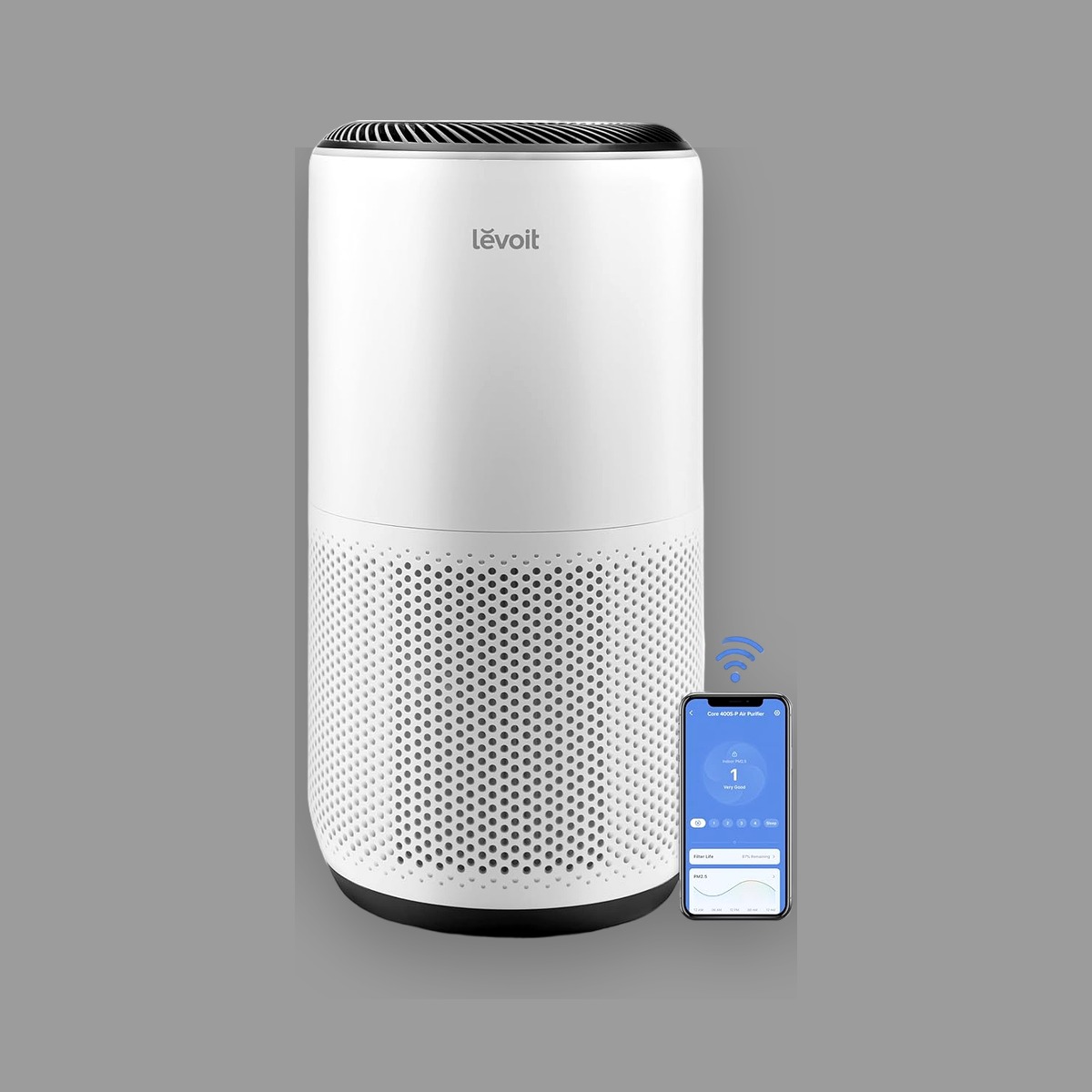
Levoit Core 300S

★★★★½

Compact, quiet at low speeds (24 dB), and app-controlled via Vesync. Covers up to 19m2 on Auto mode. The 360-degree intake draws air from all directions rather than one side — better for placement in the middle of a bedroom where a unit standing against a wall loses efficiency. H13 True HEPA rated at 99.97% of particles at 0.3 microns.

CADR: 141 CFM (240 m3/hr)
Coverage: Up to 19m2
Noise (low): 24 dB
Filter type: H13 True HEPA

Who this is for: Bedrooms up to 19m2. Households where quiet operation during sleep is the primary requirement. Those wanting app control and auto mode for set-and-forget operation. A good entry-level unit for first-time air purifier buyers who want real HEPA performance without high upfront cost.

Limitation: 19m2 coverage means it is not the right choice for open-plan living areas or rooms above 20m2. For larger spaces, see the Winix 5500-2 below.

Cost breakdown

Upfront~$120-160
Annual filter~$40-60
5-year total~$320-460
Best for large rooms

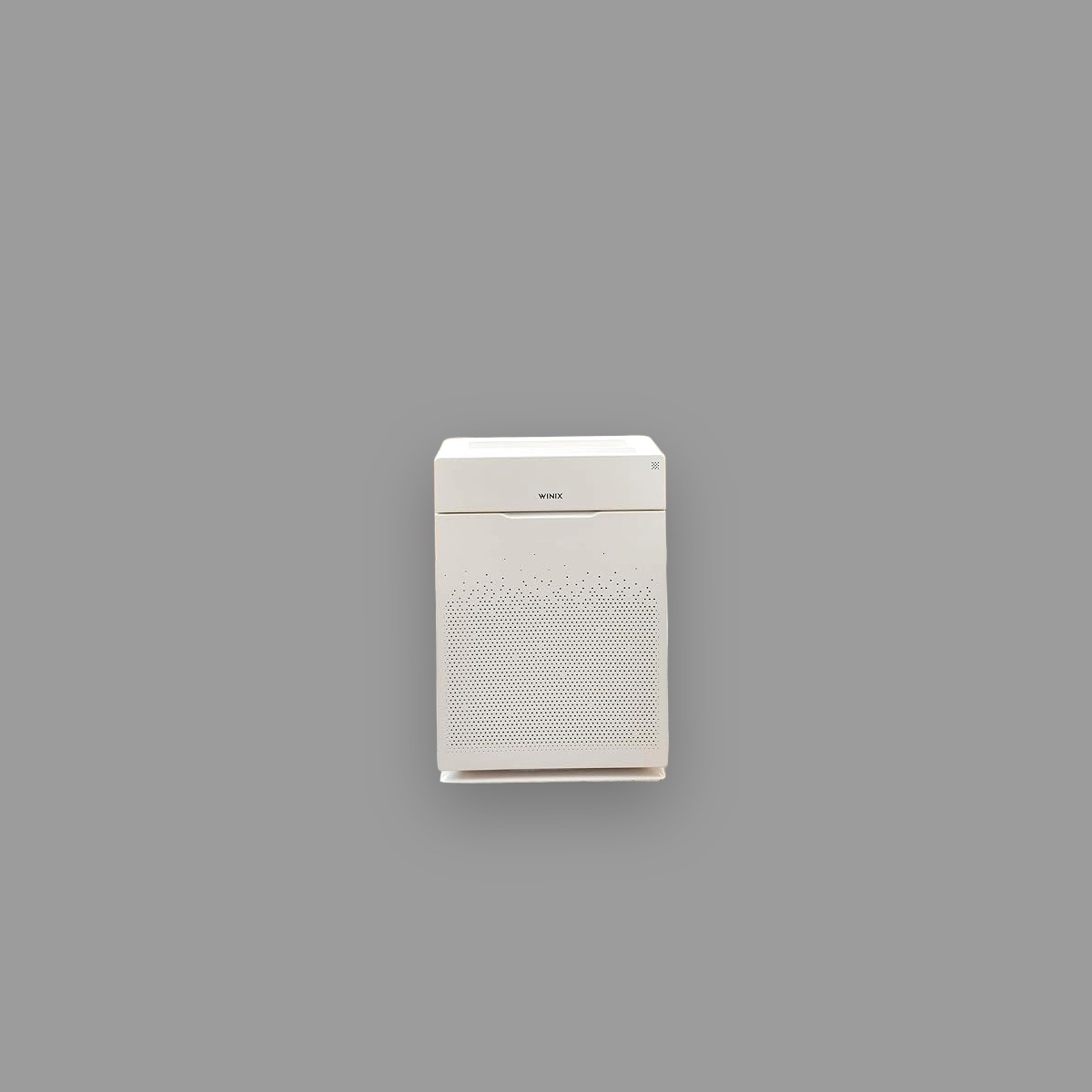
Winix 5500-2

★★★★½

The unit for open-plan living rooms and larger spaces. 232 CFM smoke CADR means it can process the air in a 33m2 room more than twice per hour at high speed. PlasmaWave technology breaks down odours and VOCs at the molecular level. Auto mode with air quality sensor adjusts fan speed without manual intervention.

CADR smoke: 232 CFM (394 m3/hr)
Coverage: Up to 33m2
Auto mode: Air quality sensor
Filter type: True HEPA + carbon

Who this is for: Open-plan living areas, larger bedrooms (20m2+), homes in bushfire-prone regions where high smoke CADR matters during events. The auto sensor and carbon layer make it effective against both particles and VOCs from cooking and furniture off-gassing.

Australian bushfire note: During smoke events, run at maximum speed. The 232 CFM smoke CADR will clear a 33m2 room of fine smoke particles to healthy levels within approximately 20-25 minutes at high speed.

Cost breakdown

Upfront~$280-350
Annual filter~$60-80
5-year total~$580-750

Not sure which air purifier suits your room?

Answer three questions — room size, your main concern (allergens, smoke, VOCs), and whether you need sleep-mode quiet — and get a matched recommendation.

Take the air purifier quiz

EMF Measurement

EMF meters

You cannot reduce what you have not measured. The TriField TF2 is the starting point for any meaningful household EMF assessment — not because it tells you what is dangerous, but because it tells you what is actually present in your sleeping environment versus what you are assuming. A Palm Beach bedroom audit using this meter found 0.32 mW/m2 RF at the bed head before the router was moved, and 0.032 mW/m2 after moving it 4m away. That 90% reduction cost nothing except knowing the number.

Only pick

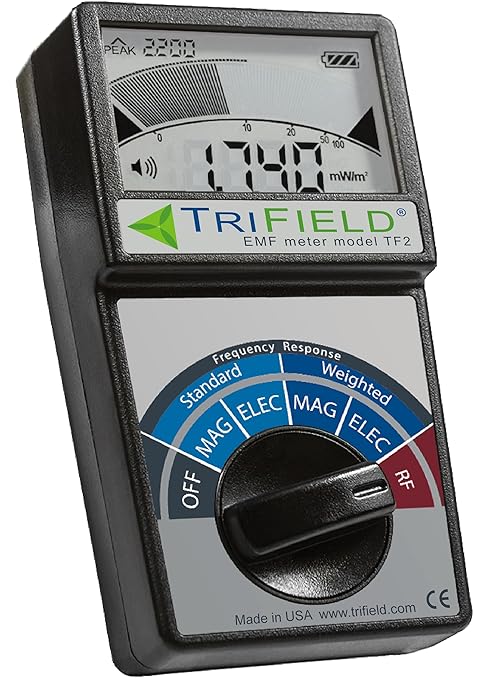
TriField TF2 EMF Meter

★★★★★

The TriField TF2 measures all three field types relevant to residential EMF assessment: radiofrequency (RF/microwave 20 MHz to 6 GHz, covering Wi-Fi, 4G/5G, smart meters), AC magnetic (ELF fields from power lines and appliances), and AC electric (fields from wiring and charging cables). One device covers the full audit. The meter used for all measurements published on this site.

RF range: 20 MHz – 6 GHz
AC magnetic: 0-100 µT
AC electric: 0-1,000 V/m
Peak hold: Yes

Real measurements — Palm Beach bedroom audit

3.058 mW/m2
Router — adjacent room wall
0.32 mW/m2
Bed head — before router move
0.032 mW/m2
Bed head — after router moved 4m
90% reduction
At zero cost. Just distance.

Who this is for: Anyone who wants to know what EMF levels are actually in their bedroom before making changes. Building biologists, parents setting up children’s bedrooms, people with sleep issues who suspect environmental factors, or anyone who prefers measurement to assumption.

What it does not do: It measures — it does not protect. The value is in knowing your numbers so you can take simple, free interventions (router distance, phone placement, charging cable position) based on data rather than guesswork.

Cost breakdown

Upfront~$200-230
Ongoing cost$0
Battery life~40 hrs

One-time purchase. No subscription, no filter replacement, no recurring cost.

How products are selected for this page

Every product here passed a minimum bar: independent certification (NSF, WaterMark, HEPA), Australian market availability, and either direct personal testing or published performance data that can be independently verified. Commission rates play no role in selection — the EcoHero is on this page because it reduced Palm Beach tap TDS from 69 ppm to 3 ppm on a calibrated meter, not because of its commission structure. Products with higher commissions that did not meet the performance bar are not on this page.

If a product you are considering is not on this list, it is either not yet tested or did not make the cut. Email hello@cleanandnative.com.au with questions about specific products.