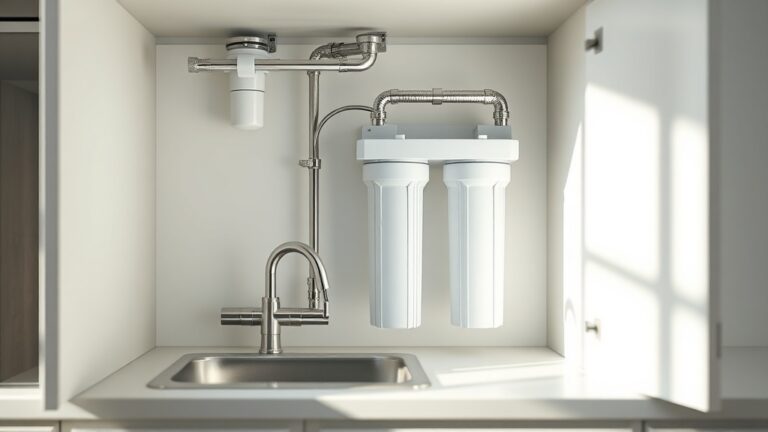
Berkey vs AquaTru Australia 2026: Which Filter Wins?
6 min read“`html
This article contains affiliate links. We may earn a commission at no extra cost to you.
Berkey vs AquaTru Australia 2026: Which Filter Wins?
Choosing a water filter in Australia isn’t straightforward. Our tap water quality varies significantly between Sydney’s relatively clean Warragamba catchment supply, Melbourne’s Yarra Valley reservoir system, and the heavily treated bore-fed supplies common in regional Queensland and Western Australia. Fluoride is added at 0.6–1.0 mg/L across most Australian states as a public health measure, and chlorine or chloramine is used for disinfection. Both Berkey and AquaTru target these contaminants — but they work very differently, and the right choice depends on your household, budget, and how your local water authority treats supply.
This comparison uses published filtration data, Australian water quality reports, and real cost modelling to help you decide. We cover performance, long-term value, and household fit across three focused sections.
Filtration Performance Head to Head
Berkey uses a gravity-fed system with Black Berkey purification elements — a proprietary blend of media that the manufacturer states removes over 200 contaminants. Crucially for Australian households, Berkey removes 99.9% of fluoride when PF-2 post-filter elements are added. Without PF-2 filters, fluoride reduction is minimal. The Black Berkey elements are independently tested and remove bacteria to >99.9999%, viruses to >99.99%, and dramatically reduce chloramines — relevant given that Brisbane’s Seqwater and Melbourne’s South East Water both use chloramination rather than free chlorine.
AquaTru uses a four-stage reverse osmosis (RO) process. RO membranes are well-established technology: they remove fluoride at rates typically between 85–95% depending on water pressure, temperature, and membrane age. AquaTru’s system includes a pre-filter, RO membrane, activated carbon stage, and a final VOC filter. Unlike Berkey, AquaTru removes fluoride without purchasing additional filters — it’s built into the RO stage.
For pathogen removal, Berkey’s purification elements have an edge in that they function without electricity or water pressure. AquaTru requires a power outlet and reasonable incoming pressure (minimum 40 PSI recommended). In areas with tank water or low municipal pressure — common in rural New South Wales and parts of South Australia ��� Berkey is often the only viable countertop option.
Both systems reduce lead, chlorine, chloramine, herbicides, and PFAS compounds. AquaTru publishes NSF/ANSI certification data for its membrane stage; Berkey’s testing is conducted by independent laboratories and available on request. Neither system currently holds full NSF certification in Australia, so consumers should review the underlying test reports rather than relying on certification marks alone. For context on evaluating contaminant claims, our guide to water filter testing standards breaks down what NSF, ANSI, and WaterMark certifications actually mean for Australian buyers.
Cost and Long-Term Value Compared
Upfront price matters, but the real cost of a water filter is calculated over three to five years of use. Here’s how both systems compare for an average Australian household consuming approximately 4 litres of filtered water per day.
| Cost Factor | Berkey (Big Berkey + PF-2) | AquaTru |
|---|---|---|
| Upfront cost (AUD approx.) | $450–$550 | $599–$699 |
| Filter replacement interval | Black elements: ~22,700 L; PF-2: ~9,500 L | Pre-filter: 6 months; RO membrane: 2 years; carbon: 6 months |
| Replacement filter cost (annual AUD approx.) | $60–$90 (PF-2 dominant cost) | $130–$180 |
| Electricity required | No | Yes (~10–15W during filtration) |
| Waste water produced | None | ~3:1 waste-to-filtered ratio |
| Estimated 3-year total cost (AUD) | $630–$820 | $990–$1,240 |
Berkey is meaningfully cheaper over three years, particularly because the Black Berkey elements have an exceptional lifespan. The PF-2 elements — necessary for fluoride removal — do add ongoing cost, but AquaTru’s more frequent filter schedule keeps its running costs higher regardless.
AquaTru’s waste water ratio deserves attention in Australian context. With water restrictions common across Perth (Water Corporation), Adelaide (SA Water), and increasingly across south-east Queensland, producing three litres of wastewater per litre filtered is a genuine environmental and practical drawback. Berkey produces zero wastewater. For households already managing tank or bore water, this is significant. Our water conservation and home filtration guide covers how to minimise filtered water waste across different system types.
On value, Berkey wins clearly for budget-conscious households and anyone on a water-limited supply. AquaTru justifies its higher cost only if convenience features — faster filtration, no manual pouring, integrated tank — are priorities.
Which Filter Suits Australian Households Best?
There’s no universal answer, but there are clear patterns based on household type and location.
Berkey suits you if: You’re on tank, bore, or rural supply with variable pressure. You want fluoride removal without RO. You’re in a rental and can’t install under-bench systems. You want off-grid capability — Berkey functions without electricity or mains pressure, which is relevant during the increasingly frequent storm and flooding events affecting Queensland, northern New South Wales, and parts of Victoria. You’re managing a tighter budget and want the lowest cost per litre over time.
AquaTru suits you if: You’re on reliable mains supply in a metro area (Sydney, Melbourne, Adelaide, Perth, Canberra). You want a faster filtered water flow without manually pouring batches. You’re comfortable with the wastewater trade-off and your council isn’t under restrictions. You prioritise a more compact footprint — AquaTru’s countertop RO unit is genuinely space-efficient compared to a Big Berkey’s height.
For families with children, both systems effectively remove the lead that can leach from older copper-soldered plumbing — a real concern in pre-1990 homes across inner Melbourne, Sydney’s inner west, and Adelaide’s older suburbs. Victorian plumbing installed before 2004 may still contain lead solder at joins; Melbourne Water’s own advice recommends running taps before drinking if the home is older. Either filter addresses this adequately.
If your household is primarily concerned with PFAS contamination — a growing concern near defence bases in areas including Katherine (NT), Williamtown (NSW), and Oakey (QLD) — both systems reduce PFAS, but Berkey’s independent testing on PFAS compounds is less comprehensive than AquaTru’s RO data. For PFAS-affected communities, RO remains the better-evidenced technology. See our PFAS and water filtration in Australia article for detailed guidance on that specific issue.
Frequently Asked Questions
Does Berkey remove fluoride without the PF-2 filters?
No — the standard Black Berkey purification elements do not significantly reduce fluoride on their own. Fluoride removal requires the addition of PF-2 post-filter elements, which attach beneath the Black Berkey elements inside the lower chamber. With PF-2 filters installed, Berkey’s manufacturer reports 99.9% fluoride reduction. Australian tap water is fluoridated at 0.6–1.0 mg/L across most states; if fluoride removal is a priority, budget for PF-2 elements as part of your initial purchase. They retail for approximately $60–$80 AUD per pair and should be replaced every 9,500 litres or annually for average households.
Is AquaTru available with Australian warranty and support?
AquaTru is sold in Australia through authorised distributors, and warranty support is managed locally. Warranty terms are typically 12 months on parts and the unit, with replacement filters readily available domestically. Always confirm with the retailer that you’re purchasing through an authorised Australian channel, as grey-market imports may not include local warranty coverage. Filter availability within Australia has improved significantly since 2023,
FREE CHECKLIST
Get the Australian Home Environment Checklist
30 checks across water, air and EMF. Free PDF. No spam.
Former Royal Australian Navy Clearance Diver and TAG-E counter-terrorism operator. Founded Clean and Native to apply the same rigorous thinking to the home environment.
Full biography →