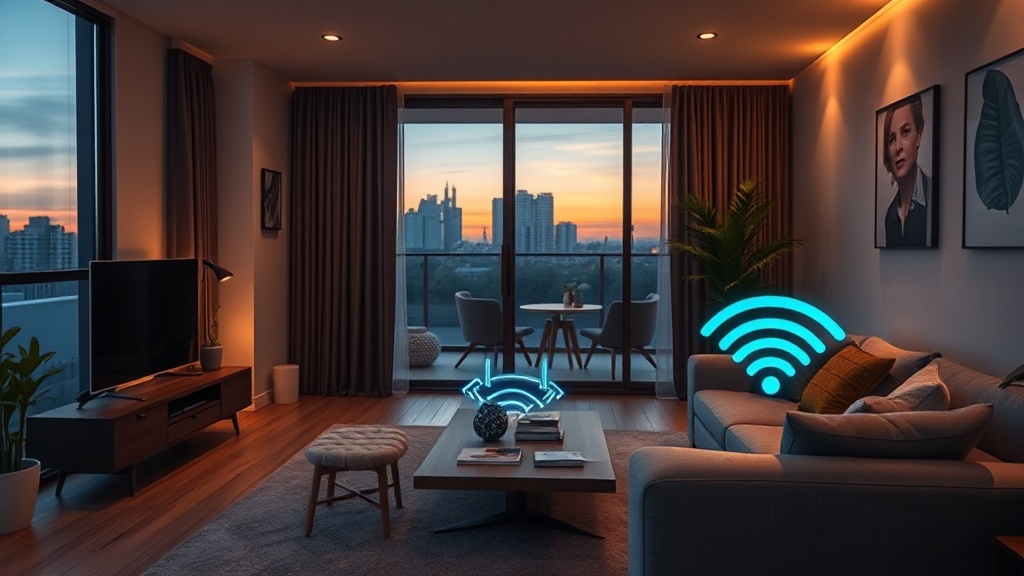
What Is EMF Radiation and Should Australians Be Concerned?
EMF — electromagnetic fields — is a term that generates more heat than light in most conversations. On one side you have people convinced their Wi-Fi router is slowly killing them. On the other, you have blanket dismissal of any concern as pseudoscience. Neither position is particularly useful.
This article is an attempt to give you a clear, honest foundation: what EMF actually is, how it’s classified, what Australian standards say, and where the genuine uncertainty in the science lies. From there, you can make a considered decision.
Key Takeaways
- EMF exists on a spectrum — not all frequencies are equivalent in their biological effects
- Ionising radiation (X-rays, gamma rays) is established as harmful at sufficient doses; non-ionising is less clear
- Australia’s exposure standards are set by ARPANSA and are based on the ICNIRP guidelines
- The World Health Organisation classifies RF-EMF as “possibly carcinogenic to humans” (Group 2B) — the same category as pickled vegetables and coffee
- A precautionary approach to common sources of exposure costs very little and has no downside
What Is Electromagnetic Radiation?
Electromagnetic radiation is energy that travels in waves through space. It’s characterised by two things: frequency (how many waves pass a point per second, measured in Hertz) and wavelength (the distance between wave peaks). Higher frequency means shorter wavelength and more energy per photon.
The electromagnetic spectrum runs from extremely low-frequency (ELF) fields — generated by power lines and household wiring — all the way through radio waves, microwaves, visible light, ultraviolet radiation, X-rays, and gamma rays. Everything on that spectrum is electromagnetic radiation. The categories that matter for this discussion are:
Ionising Radiation
At the high-frequency end of the spectrum — ultraviolet (UV) radiation, X-rays, and gamma rays — photons carry enough energy to strip electrons from atoms and break chemical bonds. This is called ionisation, and it’s the mechanism by which radiation damages DNA. The link between ionising radiation and cancer is well-established and not seriously disputed.
Non-Ionising Radiation
Below visible light, photons don’t carry enough energy to ionise atoms. This category includes the radio frequencies used by mobile phones, Wi-Fi routers, and microwave ovens, as well as the extremely low frequency fields produced by power lines and electrical appliances. The health effects of chronic low-level exposure to non-ionising radiation are where the genuine scientific debate lives.
The Main Sources of EMF in a Typical Australian Home
| Source | Field Type | Frequency Range | Typical Location |
|---|---|---|---|
| Household wiring & power outlets | ELF Electric & Magnetic | 50 Hz | Throughout home |
| Wi-Fi router | RF (radiofrequency) | 2.4 GHz / 5 GHz | Living room, home office |
| Mobile phone | RF | 700 MHz – 3.5 GHz | Pocket, bedside |
| Smart meter | RF | 900 MHz | Exterior wall of home |
| Microwave oven | RF | 2.45 GHz | Kitchen |
| Power lines (overhead) | ELF Magnetic | 50 Hz | External |
| Electric blanket | ELF Electric & Magnetic | 50 Hz | Bedroom |
Australian Exposure Standards
In Australia, exposure standards for non-ionising radiation are set and managed by ARPANSA — the Australian Radiation Protection and Nuclear Safety Agency. ARPANSA’s standards for radiofrequency EMF are based on the International Commission on Non-Ionizing Radiation Protection (ICNIRP) guidelines, which were most recently updated in 2020.
The ARPANSA Radiation Protection Standard sets maximum exposure limits based on established biological effects — primarily the heating of tissue by RF energy at high power densities. For a mobile phone held against your head, the relevant measure is SAR (Specific Absorption Rate), which Australian standards cap at 2 W/kg averaged over any 10 grams of tissue.
There is an important distinction to understand here: ARPANSA’s limits are set to prevent established biological effects — i.e., tissue heating. They are not designed to account for potential long-term effects at lower exposure levels, about which the science remains unsettled.
What the Science Actually Says
This is the section where it gets genuinely complicated, and where honesty requires acknowledging uncertainty rather than oversimplifying in either direction.
The WHO Classification
In 2011, the International Agency for Research on Cancer (IARC) — part of the WHO — classified radiofrequency electromagnetic fields as “possibly carcinogenic to humans” (Group 2B). This sounds alarming, but context matters: Group 2B is the second-lowest risk category, indicating limited evidence of carcinogenicity in humans. Pickled vegetables, aloe vera extract, and talc-based body powder are also in Group 2B. Coffee was in Group 2B until 2016.
In 2024, IARC completed a more comprehensive review (Monograph 130) of RF-EMF, examining mobile phone use and cancer risk. The classification was not upgraded.
The Interphone Study and NTP Report
The largest epidemiological study on mobile phone use and brain cancer risk — the Interphone study, involving 13 countries and 10,000 participants — found no overall increase in risk of glioma or meningioma with mobile phone use, though it found a non-significant increased risk in the highest decile of users. The US National Toxicology Program (NTP) found “clear evidence” of tumours in male rats exposed to high-level RF radiation, but the exposure levels used were significantly higher than typical human exposure, and extrapolation to human health outcomes is contested.
ELF-EMF and Childhood Leukaemia
The most consistent finding in EMF health research concerns ELF magnetic fields — specifically, from power lines — and childhood leukaemia. Multiple studies have found a modest but statistically significant association between exposure above 0.3–0.4 microtesla and elevated leukaemia risk in children. IARC classifies ELF magnetic fields as Group 2B for this reason. This does not establish causation, and the biological mechanism is unclear, but the epidemiological signal has been replicated across independent studies.
The Honest Assessment
The mainstream scientific position, as of 2026, is that exposure to non-ionising EMF at levels below ARPANSA/ICNIRP limits does not cause demonstrable harm based on established mechanisms. There is no proven causal mechanism by which low-level non-ionising radiation damages biological tissue.
The complication is this: “no proven mechanism” is not the same as “definitively safe.” Mobile phones have been in widespread use for around 30 years — not long enough to observe long-term exposure effects across a population with confidence. The precautionary principle — reducing exposure where it can be done cheaply and without harm — remains a rational position even in the absence of definitive evidence of harm.
What to Do — Practical Steps
- Keep your phone out of your bedroom at night, or use aeroplane mode while sleeping
- Use speakerphone or wired earbuds rather than holding your phone against your head
- Place your Wi-Fi router in a room where you spend minimal time — not the bedroom or home office
- Consider a router timer to switch off overnight (approximately 8 hours of reduced exposure daily)
- Don’t sleep under an electric blanket — use it to warm the bed, then unplug before sleeping
- Read our full guide: How to Measure EMF in Your Home
The goal is not to live in a Faraday cage. It’s to make low-cost adjustments that reduce your highest exposures — particularly during sleep, when your body does its repair work. Most of these steps take five minutes and have no downside.
Former Royal Australian Navy Clearance Diver and TAG-E counter-terrorism operator. Founded Clean and Native to apply the same rigorous thinking to the home environment.
Full biography →