
This site works on two tracks. Where I have personally measured a product in my own home, the article says so and gives the readings. Everything else is assessed on manufacturer specification, independent certification (NSF/ANSI, WaterMark), and Australian standards (ADWG, ARPANSA). No claim on this site is made without a source that can be produced. To date, three products have been measured first hand in my own Palm Beach home: the EcoHero 5-Stage RO water filter, the TriField TF2 EMF meter, and the Coway Airmega 150 air purifier. Here is exactly how both tracks work.
Our Independence Policy
Jayce Love funds all product purchases personally or through Clean and Native’s affiliate commission. No brand has ever paid for a review, provided a gifted unit in exchange for coverage, or had any input into our ratings or conclusions. If a product we reviewed turns out to be poor value, we say so — and we update articles when products change.
We earn commissions through affiliate links on products we recommend. Current affiliate relationships: Amazon AU (cleanandnat22-22), SaferEMF (?ref=CLEANANDNATIVE), Pure Water Systems, HolyH2O, Premium Grounding, Waters Co Australia, and Earthing Oz. This is disclosed on every article. Our policy: we would recommend a product at the same rating whether or not an affiliate relationship exists. If the best product in a category has no affiliate programme, we still recommend it.
How We Assess Water Filters
The one water filter I own and have measured first hand is the EcoHero 5-Stage RO. I measure it with a calibrated TDS-3 total dissolved solids meter (verified against a known reference solution before each test) on my own Palm Beach QLD mains water (SEQ grid, Seqwater-treated, chloramine disinfectant, approximately 69 ppm TDS, fluoride added at 0.7 mg/L). Every other water filter on the site is assessed on manufacturer specification, independent certification (NSF/ANSI, WaterMark AS3497), and the Australian Drinking Water Guidelines, and is not hands-on tested.
Our test baseline: Palm Beach mains water — 69 ppm TDS pre-filter. Post-EcoHero 5-Stage RO: 3 ppm TDS (95.7% reduction, measured 14 March 2026).
What I measure on the EcoHero I own:
- TDS reduction percentage (pre- and post-filter readings, minimum 3 consecutive tests averaged)
- Flow rate (litres per minute at full filter capacity vs. near end-of-life)
- Filter longevity (tracked from installation date to when performance drops below 80% of rated TDS reduction)
- Installation complexity (time from unboxing to first filtered water, tools required)
- Chloramine performance (noted based on filter media type — catalytic carbon vs standard GAC vs RO membrane)
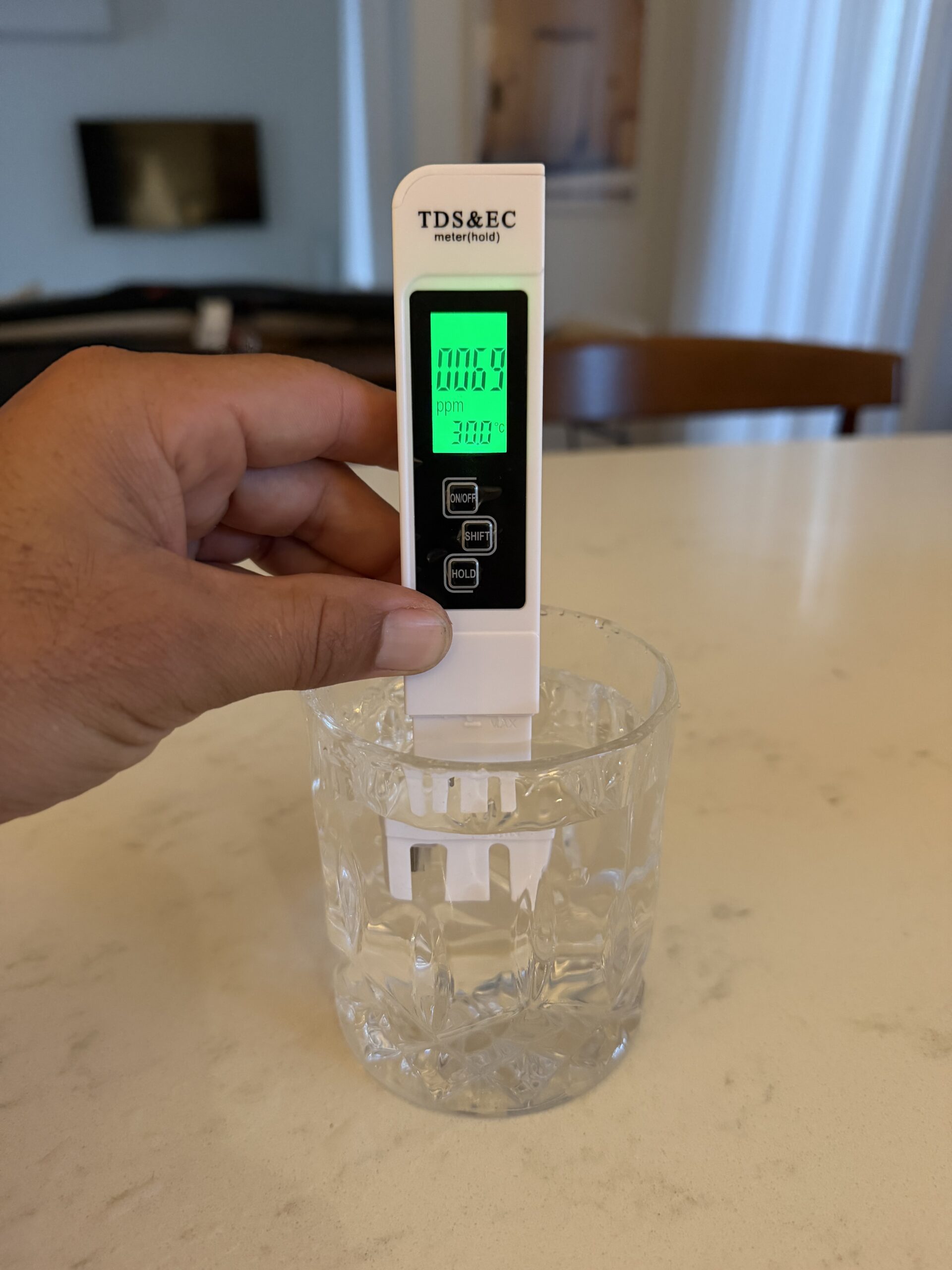
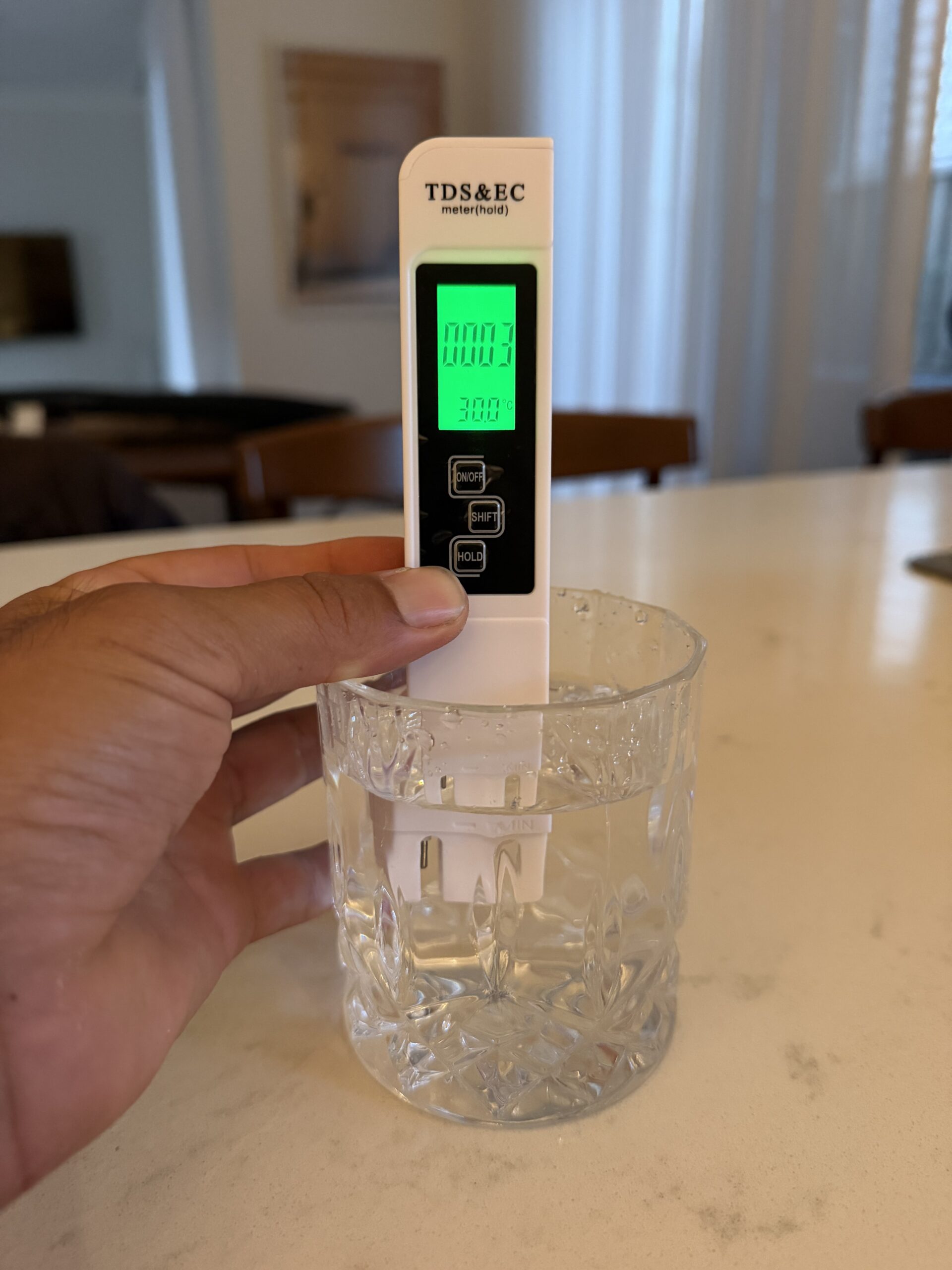
What we cannot test in-house: Fluoride, PFAS, lead, and arsenic removal require laboratory analysis beyond our current setup. For these contaminants, we rely on NSF/ANSI certification data, independent laboratory results published by the manufacturer (verified against NSF’s public database), and Water Quality Association standards. We clearly distinguish tested claims from certification-based claims throughout our articles.
How We Assess EMF Meters and Reduction Strategies
The EMF meter I own and use for first-hand readings is the TriField TF2, a tri-mode instrument measuring RF (radio frequency), ELF magnetic, and ELF electric fields, calibrated to NIST-traceable standards. I use it to take the readings reported from my own Palm Beach home. Other EMF meters and shielding products on the site are assessed on manufacturer specification and independent certification, and are not hands-on tested.
Test location: Palm Beach QLD home — bedroom, office, and kitchen. Router directly measured at 0m, 1m, 2m, and 5m distance. Smart meter measured through external wall at 1m.
What I measure in my own home with the TriField TF2:
- RF peak and average readings (µW/m²) at sleeping position, desk position, and within 0.5m of each device
- ELF magnetic field at pillow height with all circuits active and with demand switch installed
- Before/after readings for every recommended mitigation (router placement, timer switch, device removal)

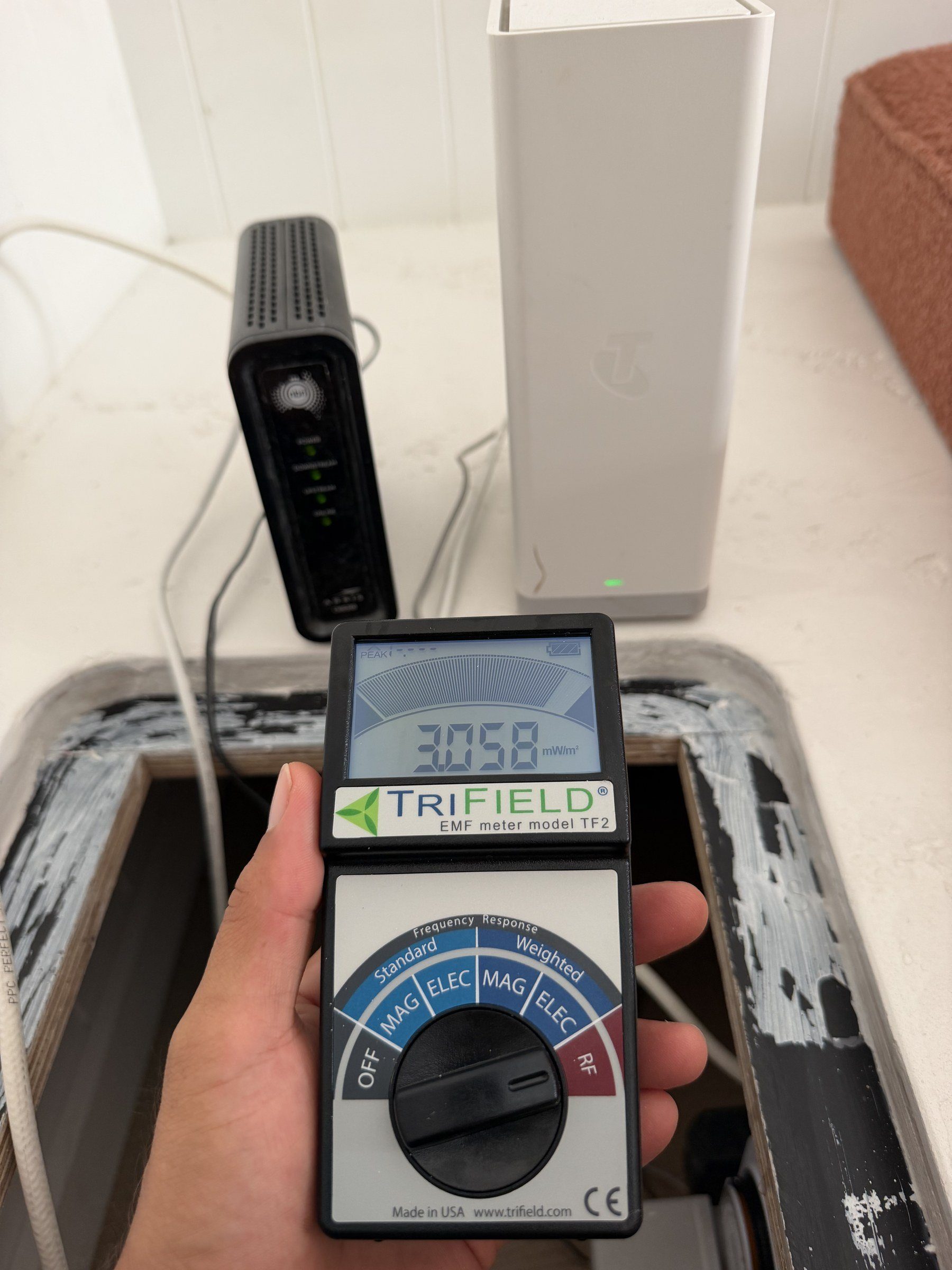
Where a shielding product has been measured in my own home, the article gives before and after readings from the TriField TF2 at standardised distances and reports raw meter readings rather than promotional claims. Shielding products I have not measured are assessed on manufacturer specification and independent certification, and the article states which applies. It also flags the shielding trap, where a shielded room can increase exposure by forcing the phone to amplify signal.
How We Assess Air Purifiers
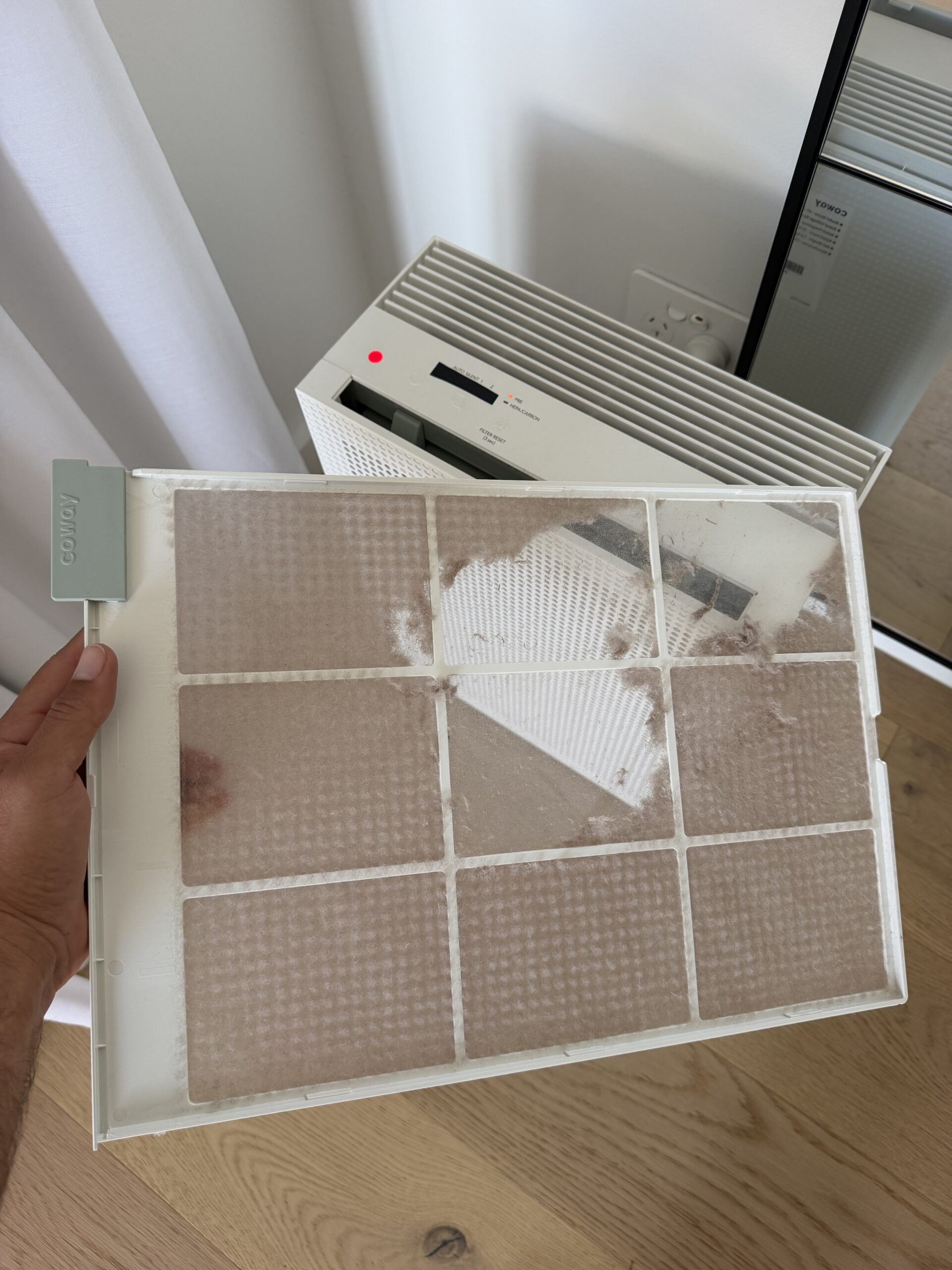
The one air purifier I own and have run in my own home is the Coway Airmega 150 (AP-1019C). Where I report first-hand air readings, they are taken with an Inkbird air quality monitor measuring PM1, PM2.5, PM10, TVOC, and CO2 in my own Palm Beach home. Every other air purifier on the site is assessed on manufacturer specification, verified CADR, and independent certification, and is not hands-on tested.
What I check, first hand on the Coway I own and on specification for the rest:
- Time to reduce PM2.5 from 200 µg/m³ to under 12 µg/m³ (WHO guideline for 24hr average), measured only on units I own
- CADR (Clean Air Delivery Rate) verified against rated specification
- Noise level (dBA) on each speed setting, measured at 1m distance
- TVOC performance where carbon filtration is claimed
- Filter replacement cost over 5 years (based on rated filter life and current Australian pricing)
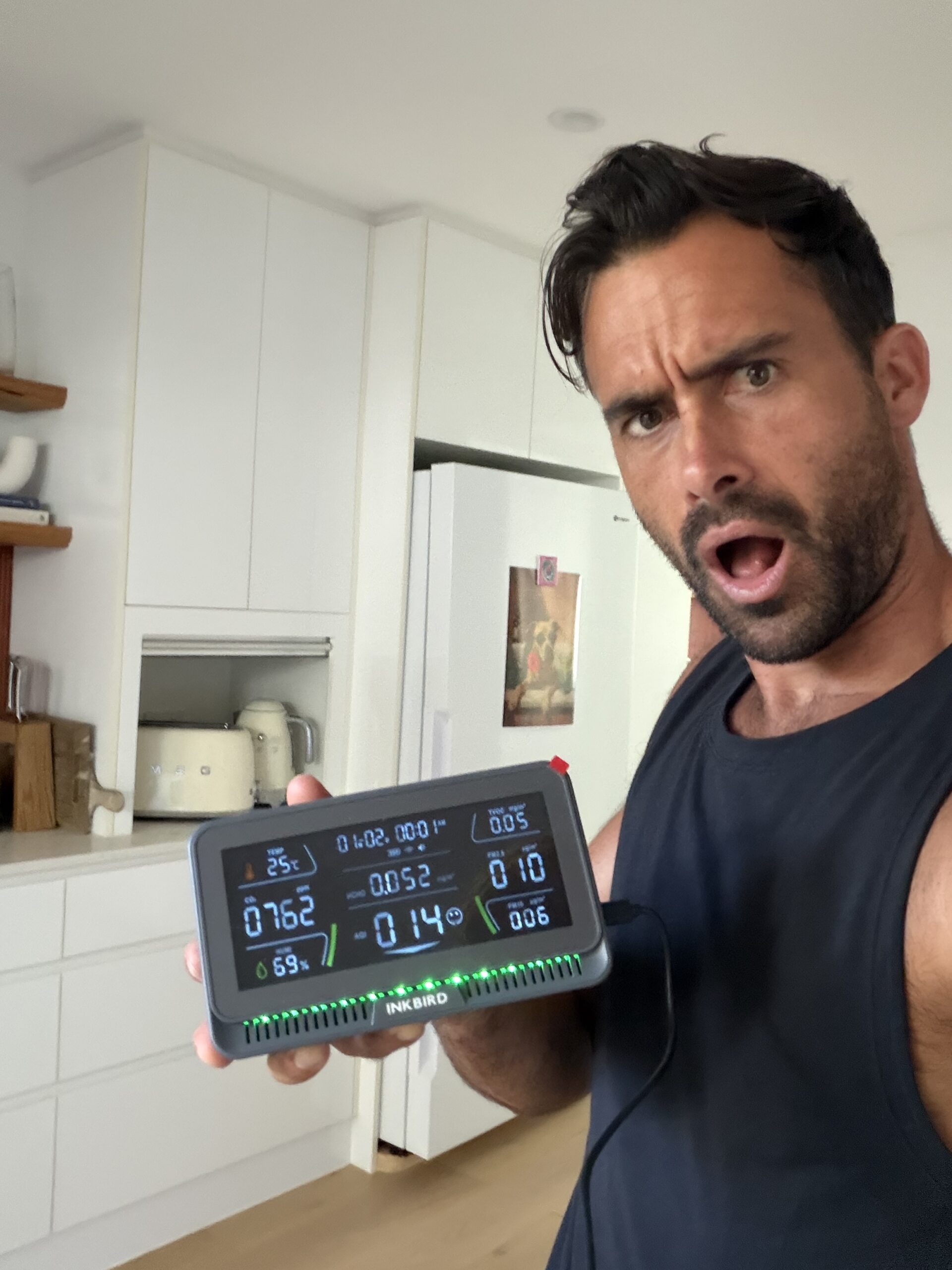
Live Readings — Palm Beach QLD Kitchen
Ambient air, no purifier running. This is the baseline before the smoke-chamber test begins.
| CO² | 762 ppm |
| AQI | 14 — Good |
| PM2.5 | 10 µg/m³ |
| PM1.0 | 6 µg/m³ |
| HCHO | 0.052 mg/m³ |
| TVOC | 0.05 mg/m³ |
| Temp | 25°C |
| Humidity | 69% |
For a purifier I own, I introduce incense smoke to push PM2.5 above 200 µg/m³ and time how fast it clears to below 12 µg/m³ (WHO 24hr average limit). Where I have not run a unit myself, clean-air performance is reported from the manufacturer’s rated CADR and any independent certification, and the article says so.
Our Rating System
Products are scored on a 10-point scale across performance, value, Australian suitability, and ease of use. For the three products measured in my own home, performance reflects those first-hand readings. For every other product, performance reflects manufacturer specification, verified certification, and Australian standards, and the article states which basis applies. The overall score is a weighted average, with performance weighted most. A product can score 9.5 or higher without leading every category. It means it is the best choice for most Australian households in its price band.
| Score | What it means |
|---|---|
| 9.0–10 | Best in class for Australian conditions. No significant compromises. |
| 7.5–8.9 | Excellent. One or two caveats — clearly stated. |
| 6.0–7.4 | Good for some buyers. Specific use cases only. |
| 4.0–5.9 | Below average. Only recommended if no alternatives exist. |
| 0–3.9 | Do not buy. Performance fails to justify the price. |
Product Selection
Products are selected for review based on: Amazon AU availability, Australian distributor access, significant search volume for the category, and whether the product represents a genuinely distinct option vs. products already reviewed. We do not review products purely because a brand requests it.
When a product is discontinued, delisted, or significantly changed (new model released), we update our review to reflect this — we do not leave outdated recommendations live.
Disclosure
Clean and Native earns commissions from purchases made through affiliate links on this site. Current programmes: Amazon AU (tag: cleanandnat22-22), SaferEMF (?ref=CLEANANDNATIVE), Pure Water Systems, HolyH2O (?bg_ref=Nxs6WhGrkb), Premium Grounding (?ref=cleanandnative), Waters Co Australia, and Earthing Oz. This is disclosed on every article that contains affiliate links. Commission rates are not disclosed in editorial copy. Affiliate relationships do not influence ratings — we link to the best product for the reader, not the highest-commission option.
Last updated: July 2026 — Jayce Love, Clean and Native