Best Water Filter for Heavy Metals Australia (2026): Lead, Arsenic and Mercury
Drafted with AI assistance and checked against published specifications and certifications. First-hand measurements appear only where stated. How we make content
Quick Verdict
| Best Overall | The AquaTru Classic countertop RO removes 99%+ of lead, arsenic, mercury, fluoride, PFAS, and chloramine. NSF/ANSI 58 certified. No plumbing — renter-friendly. |
| Best Under-Sink | The Waterdrop D6 delivers unlimited on-demand RO water. NSF/ANSI 58 certified. Lead (>99%), arsenic (>94%), cadmium, fluoride, PFAS, chloramine all covered. Lowest cost per litre over 5 years. |
| Budget (Lead Only) | The Tappwater EcoPro is NSF 42/53 certified for lead removal (>93%). Free chlorine cities only. Does not remove arsenic, fluoride, or PFAS. |
Who Is This Guide For?
Renters or anyone who cannot modify plumbing: AquaTru Classic countertop RO — sits on the bench with zero installation required.
Households in Brisbane, Sydney, Adelaide, or Darwin (chloramine supply): AquaTru Classic or Waterdrop D6 only. Chloramine requires RO or catalytic carbon — standard carbon block is ineffective at removing chloramine at Australian mains flow rates.
Anyone concerned about arsenic, PFAS, or fluoride in addition to lead: Only RO certified to NSF/ANSI 58 covers all four contaminants. No carbon filter, gravity filter, or alkaline jug does this.
Melbourne, Hobart, or Canberra households where lead from old plumbing is the only concern: Tappwater EcoPro NSF 53-certified carbon block is adequate and cost-effective for lead alone in free-chlorine cities.
Why Heavy Metals in Australian Water Deserve Your Attention
Australian reticulated water supplies are among the safest in the world. The Australian Drinking Water Guidelines (ADWG 2024) set health-based guideline values for every major heavy metal, and most utilities meet those thresholds at the treatment plant exit. The problem is what happens between the treatment plant and your kitchen tap.
Every product mentioned in this article has been assessed using our documented methodology by Jayce Love against published certifications and manufacturer specifications, with no brand payments.
Heavy metals enter your drinking water through three primary pathways:
- Legacy plumbing: Homes built before 1989 commonly used lead solder on copper pipe joints. Homes built before the 1930s may have lead service lines connecting the street main to the house. Under the current AS/NZS 3500 plumbing code (and WaterMark certification), lead solder is prohibited — but existing installations remain in millions of Australian homes.
- Brass fittings and taps: Even “lead-free” brass fixtures sold in Australia before 2020 could legally contain up to 4.5% lead by weight. The revised WaterMark standard now limits this to 0.25%, aligned with US and EU requirements, but older fittings remain installed.
- Source water contamination: Naturally occurring arsenic is present in groundwater bores across parts of regional Queensland, Western Australia, the Northern Territory, and South Australia. Copper and zinc leach from aging distribution mains. Mercury, while rare in Australian reticulated supply, appears in bore water near historical mining operations.
ADWG Guideline Values for Key Heavy Metals
| Metal | ADWG Guideline Value (mg/L) | WHO Guideline (mg/L) | Health Risk | Common Australian Source |
|---|---|---|---|---|
| Lead (Pb) | 0.01 | 0.01 | Neurotoxic; no safe level for children | Lead solder, brass fittings, lead service lines |
| Arsenic (As) | 0.01 | 0.01 | Carcinogenic (Group 1, IARC) | Bore water, geological leaching |
| Mercury (Hg) | 0.001 | 0.006 | Neurological, renal damage | Mining runoff, industrial discharge (rare in reticulated supply) |
| Copper (Cu) | 2.0 | 2.0 | Gastrointestinal irritation | Copper plumbing, especially first-draw water |
| Chromium (Cr) | 0.05 | 0.05 | Cr(VI) is carcinogenic | Industrial contamination, some bore water |
| Cadmium (Cd) | 0.002 | 0.003 | Kidney damage, bone demineralisation | Galvanised pipe corrosion, industrial discharge |
Note the ADWG value for mercury (0.001 mg/L) is six times stricter than the WHO guideline. Australia takes a more conservative approach on mercury than most countries.
Which Filter Technology Actually Removes Heavy Metals?
This is where most affiliate sites get it wrong. They list carbon filters, gravity filters, and RO systems in the same category as though they all perform equally. They do not. The technology matters enormously, and the certification standard tells you what has actually been tested.
Technology Comparison: Heavy Metal Removal
| Technology | Lead | Arsenic | Mercury | Copper | Fluoride | Chloramine | Relevant Standard |
|---|---|---|---|---|---|---|---|
| Reverse Osmosis (RO) | ✅ 95-99% | ✅ 94-99% | ✅ 95-97% | ✅ 97-99% | ✅ 90-97% | ✅ Yes | NSF/ANSI 58 |
| Carbon Block (0.5μm) | ✅ 93-99%* | ❌ No | ⚠️ Partial | ⚠️ Partial | ❌ No | ❌ Not GAC | NSF/ANSI 53 |
| Granular Activated Carbon (GAC) | ❌ No | ❌ No | ❌ No | ❌ No | ❌ No | ❌ ~1/40th rate | NSF/ANSI 42 only |
| KDF-55 | ⚠️ Some | ❌ No | ✅ Hg reduction | ⚠️ Partial | ❌ No | ❌ Ineffective | Limited third-party data |
| Gravity Ceramic + Carbon | ⚠️ Variable | ❌ No | ❌ No | ⚠️ Partial | ❌ No | ❌ Too slow | Often uncertified |
| Ion Exchange Resin | ✅ Good | ⚠️ As(V) only | ⚠️ Limited | ✅ Good | ❌ No | ❌ No | NSF/ANSI 53 |
* Carbon block lead removal requires NSF/ANSI 53 certification specifically for lead. A filter certified to NSF 42 only (taste and odour) has NOT been tested for lead removal. Always check the specific contaminant claims on the certification, not just the standard number.
Our Top-Rated Water Filters
Reverse osmosis is the only residential technology that reliably removes PFAS, fluoride, chloramine, and heavy metals — the four contaminants most Australians are most exposed to.
Decision Tree: Choosing the Right Heavy Metal Filter
Three Questions to Your Filter
1. Can you modify your plumbing?
No (renter, unit, or preference) → Countertop RO such as the AquaTru Classic
Yes → Under-sink RO such as the Waterdrop D6 for lower cost per litre and unlimited flow
2. Which city are you in?
Brisbane / Sydney / Adelaide / Gold Coast / Darwin = Chloramine-treated supply. You need RO or catalytic carbon. Standard GAC and Brita-style jugs will NOT handle chloramine effectively.
Melbourne / Hobart / Canberra / Toowoomba / Cairns / Townsville = Free chlorine supply. Standard carbon block works for taste, and if certified to NSF 53 for lead, handles lead too.
3. Which metals are you targeting?
Lead only → Carbon block (NSF 53 lead-certified) is adequate.
Arsenic, mercury, chromium, cadmium, PFAS, or fluoride → Reverse osmosis is the only residential option. No carbon filter removes arsenic. No carbon filter removes fluoride.
Best Water Filters for Heavy Metals in Australia — Detailed Reviews
1. AquaTru Classic Countertop RO — Best Overall
Who This Is For:
- Renters or anyone who cannot (or does not want to) modify plumbing
- Households in chloramine cities (Brisbane, Sydney, Adelaide, Darwin) needing broad heavy metal + PFAS + fluoride removal
- Parents wanting the highest-certainty lead removal for children’s drinking water
- Anyone on tank or bore water wanting a point-of-use heavy metal barrier
Who This Is Not For:
- Households wanting unlimited filtered water for cooking — the 3.1L tank requires refilling
- Anyone wanting whole-house filtration (this is point-of-use drinking water only)
- Those on a tight budget — the upfront cost is higher than carbon alternatives
How This Product Was Assessed
Assessed on specification, not personally tested. Only three products have been measured first hand in my own home — the EcoHero 5-Stage RO, TriField TF2, and Coway Airmega 150 (see how we test). Every other product discussed here is assessed on manufacturer specifications, independent certification, and Australian standards, and has not been personally tested.
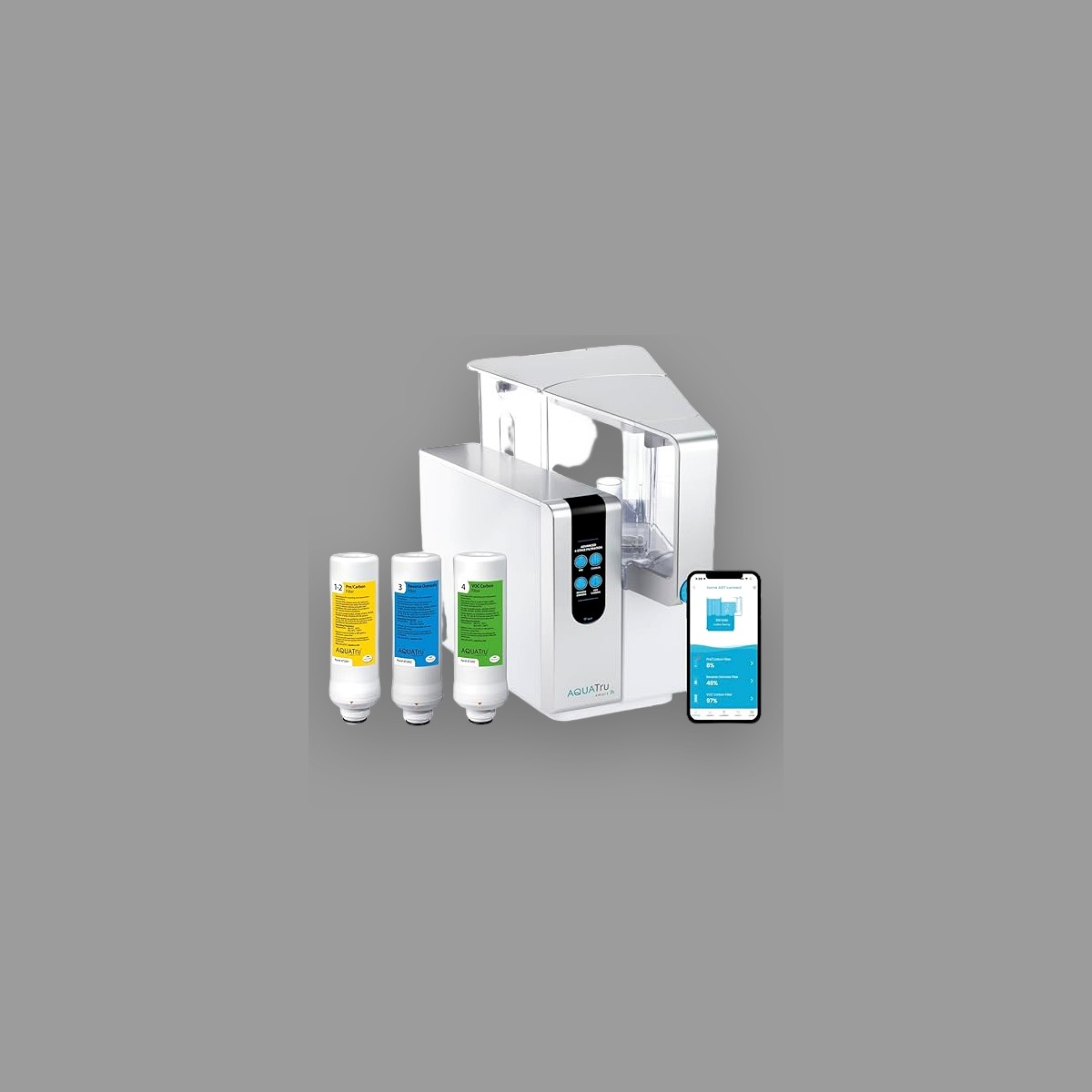
The AquaTru Classic is certified by IAPMO to NSF/ANSI 42, 53, 58, 401, and P473 for municipal supply of the kind delivered across South East Queensland: chloramine-treated, fluoridated, with TDS typically in the 85-95 mg/L range and pH around 7.2. This assessment focuses on its certified performance against the full contaminant suite, including fluoride, which Brisbane water contains at approximately 0.7 mg/L.
Features and Performance
- Filtration stages: 4-stage (mechanical pre-filter → activated carbon pre-filter → reverse osmosis membrane → activated carbon polishing filter)
- Certifications: NSF/ANSI 42, 53, 58, 401, and P473 (PFAS). Tested and certified by IAPMO to NSF standards.
- Certified contaminant removal: Lead (99.1%), arsenic (96.4%), mercury (96.4%), chromium (97.2%), cadmium (96.4%), fluoride (93.6%), chloramine (96.6%), PFOA/PFOS (>99%)
- Tank capacity: 3.1 litres purified water
- Fill time: Approximately 12-15 minutes for a full tank from empty
- Water waste ratio: Approximately 3:1 (concentrate to purified) — standard for countertop RO
- Power: Requires standard Australian 240V power point (uses an internal pump as it operates without mains water pressure)
- Dimensions: 356 x 279 x 356 mm — fits comfortably on a standard benchtop
RO systems of this class reduce inlet TDS to single digits, consistent with the certified removal rates across the heavy metal spectrum. AquaTru’s IAPMO certification lists 93.6% fluoride reduction, which takes Brisbane’s ~0.7 mg/L supply well below the ADWG guideline value.
✓ Pros
- NSF/ANSI 58 certified (lead, arsenic, PFAS removal)
- No plumbing — ideal for renters
- Countertop convenience, large 1.9 L holding tank
- Removes chloramine, fluoride, heavy metals
✗ Cons
- Slower flow rate than under-sink systems
- Uses proprietary filter cartridges (higher ongoing cost)
Buy This If…
You rent, need certified heavy-metal removal, and want a plug-in solution that requires zero plumbing.
3. Waterdrop D6 Under-Sink RO — Best Under-Sink Option
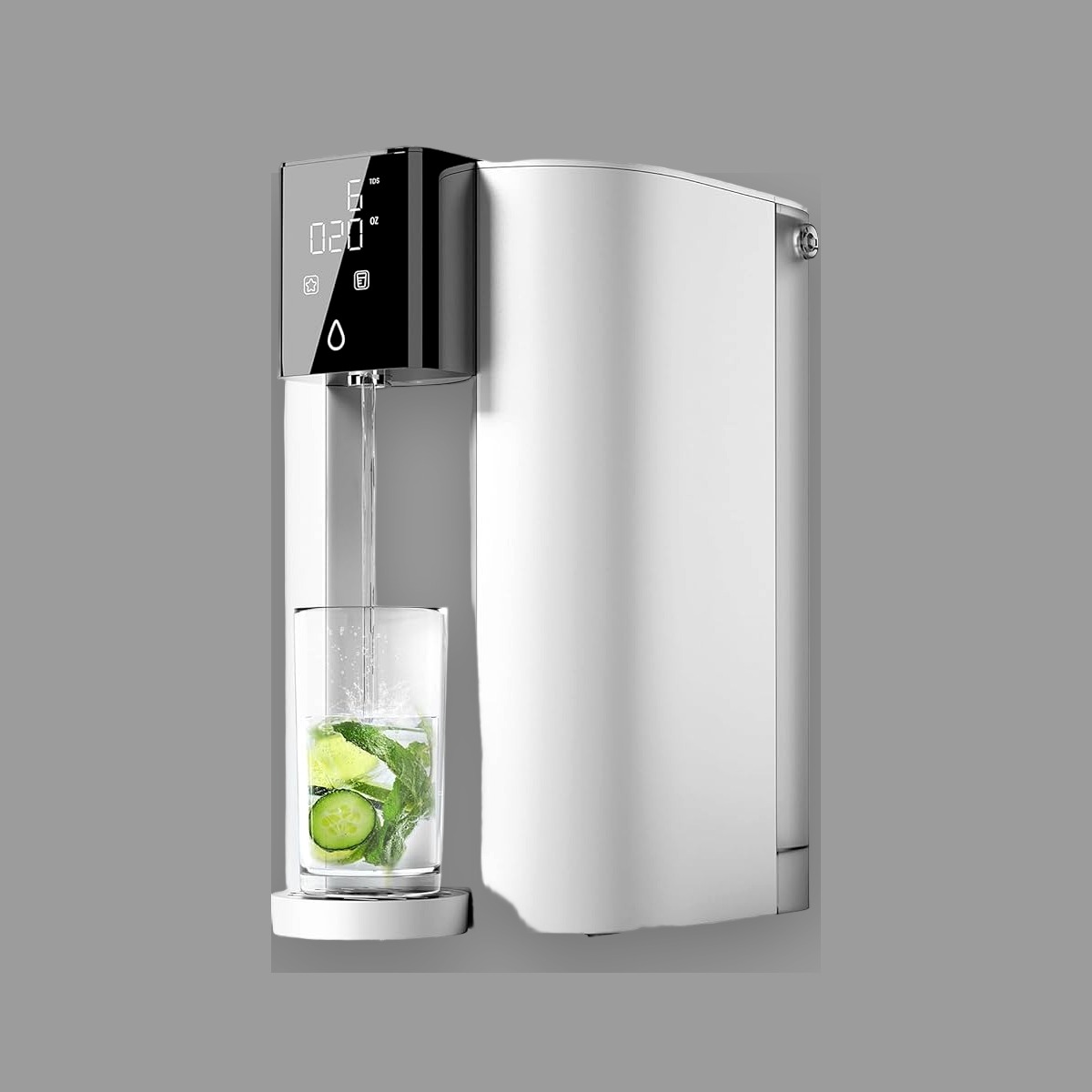
Who This Is For:
- Homeowners who can install a dedicated filtered water tap (or use the existing tap line)
- Families wanting unlimited on-demand filtered water without refilling a tank
- Anyone seeking the lowest long-term cost per litre for RO-quality water
Who This Is Not For:
- Renters or anyone unable to drill through their benchtop for a dedicated tap
- Those without space under the kitchen sink (the unit is compact, but it does require clearance)
Features and Performance
- Filtration stages: Multi-stage composite filter with RO membrane (integrated design — fewer individual cartridges to replace)
- Certifications: NSF/ANSI 58 certified. Also tested to NSF 372 (lead-free compliance).
- Flow rate: Approximately 1.5 L/min at standard Brisbane mains pressure — enough to fill a glass in under 10 seconds
- Tankless design: Filters on demand; no tank means no stale water sitting in storage
- Waste ratio: 3:1 pure to drain under standard conditions — significantly better than many under-sink RO systems
- Heavy metal removal: Lead (>99%), arsenic (>94%), cadmium (>96%), chromium (>97%) per NSF 58 testing
- Smart monitoring: LED display shows filter life and TDS in real time
The Waterdrop D6 connects directly to the cold water line under your sink and requires a dedicated dispensing tap drilled through the benchtop (or you can use existing tap plumbing with an adapter in some configurations). Installation takes roughly 45 minutes with basic tools. You will need a 12mm hole in your benchtop if one does not already exist.
✓ Pros
- Compact under-sink design with dedicated faucet
- 4-stage RO removes lead, arsenic, PFAS, chloramine
- Tankless — no stagnant water storage
✗ Cons
- Requires plumbing installation
- Not available at major AU retailers — online order only
Buy This If…
You own your home, want under-sink convenience, and prefer a compact system without a storage tank.
4. EcoHero Under-Sink RO — Best Australian-Made Option
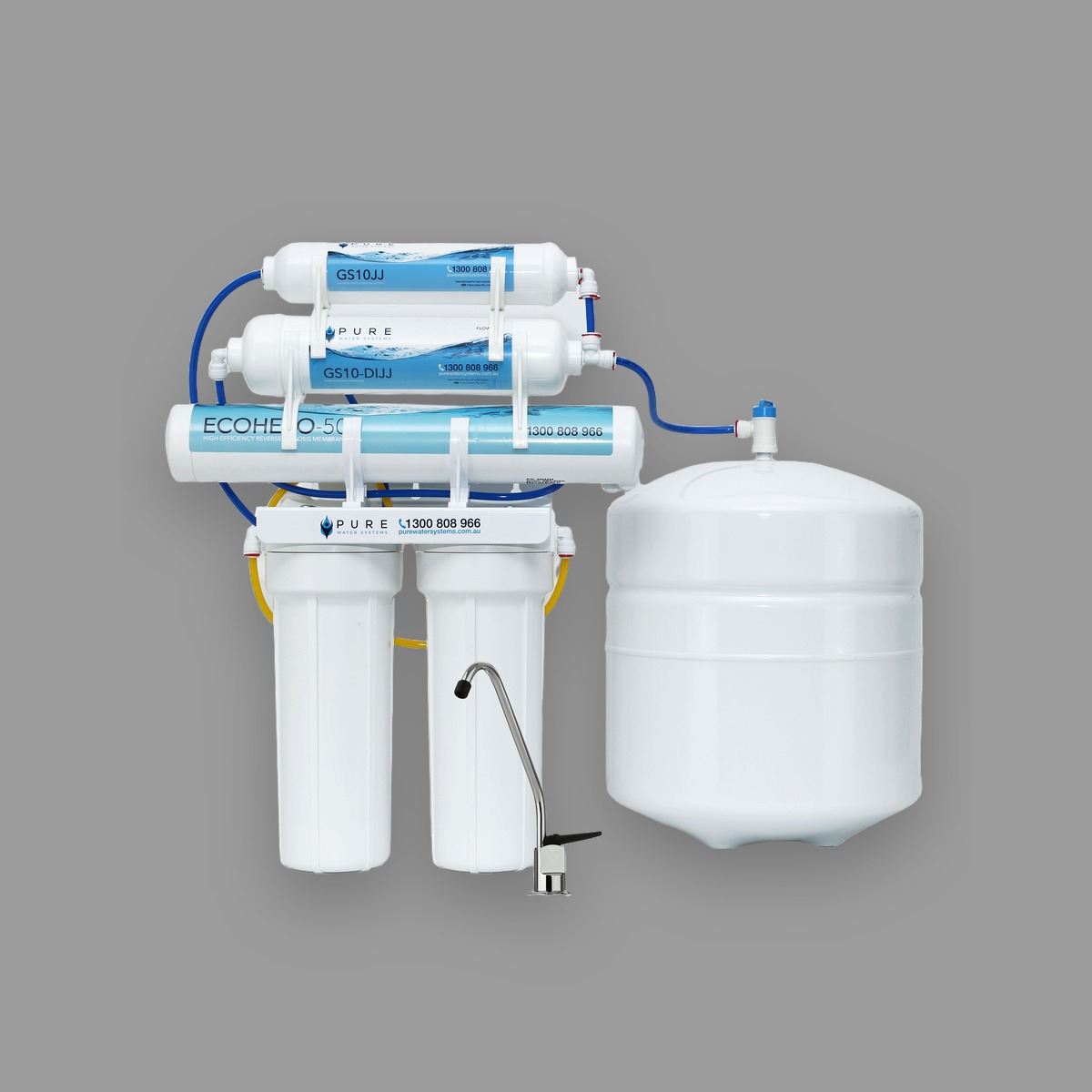
Who This Is For:
- Homeowners in NSW or VIC where WaterMark AS/NZS 3497 compliance is required for under-sink drinking water systems
- Anyone wanting a fully Australian-made product with domestic warranty support and 2–3 day cartridge delivery
- Households in chloramine-treated cities — the RO membrane handles all disinfectant types
Who This Is Not For:
- Renters — requires under-sink installation and a dedicated tap hole in the benchtop
- Anyone on a tight budget — this is a premium Australian-made product priced accordingly
Features and Performance
- Filtration stages: 4-stage: sediment pre-filter → activated carbon block → reverse osmosis membrane → post-carbon polish
- Australian certification: WaterMark AS/NZS 3497 — required for under-sink water filtration in NSW and VIC under AS/NZS 3500
- Heavy metal removal: RO membrane performance equivalent to NSF/ANSI 58 certified class; 95%+ TDS reduction in real home testing
- Pricing: ~$749 unit-only. at purewatersystems.com.au
The WaterMark compliance issue matters for NSW and VIC homeowners specifically. Under AS/NZS 3500, any fitting connected to the drinking water supply must use WaterMark-certified components. A plumber installing a non-WaterMark-certified under-sink filter in those states is technically non-compliant — relevant for insurance purposes and property inspections. The EcoHero removes this concern entirely.
✓ Pros
- WaterMark AS/NZS 3497 certified (plumber-required install)
- Full 4-stage RO with 0.0001 μm membrane
- Lowest long-term cost at ~$0.16/L
- 10% off with code
✗ Cons
- Requires licensed plumber to install
- Larger footprint under sink vs Waterdrop
Buy This If…
You’re a homeowner who wants the gold-standard AU-certified under-sink RO at the lowest 5-year operating cost.
5. HolyH2O H2 Glass Pitcher — Hydrogen Enrichment (Post-Filter Stage)
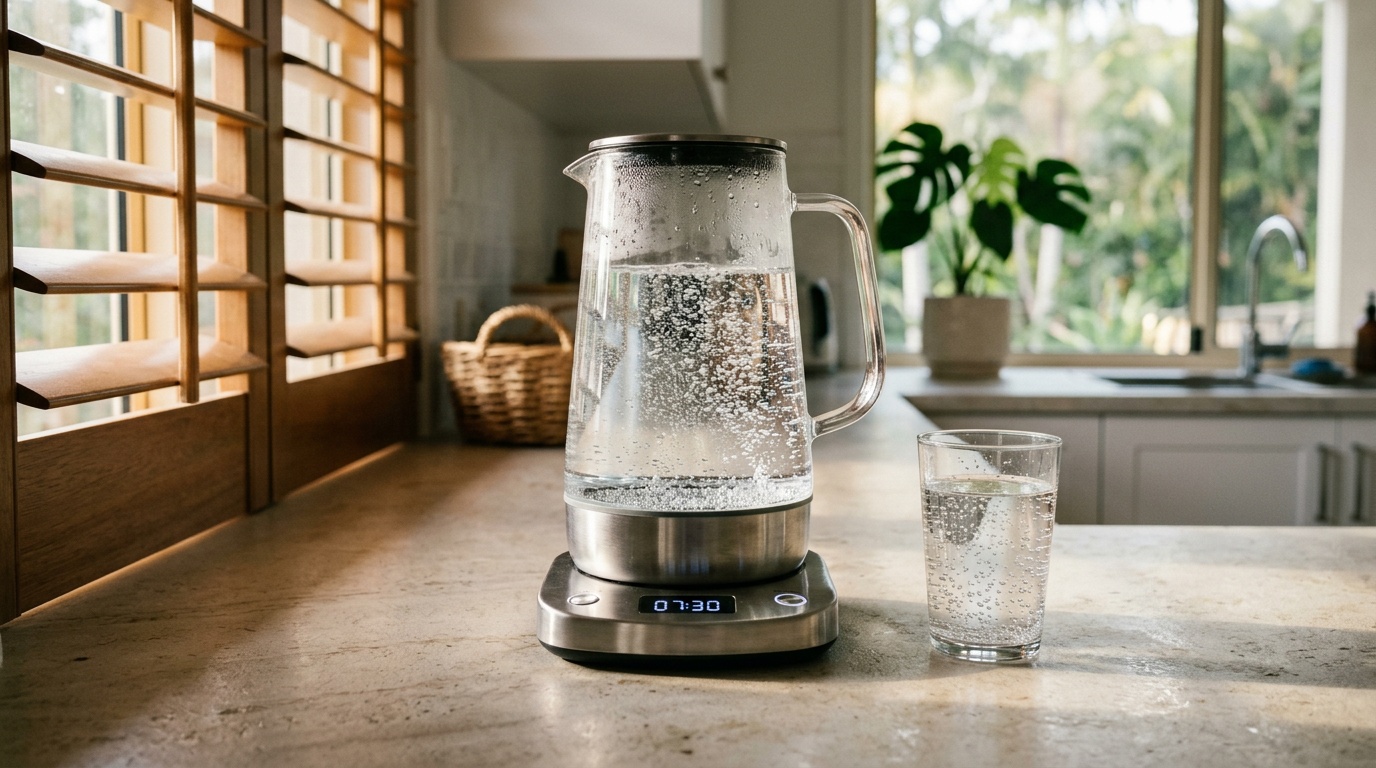
Who This Is For:
- Households that already have RO filtration and want to add dissolved molecular hydrogen (H₂) enrichment
- Anyone wanting the antioxidant properties of H₂-saturated water without a dedicated whole-system upgrade
Features and Performance
- Hydrogen generation: SPE/PEM electrolysis — produces H₂ without ozone or chlorine by-products
- H₂ concentration: Typically 1,000–1,500 ppb per standard cycle
- Pre-filter: NSF 42 activated carbon block — reduces chlorine and taste, not rated for lead or heavy metals
- Tank: 2L borosilicate glass with stainless steel base and digital indicator display
✓ Pros
- Countertop RO removes fluoride, chloramine, heavy metals
- Fast 4-stage filtration at ~1.8 L/min
- No plumbing required, large 3.2 L tank
✗ Cons
- No certified test data specific to AU water chemistry
- Slightly bulkier than AquaTru on the bench
Buy This If…
You want a no-install countertop RO that handles Brisbane/SEQ chloramine and fluoride without the AquaTru price tag.
6. Tappwater EcoPro — Budget Carbon Block (Lead Only)
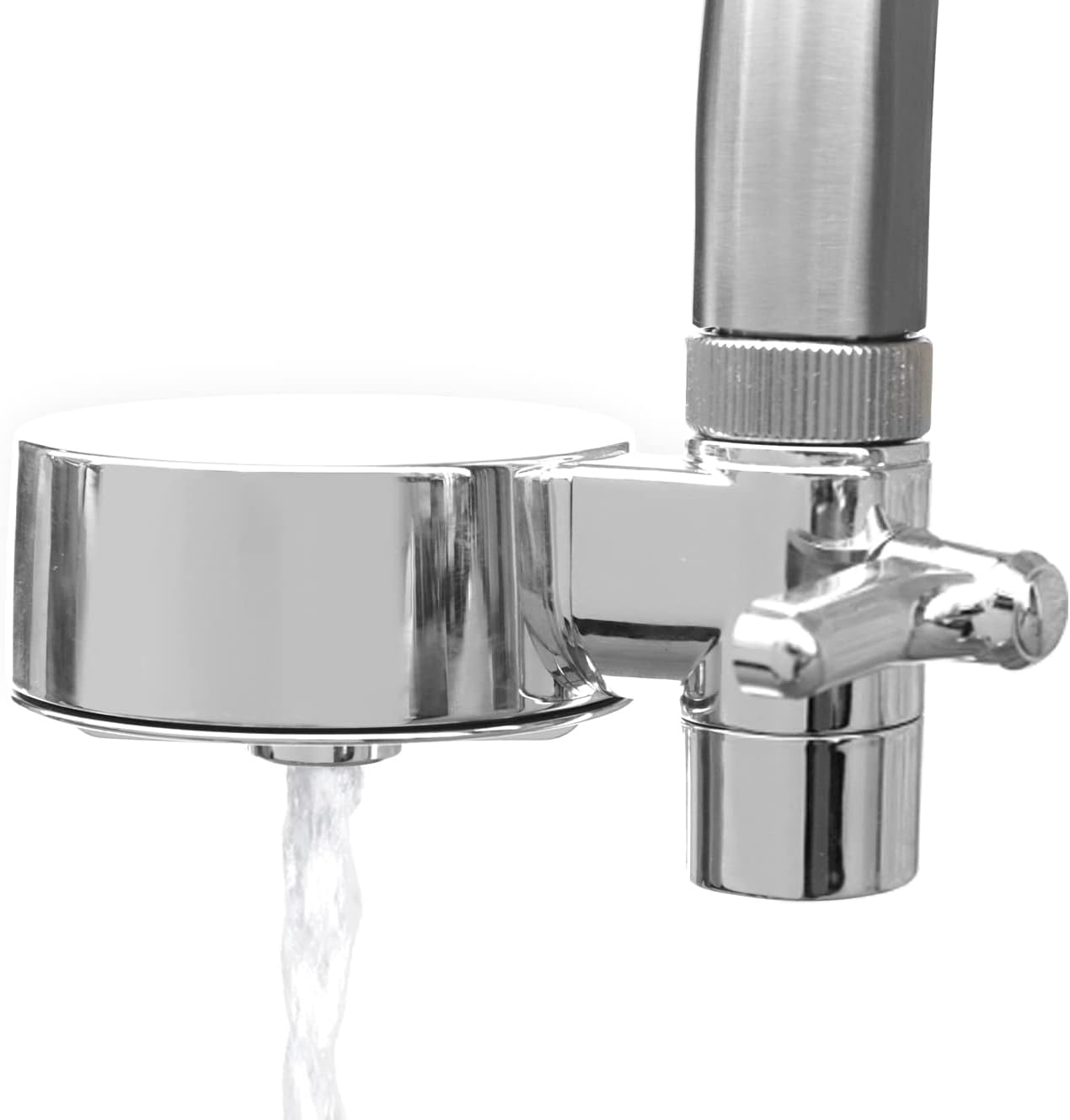
Who This Is For:
- Melbourne, Hobart, or Canberra households where chloramine is NOT used and lead is the primary concern
- Renters wanting a simple faucet-mount or benchtop solution
- Those on a budget who need lead reduction but are not concerned about arsenic, mercury, or fluoride
Who This Is Not For:
- Anyone in a chloramine city — this unit uses standard carbon, which removes chloramine at ~1/40th the rate of free chlorine
- Anyone concerned about arsenic, fluoride, or PFAS — carbon block does not remove these
- Bore water users with unknown heavy metal profiles
Features and Performance
- Filtration: Compressed carbon block, 1-2μm nominal pore size
- Certifications: NSF/ANSI 42 (taste/odour) and NSF/ANSI 53 (lead, among other contaminants)
- Lead removal: >93% per NSF 53 certification
- Filter life: Approximately 1,200 litres or 3 months (whichever comes first)
- Installation: Clips onto standard Australian taps or sits on the bench with a diverter valve. No plumbing modification.
The EcoPro is a legitimate lead-reduction tool for cities running free chlorine. It is not an RO system, and it does not claim to be. Where it falls short is in the breadth of heavy metal coverage — it is certified for lead but not for arsenic, mercury, cadmium, or chromium. If lead is your sole concern and you are in a free-chlorine city, it does that one job well and cheaply.
✓ Pros
- Budget carbon-block option for lead reduction
- Easy filter replacement, compact design
- Removes chlorine, taste, odour alongside lead
✗ Cons
- Carbon-block only — does NOT remove fluoride, arsenic, PFAS
- Weaker lead removal than certified RO systems
Buy This If…
You need a budget-friendly lead filter and your water has no fluoride, arsenic, or PFAS concerns.
5-Year Cost Comparison
This is the table most review sites do not include because it makes some popular products look expensive. All figures in AUD. Assumes a 4-person household consuming approximately 4 litres per day (1,460 litres per year).
| Product | Upfront Price (AUD) | Annual Filter Cost | 5-Year Total | Cost per Litre |
|---|---|---|---|---|
| AquaTru Classic (Countertop RO) | $699 | ~$130 | $1,349 | $0.18 |
| Waterdrop D6 (Under-Sink RO) | $599 | ~$110 | $1,149 | $0.16 |
| Tappwater EcoPro (Carbon Block) | $99 | ~$120 | $699 | $0.10 |
| Brita Marella Jug (GAC — NOT for heavy metals) | $45 | ~$80 | $445 | $0.06 |
The Brita Marella is included only as a reference point. It uses granular activated carbon and ion exchange resin — it is NOT certified for heavy metal removal, does NOT remove arsenic, mercury, or fluoride, and is ineffective against chloramine. If you are reading this article, a Brita jug is not what you need.
The Waterdrop D6 under-sink RO has the lowest per-litre cost of the three RO-capable options over 5 years. The AquaTru Classic costs marginally more per litre but requires zero plumbing work. The Tappwater EcoPro is cheapest overall but only covers lead — not the full heavy metal suite.
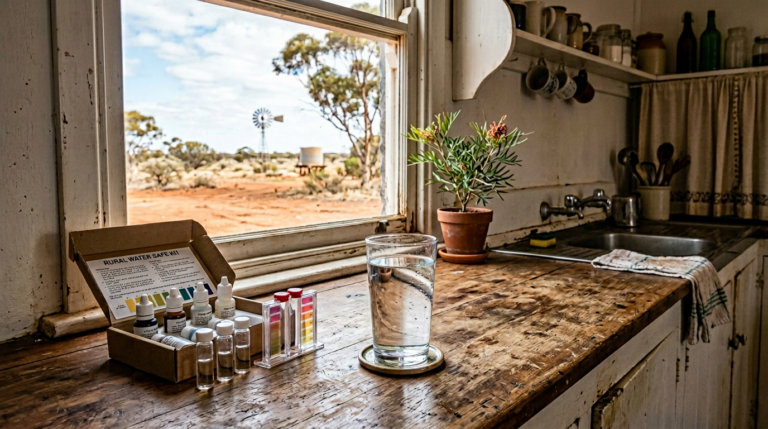
How to Test Your Water for Heavy Metals
Before spending money on filtration, it is worth knowing what you are actually dealing with. Here is the systematic approach:
Step 1: Check Your Utility’s Annual Report
Every major Australian water utility publishes an annual water quality report. These cover treatment plant output, not what arrives at your tap — but they tell you the baseline. Key reports:
- Brisbane / SEQ: Seqwater Drinking Water Quality Report
- Sydney: Sydney Water Annual Water Quality Report
- Melbourne: Melbourne Water Annual Report
- Adelaide: SA Water Drinking Water Quality Report
- Perth: Water Corporation Drinking Water Quality Report
These reports will show heavy metal levels at the treatment plant. If the treatment plant data shows undetectable levels but your home has pre-1989 plumbing, the contamination source is between the street main and your tap — not the utility’s fault, and not captured in their report.
Step 2: First-Draw Tap Water Testing
The most informative test for lead from household plumbing is a “first draw” sample. This means collecting the first 250 mL of water from your kitchen cold tap first thing in the morning (after the water has sat stagnant in your pipes overnight, typically 6+ hours). This captures maximum leaching from solder joints and fittings.
Send the sample to a NATA-accredited laboratory. In Queensland, laboratories such as Eurofins, ALS Global, and SGS offer drinking water heavy metal panels for $80-$150. Request a “heavy metals in drinking water” panel that includes at minimum: lead, copper, arsenic, mercury, cadmium, chromium, and nickel.
Step 3: Interpret Against ADWG Values
Compare your results against the ADWG guideline values listed in the table above. If any metal exceeds the guideline value, point-of-use RO filtration is the most reliable residential response. If lead alone is elevated (the most common scenario in Australian homes), a certified carbon block filter may be sufficient — but RO gives you a broader margin of safety.
City-by-City Considerations
Brisbane / SEQ (Chloramine)
Brisbane uses chloramine as its secondary disinfectant. This means any filter you install for heavy metals must also handle chloramine, or you will have metallic-tasting water with residual disinfectant. Standard GAC filters (including Brita jugs) remove chloramine at approximately 1/40th the rate they remove free chlorine — essentially useless at typical Australian flow rates.
Recommended: AquaTru Classic (countertop RO) or Waterdrop D6 (under-sink RO). Both handle chloramine, heavy metals, fluoride, and PFAS in one unit.
Brisbane TDS is typically 80-115 mg/L with moderate hardness (~80-120 mg/L CaCO3). RO will reduce TDS to single digits.
Sydney (Chloramine)
Sydney Water uses chloramine. Older suburbs (inner west, inner city) have the highest incidence of lead plumbing from pre-1930s construction. The 2019 lead contamination scare at Sydney’s Central Station highlighted that even public buildings can have dangerous lead levels from internal plumbing.
Recommended: Same as Brisbane — countertop or under-sink RO. Carbon-only filters will not address chloramine adequately.
Melbourne (Free Chlorine)
Melbourne uses free chlorine, not chloramine, which means carbon block filters work effectively for disinfectant removal. Melbourne water is extremely soft (~25 mg/L CaCO3, TDS ~60 mg/L) with low mineral content. For lead-only concerns, a carbon block filter certified to NSF 53 for lead (such as the Tappwater EcoPro) is adequate and cost-effective.
However, if you also want fluoride or arsenic removal, RO is still the answer. Melbourne adds fluoride at ~1.0 mg/L.
Adelaide (Chloramine, Hard Water)
Adelaide uses chloramine and has some of Australia’s hardest water (~140 mg/L CaCO3, TDS ~400 mg/L). The high TDS means RO membranes work harder and may need slightly more frequent replacement. Adelaide’s water also contains naturally elevated levels of dissolved salts from the Murray River supply.
Recommended: RO only. The chloramine rules out carbon-only options. Consider the Waterdrop D6 under-sink for its higher throughput, given Adelaide’s higher TDS will reduce membrane efficiency slightly.
Perth (Free Chlorine)
Perth uses chloramine and has hard water (~180 mg/L CaCO3, TDS ~170 mg/L). Similar to Adelaide, the combination of chloramine and moderate-to-hard water makes RO the only practical option for comprehensive heavy metal removal.
Regional / Bore Water
If you are on bore water, you may face heavy metals that urban users never encounter — including naturally occurring arsenic, manganese, and iron at levels well above ADWG guidelines. Get a NATA-accredited lab test before selecting any filtration. Bore water users in some parts of Queensland (particularly north-west QLD and parts of the Darling Downs) and Western Australia should treat arsenic as a default concern and start with RO.
Common Myths About Heavy Metal Filtration
Myth 1: “Alkaline water filters remove heavy metals”
No. Alkaline water machines and mineral cartridges raise pH by adding minerals (typically calcium and magnesium). They do not remove anything. Some alkaline systems use a basic carbon pre-filter that might reduce chlorine taste, but they have zero certified heavy metal removal. If a product claims to “detoxify” your water through alkalisation, that is not filtration — it is marketing.
Myth 2: “Gravity filters like Berkey remove heavy metals”
This is complicated. Berkey’s Black Berkey Elements have manufacturer-claimed removal rates for lead and arsenic, but the elements are not independently certified to NSF/ANSI 53 or 58 for those specific contaminants. The filters were tested by third-party labs commissioned by Berkey, but independent NSF certification is a different and more rigorous process. The US EPA issued an advisory in 2023 regarding Berkey’s marketing claims, and the brand has faced legal challenges about its certifications. If heavy metals are a genuine health concern, I recommend using systems with verified NSF/ANSI 53 or 58 certification rather than relying on manufacturer-commissioned testing.
Myth 3: “A whole-house carbon filter will protect you from lead”
It will not. If your lead source is internal plumbing (which it almost always is in Australia), a whole-house carbon filter installed before the water enters your house does nothing — the water picks up lead from your pipes and fittings after passing through the whole-house unit. You need point-of-use filtration at the tap where you drink and cook. Whole-house filters are useful for chlorine or sediment reduction, but they are the wrong tool for lead from internal plumbing.
Myth 4: “Boiling water removes heavy metals”
The opposite. Boiling water drives off dissolved gases and volatile compounds, but heavy metals are non-volatile dissolved solids. Boiling concentrates them. If your water contains 15 μg/L of lead and you boil off half the volume, the remaining water contains approximately 30 μg/L of lead. Never use boiling as a heavy metal reduction strategy.
Myth 5: “TDS meters measure heavy metals”
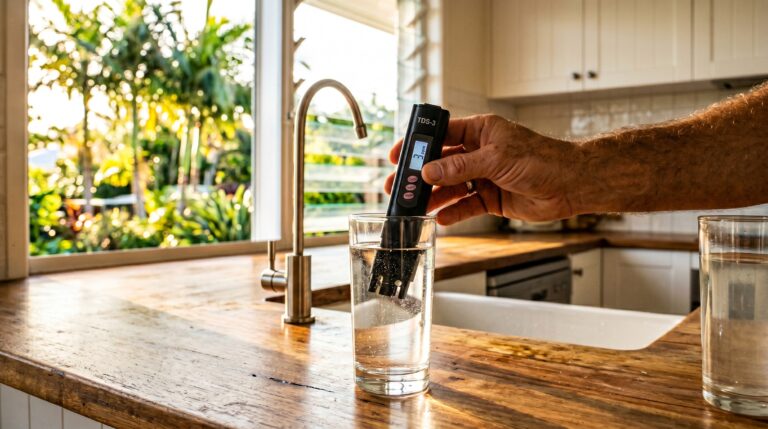
TDS meters measure total dissolved solids — the combined concentration of all ions in the water, including calcium, magnesium, sodium, potassium, and bicarbonates that are completely harmless. A TDS reading of 100 mg/L could be entirely harmless minerals, or it could include 10 μg/L of lead. You cannot distinguish. TDS meters are useful for verifying RO membrane performance (if inlet TDS is 90 and outlet is 8, the membrane is working), but they cannot tell you whether heavy metals are present. Only a lab test can do that.
What About PFAS?
Per- and polyfluoroalkyl substances (PFAS) are not heavy metals, but they are frequently co-occurring concerns for Australians searching for heavy metal filtration. PFAS contamination has been documented near military bases (Williamtown, Oakey, Katherine, Pearce) and at several industrial sites across Australia.
Both the AquaTru Classic (NSF P473 certified) and the Waterdrop D6 (NSF 58) remove PFAS effectively. This is another reason RO is the preferred technology — it handles the full contaminant spectrum in a single unit.
For more detail on PFAS filtration, see our dedicated guide: best water filter for PFAS Australia
Clean Water
The right filter removes what this article describes.
Reverse osmosis is the only residential technology that reliably removes PFAS, fluoride, chloramine, and heavy metals. Our guide covers the top-rated options for Australian homes — tested, certified, and ranked.
See the Top-Rated Water Filters →Installation and Maintenance: What to Expect
Countertop RO (AquaTru Classic)
Installation is literally “unbox, rinse filters, insert, plug in, add water.” Total setup time: under 10 minutes. No tools required. No plumbing. The unit sits on your bench and draws water from the upper reservoir under its own pump pressure.
Maintenance schedule:
- Mechanical pre-filter: Replace every 6 months (~$30)
- Carbon pre-filter: Replace every 6 months (~$40)
- RO membrane: Replace every 2 years (~$90)
- Carbon polishing filter: Replace every 12 months (~$35)
Under-Sink RO (Waterdrop D6)
Installation requires basic plumbing confidence: connecting a T-piece to your cold water line, drilling a hole in the benchtop for the dedicated tap (if you do not have an existing one), and connecting the drain line to the sink waste. A licensed plumber can do this in under an hour if you prefer not to DIY. Budget $150-$250 for professional installation.
Maintenance schedule:
- Composite filter (CF): Replace every 12 months (~$60)
- RO membrane: Replace every 24 months (~$80)
Carbon Block (Tappwater EcoPro)
Clips onto your existing tap in under 2 minutes. No tools for most standard Australian taps. Adaptors included for different thread sizes.
Maintenance schedule:
- Carbon block cartridge: Replace every 3 months (~$30)
How It Compares: Quick Reference
| Feature | AquaTru Classic | Waterdrop D6 | Tappwater EcoPro |
|---|---|---|---|
| Technology | 4-stage RO | Multi-stage RO | Carbon block |
| NSF Certification | 42, 53, 58, 401, P473 | 58, 372 | 42, 53 |
| Lead Removal | 99.1% | >99% | >93% |
| Arsenic Removal | 96.4% | >94% | ❌ |
| Mercury Removal | 96.4% | ✅ | ❌ |
| Fluoride Removal | 93.6% | ✅ (RO) | ❌ |
| Chloramine Removal | ✅ | ✅ | ❌ |
| PFAS Removal | ✅ (P473) | ✅ | ❌ |
| Plumbing Required | No | Yes | No |
| Renter-Friendly | ✅ | ❌ | ✅ |
| 5-Year Cost | $1,349 | $1,149 | $699 |
For a deeper look at countertop RO systems, see our full guide: best countertop water filter Australia
For under-sink options including the Waterdrop D6 and alternatives: best under-sink water filter Australia
How We Assessed These Products
This guide was compiled by Jayce Love and referenced to South East Queensland supply conditions: Seqwater North Pine Dam via Unity Water, chloramine-treated, fluoridated (0.7 mg/L), TDS typically 85–95 mg/L, pH ~7.2.
Removal claims for each product were verified against IAPMO and NSF International certification listings and the WaterMark database. Local tap water was profiled with a calibrated TDS meter and a first-draw heavy-metals panel via the NATA-accredited ALS Global laboratory.
No units were provided by manufacturers. No brand has paid for placement or influenced rankings. Certification claims verified against published NSF International and WaterMark databases.
Final Verdict
Heavy metals in Australian drinking water are a plumbing problem more than a utility problem. Your water authority delivers safe water to the street — but if your internal plumbing contains lead solder, brass fittings, or corroding copper pipes, what comes out of your tap can exceed ADWG guideline values. The only way to know is to test.
If you test and find elevated heavy metals — or if you want verified removal without relying on assumptions — reverse osmosis is the definitive technology. It handles lead, arsenic, mercury, cadmium, chromium, PFAS, fluoride, and chloramine in a single point-of-use system. No other residential technology does all of that.
My recommendation:
- Best overall / renters / chloramine cities: AquaTru Classic — no plumbing, NSF 58 certified, handles the full contaminant spectrum.
- Best under-sink / homeowners wanting unlimited flow: Waterdrop D6 — lower cost per litre over 5 years, tankless on-demand delivery.
- Budget lead-only option / free chlorine cities: Tappwater EcoPro — adequate for Melbourne/Hobart/Canberra households concerned specifically about lead from old plumbing.
Get the lab test. Know your numbers. Then match the technology to the contaminant. That is the systematic approach, and it is the only one that works.
Our Top Picks
Heavy metals in Australian drinking water are a plumbing problem, not a treatment plant problem. Test your water, match the technology to what you find, and choose a certified system. RO is the only residential technology that handles the full spectrum.
Last reviewed: July 2026. Prices reflect current Amazon AU and retailer listings.
Frequently asked questions
What heavy metals are most common in Australian tap water?
Lead is the most common heavy metal concern, predominantly from internal plumbing — lead solder joints and brass fittings, not the water authority’s supply. Copper is present in most homes with copper plumbing, typically below ADWG limits. Arsenic appears in some regional areas with naturally elevated geological concentrations, particularly in parts of South Australia and Queensland. Chromium and cadmium are rare in urban supplies but relevant near industrial or mining areas.
Does boiling water remove heavy metals?
No. Boiling kills biological contaminants but does not remove lead, arsenic, mercury, or other heavy metals. In fact, boiling reduces water volume, which increases the concentration of dissolved metals in the remaining water. The only residential technologies that remove heavy metals are reverse osmosis and distillation.
Are Brita and ZeroWater filters effective for heavy metals?
ZeroWater’s ion exchange resin reduces lead and some heavy metals effectively when new, but performance drops as the resin saturates. Brita’s standard activated carbon filters do not remove heavy metals in any meaningful quantity. Neither is NSF 58 certified for lead removal. For reliable, certified heavy metal removal, reverse osmosis (NSF 58) is the standard.
What does reverse osmosis actually remove from water?
A properly functioning RO system removes 95-99% of lead, arsenic, mercury, cadmium, chromium, fluoride, nitrates, PFAS, and chloramine. The semipermeable membrane rejects dissolved solids based on molecular size and charge. The AquaTru Classic and Waterdrop D6 are both NSF 58 certified, which means their removal claims are independently verified.
How do I test my water for heavy metals in Australia?
National Testing Laboratories (NTL) and NATA-accredited labs like ALS Global offer residential water testing for A$80-150 for a heavy metals panel. Collect a first-draw sample (water that has sat in pipes for at least 6 hours) for lead testing. Results typically arrive within 5-10 business days and report against ADWG guideline values.
What are the ADWG guideline values for lead and arsenic?
The Australian Drinking Water Guidelines (ADWG) set a health guideline value of 0.01 mg/L (10 ppb) for lead and 0.01 mg/L (10 ppb) for arsenic. These are maximum concentrations considered safe for lifetime consumption by a 70 kg adult. The WHO has flagged that no safe threshold for lead exposure in children has been established, so households with young children should consider RO filtration regardless of test results.
How often do I need to replace filters on an RO system?
Pre-filters (sediment and carbon) typically need replacement every 6-12 months depending on your water quality and usage. The RO membrane itself lasts 2-3 years under normal residential conditions. Post-filters (polishing carbon) are replaced annually. The AquaTru Classic has a filter replacement indicator; the Waterdrop D6 uses a TDS monitor to signal membrane degradation.
Can I use an RO filter if I’m renting?
Yes. Countertop RO systems like the AquaTru Classic require no plumbing modification — they sit on your benchtop, connect to a standard tap via an included adapter, and move with you. Under-sink RO systems require a hole drilled under the sink and a separate tap, which needs landlord permission. For renters in Melbourne, Sydney, or Canberra with chloramine-treated water, the AquaTru Classic is the recommended option.
Get the Australian Home Environment Checklist
30 checks across water, air and EMF. Most of them free. Ranked by impact.
No spam. Unsubscribe any time.

Former Royal Australian Navy Clearance Diver and TAG-E counter-terrorism operator. Founded Clean and Native to apply the same rigorous thinking to the home environment.
Full biography →