
AIR QUALITY
Indoor Air Is Often More Polluted Than Outdoor Air
We spend up to 90% of our time indoors — but most of us have never thought about what we’re breathing. Here’s what’s actually in the air in your home, and what to do about it.
Independently assessed. Jayce Love measures the products he owns with calibrated instruments, and assesses everything else on manufacturer specification and independent certification — no gifted units, no brand payments. See our testing process →
Disclosure: This page contains affiliate links. If you buy through our links, we may earn a small commission at no extra cost to you. See our comparison methodology →
Why This Matters More Than Most People Realise
The air outside in most Australian cities is reasonably clean. But outdoor air can move and disperse. Indoor air sits still, recirculates, and builds up.
Modern homes are built more airtight than ever — which is great for energy efficiency, but it traps what’s already inside. Cooking fumes, cleaning product residue, off-gassing from furniture and carpet, mould, dust mite waste, pet dander — these all accumulate in an enclosed space.
Add bushfire season, and Australians face an air quality challenge that most other countries don’t have to think about.
The 3 Types of Indoor Air Pollutants
Indoor pollutants split into three categories. Understanding which type you’re dealing with tells you which solution actually works.
Particulate Matter (PM2.5 + PM10)
Dust, pollen, mould spores, pet dander, smoke particles. PM2.5 is the most dangerous — small enough to reach your lungs and bloodstream. During bushfire season, indoor PM2.5 can spike 20× even with windows closed.
Volatile Organic Compounds
Gases off-gassing from furniture, paint, cleaning products, cooking fumes and adhesives. Most homes off-gas TVOCs for years after renovation. HEPA cannot capture VOCs — activated carbon is the only solution.
Biological Contaminants
Mould spores, bacteria, viruses, dust mite waste. High humidity in Brisbane, Cairns and coastal NSW creates ideal mould conditions. H13 HEPA captures these — ionisers and ozone do not, and ozone causes lung damage.
“Most people buy a purifier for particles but their biggest problem is VOCs — especially in a recently renovated or newly furnished home. Getting both HEPA and carbon filtration isn’t a nice-to-have, it’s the baseline.”
What HEPA Actually Means (And What It Doesn’t)
HEPA is probably the most misunderstood term in the air purifier market. Here’s what it actually means.
True HEPA H13 — the standard that matters
A True HEPA H13 filter captures 99.95% of particles at 0.3 microns. For reference, a human hair is about 70 microns wide. These filters are capturing things that are completely invisible to the naked eye.
H13 True HEPA (the standard that matters) — Captures ≥99.95% of particles at 0.3 microns. The EN 1822 standard. What Breville Protect Max, Levoit Core 400S, and Winix 5500-2 use. Non-negotiable for smoke, bacteria, and viruses.
H11 / H12 HEPA — Captures 95–99.5% at 0.3 microns. Often used in budget filters. Fine for dust and pollen. Not sufficient for bushfire smoke, bacteria, or COPD/asthma management.
‘HEPA-type’ or ‘HEPA-style’ — Not a real standard. Typically 85–90% efficiency. Common in cheap $30–80 units. Avoid if you’re buying for health reasons — these are marketing terms, not certifications.
The carbon layer in a good purifier works alongside the HEPA filter — it adsorbs gases and VOCs that the HEPA layer physically can’t capture. If your purifier doesn’t have both, it’s handling one category of pollutant and letting the other pass through.
How To Size A Purifier For Your Room
Getting the right size is more important than getting the most expensive model. An undersized purifier running constantly is less effective than a correctly sized one on its auto setting.
The number to focus on is CADR — Clean Air Delivery Rate. It measures how quickly a purifier cleans a room, expressed in m³/h.
“For Australian households during bushfire season, size up. Aim for a unit that turns over the room’s air volume at least 4–5 times per hour rather than the standard 2–3.”
⚠ BUSHFIRE SEASON TIP
During bushfire season, PM2.5 levels inside can spike 10–20× above normal — even with windows closed. If you’re in a high-risk area, size up to a unit rated for a room twice your actual size.
Run it on high for the first 30 minutes when smoke is visible outdoors, then drop to medium for continuous overnight protection.
Take the 60-second quiz — get a personalised recommendation
Answer 3 questions about your air quality concerns, room size, and budget. We’ll match you to the right purifier for your home.
Find my purifier →3 Steps To Cleaner Air At Home
1. Choose the right size for your room
Match CADR to your room’s floor area — divide m² by 2.5 to get the minimum CADR in m³/h. For bushfire season, size up. Aim for 4–5 air changes per hour. An undersized unit running flat-out loses to a correctly sized unit on auto mode.
2. Run it where you actually breathe
For most people, that’s the bedroom — you spend 8 hours there with windows closed. Position 1–2m from your head, not against a wall. Run it all night. A second unit in the living area is the next priority for households with kids, pets, or respiratory conditions.
3. Change the filter on schedule, not by colour
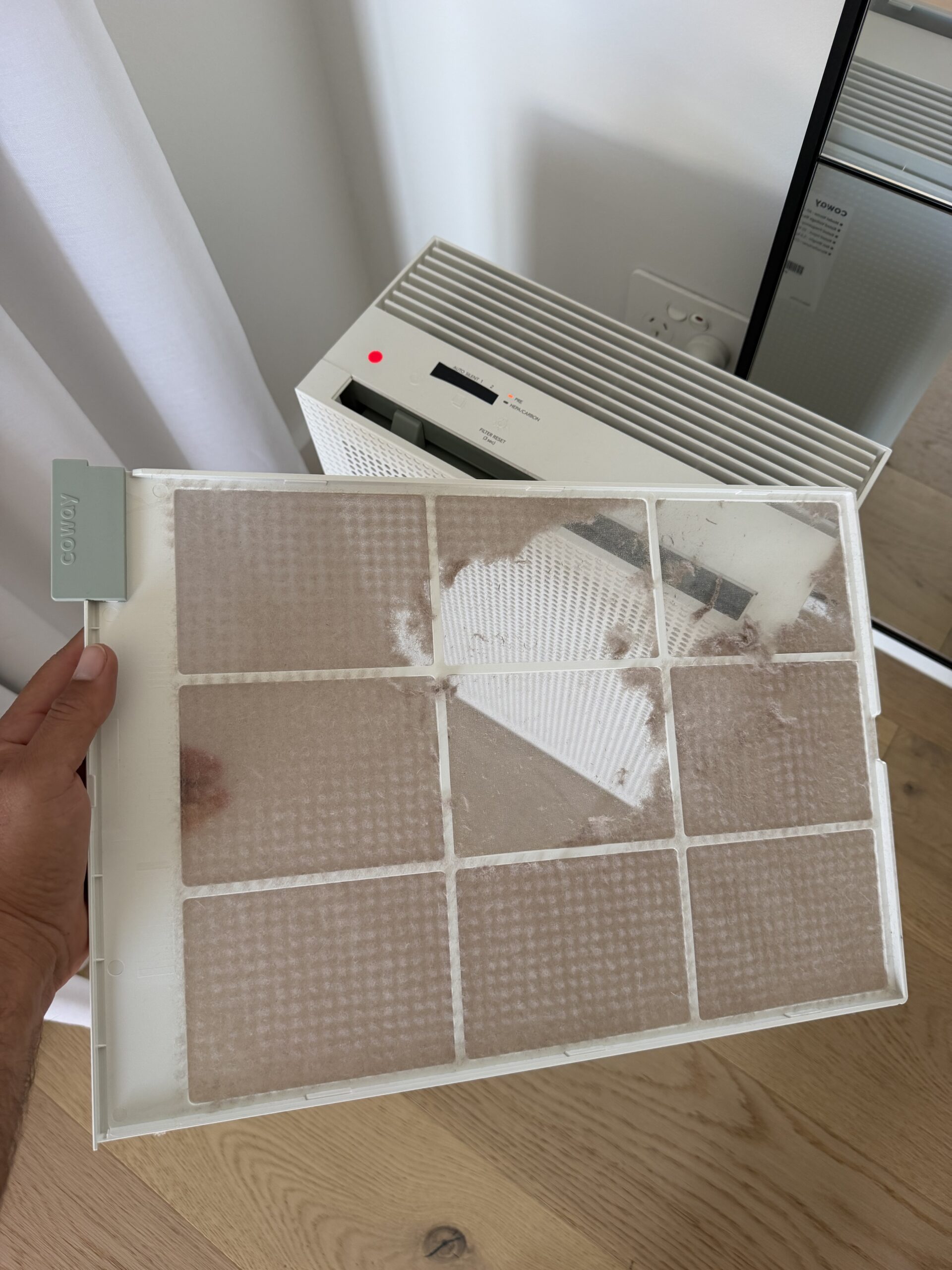
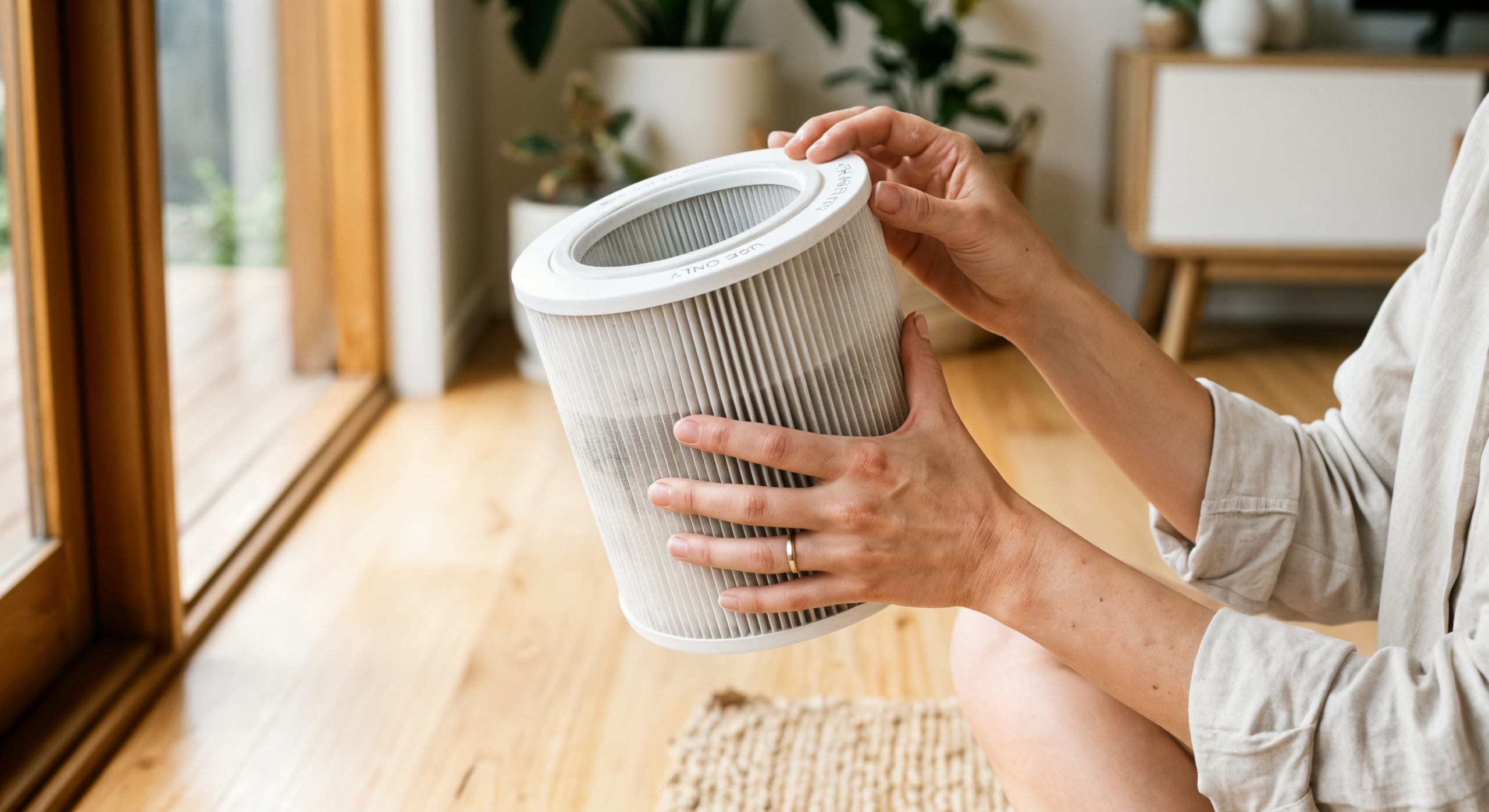
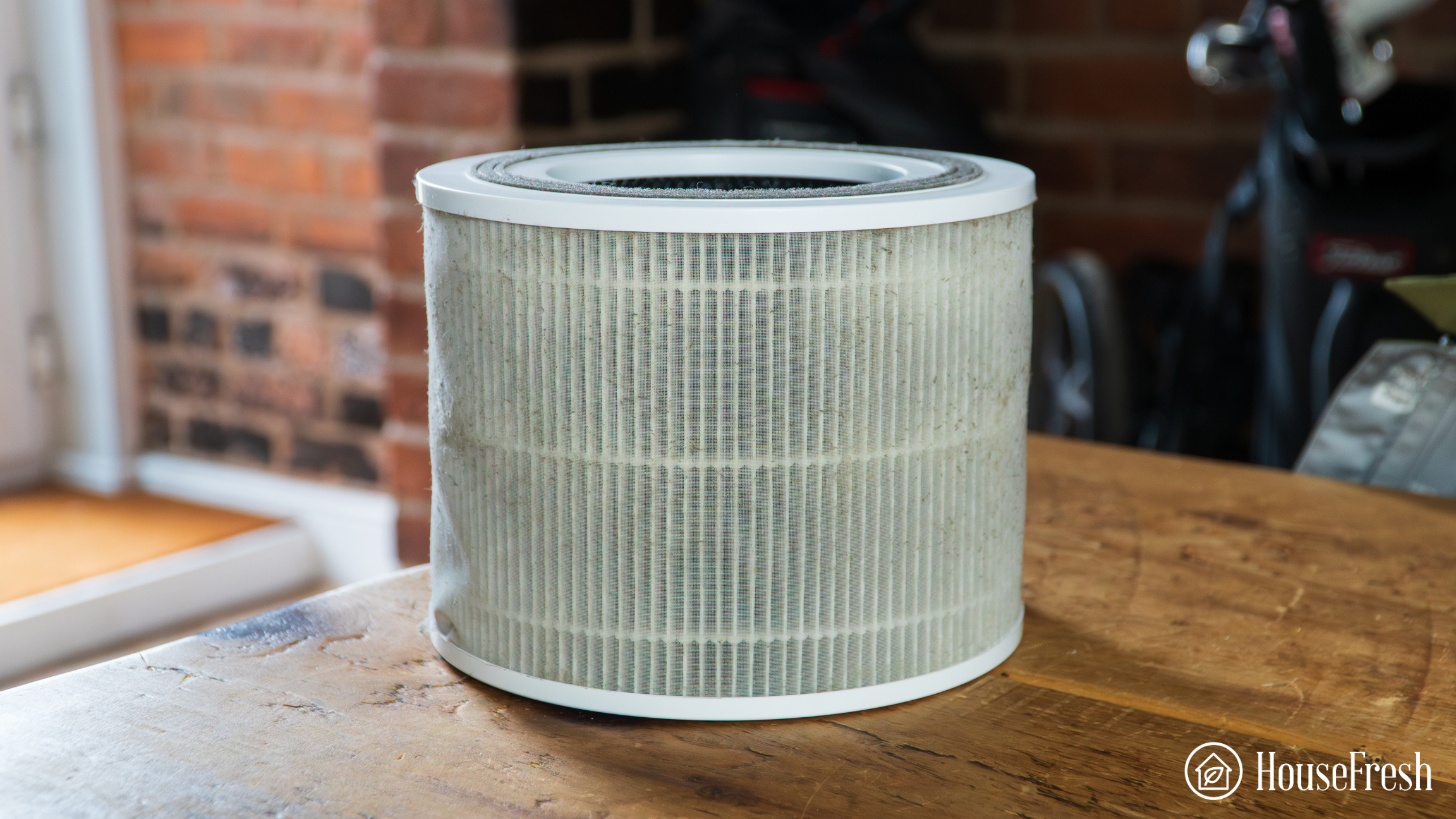
Most HEPA filters last 12 months, but bushfire season can exhaust a filter in 6–8 weeks. Don’t wait until the filter looks dark — airflow drops before colour changes obviously. Set a calendar reminder the day you install each filter.
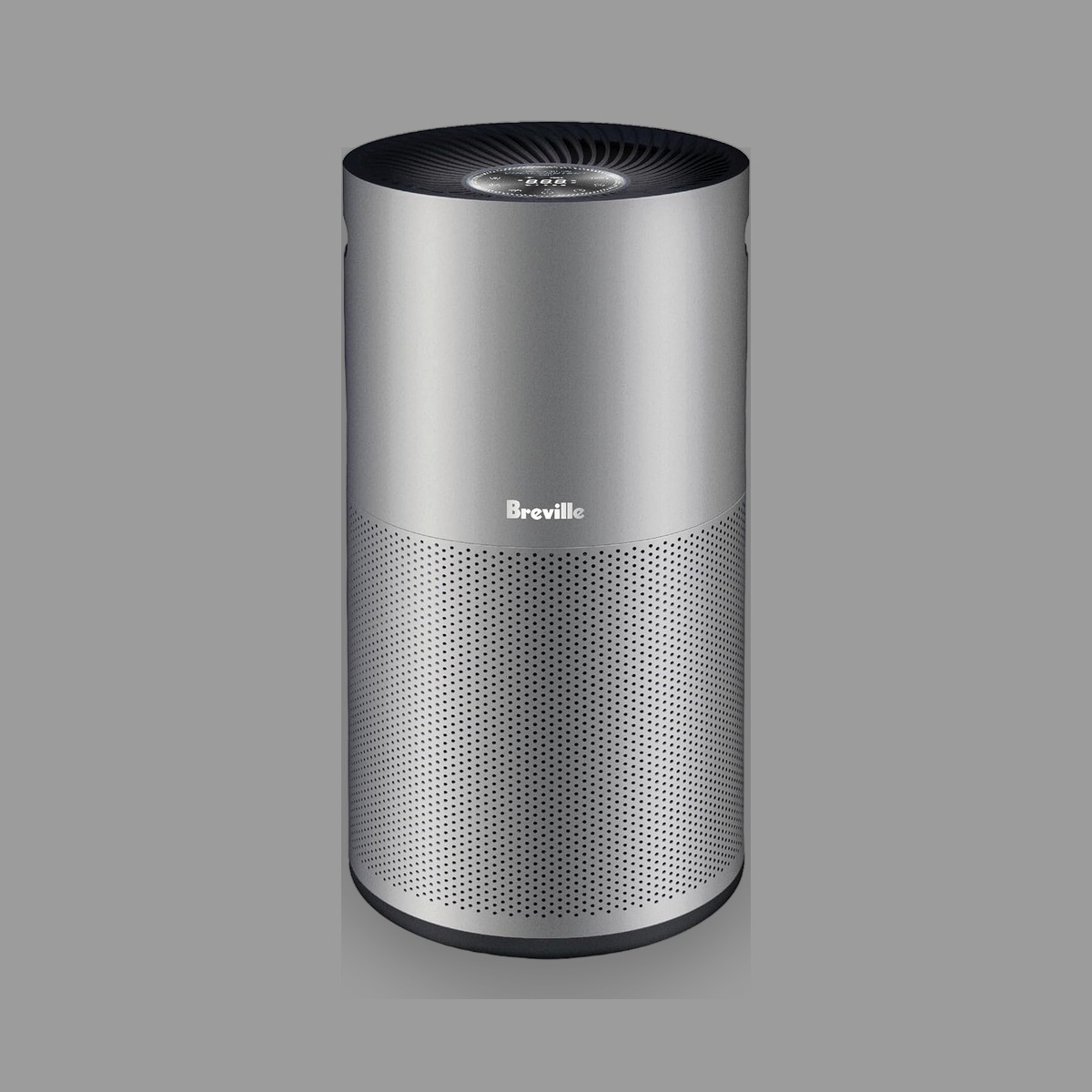
Breville the Smart Air Connect
H13 HEPA + activated carbon. Real-time AQI display. Assessed for Australian bushfire seasons. Covers rooms up to 40m² and handles both PM2.5 smoke particles and VOC gases.
AUSTRALIAN AIR CONTEXT
Australia has strong outdoor air standards — the national goal for PM2.5 is 8 µg/m³ annually — but there is no enforceable standard for the air inside your home, where you spend most of your life. During major bushfire events, Sydney and Canberra have recorded outdoor AQI readings above 2,000, many times the ‘hazardous’ threshold.
Smoke PM2.5 seeps indoors even with windows shut, and coastal humidity across QLD and NSW drives mould that standard filters miss. A calibrated particle counter is the only way to know your real indoor number — see how we test.
All Air Quality Articles
HEPA ratings, CADR benchmarks, and Australian bushfire season assessed.
Best Purifier Roundups
Reviews & Comparisons
Specific Concerns
Bushfire Smoke & Seasonal Events
FREE DOWNLOAD
Get the Australian Home Environment Checklist
30 checks across water, air and EMF. Most of them free. Ranked by impact.
NO SPAM. UNSUBSCRIBE ANY TIME.