Best Air Purifier for Mould Australia 2026: HEPA vs UV vs Activated Carbon
A HEPA air purifier reduces airborne mould spore concentration in Australian homes, but it will not eliminate mould growing on surfaces or fix the moisture problem that caused it. HEPA filtration (True H13 minimum) captures 99.97% of 0.3-micron particles including Aspergillus, Penicillium, and Cladosporium spores. Activated carbon helps with musty odours but does not kill spores. UV-C light adds marginal benefit at consumer-grade exposure times and should not be a purchase driver. The catches: purifiers are reactive tools—if you don’t control humidity (ideally 30–50% RH) and fix water intrusion, spore load will regenerate faster than filtration can manage, and you’re running a mould recirculation cycle. Coastal Queensland and NSW buyers face the highest baseline risk due to sustained high humidity. Buy a HEPA purifier for symptom relief and spore reduction, but pair it with dehumidification, ventilation, and source remediation—or you’re treating the symptom, not the cause.
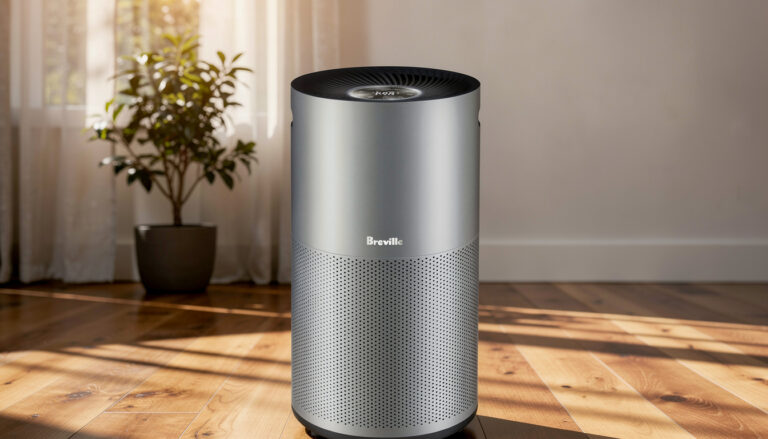
See Breville Protect Max Price →Mould is a persistent problem in Australian homes, particularly in humid coastal cities — Sydney, Brisbane, Gold Coast, Wollongong, Darwin, and Cairns all experience indoor relative humidity conditions that consistently support mould growth. A HEPA air purifier is one of the most effective tools for reducing the airborne spore load that causes respiratory symptoms, allergic reactions, and worsened asthma. But understanding what a purifier can and cannot do for mould is essential before spending money on one.
The three products we own are measured first-hand by Jayce Love, former Royal Australian Navy Clearance Diver; every other product is assessed on published manufacturer specifications and independent certification using our documented methodology — no gifted units, no brand payments.
The key distinction: an air purifier reduces the concentration of mould spores circulating in your air. It does not eliminate the mould growing on your walls, ceiling, bathroom grout, or behind your furniture. For a complete mould management approach, you need to address the moisture source, control humidity, and then use a purifier to manage airborne spore load. Getting only one of these right is not enough.
Why Mould Is Particularly Bad in Australian Homes
Australia’s climate creates mould conditions that are worse than most comparable developed countries. The specific factors:
- High ambient humidity: Coastal cities from Cairns to Sydney experience summer relative humidity regularly exceeding 75–85%. Indoor humidity follows outdoor levels unless actively controlled by air conditioning or dehumidification.
- Building construction: Australian residential construction — brick veneer, weatherboard, lightweight steel frame — is not designed for the thermal mass and vapour barriers used in northern European or North American cold-climate construction. Many Australian homes have inadequate vapour management, leading to condensation on cold surfaces in winter and moisture penetration in wet seasons.
- Rental housing stock: Australia’s rental housing is disproportionately older and poorly maintained. Inadequate exhaust ventilation in bathrooms and kitchens, leaking roofs, and slow landlord maintenance responses create chronic mould conditions for a significant portion of the rental population.
- Poor window ventilation habits: Air conditioning use leads to windows being kept closed for extended periods, reducing the natural ventilation that would otherwise dilute indoor humidity and flush out spores.
Mould Spores: Size, Species, and Why HEPA Is the Right Technology
Mould spores are the microscopic reproductive particles released by mould colonies into the air. Their size range — typically 1–30 microns in diameter — is well within the capture range of true HEPA filtration:
| Mould Species | Common Location in AU Homes | Spore Size | Health Concern |
|---|---|---|---|
| Cladosporium | Window frames, bathroom grout, fabric | 3–7 µm | Hay fever, asthma trigger, skin reactions |
| Alternaria | Shower recesses, under-sink areas, outdoor entry | 20–30 µm | Strong asthma trigger — associated with thunderstorm asthma events |
| Aspergillus | Air conditioning ducts, potting mix, old insulation | 2–5 µm | Serious lung infections in immunocompromised individuals |
| Penicillium | Walls behind furniture, carpet underlay, old mattresses | 2–4 µm | Allergic reactions, sinusitis, mycotoxin production |
| Stachybotrys (“black mould”) | Chronic water damage — behind wet walls, under wet carpet | 5–10 µm | Mycotoxin production — significant health concern in heavily contaminated homes |
True HEPA filtration is rated to capture 99.97% of particles at 0.3 microns — the most penetrating particle size. All mould spores (1–30 µm) are significantly larger than this test particle, meaning HEPA captures mould spores at very high efficiency — essentially 100% for the larger species like Alternaria. This is why HEPA is the correct and sufficient technology for mould spore removal from air. UV, ionisers, and ozone generators are not equivalent substitutes.
Our Top Air Purifier Picks
True H13 HEPA with activated carbon is the only technology that removes particles AND gases from your indoor air. For bushfire smoke, pollen, and VOCs — HEPA is non-negotiable.
Filter Technology Comparison for Mould
| Technology | Mould Spore Removal | Kills Mould? | Verdict |
|---|---|---|---|
| True HEPA | 99.97%+ at 0.3 µm | Traps (spores cannot reproduce in filter) | Essential — primary technology |
| Activated Carbon | None (gas adsorption only) | No | Important for musty VOCs (microbial MVOCs) — pair with HEPA |
| UV-C lamp | Inactivates spores passing close to lamp | Partially — effectiveness depends on dose/exposure time | Supplementary — use alongside HEPA, not instead |
| Ioniser / Plasma | Causes some spores to clump and fall from air | Partially — limited real-world data | Supplementary — can deposit spores on surfaces instead of capturing them |
| Ozone generator | Some surface mould killing at high concentrations | Yes at high doses | Do NOT use — harmful to lungs at effective concentrations |
| HEPA + UV-C + Carbon | 99.97%+ (HEPA) + inactivation (UV) | Best available combination | Ideal — comprehensive mould and VOC approach |
The Musty Smell Problem: Why You Also Need Activated Carbon
The characteristic musty smell of mould-affected rooms is not caused by spores — it’s caused by microbial volatile organic compounds (MVOCs): gases including geosmin, 1-octen-3-ol, and 2-methylisoborneol produced by mould metabolism. These gases are present even after mould colonies are remediated, because they persist in porous materials (walls, carpet, furniture) for weeks to months after the mould itself is removed.
HEPA filtration does not remove gases. An air purifier with only HEPA will remove spores but leave the musty smell entirely intact. Activated carbon adsorbs MVOCs and addresses the odour component. For effective mould-smell management, the purifier needs both a genuine HEPA stage and a meaningful carbon stage — at minimum 300–500 g of activated carbon for a bedroom, 1 kg+ for a living area.
How to Size an Air Purifier for a Mould-Affected Room
For mould-affected spaces, aim for 5 air changes per hour (ACH) rather than the standard 4 ACH recommendation — the higher turnover rate compensates for continuous spore input from active mould sources that may not yet be fully remediated.
Calculation: Room volume (m³) × 5 ÷ 60 = required CADR in m³/min. Or more simply:
- 10 m² bedroom (2.7m ceiling = 27 m³): CADR 135+ m³/h
- 15 m² bedroom (40.5 m³): CADR 200+ m³/h
- 25 m² master bedroom (67.5 m³): CADR 340+ m³/h
- 40 m² open-plan living (108 m³): CADR 540+ m³/h
Run the purifier at high speed for the first 30–60 minutes in a mould-affected room to achieve rapid initial spore reduction, then drop to auto or medium for sustained background cleaning. Most modern purifiers with particulate sensors will automatically ramp up when spore levels are elevated.
Best Air Purifiers for Mould in Australia 2026
1. Winix Zero Pro — Best for Bedrooms
The Winix Zero Pro is the strongest value option for Australian bedrooms with mould concerns. It combines a true HEPA filter with a washable pre-filter, an activated carbon stage for MVOCs, and Winix’s PlasmaWave technology (a plasma-based ionisation stage that can be independently switched on or off). Auto mode uses a combination of particle and gas sensors to adjust fan speed continuously.
CADR: ~330 m³/h on high, covering bedrooms up to 25–30 m².
Carbon mass: Approximately 300–400 g of granular activated carbon — adequate for bedroom MVOC control.
Noise: 25 dB on low (sleep mode), 52 dB on high. Genuinely quiet at night on auto.
Filter life: HEPA approximately 12 months; carbon 12 months; pre-filter washable.
Price: ~$499 AUD.
Best for: Bedrooms in Sydney, Brisbane, Gold Coast, or any humid coastal city where mould and overnight allergen exposure is the primary concern.
2. Levoit Core 400S — Best Budget Option
The Levoit Core 400S delivers genuine HEPA + activated carbon filtration in a compact cylindrical form factor at a lower price point than the Winix. It connects to the VeSync app for scheduling, air quality monitoring, and remote control — useful for running at high speed while you’re out, then dropping to quiet before you return.
CADR: ~330 m³/h, covers bedrooms up to ~25 m² at 5 ACH.
Carbon mass: Approximately 200–250 g — adequate for moderate MVOC levels.
Noise: 24 dB on sleep mode, 51 dB on high.
Filter life: Combination HEPA + carbon filter approximately 6–8 months.
Price: ~$279–329 AUD.
Best for: Budget-conscious buyers in bedrooms; renters who want a portable, no-fuss option they can move between rooms or take when they move house.
3. Breville Protect Max — Best for Open-Plan Living Areas
For open-plan Australian living areas where mould spores from a bathroom, laundry, or wall cavity are circulating through a larger space, the Breville Protect Max offers the highest CADR of any readily available Australian-market purifier at ~450 m³/h. Its auto mode uses particulate sensors to ramp up when spore levels increase — relevant during peak humid weather events.
CADR: ~450 m³/h, covers living areas up to 45–55 m².
Carbon: Multiple activated carbon layers — good for MVOC absorption in larger spaces.
Noise: 38 dB on low, 65 dB on high (run auto during the day, not overnight in bedrooms).
Price: ~$799 AUD.
Best for: Large living areas, open-plan kitchen/dining, homes with significant mould remediation underway where spore release during cleaning requires high-capacity filtration.
The Complete Mould Management Approach for Australian Homes
An air purifier is one component of a mould management strategy, not the whole strategy. In order of importance:
- Fix the moisture source: Leaking roof, rising damp, inadequate bathroom exhaust fan, single-glazed windows with condensation, unvented dryer. Without addressing moisture, mould will regrow regardless of filtration.
- Control indoor relative humidity below 55%: A dehumidifier in humid climates (Brisbane, Sydney, Darwin coastal areas) is the most effective single tool for mould prevention. Most mould species cannot sustain growth below 60% RH; aggressive dehumidification to 50–55% suppresses growth effectively. A quality 20L/day dehumidifier (~$400–600) handles a 3-bedroom home in humid conditions.
- Increase ventilation: Open windows cross-ventilating the home during dry conditions flushes humidity and spores. Install or upgrade bathroom and kitchen exhaust fans to current standards (minimum 10 L/s continuous, 25 L/s intermittent per AS 1668.2).
- Remediate visible mould growth: Small surface mould (less than 1 m²) can be DIY remediated with appropriate personal protective equipment (P2 mask, gloves, goggles) and a suitable mould-killing solution. Larger contamination areas or mould behind walls, under floors, or in HVAC systems requires professional remediation.
- Run a HEPA air purifier continuously: After addressing the above, a running HEPA purifier maintains low airborne spore levels and manages any residual spore release during humid weather events or before remediation is complete.
Mould and Air Conditioners: A Hidden Problem
Split system air conditioners are a frequently overlooked mould source in Australian homes. The evaporator coil and drain pan operate at low temperatures during cooling, creating condensation — an ideal mould growth environment. AC ducts in humid climates often develop Cladosporium and Aspergillus colonisation within 2–3 years without cleaning.
When the AC runs, air passing over a mould-colonised coil or through contaminated ducts picks up spores and distributes them through the room. Running an air purifier in the same room as a mould-contaminated AC captures these spores before they reach airways. However, the correct fix is cleaning or servicing the AC unit — a professional AC clean with anti-mould treatment ($150–300) is warranted annually in high-humidity environments, not just filtering the output.
Frequently Asked Questions
Do air purifiers help with mould?
Yes, specifically with airborne mould spores. A true HEPA air purifier captures 99.97% of particles at 0.3 microns, and mould spores (1–30 microns) are well within this capture range. Running a HEPA purifier reduces the airborne spore concentration that causes respiratory symptoms and allergic reactions. It does not remove mould growing on surfaces — that requires physical remediation and moisture control.
What is the best air purifier for mould in Australia?
For bedrooms, the Winix Zero Pro (~$499) offers the best combination of HEPA filtration, activated carbon for musty odour removal, auto particle sensing, and quiet overnight operation. For larger living areas, the Breville Protect Max (~$799) provides the highest CADR of any readily available Australian-market purifier. Both are available on Amazon AU with Australian warranty.
Can an air purifier remove mould spores from the air?
Yes. True HEPA filters capture mould spores with near-100% efficiency — all common Australian indoor mould species (Cladosporium 3–7 µm, Alternaria 20–30 µm, Aspergillus 2–5 µm, Penicillium 2–4 µm) are larger than the 0.3 µm HEPA test particle. Ionisers and UV alone are not equivalent substitutes — HEPA is the required technology for reliable spore capture.
Will an air purifier get rid of musty mould smell?
Yes, partially — if it includes a substantial activated carbon stage. Musty smell comes from microbial VOCs (MVOCs) emitted by mould, not from spores. HEPA alone does not remove gases. A purifier with 300 g+ of activated carbon will reduce MVOC concentration and musty odour noticeably. Full odour elimination requires removing the mould source and allowing the MVOCs to dissipate from porous materials over time.
Do I need a dehumidifier or an air purifier for mould?
Ideally both, serving different functions. A dehumidifier addresses the cause by reducing indoor humidity below the 60% threshold required for mould growth — preventing new growth and slowing existing growth. An air purifier addresses the symptom by removing airborne spores that cause respiratory symptoms. In a mould-affected home, a dehumidifier is arguably more important for long-term control; an air purifier is more important for immediate respiratory protection.
Is UV effective against mould in air purifiers?
Partially. UV-C lamps inactivate mould spores that pass close to the lamp at sufficient exposure dose. However, in most consumer air purifiers, airflow speed means spores pass the UV lamp too quickly for complete inactivation. UV is a useful supplementary stage when combined with HEPA — it provides an additional layer of spore inactivation on top of physical capture. UV alone, without HEPA, is not sufficient for mould spore removal.
Can mould grow inside my air purifier?
Yes, if the filter becomes wet or is not replaced on schedule. A HEPA filter that captures mould spores in a high-humidity environment can become a growth substrate if the filter is damp. Most quality purifiers are designed with airflow that keeps filters dry. Maintain low indoor humidity (below 55–60% RH), replace filters on schedule, and check pre-filters regularly for visible mould growth. Running the purifier continuously rather than intermittently reduces the risk of filter surfaces remaining damp.
How long does it take an air purifier to reduce mould spore levels?
At appropriate CADR for the room size (5 air changes per hour), PM2.5 and particle levels in a sealed room typically drop by 50–80% within 30 minutes on high speed, and 90%+ within 60 minutes. Mould spore reduction follows a similar curve. For an active mould source releasing ongoing spores, the purifier will continuously maintain reduced levels rather than achieving one-time clearance. Run continuously rather than intermittently for sustained protection.
Are ionisers or ozone generators better than HEPA for mould?
No to both. Ionisers cause spores to clump and fall from the air onto surfaces rather than capturing them — this may reduce airborne concentration temporarily but doesn’t remove spores from the room and can lead to surface contamination. Ozone generators can kill mould at high concentrations but at those concentrations are damaging to human lung tissue — they should not be used in occupied spaces. True HEPA remains the gold standard for mould spore removal from air.
Get the Australian Home Environment Checklist
30 checks across water, air and EMF. Most of them free. Ranked by impact.
No spam. Unsubscribe any time.

Former Royal Australian Navy Clearance Diver and TAG-E counter-terrorism operator. Founded Clean and Native to apply the same rigorous thinking to the home environment.
Full biography →