Victoria Air Quality Warning: Protect Your Home from Smoke
During a Victoria air quality warning, bushfire smoke can push indoor PM2.5 concentrations to levels 5–10 times higher than outdoor readings unless you take specific protective action. A HEPA air purifier rated for your room size, combined with basic window sealing, is the most effective and affordable way to protect your household.
What “Poor” Air Quality Actually Means for Your Victorian Home
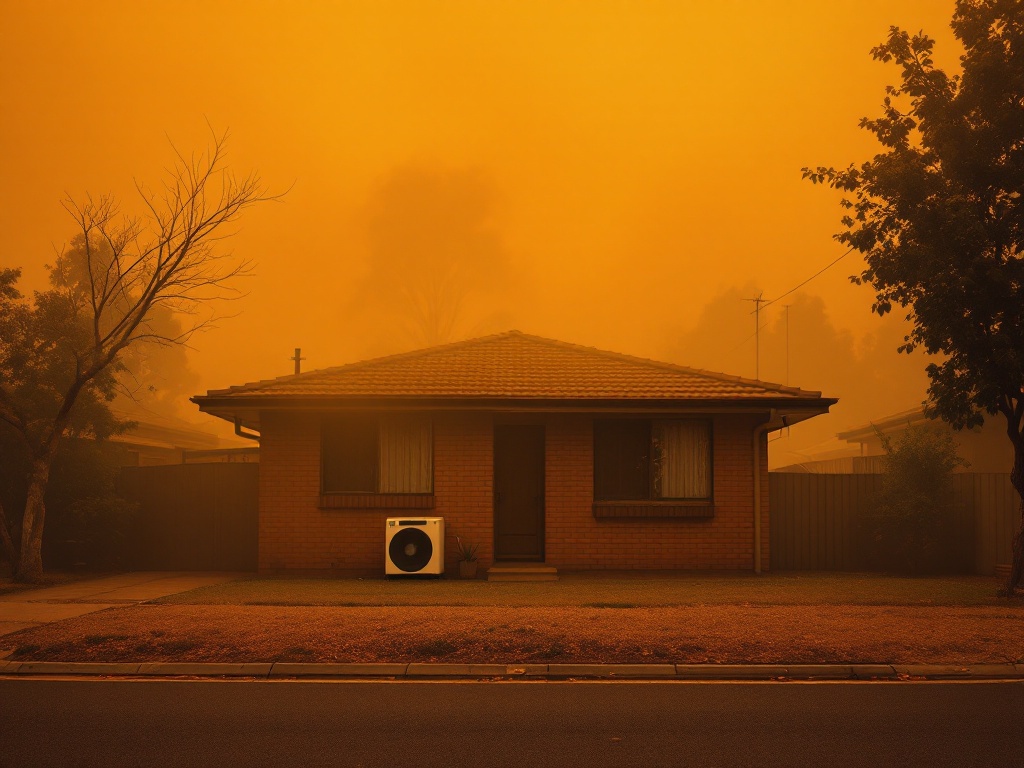
When EPA Victoria’s AirWatch map turns orange or red, it is not an abstract bureaucratic rating. It means the PM2.5 concentration in your suburb has exceeded 25 micrograms per cubic metre — the National Environment Protection Measure (NEPM) 24-hour standard — or is trending that way. During significant bushfire events, readings across Gippsland, the Latrobe Valley, the Dandenong Ranges, and Melbourne‘s eastern suburbs regularly spike above 150 µg/m³. That is six times the NEPM limit.
PM2.5 is the fraction of smoke that matters most. Particles at 2.5 microns or smaller bypass your nose and throat entirely. They embed in the alveoli of your lungs. At concentrations above 35 µg/m³, healthy adults begin to experience measurable lung function impairment. For people with asthma, chronic obstructive pulmonary disease, or cardiovascular disease, the threshold for harm is lower and the consequences are more severe.
Here is the part most emergency advice misses: indoor air during a smoke event is not safe by default. Research published in the journal *Environmental Science and Technology* found that indoor PM2.5 concentrations reach 50–80% of outdoor concentrations in Australian residential homes within 2–4 hours of a smoke event, due to natural air infiltration through gaps around windows, doors, and exhaust vents. If the AirWatch reading outside your Ferntree Gully or Ballarat home is 200 µg/m³, your unprotected living room is likely at 100–160 µg/m³ by mid-afternoon.
EPA Victoria publishes real-time monitoring data and 24-hour forecasts at epa.vic.gov.au/check-air-and-water-quality. Set a browser bookmark now, before you need it.
Step One: Seal Your Home Before You Run a Filter
Sealing costs nothing. It should always be your first move. A HEPA purifier fighting an open window is like bailing a leaking boat — you are fighting the source, not solving it.
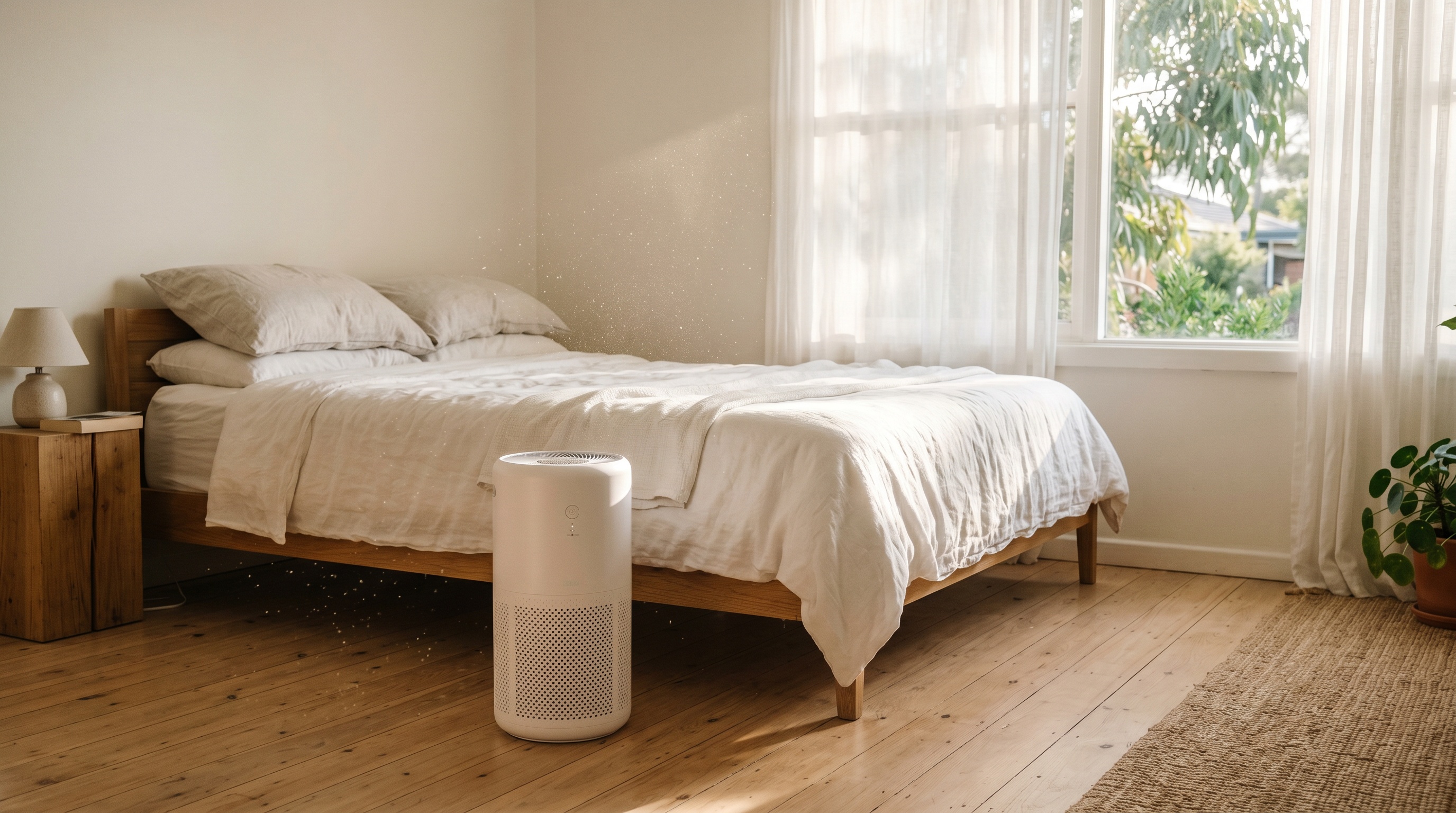
Victorian homes built before 2010 typically have substantial air infiltration. Weatherstripping around external doors degrades over years. Sash windows have gaps of 3–5mm as a matter of course. Exhaust fans in kitchens and bathrooms have flap mechanisms that do not seal fully. Each of these is a direct smoke entry point.
Practical Sealing Checklist for Smoke Events
Close all windows and external doors — this is obvious but people leave laundry doors and garage doors partially open and wonder why smoke is inside. Check exhaust fan covers and push the flaps closed manually if they do not seal automatically. Stuff a rolled towel at the base of any door with a visible gap to the outside. If you have a ducted heating system, switch it to “recirculate” mode rather than drawing fresh air from outside — or turn it off entirely if the control panel does not offer recirculate. Evaporative coolers are the worst offenders: they work by drawing outside air through wet pads, which means they pump smoke-laden air directly into your home during a bushfire event. Turn evaporative coolers off completely during a smoke warning and seal the roof vent manually if you can access it safely.
A study by CSIRO found that simple draught-sealing in Australian residential buildings reduces air change rates by 30–50%, directly reducing particle infiltration during smoke events. That is a meaningful reduction before you spend a dollar on filtration equipment.
Choosing the Right HEPA Air Purifier for Victorian Smoke Season
Once your home is sealed, a correctly sized HEPA purifier does the remaining work. The critical specification is CADR — Clean Air Delivery Rate — measured in cubic metres per hour (m³/h). This number tells you how many cubic metres of air the unit cleans per hour at its rated HEPA efficiency. Match CADR to room volume.
The standard formula is: CADR ≥ room area (m²) × 2.5 for a normal room with 2.5m ceilings. During a smoke event, you want the unit running at or above this rate continuously, not on auto or eco mode. Auto mode sensors detect particles and modulate fan speed — during a major smoke event when particles are everywhere, auto mode runs the fan harder, but you want guaranteed throughput from the start.
Do not confuse H11 HEPA with H13 HEPA. H11 HEPA captures 95% of particles at 0.3 microns. H13 captures 99.97%. That 5% difference sounds minor. It is not. At an outdoor concentration of 200 µg/m³ and estimated indoor infiltration of 120 µg/m³, H11 leaves 6 µg/m³ behind per pass while H13 leaves 0.036 µg/m³. For vulnerable household members, always use H13.
Melbourne uses free chlorine disinfection, not chloramine — this is relevant if you are also filtering drinking water, not for air purifier selection. What matters for purifier selection is smoke particle size (PM2.5 dominates at 0.1–2.5 microns) and room volume.
CADR per Dollar — Mid-Range HEPA Purifiers, Australia 2026
Best Overall — Breville Protect Max
✓ Pros
- 550 m³/h CADR — highest in its price bracket in Australia
- H13 HEPA rated at 99.97% capture at 0.3 microns
- Activated carbon stage captures smoke odour compounds
- Australian brand — easy warranty and support
✗ Cons
- Replacement filters are ~$80–$100 per year
- On max speed it generates ~55 dB — audible in quiet bedrooms
- Larger footprint than cylinder-style competitors
Best Value — Levoit Core 400S
✓ Pros
- VeSync app shows real-time PM2.5 readings from built-in sensor
- Auto mode reacts to detected particles — useful when smoke levels fluctuate
- ~$249 — accessible at short notice before a smoke event
- Quiet at 24 dB on Sleep mode — appropriate for bedrooms overnight
✗ Cons
- 260 m³/h insufficient for open-plan spaces over 45m²
- Does not carry H13 rating — H11 filter standard
- Auto mode may under-respond during rapid smoke infiltration events
Top Picks for Victoria Smoke Season
Vulnerable Groups in Victoria: Specific Protocols by Risk Level
Generic “take precautions” advice is not actionable. Here is what specific risk groups should do differently.
People with Asthma or Chronic Lung Disease
You are the highest-priority group. During any EPA Victoria “Poor” or worse AirWatch reading, your indoor PM2.5 threshold for triggering symptoms may be as low as 12 µg/m³ — well below what unprotected indoor air delivers during a regional smoke event. Keep a HEPA purifier running continuously in the room you spend the most time in, not just at night. If you use a reliever inhaler, have it accessible before symptoms start — PM2.5 exposure causes bronchospasm within 30–60 minutes of significant exposure according to data from the National Asthma Council Australia.
Do not rely on a surgical mask indoors. A surgical mask filters large particles but does not seal around your face and provides near-zero protection against PM2.5. A correctly fitted P2 respirator (Australian standard AS/NZS 1716:2012) is the minimum if you must leave the building during a smoke event.
Children Under 12
Children breathe more air relative to their body weight than adults. A 6-year-old in a smoke-affected room inhales roughly 50% more particles per kilogram of body weight than a 35-year-old adult in the same space. Schools across eastern Victoria have started issuing air quality protocols, but many homes have no protection at all.
Priority placement for the family’s HEPA purifier should be the room where children sleep, not the living room. Children spend more hours in their bedroom than any other space. If you have one purifier, it goes in the child’s bedroom during a smoke event — adults can manage the living room with sealing alone if necessary.
Pregnant Women
Exposure to PM2.5 during pregnancy is associated with increased risk of preterm birth and low birthweight according to research published in *The Lancet Planetary Health* (2019). The mechanism is systemic inflammatory response triggered by particles entering the bloodstream via the lungs. There is no established safe threshold during pregnancy — precaution is the correct position.
The Winix Zero Pro is worth considering for pregnancy households because it combines H13 HEPA with a True HEPA carbon filter stage and does not emit ozone (unlike some ionic purifiers that do, and which are contraindicated for pregnant women). Verify any purifier you buy is not ioniser-only or ozone-generating.
Elderly Residents (65+) and People with Heart Conditions
PM2.5 particles entering the bloodstream drive inflammatory processes in arterial walls. For people with existing cardiovascular disease, acute smoke events are associated with increased emergency admissions for cardiac events according to research cited by the Australian Institute of Health and Welfare. During a “Hazardous” AirWatch reading — the level above “Poor” — the Victorian Department of Health recommends this group not only stay indoors but reduce physical exertion (including housework) to minimise breathing rate and particle uptake.
A purifier running in the bedroom at night matters most for this group. Cardiovascular repair processes are concentrated during sleep — disrupting oxygenation or exposing the body to PM2.5 during sleep hours compounds the risk.
How to Monitor Victoria Air Quality in Real Time
Knowing when to act is as important as knowing what to do. EPA Victoria’s AirWatch platform at epa.vic.gov.au/check-air-and-water-quality provides real-time hourly data from monitoring stations across the state, including Melbourne CBD, Alphington, Footscray, Traralgon, Moe, Geelong, Ballarat, Bendigo, and Wangaratta. Data updates on the hour.
The AirWatch Air Quality Index (AQI) categories map to specific PM2.5 concentrations and recommended actions:
| AirWatch Category | PM2.5 (µg/m³) | Recommended Action |
|---|---|---|
| Good | 0–12 | Normal activity |
| Moderate | 12–25 | Sensitive groups reduce outdoor exertion |
| Poor | 25–50 | All groups limit outdoor activity; run purifier indoors |
| Very Poor | 50–100 | Stay indoors; seal home; purifier on continuous high |
| Hazardous | 100+ | Do not go outside; reduce all physical activity; P2 mask if evacuation required |
For suburb-level monitoring, AirWatch also provides postcode-specific estimates using interpolation from nearby monitoring stations. Residents in Latrobe Valley postcodes (3820–3844), alpine townships like Bright and Harrietville, and the Dandenong Ranges corridor (Belgrave, Emerald, Gembrook) are in zones that receive significantly elevated readings during Gippsland fire events.
EPA Victoria also issues Air Quality Alerts via the VicEmergency app. Download it. During active fire seasons (October to March), alerts can arrive overnight and you want to wake to a notification, not to smoke inside your home.
A Simple Decision Rule for When to Act
Check AirWatch at 7am. If your nearest monitoring station shows “Poor” or above, seal the house and start the purifier before you open windows for morning air. Do not wait until you can smell smoke — by the time smoke is perceptible by smell, you are already well above 25 µg/m³.
Budget-Based Protection Plan: What to Buy at Each Spending Level
Not every Victorian household will spend $449 on an air purifier. Here is what meaningful protection looks like at three realistic budget levels.
Under $50 — Basic Protection
Draught seal tape costs under $20 at Bunnings. Apply it to the bottom of external doors. Add a $15 door snake to the worst offending gap. This alone reduces infiltration meaningfully at zero ongoing cost. If you own a box fan and can source a 20×20 inch MERV-13 or higher furnace filter, tape it to the intake face of the fan — this creates a functional particle filter. It is not a substitute for a proper HEPA unit but it provides real filtration at negligible cost. University of Michigan research demonstrated that box fan + MERV-13 filter combinations achieve 50–90% reduction in indoor PM2.5 during smoke events.
$150–$300 — Effective Single-Room Protection
The Levoit Core 400S at ~$249 is the correct buy at this budget. It delivers 260 m³/h CADR, operates at 24 dB on sleep mode, and has a built-in PM2.5 sensor so you can see real-time indoor air quality on your phone. Buy one and put it in the bedroom where the most vulnerable household member sleeps. That is a complete solution for a single room.
$400+ — Whole-Home Priority Protection
The Breville Protect Max at ~$449 covers 80m² in a single pass. For a Victorian home of 120–180m², you need two units — one in the main bedroom, one in the living area. The Breville in the living area, the Levoit Core 400S in the master bedroom. Combined CADR of 810 m³/h covers the typical floor plan of a three-bedroom Victorian home on continuous operation.
| Budget | What to Buy | Protection Level | Covers |
|---|---|---|---|
| Under $50 | Draught seal tape + door snakes + box fan + MERV-13 filter | 50–70% PM2.5 reduction | Whole home (infiltration reduction) |
| $150–$300 | Levoit Core 400S | Up to 80% PM2.5 reduction in target room | Single room up to 40m² |
| $400–$700 | Breville Protect Max | Up to 80% PM2.5 reduction in large space | Open plan up to 80m² |
| $700+ | Breville Protect Max + Levoit Core 400S | Whole-home coverage | Living area + master bedroom, ~120m² |
What Purifiers Cannot Do — Honest Limitations
A HEPA air purifier removes particles. It does not remove carbon monoxide or nitrogen dioxide, which are also present in bushfire smoke. These gases require activated carbon filtration — not HEPA alone. Both the Breville Protect Max and the Winix Zero Pro include an activated carbon stage alongside their HEPA filter, which addresses smoke odour compounds and some volatile organic compounds (VOCs). The Levoit Core 400S also includes a carbon pre-filter.
HEPA filtration has no effect on smoke that is already embedded in soft furnishings, carpet, or clothing. Post-smoke-event cleaning requires vacuuming with a HEPA-filtered vacuum and washing soft furnishings at 60°C if practicable.
No purifier replaces ventilation with actually clean air once the smoke event has passed. When AirWatch returns to “Good”, open windows and flush the house for 20–30 minutes before switching back to normal operation.
The Breville Protect Max is the benchmark purifier for Victorian smoke season.
550 CADR, H13 HEPA, activated carbon stage. Best CADR-per-dollar of any purifier under $500 in Australia. Available on Amazon AU with fast delivery — order before the forecast says “Poor”.
Last reviewed: June 2026 — Clean and Native
Final Verdict
This article is most relevant for Victoria residents dealing with smoke-related air quality issues who need practical steps to protect their indoor air quality and health. The most important action is to invest in a high-quality air purifier from Browse our air purifier reviews to create a clean breathing space during air quality warnings.
Frequently Asked Questions
Go to epa.vic.gov.au/check-air-and-water-quality to access EPA Victoria’s AirWatch map. It shows real-time PM2.5 AQI readings updated hourly from monitoring stations across Melbourne, Geelong, Ballarat, Bendigo, Traralgon, Wangaratta, and other locations. Download the VicEmergency app for push alerts when air quality deteriorates rapidly during fire events.
No. During a “Poor” or worse AirWatch rating, opening windows significantly increases indoor PM2.5. Keep all windows and external doors closed, switch ducted heating or cooling to recirculate mode, and run a HEPA purifier inside. Only ventilate the house once AirWatch returns to “Good” or “Moderate”.
Yes, when correctly sized for the room. A HEPA purifier rated at CADR ≥ room area × 2.5 (in m³/h) will reduce indoor PM2.5 by up to 80% within 30–60 minutes of continuous operation. The key is matching CADR to room volume and running the unit on high continuously, not on auto mode, during a smoke event.
H11 HEPA captures 95% of particles at 0.3 microns. H13 HEPA captures 99.97%. For smoke particle protection — especially for children, elderly residents, and people with lung or heart conditions — H13 is the correct standard. The Breville Protect Max uses H13; the Levoit Core 400S uses H11. Both provide meaningful protection; H13 leaves significantly fewer particles behind per filtration pass.
Yes, immediately. Evaporative coolers work by drawing outside air through wet pads and blowing it inside — during a smoke event, this actively pumps contaminated air into your home. Turn the unit off and seal the roof vent if accessible. This is the single most important action for Victorian households using evaporative cooling.
No. A surgical mask does not seal around the face and provides near-zero protection against PM2.5. A P2 respirator (Australian standard AS/NZS 1716:2012) correctly fitted is the minimum effective option if you must go outside during a smoke event. Cloth masks and surgical masks are ineffective for PM2.5 protection.
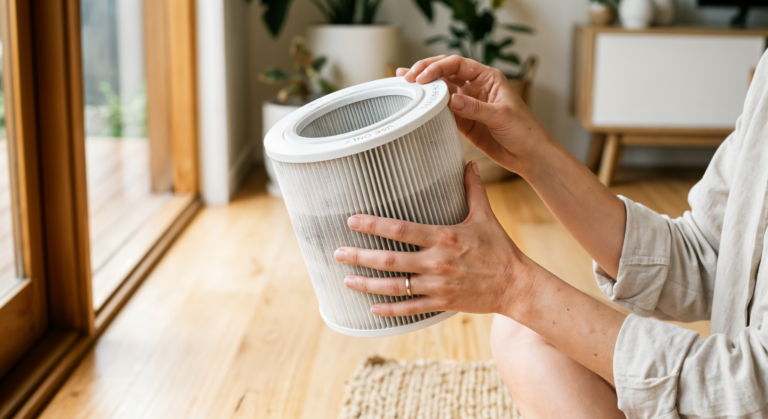
Running an H13 HEPA purifier continuously during a major smoke event (days to weeks) will load the filter significantly faster than normal use. Most manufacturers rate filters for 6–12 months at 12 hours/day use. During prolonged smoke events, check the filter monthly — grey/brown discolouration indicates heavy particle loading. A loaded filter reduces CADR; replace it promptly. Budget $80–$120 per year for filter replacements on a mid-range unit.
The highest-risk zones are Gippsland (including the Latrobe Valley, Bairnsdale, Orbost), the alpine corridor (Bright, Harrietville, Mount Beauty), and Melbourne’s eastern and outer suburbs (Ferntree Gully, Belgrave, Gembrook, Healesville, Lilydale). Inner Melbourne suburbs including Fitzroy, Collingwood, and Richmond are also significantly affected when south-westerly winds carry Gippsland smoke across the city. Use AirWatch to check your specific monitoring station.
Yes. A box fan with a MERV-13 (or higher) furnace filter taped to the intake face is a functional emergency particle filter. University of Michigan research found this combination reduces indoor PM2.5 by 50–90% during smoke events. It is not equivalent to a rated HEPA unit but it is far better than no filtration when a smoke event arrives before you can order a purifier.
Get the Australian Home Environment Checklist
30 checks across water, air and EMF. Most of them free. Ranked by impact.
No spam. Unsubscribe any time.

Former Royal Australian Navy Clearance Diver and TAG-E counter-terrorism operator. Founded Clean and Native to apply the same rigorous thinking to the home environment.
Full biography →