Darwin Boil Water Alert: Safe Water Solutions
During a Darwin boil water alert, activated charcoal filters including Brita-type jugs cannot remove microbial contaminants — only reverse osmosis with a 0.0001-micron membrane, UV sterilisation, or boiling itself will make your water safe to drink.
Why Darwin Gets Boil Water Alerts — and Why They Keep Coming Back
Darwin’s water supply infrastructure covers a large and geographically isolated territory. Power And Water Corporation (PAWC) manages treatment facilities at Darwin River Dam and the Manton Dam catchment, with distribution networks spanning from Palmerston to Litchfield and beyond. Any break in pressure, flooding event, contamination of source water, or treatment plant failure can trigger an alert across the network. The NT monsoon season — October through April — creates the highest-risk window. Flooding overwhelms catchments, heavy sediment loads stress filtration capacity, and ageing distribution pipes that lose positive pressure can draw in soil bacteria and protozoa.

Between 2019 and 2025, Darwin and the greater Top End have experienced multiple boil water advisory events, some localised to suburbs, others affecting tens of thousands of residents simultaneously. The critical point is this: when an alert is issued, it means microbial contamination is either confirmed or suspected. That changes everything about how your filtration system needs to perform.
Darwin’s Disinfection System: Chloramine, Not Free Chlorine
Before getting into what filters work during alerts, you need to understand how Darwin’s water is treated under normal conditions — because it directly determines which filters are useful year-round.
Darwin uses chloramine as its primary disinfectant. Chloramine is formed by combining chlorine with ammonia, and it is used by Power And Water Corporation across the greater Darwin supply zone. This matters enormously for filter selection.
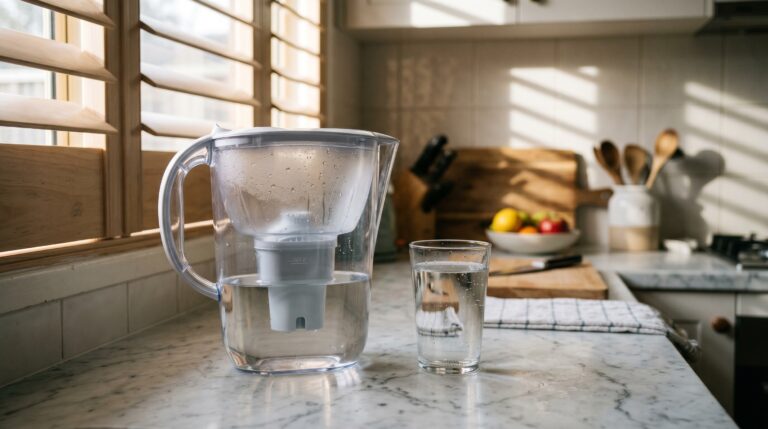
Standard granular activated carbon (GAC) filters — the kind inside Brita jugs, refrigerator filters, and most benchtop units — remove free chlorine efficiently. They remove chloramine at approximately 1/40th the rate. At typical Darwin water flow rates, a standard GAC filter provides essentially no chloramine reduction before the water reaches your glass. This is not a minor distinction. It means that the most commonly sold water filters in Darwin are doing almost nothing to address the primary chemical disinfectant in your tap water.
Chloramine removal requires one of three technologies: catalytic activated carbon (a chemically modified form of carbon), a compressed carbon block filter, or reverse osmosis. For Darwin residents, this means the answer to “which filter do I need?” is fundamentally different from residents in Melbourne or Hobart, where free chlorine is used and standard carbon works fine.
What “Boil Water Alert” Actually Means — and Which Technologies Respond to It
A boil water advisory means the drinking water supply may contain harmful microorganisms including bacteria (such as E. coli, Campylobacter), protozoa (including Cryptosporidium and Giardia), and potentially enteric viruses. The advisory is issued as a precaution when these risks cannot be ruled out. Authorities including NT Health and Social Services have confirmed explicitly that activated charcoal filters cannot remove microbiological contaminants during boil water advisories.
Here is the technical reason: activated charcoal works by adsorption — contaminants stick to the surface of the carbon material. Bacteria, protozoa, and viruses are not reliably captured this way. They are living (or quasi-living, in the case of viruses) particles that can pass through carbon media, detach after initial capture, or even multiply within a wet carbon filter bed. Carbon filters are not rated for microbial removal under any Australian or international standard relevant to drinking water safety.
Technologies that work during a boil water alert
Boiling: A rolling boil for one minute (or three minutes above 2,000 m elevation, not a concern in Darwin) kills all known waterborne pathogens. It is free, requires no equipment beyond a pot and a stove, and works 100% of the time if done correctly. The limitation is practicality — you cannot boil water for showering, washing dishes, or brushing teeth at scale.
Reverse osmosis (RO): A properly certified RO membrane has a pore size of approximately 0.0001 microns. Cryptosporidium oocysts are 4–6 microns in diameter. Giardia cysts are 8–12 microns. Bacteria range from 0.5 to 5 microns. None of these pass through an intact RO membrane. For virus removal, RO membranes are effective but this must be confirmed by the specific product’s NSF/ANSI 58 certification data — look for virus log-reduction data in the third-party test report. A 4-stage or 5-stage RO system with a dedicated storage tank provides safe drinking water continuously without boiling, provided the membrane is intact and replaced on schedule.
UV sterilisation at 254 nm: Ultraviolet light at the germicidal wavelength of 254 nanometres damages the DNA of microorganisms, rendering them unable to reproduce. At a validated dose of 40 mJ/cm² or higher, UV achieves greater than 4-log (99.99%) reduction of bacteria and protozoa including Cryptosporidium, which is notably resistant to chlorination. UV does not remove chemical contaminants, particulates, or chloramine — it is a steriliser, not a filtration medium. For Darwin, the most effective combination is pre-filtration (to remove sediment and chloramine) followed by UV. Whole-house UV systems achieve this for the entire home; point-of-use UV fits under the sink for drinking water only.
Ceramic filtration (with caution): High-quality ceramic filters with pore sizes of 0.2 microns or smaller can remove bacteria and protozoa. The Berkey gravity system uses a combination of carbon block and ceramic elements rated to 0.2 microns, which addresses most bacterial and protozoan risks. The critical caveat: ceramic filters alone do not reliably remove viruses, which at 0.02–0.3 microns are smaller than most ceramic pore ratings. In Darwin’s context, where viral contamination cannot be excluded during an alert, ceramic-only filtration is better than nothing but is not equivalent to boiling or RO.
Technologies that fail during a boil water alert
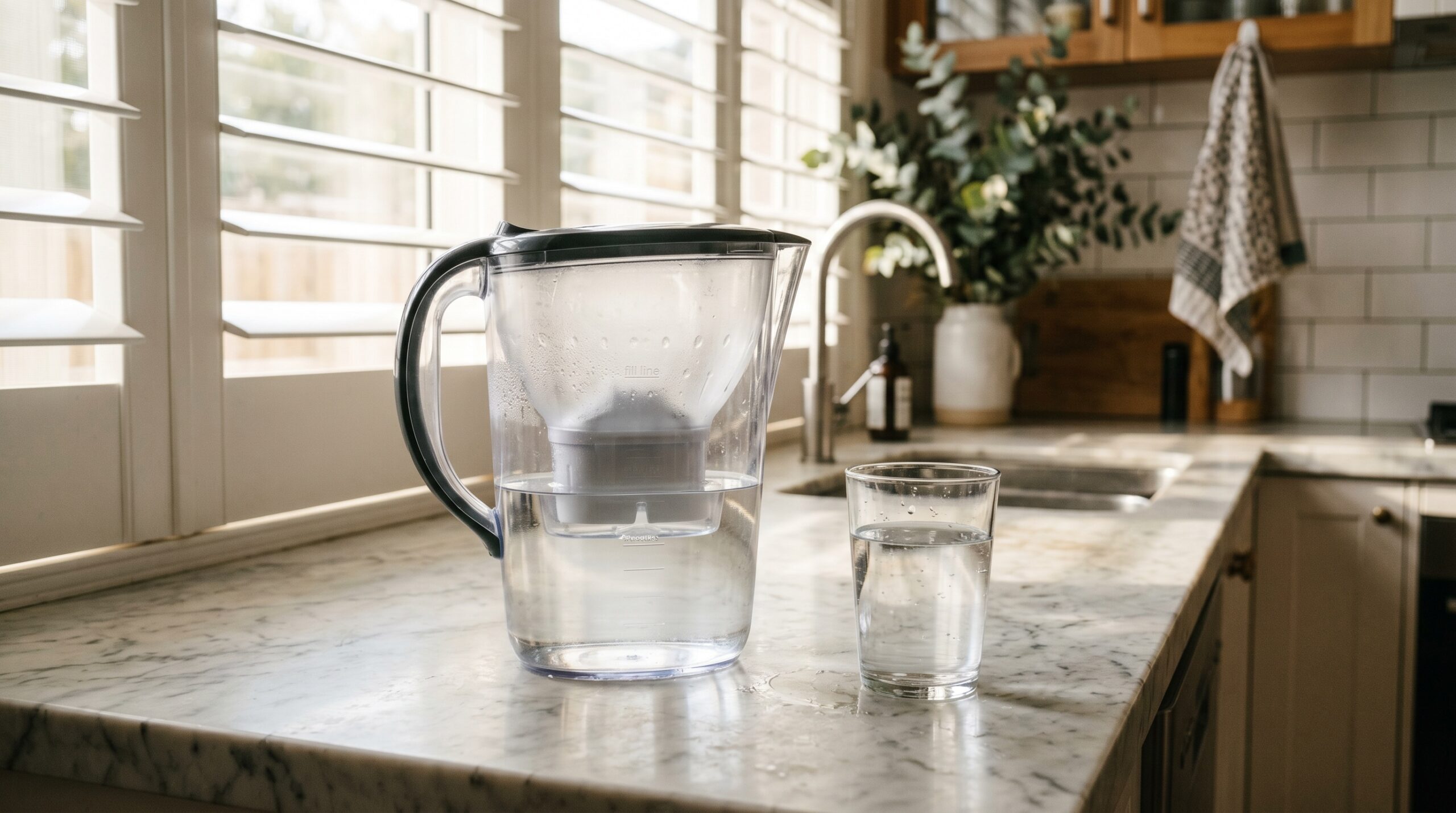
Standard activated charcoal (GAC) filters: Brita jugs, Pur filters, most benchtop units, refrigerator filters. As confirmed by NT Health and Social Services, these cannot remove microbiological contaminants. Do not use these as a substitute for boiling during an active alert.
KDF-55 media: Used in some shower filters and inline units. KDF removes chlorine via redox reaction and reduces heavy metals. It has no rating for microbial removal and should not be relied upon during an alert.
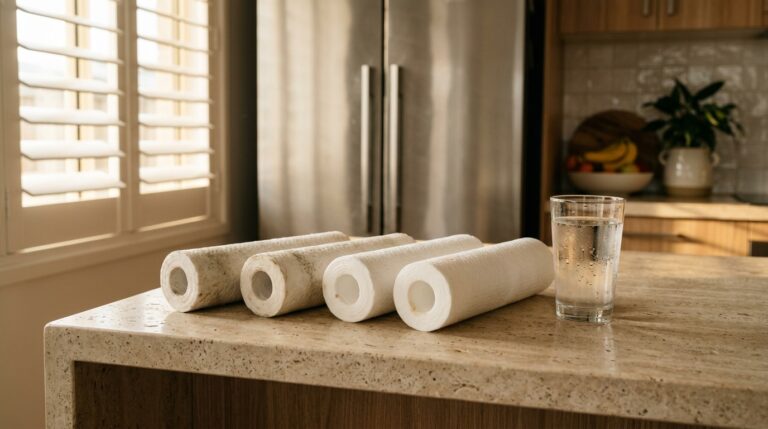
Sediment filters: 1-micron sediment cartridges will catch some larger protozoa but are not rated for drinking water safety. They are a pre-filtration stage, not a standalone solution.
Recommended for Darwin Boil Water Events
The Two Best Long-Term Water Solutions for Darwin Homes
A boil water alert typically lasts days to weeks. But Darwin residents who have been through two or three of these events understand the deeper problem: the infrastructure that creates these alerts is not going away soon. The smart move is a permanent system that handles both routine chloramine removal and microbial safety simultaneously. Here are the two systems worth considering.
Option 1: Countertop RO — The AquaTru Classic Smart Alkaline

✓ Pros
- No plumbing required — set up in minutes
- NSF/ANSI certified for 82 contaminants including microbes
- Removes chloramine, fluoride, PFAS, and lead
- Alkaline remineralisation stage restores pH
✗ Cons
- 3:1 waste water ratio — produces 3 litres of drain water per litre filtered
- Tank capacity limits output during high-use periods
- Higher upfront cost than basic benchtop filters
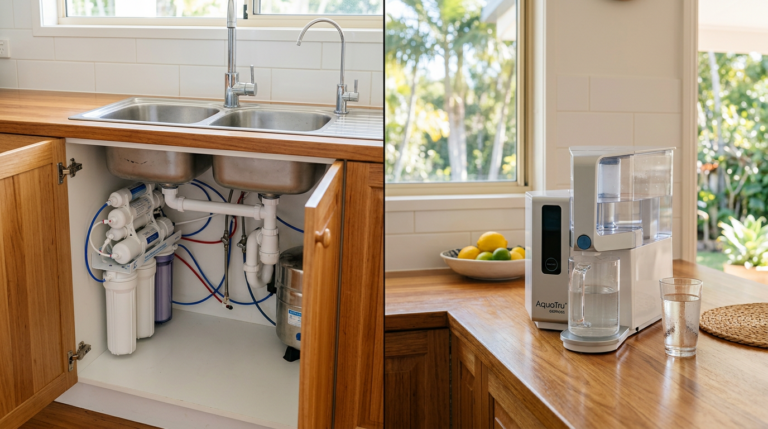
The AquaTru’s key advantage in a boil water alert scenario is speed of deployment. You do not need to call a plumber, organise an installation appointment, or wait for parts. It connects to your tap with a standard adaptor, fills its internal tank, and starts producing RO-quality water. The 4-stage filtration sequence — sediment pre-filter, carbon pre-filter, RO membrane, and catalytic carbon post-filter — addresses both the routine chloramine issue and the microbial safety issue simultaneously.
Option 2: Under-Sink RO — PWS EcoHero 5-Stage

✓ Pros
- WaterMark AS3497 certified — mandatory for plumbed fixtures in Australia
- 5-stage filtration addresses sediment, chloramine, fluoride, and microbes
- Australian supplier with local support and filter replacements
- Removes 90–97% fluoride — carbon filters cannot do this
✗ Cons
- Requires licensed plumber for installation (AS/NZS 3500)
- Produces waste water — typical RO waste ratio is 3:1 to 4:1
- Not a same-day emergency solution
For Darwin owner-occupiers, the under-sink RO is the right long-term answer. Once installed, it runs continuously. You turn on your cold tap at the dedicated filter faucet and you get RO-quality water — during normal operation, during a boil water alert, and during wet season flooding events. The WaterMark certification means it meets Australian plumbing standards (AS3497), which is a legal requirement for any filter connected to your mains supply.
What About UV Whole-House Systems for Darwin?
Point-of-use RO solves drinking water. But what about the water you shower in, brush teeth with, and use for cooking? During a prolonged boil water alert, the inconvenience of boiling every drop for every use case becomes significant. A whole-house UV system addresses this by treating all water entering your home at the point of entry.

✓ Pros
- Treats all water entering the home — not just drinking water
- >4-log bacterial and protozoan reduction including Cryptosporidium
- No chemicals added — zero taste or odour impact
- Low ongoing cost — annual lamp replacement only
✗ Cons
- Does NOT remove chemical contaminants, chloramine, fluoride, or PFAS
- Ineffective if water turbidity exceeds 5 NTU — sediment pre-filter is mandatory
- Requires licensed plumber for point-of-entry installation
The critical limitation of UV for Darwin is turbidity. During wet season flooding events — precisely when boil water alerts are most likely — Darwin’s source water often carries elevated sediment loads. Turbid water blocks UV penetration, allowing pathogens to pass through the lamp chamber without receiving a lethal dose. This means whole-house UV must be paired with a sediment pre-filter rated to at least 5 microns, ideally 1 micron, installed upstream of the UV chamber. Without that pre-filter, the UV system cannot be relied upon during the highest-risk weather events.
A well-designed whole-house system for Darwin combines: a Big Blue 20-inch sediment pre-filter at point of entry, a UV steriliser immediately downstream, and a point-of-use RO at the kitchen sink for drinking and cooking. That setup handles microbial risk at the house level and chemical removal (chloramine, fluoride, PFAS) at the drinking water point.
Darwin Water Quality Baseline: What You’re Dealing With Year-Round
Understanding the baseline water quality in Darwin helps you select the right system for both normal and emergency conditions. Darwin’s water comes primarily from Darwin River Dam and the Manton Dam system, both surface water catchments in the Top End. The water is treated with disinfection (chloramine), pH adjustment, and coagulation/flocculation before entering the distribution network.
Darwin tap water is relatively soft compared to Perth or Adelaide. Hardness typically sits below 100 mg/L as CaCO₃, which means scale build-up in RO membranes is less of a concern than in South Australian homes. TDS (total dissolved solids) in Darwin tap water generally runs in the range of 80–150 mg/L depending on seasonal conditions and the catchment being drawn from — lower in wet season when dams are full, slightly higher in dry season as reservoir levels drop and minerals concentrate.
Fluoride is added to Darwin’s water supply at approximately 0.7 mg/L, in line with the Australian Drinking Water Guidelines (ADWG 2022) recommended range of 0.6–1.1 mg/L. If fluoride removal is a priority for your household, this requires reverse osmosis (90–97% removal) or activated alumina (80–95% removal). Carbon filters of any type cannot remove fluoride — this is a fundamental chemical property, not a quality issue with any specific brand.
PFAS contamination is a documented concern in the broader NT region, particularly near defence facilities. Darwin International Airport and nearby RAAF base areas have historically been associated with PFAS-affected groundwater from AFFF firefighting foam. If your water comes from affected bores or council water sourced from affected catchments, PFAS removal requires RO — it is the only residential technology that reliably removes PFAS compounds, achieving greater than 97% reduction for PFOA and PFOS.
Decision Tree: Which System Do You Need?
3 Questions to Find Your Darwin Water Filter
1. Are you a renter or unable to modify plumbing?
Yes: AquaTru Classic countertop RO. No plumber needed, delivers NSF-certified RO water, effective during boil water alerts.
No: Go to question 2.
2. Do you want protection only at the kitchen tap, or for the whole house?
Kitchen tap only: PWS EcoHero 5-Stage under-sink RO. Handles drinking and cooking water completely.
Whole house (shower, teeth brushing, cooking): Add a whole-house UV unit with sediment pre-filter at point of entry. Combine with under-sink RO for drinking water.
3. Are PFAS or fluoride removal priorities?
Yes: RO only. Carbon filters — including catalytic carbon and gravity filters — cannot remove fluoride or PFAS. Only an RO membrane achieves 90–97% fluoride reduction and >97% PFAS reduction.
5-Year Cost Comparison: What Each Approach Actually Costs
5-Year Total Cost of Ownership — Darwin Water Safety Solutions
Assumes 4L/day drinking water use per household. Filter replacement costs based on manufacturer schedules. Boiling cost based on 30-minute electric kettle cycle daily at QLD/NT average 35c/kWh.
The comparison makes the case plainly. Bottled water costs roughly nine times more over five years than an under-sink RO system — and provides no protection against PFAS, no chloramine removal, and no security during a boil water event if the bottles run out. A $0.38/day investment in filtered water infrastructure beats $6/day in bottled water, with better outcomes on every safety metric.
What to Do Right Now If a Darwin Boil Water Alert Is Active
If you are reading this because an alert is active today, here is the immediate protocol.
If you have no filter at all: Boil all water used for drinking, making ice, brushing teeth, preparing food, and washing fresh produce. A rolling boil for one minute is sufficient. Let it cool in a covered clean container. Do not use tap water direct from the tap for any of these purposes until the alert is lifted.
If you have a Brita, refrigerator filter, or standard benchtop carbon filter: Do not use this water unboiled. Per NT Health and Social Services guidance, these filters cannot remove microbiological contaminants. Run the boiled water through the carbon filter afterwards if you want to improve taste — but boil first.
If you have a certified RO system (NSF 58) in good working order with a recently replaced membrane: RO water is safe to drink during the alert provided the system is functioning correctly and the membrane is within its service life. If the membrane is overdue for replacement or the system has not been maintained, treat it as a carbon filter — boil first.
If you have a UV system: Check your lamp age. UV lamps degrade over time and must be replaced annually regardless of visible light output. A lamp that appears lit may not be delivering adequate germicidal dose. If the lamp is within its service period and pre-filtration is clear, UV-treated water is safe to drink.
Last reviewed: June 2026 — Clean and Native
Ready to stop relying on boiling?
The PWS EcoHero 5-Stage RO is the top-rated permanent solution for Darwin homes — WaterMark AS3497 certified, removes chloramine, fluoride, PFAS, and microbial contaminants. The AquaTru is the immediate no-plumber option.
Final Verdict
This article is most relevant for Darwin residents facing water safety concerns who need practical solutions to ensure their household water is safe for drinking and cooking. The most important action is to invest in a reliable water filtration system from trusted providers available at See Pure Water Systems to protect your family’s health during boil water alerts.
Also filtering your shower water? See our full Best Shower Filter Australia 2026 guide — including the only catalytic carbon option proven effective for chloramine cities.
Frequently Asked Questions
No. NT Health and Social Services has confirmed that activated charcoal filters including Brita-type jugs cannot remove microbiological contaminants. During a boil water alert, you must boil water first before using any carbon filter for taste improvement.
Yes, provided the system holds current NSF/ANSI 58 certification, the RO membrane is intact, and it has been replaced within its service interval (typically every 2–3 years). An RO membrane at 0.0001 microns physically blocks bacteria and protozoa that are orders of magnitude larger.
Darwin uses chloramine — a combination of chlorine and ammonia — as its primary disinfectant. This means standard activated carbon (GAC) filters are largely ineffective for routine disinfectant removal. Darwin residents need catalytic carbon or RO for chloramine reduction.
Yes. Power And Water Corporation adds fluoride to Darwin’s drinking water at approximately 0.7 mg/L, consistent with the Australian Drinking Water Guidelines range of 0.6–1.1 mg/L. Only reverse osmosis (90–97% removal) or activated alumina (80–95%) can remove fluoride. Carbon filters cannot.
Duration varies significantly. Localised alerts caused by a single pressure loss event may resolve in 24–72 hours once the network is flushed and test results return negative. Alerts following major flooding or treatment plant issues can persist for days to several weeks. Sign up for Power And Water Corporation alerts and NT Health notifications for updates specific to your suburb.
Darwin’s reticulated town water supply from Darwin River Dam has not been identified as a PFAS-contaminated source. However, areas near Darwin International Airport and related defence facilities have documented PFAS-affected groundwater. If your property draws from a private bore in these areas, PFAS testing is warranted. RO filtration achieves greater than 97% PFAS reduction.
Yes, if the water entering the UV chamber is clear (below 5 NTU turbidity) and the UV lamp is within its service life. During wet season flooding events, Darwin’s source water can carry elevated sediment loads that block UV penetration — making a sediment pre-filter mandatory upstream of any UV system.
It depends entirely on the filter type. A whole-house GAC or carbon block filter provides no microbial protection — treat it as unfiltered water during an alert. A whole-house UV system with a functioning lamp and clear pre-filtered water is effective. Whole-house RO is uncommon in residential settings due to cost and waste water volume but would be effective if NSF 58 certified.
For renters: the AquaTru Classic countertop RO — no installation required, NSF certified, effective during alerts. For homeowners: the PWS EcoHero 5-Stage under-sink RO with WaterMark AS3497 certification, installed by a licensed plumber before October. Both handle chloramine removal year-round and microbial safety during alerts.
Get the Australian Home Environment Checklist
30 checks across water, air and EMF. Most of them free. Ranked by impact.
No spam. Unsubscribe any time.

Former Royal Australian Navy Clearance Diver and TAG-E counter-terrorism operator. Founded Clean and Native to apply the same rigorous thinking to the home environment.
Full biography →