Gold Coast Tap Water Quality 2026: Softest Water in SEQ, Chloramine and What Filters Work
Affiliate disclosure: Clean and Native earns a commission if you purchase through links on this page. This does not affect our editorial position — products are recommended based on performance data and certification only.
Gold Coast tap water is the softest in South East Queensland at 33.9 mg/L hardness, supplied from Hinze and Little Nerang Dams with chloramine disinfection and fluoride at 0.6-0.8 mg/L, requiring catalytic carbon or reverse osmosis filters for effective removal. PFAS testing is below ADWG limits, but chloramine persists longer than free chlorine and standard activated carbon won’t remove it. The catches: desalination plant supplementation during drought shifts mineral profiles seasonally, and fluoride removal requires reverse osmosis or activated alumina — carbon alone won’t touch it.
| Filter Type | Gold Coast Suitability | Verdict |
|---|---|---|
| RO (under-sink) | Removes chloramine + fluoride + PFAS | Recommended |
| Catalytic carbon (benchtop) | Removes chloramine, retains minerals | Good for chloramine only |
| Standard GAC carbon | Ineffective against chloramine | Avoid as primary |
Gold Coast tap water has a genuinely distinctive quality profile compared to the rest of South East Queensland. The combination of Hinze Dam’s protected Numinbah Valley and Springbrook Plateau catchment and the Gold Coast Desalination Plant creates the softest water in the SEQ grid. Understanding the specific characteristics — including why chloramine disinfection means your standard carbon filter is not doing what you think — is the most practically useful information for any Gold Coast household considering filtration.
Where Gold Coast water comes from
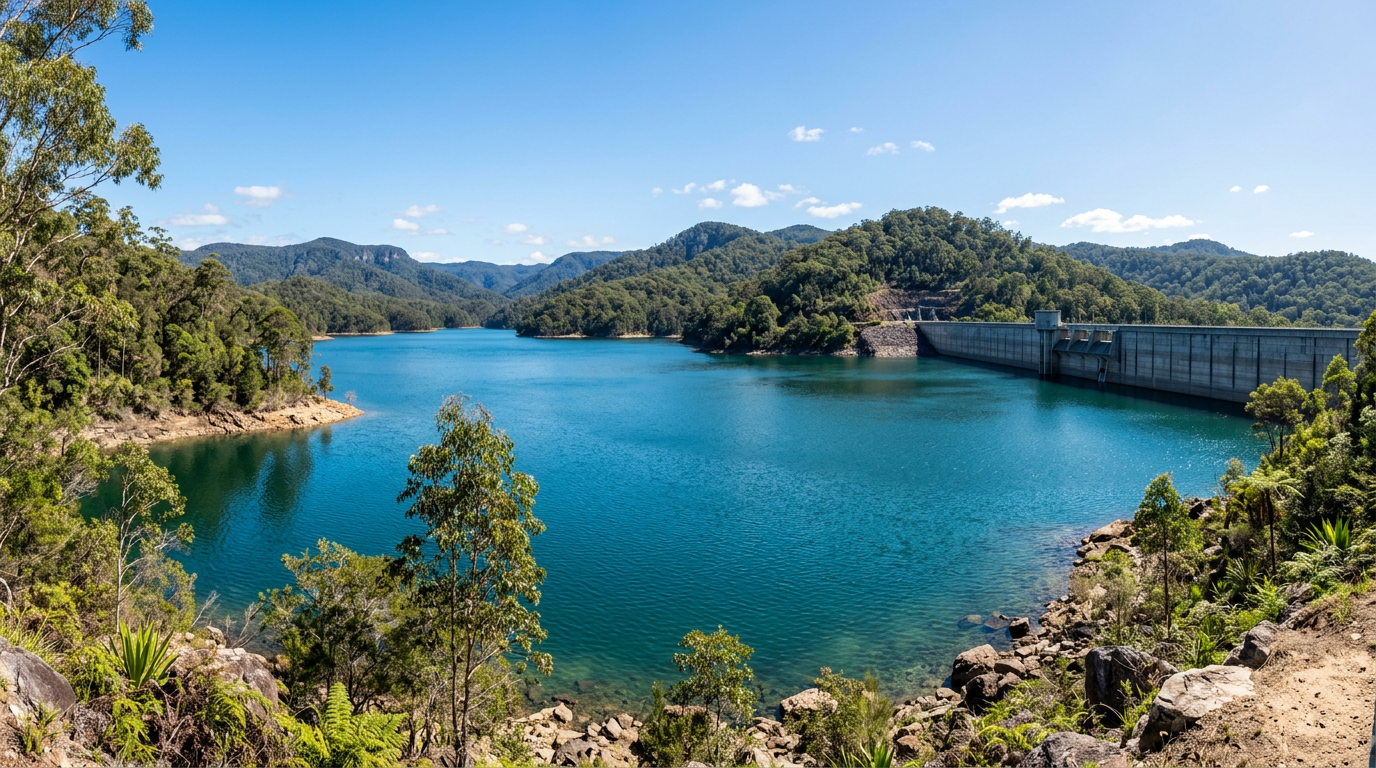
Seqwater manages Gold Coast’s bulk water supply from two primary dam sources. Hinze Dam — with a total capacity of approximately 320 GL — is the primary source. Its 207 km2 catchment covers the Numinbah Valley and Springbrook Plateau, predominantly natural bushland in state forests and national parks. This catchment quality is directly reflected in the low mineral content and low PFAS levels of the treated water. Little Nerang Dam provides secondary surface water supply.
Treatment occurs at the Molendinar and Mudgeeraba Water Treatment Plants, with a combined capacity of approximately 265 ML per day. A critical supplementary source is the Gold Coast Desalination Plant at Tugun, commissioned in 2009 with a capacity of 133 ML per day. The desalination plant uses reverse osmosis to process Pacific Ocean seawater, which is then remineralised and blended into the distribution network. During drought periods when dam levels drop, desalination output increases — changing the blend in the network and potentially shifting the mineral profile of water reaching taps. When the Gold Coast is receiving significant desalination supplement, TDS and mineral content in the network can differ from dam-only supply periods.
Gold Coast water quality data
| Parameter | Gold Coast level | ADWG guideline | Filtration relevance |
|---|---|---|---|
| Hardness | ~33.9 mg/L CaCO3 (very soft) | No health guideline | Softest in SEQ. Virtually no scale. No softener needed. |
| Disinfection | Chloramine | 3 mg/L (health) | Critical: Standard carbon does not remove chloramine. Catalytic carbon or RO required. |
| Fluoride | 0.6-0.8 mg/L | 1.5 mg/L (health) | QLD mandated. RO is the only consumer method that removes fluoride. |
| PFAS | Below ADWG — all sources | Updated June 2025 | Hinze Dam and Little Nerang Dam passive sampling: all below old and updated ADWG. |
| Seasonal variation | Varies with desalination blend | N/A | Desalination supplement during drought shifts mineral profile. RO maintains consistent output regardless of blend. |
Chloramine: why your standard filter may not be working
The entire SEQ Water Grid — including Gold Coast — uses chloramine as the secondary disinfectant. Chloramine is formed by combining chlorine with ammonia and provides a longer-lasting residual through the distribution network than free chlorine alone. For Gold Coast residents, this creates a specific filtration problem that most consumer filter products do not address.
Standard activated carbon filtration — the medium in most tap-mount filters, pitcher filters, and basic under-sink units — removes free chlorine effectively through adsorption. Chloramine has a much weaker affinity for standard carbon and passes through at flow rates typical of household use. If you have installed a standard carbon filter and still notice a chemical taste in your Gold Coast tap water, chloramine is the likely explanation.
What works for chloramine on the Gold Coast: Catalytic carbon media (NSF 42 certified specifically for chloramine removal) or reverse osmosis. The TAPP EcoPro uses catalytic carbon and is independently certified for chloramine removal. Standard carbon blocks, Brita pitchers, and most countertop gravity filters are not rated for chloramine and will leave the majority of it in your water.
Our Top-Rated Water Filters
Reverse osmosis is the only residential technology that reliably removes PFAS, fluoride, chloramine, and heavy metals — the four contaminants most Australians are most exposed to.
The desalination factor
The Gold Coast Desalination Plant is one of the most significant infrastructure investments in Queensland’s water security strategy. When dam levels are healthy, the plant typically operates at reduced capacity. During droughts — as experienced during the Millennium Drought and subsequent dry periods — it ramps up to provide climate-independent supply. During high-output periods, desalinated water (after remineralisation) forms a larger proportion of the blend reaching Gold Coast taps.
The practical water quality effect: desalinated water has a different mineral profile to dam water. The remineralisation process adds back calcium carbonate and carbon dioxide to prevent the water from being corrosive to pipes, but the resulting mineral content differs from Hinze Dam water. During drought periods, Gold Coast residents may notice different taste characteristics that reflect the shifting blend. RO filtration is unaffected by this variation — the membrane maintains consistent output regardless of the inlet mineral profile.
What filtration makes sense for Gold Coast homes
Chloramine taste — catalytic carbon
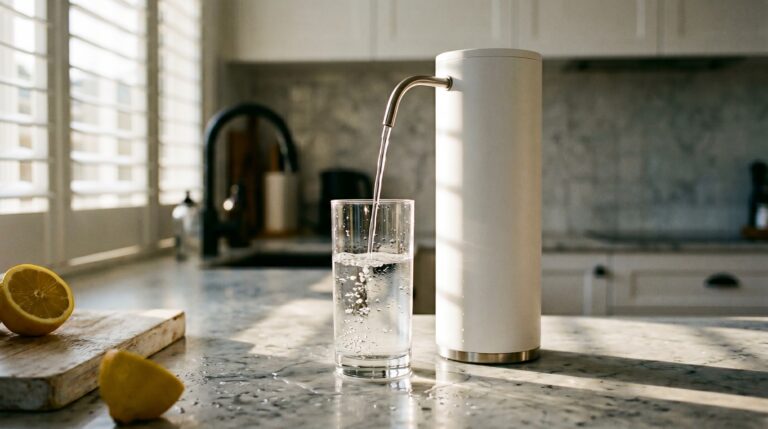
NSF 42-certified catalytic carbon filter removes chloramine and taste compounds. Must be specifically certified for chloramine — standard carbon is insufficient. Best for renters or those who want a simple tap-mount solution without plumbing modification.
Recommended: TAPP EcoPro — catalytic carbon, NSF 42 + 53
See the TAPP EcoPro on Amazon AU →Comprehensive — fluoride, chloramine, TDS
Reverse osmosis removes chloramine via the membrane, fluoride (93%+), and all dissolved compounds. Gold Coast’s soft water means RO membranes face minimal mineral fouling. Output is consistent regardless of whether dam or desalination water dominates the supply blend.
Recommended: EcoHero 5-Stage RO — WaterMark + NSF 58
See the EcoHero RO System →Not sure which option suits your setup? Take the water filter quiz for a personalised recommendation, or see our complete best water filters Australia guide for all options across every price point. For Gold Coast-specific picks, see our Gold Coast water filter guide.
Frequently asked questions
Is Gold Coast tap water safe to drink?
Yes. Gold Coast water is supplied by Seqwater from Hinze Dam and the Gold Coast Desalination Plant, treated to Australian Drinking Water Guidelines, and distributed by City of Gold Coast. All PFAS testing from Hinze Dam and Little Nerang Dam raw water has returned results below ADWG guidelines. The water is safe without additional filtration.
Is Gold Coast water hard or soft?
Gold Coast has the softest water in South East Queensland at approximately 33.9 mg/L as CaCO3 — comparable to Melbourne and significantly softer than Brisbane (80-115 mg/L), Sydney (48-52 mg/L), and Geelong (130 mg/L). Minimal scale on appliances, easy soap lathering, no water softener required.
Is Gold Coast tap water safe to drink?
Yes. Gold Coast water is supplied by Seqwater from Hinze Dam and the Gold Coast Desalination Plant, treated to Australian Drinking Water Guidelines, and distributed by City of Gold Coast. All PFAS testing from Hinze Dam and Little Nerang Dam raw water has returned results below ADWG guidelines. The water is safe without additional filtration.
Is Gold Coast water hard or soft?
Gold Coast has the softest water in South East Queensland at approximately 33.9 mg/L as CaCO3 — comparable to Melbourne and significantly softer than Brisbane (80-115 mg/L), Sydney (48-52 mg/L), and Geelong (130 mg/L). Minimal scale on appliances, easy soap lathering, no water softener required.
Does Gold Coast water have chloramine?
Yes. The entire SEQ Water Grid, including Gold Coast, uses chloramine as secondary disinfection. Standard activated carbon filters (most pitcher filters and basic tap-mount units) do not effectively remove chloramine. Catalytic carbon certified for chloramine removal, or reverse osmosis, is required.
Why won’t a standard carbon filter remove chloramine from Gold Coast tap water?
Standard granular activated carbon absorbs chlorine gas, not chloramine (NH2Cl). Chloramine is chemically bonded and requires catalytic carbon (which oxidises it) or reverse osmosis to remove it. A basic carbon filter gives false confidence on the Gold Coast.
How soft is Gold Coast tap water compared to Brisbane?
Gold Coast tap water is significantly softer than Brisbane – approximately 33-34 mg/L hardness versus Brisbane’s 80+ mg/L. Gold Coast residents rarely need water softeners, though hardness shifts seasonally when the desalination plant supplements supply during drought.
Does Gold Coast tap water contain PFAS above safe limits?
PFAS testing from Hinze Dam and Little Nerang Dam raw water returned all results below ADWG guidelines. Gold Coast Water Authority publishes quarterly water quality reports confirming no reportable PFAS contamination in primary supply sources.
What TDS reduction can an RO system achieve on Gold Coast water?
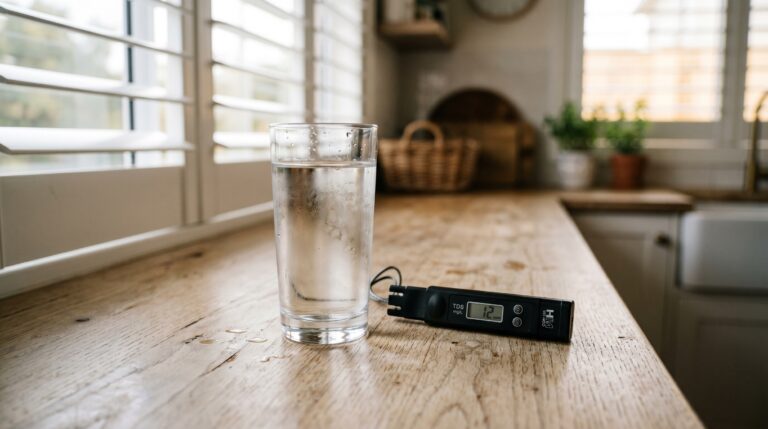
An EcoHero 5-stage RO system on Palm Beach mains water reduced TDS from 69 ppm to 3 ppm – 95.7% reduction (meter tested). Gold Coast’s naturally soft water makes RO systems highly efficient with minimal mineral load.
Is Gold Coast tap water fluoridated and can filters remove it?
Yes. Gold Coast tap water contains 0.6-0.8 mg/L fluoride, below the ADWG limit of 1.5 mg/L. Catalytic carbon does not remove fluoride – only reverse osmosis or ion-exchange resins are effective.
Get the Australian Home Environment Checklist
30 checks across water, air and EMF. Most of them free. Ranked by impact.
No spam. Unsubscribe any time.

Former Royal Australian Navy Clearance Diver and TAG-E counter-terrorism operator. Founded Clean and Native to apply the same rigorous thinking to the home environment.
Full biography →