Bendigo Tap Water Quality 2026: What’s Actually In It?
Drafted with AI assistance and checked against published specifications and certifications. First-hand measurements appear only where stated. How we make content
Bendigo tap water is ADWG-compliant but contains free chlorine disinfectant, fluoride at ~0.9 mg/L, and moderate hardness from Coliban Water’s reservoir and Goldfields Superpipe sources. It’s safe to drink, but chlorine taste is common, and the region’s 160-year gold mining legacy means trace metals warrant filtration for peace of mind. The catches: no chloramine (easier to filter than Sydney/Melbourne), but free chlorine means taste/odour complaints are higher, and hardness varies by suburb (100–180 mg/L CaCO₃ typical).
| Your priority | Bendigo context | Verdict |
|---|---|---|
| Chlorine + fluoride removal | Free chlorine (no chloramine), 0.9 mg/L fluoride | RO system recommended |
| Taste/odour only | Chlorine complaints common, no chloramine | Carbon filter adequate |
| Mining legacy concerns | 160 years gold mining, trace metals possible | RO + remineralisation ideal |
Bendigo tap water is treated with free chlorine (not chloramine), sourced primarily from the Coliban Water supply system drawing on reservoirs across central Victoria and supplemented by the Goldfields Superpipe from the Goulburn system. If you live in Bendigo and want to know exactly what is in your water — the disinfectants, the fluoride levels, the hardness, the legacy contaminants from 160 years of gold mining — this is the most detailed breakdown you will find anywhere.
The three products we own are measured first-hand by Jayce Love, former Royal Australian Navy Clearance Diver; every other product is assessed on published manufacturer specifications and independent certification using our documented methodology — no gifted units, no brand payments.
I am Jayce Love, a former Royal Australian Navy Clearance Diver now based on the Gold Coast. I built Clean and Native to cut through vague claims about water quality and give you the specific numbers, standards, and filtration solutions that actually matter. Bendigo’s water is compliant with the Australian Drinking Water Guidelines (ADWG 2024), but “compliant” and “optimal” are not the same thing. Let me walk you through every detail.
Who Supplies Bendigo’s Tap Water?
Coliban Water is your water authority. They serve approximately 145,000 people across the Coliban district, including Bendigo, Castlemaine, Kyneton, and surrounding towns. Their operational area covers one of Australia’s most historically significant gold mining regions — and that history leaves a chemical fingerprint on the water supply.
Bendigo’s drinking water comes from a network of reservoirs and treatment plants. The primary sources are:
- Upper Coliban Reservoir — capacity 37,700 ML, the backbone of Bendigo’s supply
- Lauriston Reservoir — capacity 19,800 ML, feeding into the Sandhurst Reservoir system
- Malmsbury Reservoir — capacity 13,400 ML
- Goldfields Superpipe — a 150 km pipeline from the Goulburn system (Waranga Basin), commissioned in 2007 to drought-proof the region
The water is treated at the Sandhurst Water Treatment Plant (WTP) before reaching most Bendigo households. This plant uses conventional treatment: coagulation, flocculation, sedimentation, filtration, and disinfection with free chlorine. Fluoride is added at the treatment plant in accordance with Victorian Government health policy.
Understanding your supply source matters because it determines your water chemistry. When the Superpipe supplements local reservoir supply, you can see shifts in hardness, TDS, and turbidity. Keep reading for the specific numbers.
Bendigo Water Chemistry: The Actual Numbers
Coliban Water publishes annual water quality reports and is subject to auditing under the Safe Drinking Water Act 2003 (Vic). Below are the key parameters from the most recent reporting period, cross-referenced against ADWG health and aesthetic guideline values.
| Parameter | Bendigo Typical Range | ADWG Guideline Value | What This Means for You |
|---|---|---|---|
| pH | 7.0 — 7.8 | 6.5 — 8.5 (aesthetic) | Well within range; no corrosion concerns |
| Total Dissolved Solids (TDS) | 60 — 150 mg/L | 600 mg/L (aesthetic) | Low to moderate; varies with Superpipe blending |
| Hardness (CaCO₃) | 40 — 100 mg/L | 200 mg/L (aesthetic) | Moderately soft to moderate; minimal scale buildup |
| Free Chlorine Residual | 0.2 — 1.5 mg/L | 5 mg/L (health) | Standard carbon filtration removes this effectively |
| Fluoride | 0.7 — 1.0 mg/L | 1.5 mg/L (health) | Deliberately added; only RO or activated alumina removes it |
| Turbidity | 0.1 — 0.5 NTU | 5 NTU (aesthetic) | Very clear water post-treatment |
| Aluminium (residual from coagulation) | 0.01 — 0.1 mg/L | 0.2 mg/L (aesthetic) | Within limits but detectable; aluminium sulphate used as coagulant |
| Iron | 0.01 — 0.15 mg/L | 0.3 mg/L (aesthetic) | Can cause brown staining at upper range in older pipes |
| Manganese | 0.005 — 0.05 mg/L | 0.1 mg/L (aesthetic) / 0.5 mg/L (health) | Elevated in some areas; causes black staining |
| Trihalomethanes (THMs) | 0.02 — 0.15 mg/L | 0.25 mg/L (health) | Chlorine disinfection byproducts; higher in summer |
Two things stand out in that table. First, the TDS and hardness ranges are wide because Bendigo’s supply shifts between local reservoir water and Superpipe water depending on season and dam levels. Second, aluminium is consistently present because Sandhurst WTP uses aluminium sulphate as a coagulant — a standard practice, but it means residual aluminium ends up in your tap.
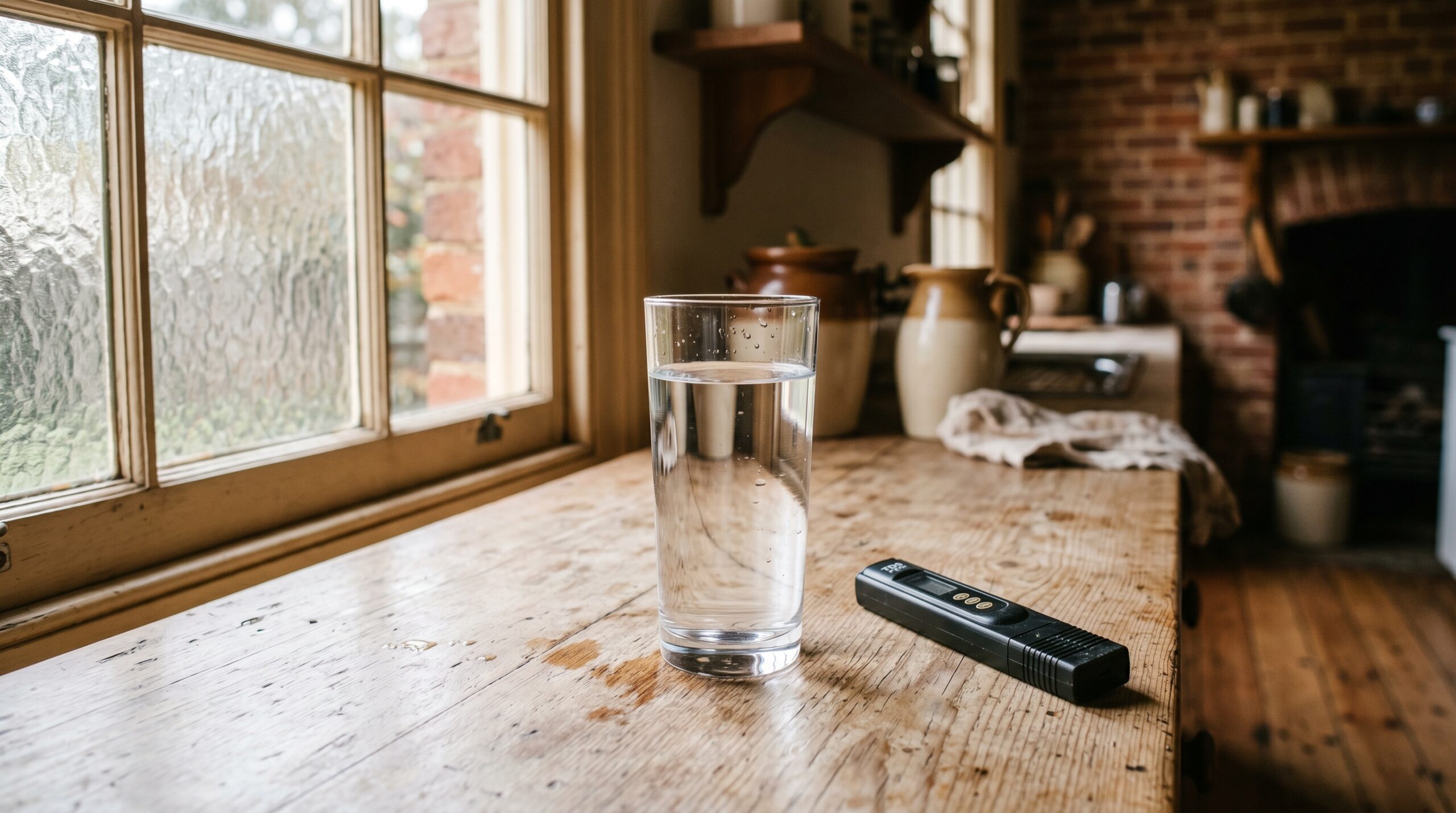
If you want to know exactly what your individual tap is delivering, a TDS meter will cost you about $15 and gives you an instant baseline. For a full contaminant profile, National Association of Testing Authorities (NATA) accredited labs in Victoria offer drinking water panels for around $150-250. Now let us look at the contaminants that will not appear on Coliban Water’s standard reports.
Free Chlorine: Why Bendigo Has an Advantage Over Brisbane and Sydney
Here is something most water filter comparison sites get wrong: they recommend the same filters for every Australian city. That is a mistake because the type of disinfectant determines which filter technology works.
Bendigo uses free chlorine for disinfection. This is a significant advantage for you as a consumer because standard granular activated carbon (GAC) and carbon block filters remove free chlorine effectively — typically 95%+ reduction per NSF/ANSI 42 testing protocols.
Compare this to Brisbane (SEQ Water), Sydney (Sydney Water), Adelaide (SA Water), Perth (Water Corporation), and Darwin — all of which use chloramine (a combination of chlorine and ammonia). Chloramine is far more persistent in distribution networks, which is why those utilities use it. But it also means standard carbon filters fail to remove it adequately. Those cities require catalytic carbon or reverse osmosis.
For Bendigo residents, this means a quality carbon block benchtop or under-sink filter will handle chlorine taste, odour, and associated disinfection byproducts like trihalomethanes. You do not need catalytic carbon specifically for disinfectant removal, though it will not hurt if a system includes it. Where carbon falls short is with fluoride, heavy metals, and other dissolved contaminants — which we will cover next.
Fluoride in Bendigo Water: 0.7-1.0 mg/L Added at the Treatment Plant
Victoria mandates water fluoridation under the Health (Fluoridation) Act 1973. Coliban Water adds fluoride at the Sandhurst WTP, targeting a concentration of approximately 1.0 mg/L. In practice, levels fluctuate between 0.7 and 1.0 mg/L across the distribution network.
The ADWG health guideline value for fluoride is 1.5 mg/L. Bendigo’s levels sit well below this threshold. Whether you want to remove fluoride is a personal decision, but here is what you need to know about the technology:
- Reverse osmosis (RO) removes 90-97% of fluoride — the most reliable residential option, verified under NSF/ANSI 58
- Activated alumina adsorbs fluoride, but performance degrades with pH above 7.0 and requires regular media replacement
- Standard carbon filters (GAC, carbon block, Brita-style jugs) do NOT remove fluoride — if anyone tells you otherwise, they are wrong
- Bone char has some fluoride removal capacity but is inconsistent and not NSF-certified for this claim
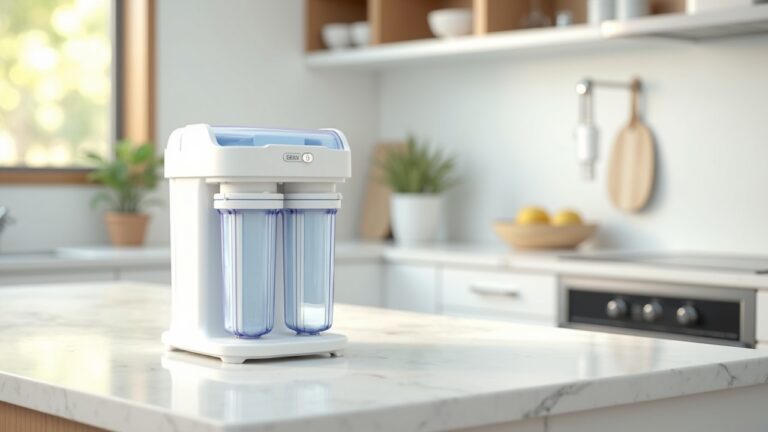
If fluoride removal is a priority for your household, reverse osmosis is the only technology I recommend. A countertop RO unit like the AquaTru Classic (NSF 58 certified) achieves verified fluoride reduction without requiring plumbing modifications. There are no shortcuts here — the chemistry is non-negotiable.
The Gold Mining Legacy: Arsenic, Antimony, and Heavy Metals in Bendigo’s Catchment
This is the section that makes Bendigo’s water story different from most Victorian cities. Bendigo sits at the heart of one of the world’s most intensively mined gold regions. From the 1850s gold rush through to industrial-scale deep reef mining in the early 1900s, the landscape was reshaped. Mine tailings, processing residues, and disturbed geology left a lasting chemical signature in the soil and waterways.
The contaminants of concern from gold mining activity include:
- Arsenic — naturally elevated in central Victorian geology and concentrated by mining. The ADWG health guideline is 0.01 mg/L (10 µg/L). Arsenic is a Group 1 carcinogen classified by the International Agency for Research on Cancer (IARC).
- Antimony — associated with gold-bearing quartz reefs in the Bendigo goldfield. ADWG guideline: 0.003 mg/L.
- Lead — from historical smelting and degradation of old lead service pipes still present in some Bendigo properties built before the 1970s. ADWG guideline: 0.01 mg/L.
- Mercury — used extensively in gold amalgamation processes during the 19th century. ADWG guideline: 0.001 mg/L.
- Cadmium — associated with zinc mineralisation in the goldfields. ADWG guideline: 0.002 mg/L.
Coliban Water’s treatment processes address these contaminants, and their reporting shows compliance with ADWG health guideline values. However, there are two critical caveats that the annual report does not spell out for you:
Caveat 1: The “last mile” problem. Coliban Water tests at the treatment plant and at selected distribution network points. They do not test at your kitchen tap. If your property has older galvanised steel or lead-soldered copper pipes, heavy metals can leach into your water between the main and your glass — particularly if water has been sitting in the pipes overnight. This is called “first flush” contamination, and it is a well-documented issue in older housing stock. Properties built before 1989 in Bendigo should be considered at elevated risk for lead from plumbing solder.
Caveat 2: Detection limits vs. safety. Some contaminants are reported as “less than the limit of reporting” (LOR). For example, if arsenic is reported as “<0.001 mg/L," this means it was below the instrument's detection capability -- not that it was zero. Cumulative exposure to very low levels of multiple contaminants is an area of ongoing research. The ADWG itself acknowledges that guideline values incorporate safety factors but are based on individual contaminant assessment, not combined exposure.
For older Bendigo homes — particularly those in established suburbs like Eaglehawk, Golden Square, Kangaroo Flat, and central Bendigo — a point-of-use reverse osmosis system provides a verified final barrier against heavy metals that may enter water after it leaves the treatment plant. RO systems certified to NSF/ANSI 58 are tested specifically for lead (99%+), arsenic (95%+), and other dissolved metals.
Disinfection Byproducts: THMs and HAAs in Bendigo
When free chlorine reacts with natural organic matter (NOM) in the water — decaying vegetation, humic acids from the catchment — it forms disinfection byproducts (DBPs). The two main categories are trihalomethanes (THMs) and haloacetic acids (HAAs).
Coliban Water’s data shows THM levels in Bendigo typically ranging from 0.02 to 0.15 mg/L, against the ADWG health guideline of 0.25 mg/L. This is compliant, but there are seasonal spikes. THM formation increases with:
- Higher water temperature (summer months, December through February)
- Higher NOM levels (after heavy rainfall events washing organic material into reservoirs)
- Longer residence time in the distribution network (dead-end mains, low-use periods)
If you live at the end of Bendigo’s distribution network — areas like Strathfieldsaye, Maiden Gully, or Marong — your water has had more contact time with chlorine, which means higher potential THM levels compared to properties closer to the Sandhurst WTP.
THMs are volatile compounds. Two practical actions reduce your exposure immediately:
- Carbon filtration at point-of-use — carbon block filters certified to NSF/ANSI 53 are specifically tested for THM reduction. This is the health effects standard, not just the taste-and-odour standard (NSF 42).
- Ventilation while showering — THMs volatilise in hot water and can be inhaled. Opening a window or running an exhaust fan reduces airborne THM concentration in your bathroom.
Reverse osmosis systems with carbon pre-filters handle THMs as part of their multi-stage process. If you are already filtering for fluoride or heavy metals with RO, THMs are addressed simultaneously.
Clean Water
The right filter removes what this article describes.
Reverse osmosis is the only residential technology that reliably removes PFAS, fluoride, chloramine, and heavy metals.
See the Top-Rated Water Filters →PFAS in Bendigo: What the Data Shows
Per- and polyfluoroalkyl substances (PFAS) are a national concern. These synthetic chemicals do not break down in the environment (hence “forever chemicals”) and have been detected in water supplies near defence bases, airports, and industrial sites across Australia.
Bendigo’s primary PFAS risk profile is lower than cities near major defence or aviation facilities. There are no significant RAAF or Army bases in the immediate Bendigo catchment that used aqueous film-forming foam (AFFF) — the main historical source of PFAS contamination in Australian water supplies.
However, “lower risk” does not mean “zero risk.” PFAS sources in the Bendigo region include:
- Bendigo Airport (YBDG) — fire training areas at regional airports are potential PFAS sources
- CFA training facilities — Country Fire Authority sites where AFFF was historically used
- Landfill leachate — PFAS from consumer products accumulating in landfill and leaching into groundwater
- Industrial sites — metal plating, textile treatment, and other PFAS-using industries
The ADWG does not currently set a formal guideline value for PFAS. The Australian Government health-based guidance values (as of the PFAS National Environmental Management Plan 3.0) are:
- PFOS: 0.07 µg/L (70 ng/L)
- PFOA: 0.56 µg/L (560 ng/L)
- PFHxS: 0.07 µg/L (70 ng/L)
Coliban Water has not published widespread PFAS detection in treated drinking water above these thresholds. But here is the practical issue: PFAS testing is expensive and not performed on every water quality monitoring cycle. The absence of published detections is not the same as the absence of PFAS.
If PFAS removal is a concern for your household, reverse osmosis is your answer. RO membranes with pore sizes of approximately 0.0001 microns reject PFAS compounds at rates exceeding 90%, with many certified systems achieving 95%+ under NSF/ANSI 58 testing. Activated carbon can reduce some longer-chain PFAS compounds but is unreliable for shorter-chain variants like PFBS and PFHxA. Do not rely on carbon alone for PFAS.
Bendigo’s Pipe Network: Age, Material, and What It Adds to Your Water
Coliban Water manages approximately 2,400 km of water mains. Bendigo’s urban infrastructure dates back to the gold rush era in some areas, and while major trunk mains have been upgraded, the network includes a mix of pipe materials:
- Cast iron — prevalent in older suburbs (pre-1960s), prone to internal corrosion and iron release
- Asbestos cement (AC) — widely used from the 1940s through 1980s. Coliban Water, like most Victorian water authorities, has AC pipes still in service. Asbestos fibres can shed into water from degrading pipe walls, though the ADWG does not set a health guideline for ingested asbestos (the primary risk pathway for asbestos is inhalation)
- PVC and HDPE — modern replacements used in newer subdivisions and pipe renewal programs
- Copper with lead solder — your internal household plumbing, if pre-1989 construction
The condition of the mains between Coliban Water’s infrastructure and your property boundary — and then your internal plumbing from the meter to the tap — creates a “last mile” that is entirely outside the utility’s water quality testing regime.
Practical action for Bendigo homes built before 1989: Run the kitchen cold tap for 30-60 seconds each morning before filling the kettle or drinking glass. This flushes water that has been in contact with potentially lead-soldered joints overnight. Better yet, install a point-of-use filter certified to NSF/ANSI 53 for lead reduction, which captures lead particles regardless of flushing.
Properties in established Bendigo suburbs like Kennington, Flora Hill, Quarry Hill, and Long Gully are statistically more likely to have older plumbing. If you are in one of these areas and have never had your water independently tested, it is worth the $150-250 investment for a NATA-accredited lab panel.
Seasonal Variations: How Bendigo’s Water Changes Through the Year
Bendigo’s water quality is not static. Central Victoria’s climate — hot, dry summers and cool, wet winters — creates predictable seasonal patterns in your tap water.
Summer (December — February):
- Higher water temperatures increase THM formation rates
- Increased chlorine dosing to maintain residual through longer, warmer distribution network
- Algal activity in reservoirs can produce geosmin and MIB (methylisoborneol), causing earthy/musty taste and odour
- Higher evaporation concentrates minerals, potentially increasing TDS
- Greater reliance on Goldfields Superpipe water when local reservoirs drop, changing the baseline chemistry
Winter (June — August):
- Heavy rainfall events increase turbidity from catchment runoff
- Higher organic matter loading from storm flows increases NOM — leading to higher coagulant dosing and potentially higher residual aluminium
- Lower water demand means longer residence time in pipes, which can mean higher chlorine contact but also more biofilm interaction
Post-bushfire periods: Central Victoria is bushfire-prone, and fire in the catchment area dramatically affects water quality. The 2019-20 and 2009 Black Saturday fires demonstrated that burned catchments release elevated levels of manganese, iron, turbidity, and dissolved organic carbon into reservoirs for months to years after the fire event. If a significant fire impacts the Harcourt, Malmsbury, or Upper Coliban catchments, expect temporary water quality changes.
A home water filter gives you a consistent output regardless of these seasonal swings. That consistency is the real value proposition — you stop being at the mercy of catchment conditions and treatment plant adjustments.
How Bendigo Water Compares to Other Victorian Cities
Context matters. Here is how Bendigo’s water stacks up against other major Victorian supply zones.
| Parameter | Bendigo (Coliban Water) | Melbourne (Melbourne Water) | Ballarat (Central Highlands Water) | Geelong (Barwon Water) |
|---|---|---|---|---|
| Disinfectant | Free chlorine | Free chlorine | Free chlorine | Free chlorine |
| Fluoride (mg/L) | 0.7 — 1.0 | 0.7 — 1.0 | 0.7 — 1.0 | 0.7 — 1.0 |
| Hardness (mg/L CaCO₃) | 40 — 100 | ~25 | 30 — 80 | 50 — 120 |
| TDS (mg/L) | 60 — 150 | 30 — 50 | 50 — 120 | 80 — 200 |
| Mining legacy risk | High (gold mining) | Low | Moderate (gold mining) | Low |
| Superpipe supplementation | Yes (Goulburn) | No | No | No (Melbourne pipeline) |
Melbourne’s water is notably softer and lower in TDS because it draws from protected, forested catchments (Yarra Ranges, Thomson Reservoir) with minimal agricultural or mining activity. Bendigo’s water is harder, carries more dissolved minerals, and has the additional variable of gold-mining-era contamination in the broader catchment. Ballarat shares a similar mining legacy but draws from different catchments.
The good news for all Victorian cities: free chlorine is used across the state, which means basic carbon filtration is effective for chlorine and taste improvement everywhere in Victoria. That is not the case in Brisbane, Sydney, Adelaide, or Darwin, where chloramine requires more advanced filtration.
What Filter Technology Works for Bendigo Water?
Based on Bendigo’s specific water chemistry — free chlorine disinfection, added fluoride, moderate hardness, gold mining legacy contaminants, and older pipe infrastructure — here is what actually works and what does not.
| Filter Technology | Free Chlorine | Fluoride | Lead/Heavy Metals | THMs | PFAS | Verdict for Bendigo |
|---|---|---|---|---|---|---|
| Brita-style jug (GAC) | Partial | No | No | Minimal | No | Inadequate |
| Carbon block (NSF 42/53) | Yes (95%+) | No | Yes (if NSF 53) | Yes (if NSF 53) | Partial | Good for chlorine/taste; insufficient for fluoride |
| Gravity ceramic | Variable | No | Variable | Variable | No | Inconsistent performance |
| Under-sink RO (NSF 58) | Yes | Yes (90-97%) | Yes (95-99%) | Yes | Yes (90-95%+) | Best overall solution |
| Countertop RO (NSF 58) | Yes | Yes (90-97%) | Yes (95-99%) | Yes | Yes (90-95%+) | Best for renters or no plumbing access |
The bottom line for Bendigo: If you only care about chlorine taste and odour, a quality carbon block filter certified to NSF 42 will do the job. If you want to address fluoride, heavy metals (especially from older plumbing), PFAS, and disinfection byproducts comprehensively, reverse osmosis is the correct technology. There is no middle ground on this — the chemistry does not allow it.
For Bendigo renters, a countertop RO like the AquaTru Classic requires zero plumbing changes and delivers NSF 58 certified contaminant reduction. For homeowners, an under-sink RO with a dedicated faucet is the most seamless long-term setup. Either way, look for WaterMark certification (AS/NZS 3718) on any system connected to Australian plumbing.
Testing Your Own Bendigo Tap Water
If you want to move beyond published utility data and find out what is actually coming out of your tap, here is the testing hierarchy I recommend:
Level 1 — Free ($0): Request Coliban Water’s most recent annual water quality report for your specific supply zone. They are legally required to provide this under the Safe Drinking Water Act 2003 (Vic). Call them on 1300 363 200 or download from their website.
Level 2 — Basic ($15-30): Purchase a TDS meter (available on Amazon or from Bunnings). This gives you an instant reading of total dissolved solids in parts per million (ppm), which correlates with mg/L. Test at different times of day and after different standing periods. Compare your reading to the 60-150 mg/L range typical for Bendigo.
Level 3 — Comprehensive ($150-250): Send a sample to a NATA-accredited laboratory for a full drinking water panel. Victorian options include ALS Environmental (Melbourne), Envirolab Services, and SGS. Specify that you want heavy metals (including lead and arsenic), PFAS, THMs, and microbiological testing. Collect the sample from your kitchen cold tap after the water has been standing in pipes for at least 6 hours (first thing in the morning is ideal for detecting pipe-leached contaminants).
Level 4 — Before and after filter verification ($30-250): Once you install a filter, test the input and output TDS at minimum. For RO systems, you should see a 85-95%+ TDS reduction. If your input is 100 mg/L and your output is 10 mg/L, the membrane is performing correctly. If the rejection rate drops below 80%, the membrane needs replacement.
Bendigo-Specific Suburbs: Water Quality Variation Across the Network
Not all Bendigo taps deliver the same water. Your position in the distribution network, the age of local mains, and the elevation of your property all affect what reaches your glass.
Central Bendigo / Quarry Hill / Long Gully: Closest to the Sandhurst WTP. Generally lower chlorine contact time (fewer DBPs) but oldest infrastructure. Highest probability of lead-soldered copper plumbing and cast iron service connections. Iron staining and sediment are more common complaints.
Eaglehawk / California Gully: Historic mining heartland. Some of the oldest residential infrastructure in the region. Properties here should be considered higher risk for both pipe-related contamination and proximity to historical mine sites. Groundwater interaction with old mine workings is a background concern for private bores in this area — if you supplement your Coliban Water supply with bore water, independent testing is non-negotiable.
Strathfieldsaye / Junortoun: Growing eastern suburbs at the end of the distribution network. Longer pipe runs mean more chlorine contact time and potentially higher THM levels. Newer housing stock (post-2000s) typically has compliant copper or plastic plumbing, reducing the lead risk. However, TDS and chlorine residual readings here can differ noticeably from central Bendigo.
Maiden Gully / Marong: Northwest fringe of the network. Similar end-of-line characteristics to Strathfieldsaye. Some properties in this area are on rural lots that may have private rainwater tanks supplementing mains supply — if you blend tank water with mains, you need to manage both supply quality profiles independently.
Kangaroo Flat / Golden Square: Mid-network suburbs with mixed-age housing. The closer to the Bendigo Creek corridor, the more relevant the historical mining contamination context becomes for any private bore usage. Mains supply is treated, but these suburbs represent the transition between the old and new Bendigo infrastructure.
No matter where you are in Bendigo’s network, a point-of-use filter at your kitchen tap addresses the “last mile” that no utility can control.
Rainwater Tank Supplementation in Greater Bendigo
Many properties in the Greater Bendigo area, particularly on larger rural-residential lots in Strathfieldsaye, Junortoun, Maiden Gully, Epsom, and Huntly, have rainwater tanks. Some use tank water for drinking, either exclusively or blended with mains supply.
Rainwater in the Bendigo region has its own quality profile that you need to be aware of:
- No disinfection residual — no chlorine to suppress microbial growth. Bacterial contamination from bird and animal faeces on the roof is the primary health risk
- Potential heavy metal contamination — roof materials (lead flashing, zinc-aluminium roofing) can leach metals into collected water. Wind-blown dust from former mining areas can deposit arsenic and other metals on roofs
- No fluoride — rainwater does not contain added fluoride
- Low TDS — typically 10-30 mg/L, much lower than mains supply
- Pesticide and herbicide risk — aerial spraying on surrounding agricultural or horticultural properties can deposit on roof catchments
If you drink rainwater in the Bendigo region, UV disinfection (certified to AS/NZS 4348) is the minimum recommended treatment for microbial safety. For comprehensive protection including metals and chemicals, a UV + sediment + carbon + RO system provides the most robust treatment train. Have your tank water tested annually by a NATA-accredited lab.
The Regulatory Framework: Who Is Watching Bendigo’s Water Quality?
Understanding who regulates your water quality — and the limits of that regulation — helps you make informed decisions about home filtration.
Australian Drinking Water Guidelines (ADWG 2024): Published by the National Health and Medical Research Council (NHMRC). These are guidelines, not legally enforceable standards. They represent best practice targets that water utilities aim to meet.
Safe Drinking Water Act 2003 (Vic): The Victorian legislation that gives ADWG targets legal weight. Coliban Water must prepare and implement a risk management plan, comply with water quality standards set by the Department of Health, and report non-compliance.
Department of Health (Victoria): Oversees drinking water quality regulation, audits water utilities, and sets compliance targets based on ADWG guideline values.
Essential Services Commission (ESC): Regulates Coliban Water’s pricing, service standards, and performance reporting. Not a water quality regulator per se, but the body that ensures the utility operates efficiently.
EPA Victoria: Regulates environmental discharges, catchment protection, and contaminated land. Relevant where historical mining contamination intersects with water catchment areas.
The key takeaway: these regulatory bodies ensure Coliban Water meets compliance thresholds at the treatment plant and at distribution network monitoring points. None of them are responsible for, or test, the water quality at your individual tap. That gap is where home filtration provides a measurable benefit.
Action Plan: What to Do About Bendigo Tap Water
Here is the systematic approach, ordered from lowest cost to highest impact:
- Get your baseline — Request Coliban Water’s latest water quality data for your supply zone. Buy a $15 TDS meter and test your tap water. Note the reading and the date.
- Assess your plumbing age — If your property was built before 1989, assume lead solder is present. Run the cold tap for 30-60 seconds each morning before drinking. Do not drink or cook with hot tap water (hot water dissolves more lead from pipes).
- Decide your filtration priority — If chlorine taste is your main concern, a carbon block filter (NSF 42 certified) solves it for $50-150. If you want fluoride, heavy metal, PFAS, and DBP removal, you need reverse osmosis (NSF 58 certified).
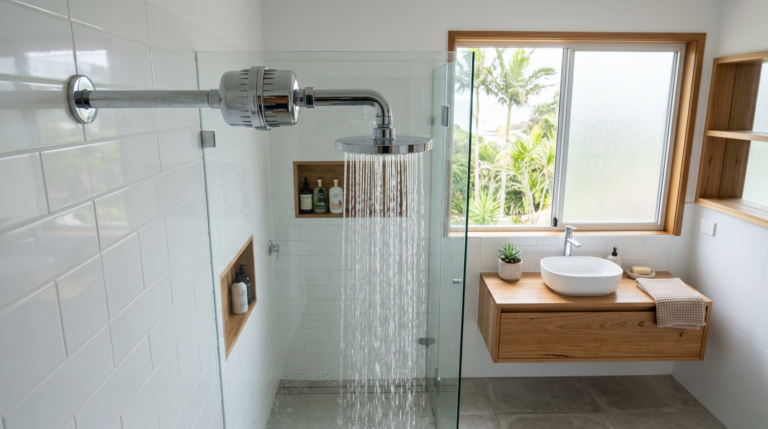
- Install at point-of-use — For drinking and cooking water, a countertop or under-sink system at the kitchen tap is the most cost-effective approach. Whole-house systems are significantly more expensive and primarily justified if you want chlorine-free shower water as well.
- Verify your filter performance — Test TDS before and after the filter. For RO systems, expect 85-95%+ rejection. Replace filters and membranes on schedule — a neglected filter is worse than no filter because it becomes a bacterial breeding ground.
- Consider independent lab testing — If you are in an older suburb (Eaglehawk, Golden Square, central Bendigo, Kangaroo Flat) or have specific health concerns, invest in a NATA-accredited water test. This is the only way to know exactly what your individual tap delivers.
Ready to filter your water?
We have ranked the best countertop and under-sink RO systems available in Australia.
Countertop Filter Guide →Frequently Asked Questions: Bendigo Tap Water
Is Bendigo tap water safe to drink?
Yes, Coliban Water’s treated supply meets ADWG guideline values at the point of distribution. However, “safe” per regulatory thresholds and “optimally clean” are different standards. Compliant water can still contain measurable levels of chlorine, fluoride, THMs, residual aluminium, and trace metals — all within guideline limits but present nonetheless. If your home has pre-1989 plumbing, lead from solder joints is an additional risk not covered by utility testing at your tap.
Does Bendigo use chlorine or chloramine?
Bendigo uses free chlorine for disinfection. This is standard across Victorian water utilities including Melbourne Water, Central Highlands Water (Ballarat), and Barwon Water (Geelong). Free chlorine is effectively removed by standard granular activated carbon and carbon block filters. You do not need catalytic carbon for Bendigo water, unlike Brisbane, Sydney, Adelaide, or Darwin which all use chloramine.
Is there fluoride in Bendigo water?
Yes. Coliban Water adds fluoride at the Sandhurst Water Treatment Plant, targeting approximately 1.0 mg/L. Actual levels at your tap typically range from 0.7 to 1.0 mg/L, which is below the ADWG health guideline of 1.5 mg/L. If you want to remove fluoride, only reverse osmosis (90-97% removal, NSF 58 certified) or activated alumina are effective. Standard carbon filters, including Brita jugs and carbon block systems, cannot remove fluoride.
How hard is Bendigo water?
Bendigo water has a hardness of approximately 40-100 mg/L as CaCO₃, classified as moderately soft to moderately hard. This is harder than Melbourne (~25 mg/L) but softer than Adelaide (~140 mg/L) or Perth (~180 mg/L). At these levels, you may notice mild scale on kettle elements over time, but it is unlikely to cause significant plumbing issues. The hardness varies depending on whether your supply is drawing primarily from local reservoirs or the Goldfields Superpipe.
Are there PFAS in Bendigo water?
Bendigo’s primary catchments are not located near major defence or aviation PFAS contamination sources, which gives the region a lower risk profile than some other Australian cities. However, PFAS from regional airport fire training areas, CFA facilities, landfill leachate, and industrial sources cannot be completely ruled out. Coliban Water has not published detections above PFAS National Environmental Management Plan guidance values. If you want to ensure PFAS removal, reverse osmosis certified to NSF 58 achieves 90-95%+ reduction of PFOS and PFOA.
Why does my Bendigo tap water sometimes taste or smell different?
Seasonal variations are the main cause. In summer, higher water temperatures and algal activity in reservoirs can produce geosmin and MIB — compounds that give water an earthy or musty taste. Higher chlorine dosing in warmer months can increase the chlorine taste. After heavy rain, increased organic matter in catchment runoff changes the NOM profile and may alter taste. If your supply shifts between local reservoir and Superpipe water, the mineral balance changes. A carbon block filter at point-of-use eliminates these taste variations.
Should I worry about lead in Bendigo tap water?
If your home was built before 1989, yes — you should take precautions. Lead solder was used on copper pipe joints in Australian plumbing until it was phased out in the late 1980s. Lead leaches into water from these joints, particularly when water sits in the pipes for extended periods (overnight, during holidays). Coliban Water’s treatment and distribution system does not add lead, but they cannot control what happens inside your property’s plumbing. Run the cold tap for 30-60 seconds before drinking each morning, and consider a filter certified to NSF/ANSI 53 for lead reduction.
What is the best water filter for Bendigo?
It depends on what you want to remove. For chlorine taste and odour only, a carbon block filter certified to NSF 42 is sufficient and cost-effective. For comprehensive removal of fluoride, heavy metals, PFAS, THMs, and other dissolved contaminants, reverse osmosis certified to NSF 58 is the correct technology. For Bendigo renters, the AquaTru Classic is a countertop RO system that requires no plumbing modifications. For homeowners, an under-sink RO with a dedicated faucet and WaterMark certification (AS/NZS 3718) is the long-term solution.
Does Coliban Water test for all contaminants?
Coliban Water tests for a range of parameters required under the Safe Drinking Water Act 2003 (Vic) and aligned with ADWG guideline values. However, they do not test for every possible contaminant on every monitoring cycle. PFAS testing, for example, is not a routine part of every water quality round. Microplastics are not included in standard monitoring. Pharmaceutical residues and endocrine-disrupting compounds are not part of the ADWG framework. The absence of data for a contaminant is not evidence of its absence in the water.
Is bore water safe to drink in the Bendigo region?
Private bore water in the Bendigo region carries elevated risk due to the gold mining legacy. Groundwater in areas like Eaglehawk, California Gully, Epsom, and surrounds can contain naturally elevated arsenic, antimony, and other heavy metals from geological formations disturbed by mining. Bore water is not subject to the same treatment and monitoring as Coliban Water’s reticulated supply. If you use bore water for any purpose, have it tested by a NATA-accredited laboratory for heavy metals, microbiological parameters, and nitrates at minimum. Annual testing is recommended.
Get the Australian Home Environment Checklist
30 checks across water, air and EMF. Most of them free. Ranked by impact.
No spam. Unsubscribe any time.

Former Royal Australian Navy Clearance Diver and TAG-E counter-terrorism operator. Founded Clean and Native to apply the same rigorous thinking to the home environment.
Full biography →