Smart Meter Shield vs Smart Meter Opt-Out: Which Should You Choose? (Australia 2026)
Your smart meter transmits RF microwave pulses through your wall — sometimes thousands of times per day — and you want it to stop. You have two paths: shield the meter from outside (a metal cover that attenuates RF) or request your electricity distributor remove or disable the smart meter entirely. As a former Royal Australian Navy Clearance Diver, I approach this the same way I approach any threat: measure it, quantify the options, then act on the one that actually solves the problem. This article gives you the numbers, the state-by-state opt-out rules, the measured shielding performance, and the five-year cost comparison so you can make the right call for your household.
The short answer: If you live in Victoria, you can opt out of a smart meter and return to a manual read — it is the only state where this right is clearly legislated. In every other state or territory, opt-out is either unavailable or requires individual negotiation with your distributor, making a physical RF shield the more practical immediate action. But shielding has its own traps, and getting it wrong can actually increase your exposure indoors.
Quick Verdict: Shield vs Opt-Out
| Use Case | Winner | Why |
|---|---|---|
| Victorian homeowner wanting zero RF from meter | Opt-Out | Legally mandated option; removes the RF source entirely |
| QLD, NSW, SA, or WA homeowner | Shield | No legislated opt-out right; shielding is the only reliable action |
| Renter (any state) | Shield | No property ownership needed; removable when you move |
| Bedroom shares a wall with the meter box | Shield + source reduction | Immediate 90-98% RF reduction on the sleeping-area side |
| Lowest five-year cost | Opt-Out (Vic) / Shield (elsewhere) | Victorian opt-out has ongoing fees but eliminates the source; shield is a one-off $90-$200 purchase |
| Maximum RF reduction (measured) | Opt-Out | 100% reduction — no transmitter means no RF. Shielding achieves 90-98%. |
What Your Smart Meter Actually Does (and Why You Should Care)
A smart meter is an advanced metering infrastructure (AMI) device mounted on the outside of your house — typically on the meter board beside your switchboard. It measures your electricity consumption and transmits that data wirelessly to your distributor via a mesh radio network operating in the 900 MHz or 2.4 GHz ISM bands.
The three products we own are measured first-hand by Jayce Love, former Royal Australian Navy Clearance Diver; every other product is assessed on published manufacturer specifications and independent certification using our documented methodology — no gifted units, no brand payments.
The problem is not a single transmission. It is the cumulative pulse count. Smart meters do not transmit once a day. Depending on your distributor’s network configuration, your meter may transmit short RF bursts every 15 seconds to 5 minutes — roughly 300 to 5,000+ pulses per day. Each pulse is brief (typically 2-20 milliseconds), but the meter is active 24 hours a day, including while you sleep.
ARPANSA’s general public RF exposure limit at 900 MHz is approximately 450 μW/cm² (4,500 mW/m²). Smart meter pulses at 1 metre typically measure between 0.5 and 8 mW/m² — well under the ARPANSA thermal safety limit. But the ARPANSA limit is a thermal-only standard. It does not address chronic low-level pulsed exposure. The Building Biology guideline for sleeping areas is below 0.1 mW/m², which means even a modest smart meter reading of 2 mW/m² at your bedroom wall is 20 times above that precautionary threshold.
That is the tension you are navigating. Let me show you both solutions in detail so you can pick the right one.
How Smart Meter Shielding Works
A smart meter shield is a metal enclosure — typically aluminium or stainless steel mesh — that fits over the front face of the meter to attenuate the RF signal radiating toward your house. The physics is straightforward: a conductive metal screen reflects and absorbs electromagnetic waves. The effectiveness depends on the material, the mesh aperture size relative to the wavelength, and how well the edges are sealed.
Measured Shielding Performance
Commercially available aluminium smart meter covers are rated to attenuate RF by roughly 10-15 dB, which corresponds to a 90-97% reduction on the house-facing side. Manufacturers of covers such as the Smart Meter Guard specify attenuation in this range; the figure achieved in any given install depends on fit, edge sealing and mesh aperture relative to wavelength.
For context, my router at 2 metres reads 3.058 mW/m² on the TriField TF2. After installing an RF-shielding bed canopy in the bedroom, the bed-head reading dropped to 0.032 mW/m² — a 98.95% reduction. The smart meter shield achieves a similar order of magnitude, but with one critical caveat.
The Shielding Trap: Reflections Toward the Grid
Here is what most shield sellers will not tell you. A metal cover on the front of the meter reflects RF back toward your wall — that is the intended function. But if the cover is poorly fitted or open at the sides, you can create RF “edge diffraction” that actually concentrates energy in unexpected directions. More importantly, the shield also reflects the signal away from the distributor’s mesh network receiver, which can cause the meter to increase its transmit power to compensate, or trigger more frequent retransmission attempts.
Some distributors have noted increased transmission rates from shielded meters. This does not necessarily increase your indoor exposure (the shield still blocks the house-facing side), but it means the meter may be transmitting more often, which matters if you spend time in your front yard or if neighbours are affected by the redirected signal.
Types of Smart Meter Shields Available in Australia
| Shield Type | Material | Typical Attenuation (dB) | Approx Cost AUD | Notes |
|---|---|---|---|---|
| Aluminium cage/box (commercial) | Perforated aluminium | 10-15 dB (90-97%) | $90-$180 | Most common; fits over meter face with magnets or clips |
| Stainless steel mesh cover | Woven stainless mesh | 8-12 dB (84-94%) | $70-$130 | Mesh aperture must be < 1/10th wavelength for effective shielding |
| DIY aluminium foil wrap | Heavy-duty aluminium foil | 5-20 dB (variable) | $5-$15 | Inconsistent; degrades with weather; may void meter warranty |
| RF-shielding paint on interior wall | Carbon/nickel-loaded paint (e.g., Yshield HSF54) | 30-40 dB (99.9%+) | $300-$600 per wall | Applied to the interior wall behind the meter; must be grounded and covered with regular paint |
| Interior wall aluminium foil + plasterboard | Foil-backed plasterboard | 15-25 dB (97-99.7%) | $100-$250 (materials) | Permanent renovation; excellent if you are already replastering |
The 900 MHz frequency used by most Australian smart meters has a wavelength of approximately 33 cm. For a metal mesh to be effective, the aperture (hole size) must be less than roughly 3.3 cm — one-tenth of the wavelength. Any commercial product meeting this spec will work. If you are going DIY, this is the number that matters.
Let me walk you through the opt-out path before we compare costs.
Smart Meter Shielding Products — Available in Australia
The Armoflex composite panel installs directly over the meter (exterior) and absorbs RF. The RF foil is the interior wall treatment for painting or plasterboard installation behind the meter. Measure before and after with a TriField TF2 to verify attenuation.
Smart Meter Opt-Out: State-by-State Rules in Australia (2026)
Opting out means requesting that your electricity distributor either replace your smart meter with a legacy accumulation meter (no wireless) or disable the wireless communications module while retaining the digital metering function. Availability and cost vary dramatically by state.
Victoria
Victoria is the only state where smart meter opt-out is a regulated right. The Advanced Metering Infrastructure (AMI) program made smart meters mandatory from 2009 to 2013, but after public pushback, the Victorian Government introduced provisions allowing customers to request their distributor decommission the communications function.
Under the current framework, you can contact your distributor (Powercor, CitiPower, Jemena, AusNet Services, or United Energy) and request the communications module be switched off. The meter stays on the wall but no longer transmits wirelessly. The distributor then sends a manual meter reader to your property, and you are charged a quarterly manual read fee.
Victorian opt-out costs (typical 2025-2026):
- One-off request/admin fee: $0-$70 (varies by distributor)
- Quarterly manual meter read fee: $30-$55 per quarter ($120-$220 per year)
- Some distributors charge a “meter reconfiguration” fee of $100-$200
The key benefit: the RF source is eliminated entirely. Zero transmissions. Zero RF from the meter. This is a 100% reduction — no shielding product can match it.
New South Wales
NSW does not have a legislated smart meter opt-out. The rollout of smart meters accelerated after the 2023 AEMC rule change requiring all new and replacement meters to be smart meters (Type 4). Your metering coordinator (typically your retailer’s appointed provider, such as Intellihub, Landis+Gyr, or Vector) installs the meter.
You can contact your retailer and request a non-communicating meter or ask for the wireless module to be disabled. Success depends entirely on your retailer and their metering coordinator. Some will accommodate the request for a fee. Many will refuse. There is no regulatory body compelling them to comply.
Practical advice for NSW: If your existing accumulation meter still works, you can delay replacement by not switching retailers (a retailer switch often triggers a meter change). If a new smart meter has already been installed, shielding is your most reliable immediate option.
Queensland
Queensland’s smart meter rollout is managed by Energex (South East QLD) and Ergon Energy (regional QLD). Like NSW, there is no legislated opt-out right. However, Queensland has a slower rollout than Victoria, and many properties — particularly in regional areas — still have legacy meters.
I live in Palm Beach (Energex territory). When I contacted Energex about disabling the wireless communications on my smart meter, I was told this was “not a service we offer.” Shielding was my next step.
If you are in SEQ and your meter has not yet been replaced, you have limited ability to refuse installation. The National Electricity Rules require the responsible person to provide access for metering works. Refusing access can lead to estimated billing and potentially disconnection notices.
South Australia
SA Power Networks manages distribution in South Australia. Smart meter rollout is progressing under the national metering competition framework. There is no opt-out right. You can request your retailer instruct the metering provider to disable communications, but there is no obligation for them to do so.
Adelaide properties tend to have meter boxes on external walls facing the street. If your bedroom or living area backs onto this wall, shielding the interior wall or exterior meter is your immediate option.
Western Australia
Western Power is rolling out AMI meters across the South West Interconnected System. WA operates under its own rules (not the National Electricity Market), which gives Western Power more discretion. At the time of writing, Western Power has not published a formal opt-out pathway. Contact Western Power directly and cite your concerns. Some customers have reported success in having the meter’s communications disabled, but this is case-by-case.
Tasmania, ACT, and Northern Territory
Tasmania (TasNetworks), ACT (Evoenergy), and NT (Power and Water Corporation) all have relatively small-scale smart meter deployments. Opt-out experiences vary. Tasmania has been more responsive to individual requests. The ACT and NT have limited smart meter penetration, so you may still have a legacy meter.
Summary Table: Opt-Out Availability by State
| State/Territory | Opt-Out Available? | Ongoing Cost | What This Means for You |
|---|---|---|---|
| Victoria | Yes (legislated) | $120-$220/year manual read fee | You can eliminate 100% of meter RF. Best available option in Australia. |
| NSW | No (case-by-case only) | Variable if granted | Shielding is your most reliable path. |
| Queensland | No | N/A | Shielding or interior wall treatment required. |
| South Australia | No (case-by-case only) | Variable if granted | Shielding is the practical option. |
| Western Australia | No formal pathway | Variable if granted | Contact Western Power directly. Shield in the meantime. |
| Tasmania | Case-by-case (generally responsive) | Variable | Worth requesting; shield as backup. |
| ACT | Limited deployment | N/A | You may still have a legacy meter. Check first. |
| NT | Limited deployment | N/A | Smart meters uncommon. Check your meter type. |
Now that you know your options in your state, let me lay out the head-to-head comparison.
Head-to-Head Comparison: Shield vs Opt-Out
| Criterion | Smart Meter Shield | Smart Meter Opt-Out | What This Means for You |
|---|---|---|---|
| RF Reduction | 90-98% (10-17 dB) depending on product and installation | 100% — source eliminated | Opt-out wins on pure RF reduction. But 92-98% shielding gets most people below Building Biology sleeping thresholds. |
| Availability | Any state, any property, renters included | Victoria (legislated). Other states: unreliable. | If you are outside Victoria, shielding is your only guaranteed option. |
| Upfront Cost (AUD) | $90-$200 (commercial cover) or $5-$15 (DIY) | $0-$200 admin/reconfiguration fee | Similar upfront, but opt-out has recurring fees. |
| Ongoing Cost (AUD/year) | $0 | $120-$220/year (Victorian manual read fee) | Shielding has zero ongoing costs. Opt-out costs accumulate year on year. |
| Installation Difficulty | 5 minutes. No tools for magnetic-mount covers. | Phone call + waiting period (2-8 weeks typical) | Shielding gives you same-day results. |
| Distributor Relations | Some distributors object; may send removal notice | Formal process; no conflict with distributor | Opt-out is the cleaner path legally. Shielding may invite pushback. |
| Impact on Billing Accuracy | May cause communication errors; estimated reads possible | Manual reads: accurate but less frequent (quarterly) | If shielding blocks the meter’s signal completely, you may receive estimated bills. |
| Reversibility | Fully reversible — remove the cover | Reversible — request reactivation | Both are reversible. Neither locks you in permanently. |
EMF Measurement
You cannot reduce what you have not measured.
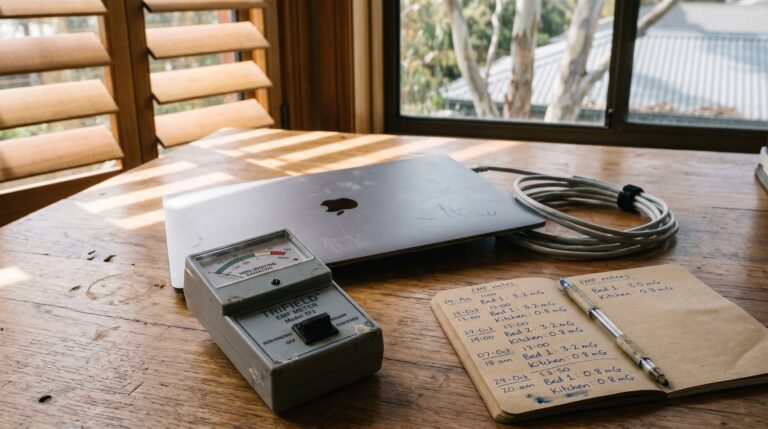
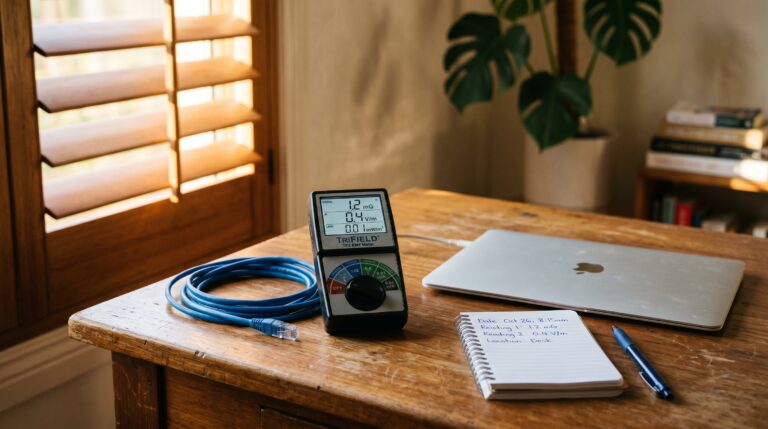
The TriField TF2 measures AC magnetic, AC electric, and RF/microwave fields in a single meter. It is what I use to audit rooms at the Palm Beach house.
See the TriField TF2 Review →Five-Year Cost Comparison
Cost matters because you will live with this decision for years. Here is what each path costs over five years, assuming typical Victorian distributor fees and a mid-range commercial shield.
| Option | Upfront (AUD) | Annual Running Cost (AUD) | 5-Year Total (AUD) |
|---|---|---|---|
| Commercial aluminium shield | $140 | $0 | $140 |
| RF-shielding paint (one interior wall) | $450 | $0 | $450 |
| Victorian opt-out (low estimate) | $70 | $120 | $670 |
| Victorian opt-out (high estimate) | $200 | $220 | $1,300 |
| Shield + opt-out combined (Vic) | $210 | $120 | $810 |
The shield is cheaper in every scenario. But cheaper is not always better — a 100% RF reduction from opting out is worth the premium if you are a Victorian homeowner and the meter is on your bedroom wall. If you are in Queensland, NSW, SA, or WA, the shield is not just cheaper — it is your only option with any certainty.
The Shielding Trap Most People Miss
I need to address something that most smart meter shield sellers ignore. The principle is identical to the one I follow with bedroom RF canopies: if the primary EMF source is inside the shielded space, the shield reflects energy back and increases your exposure.
With smart meters, this trap applies in a specific scenario: the meter is mounted inside a metal switchboard enclosure that is already partially shielded on three sides by the metal housing. Adding a shield on the front (street-facing) side can create a near-complete Faraday cage around the meter. If the meter’s signal cannot escape in any direction, the meter’s internal transmitter may increase power output or retry transmissions more aggressively.
The correct approach is to shield on the house-facing side only, leaving the street-facing side open so the meter can still communicate with the network. This way:
- RF toward your living space is reduced by 90-98%
- The meter’s signal escapes toward the street, keeping transmit power stable
- Your billing remains accurate
If you fully enclose the meter, you may receive estimated bills, trigger a distributor inspection, or cause the meter to transmit at maximum power inside the enclosure — defeating the purpose.
Distributor Pushback: What Happens If They Object
This is a real concern. Distributors own the meter. You own the property. These interests can collide.
Shield Pushback
Some distributors have sent letters requesting customers remove smart meter shields, arguing the shield interferes with metering equipment. In most states, the distributor has a right of access to the meter and a right to accurate metering. If your shield blocks the signal so completely that the meter cannot communicate, the distributor has a legitimate complaint.
The practical middle ground: use a house-side-only shield (behind the meter, on the interior wall) rather than an external cage over the meter itself. An RF-shielding paint application or foil-backed plasterboard on the interior wall is invisible to the distributor, does not interfere with their equipment, and provides 15-40 dB of attenuation on the side that matters — your sleeping or living area.
Opt-Out Pushback (Non-Victorian States)
If you request an opt-out outside Victoria and the retailer or metering coordinator refuses, you have limited formal avenues. You can:
- Lodge a complaint with your state energy ombudsman (EWOV in Victoria, EWON in NSW, EWOQ in QLD, EWOSA in SA, EO WA in Western Australia)
- Write to your distributor citing health concerns and requesting a review under their hardship or medical provisions
- Request a Type 5 or Type 6 meter (manually read interval or accumulation meter) through your retailer — although this conflicts with the AEMC’s 2023 rule change mandating Type 4 smart meters for all new installations
In practice, persistence and formal written requests yield better results than phone calls. Document everything. If the ombudsman cannot help, shielding is your fallback.
Decision Tree: Three Questions to Find Your Answer
You do not need to read every section above. Answer these three questions in order.
Question 1: Do you live in Victoria?
→ Yes: Opt-out is available and legislated. Request it through your distributor. Accept the manual read fee. You eliminate 100% of smart meter RF. Done.
→ No: Proceed to Question 2.
Question 2: Does your bedroom, nursery, or main living area share a wall with the meter box?
→ Yes: This is high priority. Apply RF-shielding paint (Yshield HSF54 or equivalent) to the interior of that wall, or install foil-backed plasterboard. Target 20+ dB attenuation. Measure before and after with a meter like the TriField TF2 or Safe and Sound Pro II.
→ No: Proceed to Question 3.
Question 3: Is your measured smart meter RF at the nearest interior wall above 0.1 mW/m² (Building Biology sleeping threshold)?
→ Yes: Install a commercial smart meter cover on the house-facing side of the meter. Confirm reduction with a meter. Typical result: 90-98% reduction.
→ No: Your smart meter RF at that distance is already below the precautionary threshold. Focus your EMF reduction efforts on higher-impact sources — your Wi-Fi router, cordless phone base station, and mobile phone charging position are likely contributing more to your bedroom RF exposure.
Who Should Choose a Smart Meter Shield
- You live outside Victoria and have no legislated opt-out right. Shielding is your only guaranteed path to reduced smart meter RF.
- You are a renter. You cannot request meter changes or modifications to utility infrastructure. A removable shield or interior wall treatment is your option.
- You want immediate results. A shield installs in 5 minutes. An opt-out request takes weeks and may be refused.
- You want to avoid ongoing costs. A one-off purchase of $90-$200 versus $120-$220 per year in perpetuity.
- You need to maintain time-of-use billing. Opting out in Victoria reverts you to a flat tariff (no off-peak/shoulder rates). If you have solar panels and benefit from feed-in tariff monitoring, the smart meter’s data function has financial value.
Who Should Choose Smart Meter Opt-Out
- You live in Victoria and want the cleanest possible reduction. 100% RF elimination from the meter is unbeatable.
- You want zero distributor conflict. Opt-out is a formal process. Shielding can trigger letters and inspections.
- Your meter is surrounded by living spaces. If the meter is on a shared wall between apartments or near multiple rooms, a shield only blocks one direction. Opt-out eliminates the source in all directions.
- You do not benefit from time-of-use tariffs or solar feed-in monitoring. The financial loss from reverting to flat tariffs is negligible for you.
- You want to eliminate the RF source entirely. No second-guessing shield quality, installation gaps, or reflections.
The Measurement Step You Must Not Skip
Before you spend a dollar on a shield or submit an opt-out request, measure your actual exposure. I cannot stress this enough. Your smart meter may not be your biggest RF source.
At the Palm Beach house, my initial assumption was that the smart meter was the primary RF contributor to the bedroom. When I measured, the Wi-Fi router — located in the hallway — was producing 3.058 mW/m² at the bed head. The smart meter, through the external brick wall, registered well below the router at the nearest interior point (the kitchen, not the bedroom). The router was the bigger problem.
Here is the measurement protocol I use:
- Identify your smart meter location. Walk outside and find the meter box.
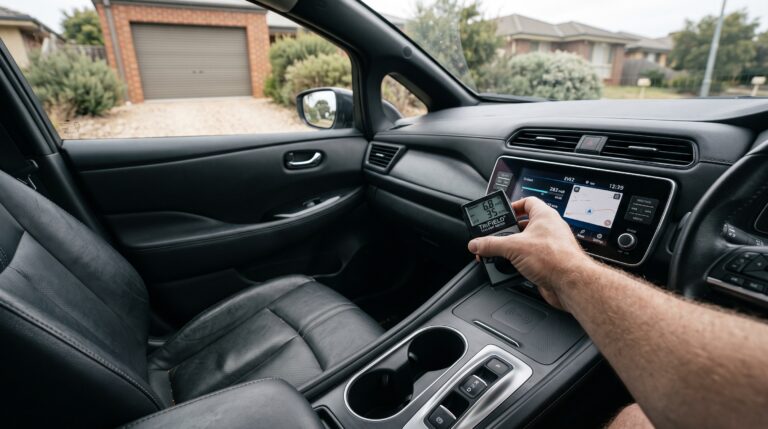
- Measure the exterior RF. Hold your RF meter 1 metre from the smart meter face. Wait at least 2 minutes to capture several transmission pulses. Record the peak reading.
- Measure the corresponding interior wall. Go inside to the wall directly behind the meter. Measure at the same height. Record peak.
- Compare against Building Biology thresholds. Sleeping areas: below 0.1 mW/m². Living areas: below 1.0 mW/m² is a reasonable precautionary target.
- Measure your other RF sources. Wi-Fi router, cordless phone base, microwave oven (when running), mobile phones. Rank all sources from highest to lowest.
- Address the highest source first. This may not be the smart meter.
The TriField TF2 and Safe and Sound Pro II are both capable of capturing the pulsed RF from a smart meter. The Safe and Sound Pro II has a faster sample rate that better captures short-duration smart meter pulses, but the TriField TF2 is more versatile for a whole-house audit because it also measures AC magnetic and AC electric fields.
Can You Do Both? Shield and Opt-Out Combined
Yes. And in some situations, you should.
If you are a Victorian homeowner with the meter on your bedroom wall, opting out eliminates the RF while you wait for the distributor to process the request (2-8 weeks). In the meantime, a temporary shield gives you immediate protection. Once the opt-out is confirmed and the communications module is disabled, you can remove the shield.
If you are in another state and manage to negotiate a partial opt-out (communications disabled but not guaranteed to stay that way), a shield provides insurance against the meter being reactivated without notice during firmware updates or network changes.
What About the Magnetic Field from the Smart Meter?
Smart meter discussions focus on RF because that is the wireless transmission. But the meter also sits on your switchboard, where high current flows create AC magnetic fields. These are a separate exposure — typically 0.2-2.0 μT at 30 cm from the meter box, dropping off rapidly with distance.
An RF shield (aluminium, mesh, or paint) does nothing for low-frequency magnetic fields. Those require high-permeability materials like mu-metal, or simply distance. If your headboard is against the meter wall, moving the bed 1 metre away often reduces the magnetic field exposure more than any shielding product.
The Building Biology sleeping area guideline for AC magnetic fields is below 0.2 μT. Measure this with the TriField TF2’s magnetic field mode. If your bed-head reading exceeds 0.2 μT and the meter wall is the source, move the bed before spending money on shielding.
Common Myths About Smart Meter Shielding
Myth: “A shield will cause my smart meter to explode or overheat.”
No. Smart meters transmit at low power (typically 0.5-1.0 watts). The reflected energy from a shield does not cause thermal buildup. The meter’s electronics are designed to handle signal attenuation and retransmission. There is no explosion or fire risk from an external metal cover.
Myth: “Shielding a smart meter is illegal.”
There is no Australian law that specifically prohibits placing a cover over a smart meter. However, tampering with the meter itself (opening the housing, disconnecting wires) is illegal under state electricity legislation. A shield placed over the exterior without touching the meter’s internal components is not tampering. That said, your distributor may request removal under the terms of their access agreement.
Myth: “If I opt out in Victoria, I’ll lose power.”
No. Opting out disables the communications module. The meter continues to measure electricity consumption. A manual meter reader visits quarterly. Your power supply is unaffected.
Myth: “Aluminium foil on the meter works just as well as a commercial shield.”
It can work — aluminium foil provides 15-20+ dB of RF attenuation at 900 MHz when intact. The problem is durability. Outdoor-exposed aluminium foil degrades quickly: rain, UV, wind, and physical contact create tears and gaps that reduce effectiveness within weeks. A commercial shield maintains consistent attenuation for years. If you use foil as a temporary measure, inspect and replace it regularly.
Smart Meter RF in Context: How It Compares to Other Household Sources
Perspective matters. Here is how your smart meter compares to other common RF sources, measured at typical distances in a home:
| RF Source | Typical Distance | Measured RF (mW/m²) | Duty Cycle |
|---|---|---|---|
| Smart meter (through exterior wall) | 1-3 m interior | 0.5-8.0 (peak pulse) | Brief pulses, 300-5,000+/day |
| Wi-Fi router (2.4 GHz) | 2 m | 1.0-6.0 (continuous) | Near-continuous when devices are connected |
| Cordless phone base (DECT) | 1 m | 3.0-10.0 | Continuous beacon signal 24/7 |
| Mobile phone (4G/5G, active call) | Against head | 50-200+ at the antenna | During calls and data transfers |
| Microwave oven (leakage while running) | 1 m | 5.0-50.0 | Only when cooking |
| Mobile tower (macro cell) | 100-200 m | 0.01-1.0 | Continuous |
Notice the DECT cordless phone base station. It transmits a beacon signal 24 hours a day, even when you are not on a call. If you have one within 3 metres of your bed, it is likely a bigger RF contributor than your smart meter. Replace it with a corded phone or an Eco-DECT model that powers down the beacon when the handset is docked.
This is why measurement comes first. Your smart meter might rank third or fourth on your household’s RF source list.
Solar Panels, Battery Systems, and Smart Meter Dependencies
If you have rooftop solar panels (common across Brisbane, Sydney, Adelaide, Gold Coast suburbs), your smart meter serves a dual function: it measures both electricity consumption and solar export. The communications module transmits your export data to the distributor, which is used to calculate your feed-in tariff credit.
If you opt out and revert to manual reads, you may lose real-time export monitoring and potentially experience delays in feed-in tariff credits. Some Victorian distributors have warned that opting out could affect time-of-use billing and solar payment reconciliation.
If you shield the meter and block communications, the same issue applies — the distributor cannot read your export data remotely and may revert to estimated export figures.
For solar homeowners, the financial calculation changes. You need to weigh the RF reduction benefit against the potential loss of accurate feed-in tariff payments. In many cases, the difference is small (a few dollars per quarter), but for systems generating significant export credits, it is worth calculating.
Final Verdict
If you are in Victoria, opt out. It is legislated, it eliminates 100% of the smart meter’s RF, and the cost — while ongoing — is the price of a complete solution. No shield can match zero emissions.
If you are anywhere else in Australia, shield. Specifically, apply an interior wall treatment (RF-shielding paint or foil-backed plasterboard) to the wall between the meter and your sleeping or living area. This avoids distributor conflict, provides 15-40 dB of attenuation (97-99.99% RF reduction on that wall), and costs nothing to maintain.
Before you do either, measure. Identify your actual highest RF source. It may not be the smart meter. Address sources in order from highest to lowest. That is the protocol.
The correct sequence is always: measure, reduce sources, then shield what remains.
Start with a measurement, not a purchase.
Our measurement guide covers the room-by-room protocol used at the Palm Beach house.
EMF Measurement Guide →Frequently Asked Questions
Does a smart meter shield block 100% of RF?
No. A commercial aluminium smart meter cover typically provides 10-15 dB of attenuation, which translates to 90-97% RF reduction on the shielded side. RF-shielding paint on an interior wall can achieve 30-40 dB (99.9%+). Only removing or disabling the transmitter (opt-out) provides 100% reduction.
Can I opt out of a smart meter in Queensland?
There is no legislated opt-out right in Queensland. Energex and Ergon Energy do not offer a formal opt-out pathway. You can write to them requesting the communications module be disabled, but they are not obligated to comply. Shielding is the more reliable option for QLD residents.
Will shielding my smart meter affect my electricity bill?
If the shield blocks enough of the signal to prevent the meter from communicating with the distributor’s network, you may receive estimated bills instead of actual readings. To avoid this, shield only the house-facing side (interior wall treatment) rather than fully enclosing the meter.
Is it illegal to put a cover over my smart meter in Australia?
There is no specific Australian law prohibiting a cover over a smart meter. Tampering with the meter’s internal components is illegal under state electricity legislation, but placing an external cover over the housing is not tampering. Your distributor may request removal under their access agreement terms.
How much does smart meter opt-out cost in Victoria?
Expect a one-off admin or reconfiguration fee of $0-$200 (varies by distributor) plus an ongoing quarterly manual meter read fee of $30-$55 per quarter ($120-$220 per year). Over five years, the total cost ranges from approximately $670 to $1,300.
Does a smart meter emit RF all the time?
Not continuously, but frequently. Smart meters transmit in short RF pulses (typically 2-20 milliseconds each) at intervals of every 15 seconds to 5 minutes. This means 300 to 5,000+ pulses per day. The meter is active around the clock, including overnight while you sleep.
What RF meter should I use to measure my smart meter’s emissions?
The TriField TF2 (measures RF, AC magnetic, and AC electric fields) is the best all-round option for a home audit. The Safe and Sound Pro II has a faster sample rate that better captures brief smart meter pulses but only measures RF. For a first meter, I recommend the TriField TF2 because it covers all three field types.
Will my solar feed-in tariff be affected if I opt out or shield?
Potentially. Your smart meter monitors solar export in real time and transmits the data to your distributor. If the communications module is disabled (opt-out) or blocked (shield), your export data will be read manually (quarterly) or estimated. This can delay feed-in tariff credits and may affect billing accuracy for time-of-use tariffs.
Is the RF from a smart meter dangerous?
Smart meter RF is well below ARPANSA’s thermal exposure limit of approximately 450 μW/cm² at 900 MHz. ARPANSA states there is no established health risk at these levels. However, the Building Biology precautionary guideline for sleeping areas (below 0.1 mW/m²) is significantly stricter than ARPANSA’s limit. Whether to apply the precautionary threshold is a personal decision. This article provides the measured data so you can make an informed choice.
Can I use RF-shielding paint behind my bed if the smart meter is on the other side of the wall?
Yes. RF-shielding paint (such as Yshield HSF54) applied to the interior surface of the wall, then grounded to the house’s earth conductor and covered with regular paint, provides 30-40 dB of attenuation. This is one of the most effective approaches because it is invisible to the distributor, does not interfere with the meter’s ability to communicate toward the street, and provides high attenuation exactly where you need it — on your side of the wall.
Measure First. Act Second.
The TriField TF2 measures RF, AC magnetic, and AC electric fields in one meter. Every room audit starts here before you spend on shielding.
Get the Australian Home Environment Checklist
30 checks across water, air and EMF. Most of them free. Ranked by impact.
No spam. Unsubscribe any time.

Former Royal Australian Navy Clearance Diver and TAG-E counter-terrorism operator. Founded Clean and Native to apply the same rigorous thinking to the home environment.
Full biography →