Fremantle Tap Water Quality 2026: What’s Actually In It?
Fremantle tap water is safe to drink and meets all Australian Drinking Water Guidelines, with moderately hard water (~125 mg/L CaCO₃), controlled fluoride (0.6–0.8 mg/L), and no detected PFAS in the metro supply. The integrated Perth system delivers consistent quality year-round, though seasonal TDS variation of up to 15% affects taste. The catches: chlorine disinfection leaves noticeable taste and odour for some users, and moderate hardness causes gradual scale buildup in kettles and appliances.
| Concern | Fremantle Status | Verdict |
|---|---|---|
| Drinking safety | Compliant, PFAS-free metro | Safe as-is |
| Taste/chlorine | 0.6 mg/L free chlorine | Filter improves |
| Scale/hardness | 125 mg/L (moderate) | RO if concerned |
Fremantle water quality data
| Parameter | Level | ADWG guideline | Status |
|---|---|---|---|
| Total Dissolved Solids (TDS) | ~200 mg/L | 500 mg/L max | Pass |
| Water Hardness | ~125 mg/L CaCO3 | No health limit | Moderately hard |
| pH | 7.4 — 7.8 | 6.5 — 8.5 | Pass |
| Fluoride | 0.6 — 0.8 mg/L | 1.5 mg/L max | Pass |
| Disinfection | Free chlorine | 0.6 mg/L target | Standard |
| PFAS | Not detected (metro) | 0.07 µg/L PFOS+PFOA | Pass |
Source: Water Corporation annual drinking water quality reports for the Perth metropolitan supply. Fremantle is served by the integrated Perth supply system — readings are representative values, not a single measured sample. Actual readings vary seasonally by up to 15%.
The three products we own are measured first-hand by Jayce Love, former Royal Australian Navy Clearance Diver; every other product is assessed on published manufacturer specifications and independent certification using our documented methodology — no gifted units, no brand payments.
Is Fremantle water hard or soft?
Fremantle water is moderately hard at around 125 mg/L as calcium carbonate. This sits in the “moderately hard” band (100 — 200 mg/L). For context, Melbourne is 20 — 40 mg/L (soft) and Adelaide is 130 — 160 mg/L (similar to Fremantle).
What does hardness mean in practice:
- Kettles and appliances: Scale builds up faster. Descale kettles every 2 — 3 months. Hot water systems and dishwashers accumulate limescale over years.
- Soap lathering: Hard water reacts with soap to form calcium stearate rather than lather. You use more soap and may notice a film on skin.
- Drinking water taste: Mineral character is noticeable but not unpleasant to most people.
- Health impact: None. The WHO and ADWG have no health-based guideline value for water hardness. The calcium and magnesium in hard water are bioavailable minerals.
If hardness-related scale is a concern for appliances, a whole-house water softener addresses it at the source. For drinking water specifically, a countertop or under-sink RO removes calcium and magnesium along with other dissolved solids — TDS typically drops from ~200 mg/L to under 20 mg/L after RO.
Does Fremantle water have fluoride?
Yes. Water Corporation fluoridates Perth metropolitan water at 0.6 — 0.8 mg/L. The ADWG health guideline value is 1.5 mg/L — Fremantle’s fluoride level is well below this. The Australian government’s target for fluoridated water is 0.6 — 0.9 mg/L for dental health purposes.
Standard activated carbon filters do not remove fluoride. If fluoride removal is a priority, you need either:
- Reverse osmosis: NSF 58-certified RO systems reduce fluoride by 90 — 96%. The AquaTru Classic and Waterdrop D6 are both NSF 58 certified.
- Activated alumina: Specific filter media rated for fluoride removal. Less common in consumer products. Some Berkey filters include fluoride-rated elements as an add-on.
Fremantle uses free chlorine — why this matters for filter selection
Perth and Fremantle use free chlorine for disinfection, not chloramine. This is an important distinction for filter selection.
Standard activated carbon filters (granular activated carbon or carbon block) remove free chlorine easily and completely. If you are buying a filter primarily for taste and odour improvement in Fremantle, a basic carbon filter is sufficient and cost-effective.
Chloramine, used in Sydney, Melbourne, Brisbane, and Canberra, requires catalytic activated carbon (or reverse osmosis) to remove effectively. The TAPP EcoPro uses activated carbon block and is rated for free chlorine cities including Perth. It is not effective for chloramine.
If you are in a free chlorine city like Fremantle and want basic taste improvement without committing to RO, the TAPP EcoPro is the low-cost option. If you want fluoride reduction, TDS reduction, or hardness reduction from your drinking water, RO is the right technology.
PFAS status in Fremantle
Water Corporation tests Perth metropolitan supply for PFAS as part of routine water quality monitoring. Current testing shows PFAS below detection limits in the Perth integrated supply system that serves Fremantle. There are no known PFAS contamination sources in the Fremantle supply catchment comparable to the documented contamination issues near RAAF bases at Williamtown (NSW) or Oakey (QLD).
If PFAS is a specific concern, NSF 58-certified reverse osmosis and NSF 53-certified activated carbon block filters both address PFAS removal. The AquaTru Classic is NSF 58 certified and independently tested to remove PFAS compounds including PFOS and PFOA.
Best water filters for Fremantle residents
The right filter for a Fremantle household depends on what you are trying to remove:
- Chlorine taste and odour only: A carbon block filter like the TAPP EcoPro ($60 — $80 AUD). Fits standard tap aerators, no installation required. Works well in free chlorine cities like Perth.
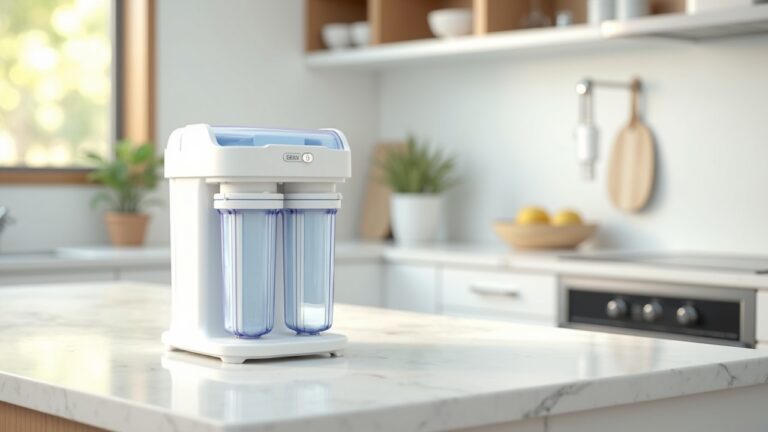
- Chlorine + TDS reduction + hardness + fluoride: Reverse osmosis. The AquaTru Classic (countertop, no plumbing, NSF 58 certified) or Waterdrop D6 (under-sink, unlimited flow). Both reduce TDS from ~200 mg/L to under 20 mg/L and remove fluoride by 90 — 96%.
- Renters or apartment dwellers: AquaTru Classic is the practical choice — sits on the benchtop, connects to any tap via adapter, moves with you.
Recommended Water Filters for Fremantle
Fremantle uses free chlorine — standard activated carbon or RO both work. Choose based on whether you need fluoride and hardness reduction.
Frequently asked questions
Is Fremantle tap water safe to drink in 2026?
Yes. Fremantle tap water meets all Australian Drinking Water Guidelines (ADWG). Water Corporation publishes annual drinking water quality reports for the Perth metropolitan supply. All regulated parameters — including microbiological, chemical, and physical — are within guideline values. The water is safe for all household uses including drinking, cooking, and infant formula preparation.
Why does Fremantle tap water taste different from bottled water?
The detectable chlorine taste comes from free chlorine used for disinfection. Fremantle’s water also has a moderate mineral character from TDS (~200 mg/L) and hardness (~125 mg/L CaCO3). Bottled water is typically lower in TDS and is unchlorinated. A standard activated carbon filter removes the chlorine taste completely. For taste matching bottled water, a reverse osmosis system reduces TDS to under 20 mg/L.
What is the TDS level of Fremantle tap water?
Perth metropolitan water, which supplies Fremantle, typically measures around 150 — 250 mg/L total dissolved solids depending on the source blend (surface water from dams, groundwater, and desalinated seawater). The ADWG aesthetic guideline is 500 mg/L. Fremantle’s TDS is well within this limit. A reverse osmosis system reduces TDS to 10 — 30 mg/L if lower mineral content is preferred.
Does Fremantle water contain fluoride and is it safe?
Yes, Water Corporation adds fluoride to the Perth metropolitan supply at 0.6 — 0.8 mg/L for dental health purposes. This is below the ADWG health guideline value of 1.5 mg/L. Activated carbon filters do not remove fluoride. Reverse osmosis (NSF 58 certified) reduces fluoride by 90 — 96%. Activated alumina media also removes fluoride but is less common in consumer products available in Australia.
Does Fremantle use chloramine or free chlorine?
Fremantle and Perth use free chlorine for disinfection. This is different from Sydney, Melbourne, Brisbane, and Canberra, which have transitioned to chloramine. Standard activated carbon filters remove free chlorine effectively. If you are buying a filter like the TAPP EcoPro, it works well in Fremantle. Catalytic carbon or reverse osmosis is required for chloramine removal — not needed for Fremantle water.
What is the best water filter for hard water in Fremantle?
For drinking water, a reverse osmosis system removes calcium and magnesium along with other dissolved solids, producing soft, low-TDS water. The AquaTru Classic (countertop, no plumbing) and Waterdrop D6 (under-sink) are both NSF 58 certified and reduce water hardness as part of their full-spectrum filtration. For whole-home hardness treatment, a salt-based ion exchange softener addresses scale in appliances and plumbing — this is a separate decision from drinking water filtration.
Is there PFAS in Fremantle water?
Current Water Corporation testing shows PFAS below detection limits in the Perth integrated supply that serves Fremantle. There are no documented PFAS contamination sources near the Fremantle supply catchment. If you want additional certainty, an NSF 58-certified RO system (AquaTru Classic, Waterdrop D6) and NSF 53-certified activated carbon filters both demonstrate PFAS removal in independent testing.
How often should I replace my water filter in Fremantle?
For carbon tap filters like the TAPP EcoPro: every 3 months or 1,000 litres, whichever comes first. For countertop RO systems like the AquaTru: pre-filters every 6 months, RO membrane every 24 months. For under-sink RO like the Waterdrop D6: pre-filters every 6 — 12 months (TDS monitor signals membrane degradation). Fremantle’s moderately hard water (125 mg/L) shortens pre-filter life compared to soft water cities like Melbourne.
Get the Australian Home Environment Checklist
30 checks across water, air and EMF. Most of them free. Ranked by impact.
No spam. Unsubscribe any time.

Former Royal Australian Navy Clearance Diver and TAG-E counter-terrorism operator. Founded Clean and Native to apply the same rigorous thinking to the home environment.
Full biography →