Benchtop Water Filter vs Under Sink Water Filter: Which Should You Choose? (Australia 2026)
The question isn’t which filter looks better on your bench. It’s what you actually need to remove from your water — and whether you need to remove fluoride. That single question determines whether a benchtop filter is sufficient or whether you need an under-sink RO. Most buyers get this wrong because most comparison guides don’t explain the technology difference. This one does.
Recommendations in this article draw on our documented methodology, first-hand measurement of the EcoHero 5-stage RO by Jayce Love with calibrated instruments, plus manufacturer specifications and NSF certifications for the other units. No gifted units, no brand payments.
Quick Verdict
Choose Benchtop if you rent, move often, or only need chloramine + taste improvement
No plumbing. Portable. ~$150–400 AUD. Does not remove fluoride.
Choose Under-Sink RO if you want fluoride removal, own your home, or have high usage
Removes fluoride (93–96%), PFAS (98%), chloramine, heavy metals. ~$450–900 installed.
Benchtop is right for you if…
- You’re renting — no plumber, no lease issues
- You move frequently and want to take your filter
- Fluoride removal is not a priority
- You use under 8 litres of filtered water daily
- You want the lowest upfront cost
Under-sink RO is right for you if…
- You want fluoride removed (RO is the only option)
- You’re near a PFAS contamination zone
- You own your home and want a permanent solution
- Your family uses 10+ litres of filtered water daily
- You have an older home with brass fittings or lead risk
What’s the Actual Difference in What They Remove?
This is the question most comparison guides skip. Benchtop and under-sink filters use fundamentally different technologies — and that determines what they can and cannot remove.
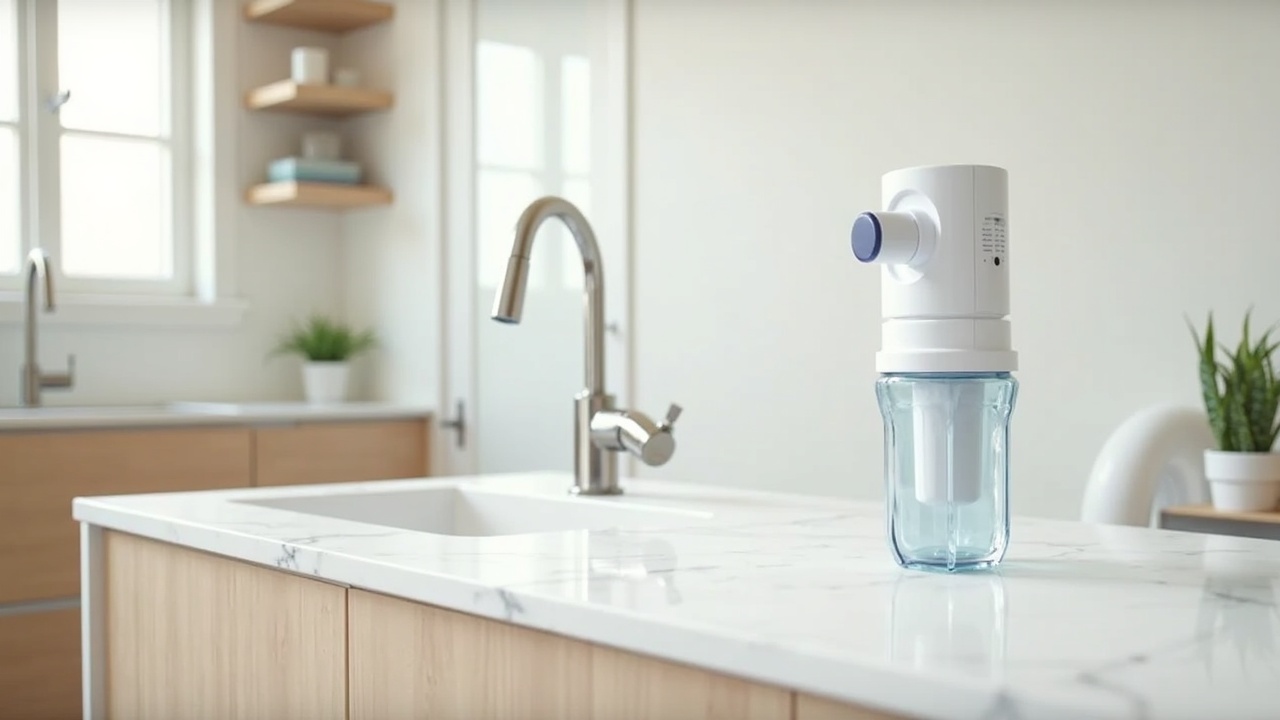
Benchtop gravity filters use activated carbon, ceramic, and sometimes alkalising mineral stages. They remove chlorine, chloramines, sediment, some VOCs, and most bacteria. They do not reliably remove fluoride, PFAS, nitrates, heavy metals in ionic form, or dissolved salts. Good for taste and chloramine reduction. Not comprehensive.
Under-sink reverse osmosis systems force water through a membrane at 0.0001 microns — small enough to block dissolved ions. RO removes fluoride (93–96%), PFAS (up to 98%), lead (up to 99%), arsenic, nitrates, chloramine, and microplastics. It’s the only residential technology that comprehensively addresses all of these.
| Contaminant | Benchtop Carbon/Ceramic | Under-Sink RO | AU Relevance |
|---|---|---|---|
| Chloramine | Yes | Yes | Brisbane, Sydney, Adelaide, Gold Coast |
| Fluoride | No | 93–96% | Added in QLD, NSW, VIC, SA, WA |
| PFAS | Partial | Up to 98% | 700+ AU contamination sites |
| Lead / Heavy Metals | Partial | Up to 99% | Pre-1990 homes |
| TDS / Dissolved Minerals | No | 85–95% | High in Adelaide, Perth |
| Taste / Chlorine | Excellent | Excellent | Both handle this well |
Cost Comparison — What You Actually Pay Over 3 Years
The upfront cost difference is real but the 3-year picture is what matters for homeowners. Benchtop filters look cheaper until you account for cartridge replacement frequency and the fact that gravity filters need more frequent changes on harder Australian water.
| System | Purchase | Install | Annual filters | 3-year total |
|---|---|---|---|---|
| Quality benchtop carbon | ~$200 | $0 | ~$80 | ~$440 |
| Benchtop gravity (8-stage) | ~$350 | $0 | ~$120 | ~$710 |
| Under-sink carbon only | ~$280 | ~$150 | ~$60 | ~$610 |
| EcoHero 5-stage RO | ~$599 | ~$175 | ~$490 | ~$2,244 |
RO costs more over 3 years but removes significantly more contaminants. For fluoride removal specifically, there is no cheaper residential option.
Installation — What’s Actually Involved
Benchtop: Unbox, rinse filters, place on bench. Five minutes. Zero tools. Works in any kitchen, rental or owned. The only ongoing task is refilling the reservoir and cleaning the unit periodically.
Under-sink carbon (non-RO): DIY-friendly with push-fit connections. Typically 30–60 minutes if you’re comfortable under a sink. No drilling unless you want a dedicated filtered water tap rather than a diverter on your existing tap.
Under-sink RO: Requires a dedicated tap hole in the benchtop. If one isn’t already there, a plumber is the sensible call — $150–200 for standard installation. Pure Water Systems coordinates this for the EcoHero; you don’t have to source anyone yourself. See the full under-sink guide for installation detail.
Our Top-Rated Water Filters
Reverse osmosis is the only residential technology that reliably removes PFAS, fluoride, chloramine, and heavy metals — the four contaminants most Australians are most exposed to.
Which Should You Choose — The Decision Framework
One question cuts through everything: do you want fluoride removed?
If yes — under-sink RO. There is no other residential option that reliably removes fluoride. Not benchtop gravity filters, not carbon blocks, not tap-mount filters. Only reverse osmosis achieves 93–96% fluoride removal.
If no — then the next question is whether you rent or own. Renters: benchtop is the answer. Owners with only taste/chloramine concerns: an under-sink carbon block at $280–350 is excellent value and cleaner than a benchtop unit on your counter.
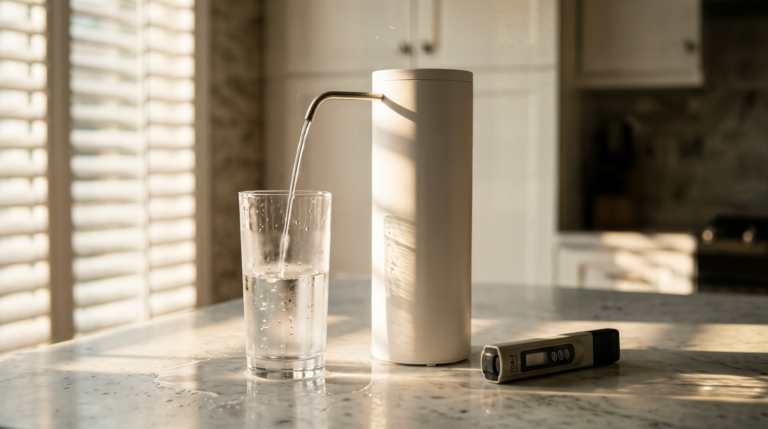
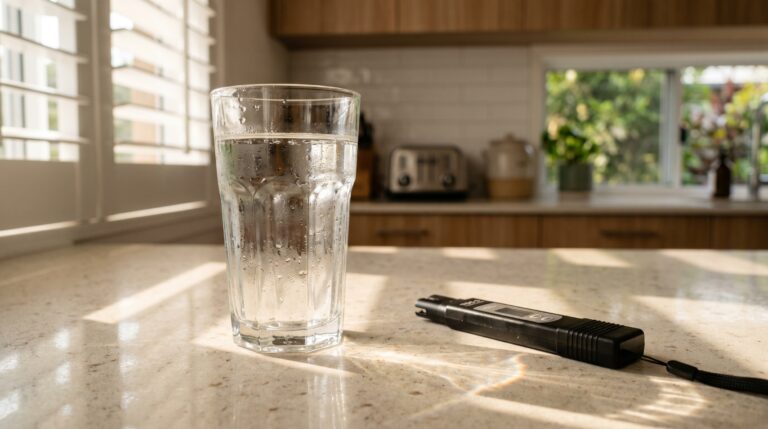
I measured the TDS of our Palm Beach tap water at 69 ppm from the Seqwater supply. After the EcoHero 5-stage RO: 3 ppm. If you’re in Adelaide (480+ mg/L from the Murray River) the taste difference from an RO system is immediately obvious. If you’re in Melbourne (55 mg/L from mountain catchments), a carbon block handles the main concerns.
See the full product comparisons
Frequently Asked Questions
Does a benchtop filter remove fluoride?
No. Standard benchtop carbon and ceramic gravity filters do not remove fluoride. The only residential filtration technology that reliably removes fluoride is reverse osmosis (93–96% removal) or bone char carbon (specialised, less common). If fluoride removal is your goal, you need an under-sink or countertop RO system.
Can I use a benchtop filter in a rental property?
Yes — benchtop filters require no installation, no plumbing modifications, and no landlord permission. They sit on the bench and connect to nothing. This makes them the default recommendation for renters. Under-sink systems typically require drilling a tap hole in the benchtop, which requires landlord approval.
Which filter is better for Australian tap water?
It depends on your state and your goals. For chloramine removal and taste improvement only (adequate for most Melbourne households with soft water), a benchtop carbon filter is sufficient. For fluoride reduction, PFAS removal, or if you’re in Adelaide with high TDS water, an under-sink RO is the better choice. Check your utility’s annual water quality report to understand your specific water profile before deciding.
How often do filters need replacing?
Benchtop carbon filters: every 6–12 months. Ceramic elements: 12–18 months. Under-sink carbon pre-filters: 6–12 months. RO membrane: every 2–3 years. Post-carbon and remineraliser: annually. Australian water quality affects these intervals — Perth and Adelaide’s harder water reduces carbon filter life by 20–30% compared to Melbourne or Sydney.
What is the best benchtop water filter in Australia?
For chloramine and taste improvement, any quality activated carbon benchtop system with NSF 42 certification handles Australian water well. For broader filtration including some heavy metal reduction, a multi-stage gravity system with ceramic and carbon stages is the step up. Neither removes fluoride — that requires RO.
Is an under-sink filter worth the cost?
For homeowners who want comprehensive filtration including fluoride removal: yes. The EcoHero 5-stage RO at ~$899 installed drops TDS from 69 ppm to 3 ppm in our Palm Beach testing. The cost per litre over 3 years is lower than buying bottled water and comparable to a quality benchtop system once you factor in convenience and filter replacement. For renters or households only wanting taste improvement, a benchtop filter delivers good results at lower cost.
Get the Australian Home Environment Checklist
30 checks across water, air and EMF. Most of them free. Ranked by impact.
No spam. Unsubscribe any time.

Former Royal Australian Navy Clearance Diver and TAG-E counter-terrorism operator. Founded Clean and Native to apply the same rigorous thinking to the home environment.
Full biography →