Why Indoor Air Quality Is Worse Than Outdoor Air in Australian Homes
8 min read
This article contains affiliate links. We may earn a commission at no extra cost to you.
The US Environmental Protection Agency estimates that indoor air is two to five times more polluted than outdoor air. Australian building science research broadly supports the same finding. Given that Australians spend approximately 90% of their time indoors, this is not a minor concern.
The irony is that we have collectively invested enormous attention in outdoor air quality — pollution regulations, vehicle emission standards, industrial controls — while largely ignoring what happens to the air inside our sealed, insulated, and often poorly ventilated homes.
Key Takeaways
- Australian homes concentrate indoor pollutants due to modern insulation and low air exchange rates
- The biggest sources are cooking (especially gas), building materials, furniture, and cleaning products
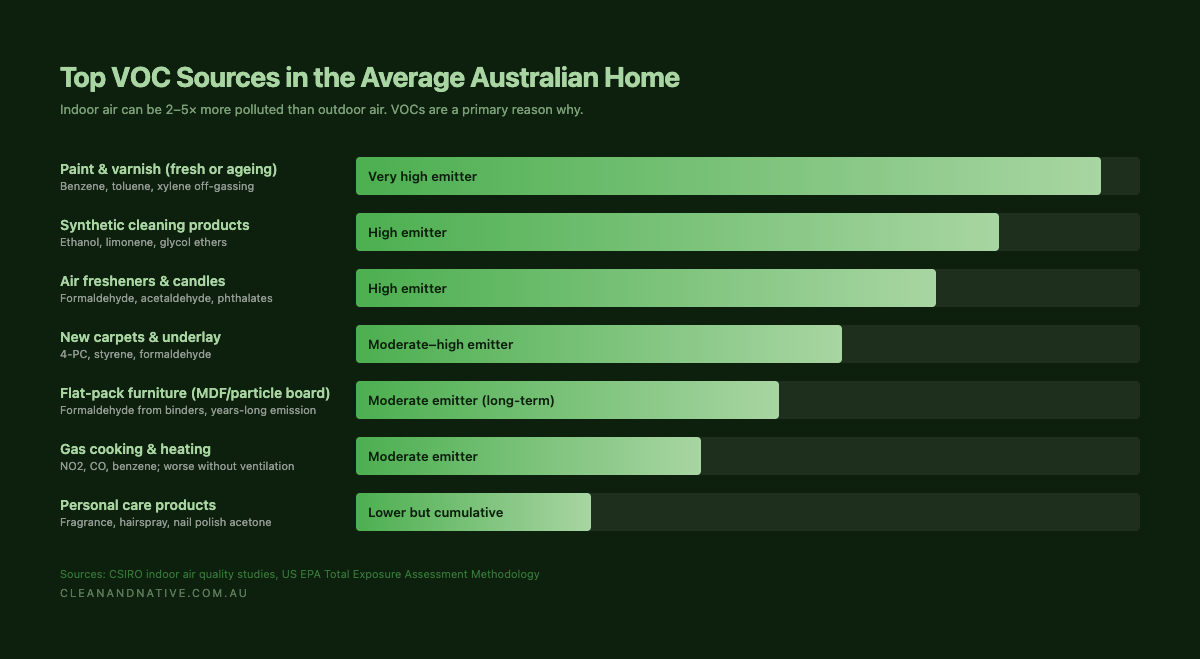
- VOCs (volatile organic compounds) off-gas from paint, carpet, adhesives, and synthetic furnishings for months to years
- Gas cooking produces NO₂ at concentrations that regularly exceed WHO guidelines within kitchen zones
- Ventilation is the highest-impact, lowest-cost intervention — and it’s often free
NEXT STEP
You know the problem. Now fix it.
We have tested and ranked the air purifiers that actually perform in Australian homes — HEPA ratings, CADR scores, bushfire smoke handling, and real running costs. Plus: how to measure your air quality before you spend a cent on a purifier.
Why Modern Australian Homes Trap Pollutants
Older Australian homes — the pre-1980s fibro or weatherboard cottage with gaps under the doors and uninsulated walls — were inadvertently well-ventilated. Air exchange rates were high simply because buildings were leaky.
Modern Australian homes are built to increasingly tight energy efficiency standards under the NCC (National Construction Code). Better insulation, double-glazed windows, weather sealing, and mechanical HVAC systems have dramatically reduced uncontrolled air infiltration. This is good for energy bills and temperature regulation. It is bad for indoor air quality, because the same tightness that keeps conditioned air in also keeps pollutants in.
Without adequate mechanical ventilation — which most Australian residential buildings don’t have — the air inside your home recirculates, and pollutants accumulate.
The Main Sources of Indoor Air Pollution
Gas Cooking
Natural gas combustion produces nitrogen dioxide (NO₂), carbon monoxide (CO), and fine particulates. Kitchen NO₂ concentrations during gas cooking regularly exceed WHO hourly guidelines. Most Australian range hoods are under-ducted or recirculating — they filter grease but not gases.
Furniture & Flooring
New furniture, carpets, and flooring — particularly MDF-based flat-pack and synthetic carpet — off-gas formaldehyde and other VOCs. Off-gassing is highest in the first 6–12 months but can continue for years at lower levels.
Cleaning Products
Many conventional cleaning sprays, disinfectants, and air fresheners are significant VOC sources. Fragranced products contain terpenes that react with ozone to form secondary pollutants including formaldehyde. Plug-in air fresheners are among the worst offenders.
Building Materials
Paint, adhesives, sealants, and composite wood products all off-gas VOCs. Renovation activity dramatically spikes indoor VOC levels. New home construction — the “new home smell” — is a chemical cocktail of off-gassing materials at peak concentration.
Candles & Incense
Paraffin candles produce particulates, VOCs, and trace amounts of known carcinogens including benzene and toluene. Incense combustion generates fine particulate matter at very high concentrations. Both are common in Australian homes and both are significant indoor air quality risks.
Mould & Biological Pollutants
Australia’s climate — particularly in coastal Queensland, NSW, and Victoria — creates ideal conditions for mould in bathrooms, under-slab areas, and poorly ventilated walls. Mould spores and mycotoxins are well-established respiratory hazards. Dust mites in carpet and bedding are Australia’s most common allergen trigger.
The Gas Cooking Problem
This deserves more attention than it typically gets. A 2022 study published in Environmental Science & Technology found that gas stoves emit methane even when not in use (via fittings and connectors), and that cooking with gas regularly produces NO₂ concentrations that exceed WHO guidelines in kitchen and adjacent living areas.
Research from the Australian Institute for Health and Welfare (AIHW) and international epidemiological data links residential gas cooking to increased rates of childhood asthma — with one meta-analysis (Hasanbeigi & Price, 2015 review data) suggesting children in gas-cooking homes have approximately 42% increased risk of current asthma compared to electric-cooking homes.
The implication is not that everyone should immediately rip out their gas stove. It is that: (1) always run your range hood on high with a window cracked when cooking on gas, (2) consider upgrading to an induction cooktop when you next replace your stove, and (3) if you have children with respiratory conditions, gas cooking is a meaningful environmental variable worth addressing.
The Recirculating Range Hood Problem
Many Australian kitchens — particularly in apartments and townhouses — have recirculating range hoods that filter grease through charcoal but vent back into the kitchen. These do not remove gases like NO₂ or CO. To address cooking combustion products, you need either a ducted range hood to outside or a separately opened window during cooking.
The Hierarchy of Fixes — In Order of Impact
Cross-Ventilate Daily
Open windows on opposite sides of your home for 15–20 minutes each morning to flush overnight-accumulated pollutants. This is the single highest-impact action and costs nothing. In humid climates (QLD, coastal NSW), do this in the morning before humidity peaks to avoid mould-promoting conditions.
Remove the Worst Offenders
Plug-in air fresheners, synthetic scented candles, and spray disinfectants with synthetic fragrance are significant VOC sources with no health benefit. Remove them. Replace with unscented alternatives or nothing. This immediately reduces your indoor VOC load.
Cook With Ventilation
Run your range hood on high and crack a window every time you cook on gas. If you have a recirculating hood, open a window in an adjacent room as well. This single habit change materially reduces your NO₂ and fine particulate exposure.
Buy an Air Quality Monitor
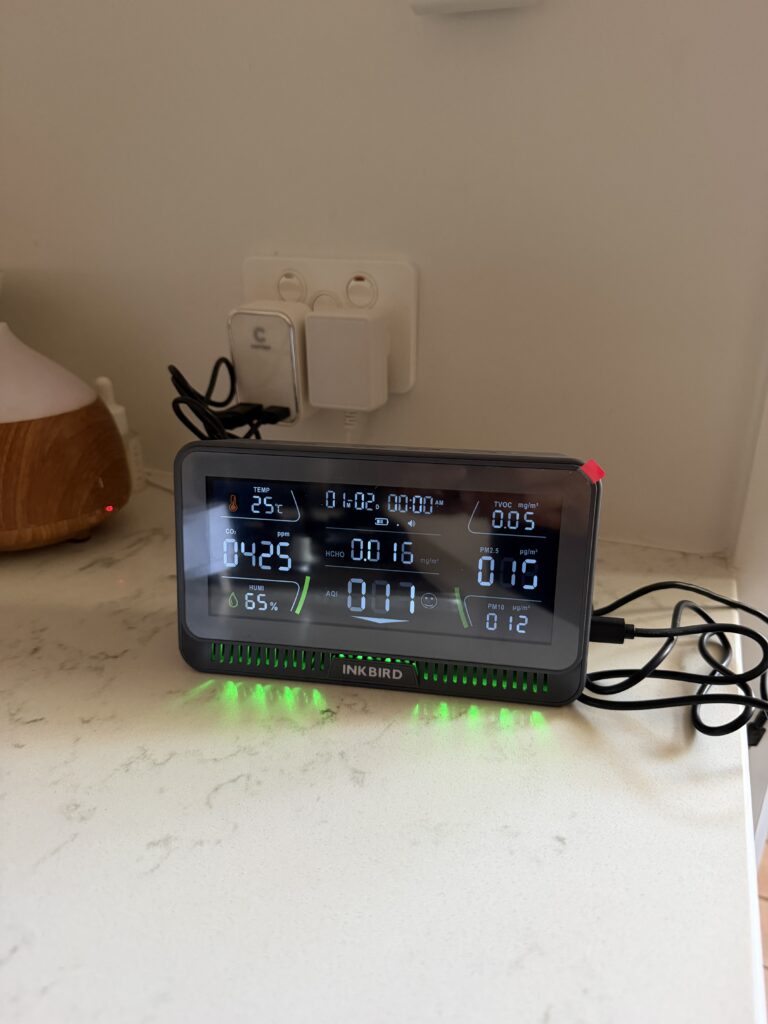
An indoor air quality monitor that measures PM2.5, VOCs, CO₂, and temperature/humidity tells you what you’re actually dealing with. You can’t optimise what you can’t measure. Monitors in the $80–$200 range (Temtop, Airthings, or similar) are accurate enough for household use and give you real data to guide further decisions.
Add a HEPA Air Purifier in the Bedroom
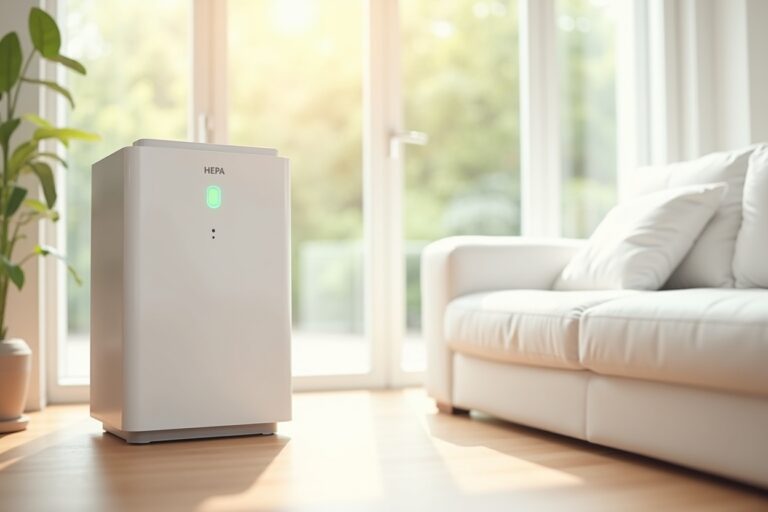
A true HEPA air purifier in your bedroom — where you spend 7–9 hours a night — provides meaningful filtration of particulates, mould spores, and dust mite allergens. Look for a unit with a genuine HEPA filter (not “HEPA-style”) and CADR appropriate to your room size. Run it continuously on low overnight.
Eliminate Mould at the Source
If mould is visible anywhere in your home, address the water source causing it — a leaking pipe, inadequate bathroom ventilation, or poor subfloor drainage. Surface treatment without fixing the moisture source is temporary. Install bathroom exhaust fans that vent to outside (not to the roof cavity), and run them for 20 minutes after every shower.
Quick Start — This Week
- Open windows cross-directionally for 15 min each morning starting today
- Remove plug-in air fresheners and synthetic-fragrance candles
- Start running your range hood every time you cook — and crack a window
- Check bathroom exhaust fan: does it vent outside or recirculate? (Look outside for the vent cap)
- Consider ordering an indoor air quality monitor to baseline your home’s pollution levels
Ready to choose an air purifier?
Our 2026 guide ranks the best air purifiers for Australian homes by real-world CADR, bushfire smoke performance, and running cost — not spec-sheet marketing.
Frequently Asked Questions
Why is indoor air quality often worse than outdoor air in Australia?
Australian homes tend to be well-sealed for energy efficiency, which reduces natural ventilation and allows indoor pollutants to accumulate. Common sources include off-gassing from new furniture, synthetic cleaning products, gas cooking, carpets, and building materials. Indoor air can be 2–5 times more polluted than outdoor air even in cities.
What are the most harmful indoor air pollutants in Australian homes?
VOCs (volatile organic compounds) from paint, furniture, and cleaning products; particulate matter (PM2.5) from cooking and candles; formaldehyde from MDF/particle board furniture; and nitrogen dioxide (NO2) from unflued gas heaters are the most common harmful indoor air pollutants in Australian homes.
Do air purifiers actually work for indoor air quality?
Yes — high-quality HEPA air purifiers effectively capture PM2.5 particulates, allergens, mould spores, and pet dander. Look for true HEPA certification (not “HEPA-type”), a CADR (clean air delivery rate) appropriate for your room size, and an activated carbon filter for VOC reduction. Units like the AirDoctor, IQAir HealthPro, and Austin Air HealthMate consistently perform well in independent tests.
Is gas cooking bad for indoor air quality?
Research increasingly shows gas cooking is a significant source of nitrogen dioxide (NO2) and benzene in Australian homes. A 2022 US study found gas stoves could produce NO2 levels exceeding outdoor air quality standards within minutes. Good ventilation (range hood vented to outside, not recirculating), opening windows while cooking, and switching to induction are the most effective solutions.
How can I improve indoor air quality without an air purifier?
Open windows for cross-ventilation daily for 15+ minutes (ideally morning and evening when outdoor air is cleaner). Avoid synthetic air fresheners and candles. Choose low-VOC paints and furniture. Use a range hood when cooking. Keep indoor plants (though their air-purifying effect is modest without large quantities). Remove shoes at the door to reduce tracked-in pollutants.
Get the Australian Home Environment Checklist
30 checks across water, air and EMF. Most of them free. Ranked by impact.
No spam. Unsubscribe any time.
Former Royal Australian Navy Clearance Diver and TAG-E counter-terrorism operator. Founded Clean and Native to apply the same rigorous thinking to the home environment.
Full biography →