Dyson Purifier Cool vs Levoit Core 600S Australia 2026: Which Is Worth Your Money?
Quick Verdict
The three products we own are measured first-hand by Jayce Love, former Royal Australian Navy Clearance Diver; every other product is assessed on published manufacturer specifications and independent certification using our documented methodology — no gifted units, no brand payments.
The Levoit Core 600S delivers 41% more clean air per minute than the Dyson Purifier Cool and costs roughly 60% less. Over five years including annual filter replacements, the Dyson costs approximately $1,700 AUD versus the Levoit’s $720. The Dyson wins on industrial design, bladeless fan functionality, and living-room aesthetics. If your primary concern is removing PM2.5 during bushfire season or reducing pollen and mould spores in a Brisbane, Sydney, or Melbourne home, the Levoit Core 600S wins every measurable performance metric that matters.
| Metric | Dyson Purifier Cool | Levoit Core 600S |
|---|---|---|
| CADR smoke (m³/h) | ~290 | 410 |
| Effective room size (2 ACH) | ~48 m² | ~68 m² |
| Filter class | H13 HEPA + Carbon | H13 HEPA + Carbon |
| Sleep mode noise | 40 dB | 24 dB |
| Price (AUD) | ~$999 | ~$399 |
| 5-year cost of ownership | ~$1,700 | ~$720 |
| Bladeless fan function | Yes | No |
| Smart app | Dyson Link | VeSync |
I am Jayce Love, former Royal Australian Navy Clearance Diver and founder of Clean and Native. I test and review air purifiers, water filters, and EMF reduction equipment for Australian homes — with measurements and certifications, not marketing claims.
The question I get asked most often about air purifiers: “Is the Dyson actually worth $600 more than a Levoit?” The honest answer depends on what you need. If you need the fastest clean-air response during a bushfire smoke event, you do not need to pay $999. If you want one device that purifies the air and cools the room — without a second appliance — the Dyson argument becomes more interesting. This comparison gives you the data to decide for yourself.
Who Each Purifier Is For — and Who It Is Not For
✓ Pick the Levoit Core 600S if
- Your primary concern is PM2.5 reduction during bushfire smoke season or pollen spikes
- You want the most CADR per dollar spent (410 m³/h at $399 AUD)
- You run the purifier overnight and noise is a deciding factor (24 dB sleep mode versus 40 dB on the Dyson)
- You have a 50-70 m² open-plan area that needs coverage
- You want lower ongoing filter costs (~$70/year versus ~$140/year for the Dyson)
✓ Pick the Dyson Purifier Cool if
- You want a single device that functions as both a purifier and a bladeless fan (relevant for QLD and NSW summers)
- Aesthetics and living-room placement matter — the Dyson tower design is genuinely distinctive
- You want the engineering assurance of a fully sealed airflow path (not just H13 filter media)
- You are buying for a smaller space (bedroom, study, 25-35 m²) where the CADR gap matters less
Neither unit is suitable for: Whole-home coverage in a standard Australian 3-4 bedroom house. Both require closed rooms to be effective. For whole-home coverage during a hazardous smoke event, the bushfire smoke purifier guide covers units with CADR above 600 m³/h for large spaces.
Why CADR Matters More Than Brand in an Australian Bushfire Context
Australia’s air quality is not a background concern. It is a recurring, predictable emergency. During the Black Summer bushfires of 2019-2020, PM2.5 readings in Canberra reached 2,000 µg/m³ — roughly 80 times the NEPM 24-hour advisory standard of 25 µg/m³. Sydney’s western suburbs recorded AQI above 200 for consecutive days. Melbourne’s 2016 thunderstorm asthma event sent over 10,000 people to emergency departments in a single evening.
These events are no longer outliers. The October-March bushfire and smoke season reliably delivers hazardous PM2.5 into Brisbane, Sydney, Melbourne, and Canberra homes. Brisbane’s subtropical climate adds aggressive mould spore loads from November through April — spores in the 2-20 micron range that pass through unsealed windows and doors. Perth’s spring pollen season (September-November) ranks among the highest measured in the southern hemisphere for grass and tree pollen concentrations.
In every one of these scenarios, CADR — Clean Air Delivery Rate — is the metric that determines how quickly your purifier reduces indoor particle concentrations. The Levoit Core 600S at 410 m³/h cleans a sealed 30 m² room to safe PM2.5 levels approximately 5 minutes faster than the Dyson at 290 m³/h. During a hazardous air quality event, that difference is measurable exposure reduction.
Filtration Technology: H13 HEPA Is Not the Full Story
Both units use H13 HEPA media. That captures 99.97% of airborne particles at 0.3 microns — the most penetrating particle size (MPPS). PM2.5 particles (0.1-2.5 µm), pollen (10-100 µm), mould spores (2-20 µm), and dust mite allergens (1-10 µm) are all captured at H13 grade. On filter media alone, neither unit has a meaningful advantage.
Dyson’s sealed airflow path
The Dyson engineering distinction is its fully sealed system. The H13 HEPA and activated carbon layers are combined in a single cylindrical cartridge, and the entire airflow path — not just the filter media — is sealed so air cannot bypass the filtration. This matters because some lower-cost units have H13-rated filter media but allow unfiltered air leakage around loose gaskets. Dyson’s sealed system prevents that. The activated carbon layer targets NO2, formaldehyde, and VOCs using tris-impregnated carbon pellets. For standard household VOC loads from cooking, off-gassing furniture, and cleaning products, it performs adequately.
Levoit’s 360-degree intake and larger filter drum
The Levoit Core 600S uses VortexAir 3.0 technology — a 360-degree cylindrical intake draws air from all directions into the filter drum and exhausts clean air upward. The filter drum is physically larger than the Dyson’s, which directly translates to higher airflow capacity without increasing noise proportionally. The integrated H13 HEPA and activated carbon layers are comparable in carbon mass to the Dyson. Neither unit is optimised for heavy gas-phase pollutant loads — if you live adjacent to a major industrial corridor or a heavily trafficked road, a dedicated carbon-bed unit would outperform both.
CADR and Room Coverage: What the Numbers Mean for Your Home
CADR tells you how many cubic metres of fully cleaned air the unit delivers per hour. At 410 m³/h versus 290 m³/h, the Levoit Core 600S has a 41% higher CADR. Here is what that means in practical room sizes:
| Scenario | Dyson Purifier Cool | Levoit Core 600S |
|---|---|---|
| Max room at 2 ACH (2.4m ceiling) | ~48 m² | ~68 m² |
| Time to clean 30 m² sealed room (estimated) | ~15 min | ~10 min |
| Bedroom (25 m²) at 4 ACH — bushfire mode | Achievable on max | Achievable on medium |
| Open-plan kitchen/lounge (50 m²) | Underpowered at 2 ACH | Adequate at 2 ACH |
ACH (air changes per hour) is the number of times the purifier processes the total room volume. AHAM recommends a minimum of 2 ACH for effective general purification. During a bushfire smoke event with AQI above 150, you want 4-5 ACH in the room where family members sleep. At 4 ACH, the Dyson handles approximately 24 m² and the Levoit handles approximately 34 m² — the difference between covering one bedroom versus covering a bedroom plus a hallway. For a full breakdown of room sizing see the best air purifier Australia guide.
Noise: The Metric That Determines Whether You Actually Use It
You will run your purifier overnight. That is 7-9 consecutive hours of exposure to the same room air. If the unit is too loud, you will turn it down to its least effective speed or switch it off entirely. Noise is not a comfort feature — it is a compliance feature.
This is where the Levoit Core 600S has the most decisive advantage over the Dyson Purifier Cool.
| Speed Setting | Dyson Purifier Cool | Levoit Core 600S | Context |
|---|---|---|---|
| Sleep / Low | 40 dB | 24 dB | 24 dB is below a whisper. 40 dB is a quiet library. |
| Medium | ~48 dB | ~40 dB | 8 dB difference is perceived as roughly 2.5x louder |
| Maximum | 56 dB | 52 dB | Both are intrusive at max. Use only for rapid room clearing. |
The 16 dB gap at sleep mode is significant. Every 10 dB increase is perceived as approximately twice as loud. At 40 dB, many people report noticing the Dyson during light sleep. At 24 dB, the Levoit is effectively inaudible in a quiet bedroom. If you have children or are a light sleeper, this is not a minor consideration — it is the most operationally important spec difference between these two units.
For a detailed breakdown of how noise interacts with sleep quality and purifier effectiveness, see the air purifier sleep guide for Australian homes.
Five-Year Cost of Ownership
The $600 purchase price difference between these units understates the total cost gap. Filter replacement is ongoing and mandatory — a clogged HEPA filter reduces airflow and CADR, making an unmaintained purifier nearly useless within 12 months. Here is the full 5-year picture:
| Cost Item | Dyson Purifier Cool | Levoit Core 600S |
|---|---|---|
| Unit purchase | ~$999 | ~$399 |
| Annual replacement filter (AUD) | ~$140 (combo HEPA+Carbon) | ~$65 (360 HEPA filter) |
| 5-year filter cost | ~$700 | ~$325 |
| Total 5-year cost | ~$1,699 | ~$724 |
| 5-year saving with Levoit | ~$975 | |
Filter prices assume annual replacement under moderate-to-heavy use (10-16 hours/day). In high-pollution regions (western Sydney, Perth industrial zones, Brisbane mould season) or households running units continuously during bushfire events, you may replace filters every 6-8 months, which increases costs proportionally for both units. The Dyson’s filter cost disadvantage remains consistent regardless of replacement frequency.
Smart Features and App Control
Both units offer smart app control, scheduling, and real-time air quality monitoring via PM2.5 sensors. The practical differences are minor for most users.
The Dyson Link app provides granular data visualisation including particulate counts by size band, VOC readings, and NO2 levels. It integrates with Siri and Google Home. The auto mode uses the onboard air quality sensors to ramp fan speed automatically — useful during a morning commute smoke event when you want the unit to respond before you get home.
The VeSync app (Levoit) provides similar functionality: scheduling, sleep timer, air quality index display, and Alexa/Google Home integration. The interface is less polished than Dyson’s but functionally adequate. The Core 600S auto mode responds to its onboard PM2.5 laser sensor and triggers turbo mode automatically when particle counts spike — which is the primary use case during a bushfire smoke infiltration event.
For the purpose of running your purifier effectively during an Australian smoke season, the app features are comparable. Neither provides a meaningful advantage in real-world clean-air outcomes.
Design, Placement, and Practical Use
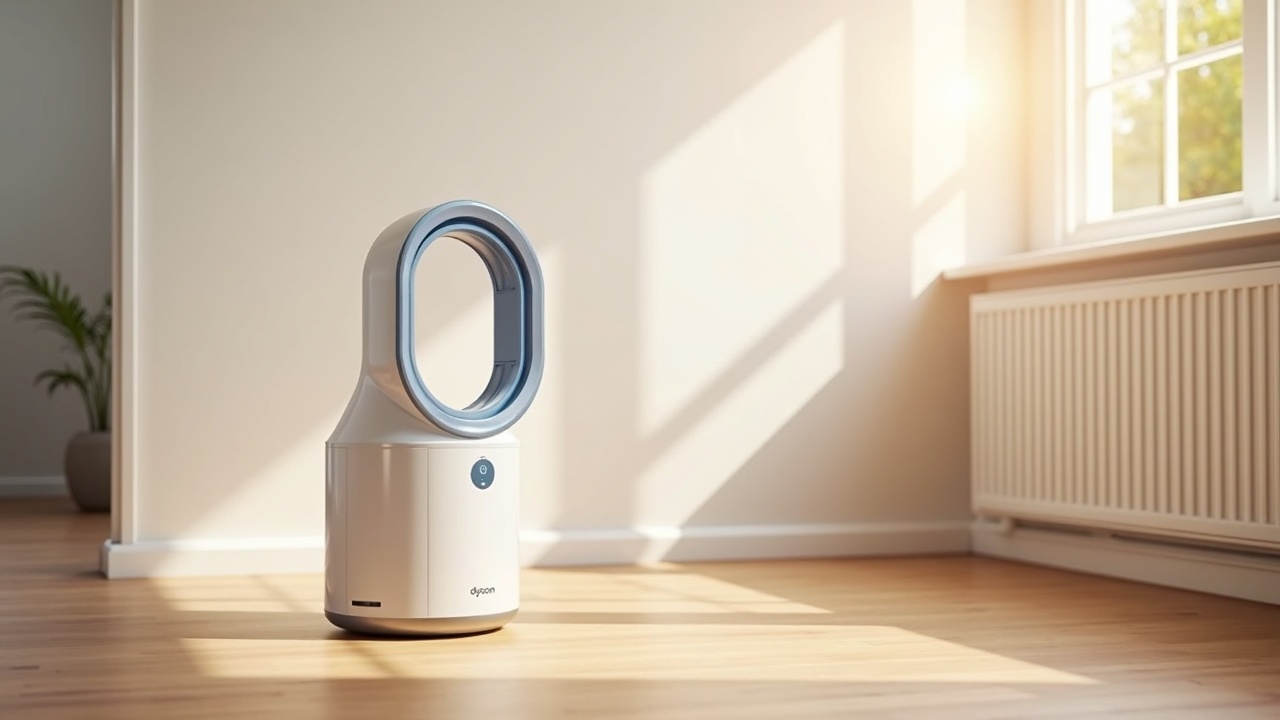
The Dyson Purifier Cool is a tower unit that doubles as a bladeless fan. For homes in Brisbane, coastal QLD, and northern NSW where you might run both a fan and a purifier simultaneously from October through April, the dual-function design is genuinely useful — it eliminates one appliance. The oscillation coverage (up to 350 degrees) also distributes both airflow and purified air more effectively across a room than the Levoit’s upward-only exhaust.
The Levoit Core 600S is a compact cylinder (310mm diameter, 710mm tall) that fits unobtrusively in a corner. It has no fan function. The 360-degree intake means it is equally effective regardless of orientation — you do not need to position it facing the room’s centre. It is 4.7 kg lighter than the Dyson, which matters if you move it between rooms during a multi-day smoke event.
Neither unit is specifically certified by CHOICE Australia or tested under the Australian Standard AS 4260 (High Efficiency Particulate Air Filters). Both hold AHAM certification for their published CADR figures, which is the most meaningful third-party verification available for these products in the Australian market.
City-by-City Recommendation
Brisbane and south-east QLD: The Levoit is the better fit. Hot, humid summers with mould spore loads require high CADR and continuous overnight operation. The 24 dB sleep mode is critical when you need the unit running all night without waking children. The Dyson fan function is redundant if you already have ceiling fans or a split system.
Sydney (especially western suburbs): Either works. The Levoit’s higher CADR provides faster response during bushfire smoke events which affect Penrith, Parramatta, and the Blue Mountains corridor most severely. If you live in a high-rise apartment without ceiling fans, the Dyson’s cooling function adds value.
Melbourne: The 2016 thunderstorm asthma event demonstrated Melbourne’s vulnerability to rapid pollen particle infiltration. The Levoit’s 41% higher CADR means a faster response window when atmospheric conditions deteriorate quickly. Melbourne’s temperamental weather also justifies continuous overnight operation — the Levoit’s noise advantage applies directly.
Perth: The Levoit is the clear choice. Perth’s spring pollen season and proximity to the Wheatbelt’s grass pollen corridors makes CADR the dominant decision factor. The lower total cost of ownership over 5 years is also more significant in Perth’s higher-cost-of-living context.
Adelaide and regional SA: Either works. For homes near the Riverland and Murray corridor (dust and bushfire risk), the Levoit’s higher CADR provides better margin. For compact city apartments under 35 m² where the Dyson’s fan function replaces a separate unit, the Dyson price premium becomes more defensible.
Final Verdict
Buy the Levoit Core 600S if your primary objective is removing PM2.5 particles and allergens from Australian indoor air. At 410 m³/h CADR, 24 dB sleep mode, and a 5-year total cost of approximately $724, it outperforms the Dyson on every metric that directly affects air quality outcomes. The filter cost savings alone — approximately $75/year — recover the price difference in under eight years of ownership.
Buy the Dyson Purifier Cool (or the current Big+Quiet Formaldehyde) if you want a single device that also functions as a bladeless fan, if design and living-room aesthetics matter, or if Dyson’s fully sealed airflow path gives you engineering confidence that an unsealed competitor cannot. You pay a $975 premium over five years for those advantages. Whether that premium is worth it depends on your priorities — not on air-cleaning performance, where the Levoit wins outright.
If you are not sure which class of purifier fits your home, the best air purifier Australia 2026 guide covers the full market from $149 to $999+.
Our Recommendation
For most Australian households, the Levoit Core 600S delivers better air quality outcomes at significantly lower total cost. The Dyson Purifier Cool (or its successor, the Big+Quiet Formaldehyde) is the right choice only when fan function is a genuine requirement.
Frequently Asked Questions
Does the Levoit Core 600S remove bushfire smoke PM2.5?
Yes. The Core 600S uses an H13 HEPA filter that captures 99.97% of particles at 0.3 microns. PM2.5 bushfire smoke particles (0.1-2.5 µm) are captured at this grade. At 410 m³/h CADR, the Core 600S clears a sealed 30 m² room to safe PM2.5 levels (below the NEPM advisory standard of 25 µg/m³) in approximately 10 minutes from a hazardous starting concentration.
Is the Dyson Purifier Cool worth the extra cost in Australia?
Only if you need the bladeless fan function alongside air purification. On pure air cleaning performance, the Levoit Core 600S delivers 41% higher CADR at 60% of the price. The 5-year total cost of ownership gap is approximately $975. The Dyson wins on industrial design, sealed airflow engineering, and dual fan-purifier functionality. It does not win on CADR, noise at sleep mode, or value per dollar of purification.
What CADR do I need for an Australian bedroom?
For a standard Australian bedroom (15-25 m², 2.4m ceiling), a CADR of 200-300 m³/h achieves 4 ACH — the minimum recommended for effective purification during a bushfire smoke event. Both the Dyson (290 m³/h) and Levoit Core 600S (410 m³/h) exceed this threshold. The Levoit’s higher CADR means it achieves 4 ACH at a lower fan speed, which is quieter and uses less power.
How often do I replace filters on the Levoit Core 600S in Australia?
Under standard use (10-12 hours/day) in a typical Australian city home, approximately every 6-8 months in high-pollution periods (bushfire season, Brisbane mould season) and every 10-12 months in lower-pollution periods. The Core 600S has a built-in filter life indicator. The replacement 360 HEPA filter costs approximately $60-70 AUD on Amazon. Annual filter cost is typically $65-90 depending on usage.
Can either unit remove mould spores in Brisbane’s humid climate?
Yes. Mould spores range from 2-20 microns in diameter — well above the 0.3 micron capture threshold of H13 HEPA. Both units capture mould spores in the filter media. However, an air purifier reduces airborne spore concentration — it does not address the source moisture that produces mould. Running the Core 600S continuously from November through April in a Brisbane home will meaningfully reduce airborne mould spore load, but structural moisture control remains essential.
Does the Dyson Purifier Cool produce ozone?
No. The Dyson Purifier Cool uses H13 HEPA and activated carbon filtration with no ioniser or UV-C stage active by default. HEPA and carbon filtration does not generate ozone. Ozone is produced by corona discharge ionisers and some UV-C configurations — neither of which is present in the standard Dyson Purifier Cool operation mode.
Is the Levoit Core 600S suitable for a large open-plan living area?
At 410 m³/h CADR, the Core 600S is rated for approximately 68 m² at 2 ACH (2.4m ceiling). A typical open-plan kitchen and living area in an Australian home runs 40-55 m², which puts it at the effective limit for the Core 600S. For spaces above 55 m², two units or a higher-CADR model is recommended. Close internal doors to isolate the priority space during a bushfire smoke event.
Which air purifier is better for pollen allergies in Perth and Melbourne?
Both capture pollen effectively at H13 grade (pollen particles are 10-100 microns — far above the filter’s capture threshold). The Levoit Core 600S is the better choice for pollen allergy management because its higher CADR means faster particle reduction when you return home with the windows closed after an outdoor pollen exposure. The 24 dB sleep mode also allows continuous overnight operation without sleep disruption, which maintains low overnight indoor pollen concentrations consistently.
Get the Australian Home Environment Checklist
30 checks across water, air and EMF. Most of them free. Ranked by impact.
No spam. Unsubscribe any time.

Former Royal Australian Navy Clearance Diver and TAG-E counter-terrorism operator. Founded Clean and Native to apply the same rigorous thinking to the home environment.
Full biography →