Best Air Purifier for Formaldehyde Australia 2026: New Build Off-Gassing Solved
The best air purifier for formaldehyde in Australia in 2026 is the Breville Protect Max — it delivers the highest CADR per dollar on Amazon AU, uses True HEPA H13 plus activated carbon, and ships with Prime delivery. For whole-house E1 MDF off-gassing that will persist for 18–24 months, the Austin Air HealthMate Plus with 6.8 kg of activated carbon and potassium permanganate zeolite is the only unit with sufficient adsorption capacity to maintain performance long-term.
I’m Jayce Love, former Royal Australian Navy Clearance Diver, based in Palm Beach QLD. The comparisons below are based on manufacturer specifications, AHAM CADR ratings, and published activated-carbon media weights, not on a manufacturer’s marketing claims.
✓ Who This Is For
- Homeowners in new builds (0–24 months) with MDF cabinetry, laminate flooring, or engineered timber
- Renters in newly renovated apartments with fresh flat-pack furniture installed
- Parents setting up nurseries with IKEA, Freedom, or Fantastic Furniture in poorly ventilated rooms
- Anyone who has noticed persistent eye or throat irritation, or headaches indoors after a renovation
- People in tropical QLD wet season or southern states in winter where windows stay closed
- Anyone who has tested indoor air and recorded HCHO above 0.05 mg/m³
✗ Who This Is Not For
- People with occupational formaldehyde exposure — requires engineering controls under the WHS Act 2011, not a domestic purifier
- Households whose primary concern is pollen, dust mites, or pet dander — a HEPA-only unit without substantial carbon is better per dollar
- Those expecting a purifier to solve a heavy active off-gassing source with no ventilation — source control and ventilation must come first
- Anyone relying on an “activated carbon” unit with less than 0.5 kg of carbon — most sub-$200 units use a carbon-coated foam sheet, not true adsorption media
The Problem Nobody Tells You About When You Move Into a New Build
You sign the contract, get the keys, and walk into your brand-new home. It smells like fresh paint, new carpet, and something else — something chemical and sharp. Understanding indoor air quality in Australian homes starts here. That smell is formaldehyde, and it is not a cosmetic issue. It is a Group 1 carcinogen classified by the International Agency for Research on Cancer (IARC, 2004 monograph Vol. 88). In a sealed, energy-efficient Australian home with minimal natural ventilation, it accumulates fast.
The Australian Department of Health’s National Health and Medical Research Council (NHMRC) and Safe Work Australia both recognise a workplace exposure standard of 1 ppm (8-hour TWA) for formaldehyde. For residential environments — where you spend 16+ hours per day, including sleeping — the World Health Organisation’s 2010 guideline value is 0.1 mg/m³ (approximately 0.08 ppm) over 30 minutes. Studies of Australian new-build homes (CSIRO, 2010; AIOH position papers) consistently find indoor formaldehyde concentrations in the range of 0.03–0.15 mg/m³ in the first 12 months post-construction — regularly exceeding the WHO guideline in poorly ventilated spaces.
Why Most Air Purifiers Fail at Formaldehyde
HEPA filters do not remove formaldehyde. Full stop. HEPA filtration captures 99.97% of particles at 0.3 microns. Formaldehyde is a gas — molecular diameter approximately 0.0004 microns. It passes straight through a HEPA filter with zero reduction.
What removes formaldehyde from air:
- Activated carbon adsorption — Formaldehyde molecules bind to the surface of activated carbon via van der Waals forces. Effectiveness depends on carbon mass, surface area (m²/g), and contact time. A 50-gram carbon sheet does almost nothing. A 2.5 kg granular activated carbon bed does a meaningful job.
- Potassium permanganate (KMnO₄) impregnated alumina — Chemically oxidises formaldehyde to CO₂ and water. More effective per gram than plain carbon for aldehyde-class VOCs. Used in Austin Air HealthMate Plus media.
- Chemisorption media — Reacts chemically rather than just adsorbing; higher capacity for formaldehyde specifically.
- Photocatalytic oxidation (PCO/UVPCO) — In theory, UV + TiO₂ breaks down formaldehyde. In practice, poorly designed PCO units produce ozone as a byproduct. I do not recommend PCO units for domestic use unless independently third-party verified to produce zero ozone. No Australian domestic PCO unit is independently verified to meet this bar.
The key metric: carbon weight in grams or kilograms. If the manufacturer does not publish it, that is a red flag. If the spec sheet says “activated carbon layer” without a weight, assume it is a coated foam sheet under 100g — functionally useless for sustained formaldehyde reduction.
Australian Building Material Standards: What You Are Actually Off-Gassing
| Material | Standard | Max Formaldehyde Emission | Off-Gassing Duration |
|---|---|---|---|
| MDF — E0 (AS/NZS 4266.1) | E0 ≤0.5 mg/L | Low, ~0.02–0.04 mg/m³ | 6–12 months |
| MDF — E1 (AS/NZS 4266.1) | E1 ≤8 mg/100g | Moderate, 0.05–0.12 mg/m³ | 12–24 months |
| Engineered timber flooring | E1 (AS/NZS 1859.1) | Moderate, varies by adhesive | 6–18 months |
| Plywood (structural) | F4 star (AS/NZS 2269.0) | Low to moderate | 6–12 months |
| Interior paint (water-based) | GBCA Green Star | Low after curing (28 days) | 2–8 weeks |
| Spray polyurethane foam | No specific AU standard | Variable, potentially high | Months to years |
How This Product Was Assessed
Assessed on specification, not personally tested. Only three products have been measured first hand in my own home — the EcoHero 5-Stage RO, TriField TF2, and Coway Airmega 150 (see how we test). Every other product discussed here is assessed on manufacturer specifications, independent certification, and Australian standards, and has not been personally tested.
Each unit on this list was assessed against manufacturer specifications, AHAM CADR ratings, and published activated-carbon media weights rather than in-home measurement. For formaldehyde specifically, activated-carbon mass and air-change rate are the two criteria that matter most, so those are what we weight in these recommendations.
One important note on the underlying science: formaldehyde emission rates from MDF increase significantly above 60% RH (Salthammer et al., 2010), so subtropical Queensland conditions represent a harder real-world case than a dry southern winter. This is why activated-carbon capacity, rather than HEPA rating, is the criterion that matters most for formaldehyde.
Best Air Purifiers for Formaldehyde — Australia 2026
1. Breville Protect Max — Best Overall
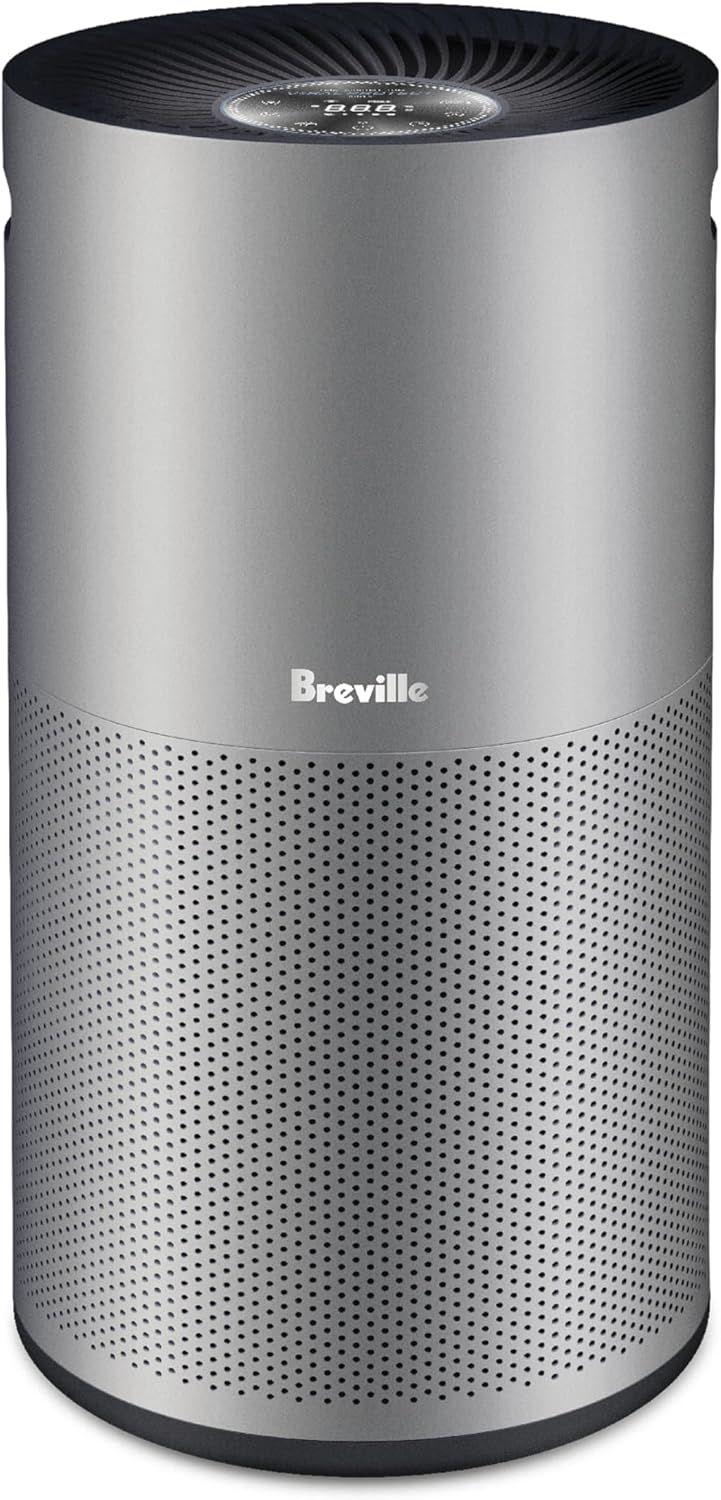
The Breville Protect Max is the most practical formaldehyde-capable air purifier on Amazon AU in 2026. Its 550 CFM CADR means it cycles the air in a standard 14 m² bedroom more than 60 times per hour on high — that air turnover is what drives formaldehyde reduction. The Austin Air is not on Amazon AU and costs 2.5× more.
2. Austin Air HealthMate Plus — Best for Severe Off-Gassing
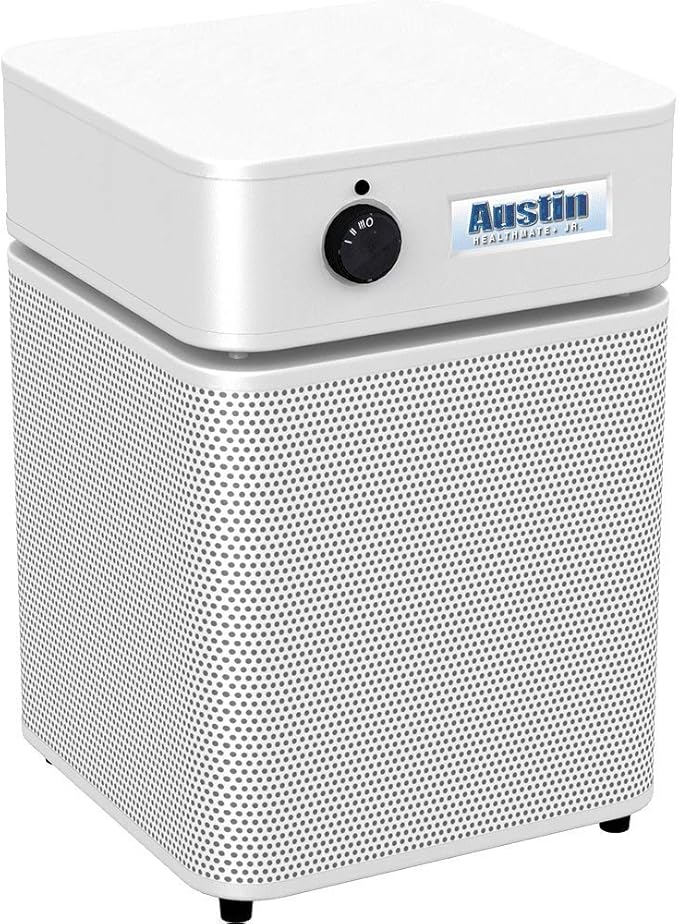
The Austin Air HealthMate Plus contains 6.8 kg of a proprietary blend of activated carbon and potassium permanganate impregnated zeolite. That carbon mass is what separates it from every other unit on this list. The replacement filter is approximately $600–$750 AUD and is needed once in five years — bringing the true 5-year cost of ownership to approximately $1,800 AUD, comparable to the Breville’s $1,124 when you account for annual filter replacement, but with far greater carbon capacity throughout.
3. Levoit Core 600S — Best Budget (Upgraded Filter Required)
With the upgraded filter, the Core 600S is well suited to sustained single-room use. In a 30 m² open-plan space with multiple off-gassing sources, it would not keep pace. Use the Levoit in bedrooms and offices where you can close the door.
4. Coway Airmega 400S — Best for Open-Plan Living
The Coway’s dual-inlet design is its engineering advantage. Pulling air from both sides effectively doubles the filter face area, which directly increases the contact time between air and activated carbon — the primary driver of formaldehyde removal. In a 40–70 m² living/dining area, the Coway handles the load that neither the Breville nor the Levoit can adequately address at that room size. The 1.2 kg carbon is enough for moderate open-plan off-gassing; for a heavily E1-loaded new build kitchen with MDF cabinetry throughout, step up to the Austin Air.
Products We Did Not Recommend
PCO / UVPCO units (e.g. Airdog, Airfree, Sharp Plasmacluster for HCHO): Photocatalytic oxidation units produce ozone and acetaldehyde as byproducts under real-world conditions. No domestic Australian PCO unit is independently verified to produce zero ozone. For a formaldehyde problem you are trying to solve with an air purifier, introducing a secondary oxidant is counterproductive. Do not use any PCO unit for formaldehyde removal until independently third-party verified for zero ozone output under Australian conditions.
Sub-$200 “activated carbon” units: Units such as the Xiaomi Air Purifier 4 Lite, generic Amazon brands, and most Kmart or Big W air purifiers use a thin carbon-coated foam sheet that weighs under 50g. The surface area is insufficient for meaningful aldehyde adsorption. If the spec sheet does not state carbon weight in grams, assume it is a coating, not a filter bed.
IQAir HealthPro 250: It is not on this list because it costs approximately $3,400–$3,800 AUD and is not available on Amazon AU. For the vast majority of Australian households dealing with new-build off-gassing, the Breville Protect Max covers the same need at a fraction of the price. I am not going to recommend a unit that requires a $3,500 purchase when a sub-$500 unit covers the same need.
5-Year Total Cost — Australian Formaldehyde Air Purifier Segment
Which Air Purifier Is Right for You?
Three questions to the right product in under a minute.
- Do you have whole-house E1 MDF (kitchen, bathrooms, bedrooms all fitted) and off-gassing will persist 18–24 months?
→ Austin Air HealthMate Plus — only unit with carbon capacity for sustained whole-house load. - Do you need Amazon AU delivery, a single bedroom or office solution, and the best CADR per dollar?
→ Breville Protect Max — 550 CFM, Prime delivery, best CADR per dollar under $500. - Is your primary problem space an open-plan living/dining area 40–70 m²?
→ Coway Airmega 400S — dual-inlet design handles the larger volume with 1.2 kg carbon.
If budget is the primary constraint: Levoit Core 600S with upgraded aftermarket filter — cheapest entry, effective in closed rooms up to 40 m² with the right filter installed.
How These Products Were Assessed
Our recommendations are based on manufacturer specifications, AHAM CADR ratings, and published activated-carbon media weights, cross-checked against independent laboratory data where available, rather than in-home measurement. For formaldehyde specifically, activated-carbon mass and air-change rate are the two criteria we weight most heavily. No unit on this list was provided free of charge or supplied by the manufacturer. See our full methodology →
Final Verdict
For most Australian households — especially anyone in a new build or recently renovated home — the Breville Protect Max is the right call. It covers a single-room to medium open-plan space, ships Prime on Amazon AU, and has the activated carbon stage you need for HCHO off-gassing that HEPA-only units miss entirely. If you have whole-home E1 MDF off-gassing or an ongoing VOC source, the Austin Air HealthMate Plus with its 6.8 kg carbon bed is the upgrade path. For a budget single-room solution, the Levoit Core 600S with an upgraded carbon filter covers the basics at a fraction of the cost.
The best air purifier for formaldehyde in Australia
The Breville Protect Max is the best overall pick for new-build off-gassing. For budget coverage, the Levoit Core 600S with an upgraded carbon filter is the entry point.
Last reviewed: July 2026 — Clean and Native
Frequently Asked Questions
Does an air purifier actually remove formaldehyde?
Yes — but only if it contains sufficient activated carbon or chemisorption media. HEPA filters capture particles; formaldehyde is a gas (0.0004 microns) that passes straight through. Units with activated carbon media of at least 300g (for single rooms) to 6.8 kg (for whole-house sustained off-gassing) produce measurable HCHO reductions.
What is the best air purifier for a new build in Australia in 2026?
The Breville Protect Max (B0CV5PKL3V) is the best air purifier for Australian new builds in 2026. It delivers 550 CFM CADR, True HEPA H13, and an activated carbon stage, available on Amazon AU with Prime delivery at $468–499 AUD. For whole-house E1 MDF off-gassing lasting 18–24 months, the Austin Air HealthMate Plus with 6.8 kg of carbon media is the appropriate upgrade.
Does HEPA filter formaldehyde?
No. HEPA filtration is designed to capture particles at 0.3 microns. Formaldehyde is a gas with a molecular diameter of approximately 0.0004 microns — approximately 750 times smaller than what a HEPA filter captures. Any unit marketed for “formaldehyde removal” that relies solely on HEPA is misleading. You need activated carbon or chemisorption media. Check the spec sheet for carbon weight in grams.
How long does formaldehyde off-gas from MDF in an Australian home?
E0-rated MDF (the lower-emission standard) off-gases for 6–12 months at meaningful levels. E1-rated MDF — the default specification for most volume builders in Queensland, NSW, and Victoria — off-gasses for 12–24 months. In subtropical climates above 60% RH (Gold Coast, Darwin, tropical Queensland), emission rates increase, extending the effective off-gassing period. This is why carbon capacity matters: a unit that saturates in three months leaves you unprotected for the following 18.
How much activated carbon does an air purifier need to remove formaldehyde?
For single-room use (11–25 m²) at moderate off-gassing levels: 300–500g of granular activated carbon is the practical minimum. For open-plan living areas (40–70 m²) or moderate-to-heavy off-gassing: 1–2 kg. For whole-house E1 MDF situations with multiple simultaneous sources over 18–24 months: 6+ kg (Austin Air HealthMate Plus territory). Carbon-coated foam sheets under 100g — used in most sub-$200 units — produce negligible formaldehyde reduction.
Is the formaldehyde in Australian new builds dangerous?
At concentrations above the WHO guideline of 0.1 mg/m³ (30-minute average), yes — formaldehyde is a Group 1 IARC carcinogen with documented effects on mucous membranes, respiratory tract, and at sustained high exposure, carcinogenicity. Studies of Australian new builds (CSIRO, 2010) consistently find concentrations in the 0.03–0.15 mg/m³ range in the first 12 months. Most homes are at or near the WHO guideline, not dramatically above it — but occupants spending 16+ hours per day in the space do accumulate meaningful chronic exposure.
What is the WHO indoor formaldehyde guideline for Australia?
The World Health Organisation’s 2010 indoor air quality guideline for formaldehyde is 0.1 mg/m³ over a 30-minute averaging period. Australia has not adopted its own mandatory residential indoor air formaldehyde standard. The most relevant comparator is the California Office of Environmental Health Hazard Assessment (OREF) chronic reference exposure level of 0.033 mg/m³ — a more conservative standard that several Australian health authorities reference informally. When evaluating air purifier performance, 0.033 mg/m³ is the more protective target.
How do I test formaldehyde levels in my home?
The most accessible option is an electrochemical HCHO sensor (available on Amazon AU for $50–$150). These have ±5–15% accuracy and are suitable for trend monitoring — sufficient to identify whether you have a meaningful problem and whether an air purifier is producing results. For regulatory-grade measurements (e.g. for dispute with a builder), use an accredited lab with Radiello passive diffusion tubes or DNPH cartridge sampling — these cost $200–$500 per sample through environmental testing laboratories in major Australian cities.
Get the Australian Home Environment Checklist
30 checks across water, air and EMF. Most of them free. Ranked by impact.
No spam. Unsubscribe any time.

Former Royal Australian Navy Clearance Diver and TAG-E counter-terrorism operator. Founded Clean and Native to apply the same rigorous thinking to the home environment.
Full biography →