Best Air Purifier for Bedroom Australia 2026: Quiet, Sized and Tested
Drafted with AI assistance and checked against published specifications and certifications. First-hand measurements appear only where stated. How we make content
How this assessment was made. I own and run one purifier in this guide: the Coway Airmega 150 beside my bed in Palm Beach, QLD, with a phone sound meter reading on Silent and photos of the filters after a month. The others are assessed on manufacturer specifications (noise, smoke CADR and which test standard it comes from), independent approvals, and their Amazon Australia listings. Room sizes use the US EPA’s two-thirds rule. Prices were checked on 19 October 2026. Clean and Native may earn a commission on some links.
The best air purifier for a bedroom in Australia is the Coway Airmega 150 (about $254 on Amazon AU). It is the one beside my bed: on Silent I measured 32.1 dBA at one metre, it has no ioniser, and its published smoke CADR of 153 cfm suits a bedroom of up to about 21 m². For a small bedroom or a child’s room, the Coway Airmega 100 (about $183) handles about 15 m². For a large main bedroom, the Philips 3200 (about $382) moves much more air and starts at 15 dB(A).
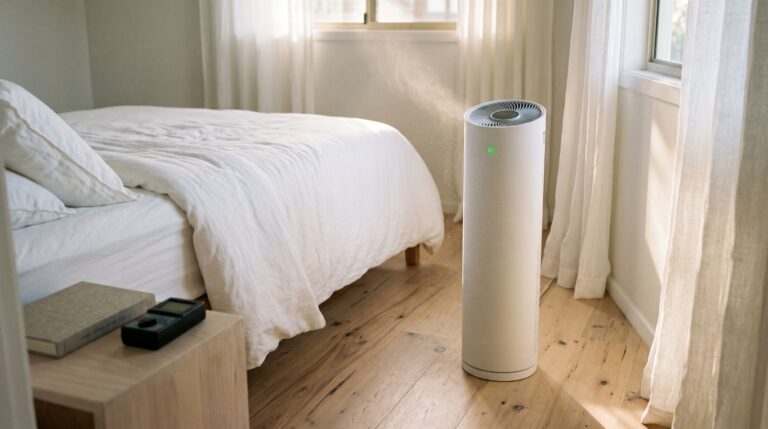
A bedroom purifier has a different job from a lounge-room one. It runs for eight hours while you sleep, often a metre from your head, in a room you can close up. That makes three things matter more than anything on the box: how quiet it is on its lowest useful setting, whether it is sized to the room, and whether it puts anything into the air, such as ozone from an ioniser, rather than only taking particles out.
Pick a HEPA unit sized to the bedroom on its smoke CADR, run it with the door closed, and avoid any ioniser you cannot switch off.
| Pick | Best for | Price (19 Oct 2026) |
|---|---|---|
| Coway Airmega 150 | Best overall; bedrooms to ~21 m²; tested at home | ~$254 |
| Coway Airmega 100 | Best for small bedrooms and kids’ rooms; ~15 m² | ~$183 |
| Philips PureProtect 3200 | Best for large main bedrooms; no ions or ozone | ~$382 |
| Levoit Core 300 | Best budget | ~$169 |
✓ A bedroom purifier suits you if
- You wake congested from dust mites or pollen
- A pet sleeps in or near the bedroom
- Smoke from bushfires or hazard reduction reaches your area
- Someone in the room has asthma or allergies
× Look elsewhere if
- You sleep with the windows open most of the year
- Mould or damp is the problem (fix the source; see the mould guide)
- You need total darkness and cannot tolerate any indicator light
- You want to clean the whole house from the bedroom
Three checks for a bedroom purifier
1. Noise on the setting you will actually use. Manufacturers quote the quietest fan speed, which may not move enough air for your room. Check the lowest setting that still gives you a sensible number of air changes. 2. Size on smoke CADR. The “up to” room size on the box is usually calculated at one or two air changes an hour. 3. Nothing added to the air. The US EPA says air cleaners with ionisers may emit ozone, and that ozone can damage the lungs and worsen asthma. In a closed bedroom overnight, that is the last place to run one.
Sizing a bedroom
The US EPA and AHAM rule: choose a smoke CADR, in cubic feet per minute, of at least two-thirds of the room’s floor area in square feet. Most Australian bedrooms fall between about 9 and 20 m². At a 2.4 m ceiling, that works out at roughly 12 m³/h of smoke CADR per square metre (my arithmetic from the EPA table).
| Bedroom | Floor area | Smoke CADR needed | Fits |
|---|---|---|---|
| Small or child’s room, 3 x 3 m | 9 m² | ~65 cfm | Airmega 100, Airmega 150 |
| Standard bedroom, 3.5 x 4 m | 14 m² | ~100 cfm | Airmega 100 (just), Airmega 150 |
| Large main bedroom, 4 x 5 m | 20 m² | ~145 cfm | Airmega 150 |
| Main suite with ensuite and robe, 30 m² | 30 m² | ~215 cfm | Philips 3200 or larger |
Those CADR targets are my calculation from the two-thirds rule (1 m² = 10.76 square feet). Coway publishes AHAM smoke CADRs of 108 cfm for the Airmega 100 and 153 cfm for the Airmega 150. For other room shapes, use our CADR calculator.
My test: the Airmega 150 by the bed
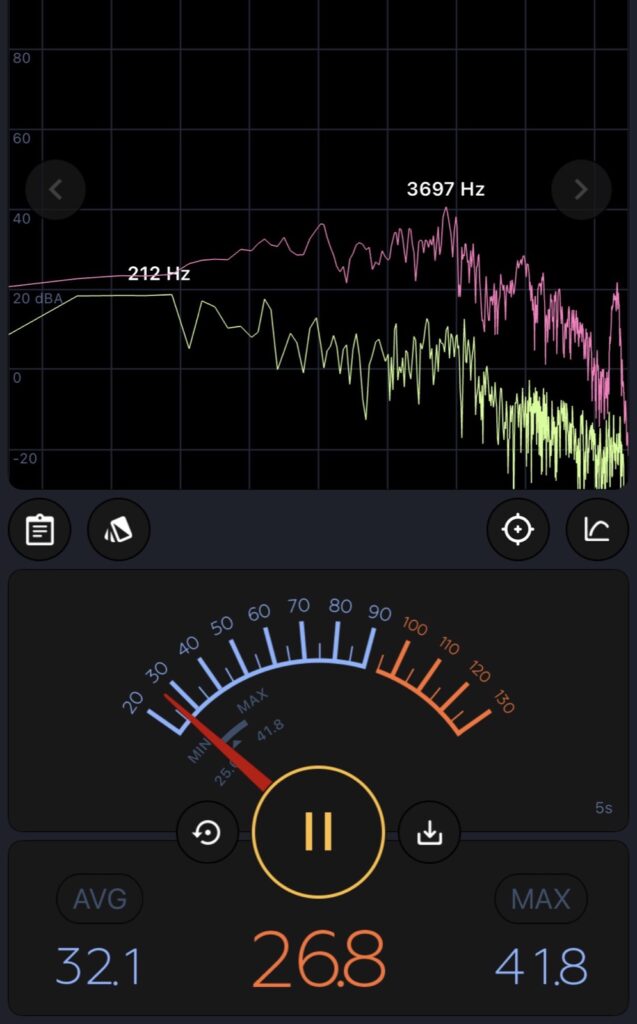
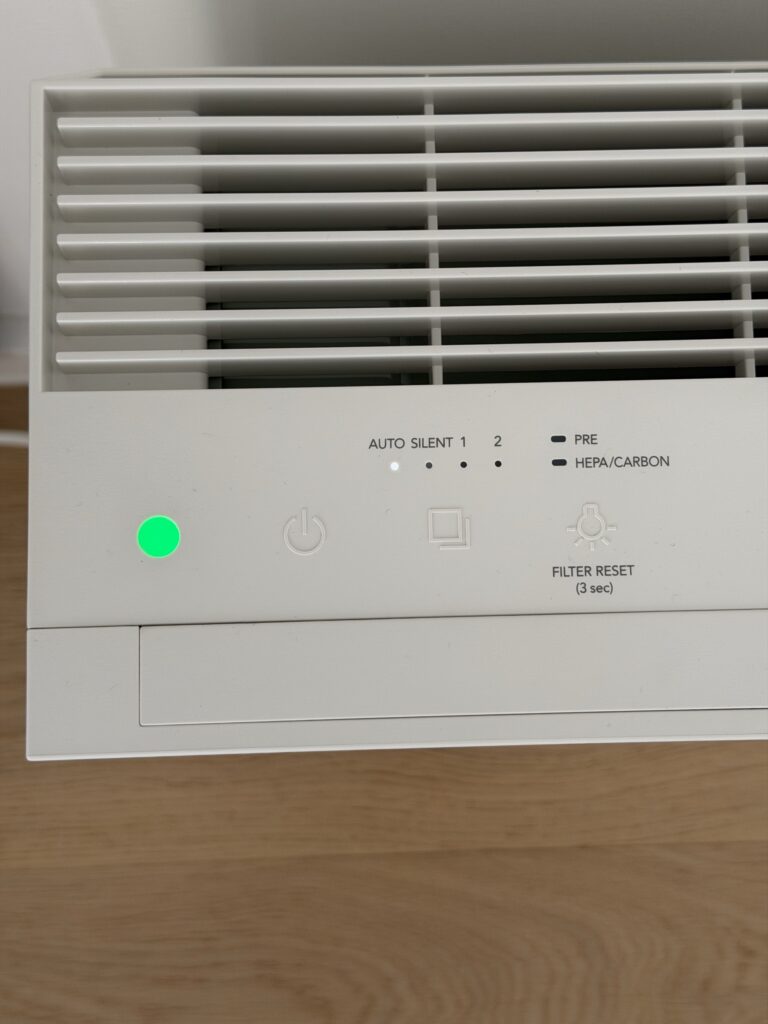
The Airmega 150 lives beside my bed in Palm Beach. On Silent, the Decibel X app on my iPhone read an average of 32.1 dBA at one metre, peaking at 41.8 dBA. A phone app is not a calibrated meter and my room has its own background noise, so read it as “quiet bedroom” rather than a lab figure; Coway publishes a range of about 20 to 48 dB(A). The control panel has an air quality light on top, which is worth knowing if you need a fully dark room.
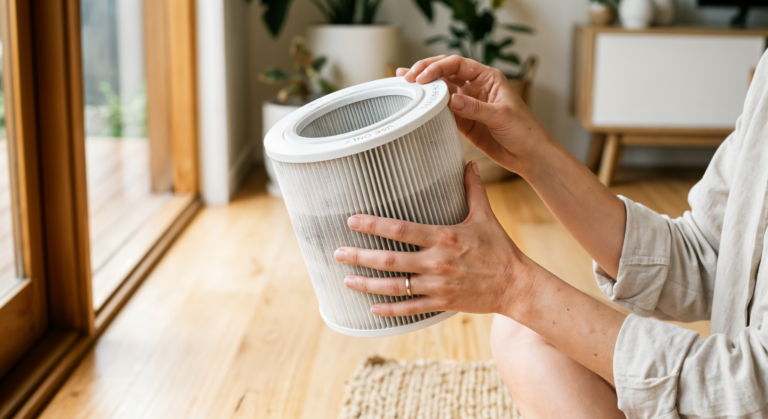
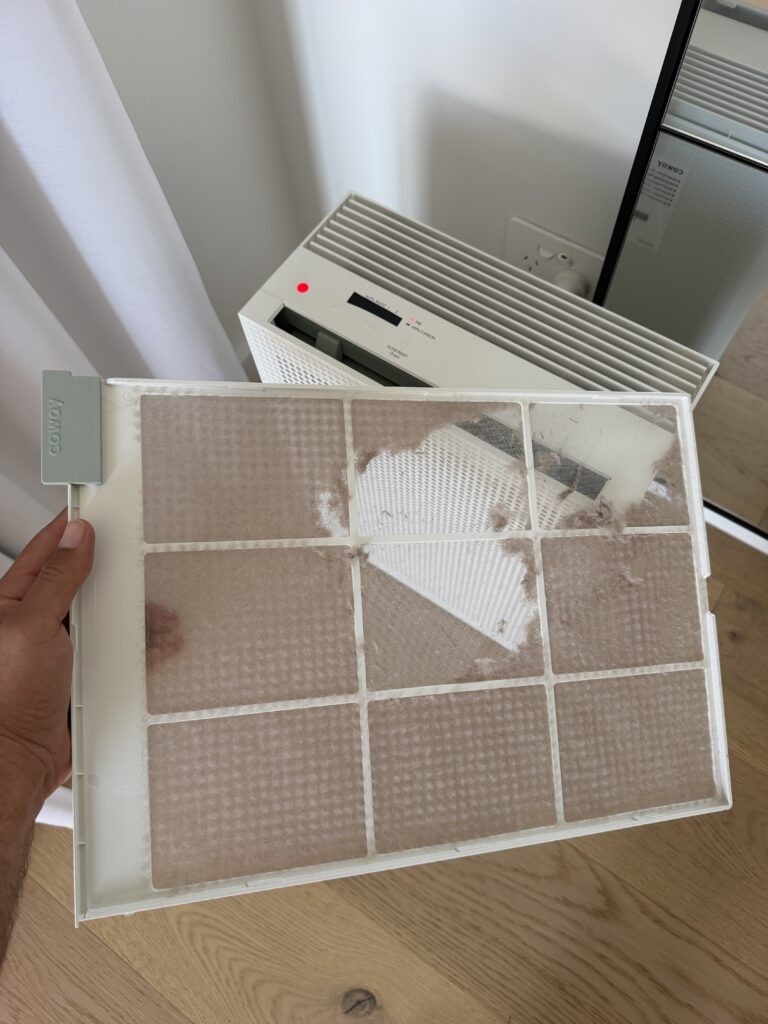
After a month, the pre-filter was coated in dust and pet hair, which is the stage designed to catch it before the HEPA filter. Vacuum it monthly. I have not measured particle counts; I don’t own a laser particle counter, so you won’t see PM2.5 numbers from me that I didn’t take.
The best bedroom air purifiers
1. Coway Airmega 150: best overall
 Tested at home32.1 dBASilent mode at 1 m (my reading)
Smoke CADR 153 cfm (Coway US) | Suits ~21 m² by the EPA 2/3 rule | Pre-filter + carbon + HEPA | 35 W | Sensitive Choice approved | ~$254 (19 Oct 2026)
Check the Airmega 150 Price on Amazon →Pre-filter, carbon deodorisation layer and HEPA filter in a cube that fits beside a bed. Coway’s smoke CADR of 153 cfm covers a bedroom of about 21 m² by the EPA rule. It draws 35 W, has no ioniser, and is approved under the National Asthma Council’s Sensitive Choice program. Coway rates the HEPA filter at a year and the deodorisation filter at 6 months. About $254 on Amazon AU, sold by Coway Australia.
✓ Pros
- Quiet on Silent in my bedroom (32.1 dBA at 1 m)
- No ioniser
- Sized for real bedrooms
× Cons
- Air quality light on the top panel
- Deodorisation filter every 6 months
- Too small for a large suite
Buy this if…
you want a proven, quiet purifier for a standard bedroom.
2. Coway Airmega 100: best for small bedrooms and kids’ rooms
 Small bedrooms108 cfmsmoke CADR (Coway US)
Suits ~15 m² by the EPA 2/3 rule | Pre-filter + HEPA + deodorisation | 20 to 48 dB(A) | 25 W | Filters ~12 months | ~$183 (19 Oct 2026)
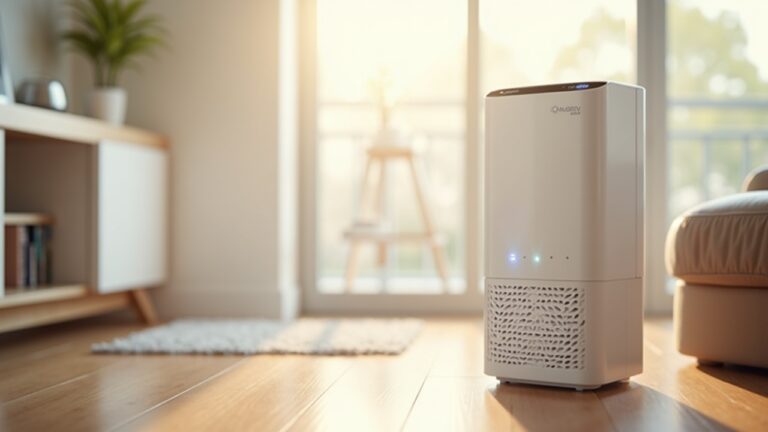
Check the Airmega 100 Price on Amazon →A smaller, cheaper Coway with a 108 cfm smoke CADR, which by the EPA rule suits a bedroom of about 15 m². It has a pre-filter, HEPA and deodorisation filter, draws 25 W and Coway quotes 20 to 48 dB(A). The National Asthma Council named it among newly approved Sensitive Choice products in December 2025. About $183 on Amazon AU, sold by Coway Australia, with more than 500 ratings averaging 4.5.
✓ Pros
- About $183
- 25 W
- Sensitive Choice approved (2025)
× Cons
- Only for rooms to ~15 m²
- Just enough for a standard 14 m² bedroom
- Filters every ~12 months
Buy this if…
the room is small, or it is for a child’s bedroom or nursery.
3. Philips PureProtect 3200: best for large main bedrooms
 Living areas520 m³/hCADR, GB/T test (Philips)
HEPA NanoProtect + carbon | No ions or ozone emitted (Philips) | 15 to 47.5 dB(A) | 36 W | Filter ~1 year | ECARF certified | ~$382 (19 Oct 2026)
Check the Philips 3200 Price on Amazon →For a big main bedroom with an ensuite and walk-in robe, step up to the 3200. Philips quotes 520 m³/h of CADR on the Chinese GB/T test (not directly comparable with AHAM cfm figures), a sleep-mode floor of 15 dB(A), 36 W, and a filter life of about a year. Philips states it emits no ions, chemicals or ozone, and it is ECARF certified as allergy-friendly. It is not on the Sensitive Choice list. About $382 on Amazon AU, sold by Amazon.
✓ Pros
- Much more airflow than the bedroom cubes
- No ions or ozone (Philips)
- 15 dB(A) sleep floor (Philips)
× Cons
- Bigger unit for a bedroom
- CADR on a different test standard
- Not Sensitive Choice listed
Buy this if…
you have a large main bedroom or suite and want one unit that keeps up.
4. Levoit Core 300: best budget
 Budget$169sold by Levoit’s AU distributor
3-stage pre-filter + carbon + HEPA | CADR 187 m³/h (Levoit AU listing) | No ioniser | Sold by VeSync (Levoit) | ~$169 (19 Oct 2026)
Check the Levoit Core 300 Price on Amazon →The cheapest sensible HEPA option for a bedroom: three-stage filter, no ioniser, sold by VeSync, Levoit’s distributor. The Australian listing quotes a CADR of 187 m³/h without naming the test standard, so keep it to a small or standard bedroom. About $169, with more than 700 ratings averaging 4.6.
✓ Pros
- About $169
- No ioniser
- Sold by Levoit’s distributor
× Cons
- CADR standard not stated
- Noise figures not verified for this model
- Small rooms only
Buy this if…
you want a basic HEPA purifier for a bedroom and the budget is tight.
Also consider: Winix Zero, with PlasmaWave off
 Best seller38.2 m²optimum room (Winix AU)
Pre-filter + carbon + HEPA + PlasmaWave (switchable) | 47 dBA max, 35 W (Winix AU sheet) | AU model AUS-1050AZBU is Sensitive Choice approved | Sold by Amazon AU | ~$279 (19 Oct 2026)
Check the Winix Zero Price on Amazon →The Winix Zero is a strong mid-size unit; Winix’s Australian distributor gives an optimum room of 38.2 m², 47 dBA maximum and 35 W. Its fourth stage, PlasmaWave, generates ions. Winix says PlasmaWave switches off from the control panel and turns off automatically in Sleep mode, so it is workable in a bedroom, but it turns back on after a power cut, according to HouseFresh’s testing. The Australian model, AUS-1050AZBU, is Sensitive Choice approved; check the box for that model number. About $279 on Amazon AU.
Comparison table
| Spec | Airmega 150 | Airmega 100 | Philips 3200 | Levoit Core 300 |
|---|---|---|---|---|
| Smoke CADR | 153 cfm | 108 cfm | 520 m³/h (GB/T) | 187 m³/h (listing) |
| Bedroom (2/3 rule) | ~21 m² | ~15 m² | Large suites | Small rooms |
| Noise (maker) | ~20 to 48 dB(A) | 20 to 48 dB(A) | 15 to 47.5 dB(A) | Not verified |
| Ions or ozone | No | No | No (Philips) | No |
| Power | 35 W | 25 W | 36 W | Not verified |
| Price (19 Oct 2026) | ~$254 | ~$183 | ~$382 | ~$169 |
Setting it up for sleep
Close the bedroom door; a purifier cannot clean the hallway as well. Put it where air can reach the intake, not jammed against the bedhead or behind a curtain. Run it on Auto during the day so the room is clean by bedtime, then drop to Silent or Sleep at night. If the indicator light bothers you, check whether the model has a light-off or sleep setting before you reach for tape. Vacuum the pre-filter monthly, and replace filters when the unit tells you rather than when they look dirty. For quieter models compared side by side, see the quietest air purifiers.
Bushfire smoke nights
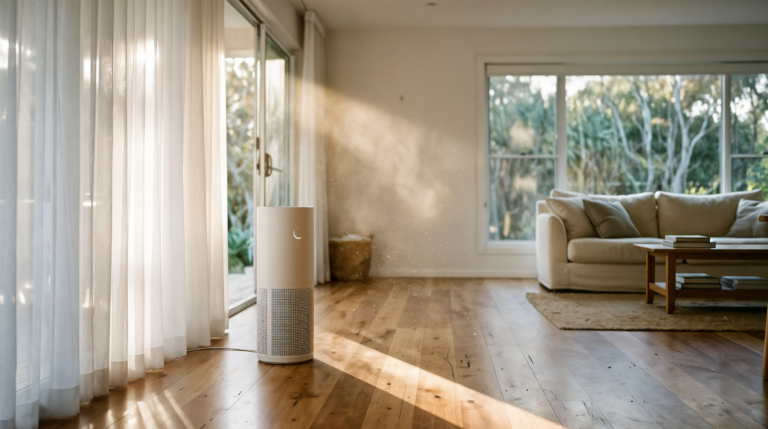
NSW Health, the Australian Government Department of Health and EPA Victoria all advise running a HEPA purifier in a small, well-sealed room with the doors and windows closed, and all three say negative ion generators do not remove the fine particles in smoke. The bedroom is usually the right clean room. On smoke nights, run the purifier on a higher setting than you normally sleep with; the US EPA’s wildfire advice is to run it continuously on the highest setting. For larger smoke-season units, see the best air purifiers for bushfire smoke.
What we left out
Breville Smart Air Viral Protect Max: not on the Sensitive Choice list and four Amazon AU ratings averaging 2.9 when checked. The Amazon AU “Levoit Core400S with Plasma” listing: Levoit’s plasma version generates ions and has no published ozone data, and I could not confirm which version ships. Ioniser-only and “ozone” purifiers: not in a bedroom.
Which should you buy?
Standard bedroom: Coway Airmega 150. Small bedroom, nursery or child’s room: Coway Airmega 100. Large main bedroom or suite: Philips 3200. Tight budget: Levoit Core 300. Pet in the bedroom: see the best air purifiers for pets. Baby’s room: see nursery air purifiers. For every room in the house, see the best air purifiers in Australia.
Final verdict
The Coway Airmega 150 is the best air purifier for a bedroom in Australia: sized for a real bedroom on its smoke CADR, no ioniser, Sensitive Choice approved, and quiet beside my own bed. Go smaller with the Airmega 100 for kids’ rooms, or bigger with the Philips 3200 for a large suite.
Prices change. Check Amazon AU before buying.
Frequently asked questions
What is the best air purifier for a bedroom in Australia?
The Coway Airmega 150: smoke CADR 153 cfm (about 21 m²), no ioniser, Sensitive Choice approved, about $254, and 32.1 dBA on Silent at 1 m in my bedroom. For small rooms, the Airmega 100; for large suites, the Philips 3200.
Is it safe to sleep with an air purifier on?
A HEPA purifier with no ioniser only removes particles, so yes. Avoid running an ioniser or ozone feature in a closed bedroom; the US EPA says ozone can damage the lungs and worsen asthma.
How quiet should a bedroom air purifier be?
Look at the noise on the lowest setting that still moves enough air for the room. My Airmega 150 read 32.1 dBA on Silent at 1 m on a phone app.
What size air purifier do I need for a bedroom?
A smoke CADR in cfm of at least two-thirds of the floor area in square feet. A 14 m² bedroom needs about 100 cfm; a 20 m² bedroom about 145 cfm.
Should I close the bedroom door with an air purifier?
Yes. Health departments advise running purifiers in small, well-sealed rooms with the doors and windows closed.
Where should I put an air purifier in the bedroom?
Where the intake has clear space, not against the bedhead or behind curtains, and within a couple of metres of the bed if possible.
Do bedroom air purifiers help with dust mites?
They capture airborne allergen particles, including dust mite allergen when it is disturbed into the air. They do not replace washing bedding hot and reducing dust.
How often should I change the filter in a bedroom air purifier?
Coway rates the Airmega 150’s HEPA filter at a year and its deodorisation filter at 6 months. Vacuum the pre-filter monthly.
Does an air purifier help with bushfire smoke at night?
Yes, a HEPA purifier in a closed bedroom is what NSW Health, the Department of Health and EPA Victoria recommend. Run it on a higher setting on smoke nights.
- Coway: Airmega 150 specifications (CADR, power, noise, filter life)
- Coway Airmega 100 specification sheet (retailer copy)
- Philips: PureProtect 3200 (AC3220) specifications
- Ausclimate: Winix Zero AUS-1050AZBU specification sheet
- Winix America: PlasmaWave FAQ (switching it off, Sleep mode, CARB)
- HouseFresh: Winix 5500-2 review (AHAM CADR, PlasmaWave behaviour)
- Sensitive Choice: approved Coway air purifiers
- Sensitive Choice: three more Coway Airmega purifiers approved (Airmega 100)
- Sensitive Choice: approved Ausclimate (Winix) air purifiers
- Sensitive Choice: what the blue butterfly means
- US EPA: how to create a cleaner air room (2/3 CADR rule)
- US EPA: guide to air cleaners in the home
- AHAM Verifide: air cleaner CADR and the 2/3 rule
- US EPA: ozone generators that are sold as air cleaners
- NSW Health: protect yourself from bushfire smoke
- Australian Government Department of Health: bushfire smoke fact sheet
- EPA Victoria: smoke and portable indoor air cleaners (publication 1809)
- Levoit: PlasmaPro 400S-P (plasma variant)
Get the Australian Home Environment Checklist
30 checks across water, air and EMF. Most of them free. Ranked by impact.
No spam. Unsubscribe any time.

Former Royal Australian Navy Clearance Diver and TAG-E counter-terrorism operator. Founded Clean and Native to apply the same rigorous thinking to the home environment.
Full biography →