Adelaide Tap Water Quality 2026: What’s Actually In It?
“
| Parameter | Level | Assessment |
|---|---|---|
| Fluoride | 1 mg/L | At upper limit of NHMRC guideline |
| Total Dissolved Solids | 400 mg/L | High — Filtration Recommended |
| Hardness | 160 mg/L as CaCO3 | Hard |
| pH | 7.8 | Slightly alkaline |
| Disinfection | Chloramine | Standard treatment |
Adelaide’s tap water, supplied by SA Water, is safe to drink and meets all Australian drinking water guidelines. However, the city’s water has some distinctive characteristics that residents should understand. With high mineral content from the Murray River source, Adelaide water is notably hard with elevated total dissolved solids. While this doesn’t pose health risks, it can affect taste, appliances, and may warrant filtration for some households seeking improved water quality.
Adelaide Water Quality Data
Let’s break down what’s actually in Adelaide’s tap water. The Total Dissolved Solids (TDS) of 400 mg/L is considered high by Australian standards. This mineral load primarily comes from the Murray River source as water travels through various geological formations, picking up calcium, magnesium, and other minerals along the way.
Adelaide water has a pH of 7.8, making it slightly alkaline, which is within the ideal range for drinking water. The chloramine disinfection system is used instead of chlorine, providing longer-lasting protection as water travels through the distribution network to your tap.
Importantly, there are no documented PFAS concerns in Adelaide’s water supply, which is positive news given the scrutiny these chemicals have received in other Australian locations.
Is Adelaide Water Hard or Soft?
Adelaide has hard water with a level of 160 mg/L as CaCO3. This puts it firmly in the “hard” category, which explains several things Adelaide residents commonly experience:
- Scale buildup in kettles, coffee machines, and hot water systems
- Reduced soap lathering and potential skin/hair dryness
- White spots on dishes and glassware after washing
- Mineral taste that some find unpalatable
While hard water isn’t harmful to health—in fact, it provides beneficial minerals like calcium and magnesium—it can be tough on appliances and affect your daily experience with water.
Does Adelaide Water Have Fluoride?
Yes, Adelaide water contains 1 mg/L of fluoride, which is at the upper limit of the NHMRC (National Health and Medical Research Council) guideline range of 0.6-1.0 mg/L. This level is deliberately maintained for dental health benefits, particularly in preventing tooth decay in children.
The fluoride level in Adelaide is higher than many other Australian capitals, sitting at the maximum recommended level. While this remains within safe guidelines, some residents prefer to filter fluoride from their drinking water for personal reasons.
Our Top-Rated Water Filters
Reverse osmosis is the only residential technology that reliably removes PFAS, fluoride, chloramine, and heavy metals — the four contaminants most Australians are most exposed to.
Should Adelaide Residents Filter Their Water?
Based on Adelaide’s water profile, filtration is recommended for most households, primarily due to the high TDS levels and water hardness rather than safety concerns. Here’s an honest assessment:
You don’t need to filter for safety — Adelaide’s tap water is safe to drink straight from the tap. However, filtration can significantly improve your water experience by:
- Reducing the mineral taste and improving palatability
- Removing chloramine taste and odour
- Reducing scale buildup in appliances
- Providing softer water for skin and hair
Given the high TDS levels, a reverse osmosis (RO) system is highly recommended for Adelaide households seeking comprehensive water treatment.
Best Water Filters for Adelaide Residents
1. Reverse Osmosis Systems (Most Recommended)
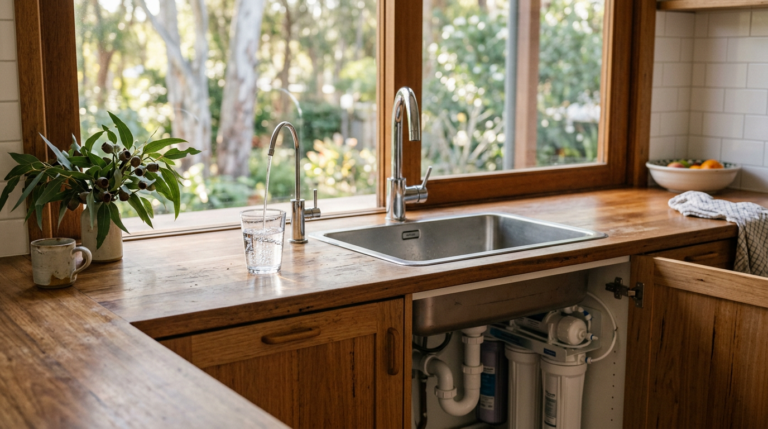
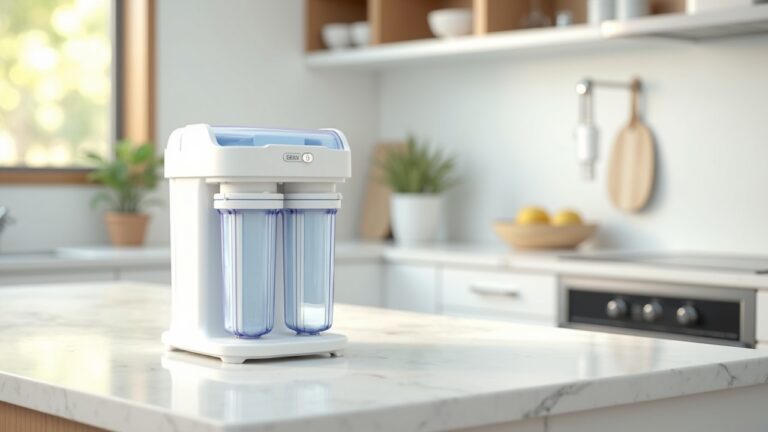
For Adelaide’s high TDS and hardness, RO systems are the gold standard. They remove dissolved minerals, fluoride, and chloramine effectively. Quality under-sink RO systems from brands like Waterdrop or iSpring are available on Amazon AU from $300-800 AUD.
2. Multi-Stage Carbon + KDF Filters
These systems tackle chloramine removal and some mineral reduction without the waste water of RO. Brands like Puretec and Pentair offer quality options through Australian retailers, typically ranging $200-500 AUD.
3. Water Softening Systems
For households primarily concerned with hardness affecting appliances and skin, dedicated water softeners can address scale buildup. These systems typically cost $800-2000 AUD installed and require ongoing salt replenishment.
Frequently Asked Questions
Why does Adelaide water taste different from other cities?
Adelaide’s water has a distinctive mineral taste due to its high TDS (400 mg/L) and hardness (160 mg/L).
Get the Australian Home Environment Checklist
30 checks across water, air and EMF. Most of them free. Ranked by impact.
No spam. Unsubscribe any time.

Former Royal Australian Navy Clearance Diver and TAG-E counter-terrorism operator. Founded Clean and Native to apply the same rigorous thinking to the home environment.
Full biography →