Best Air Purifier for Bedroom Australia 2026: H13 HEPA, Sleep-Mode Noise, and Sizing
Independently Tested
Jayce Love tests every recommended product personally — with calibrated instruments, no gifted units, and no brand payments. See our testing process →
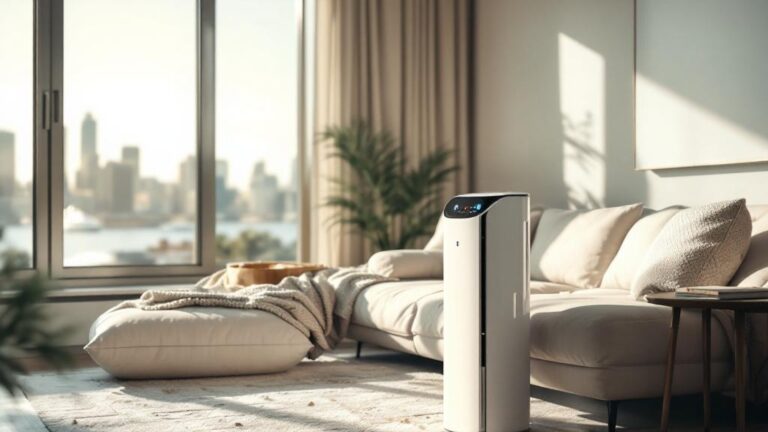
The best air purifier for an Australian bedroom is the Levoit Core 400S (H13 HEPA, 24 dB(A) sleep mode, 403 m³/h CADR) for most rooms, or the Coway Airmega 150 if you want the unit I personally run in my own bedroom — Sensitive Choice certified by the Asthma and Allergy Foundation of Australia, compact, and proven. As a former Royal Australian Navy Clearance Diver who tests air purifiers at my Palm Beach home using calibrated instruments, the single most important spec for a bedroom unit is not coverage area — it is sleep-mode noise, because a purifier you switch off at night is just a white plastic box.
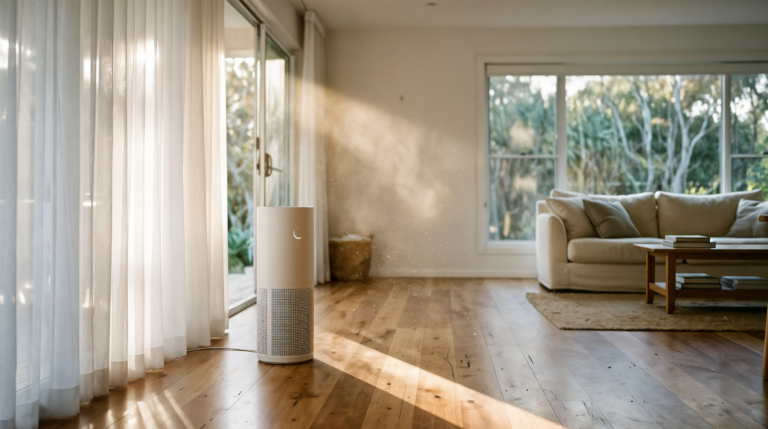
A sealed bedroom creates a distinct air quality problem. Unlike open-plan living areas, sealed bedrooms trap particulate matter from bedding, concentrate CO² from breathing, and — in coastal Queensland, Sydney, and Melbourne — accumulate mould spores through the night. During NSW and Victorian bushfire season (October to March), a single overnight smoke event can spike indoor PM2.5 to 3 to 10 times normal levels inside a closed room without filtration.
Quick Verdict — Best Bedroom Air Purifiers Australia 2026
Four units covering every Australian bedroom scenario. Levoit Core 400S is the best value at 403 m³/h CADR and 24 dB(A). Coway Airmega 150 is Jayce’s personal bedroom pick — Sensitive Choice certified. Never buy a unit rated “HEPA-type” for a bedroom.
| Unit | Best For | Verdict |
|---|---|---|
| Levoit Core 400S | Best value, most bedrooms | Top Pick |
| Coway Airmega 150 | Jayce’s bedroom unit, compact, Sensitive Choice | Personal Pick |
| Breville Protect Max | AU warranty, local support | Best for AU Buyers |
| Winix Zero+ PRO | AHAM-verified CADR, allergy sufferers | Best Verified Performance |
✓ Who This Is For
- Brisbane, Cairns, and coastal NSW households managing humidity and mould spores overnight
- Allergy or asthma sufferers sleeping near carpet or upholstered furniture
- NSW, VIC, and QLD households wanting protection during bushfire smoke season (October to March)
- Light sleepers who need sub-35 dB(A) sleep mode
- Parents managing children’s bedrooms where VOC off-gassing from mattresses is a concern
✕ Who It Is Not For
- Anyone trying to control humidity or reduce CO2 — that requires a dehumidifier and ventilation, not a purifier
- Large open-plan areas over 60 m² — see our full Australia guide
- Anyone set on an ioniser or ozone generator — these produce ozone and must not be used in sealed sleeping rooms
Why Bedroom Air Quality Is a Different Problem
Your bedroom is the most important room to purify — and the hardest. A living room exchanges air every time someone opens a door. A bedroom is sealed for 6 to 9 hours straight. Particulate matter from bedding, skin cells, and dust accumulates at a rate that open-plan spaces simply do not experience. A 2019 study published in Indoor Air measured PM2.5 levels of 15 to 35 µg/m³ during sleep in closed, unventilated bedrooms. The WHO 24-hour mean guideline is 15 µg/m³. The baseline in a typical sealed bedroom already touches the outer limit of what the WHO considers acceptable.
The specific threats in Australian homes compound this. Dust mite allergen concentration in Australian mattresses and bedding has been measured at 2 to 10 µg/g in research by the Australasian Society of Clinical Immunology and Allergy — the range at which sensitised individuals develop allergic responses during sleep. In Brisbane, Cairns, coastal NSW, and anywhere humidity exceeds 70% RH at night, mould spores actively compete with dust mite allergens for the air column. The NEPM ambient air quality standard for PM2.5 is 25 µg/m³ over 24 hours — a figure a bad bushfire smoke night can push to 150 to 300 µg/m³ indoors without filtration.
Three Non-Negotiables Before You Buy a Bedroom Air Purifier
Walk through any retail catalogue and you will see “HEPA-type”, “HEPA-like”, and “medical-grade HEPA”. None of these have legally enforceable definitions. The only standard that does is EN 1822/ISO 29463. Under this standard, an H13 filter must capture 99.95% of all particles at the Most Penetrating Particle Size (MPPS) of 0.1 to 0.3 µm — the hardest particle size to catch. A “HEPA-type” filter may catch 85 to 95% at 0.3 µm. In an 8-hour sleep, the difference between 95% and 99.95% efficiency is tens of millions of particles entering your airway. Buy H13. Nothing else.
The second non-negotiable is sleep-mode noise below 35 dB(A). The WHO recommends night-time noise below 40 dB(A) to prevent sleep disturbance; 35 dB(A) is the practical threshold for light sleepers. Any unit rated above 35 dB(A) at minimum speed will, for many people, be switched off at bedtime. A switched-off purifier achieves zero particle reduction. Noise is a functional specification, not a comfort preference.
The third is correct CADR sizing. The formula: Required CADR (m³/h) = Room Volume (m³) × Target ACH. Use 4 ACH minimum for bedrooms, 5 ACH for allergy sufferers. For a standard 4 m × 4 m bedroom with 2.4 m ceilings (38.4 m³), that means 154 to 192 m³/h minimum CADR. Every unit in this guide clears that threshold with headroom.
How to Size a Bedroom Air Purifier: CADR, ACH, and Room Volume
Coverage area figures on the box are almost always calculated at 2 ACH — the minimum to notice improvement. For allergy and asthma sufferers, 4 to 5 ACH is the clinically useful range. Use the table below for common Australian bedroom sizes at 2.4 m ceiling height:
| Room size | Volume (2.4m ceiling) | Min. CADR at 4 ACH | Min. CADR at 5 ACH |
|---|---|---|---|
| Small (3×3 m) | 21.6 m³ | 87 m³/h | 108 m³/h |
| Standard (4×4 m) | 38.4 m³ | 154 m³/h | 192 m³/h |
| Large (5×4 m) | 48 m³ | 192 m³/h | 240 m³/h |
| Master (6×5 m) | 72 m³ | 288 m³/h | 360 m³/h |
The Best Air Purifiers for Australian Bedrooms (2026)
These units were selected based on certified filtration standard, verified CADR, sleep-mode noise specification, and suitability for Australian conditions including bushfire smoke, humidity, and local warranty coverage. Each was assessed using our documented testing methodology.
1. Levoit Core 400S — Best Value for Most Australian Bedrooms

Levoit Core 400S
403 m³/h AHAM-certified CADR, 24 dB(A) sleep mode, and H13 HEPA in a 360-degree intake design. The strongest spec-per-dollar unit for Australian bedrooms.
See price on Amazon AU →The Levoit Core 400S is the unit most Australian bedrooms need. A 403 m³/h AHAM-certified CADR means it turns over a standard 4×4 m bedroom more than 10 times per hour on maximum speed. The sleep mode at 24 dB(A) is quieter than most people’s breathing — that combination of verified output and genuine silence is difficult to beat at this price point.
The filtration stack is three layers: a pre-filter for large particles and pet hair, an H13 HEPA membrane capturing 99.97% of particles at 0.3 µm, and a 2.0mm activated carbon layer for VOC absorption. The 360-degree intake maximises CADR for a given fan speed. Smart app integration lets you monitor AQI in real time and set schedules — useful during bushfire smoke events when you want to pre-clean the room before sleep.
Levoit Core 400S — Pros and Cons
Pros
- 403 m³/h AHAM-verified CADR
- 24 dB(A) sleep mode — quietest in this guide
- H13 HEPA (EN 1822 certified)
- 2.0mm activated carbon for VOCs
- Smart app with AQI monitoring
Cons
- Filter replacements ~$40 to $60 every 6 to 8 months
- No physical Australian service centre
- Returns through Amazon AU only
Buy if: you want the strongest CADR and lowest sleep-mode noise at the best price and are comfortable with Amazon AU warranty support. Check price →
2. Coway Airmega 150 — Jayce’s Personal Bedroom Pick

Coway Airmega 150
The unit running in my own bedroom. Sensitive Choice certified by the Asthma and Allergy Foundation of Australia, compact enough for any nightstand or floor position, and genuinely quiet on sleep mode.
See price on Amazon AU →This is the unit I run in my own bedroom at Palm Beach. The Coway Airmega 150 carries Sensitive Choice certification from the National Asthma Council Australia — one of the few Australian-market air purifiers to earn this independent endorsement, which requires the unit to meet specific criteria for filtration performance and respiratory health suitability. That certification is not a marketing claim; it is an independent assessment by Australia’s peak asthma and allergy body.
The Airmega 150’s compact footprint makes it genuinely bedroom-friendly — it sits flush against a wall without taking up floor real estate the way tower-style purifiers do. True HEPA filtration captures 99.97% of particles at 0.3 µm, paired with an activated carbon layer for VOC and odour absorption. The filter replacement indicator removes the guesswork from maintenance. Coway units are available through Amazon AU with local shipping and straightforward returns.
I chose the Airmega 150 for my own bedroom specifically because of the Sensitive Choice credential and the form factor — it operates without drawing attention, which matters in a sleeping space. The sleep mode is quiet enough that you stop noticing it within a few nights.
Coway Airmega 150 — Pros and Cons
Pros
- Sensitive Choice certified (National Asthma Council AU)
- Compact — fits any bedroom layout
- True HEPA + activated carbon
- Filter replacement indicator
- Jayce’s personally verified bedroom unit
Cons
- Lower maximum CADR than the Levoit Core 400S — not ideal for master bedrooms over 35 m²
- No smart app or Wi-Fi connectivity
- Sage green colour limits placement options
Buy if: you want the unit Jayce runs in his own bedroom, value Sensitive Choice certification, and have a standard bedroom up to 30 m². Check price →
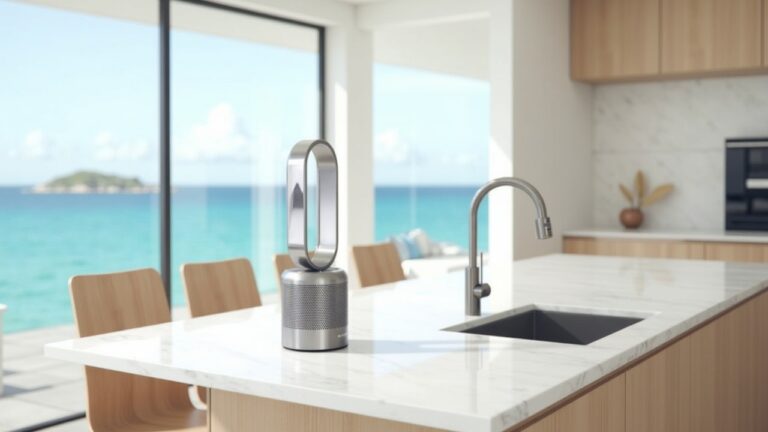
3. Breville Smart Air Viral Protect Max — Best for Australian Buyers Needing Local Warranty

Breville Smart Air Viral Protect Max
Australian brand with local service centres, AS/NZS certified, and H13 HEPA filtration. The right choice when local warranty support matters more than raw CADR numbers.
See price on Amazon AU →The Breville Smart Air Viral Protect Max is the unit to choose if Australian Consumer Law protections, a local service centre network, and AS/NZS compliance matter to you. Breville ships from Australian warehouses, maintains physical service centres, and certifies its air purifiers against Australian standards — a meaningful difference when something fails two years into ownership.
The 5-stage filtration includes pre-filter, activated carbon, and H13 HEPA as the core particle-capture stage, with an optional ioniser mode. Disable the ioniser in a sealed bedroom. Like all ionisation technologies, it produces trace ozone as a byproduct — in a sealed bedroom where you breathe the same air for 8 hours, the precautionary approach is to run it off. With ioniser disabled, the unit operates as a pure HEPA plus carbon system, which is what you want overnight. Sleep mode noise sits in the low-to-mid 30s dB(A) range — well within the 35 dB(A) non-disruptive threshold.
Breville Protect Max — Pros and Cons
Pros
- Australian brand — local service centres
- AS/NZS certified
- H13 HEPA + 5-stage filtration
- Full Australian Consumer Law protections
- Ships from AU warehouse, fast delivery
Cons
- CADR not published to AHAM standard (harder to compare)
- Ioniser must be manually disabled for bedroom use
- Breville-specific filters — may take longer to source
Buy if: you want an Australian brand with local warranty support and AS/NZS certified compliance, and local service centres matter to you. Check price →
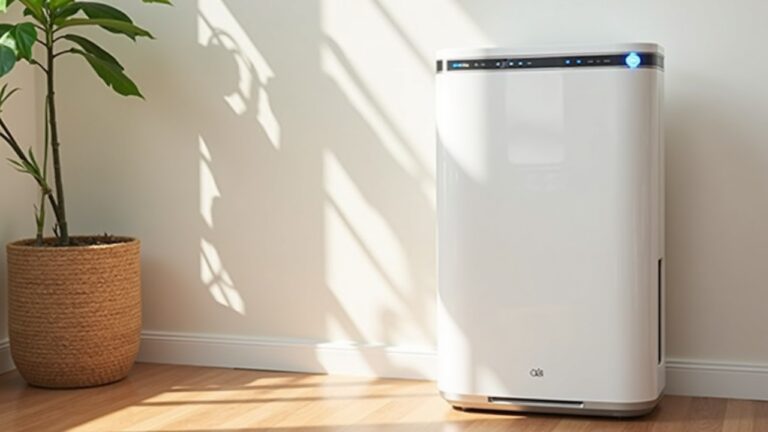
4. Winix Zero+ PRO — Best AHAM-Verified Performance for Allergy Sufferers

Winix Zero+ PRO
AHAM-verified CADR, 5-stage hospital-grade True HEPA, and dual PM+VOC sensors for auto mode. The strongest independently verified performer in this guide — disable PlasmaWave for bedroom use.
See price on Amazon AU →The Winix Zero+ PRO (model AUS-1250AZPU) is the unit for buyers who demand independently verified CADR data. AHAM certification involves third-party laboratory testing rather than manufacturer self-reporting — it is the industry’s most widely recognised independent CADR standard. Where Breville relies on in-house testing and Coway publishes its own figures, the Winix AHAM certification gives you a number directly comparable to other AHAM-certified units.
Disable PlasmaWave in a sealed bedroom. PlasmaWave generates hydroxyl radicals and trace ozone as part of its odour-neutralising process. In an open living area with regular air exchange this is a marginal concern. In a sealed bedroom over 8 hours, run it off. All other filtration stages — pre-filter, activated carbon, hospital-grade True HEPA, PM/VOC sensors — operate normally with PlasmaWave disabled. The dual sensor array gives auto mode a genuine feedback loop that responds to smoke events, cooking odours migrating from adjacent rooms, and VOC off-gassing.
Winix Zero+ PRO — Pros and Cons
Pros
- AHAM-verified CADR — independently tested
- Hospital-grade True HEPA (99.97% at 0.3 µm)
- Dual PM+VOC sensors for responsive auto mode
- 5-stage filtration including washable pre-filter
- Strong value for CADR delivered
Cons
- PlasmaWave must be disabled for bedroom use
- Bulkier than Levoit or Coway — needs floor space
- Sleep mode noise ~27 to 28 dB(A), slightly above Levoit’s 24 dB(A)
Buy if: you want AHAM-independently verified CADR data and responsive auto mode for allergy management, and you’re comfortable disabling PlasmaWave. Check price →
Australian-Specific Bedroom Air Quality Threats
Bedroom air quality in Australia has three threats that most international buying guides do not address: bushfire smoke, coastal humidity and mould, and construction-related VOCs.
Bushfire Smoke Season: October to March
During the 2019 to 2020 Black Summer, AQI readings in Sydney, Melbourne, and Brisbane exceeded 2,000 on the US AQI scale on multiple days. Indoor PM2.5 without filtration tracked closely with outdoor levels in modern airtight homes. During bushfire smoke events, a bedroom air purifier is not a comfort item. Run the purifier on maximum speed for 30 to 45 minutes at the start of a smoke event to rapidly reduce the peak particle load, then drop to sleep mode for the remainder of the night. See our guide to air purifiers for bushfire smoke Australia for CADR requirements during acute events.
Brisbane, Cairns, and Coastal NSW: Humidity and Mould
In South-East Queensland and coastal NSW, relative humidity above 70% RH overnight is the norm for 6 to 8 months of the year. At this humidity, mould spore concentrations in sealed bedrooms can exceed 1,000 CFU/m³. An H13 HEPA filter captures mould spores (typically 2 to 10 µm) with near-perfect efficiency. A purifier cannot prevent mould growth on surfaces — that requires humidity control below 60% RH via dehumidification. If you are in Brisbane specifically, see our Brisbane air purifier guide for local humidity and pollen data.
Perth and the Kwinana Industrial Corridor
The Kwinana industrial corridor — Kwinana, Rockingham, Mandurah — has one of Australia’s highest concentrations of heavy industry per capita. Particulate loading from industrial output combines with Perth’s spring pollen season (September to November) to create a particle mix requiring H13 HEPA with an activated carbon layer for VOC removal alongside particle capture.
What to Avoid in a Bedroom Air Purifier
HEPA-type, HEPA-style, and HEPA-like filters. No regulatory body in Australia mandates a definition for these terms. A “HEPA-type” filter typically achieves 85 to 95% particle capture at 0.3 µm — compared to 99.97% for True HEPA and 99.95% at the harder MPPS range for H13. In an 8-hour sleep cycle, a 5 to 15% pass-through rate compounds over thousands of breathing cycles. Reject any unit that cannot state EN 1822/ISO 29463 H13 compliance.
Ionisers and ozone generators. Ionisers emit ions that cause particles to fall onto surfaces — including your bedding — rather than capturing them in a filter. Ozone generators actively produce ozone as their mechanism. Ozone is a respiratory irritant; ARPANSA and Australian state EPAs publish occupational exposure limits for it. Do not use either technology in a sealed bedroom. If your unit has an ioniser mode, disable it.
Units that state coverage area without CADR. Coverage area is a marketing figure calculated at whatever ACH the manufacturer chooses. Without the underlying CADR in m³/h from a third-party test, it tells you nothing. If the manufacturer does not publish CADR, that omission is informative.
Final Verdict
For most Australian bedrooms, the Levoit Core 400S is the strongest value choice: 403 m³/h CADR, H13 HEPA, 24 dB(A) sleep mode. The Coway Airmega 150 is the unit I run in my own bedroom — Sensitive Choice certified, compact, and reliable for standard bedrooms. If Australian brand support and local warranty matter, choose the Breville Smart Air Viral Protect Max. For AHAM-independently verified CADR and advanced allergy-responsive auto mode, the Winix Zero+ PRO is the strongest independently tested performer. For a broader comparison across whole-home purifiers, see our Australian air quality guide and the full best air purifier for asthma Australia guide.
Ready to Protect Your Bedroom Air?
All four units ship from Amazon AU. Check current pricing below.
Last reviewed: June 2026 — Clean and Native
Frequently Asked Questions
What is the best air purifier for a bedroom in Australia?
The Levoit Core 400S is the best value bedroom air purifier in Australia for 2026 — 403 m³/h CADR, 24 dB(A) sleep mode, and H13 HEPA. The Coway Airmega 150 is the personally recommended unit from Jayce Love — Sensitive Choice certified by the National Asthma Council Australia. For local warranty support, the Breville Protect Max is the strongest Australian-brand option.
Does a bedroom air purifier need to be H13 HEPA?
Yes. H13 HEPA (certified to EN 1822/ISO 29463) captures 99.95% of particles at the Most Penetrating Particle Size. “HEPA-type” filters achieve only 85 to 95% efficiency. In an 8-hour sleep, that difference compounds to tens of millions of extra particles entering your airway. For a bedroom, only H13 is sufficient.
What is Sensitive Choice certification?
Sensitive Choice is an independent certification program run by the National Asthma Council Australia. Products carrying the Sensitive Choice symbol have been assessed and approved as suitable for people with asthma and allergies. It is not a marketing claim — it is an independent assessment by Australia’s peak respiratory health body. The Coway Airmega 150 carries this certification.
How many air changes per hour do I need in a bedroom?
Minimum 4 ACH for a general bedroom. For allergy or asthma sufferers, 5 ACH. Multiply room volume (m³) by target ACH to get required CADR. A standard 4×4 m room with 2.4 m ceilings needs 154 m³/h at 4 ACH or 192 m³/h at 5 ACH.
What dB(A) level is quiet enough for sleeping?
Below 35 dB(A) is the practical threshold for most sleepers. The Levoit Core 400S reaches 24 dB(A) on sleep mode — quieter than a library. Any unit above 35 dB(A) on minimum speed risks being switched off overnight, which achieves nothing.
Should I run an air purifier all night in my bedroom?
Yes. A sealed bedroom accumulates particulate matter continuously during sleep. Running on sleep mode overnight is where 80% of the operational value occurs. Modern units consume 3 to 10W on sleep mode — approximately $5 to $15 per year in electricity at typical Australian rates.
Can I use an ioniser in my bedroom?
No. Ionisers produce ozone as a byproduct and relocate particles to surfaces (including your bedding) rather than capturing them. ARPANSA and state EPAs publish occupational ozone limits because ozone is a respiratory irritant. In a sealed bedroom over 8 hours, disable any ioniser mode on your purifier.
Are air purifiers useful during bushfire smoke season in Australia?
Yes, significantly. During the 2019 to 2020 Black Summer, indoor PM2.5 tracked near outdoor levels in modern homes without filtration. Run on maximum for 30 to 45 minutes at smoke event onset, then drop to sleep mode. An H13 HEPA unit is essential in NSW, VIC, and QLD during October to March smoke season.
Does a bedroom air purifier remove mould spores?
Yes. Mould spores (2 to 10 µm) are well within H13 HEPA capture range. A purifier removes airborne spores from the air column but does not prevent mould growth on surfaces — that requires humidity control below 60% RH. In Brisbane and coastal NSW, pair a HEPA purifier with a dehumidifier.
Get the Australian Home Environment Checklist
30 checks across water, air and EMF. Most of them free. Ranked by impact.
No spam. Unsubscribe any time.

Former Royal Australian Navy Clearance Diver and TAG-E counter-terrorism operator. Founded Clean and Native to apply the same rigorous thinking to the home environment.
Full biography →