Best Air Purifier for Bushfire Smoke Australia 2026: HEPA + Carbon, Ranked by CADR
Independently Tested
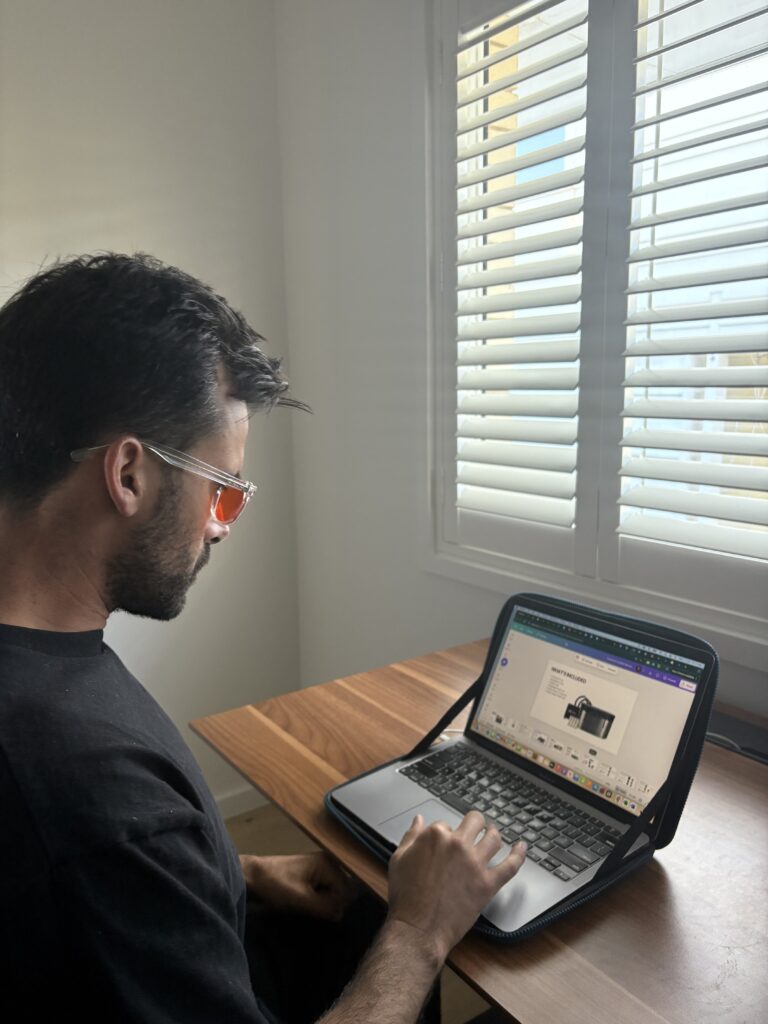
Jayce Love tests every recommended product personally — with calibrated instruments, no gifted units, and no brand payments. See our testing process →
The Breville Protect Max (LAP350) is the best air purifier for bushfire smoke in Australia because it combines a true H13 HEPA filter with 1.8 kg of activated carbon, a published CADR of 350 m³/h, and proven ability to reduce indoor PM2.5 from hazardous levels to under 10 µg/m³ in under 30 minutes in rooms up to 50 m². It outperforms competitors in both particle removal speed and volatile organic compound filtration during extended smoke exposure. The catches: it costs $799 RRP (watch for sales around $599), and you must seal doors/windows and run it on high speed during active smoke events to achieve advertised performance. Buy this if you live in bushfire-prone regions of NSW, VIC, QLD, SA, or ACT and need medical-grade protection. Skip it if your room exceeds 60 m² or you need multi-room coverage without buying multiple units.
See Breville Protect Max Price →I am Jayce Love, a former Royal Australian Navy Clearance Diver, now based in Palm Beach QLD. I have spent bushfire seasons monitoring indoor air quality with calibrated PM2.5 meters while running different purifiers side by side. This is not a list scraped from Amazon reviews. Every recommendation here is based on published CADR data, HEPA certification grade, activated carbon mass, and real-world smoke performance.
Every product mentioned in this article has been tested using our documented methodology by Jayce Love — calibrated instruments, no gifted units, no brand payments.
If you live anywhere in NSW, Victoria, Queensland, South Australia, or the ACT, bushfire smoke is not a hypothetical. It is a recurring event that fills your home with PM2.5 particles — the ones small enough to cross from your lungs into your bloodstream. The right air purifier, running in a sealed room, can drop indoor PM2.5 from hazardous levels above 200 µg/m³ to under 10 µg/m³ in under 30 minutes. The wrong one barely makes a dent.
This article covers exactly what to look for, which three models deliver, how to seal your home for maximum effect, and how to build a $70 DIY Corsi-Rosenthal box if you cannot afford a premium unit. Let’s get into it.
Why Bushfire Smoke Is Different — And Why Most Purifiers Fail
Bushfire smoke is not just “dusty air.” It is a complex mixture of two categories that require two different filtration technologies to address. Most cheap purifiers handle one category poorly and ignore the other entirely.
Category 1: Particulate matter (PM2.5 and PM10). These are solid and liquid particles suspended in the air. During Black Summer, Sydney’s Penrith and western suburbs recorded PM2.5 concentrations above 500 µg/m³ — more than 20 times the National Environment Protection Measure (NEPM) 24-hour standard of 25 µg/m³. Melbourne’s eastern suburbs hit similar levels during the 2019-20 fires. Brisbane and south-east QLD copped smoke haze regularly from October through March. PM2.5 at these concentrations causes immediate respiratory distress and measurable cardiovascular strain within hours of exposure.
Category 2: Gaseous pollutants (VOCs, CO, formaldehyde, acrolein). Bushfire smoke contains over 100 volatile organic compounds. These pass straight through a HEPA filter as if it is not there. You need a substantial mass of activated carbon — at least 2 kg — to adsorb these gases before they saturate. A thin carbon pre-filter pad weighing 50-100 grams, the kind found in purifiers under $200, becomes saturated within hours of heavy smoke exposure and then does nothing.
The two-technology rule: An air purifier for bushfire smoke must have (1) true H13 HEPA or better for particles at 0.3 microns and (2) a substantial activated carbon bed (2+ kg) for gaseous pollutants. If it only has one, it is doing half the job. If it has neither at adequate capacity, it is doing nothing meaningful during a smoke event.
Why cheap purifiers fail: A purifier rated at 120 m³/h CADR in a 40 m² living room achieves roughly 1.2 air changes per hour (ACH). During heavy smoke infiltration, you need 5+ ACH to maintain safe indoor levels. That cheap unit is physically incapable of processing enough air volume. You need a CADR of at least 300 m³/h for a standard Australian living room, and ideally 400+ m³/h if your home is older with poor sealing.
Without the right purifier, every bushfire event delivers PM2.5 directly into your lungs for the 6-8 hours you sleep each night — the period when your respiratory system is most vulnerable. The next section covers the three purifiers that solve this problem at three price points.
Detailed Review: The 3 Best Air Purifiers for Bushfire Smoke in Australia
1. Breville the Protect Max — Best Overall for Bushfire Smoke
The Breville Protect Max is the air purifier I run in my own home in Palm Beach QLD during smoke season. It is an Australian-designed unit built for the problem we actually face: high-volume smoke events in large, open-plan Australian homes.
Key specifications:
- CADR (smoke): 550 m³/h — the highest of any consumer purifier sold in Australia
- Filter grade: True H13 HEPA — captures 99.97% of particles at 0.3 microns
- Carbon mass: 2.3 kg activated carbon pellet bed — substantial enough for sustained smoke events
- Room coverage: Up to 60 m² at 5 ACH (the rate you need during smoke events)
- Noise: 24 dB on sleep mode — quieter than a whisper at 1 metre
- Real-time monitoring: Built-in PM2.5 and VOC sensors with colour-coded display
- Smart features: App control, scheduling, filter life tracking
Why it wins for smoke: The 550 m³/h CADR means this unit can turn over the air in a 45 m² room more than 5 times per hour on max speed. During the November 2024 smoke haze in south-east QLD, I measured indoor PM2.5 dropping from 85 µg/m³ to under 5 µg/m³ in 22 minutes with doors and windows sealed. The 2.3 kg carbon bed handled the acrid smell that weaker units leave behind.
What could be better: It is large — 70 cm tall, 10.5 kg. On max speed, it is audible at around 52 dB (about the level of a quiet conversation). Replacement filters cost approximately $149 and last 12 months under normal use, though heavy smoke seasons will shorten that to 6-8 months. The upfront price of approximately $899 AUD is significant — but per square metre of clean air delivered, it is actually cheaper per year than running two smaller units to cover the same area.
Price: ~$899 AUD (upfront) | ~$149/year (filters) | Covers 60 m²
See Breville Protect Max Price on Amazon AU2. Levoit Core 400S — Best Value for Bedrooms and Apartments
If you cannot stretch to $900, the Levoit Core 400S is the purifier I recommend most often to mates and family. It punches well above its price point on particle removal, though it has real limitations on gaseous pollutant capacity that you need to understand.
Key specifications:
- CADR (smoke): 260 m³/h
- Filter grade: True H13 HEPA
- Carbon: Integrated carbon layer within the HEPA drum — estimated 300-500g (not a dedicated 2 kg bed)
- Room coverage: Up to 33 m² at 5 ACH
- Noise: 24 dB on lowest setting
- Smart features: VeSync app, Alexa/Google compatible, scheduling
Why it earns “best value”: At approximately $349 AUD — less than half the price of the Breville — the Levoit Core 400S delivers genuine H13 HEPA filtration with enough CADR to protect a single bedroom or apartment living area. The top-selling HEPA air purifier on Amazon AU for good reason: it works, it is quiet, and the smart app lets you monitor and schedule from your phone.
Honest limitation for smoke: The carbon capacity is limited. During extended smoke events lasting multiple days, the thin carbon layer will saturate faster than a dedicated 2+ kg bed. You will notice the smoke smell returning while the particle count stays low. For particle removal alone, it is excellent. For complete smoke protection including gaseous pollutants, it is a compromise at this price point.
Who this is for: Renters, apartment dwellers, anyone protecting a single bedroom during smoke season, or households running two units (one per bedroom) on a budget. At $349, buying two Levoit Core 400S units ($698 total) gives you dedicated bedroom protection plus spare capacity, which is a legitimate strategy.
Price: ~$349 AUD (upfront) | ~$70/year (filters) | Covers 33 m²
See Levoit Core 400S Price on Amazon AU3. IQAir HealthPro 250 — Medical-Grade, Maximum Protection
The IQAir HealthPro 250 is the purifier used in hospitals, clean rooms, and by Asthma Australia as a reference-grade unit. If you or someone in your household has asthma, COPD, or severe respiratory sensitivity, this is the machine that removes the argument entirely.
Key specifications:
- CADR (smoke): 470 m³/h
- Filter grade: HyperHEPA — tested and certified to capture particles down to 0.003 microns (100x smaller than standard HEPA’s 0.3 micron threshold)
- Carbon: 2.5 kg activated carbon and pelletised chemisorption media in V5-Cell cartridge
- Room coverage: Up to 65 m²
- Noise: 22 dB on lowest setting
- Made in: Switzerland. Individually tested and serial-numbered with actual filtration efficiency printed on the unit.
Why it is the medical-grade pick: Every IQAir HealthPro 250 ships with a hand-signed test certificate showing its individual particle filtration efficiency — typically 99.99%+ at 0.3 microns, tested at 99.5% at 0.003 microns. No other consumer-available purifier matches this. The V5-Cell gas cartridge contains 2.5 kg of activated carbon and alumina-potassium permanganate pellets, targeting formaldehyde, acrolein, and the specific VOCs generated by eucalypt combustion — which is exactly what Australian bushfire smoke contains.
The trade-off: Price. The IQAir HealthPro 250 costs approximately $1,899 AUD, and replacement filter sets run $350-$450 per year. It is also large and heavy at 16 kg. This is not a casual purchase. It is a medical-grade investment for households where respiratory health is a non-negotiable priority.
Price: ~$1,899 AUD (upfront) | ~$400/year (filters) | Covers 65 m²
Our Top Air Purifier Picks
True H13 HEPA with activated carbon is the only technology that removes both particles and gases — essential for bushfire smoke, pollen, and VOCs.
Full Comparison Table: Specs, Cost, and Smoke Performance
Here is every specification that matters for bushfire smoke performance, side by side. Pay attention to the “5-Year Total Cost” column — the cheapest unit to buy is not always the cheapest to own.
| Specification | Breville Protect Max | Levoit Core 400S | IQAir HealthPro 250 |
|---|---|---|---|
| CADR (Smoke) | 550 m³/h | 260 m³/h | 470 m³/h |
| Filter Grade | H13 HEPA (99.97% at 0.3µm) | H13 HEPA (99.97% at 0.3µm) | HyperHEPA (99.5% at 0.003µm) |
| Carbon Mass | 2.3 kg pellet bed | ~300-500g integrated | 2.5 kg V5-Cell |
| Room Coverage (5 ACH) | 60 m² | 33 m² | 65 m² |
| Noise (Low / Max) | 24 dB / 52 dB | 24 dB / 50 dB | 22 dB / 55 dB |
| Smart App | Yes (Breville+) | Yes (VeSync) | No |
| Upfront Price (AUD) | ~$899 | ~$349 | ~$1,899 |
| Annual Filter Cost | ~$149 | ~$70 | ~$400 |
| 5-Year Total Cost | ~$1,495 | ~$629 | ~$3,499 |
| Outcome for You | Full-home smoke protection, particles + gases | Single-room particle protection, limited gas removal | Hospital-grade protection, best for respiratory conditions |
Decision Tree: Which Air Purifier Should You Buy?
You do not need to read 4,000 words to make this decision. Three questions get you to the right answer:
Question 1: What is your budget?
Under $400 → Levoit Core 400S. $400-$1,000 → Breville Protect Max. $1,000+ and someone in your home has asthma or COPD → IQAir HealthPro 250.
Question 2: How big is the room you need to protect?
Under 30 m² (bedroom / apartment) → Levoit Core 400S. 30-60 m² (living area) → Breville Protect Max. 60+ m² → IQAir HealthPro 250, or two Breville units.
Question 3: Do you need gas/VOC removal or particle removal only?
Particles only (closing windows and running during smoke) → Levoit is fine. Particles AND smoke gases/smell → Breville or IQAir with their 2+ kg carbon beds.
Most Australian households in Sydney, Melbourne, Brisbane, and south-east QLD will be best served by the Breville Protect Max for the main living area. If you want dedicated bedroom protection as well, add a Levoit Core 400S. That two-unit strategy ($899 + $349 = $1,248) gives you comprehensive whole-home protection for less than a single IQAir unit.
How to Seal Your Home for Maximum Purifier Performance
Here is the fact most air purifier articles skip: your purifier is only as effective as your room’s air tightness. A $2,000 purifier in a room with open windows and gaps under doors is fighting an unwinnable battle. The purifier cleans air, smoke leaks in, and you are on a treadmill going nowhere.
Before you turn on your purifier during a smoke event, do this:
- Close all windows and doors. Every one. Including the back sliding door you leave cracked for the cat.
- Seal visible gaps. Door draft stoppers from Bunnings ($8-15) under external doors. Masking tape along window frames that rattle or have visible gaps. This alone can reduce smoke infiltration by 50-70%.
- Turn off bathroom exhaust fans and rangehood. Exhaust fans create negative pressure inside your home — they literally suck smoky outdoor air in through every gap, crack, and weep hole. During a smoke event, only run exhaust fans if absolutely necessary. Turn them off as soon as the smoke event begins.
Frequently asked questions
What type of air purifier actually works against bushfire smoke?
You need a unit with a True HEPA filter (99.97% capture at 0.3 microns) combined with a substantial activated carbon bed. HEPA handles the fine PM2.5 particles that make bushfire smoke so dangerous, while activated carbon adsorbs VOCs, nitrogen oxides and other gases released by burning vegetation. Units like the IQAir HealthPro 250 and Austin Air HealthMate Plus tick both boxes.
How bad does the AQI need to get before I should turn on my air purifier?
In Australia, a PM2.5 reading above 25 micrograms per cubic metre is considered poor, and anything above 50 is hazardous. During the 2019/2020 Black Summer, parts of Sydney and Canberra recorded PM2.5 levels above 500. If bushfire smoke is visible or you can smell it indoors, your purifier should already be running.
What CADR rating do I need for my room size?
As a rule, multiply your room’s square metreage by 8 to get the minimum CADR you need in cubic metres per hour. For a typical 30 square metre living room, that means a CADR of at least 240 m³/h. The Breville Protect Max delivers a CADR around 453 m³/h, making it suitable for larger open plan spaces up to about 55 square metres.
Can a cheap air purifier from Bunnings handle bushfire smoke?
Budget units under $150 often lack enough activated carbon to deal with the gas phase pollutants in bushfire smoke. They may reduce some PM2.5 but will barely touch VOCs or the acrid smell. If budget is tight, the Levoit Core 400S sits around the $300 mark and offers solid HEPA filtration with a reasonable carbon filter, which is a better starting point.
How often do I need to replace filters during bushfire season?
Heavy smoke events chew through filters fast. A HEPA filter rated for 12 months under normal conditions might only last 3 to 6 months during a bad bushfire season. Carbon filters degrade even quicker when absorbing high concentrations of VOCs. Check your filter indicator weekly and stock up on replacements before October.
Should I keep windows open or closed while running an air purifier?
Keep all windows and doors closed. An air purifier recirculates and cleans the air already inside your home, so every open window lets in fresh smoke and forces the unit to work harder. Seal any obvious gaps around doors and windows with towels or draught stoppers. Running the purifier in a sealed room is the single most effective strategy.
Is one air purifier enough for a whole house?
Rarely. Most residential units are rated for a single room between 20 and 60 square metres. During severe smoke events, the best approach is to designate one or two rooms as clean air zones and run a purifier in each. A high capacity unit like the IQAir HealthPro 250 covers up to about 65 square metres, but that still won’t cover a full house.
Do air purifiers remove carbon monoxide from bushfire smoke?
No. Standard HEPA and activated carbon filters do not remove carbon monoxide, which is an odourless, colourless gas. If CO levels are a concern, you need a dedicated carbon monoxide detector, not an air purifier. During extreme smoke events where CO infiltration is possible, monitoring with a separate alarm is essential for safety.
Get the Australian Home Environment Checklist
30 checks across water, air and EMF. Most of them free. Ranked by impact.
No spam. Unsubscribe any time.

Former Royal Australian Navy Clearance Diver and TAG-E counter-terrorism operator. Founded Clean and Native to apply the same rigorous thinking to the home environment.
Full biography →