Brisbane Tap Water Quality 2026: What’s Actually In It?
Brisbane Tap Water Quality 2026: What’s Actually in Your Water
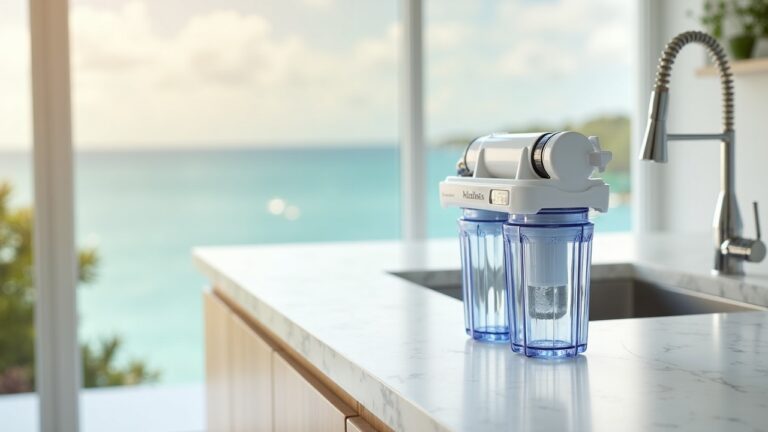
Brisbane tap water is treated with chloramine — not chlorine — making it safe to drink but requiring a specific type of filter to remove. Understanding what’s actually in SEQ water determines which filter will work, and which won’t.
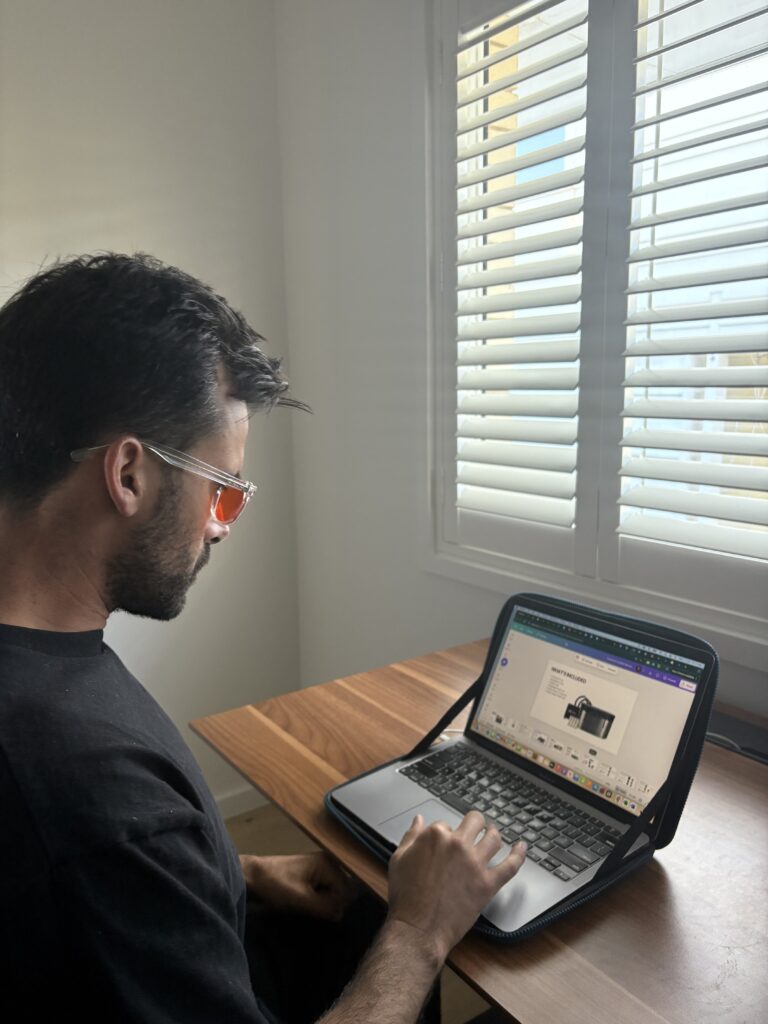
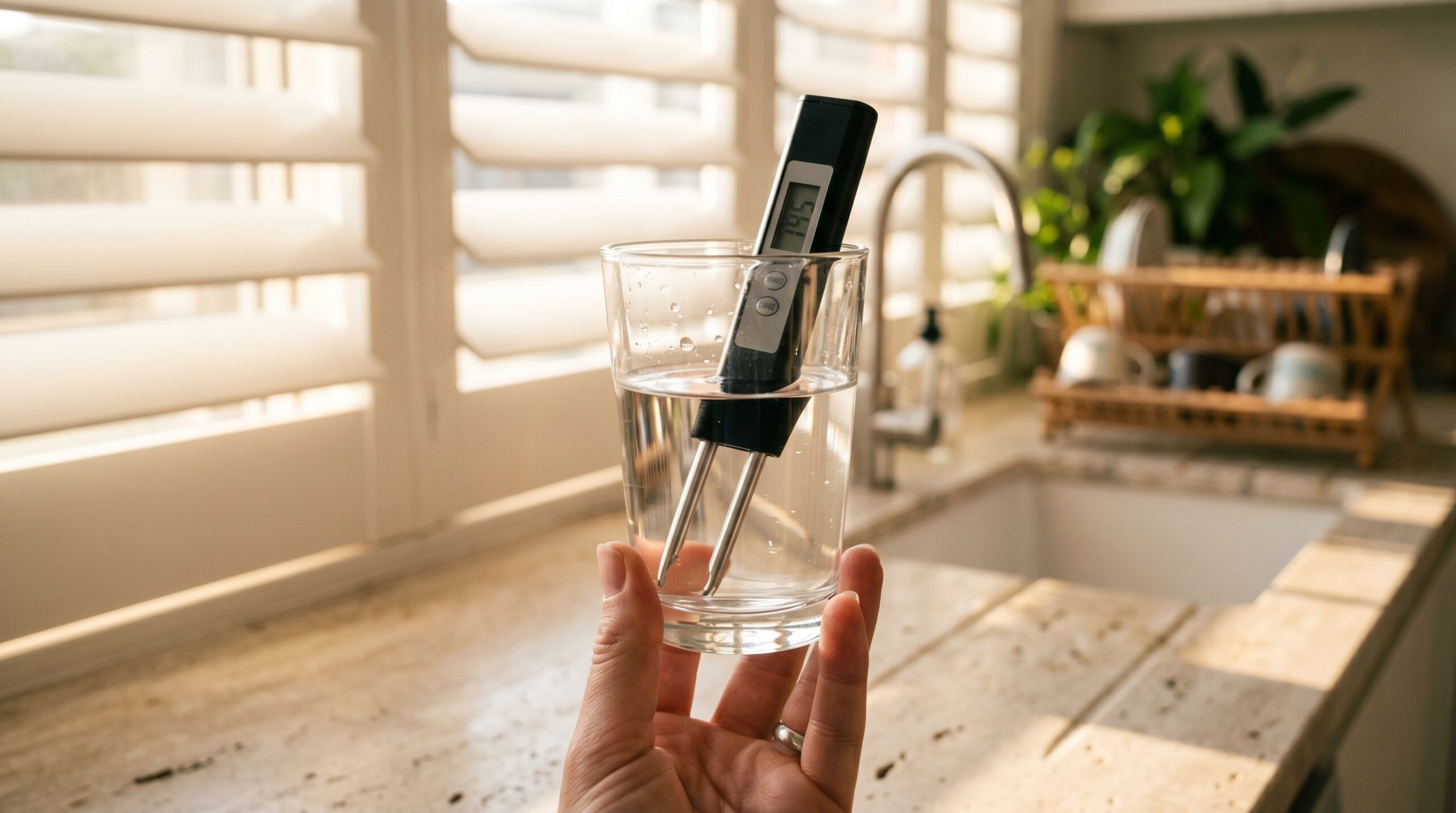
This guide is written by Jayce Love, a former Royal Australian Navy Clearance Diver who personally tested Brisbane/SEQ tap water at Palm Beach QLD, recording 69 ppm TDS before and 3 ppm TDS after a 5-stage RO system — a 95.7% reduction.
Best Water Filters for Brisbane 2026
Brisbane uses chloramine — standard pitcher filters cannot remove it. For renters: Tappwater EcoPro (catalytic carbon, tap attachment). For homeowners wanting fluoride removal: AquaTru Classic Smart RO. The Earth’s Water shower filter handles chloramine contact exposure simultaneously.
| Pick | Best for | Verdict |
|---|---|---|
| AquaTru Classic Smart RO | Fluoride + chloramine, no plumbing | Recommended |
| Tappwater EcoPro | Renters, chloramine removal | Best renter option |
| Earth’s Water Shower Filter | Chloramine skin/hair exposure | Add alongside drinking filter |
✓ This guide is for you if…
- You’re on SEQ tap water (Brisbane, Gold Coast, Ipswich, Logan)
- You’re using a Brita or standard pitcher and wondering why it still tastes off
- You want to remove fluoride or chloramine
- You’re renting and can’t install under-sink plumbing
✗ Not for you if…
- You’re on tank water (different treatment profile)
- You’re outside SEQ — Sydney, Melbourne, and Perth use chlorine, not chloramine
- You already have a whole-house RO system installed
Brisbane Water Quality: What Seqwater Actually Delivers
South East Queensland’s drinking water is managed by Seqwater, which draws from three primary sources: the Mt Crosby Weir on the Brisbane River, North Pine Dam in the northern suburbs, and Wivenhoe Dam west of Brisbane. These sources are blended and treated at the Mt Crosby water treatment plant before entering the distribution network. The resulting water quality is generally excellent by global standards — but understanding the exact treatment chemistry matters when you’re choosing a filter.
The critical distinction for Brisbane households is the disinfection method. Seqwater uses monochloramine (NH₂Cl) rather than free chlorine as the primary residual disinfectant, a practice shared across the entire SEQ water grid administered by Queensland Urban Utilities and other SEQ water service providers. Chloramine provides a more stable, longer-lasting residual disinfectant effect over the extended distribution distances in SEQ’s large network — an advantage over free chlorine, which dissipates more rapidly. However, this chemical stability is precisely what makes chloramine harder to remove with standard household filters.
The table below summarises typical Brisbane/SEQ tap water parameters based on the Seqwater Annual Drinking Water Quality Report, the Australian Drinking Water Guidelines (ADWG 2022), and Queensland Health fluoridation data. Values can vary seasonally and by suburb, but these ranges represent the typical household experience on the Brisbane grid.
| Parameter | Typical Level | ADWG Limit | Notes |
|---|---|---|---|
| Disinfection method | Monochloramine (NH₂Cl) | ≤3 mg/L total chlorine | Standard GAC filters cannot remove chloramine |
| Fluoride | 0.7–1.0 mg/L | 1.5 mg/L | Queensland Health mandated; only RO removes fluoride |
| Hardness (CaCO₃) | 80–120 mg/L | No health limit (aesthetic) | Moderate; Logan/Ipswich suburbs trend harder |
| TDS | 80–115 mg/L | 600 mg/L (aesthetic) | 69 ppm recorded at Palm Beach QLD (founder test) |
| pH | 7.2–7.8 | 6.5–9.2 | Neutral to slightly alkaline — well within range |
| THMs (trihalomethanes) | <40 µg/L | 250 µg/L | Lower THMs than chlorine-treated systems — a benefit of chloramine |
| Turbidity | <0.5 NTU | 5 NTU | Excellent clarity after treatment |
Sources: Seqwater Annual Drinking Water Quality Report; Australian Drinking Water Guidelines (ADWG) 2022; Queensland Health Fluoridation Program.
Why Your Brita Doesn’t Work in Brisbane
If you’ve tried a standard Brita pitcher filter in Brisbane and found your water still has an odd taste or chemical odour, you’re not imagining it. The issue is chemistry. Seqwater uses monochloramine (NH₂Cl), which is formed by combining ammonia with chlorine at carefully controlled ratios during the treatment process. The resulting compound is chemically stable and bonds differently to activated carbon surfaces than free chlorine does. Standard granular activated carbon (GAC) — the medium inside Brita pitchers and most budget jug filters — can adsorb free chlorine efficiently through a straightforward surface adsorption reaction. With chloramine, that same reaction is significantly less effective. Chloramine passes through standard GAC largely intact, which is why Brisbane’s water can taste chemically even after filtering through a Brita.
Seqwater switched from free chlorine to chloramine as the primary residual disinfectant for important reasons. Chloramine is more stable over the long travel distances in SEQ’s extensive distribution network, maintaining disinfection protection all the way to the tap. It also generates fewer trihalomethanes (THMs) — the disinfection byproducts formed when chlorine reacts with organic matter in water — which is why Brisbane’s THM levels typically sit well under 40 µg/L compared to systems using free chlorine. The trade-off is that chloramine creates its own disinfection byproducts (DBPs), including haloacetic acids (HAAs) and nitrosamines, and it is considerably harder to remove at the household level.
Three filter technologies are confirmed to remove chloramine effectively. First, catalytic carbon — an enhanced form of activated carbon with a modified surface structure that catalyses the chemical breakdown of chloramine — is the most practical for non-RO applications. Products like the Tappwater EcoPro use catalytic carbon block media. Second, compressed carbon block filters rated at ≤0.5 micron create sufficient contact time and surface area to achieve meaningful chloramine reduction. Third, reverse osmosis (RO) systems physically separate water from dissolved compounds including chloramine, fluoride, PFAS, and heavy metals. RO is the only technology that also removes fluoride. For more detail on chloramine-specific filter selection, see our full guide: Best Water Filters for Chloramine in Australia.
The Best Water Filters for Brisbane 2026
The following five products have been selected based on chloramine removal efficacy, suitability for Brisbane households, and practical factors like rental-friendliness, installation requirements, and price. Each has been evaluated against the specific water chemistry of the SEQ grid.
1. AquaTru Classic Smart RO — Best Overall RO Filter
BEST OVERALL RO FILTER
AquaTru Classic Smart RO
Countertop reverse osmosis — removes chloramine, fluoride, PFAS, and DBPs with no plumbing required
The AquaTru Classic Smart RO is the top recommendation for Brisbane homeowners who want comprehensive water filtration without any plumbing modifications. It sits on the countertop, fills from the tap via a side-fill reservoir, and uses a four-stage filtration process: pre-filter, reverse osmosis membrane, activated carbon post-filter, and a final polishing stage. The RO membrane removes up to 99% of dissolved contaminants — including the chloramine, fluoride, PFAS, nitrosamines, and HAAs that characterise SEQ tap water. The “Smart” variant connects to the AquaTru app, which tracks filter life and water quality in real time, which is useful for Brisbane’s seasonal water profile variations.
For Brisbane households, the RO stage is the key differentiator. While catalytic carbon filters handle chloramine effectively for drinking water, only RO removes fluoride (0.7–1.0 mg/L in Brisbane), PFAS compounds, and the full spectrum of DBPs including HAAs. If you are in Logan or Ipswich where hardness trends higher (closer to 120 mg/L CaCO₃), the RO membrane will also soften the water by stripping calcium and magnesium. The compact footprint suits Queensland kitchens with bench space, and no plumber or landlord approval is required. The primary cost is the unit itself and filter replacements every six to twelve months depending on usage.
✓ Pros
- Removes chloramine, fluoride, PFAS, DBPs, heavy metals
- No plumbing required — countertop, fill from tap
- App connectivity tracks filter life in real time
- Certified to NSF/ANSI standards 58 and 401
- Compact form factor for a 4-stage RO
✗ Cons
- Wastes water (3:1 ratio) — though lower than many RO systems
- Removes beneficial minerals alongside contaminants
- Requires counter space and power outlet
- Higher upfront cost than pitcher or tap filters
2. Tappwater EcoPro — Best for Renters
BEST FOR RENTERS
Tappwater EcoPro
Tap-attachment filter with catalytic carbon — no tools, no plumbing, removes chloramine from Brisbane’s SEQ water
The Tappwater EcoPro is the standout choice for Brisbane renters precisely because it solves the chloramine problem without requiring any plumbing modifications, tools, or landlord approval. It threads directly onto the tap aerator — a 30-second installation — and uses a catalytic carbon block to break down chloramine chemically. Standard GAC media adsorbs free chlorine via surface contact but leaves chloramine largely intact; catalytic carbon has a modified surface structure that actively catalyses the decomposition of chloramine into harmless nitrogen and chloride compounds. The result is genuinely effective chloramine removal from Brisbane tap water in a package that packs into a bag when you move out.
The filter is rated for approximately 3,000 litres — roughly six months of use for a single-person household — and replacement cartridges are readily available. The EcoPro’s compact housing switches between filtered and unfiltered modes via a lever, allowing you to use unfiltered water for tasks like washing up where filtered water isn’t necessary, which extends filter life. For Brisbane renters who’ve been running a Brita and noticing the water still tastes chemically treated, the EcoPro is typically the most noticeable improvement per dollar spent. It won’t remove fluoride (that requires RO), but for chloramine, taste, and odour removal it performs well within its category.
✓ Pros
- Catalytic carbon removes chloramine — unlike standard Brita
- No tools, plumbing, or landlord approval needed
- Switches between filtered/unfiltered mode to extend filter life
- Rated 3,000 L per cartridge
- Compact and portable — moves with you
✗ Cons
- Does not remove fluoride
- May not fit all tap aerator thread sizes
- Lower flow rate than unfiltered tap
- Not suitable if you need RO-level purity
3. Earth’s Water Premium Shower Filter — Best Shower Filter
BEST SHOWER FILTER
Earth’s Water Premium Shower Filter
Multi-stage shower filter designed for chloramine — reduces skin and hair contact with SEQ’s disinfectant
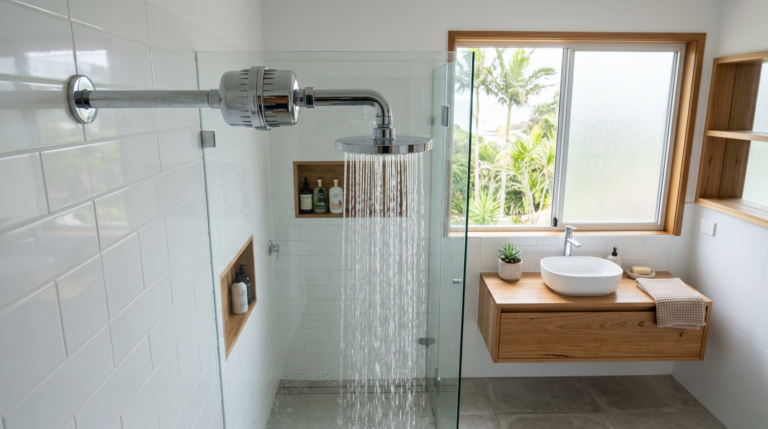
Drinking water filtration gets most of the attention, but chloramine exposure via showering is a separate and significant consideration for Brisbane households. During a typical 10-minute shower, the skin — your body’s largest organ — has extended direct contact with SEQ’s chloramine-treated water at warm temperatures, which can strip natural oils and affect the skin barrier. For people with sensitive skin, eczema, or dry hair, chloramine contact in the shower is frequently the overlooked culprit. The Earth’s Water Premium Shower Filter is specifically engineered for chloramine removal, using a multi-stage media including KDF-55 and catalytic carbon to reduce chloramine in hot shower water where standard carbon loses effectiveness due to elevated temperature.
The unit installs directly in the shower line between the wall outlet and your existing showerhead — a genuine five-minute installation with no tools beyond hand-tightening. Earth’s Water is an Australian brand with a 20% affiliate commission, which reflects genuine confidence in the product’s performance and the brand’s standing in the market. For Brisbane households already running a drinking water filter, the shower filter is the logical next step to address the remaining major chloramine exposure pathway. It’s particularly worthwhile in households where skin sensitivity, dry hair, or scalp issues have not resolved despite dietary or cosmetic interventions — Brisbane’s chloramine-treated shower water is a plausible contributing factor that most dermatologists don’t consider.
✓ Pros
- KDF-55 + catalytic carbon handles chloramine in hot water
- Australian brand, designed for SEQ water chemistry
- Five-minute installation, no tools required
- Compatible with most standard showerheads
- Practical for skin sensitivity and hair health concerns
✗ Cons
- For topical/shower use only — not for drinking water
- Requires filter cartridge replacement every 6–12 months
- May slightly reduce water pressure depending on existing pressure
4. Waterdrop D6 — Best Compact RO
BEST COMPACT RO
Waterdrop D6 RO
Compact countertop RO with alkaline remineralisation — RO purity with improved taste for Brisbane households
The Waterdrop D6 occupies a useful position in the Brisbane filtration market: it delivers full reverse osmosis performance in a more compact countertop footprint than the AquaTru, and adds a remineralisation stage that reintroduces calcium, magnesium, and trace minerals back into the purified water. RO systems strip everything — including beneficial minerals — which can leave water tasting flat and slightly acidic. The D6’s remineralisation filter raises pH slightly (typically to 7.5–8.0) and improves flavour by adding back the minerals that make natural spring water palatable. For Brisbane’s relatively low-TDS source water (80–115 mg/L), the remineralised output has noticeably better taste than straight RO permeate.
Like the AquaTru, the Waterdrop D6 requires no plumbing — it fills via a refillable reservoir and dispenses from a tank. The compact design (roughly the footprint of a large coffee machine) suits Brisbane apartments and smaller kitchens where bench space is at a premium. It removes chloramine, fluoride, PFAS, DBPs, heavy metals, and dissolved solids via the RO membrane, with the pre-filter protecting the membrane from chloramine-related degradation. The D6 is particularly well-suited for households that tried a Brita, upgraded to a catalytic carbon filter, and now want full RO-level purity without committing to an under-sink installation.
✓ Pros
- Full RO filtration including chloramine and fluoride removal
- Remineralisation stage improves taste and raises pH
- Compact countertop footprint — no plumbing required
- Pre-filter protects RO membrane from chloramine degradation
- Suitable for Brisbane apartments and smaller kitchens
✗ Cons
- Produces waste water (typical of all RO systems)
- Requires manual reservoir refilling
- Slower output than tap — suited to household drinking, not bulk use
5. Berkey Gravity Filter — Best Gravity Filter
BEST GRAVITY FILTER
Berkey Gravity Filter
No power, no plumbing — Black Berkey elements remove chloramine and bacteria; ideal for off-grid and power outage use
The Berkey is in a different category from the other filters here: it requires no electricity, no plumbing, and no connection to the water supply. Pour water into the top chamber, and gravity draws it through the Black Berkey purification elements into the lower chamber over several hours. The Black Berkey elements are a composite media that combines multiple filtration mechanisms — including ion exchange and compressed carbon — that together achieve chloramine reduction along with pathogen removal. This makes the Berkey the only filter in this list genuinely suitable for use with source water other than treated tap water, which is relevant for Brisbane households who use rainwater tanks as a secondary source, or who want a filter that functions during cyclone-related infrastructure outages.
For everyday Brisbane tap water filtration, the Berkey is not the most convenient option — it requires manual filling and has a slower throughput than any of the tap-connected filters here. Its true strength is resilience. Queensland experiences periodic flooding, severe storms, and power outages where mains pressure may be reduced or compromised, and having a gravity filter that can process tap water, rainwater, or even surface water in an emergency is a genuine household preparedness asset. The Black Berkey elements have an exceptionally long rated life (approximately 22,700 litres per pair), making the ongoing cost per litre extremely low. For households looking for a set-and-forget backup alongside a daily-use filter, the Berkey is the recommended pairing.
✓ Pros
- No electricity or plumbing required
- Removes chloramine, bacteria, viruses, and heavy metals
- 22,700 L rated life per pair of Black Berkey elements
- Works on rainwater, tank water, and tap water
- Reliable backup during Queensland storm outages
✗ Cons
- Does not remove fluoride (requires optional PF-2 elements)
- Slow throughput — requires planning ahead
- Large footprint — designed for bench-top, not cupboard storage
- Higher upfront cost for the unit itself
Brisbane Suburb Water Quality Notes
While all of Brisbane and South East Queensland receives chloramine-treated water from the Seqwater network, there is meaningful variation in water parameters across suburbs and local government areas. This is primarily driven by the distribution distance from treatment plants, the blending ratios of water from different dam catchments at different times of year, and the age and composition of local distribution infrastructure. Understanding your suburb’s position in the network can inform whether you prioritise hardness treatment alongside chloramine removal.
Logan and Ipswich suburbs tend to have the highest hardness and TDS readings on the SEQ grid. These areas receive water that has often travelled further from the primary treatment works or is drawn from catchments with naturally harder source water. Hardness in the 110–120 mg/L CaCO₃ range is common in parts of Logan and Ipswich, which means limescale accumulation on taps, appliances, and showerheads is a more pressing issue than in inner Brisbane. For households in these suburbs, an RO system (AquaTru or Waterdrop D6) provides the dual benefit of chloramine removal and softening by stripping the dissolved calcium and magnesium that cause scale. For more detail on softening options, see our guide to the best water softeners in Australia.
Inner North Brisbane — including New Farm, Fortitude Valley, Newstead, and Teneriffe — is generally served well by the SEQ grid, with lower TDS readings (often towards the 80 mg/L end of the range) and consistent water pressure owing to the proximity to treatment infrastructure. Inner north residents are unlikely to notice hardness issues but will still experience the characteristic chloramine taste and odour that no standard pitcher filter will resolve. The Tappwater EcoPro is an ideal fit for the inner-north renter demographic given the high proportion of rental properties in these suburbs.
South Brisbane and West End properties, including many apartment towers along the river corridor, draw from the same network but often experience slightly higher chloramine residuals due to the density of older distribution pipes with longer contact times. This makes the taste and odour improvement from catalytic carbon filtration particularly noticeable for South Brisbane residents.
Mt Crosby and Kenmore are among the first suburbs served from the Mt Crosby water treatment plant on the Brisbane River — being close to the treatment works means these suburbs receive water with a slightly higher residual disinfectant dose relative to distribution endpoint suburbs. The water is treated to consistent ADWG standards throughout, but the chemical taste can be more pronounced in areas receiving freshly treated water before it has time to equilibrate in the distribution system.
Gold Coast suburbs sit on the SEQ grid and share the same chloramine treatment profile as Brisbane. The coastal proximity does not materially affect tap water chemistry — Gold Coast tap water is not saltier or harder than Brisbane suburban water. Like Palm Beach QLD where founder testing recorded 69 ppm TDS, most Gold Coast on-grid households will see similar results: low TDS in the 65–85 ppm range, full chloramine treatment, and Queensland Health fluoridation at 0.7–1.0 mg/L.
Decision Guide: Which Filter Is Right for Your Situation?
Brisbane’s chloramine-based water chemistry means the filter choice matters more here than in most Australian cities. The following five scenarios cover the most common household situations on the SEQ grid.
Scenario 1: Brisbane renter, no plumbing modifications allowed. You need chloramine removal without drilling, plumbing, or landlord negotiation. The answer is the Tappwater EcoPro — it threads onto the tap aerator in 30 seconds, uses catalytic carbon to break down chloramine, and packs away when you move. Standard pitcher filters like Brita will not solve Brisbane’s chloramine problem. The EcoPro will.
Scenario 2: Homeowner who wants to remove both fluoride and chloramine. Only reverse osmosis removes fluoride from drinking water. The AquaTru Classic Smart RO is the recommended solution — no plumbing required, sits on the bench, and removes chloramine, fluoride, PFAS, DBPs, and heavy metals through a four-stage process. For comprehensive coverage of all RO options, see our full guide: Best Water Filters Australia 2026.
Scenario 3: Concerned about chloramine contact in the shower, not just drinking water. A drinking water filter leaves the shower — your largest daily chloramine exposure surface — unaddressed. Add the Earth’s Water Premium Shower Filter alongside whatever drinking filter you use. KDF-55 + catalytic carbon media handles chloramine in hot water where standard carbon degrades in performance.
Scenario 4: Want compact countertop RO with better-tasting output. The Waterdrop D6 delivers full RO filtration with an alkaline remineralisation stage that reintroduces beneficial minerals and raises pH, producing noticeably better-tasting water than straight RO permeate. It’s the most practical choice for Brisbane apartment dwellers who want RO performance without the AquaTru’s footprint.
Scenario 5: Power outage preparedness, camping, or off-grid use. The Berkey Gravity Filter with Black Berkey elements is the only option in this list that works without electricity or mains pressure. It handles Brisbane tap water, rainwater, and most surface water sources — a genuine household preparedness asset in Queensland’s storm season. For renters who split time between Brisbane and regional properties, the Berkey travels. For more options for renters specifically, see: Best Water Filters for Renters in Australia.
Final Verdict
Brisbane’s use of chloramine as its primary water disinfectant is the single most important fact for any household shopping for a water filter — it categorically rules out standard GAC pitcher filters like Brita and demands either catalytic carbon, compressed carbon block, or reverse osmosis. For most Brisbane households, the AquaTru Classic Smart RO is the most complete solution, removing chloramine alongside fluoride, PFAS, and the full suite of SEQ disinfection byproducts in one countertop unit; for renters, the Tappwater EcoPro’s catalytic carbon tap attachment is the only practical path to chloramine removal without plumbing. Whatever filter you choose for drinking water, the Earth’s Water Premium Shower Filter addresses the separate but significant chloramine exposure pathway most households overlook.
Ready to Filter Brisbane’s Chloramine?
The AquaTru Classic Smart RO removes chloramine, fluoride, PFAS, and DBPs — no plumbing required. Best countertop RO for SEQ households.
See AquaTru Price on Amazon AU →Last reviewed: June 2026 — Clean and Native
Frequently Asked Questions
Get the Australian Home Environment Checklist
30 checks across water, air and EMF. Most of them free. Ranked by impact.
No spam. Unsubscribe any time.

Former Royal Australian Navy Clearance Diver and TAG-E counter-terrorism operator. Founded Clean and Native to apply the same rigorous thinking to the home environment.
Full biography →