Do EMF Phone Cases Work? The Science, the Scams, and What Actually Protects You (Australia 2026)
Most EMF phone cases sold in Australia do not meaningfully reduce your radiation exposure — and back-only shields can force your phone to increase its transmit power, making exposure worse. The only two product types that actually work are full-perimeter Faraday pouches (block ~99% of signal but you cannot use the phone) and shielded-flap cases that cover the front while the phone is at the ear (block ~90% of head-side RF in active use). EMF stickers, shungite plates, anti-radiation chips, and scalar pendants do nothing — every independent meter test produces zero attenuation. The catch: even the products that work are inferior to free interventions like speakerphone mode, air-tube headsets, and airplane mode during sleep.
| Product type | Measurable RF reduction | Verdict |
|---|---|---|
| Faraday pouch (full enclosure) | ~99% (no signal in or out) | Works — for storage/sleep |
| Shielded-flap case | ~90% at head when flap is between phone and ear | Works — if used correctly |
| Back-only shield, stickers, shungite, chips | 0% (or negative — antenna boost effect) | Avoid entirely |
✓ Who This Is For
- Anyone who holds their phone to their ear for calls and wants to reduce RF exposure to their head
- Parents who want a practical exposure-reduction tool for teenagers who call frequently
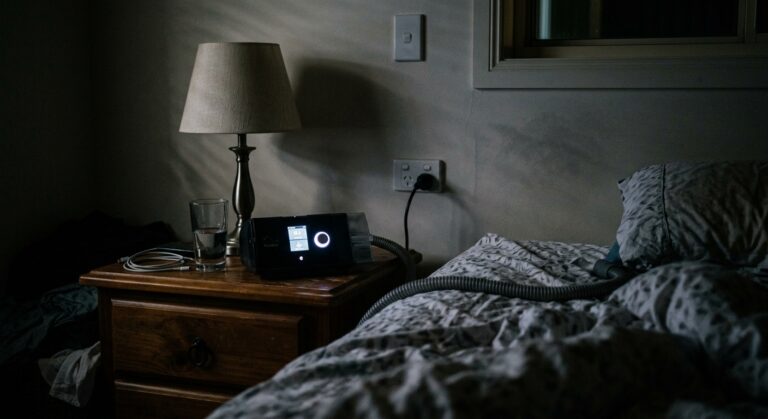
- People who sleep with a phone on the bedside table and want to block overnight RF
- Anyone who has already bought an EMF sticker and wants to know what actually works instead
✗ Who It Is Not For
- Anyone expecting a case to protect against RF from 5G towers or Wi-Fi routers — cases only address the phone you are holding
- People who already use speakerphone or a wired headset for all calls — you have already achieved more reduction than any case provides
- Anyone expecting a Faraday pouch to allow normal phone use — you cannot receive calls while the phone is enclosed
What Phone Radiation Actually Is — RF Fields, SAR, and the ARPANSA Limit
Your phone communicates with cell towers by emitting radiofrequency (RF) electromagnetic fields — a form of non-ionising radiation. Non-ionising means the energy is not strong enough to break chemical bonds or damage DNA directly the way X-rays or gamma rays can. Phone RF sits in the 700 MHz to 3,500 MHz range for 4G/5G sub-6, and up to 26 GHz for millimetre-wave 5G (not yet widely deployed in Australia as of 2026).
The reason phones matter more than your Wi-Fi router or smart meter is proximity. RF power density drops with the square of the distance from the source (inverse-square law). Your router sits 3-10 metres away. Your phone sits zero centimetres from your skull during a call. That makes your phone the single highest-contact RF source for most Australians — not 5G towers, not smart meters, not your neighbour’s Wi-Fi.
SAR (Specific Absorption Rate) is the standard measurement for how much RF energy the human body absorbs from a device. It is expressed in watts per kilogram (W/kg) and measured with the device transmitting at maximum power, positioned at a standardised distance from a phantom model of the human head. The Australian limit, set by ARPANSA (Australian Radiation Protection and Nuclear Safety Agency), is 2.0 W/kg averaged over 10 grams of tissue — identical to the ICNIRP international guideline. Every phone sold in Australia must meet this limit to pass type approval.
ARPANSA’s position, as of their 2025 fact sheet, is that current scientific evidence does not establish health effects from RF exposures within SAR limits. Their RF standard at 2.4 GHz is 1,000 µW/cm² — a thermal safety limit designed to prevent tissue heating, not a precautionary limit. It does not address the question of whether chronic low-level exposure below heating thresholds has biological effects. That question remains contested in the peer-reviewed literature. If you want to reduce your phone RF exposure as a personal precautionary measure, the rest of this article covers what actually achieves that and what is pure marketing theatre.
Why Most EMF Phone Cases Fail — Stickers, Shungite, and Back-Only Shields
The Australian EMF protection market is flooded with products that have no credible mechanism for reducing RF exposure. If you have spent money on any of the following, you have been sold a story without supporting physics.
Anti-Radiation Stickers and Chips
These small adhesive patches — often sold with claims about “harmonising” or “neutralising” phone radiation — have no measurable RF shielding effect. RF shielding requires a continuous conductive barrier (metal mesh, copper, silver-threaded fabric) between the source and your body. A 2 cm sticker on the back of your phone does not create a conductive barrier. It cannot redirect, absorb, or block RF energy in any measurable way. The US Federal Trade Commission has taken enforcement action against multiple anti-radiation sticker manufacturers for deceptive claims. No sticker product has published independent lab data showing RF attenuation measured in decibels.
Shungite Plates and Crystal Attachments
Shungite is a carbon-rich mineral from Russia. While shungite contains some conductive carbon, a thin polished plate glued to a phone case does not provide RF shielding. RF shielding requires a continuous conductive enclosure around the source (Faraday cage principle) — not a small piece of mineral on one face. There are zero peer-reviewed studies demonstrating that a shungite phone plate reduces SAR or RF power density at the user’s head. This is a minerals-as-medicine claim dressed up in physics language.
Back-of-Phone-Only Shields
This category includes thin metallic sheets or mesh panels built into the back panel of a phone case. The problem is fundamental: your phone’s antenna does not transmit exclusively from the back. Modern smartphone antennas are designed to radiate omnidirectionally — they transmit from the sides, top, bottom, and back simultaneously to maintain signal in any orientation. A shield covering only the rear face leaves 60-80% of the radiation pattern unblocked. Worse, it can reflect RF energy back through the front of the phone — potentially concentrating it toward your face during calls.
A 2019 study published in the International Journal of Environmental Research and Public Health (Belpoggi et al.) noted that partial shielding of mobile phones can alter the radiation pattern without necessarily reducing total user exposure. This is the dirty secret of cheap EMF cases: geometry matters, and a shield in the wrong position can redirect energy toward you rather than away.
The Antenna Boost Problem — How a Bad Case Can Increase Your Radiation
This is the single most important technical fact in the entire EMF phone case conversation, and most competitors do not mention it because it undermines their product recommendations.
When you place a conductive material near or over a phone’s antenna, the phone detects a weaker connection to the cell tower. In response, its adaptive power control algorithm increases transmit power to compensate. Every modern phone does this automatically — it is part of the GSM, LTE, and 5G NR specifications. The phone will boost its output power until it re-establishes an adequate signal-to-noise ratio with the tower, or until it reaches maximum transmit power.
This means a poorly designed “shielding” case that partially blocks the antenna can cause the phone to transmit at higher power than it would with no case at all. The result: more total RF energy output, not less. A 2020 paper by Wall et al. published in Bioelectromagnetics confirmed that phone cases with metallic components altered antenna performance and, in some configurations, increased the SAR measured at the head position.
Generic “anti-radiation” cases from Amazon that place conductive material over part of the antenna can raise peak RF output on the ear side rather than lower it, because the phone works harder to maintain its connection through the conductive interference. False reassurance is worse than no case — it changes behaviour (you hold the phone to your ear more often, believing you are protected) while potentially increasing total exposure.
What Actually Works — Shielded-Flap Cases and Faraday Pouches
Two product types have a genuine, physics-based mechanism for reducing RF exposure from a phone. Both work, but in fundamentally different ways with different tradeoffs.
Shielded-Flap Wallet Cases
These are phone cases with a flip-style front cover containing a layer of conductive fabric — typically silver-threaded or copper-threaded textile. The shielding material is woven into the front flap only, not the back panel. When you make a call and hold the phone to your ear with the flap between the phone screen and your head, the conductive layer deflects a portion of RF energy away from your ear and skull.
The design is intentional: the back of the phone (facing outward, away from your head) remains unshielded so the antenna can communicate with the tower normally. This avoids triggering the adaptive power increase described above. Legitimate shielded-flap cases typically claim 90-99% RF deflection on the shielded face, based on FCC-accredited lab testing. SafeSleeve and DefenderShield are two brands that have published FCC-lab SAR reduction data for their wallet-style cases.
The critical limitation: the shielding only works when the flap is closed and positioned between the phone and your head. If you use the phone on speakerphone with the flap open, the shielding does nothing. If you carry the phone in your pocket without the flap facing your body, the shielding is not positioned to reduce body exposure. It is a call-specific solution.
Faraday Pouches
A Faraday pouch is a small bag lined with conductive fabric that creates a complete Faraday cage around your phone. When the phone is fully enclosed inside the pouch (with the opening sealed), no RF signal gets in or out. The phone cannot communicate with cell towers, Wi-Fi networks, Bluetooth devices, or GPS satellites.
This is the nuclear option. It works absolutely — 100% signal blockage when properly enclosed. But the tradeoff is total: no incoming calls, no notifications, no data, no location tracking. Your phone’s battery also drains faster as it searches for signal at maximum power. Use cases: sleeping, meetings, or situations where you want complete disconnection. For daily carry while expecting calls, a Faraday pouch is impractical.
| Use Case | Shielded-Flap Case | Faraday Pouch | Air-Tube Headset |
|---|---|---|---|
| Phone calls held to ear | Best — deflects RF from skull | Cannot make calls | Best — eliminates head contact |
| Sleeping near phone | Partial — flap must face head | Best — complete RF block | Not relevant |
| Phone in pocket all day | Partial — flap must face body | Works but no calls/data | Not relevant |
| Total signal block / privacy | Does not block signal | Only option | Does not block signal |
3 EMF Phone Products Worth Buying in Australia
The three products below have verified mechanisms of action. All are available in Australia with reliable shipping. None are stickers, shungite attachments, or back-only shields.
1. Radia Smart Faraday Phone Pouch — Best Faraday Pouch
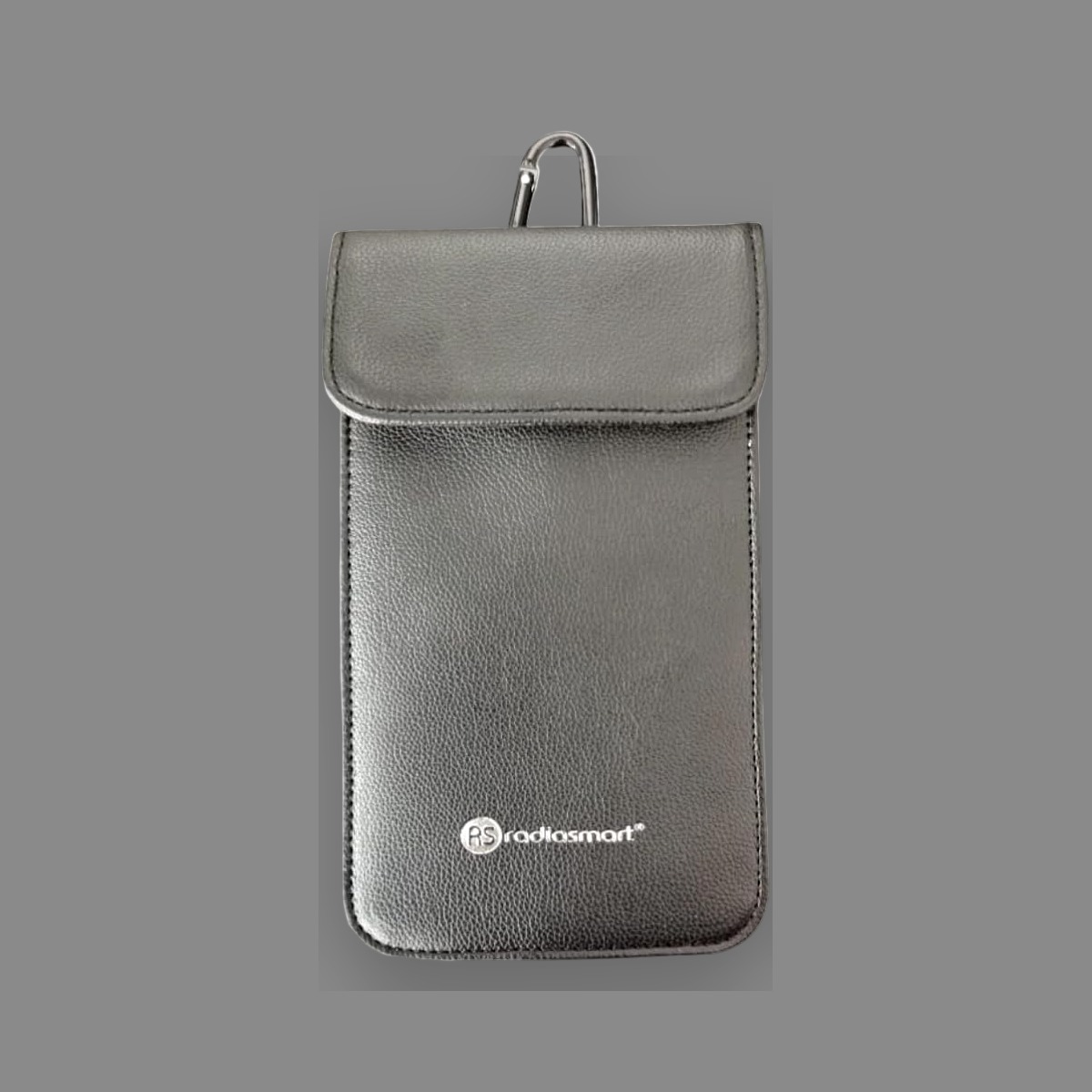
Radia Smart is an Australian brand. Their EMF Blocking Phone Pouch uses Faraday fabric on all interior surfaces. When your phone is fully enclosed with the top folded over, RF is blocked completely by the Faraday cage effect. The fold-over closure is a meaningful design detail: a loosely folded opening leaves a gap that breaks the Faraday cage effect. Fold it completely and the shield holds.
The honest limitation: your phone is completely disconnected while inside. No calls, no messages, no alarms. The phone will also drain battery faster as it searches for signal at maximum power through the shield. Best use case for Darwin households: phone goes in the pouch at bedtime, sits on the bedside table, and you sleep eight hours without RF transmission from your most-used device 30cm from your head. This aligns with the Building Biology SBM-2015 sleeping area guideline of RF below 0.1 mW/m².
2. SafeSleeve Anti-Radiation Phone Case — Best Shielded-Flap Case
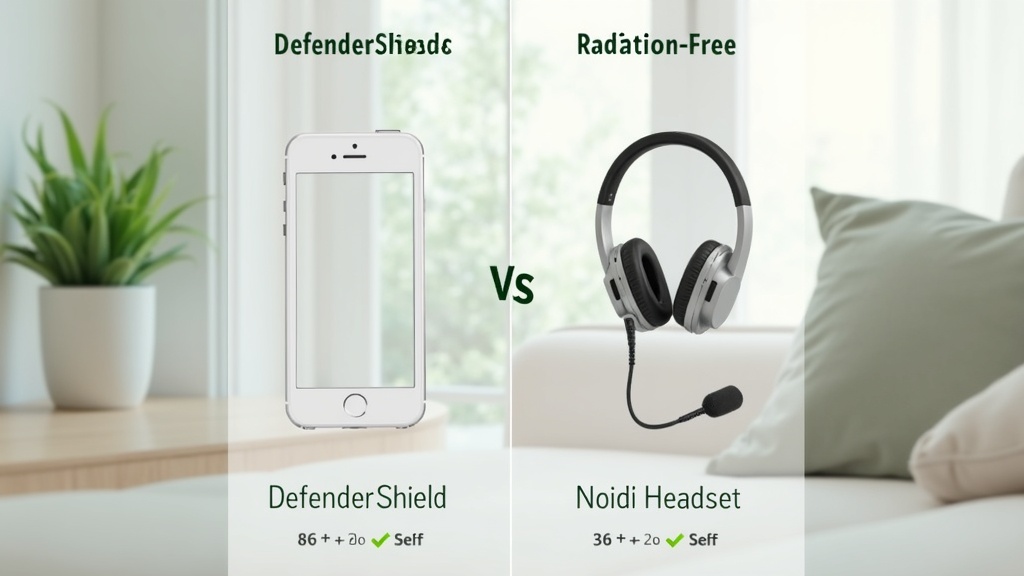
SafeSleeve is a US brand with FCC-accredited lab testing showing 99% RF deflection on the shielded flap face. The directional design — shielding on the front flap only, unshielded back — is what makes it work. The antenna communicates with the tower through the unshielded back panel at normal power. When you hold the phone to your ear with the flap closed between the screen and your head, the conductive silver-woven layer deflects RF away from your ear and skull.
The SafeSleeve is a wallet case with card slots, which means it doubles as your phone wallet. The shielding is only effective during calls with the flap correctly positioned. It does not reduce radiation from the phone’s back or sides, and it is not a Faraday enclosure — the phone continues to receive and transmit normally. Price on Amazon AU varies by phone model; universal sizes are available if your specific model is not listed. Annual replacement is not required — the conductive fabric retains effectiveness until the case itself wears out physically.
3. DefenderShield Air-Tube Headset — Best Alternative Strategy
If the goal is reducing RF to your head, the most effective single purchase is not a case at all — it is an air-tube headset. Standard wired earphones conduct a small amount of RF energy along the wire to your ear. Air-tube headsets break the conductive path: the last section uses a hollow tube to transmit sound acoustically rather than electrically. No metal wire reaches your ear canal.
DefenderShield’s air-tube headset is available through SaferEMF Australia and works with any phone. It requires no case modification, produces no antenna interference, and eliminates the phone-to-head contact that creates the highest SAR exposure. The honest limitation: audio fidelity is slightly lower than premium wired earphones due to the acoustic transmission through the air tube, and you need to remember to carry it. For call-time exposure reduction, this is the most reliable mechanism available — better than any case because it removes all contact between the phone and your head rather than partially deflecting some radiation.
The Better Strategy — Distance, Speakerphone, and Airplane Mode
Before you spend $50-100 on a specialised case or pouch, consider the three highest-impact, lowest-cost interventions for reducing phone RF exposure. These are backed by physics (inverse-square law) and cost between $0 and $79.
1. Speakerphone Mode (Free)
Holding your phone 30 cm from your head instead of 0 cm reduces RF power density at your skull by roughly 99% via inverse-square law (power density drops with the square of the distance). Speakerphone mode during calls is the single most effective RF reduction strategy available. It costs nothing. When privacy allows, speakerphone eliminates more head exposure than any case on the market.
2. Air-Tube Headset ($59-79 AUD)
When speakerphone is not practical — in public, in meetings, on the train — an air-tube headset keeps the phone 30-90 cm from your head while breaking the conductive wire path. The DefenderShield air-tube headset from SaferEMF AU is the recommended option for Australian buyers. Standard Bluetooth earbuds also increase distance from the phone but introduce their own low-power RF transmission directly into your ear canal — not an improvement.
3. Phone in Airplane Mode During Sleep (Free)
Your phone transmits RF continuously while connected to cellular and Wi-Fi networks, even when you are not using it. Placing it in airplane mode eliminates all RF emissions. If your phone sits on the bedside table 30 cm from your head for 8 hours every night, airplane mode removes that chronic overnight exposure entirely. A $20 mechanical timer (Jackson 24hr Mechanical Timer, ASIN B0DCGPPK5H, Amazon AU) can automate this without requiring you to remember at bedtime. These three strategies — speakerphone, air-tube headset, airplane mode at night — reduce more RF exposure than any case. Add a verified case or pouch only after the free steps are in place.
For a complete room-by-room approach, see our guide on EMF meters for Australian homes to understand how to measure and verify your actual exposure levels, rather than relying on marketing claims from product manufacturers.
Final Verdict
Most EMF phone cases sold in Australia are based on marketing claims with no independent lab verification. Stickers, shungite plates, and back-only shields have no credible mechanism for reducing your exposure. Worse, cases that interfere with the antenna cause your phone to boost transmit power — increasing total RF output rather than reducing it.
Two product types have legitimate, physics-based mechanisms: shielded-flap wallet cases (for call-time ear-zone reduction) and Faraday pouches (for complete signal blocking during sleep or deliberate disconnection). But the highest-impact interventions are free: speakerphone mode and airplane mode at night. An air-tube headset fills the gap for private calls without a case. ARPANSA maintains that current evidence does not establish health risks from phones used within SAR limits — but if you want to reduce exposure as a precautionary measure, start with distance and behaviour changes first. Add a verified product only after the free steps are in place.
Last reviewed: May 2026 — Clean and Native
Frequently Asked Questions
Do EMF phone cases really work?
Shielded-flap wallet cases with FCC-lab-tested conductive fabric deflect RF away from your ear during calls. Faraday pouches block all signal completely. Stickers, shungite plates, and back-only shields have no credible independent data supporting their effectiveness — and back-only shields can cause your phone to increase transmit power, making exposure worse.
What is SAR?
SAR stands for Specific Absorption Rate, measured in watts per kilogram (W/kg). It quantifies how much RF energy the human body absorbs from a device. The ARPANSA limit for phones sold in Australia is 2.0 W/kg averaged over 10 grams of tissue, aligned with the international ICNIRP guideline.
Are Faraday phone cases legal in Australia?
Yes. Faraday pouches and cases are legal in Australia. They are simply conductive fabric enclosures. There is no law against blocking your own phone’s signal. However, intentional signal jamming devices that interfere with other people’s communications are illegal under the Radiocommunications Act 1992.
Can a phone case increase my radiation exposure?
Yes. A case with metallic components near the antenna can cause the phone to increase transmit power to compensate for reduced signal to the tower. This adaptive power control response can increase total RF output and SAR at the head position, as confirmed by Wall et al. (2020) in Bioelectromagnetics.
Does 5G make phone cases more important?
Sub-6 GHz 5G operates at frequencies similar to 4G and penetrates the body in a similar way. Millimetre-wave 5G (26 GHz+) is absorbed more superficially by skin but is not yet widely deployed in Australia as of 2026. The same shielding principles apply: distance and conductive barriers work for any frequency. 5G does not fundamentally change the physics.
What is the most effective way to reduce phone EMF?
Speakerphone mode (free) reduces RF power density at your skull by roughly 99% by increasing distance. Air-tube headsets eliminate head contact during calls. Airplane mode at night removes chronic overnight exposure. These three strategies reduce more exposure than any case on the market.
Are shungite phone cases effective?
No. Shungite is a carbon mineral that does not provide RF shielding in the form of a small plate attached to a phone. RF shielding requires a continuous conductive barrier around the source. No peer-reviewed study demonstrates that a shungite phone attachment reduces SAR or RF power density at the user’s head.
How do I know if my phone case is actually shielding?
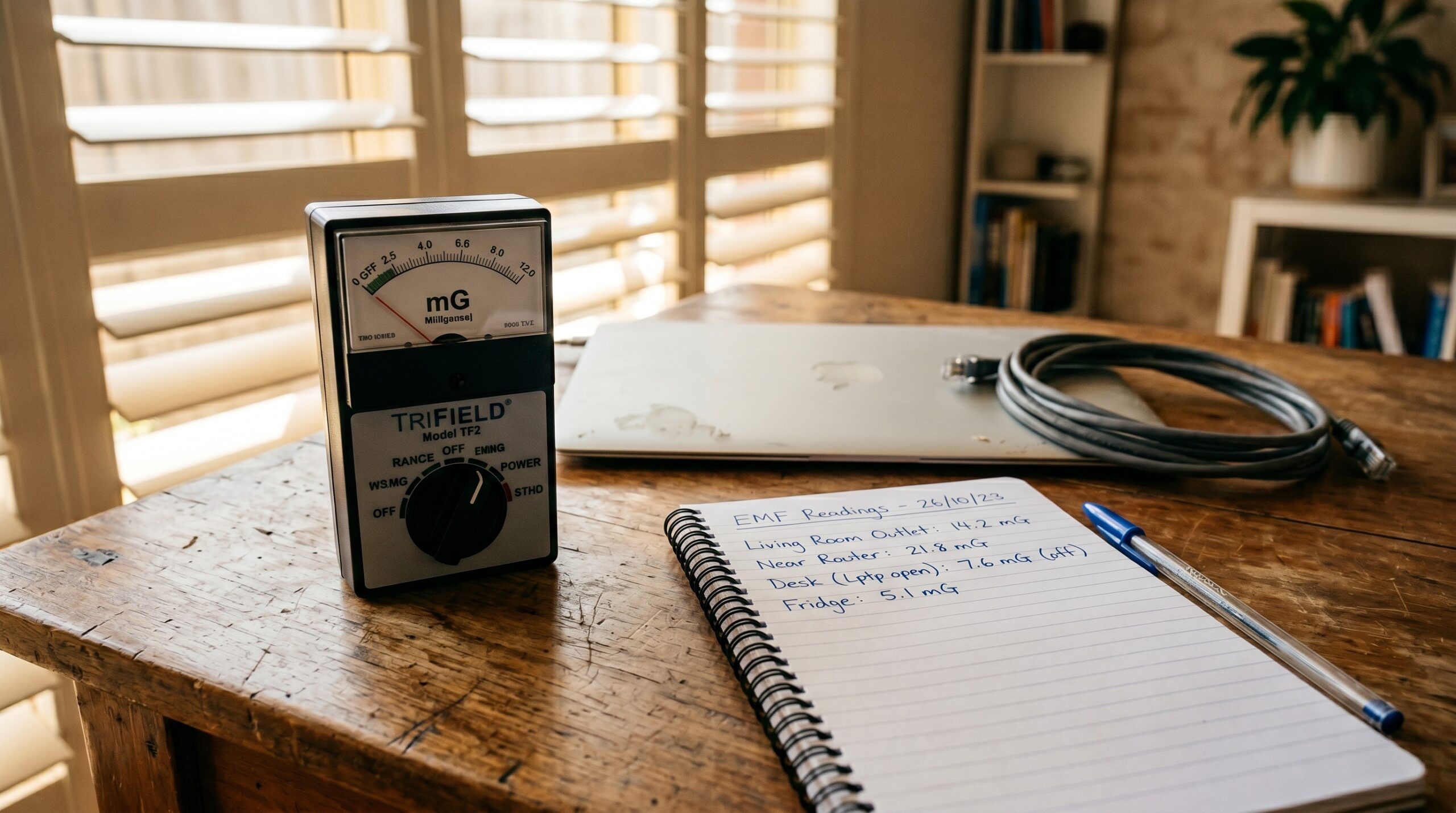
Test it with an RF meter. Place your phone in the case, make a call, and measure RF power density at the ear position with a calibrated meter like the TriField TF2. Compare the reading to the same call without the case. If the reading does not decrease on the ear side — or if it increases — the case is not shielding effectively.
Should I use a Bluetooth headset instead of a phone case?
Bluetooth headsets reduce phone-to-head RF exposure by increasing distance from the phone. However, they emit their own low-power RF directly into your ear canal. Air-tube wired headsets eliminate both the phone RF and the Bluetooth RF at the ear, making them the better solution for call-time exposure reduction.
Get the Australian Home Environment Checklist
30 checks across water, air and EMF. Most of them free. Ranked by impact.
No spam. Unsubscribe any time.

Former Royal Australian Navy Clearance Diver and TAG-E counter-terrorism operator. Founded Clean and Native to apply the same rigorous thinking to the home environment.
Full biography →