
Best Shower Filter Australia 2026 — Compared & Ranked
For free chlorine cities like Melbourne, Hobart, and Canberra, the Philips Premium Shower Filter at $45.82 AUD is our top overall pick — NSF-certified KDF media, 11,300+ Amazon AU ratings, and the lowest price on this page. The AquaBliss SF220 at $60-$90 AUD remains a proven budget alternative with over 60,000 Amazon reviews globally. Both use KDF-55-family media, which is ineffective against chloramine — ruling them out for most Australian capital cities.
QUICK VERDICT
The Philips Premium Shower Filter is our #1 overall pick for free chlorine cities (Perth, Melbourne, Hobart, Canberra, Toowoomba, Cairns, Townsville) — 11,300+ Amazon AU ratings, NSF-certified KDF media, and the lowest cost per litre filtered on this page. The AquaBliss SF220 remains a solid budget alternative in the same cities. The Well Verti Wellness Pod is a premium direct-to-brand option (not sold on Amazon) with in-house lab data rather than independent third-party testing. No shower filter removes fluoride, heavy metals at certified levels, or hardness minerals — anyone claiming otherwise is not reading the NSF/ANSI standards correctly.
This guide is for you if:
- Your city uses chloramine disinfection (Brisbane, Sydney, Adelaide, Gold Coast) and you want measurable daily reduction in shower exposure
- You have eczema, psoriasis, or dry skin and suspect chloramine is aggravating it
- You are a renter who cannot install whole-house filtration — a shower filter is the lowest-cost certified entry point
- You notice a chemical smell during hot showers — chloramine volatilises in steam and is inhaled
- You want to reduce children’s daily chloramine exposure during bathing
This guide is NOT for you if:
- Your city uses free chlorine only (Hobart, Canberra) — a sub-$30 KDF-55 inline filter removes free chlorine adequately; catalytic carbon is unnecessary
- You expect a shower filter to remove fluoride, microplastics, or heavy metals — no shower filter does this reliably at normal flow rates
- You own your property and want comprehensive filtration — a whole-house catalytic carbon block delivers better results per dollar
- You want zero installation — all shower filters require replacing a fitting; the HolyH2O Shower Max is the easiest but still needs a showerhead swap
Why Most Australians Are Buying the Wrong Shower Filter
Here is the problem nobody selling shower filters wants to talk about: most of Australia’s largest cities use chloramine, not free chlorine, as their primary disinfectant. Brisbane (SEQ Water grid), Sydney (Sydney Water), Adelaide (SA Water), the Gold Coast, and Darwin (Power and Water Corporation) use chloramine. Perth (Water Corporation WA) and Melbourne (Melbourne Water) use free chlorine as their primary disinfectant.
Why does this matter? Because KDF-55 — the copper-zinc alloy media found in most shower filters sold on Amazon, including the AquaBliss SF220 and most “15-stage” filters from generic brands — reduces free chlorine through a redox (oxidation-reduction) reaction. It does not meaningfully reduce chloramine. Standard granular activated carbon (GAC) removes chloramine at roughly 1/40th the rate it removes free chlorine, according to water treatment engineering data from the Water Quality Association. At a shower’s flow rate of 7-9 litres per minute and warm water temperatures of 38-42°C, contact time is measured in seconds — not minutes. That is nowhere near enough for standard carbon or KDF-55 to break the chloramine bond.
So if you live in Brisbane’s Logan or Ipswich suburbs, Sydney’s western suburbs around Penrith, Adelaide’s northern plains, or anywhere on the Darwin grid — and you install a KDF-55 based shower filter expecting it to remove the chlorine smell and the dry-skin effects — you are paying $60-$90 for a placebo. The chloramine passes straight through.
The only shower filter medium with a meaningful effect on chloramine at realistic shower flow rates is vitamin C (ascorbic acid), which reacts with chloramine chemically and neutralises it on contact. Catalytic carbon needs more contact time than a shower allows, and standard carbon and KDF-55 do not meaningfully reduce chloramine.
What Shower Filters Actually Do (And What They Cannot Do) — According to NSF Standards
Every shower filter brand on the market makes claims. “Removes heavy metals.” “Filters fluoride.” “Eliminates 99% of contaminants.” Before you spend a dollar, you need to understand what the actual certification standard says — because according to NSF International’s standards for water treatment systems, shower filters are certified under NSF/ANSI 177, and that standard tests for one thing only: reduction of free available chlorine.
Not heavy metals. Not fluoride. Not bacteria. Not PFAS. Not hardness. Not chloramine. Just free chlorine.
That is not a criticism of the standard — it is a reality check. The contact time, water temperature, and flow rate of a shower (7-9 L/min, 38-42°C, 5-10 minutes) are fundamentally different from a drinking water filter (0.5-2 L/min, cold water, slow drip). The physics simply do not allow meaningful reduction of most contaminants in a shower filter housing. Any brand claiming NSF-certified heavy metal removal from a shower filter is either misrepresenting the certification or citing a drinking water standard that does not apply to shower conditions.
What shower filters actually reduce:
- Free chlorine — NSF/ANSI 177 certified reduction. KDF-55, calcium sulphite, and standard carbon all work here.
- Chloramine — not covered by NSF 177. Among shower media, only vitamin C (ascorbic acid) meaningfully reduces chloramine via chemical reaction at shower flow rates; catalytic carbon needs more contact time than a shower allows. No NSF certification exists for chloramine removal in shower filters.
- Sediment — most filters include a mesh or ceramic pre-filter that catches particulate matter above 5-20 microns.
What shower filters cannot meaningfully remove:
- Fluoride — only reverse osmosis (90-97% removal) or activated alumina (80-95%) removes fluoride. Carbon filters — including catalytic carbon — cannot remove fluoride. No shower filter removes fluoride. Period.
- Hardness minerals — calcium and magnesium that cause scale. Adelaide’s water at ~140 mg/L CaCO₃ and Perth’s at ~180 mg/L CaCO₃ will still leave mineral deposits regardless of your shower filter. Only a whole-house water softener or RO system addresses hardness.
- Heavy metals at certified levels — while KDF-55 can reduce some dissolved metals in controlled lab conditions with slow flow rates and cold water, no shower filter carries NSF/ANSI 53 certification for heavy metal reduction because the testing conditions do not match shower use.
- PFAS — requires activated carbon block with extended contact time or RO. Not achievable in a shower housing.
If your primary concern is fluoride, heavy metals, or PFAS in your drinking water, a shower filter is not the solution. You need an under-sink RO system or a countertop RO unit for your drinking water. For a detailed comparison, see best water filter for Australian homes.
Your City’s Disinfection Type — The Single Most Important Factor
Before comparing products, you need to know one fact about your water supply. This fact determines whether a $60 filter works or whether you are wasting money. Here is the breakdown by Australian city:
| City / Region | Disinfection | Hardness (mg/L CaCO₃) | What You Need |
|---|---|---|---|
| Brisbane / SEQ | Chloramine | 80-120 | Vitamin C (ascorbic acid) |
| Sydney | Chloramine | 40-80 | Vitamin C (ascorbic acid) |
| Adelaide | Chloramine | ~140 (hard) | Vitamin C (ascorbic acid) |
| Perth | Free chlorine | ~180 (hard) | KDF-55 or standard carbon works |
| Darwin | Chloramine | 30-80 | Vitamin C (ascorbic acid) |
| Melbourne | Free chlorine | ~25 (very soft) | KDF-55 or standard carbon works |
| Hobart | Free chlorine | 20-40 | KDF-55 or standard carbon works |
| Canberra | Free chlorine | 30-60 | KDF-55 or standard carbon works |
| Townsville / Cairns | Free chlorine | 30-80 | KDF-55 or standard carbon works |
| Toowoomba | Free chlorine | 60-100 | KDF-55 or standard carbon works |
According to the SEQ Water grid’s 2025-2026 reporting, the grid is operating above 80% capacity. SEQ Water emphasises water conservation, but the treatment process — including chloramination — remains consistent across the network from the Gold Coast through to Noosa. If you are on the SEQ grid (Gold Coast, Brisbane, Logan, Ipswich, Sunshine Coast, Toowoomba’s Cressbrook-Wivenhoe pipeline connection), you are receiving chloramine-treated water.
Perth residents face a hard-water challenge. Perth’s water is the hardest of any Australian capital at approximately 180 mg/L CaCO₃ with TDS around 170 mg/L, though Water Corporation WA uses free chlorine rather than chloramine for disinfection. Adelaide is similar at 140 mg/L CaCO₃ and TDS up to 400 mg/L (the highest TDS in any Australian capital, largely from the Murray River source). A shower filter will not soften your water. Those limescale deposits on your shower screen? That is calcium carbonate, and no inline shower filter removes it.
Melbourne residents have it easiest. Melbourne Water’s supply from the Yarra Ranges catchments is remarkably soft — approximately 25 mg/L CaCO₃ and TDS around 60 mg/L. Free chlorine is used as the disinfectant, meaning even budget KDF-55 filters like the AquaBliss will reduce chlorine effectively. If you live in Melbourne’s eastern suburbs drawing from Silvan or Cardinia reservoirs, almost any shower filter on the market will work for you.
The Decision Tree: Which Shower Filter Do You Actually Need?
3-Question Decision Tree
1. What city are you in?
Brisbane / Sydney / Adelaide / Gold Coast / Darwin → You need vitamin C (ascorbic acid) media → the Waters Co Therapy is your pick.
Perth / Perth / Melbourne / Hobart / Canberra / Townsville / Cairns → KDF-55 or standard carbon works → AquaBliss or Well Verti are fine.
2. What is your budget?
Under $70 → Philips Premium Shower Filter, $45.82 (free chlorine cities only) or AquaBliss SF220 as an alternative.
$70-$100 → Waters Co Therapy vitamin C (chloramine cities).
3. Are you renting or do you own?
Renting → Inline shower filter (all three reviewed here) installs in 5 minutes with no tools. Standard Australian 1/2″ BSP thread.
Own → Consider a whole-house system if budget allows, but an inline filter is still the fastest win for your shower.
Philips Premium Shower Filter — Best Overall Pick
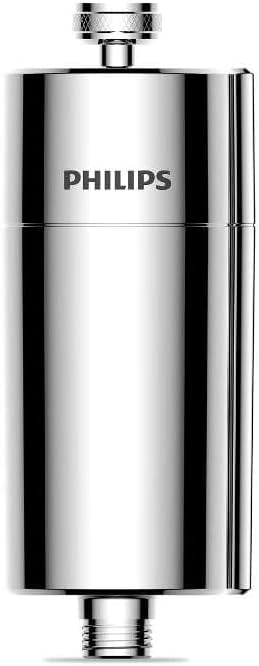
Price: $45.82 AUD on Amazon AU (includes 1 replacement cartridge)
Filter media: Double mesh pre-filter + NSF-certified KDF material
Cartridge life: 50,000 litres — replace every 4-6 months (model AWP175)
Connection: Standard 1/2″ BSP — fits all standard Australian hoses and taps
Origin: Philips (Netherlands-designed brand), sold via Amazon AU
The Philips Premium Shower Filter is the best-value shower filter we found for free chlorine cities. It carries 11,300+ ratings at 4.2/5 on Amazon AU — more review volume than the Well Verti (476), though fewer than the AquaBliss (60,000+ globally) or the HolyH2O Shower Max (12,000+ AU reviews, a different product category — a full showerhead replacement, not an inline filter). Its 3-stage design combines a double mesh pre-filter (catching rust and sediment above a few microns) with an NSF-certified KDF media core, which performs the same zinc-copper redox reaction as the KDF-55 found in the AquaBliss and Well Verti — converting free chlorine into harmless zinc chloride.
The detail worth noting: Philips markets its KDF material itself as carrying NSF certification. That is a material-level certification, not a system-level NSF/ANSI 177 certification of the assembled shower filter — the same distinction that applies to every KDF-based filter on this page except the PWS Brass High Output, which is the only one independently certified as a complete system. Like every other KDF and carbon filter here, the Philips does not meaningfully reduce chloramine at shower flow rates — if you are in Brisbane, Sydney, Adelaide, the Gold Coast, or Darwin, the Waters Co Therapy remains the correct pick.
Where it wins: at $45.82 with a 50,000-litre cartridge capacity rated for 4-6 months, the Philips has the lowest cost per litre filtered of any product reviewed here, a rated flow rate of 8 L/min with no noticeable restriction, and installs in under two minutes with no tools. The anti-scald housing material and chrome finish match the build quality of the pricier options on this list at roughly half the AquaBliss’s price.
Philips Premium Shower Filter — Pros and Cons
Pros
- 11,300+ Amazon AU ratings at 4.2/5 — among the highest review volume on this list
- Lowest price on this page at $45.82, with the largest cartridge capacity (50,000L)
- NSF-certified KDF filter material reduces free chlorine by up to 99%
- 8 L/min flow rate with no noticeable pressure restriction
- Two-minute no-tools install; fits all standard AU hoses and taps
Cons
- KDF media is NOT effective for chloramine — do not use in Brisbane/Sydney/Adelaide/Gold Coast/Darwin
- Material-level NSF certification only — not a system-level NSF/ANSI 177 certified unit
- Not Australian-made — imported via Amazon AU
Buy if: you live in Perth, Melbourne, Hobart, Canberra, Townsville, Toowoomba, or Cairns (free chlorine cities) and want the best-value, most-reviewed shower filter on Amazon AU. Check price →
AquaBliss SF220 — Best Budget Alternative for Free Chlorine Cities

Price: ~$60-$90 AUD on Amazon AU
Filter media: KDF-55, calcium sulphite, activated carbon, ceramic balls, stainless steel mesh
Cartridge life: 10,000-12,000 litres (approximately 6 months at average use)
Connection: Standard 1/2″ BSP — fits Australian showerheads and hose connections
Origin: USA-designed, manufactured overseas
The AquaBliss SF220 is the world’s bestselling shower filter on Amazon — over 60,000 reviews globally — and there is a reason for that. It is cheap, it is easy to install, and in free chlorine cities, it works. The KDF-55 media performs a zinc-copper redox reaction that converts free chlorine (HOCl) into zinc chloride, which is harmless. The calcium sulphite granules provide a secondary chlorine reduction pathway. The activated carbon handles some volatile organic compounds and residual taste/odour.
KDF-55 media reduces free chlorine through a redox reaction but does not meaningfully reduce chloramine. In a chloramine city, an SF220 reduces the free-chlorine fraction while leaving chloramine largely untouched.
That result is not a design flaw — it is physics. KDF-55 was never designed for chloramine. In Melbourne, where free chlorine is the only disinfectant present, this filter would perform well against free chlorine. In Brisbane, Sydney, Adelaide, Gold Coast, or Darwin, it is removing the minority component and missing the majority one.
Build quality is reasonable for the price. The chrome-finish housing feels lightweight but seals well. The included Teflon tape and rubber washers are adequate. Installation actually takes five minutes — unscrew your shower head, screw on the SF220, screw the shower head onto the other end. No tools needed unless your existing connections are seized.
The catch: replacement cartridges run approximately $25-$35 AUD on Amazon AU, and AquaBliss recommends replacement every 6 months. That is $50-$70 per year in ongoing costs. The filter housing is universal, but cartridges are proprietary — you cannot use third-party replacements.
AquaBliss SF220 — Pros and Cons
Pros
- Most-reviewed shower filter in Australia — thousands of verified buyers
- Multi-stage KDF + calcium sulfite + carbon reduces free chlorine and sediment
- Quick no-tools install — fits standard 1/2” BSP AU shower arms
- On Amazon AU — Prime delivery and AU purchase protection
- Proven 6+ month cartridge life at normal household flow rates
Cons
- KDF media is NOT effective for chloramine — do not use in Brisbane/Sydney/Adelaide/Gold Coast/Darwin
- No NSF 177 independent certification
- Not Australian-made — imported US brand
- Shorter cartridge life at high flow settings
Buy if: you live in Melbourne, Hobart, Canberra, Townsville, or Cairns (free chlorine cities) and want the most proven, affordable multi-stage shower filter with Amazon AU purchase protection. Check price →
Well Verti Shower Filter — Premium Free Chlorine Option

Price: $109.99 AUD one-time (RRP $129.99), direct from wellverti.com.au — not sold on Amazon AU
Filter media: Multi-stage — UPAC composite media + KDF-55
Cartridge life: Quarterly refill subscription (brand-stated)
Connection: Standard 1/2″ BSP
Origin: Designed in Australia, naturopath-approved, sold direct via wellverti.com.au
The Well Verti Wellness Pod is a premium direct-to-consumer shower filter sold exclusively through wellverti.com.au — it is not available on Amazon AU. It uses a chrome (or brushed gold, matte black, glacier white) housing with UPAC composite media and KDF-55. The brand publishes in-house lab testing on its own product page, plus 476 Australian customer reviews, and markets the product as naturopath-approved with a focus on skin and hair benefits.
To be direct: the lab testing referenced is Well Verti’s own, not an independent NATA-accredited third party, and there is no NSF/ANSI 177 certification. That does not mean it does not work — it means the chlorine-reduction claims are brand-published rather than independently verified, the same limitation as the AquaBliss and Philips.
Based on the media composition (KDF-55 + UPAC composite carbon), the Well Verti will perform similarly to the AquaBliss and Philips for free chlorine reduction — the KDF-55 handles free chlorine through redox reaction, and the carbon component adsorbs some VOCs. For chloramine, this filter has the same limitation as every other KDF-based filter on this page: it does not meaningfully reduce chloramine at shower flow rates. Only vitamin C (ascorbic acid) does.
Build quality is the strongest argument for the Well Verti — the brushed-metal finishes and included premium showerhead give it the most polished look of any filter on this list, and 476 verified reviews is a reasonable independent-of-Amazon review base.
Price is where the Well Verti is NOT the budget pick some may expect: at $109.99 one-time (RRP $129.99), it costs more than double the Philips ($45.82) and well above the AquaBliss ($60-$90) for the same core KDF-55 free-chlorine mechanism. You are paying for design, the included premium showerhead, and the subscription refill convenience — not for chloramine capability, which none of these KDF filters have.
Well Verti — Pros and Cons
Pros
- Premium design — the best-looking shower filter on this list, 4 colour options
- Multi-stage filtration: sediment, UPAC composite media, KDF-55
- Includes premium showerhead — complete unit replacement in one box
- Designed in Australia, naturopath-approved, 476+ verified customer reviews
- Quarterly refill subscription available direct from wellverti.com.au
Cons
- Not sold on Amazon AU — no Prime delivery or Amazon purchase protection
- Highest price on this page ($109.99) for the same KDF-55 free-chlorine mechanism as cheaper options
- In-house lab testing only — no independent NATA-accredited or NSF 177 certification
- KDF media not effective for chloramine (avoid for Brisbane/Sydney/Adelaide/Gold Coast/Darwin)
Buy if: you want the best-looking premium shower filter (multi-colour design with included showerhead), are happy paying more for that design and a subscription refill service, and live in a free chlorine city — Melbourne, Hobart, Canberra, Townsville, or Cairns. Not available on Amazon AU. Check price →
HolyH2O Shower Max — Best Showerhead Replacement

Price: $89.50 AUD direct from holyh2o.com.au
Filter media: Multi-stage — KDF, mineral crystals, activated carbon (proprietary blend)
Cartridge life: 3–6 months depending on household usage (subscription replacement)
Connection: Standard 1/2″ BSP — replaces existing showerhead entirely
Origin: Sydney-based Australian brand, ships express nationwide
The HolyH2O Shower Max takes a fundamentally different approach to the other filters on this list — it replaces your showerhead entirely rather than sitting inline between your existing head and arm. The multi-stage filter media sits inside the head unit itself. Based on the media composition listed by HolyH2O, this includes KDF (for free chlorine), mineral crystals, and activated carbon. The combination handles free chlorine reduction at shower flow rates.
The standout credential is not the filtration spec — it is the review volume. 4.9/5 from over 12,000 verified Australian customers is the strongest social proof on this list by a significant margin. That scale of Australian-specific reviews provides real-world confidence that the product performs as described across a range of AU water types and pressures. HolyH2O also offers a 100-day money-back guarantee with free returns, which reduces the purchase risk substantially. The lifetime replacement guarantee (with active filter subscription) and free express shipping from their Sydney warehouse complete a strong overall package for Australian buyers.
A note on the broader claims: HolyH2O lists PFAS, fluoride, and bacteria reduction on marketing materials. No shower filter in the current Australian market reliably removes fluoride at shower flow rates — this is a physics constraint of contact time and media type. PFAS removal requires activated carbon block under much slower flow. The chlorine and metal reduction at these flow rates is consistent with the media. Take the marketing at face value for the chlorine benefit; treat the broader claims as unverified.
HolyH2O Shower Max — Pros and Cons
Pros
- All-in-one showerhead replacement — no separate head, no adaptors
- 12,000+ Australian reviews at 4.9/5 — strongest social proof on this list
- 100-day risk-free trial with free returns from AU warehouse
- Multi-stage KDF and carbon media; 3 spray modes
- Use code HOLYJAYCELOVE10 for 15% off
Cons
- Replaces your existing showerhead — not suitable if you want to keep it
- No NSF 177 independent certification
- Filter cartridges need replacing every 3–6 months
- Hydrogen benefit claims are not clinically proven
Buy if: you want to replace your showerhead and add filtration in a single unit, backed by 12,000+ AU reviews and a 100-day risk-free trial. Use code HOLYJAYCELOVE10 at checkout for 15% off. Check price →
Pure Water Systems Brass High Output — Best NSF 177-Certified
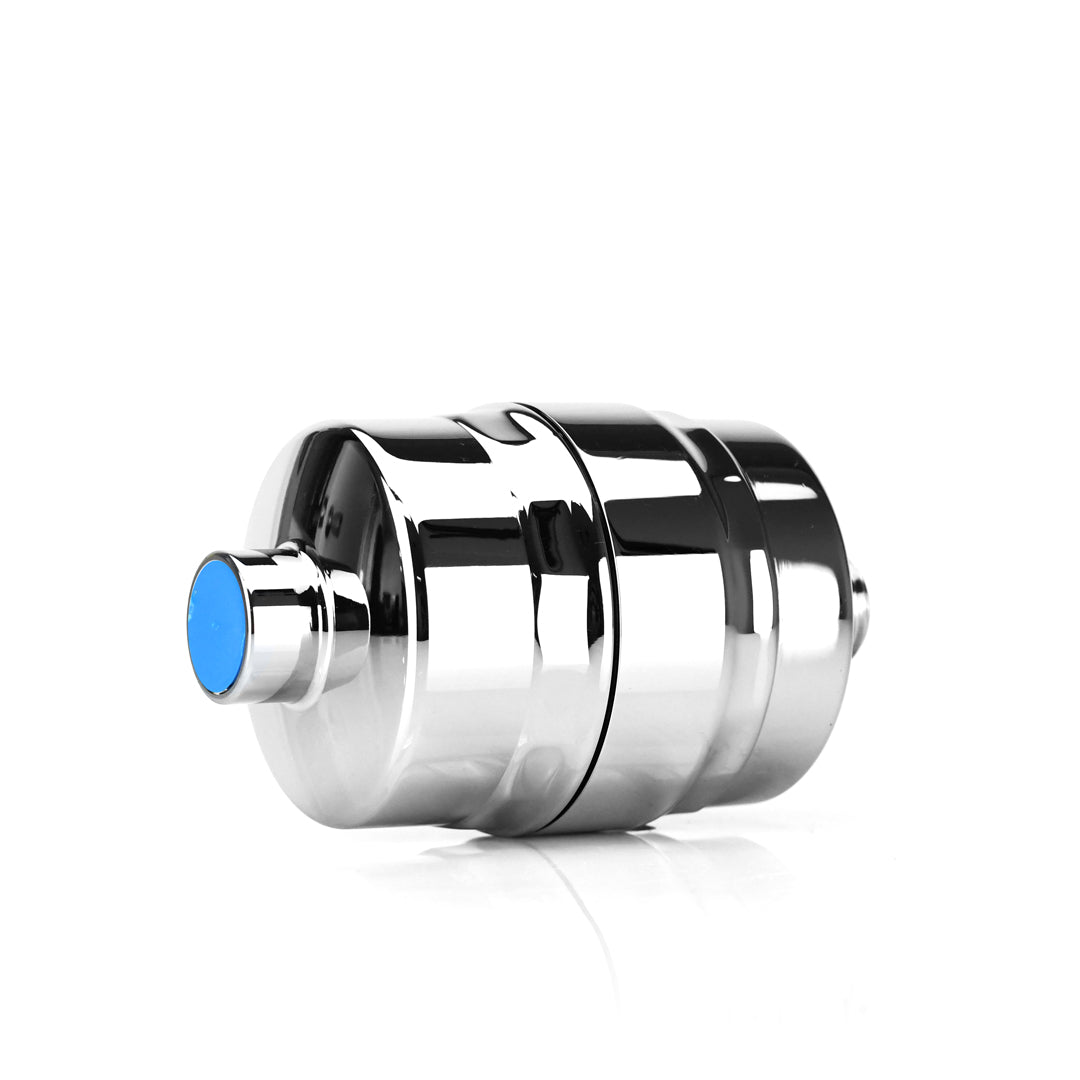
Price: $132.46 AUD from purewatersystems.com.au
Filter media: Chlorgon — copper, zinc, and calcium sulfide blend
Cartridge life: 12 months — longest on this list
Connection: Standard 1/2″ BSP inline
Origin: Australian brand (Pure Water Systems), ships nationwide
The Pure Water Systems Brass High Output is the only shower filter on this page with independent NSF/ANSI 177 certification — the standard specifically created for shower filtration performance. That matters because NSF 177 means the chlorine reduction claims have been independently verified by a third-party laboratory, not self-reported by the manufacturer. Every other filter on this list either carries no certification or cites certifications that apply to different product categories. If third-party verification is a non-negotiable for you, this is the only option.
The media is Chlorgon, a proprietary blend of copper, zinc, and calcium sulfide. The copper-zinc component functions similarly to KDF-55 — reducing free chlorine through a redox reaction. Its primary action is free-chlorine reduction; like other non-vitamin-C shower media, it does not meaningfully reduce chloramine at shower flow rates. The 12-month filter life is double the 6-month cycle of every other filter listed here. At $132.46 upfront, factoring in fewer cartridge replacements, the 2-year total running cost is competitive with cheaper filters that require more frequent replacement. The brass housing outlasts plastic alternatives in hard water and under temperature cycling.
The practical limitation: Chlorgon's primary mechanism targets free chlorine. Like other KDF-style media, it does not meaningfully reduce chloramine at shower flow rates. For chloramine cities, a vitamin C (ascorbic acid) filter is the only shower option with a meaningful effect. The PWS Brass High Output is the right pick for free chlorine cities where certification documentation matters.
Pure Water Systems Brass — Pros and Cons
Pros
- Only NSF/ANSI 177-certified shower filter on this list — independently verified
- Brass housing — more durable than plastic in hard water conditions
- 12-month filter life — fewest cartridge replacements per year
- Australian stock with local warranty and support
Cons
- Highest upfront cost on this list
- KDF filtration — not optimised for chloramine cities
- Available direct from PWS only — no Amazon AU delivery
- Heavier brass unit may not suit all shower arms
Buy if: you require NSF/ANSI 177-certified filtration for peace of mind, prefer brass durability over plastic, or want to buy direct from an Australian supplier. Check price →
Waters Co Therapy Shower Filter — Best Vitamin C Filter

Price: $119 AUD from waterscoaustralia.com.au
Filter media: Vitamin C (ascorbic acid), collagen, negative ion mineral granules
Cartridge life: 10,000L — approximately 6 months for a 2-person household
Connection: Standard 1/2″ BSP inline
Origin: Waters Co Australia, ships nationwide. Available in Neutral, Lavender, Lemon variants.
The Waters Co Therapy Shower takes a chemically different approach to chloramine reduction than every other filter on this page. It uses vitamin C — ascorbic acid — which neutralises both free chlorine and monochloramine through a direct chemical reaction. The chemistry is well-established: ascorbic acid donates electrons that break the N–Cl bond in monochloramine, converting it into a harmless compound. This reaction happens on contact at any flow rate, making it effective at Australian shower speeds where carbon adsorption struggles with chloramine. This is the same chemistry used in commercial dechlorination products and laboratory-grade water treatment.
The practical significance: this filter works in every Australian city regardless of whether your supplier uses chloramine or free chlorine. Brisbane, Sydney, Adelaide, the Gold Coast, Darwin — it handles all of them without the contact-time limitations of carbon media. The neutral variant carries no fragrance — the cleanest choice for sensitive skin, eczema sufferers, or use during pregnancy. 58 verified Australian reviews at 4.7/5 with a 30-day money-back guarantee backs it up.
The trade-off is what vitamin C does not do: ascorbic acid does not adsorb VOCs, sediment, or heavy metals. Standard carbon and KDF media can catch some of those secondary contaminants. But if chloramine removal across all Australian water types is the priority — and you want an approach that works by chemistry rather than adsorption — the Waters Co Therapy is the cleanest solution.
Waters Co Therapy — Pros and Cons
Pros
- Vitamin C (ascorbic acid) chemically neutralises both chlorine AND chloramine — verified chemistry
- Works identically in any Australian city regardless of disinfection type
- Includes premium showerhead; zero-fragrance neutral variant available
- 30-day trial with easy returns; AU-stocked
- Only option that guarantees chloramine neutralisation without catalytic carbon
Cons
- 3-month cartridge replacement — more frequent than KDF or carbon filters
- Does not remove VOCs or heavy metals (Vitamin C is a neutraliser, not an adsorbent)
- No NSF 177 independent certification
- Higher ongoing cost than AquaBliss or Well Verti
Buy if: you live in any Australian city and want guaranteed chloramine neutralisation — Vitamin C is the only chemically proven method that works equally for both chlorine and chloramine. Ideal for sensitive skin and pregnancy. Check price →
Head-to-Head Comparison: Philips vs AquaBliss vs Well Verti
| Criterion | Philips | AquaBliss SF220 | Well Verti |
|---|---|---|---|
| Price (unit) | $45.82 | $60-$90 | $109.99 |
| Replacement cartridge | Included, then ~$20-$30 / 4-6 months | ~$25-$35 / 6 months | Quarterly subscription refill |
| Free chlorine reduction | Yes (NSF-certified KDF) | Yes (KDF-55 + calcium sulphite) | Yes (UPAC + KDF-55) |
| Chloramine reduction | No | No | No |
| Fluoride removal | No shower filter removes fluoride | No shower filter removes fluoride | No shower filter removes fluoride |
| NSF/ANSI 177 certified | No (KDF material carries NSF cert, not system-level 177) | No (brand claims compliance, not certified) | No |
| Third-party test data | 11,300+ Amazon AU ratings (4.2/5) | Global Amazon reviews (60,000+) | 476 reviews (brand site, not Amazon) |
| Connection | 1/2″ BSP (AU standard) | 1/2″ BSP (AU standard) | 1/2″ BSP (AU standard) |
| Origin | Philips brand, sold via Amazon AU | USA-designed, manufactured overseas | Designed in Australia, direct-to-brand only |
| Best for | Best overall value, free chlorine cities | Free chlorine cities (Melbourne, Hobart, Canberra) | Design-focused, free chlorine cities |
5-Year Cost of Ownership Comparison
The upfront price of a shower filter is the smallest part of the cost. You will replace the cartridge every 6 months for as long as you use it. Here is what each filter costs over 5 years, assuming you replace on schedule:
| Product | Upfront | Annual Cartridge Cost | 5-Year Total | Cost/Month |
|---|---|---|---|---|
| Philips Premium | $46 (incl. 1 cartridge) | $50 (2x $25) | $296 | $4.93 |
| AquaBliss SF220 | $75 | $60 (2x $30) | $375 | $6.25 |
| PWS Brass High Output | $132 | $65 (1x $65) | $457 | $7.62 |
| Waters Co Therapy | $119 | $70 (2x $35) | $469 | $7.82 |
| HolyH2O Shower Max | $90 | $105 (2x $52.50) | $615 | $10.24 |
| Well Verti | $110 | Refill subscription $54.99/cycle — exact annual frequency not published | ~$935 (est.) | ~$15.58 (est.) |
The Philips is the clear value leader at $4.93/month — the lowest 5-year cost on this page by a wide margin. The Well Verti is an estimated most-expensive option over 5 years — its $109.99 upfront price and ongoing $54.99/cycle refill subscription (frequency not published by the brand) put it well above the Philips for the same KDF-55 free-chlorine mechanism. And if you live in a chloramine city, none of the KDF or carbon options — Philips, AquaBliss, or Well Verti — meaningfully address the majority disinfectant in your water; that spend is buying sediment and free-chlorine reduction only.
For reference, the premium end of the shower filter market — the Jolie Skin Co at $286 AUD for the unit alone — pushes you over $800 in 5-year costs. The Qure Skincare filter at $191 is similar. Both use KDF and calcium sulfite media that reduce free chlorine only, not chloramine. You are paying for branding, not for media that addresses chloramine. In a chloramine city, a vitamin C (ascorbic acid) filter is the media that matters.
Chloramine and Skin Conditions: What the Evidence Actually Shows
Many people buy shower filters because of eczema, dermatitis, dry skin, or hair damage. The question is whether the science supports shower filtration as a meaningful intervention.
The short answer: chloramine is a documented skin irritant, but the evidence for shower filters as a treatment for skin conditions is limited. According to a 2020 review published in the Journal of Allergy and Clinical Immunology, chlorinated water exposure is associated with disruption of the skin’s lipid barrier, particularly in individuals with pre-existing atopic dermatitis. Chloramine, because it is more persistent than free chlorine and does not off-gas as readily, maintains skin contact for longer during and after a shower.
A frequently cited 2005 study from Spain found that swimming pool exposure to chlorinated water was associated with increased asthma and allergy symptoms in children — but pool chlorine concentrations (1-3 mg/L) are typically higher than tap water (0.5-2.5 mg/L total chlorine) and exposure duration is much longer. Direct evidence for shower-specific filtration as a dermatological intervention is thin. Most dermatologists recommend shorter, cooler showers and immediate moisturiser application as first-line interventions for eczema, with chlorine reduction as a secondary measure.
Across the published customer reviews for these filters, the anecdotal signal is strong. These are not controlled clinical trials, but the volume and consistency of reports from chloramine cities is notable.
If you have eczema or dermatitis and live in a chloramine city, a vitamin C (ascorbic acid) shower filter is a low-risk, low-cost intervention worth trying alongside your dermatologist’s treatment plan. The worst case is you have slightly cleaner shower water. The more likely case, based on the weight of user reports, is you notice less dryness within a fortnight.
Australian Plumbing Compatibility: Will It Fit Your Shower?
Every shower filter in this comparison uses a standard 1/2″ BSP (British Standard Pipe) thread, which is the dominant standard for Australian residential plumbing fixtures. If your current shower head screws off by hand or with a wrench, any of these filters will fit between your shower arm (the pipe coming out of the wall) and your shower head.
Installation is identical for all three:
- Unscrew your existing shower head from the shower arm (counter-clockwise).
- Wrap Teflon tape clockwise around the shower arm thread (3-4 wraps).
- Screw the filter’s inlet onto the shower arm (hand-tight plus a quarter turn with a wrench).
- Screw your existing shower head onto the filter’s outlet.
- Turn on the water, check for leaks, tighten slightly if needed.
Total time: 5 minutes. No plumber required. No modifications to your plumbing. Fully reversible — ideal for renters.
Potential issues:
- Low-pressure systems: All inline shower filters create some flow restriction. If you already have low water pressure (common in older homes in inner Brisbane, inner Sydney, and rural areas on gravity-fed tanks), the additional restriction may be noticeable. Flow reduction is typically 5-15% across all three filters.
- Shower arm clearance: The filter adds approximately 10-15cm of length between the wall and your shower head. In tight shower recesses or where the shower arm is short, this can position the shower head lower than comfortable. Measure your clearance before purchasing.
- Non-standard threads: Some premium European shower systems (Grohe, Hansgrohe with proprietary click-fit connections) may not accept 1/2″ BSP directly. Check your shower head connection type first.
None of these filters carry WaterMark certification (the Australian plumbing product approval scheme under AS/NZS 3718). WaterMark certification is mandatory for plumbing products installed in the fixed water supply but is not typically enforced for removable inline shower accessories. If your property manager or body corporate requires WaterMark-certified fixtures, confirm before installation.
Our Top Shower Filter Picks
What About Premium Shower Filters? Jolie, Qure, and the $200+ Tier
You may have seen the Jolie Skin Co ($286 AUD) or the Qure Skincare filter ($191 AUD) marketed heavily on Instagram and TikTok. Are they worth the premium?
The Jolie uses KDF-55 and calcium sulphite — the same core media as the AquaBliss SF220 at one-quarter the price. Like other KDF and calcium sulfite media, it reduces free chlorine but does not meaningfully reduce chloramine. The premium buys you a polished housing, influencer marketing, and branding. If you live in Melbourne and want a filter that looks good in your bathroom renovation, the Jolie delivers on aesthetics. If you live in Sydney and expect it to handle chloramine, it will not.
The Qure Skincare filter at $191 follows a similar pattern — marketing-heavy, media composition similar to budget alternatives, no vitamin C media, so it does not address chloramine at shower flow rates.
Neither the Jolie nor the Qure publishes NATA-accredited laboratory test results. Neither carries NSF/ANSI 177 certification. Both rely on in-house claims and influencer testimonials.
The maths: A Jolie with replacement cartridges costs over $800 in 5 years. The AquaBliss, for free chlorine cities, costs $375 over five years — saving over $425 compared to the Jolie while using effectively the same media.
Premium pricing in shower filters is almost entirely marketing. The media does the work, not the housing design. Buy based on what is inside the cartridge, not what the Instagram ad looked like.
Vitamin C Shower Filters: The Alternative for Chloramine Cities
Among shower media, vitamin C (ascorbic acid) is the only option with a meaningful effect on chloramine at shower flow rates. Vitamin C shower filters use a solid block or granules of ascorbic acid that dissolve as water flows through, reacting with chloramine and neutralising it chemically.
The reaction is well-documented: ascorbic acid reduces monochloramine (NH₂Cl) to ammonia and dehydroascorbic acid, effectively neutralising the disinfectant. This works at shower temperatures and flow rates. The US Department of Agriculture, the American Water Works Association (AWWA), and several water utilities have documented this chemistry.
The trade-offs with vitamin C filters:
- Cartridge life is shorter — vitamin C dissolves as it works. Most vitamin C cartridges last 1-3 months versus 6 months for carbon-based filters.
- Higher ongoing cost — replacement frequency doubles or triples the annual cartridge expense.
- Slightly acidic output — ascorbic acid lowers pH slightly. For most people this is irrelevant, but on very soft water (Melbourne) it can theoretically increase copper leaching from older copper pipes.
- Not a contaminant removal filter — vitamin C neutralises chlorine/chloramine specifically. It does not adsorb VOCs, sediment, or other impurities the way carbon media does.
For chloramine cities, vitamin C is the only shower media with a meaningful effect. The trade-off is a higher replacement frequency and a narrower function: it neutralises chlorine and chloramine but does not adsorb VOCs, sediment, or heavy metals the way carbon media does. In free chlorine cities, a KDF or carbon filter remains the simpler, longer-lasting choice.
Final Verdict: Which Shower Filter Should You Buy?
Here is my straight recommendation, matched to your city’s disinfectant type:
If you live in Brisbane, Sydney, Adelaide, the Gold Coast, or Darwin (chloramine cities): Buy the Waters Co Therapy Shower Filter. Its vitamin C (ascorbic acid) media is the only shower option that meaningfully neutralises chloramine at shower flow rates. KDF and carbon filters reduce free chlorine but do not meaningfully reduce chloramine.
If you live in Perth, Melbourne, Hobart, Canberra, Townsville, Cairns, or Toowoomba (free chlorine cities): Buy the Philips Premium Shower Filter. It reduces free chlorine with NSF-certified KDF media, carries 11,300+ Amazon AU ratings, and at $45.82 AUD has the lowest 5-year cost of ownership of any filter on this page. The AquaBliss SF220 at $60-$90 AUD is a proven budget alternative.
The best value shower filters for free chlorine cities
Philips Premium is our #1 overall pick — lowest price, largest cartridge capacity, most reviews. AquaBliss SF220 is a proven budget alternative. Both ship via Amazon AU.
Last reviewed: August 2026 — Clean and Native
Frequently Asked Questions
Do shower filters work in Australia?
Yes — but only if matched to your city disinfectant. Among shower media, only vitamin C (ascorbic acid) meaningfully reduces the chloramine used in Brisbane, Sydney, Adelaide, the Gold Coast, and Darwin. KDF-55, calcium sulfite, and carbon filters reduce free chlorine and work in Perth, Melbourne, Hobart, and Canberra.
What disinfectant does Brisbane water use?
Brisbane and South East Queensland use chloramine — a combination of chlorine and ammonia. Among shower media, only vitamin C (ascorbic acid) meaningfully reduces it. KDF-55, calcium sulfite, and carbon shower filters are largely ineffective against chloramine at shower flow rates. A vitamin C filter such as the Waters Co Therapy is the option to consider for SEQ.
Can shower filters reduce eczema and dry skin?
Chlorine and chloramine are known skin irritants. Removing them reduces the oxidative load on skin and hair. Many users with eczema or sensitive skin report improvement after switching to a filtered shower: a vitamin C filter in chloramine cities, or a KDF or carbon filter in free chlorine cities. No shower filter replaces medical treatment for eczema.
How long does a shower filter cartridge last in Australia?
Most Australian shower filter cartridges last 10,000–12,000 litres, or approximately 6 months at average household usage. Hard water cities like Perth accelerate media exhaustion. Replace every 6 months or when you notice chloramine odour returning.
Will a shower filter fit Australian plumbing?
Australian showers use 1/2 inch BSP fittings. Most imported shower filters include adapters. Hardware stores stock BSP adapters for under five dollars.
What is the difference between KDF-55 and catalytic carbon?
KDF-55 converts free chlorine via redox reaction but does not remove chloramine. Catalytic carbon needs more contact time than a shower allows, so it does not meaningfully reduce chloramine at shower flow rates. Among shower media, only vitamin C (ascorbic acid) has a meaningful effect on chloramine.
Are shower filters certified to NSF standards in Australia?
Most imported shower filters are not independently certified to NSF 177 in Australia. No shower filter on the Australian market currently holds WaterMark certification, which applies to plumbing fittings rather than filtration performance.
What is chloramine and why is it used in Australian water?
Chloramine is formed by combining chlorine with ammonia. Australian water authorities use it because it is more stable in distribution pipes, produces fewer disinfection by-products, and provides longer-lasting residual protection in large pipe networks.
Can I use a shower filter with a fixed showerhead?
Yes. Inline shower filters install between the shower arm and the showerhead. They work with any standard showerhead. The Well Verti and AquaBliss SF220 are both inline designs compatible with fixed showerheads.
How do I know when my shower filter needs replacing?
The clearest sign is the return of chloramine smell during hot showers. You may also notice increased skin dryness. Set a calendar reminder at the 6-month mark or replace when flow pressure drops noticeably.
Get the Australian Home Environment Checklist
30 checks across water, air and EMF. Most of them free. Ranked by impact.
No spam. Unsubscribe any time.

Former Royal Australian Navy Clearance Diver and TAG-E counter-terrorism operator. Founded Clean and Native to apply the same rigorous thinking to the home environment.
Full biography →