Fluoride in Australian Drinking Water: What the Data Actually Shows
Only reverse osmosis (90–97% removal) and activated alumina (80–95% removal) reliably remove fluoride from Australian drinking water regulated at 0.6–1.0 mg/L. Carbon filters — including expensive catalytic carbon cartridges — do not remove fluoride, which is the single most common purchasing mistake for Australians targeting fluoride reduction. The catches: RO systems waste 2–4 litres per litre produced (mitigated by permeate pumps), and activated alumina requires careful pH management and more frequent regeneration.
| Technology | Fluoride Removal | Verdict |
|---|---|---|
| Reverse osmosis (RO) | 90–97% reduction | Recommended |
| Activated alumina | 80–95% (pH dependent) | Good for specialised use |
| Carbon filters (including catalytic) | 0–5% (negligible) | Avoid for fluoride |
Australian reticulated water in fluoridated areas contains fluoride at 0.6–1.0 mg/L, regulated under the Australian Drinking Water Guidelines (ADWG) 2011 (updated 2022), which sets a maximum of 1.5 mg/L. The National Health and Medical Research Council (NHMRC) confirmed this target range in its 2017 Public Statement. Approximately 89% of Australians connected to reticulated supplies receive fluoridated water, according to the Australian Institute of Health and Welfare. Two treatment technologies remove fluoride reliably: reverse osmosis filter (90–97% removal) and activated alumina (80–95% removal). Carbon filters — including catalytic carbon — do not remove fluoride. That single fact drives most of the bad purchasing decisions I see.
The three products we own are measured first-hand by Jayce Love, former Royal Australian Navy Clearance Diver; every other product is assessed on published manufacturer specifications and independent certification using our documented methodology — no gifted units, no brand payments.
As a former Royal Australian Navy Clearance Diver, I approach water quality the same way I approached dive planning: measure first, act on data, verify the outcome. This article gives you the actual numbers, the regulatory framework, the chemistry, and the only removal technologies that work.
Current Fluoride Levels Across Australian Cities
Fluoride concentrations are not uniform. Natural geology contributes background fluoride in some regions; water utilities supplement this to reach target levels. The table below compiles data from 2022–2023 state utility annual quality reports and NHMRC surveillance data.
| City / Region | Fluoride Range (mg/L) | Fluoridated? | Disinfection Type | Source |
|---|---|---|---|---|
| Brisbane / SEQ | 0.6–0.8 mg/L | Yes (since 2008) | Chloramine | Seqwater DWQMP 2023 |
| Sydney | 0.7–1.0 mg/L | Yes (since 1968) | Chloramine | Sydney Water AQR 2023 |
| Melbourne | 0.8–1.0 mg/L | Yes (since 1977) | Free chlorine | City West Water AQR 2023 |
| Adelaide | 0.7–1.0 mg/L | Yes (since 1971) | Chloramine | SA Water AQR 2023 |
| Perth | 0.6–0.8 mg/L | Yes (since 1968) | Chloramine | Water Corporation AQR 2023 |
| Hobart | 0.7–1.0 mg/L | Yes (since 1964) | Free chlorine | TasWater AQR 2023 |
| Canberra / ACT | 0.6–1.0 mg/L | Yes (since 1964) | Free chlorine | Icon Water AQR 2023 |
| Darwin | 0.6–0.9 mg/L | Yes (since 1972) | Chloramine | Power and Water AQR 2023 |
| Townsville | 0.7–1.0 mg/L | Yes | Free chlorine | Townsville City Council 2023 |
| Byron Bay / Northern Rivers NSW | ~0.1 mg/L (natural only) | No | Free chlorine | Rous Water AQR 2023 |
Key takeaway: If you are on a reticulated supply in any capital city, your water is fluoridated. The only regions not fluoridated are rural areas on small independent supplies and some Northern Rivers NSW councils that opted out. Check your utility’s annual quality report — it is a public document, freely available.
The Regulatory Framework: ADWG, NHMRC, and Who Actually Sets the Limits
The Australian Drinking Water Guidelines (ADWG) are produced by NHMRC and the Natural Resource Management Ministerial Council. They are not legislation — they are guidelines that state and territory legislation adopts by reference. Every state has a public health act or water act that gives these numbers legal force at the utility level.
The ADWG 2011 (updated 2022) sets two fluoride values:
- Health guideline value: 1.5 mg/L — the concentration below which no adverse health effects are expected from lifetime consumption (based on NHMRC’s 2017 systematic review of 90+ studies)
- Aesthetic guideline value: 1.5 mg/L — same number; fluoride is not aesthetically problematic at relevant concentrations
The optimal supplementation target of 0.6–1.0 mg/L was revised downward from 1.0 mg/L by NHMRC in 2017 partly in response to data on dental fluorosis — a cosmetic mottling of tooth enamel that occurs when children ingest excess fluoride during tooth development. Dental fluorosis is the only confirmed adverse effect at concentrations below 1.5 mg/L in Australian conditions. Skeletal fluorosis requires multi-decade exposure at 4+ mg/L — not relevant to Australian supplies.
The ADWG maximum of 1.5 mg/L provides a safety margin of approximately 1.5x above the supplementation ceiling of 1.0 mg/L. Natural geological fluoride in Australian groundwater can exceed this in some artesian basin areas, but reticulated supplies are monitored and blended to stay within guideline values.
What the Health Research Actually Shows (Without the Advocacy Layer)
The fluoride debate online is dominated by advocacy on both sides. Below is what the primary literature and major systematic reviews actually conclude — with the study citations, not summary claims.
Dental Caries Reduction
The foundational evidence for water fluoridation is a 70-year dataset. The 2015 Cochrane systematic review (Iheozor-Ejiofor et al., Cochrane Database Syst Rev) analysed 155 studies and found water fluoridation was associated with a 35% reduction in decayed, missing, or filled teeth (dmft) in primary dentition and a 26% reduction in caries-free children. The Cochrane review noted most studies were conducted before widespread fluoride toothpaste availability and graded the evidence quality as “moderate” due to study design limitations in older research.
A 2022 New Zealand study (Schluter et al., J Dent Res) using modern cohort methodology found fluoridation associated with significantly fewer dental extractions in children — one of the cleaner recent datasets because New Zealand has comparable geography and water chemistry to Australia.
Dental Fluorosis
NHMRC’s 2017 review found dental fluorosis prevalence in Australian fluoridated areas at approximately 30–40%, with the vast majority being “very mild” (faint white lines, not visible in normal conversation). Moderate fluorosis (affecting aesthetics) was found in under 3% of the fluoridated population. Severe fluorosis is essentially absent at Australian supply concentrations.
The risk is highest during tooth development (age 0–8 years). Infant formula reconstituted with fluoridated tap water is the primary exposure pathway for this age group — a point NHMRC acknowledges and which is relevant to filter purchasing decisions for families with infants.
IQ and Neurodevelopmental Claims
A 2020 Canadian study (Green et al., JAMA Pediatrics) reported associations between maternal urinary fluoride and lower IQ scores in boys. A 2022 meta-analysis (Grandjean, Neurotoxicology and Teratology) pooled data from high-fluoride studies and reported IQ associations. Both studies have drawn criticism for their methodology, exposure measurement, and confounding variables. The NHMRC reviewed these studies in their 2023 Fluoride Reference Group update and concluded the evidence was insufficient to change the 1.5 mg/L guideline, noting most associations were observed at exposures above Australian supply levels.
The US National Toxicology Program (NTP) released a systematic review in 2024 concluding there is “moderate confidence” that fluoride is associated with lower IQ in children at exposures above 1.5 mg/L — the same number as Australia’s maximum guideline. The NTP explicitly stated the review did not assess risks at the lower concentrations used in US and Australian water fluoridation programmes. The scientific position in 2024 is: uncertain at Australian supply concentrations, with ongoing research warranted.
I am not going to tell you what to do with that uncertainty. What I will tell you is what technologies actually remove fluoride if you decide you want it out.
Which Filters Actually Remove Fluoride — And Which Don’t
This is where most Australians get it wrong. Carbon filter marketing is aggressive and frequently misleading on fluoride.
| Filter Technology | Fluoride Removal? | Verified Removal Rate | Notes |
|---|---|---|---|
| Reverse Osmosis (RO) | Yes | 90–97% | NSF/ANSI 58 certified systems verified. Most effective technology available for residential use. |
| Activated Alumina | Yes | 80–95% | NSF/ANSI 53 certified. pH-dependent — performs best at pH 5.5–6.0. Most Australian tap water is pH 7.0–8.0, which reduces performance somewhat. Requires regular replacement. |
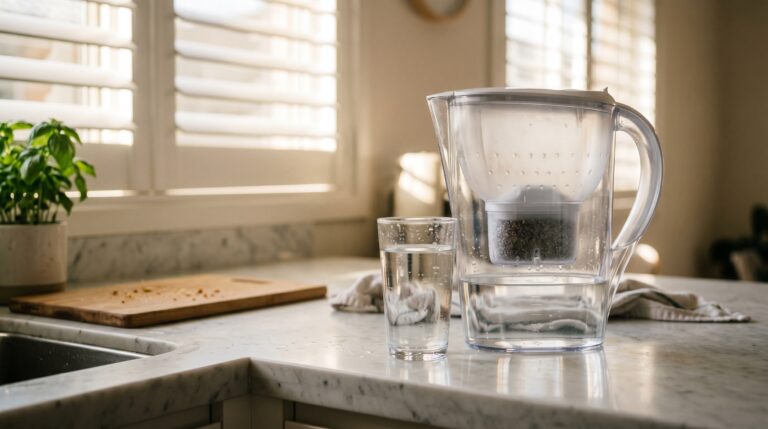
| Standard GAC (Granular Activated Carbon) | No | <5% (negligible) | Brita, standard jug filters, most countertop carbon units. Does NOT remove fluoride. Removes chlorine taste only. |
| Catalytic Carbon | No | <5% (negligible) | Catalytic carbon is excellent for chloramine removal. It does not remove fluoride. These are separate problems requiring separate solutions. |
| Carbon Block (compressed) | No | <5% (negligible) | Same as GAC — carbon chemistry does not adsorb fluoride ions at relevant concentrations. |
| KDF-55 | No | 0% | KDF is a redox medium for heavy metals and chlorine. No mechanism for fluoride removal. |
| Distillation | Yes | 99%+ | Highly effective but slow (4–6 litres per hour typical), uses electricity, and requires regular cleaning. Practical for some households. |
| Ion Exchange (basic) | Partial / Depends | Variable | Standard sodium-cycle softeners do not remove fluoride. Specialised anion exchange resins (e.g., Type II strong base) can remove fluoride but are not common in residential systems and require careful sizing. |
Reverse Osmosis for Fluoride Removal: What to Look For in Australia
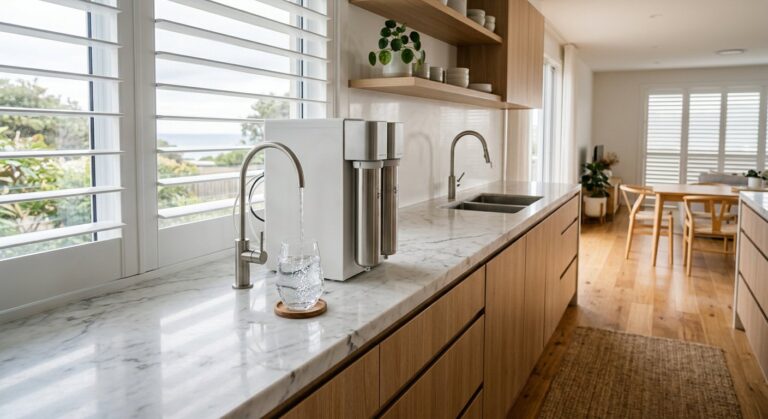
RO is the gold standard for fluoride removal in residential settings. A quality 5-stage or 6-stage under-bench RO system will bring fluoride from 0.7–1.0 mg/L down to approximately 0.03–0.07 mg/L at the post-filter stage — well below any guideline value globally.
When specifying an RO system for an Australian home, check these criteria:
- NSF/ANSI 58 certification for the RO membrane — this is the standard that verifies fluoride rejection rates under test conditions. Some cheaper systems claim “NSF-standard components” without the full system certification; these are not equivalent.
- WaterMark certification (AS/NZS 4020) for plumbing fittings — required for any device connected to Australian drinking water plumbing. This is an Australian Building Codes Board requirement, not optional. Non-WaterMark fittings are non-compliant regardless of performance claims.
- Membrane rejection rate — specified as a percentage at standard test conditions (250 mg/L NaCl, 77°F/25°C, 65 psi). For fluoride specifically, look for systems that cite NSF 58 Annex A data. Fluoride rejection of 90%+ is achievable; 95%+ is common with name-brand membranes.
- Pre-filtration stage — in chloramine cities (Brisbane, Sydney, Adelaide, Darwin), the pre-carbon stage should use catalytic carbon, not standard GAC. Chloramine attacks RO membranes and shortens their lifespan significantly. A catalytic carbon pre-filter protects the membrane and extends service intervals. Standard GAC pre-filters in these cities will result in premature membrane failure.
- Remineralisation stage — RO removes virtually everything, including beneficial minerals. A post-filter remineralisation stage (typically calcite or magnesium oxide cartridge) raises pH and adds back some calcium and magnesium. This is particularly relevant for Adelaide (TDS ~400 mg/L, hard water) where the permeate will be near-zero TDS without remineralisation.
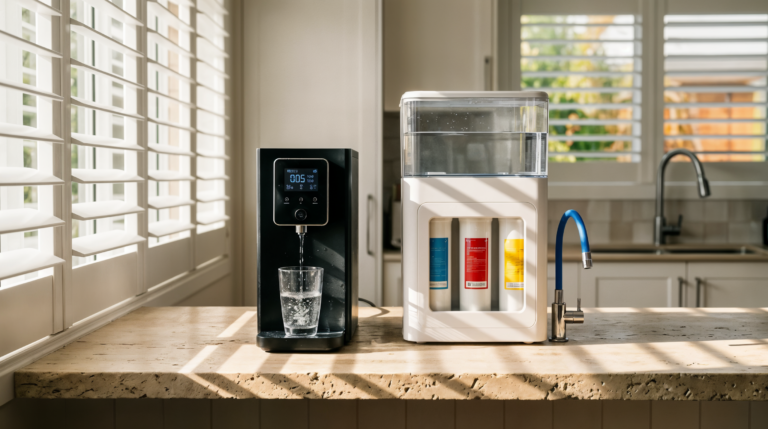
For a detailed comparison of the systems I have actually tested in a Palm Beach QLD home (chloramine supply, moderate hardness, TDS ~90 mg/L), see our water filtration guide.
Activated Alumina: The Under-Rated Option for Fluoride-Only Removal
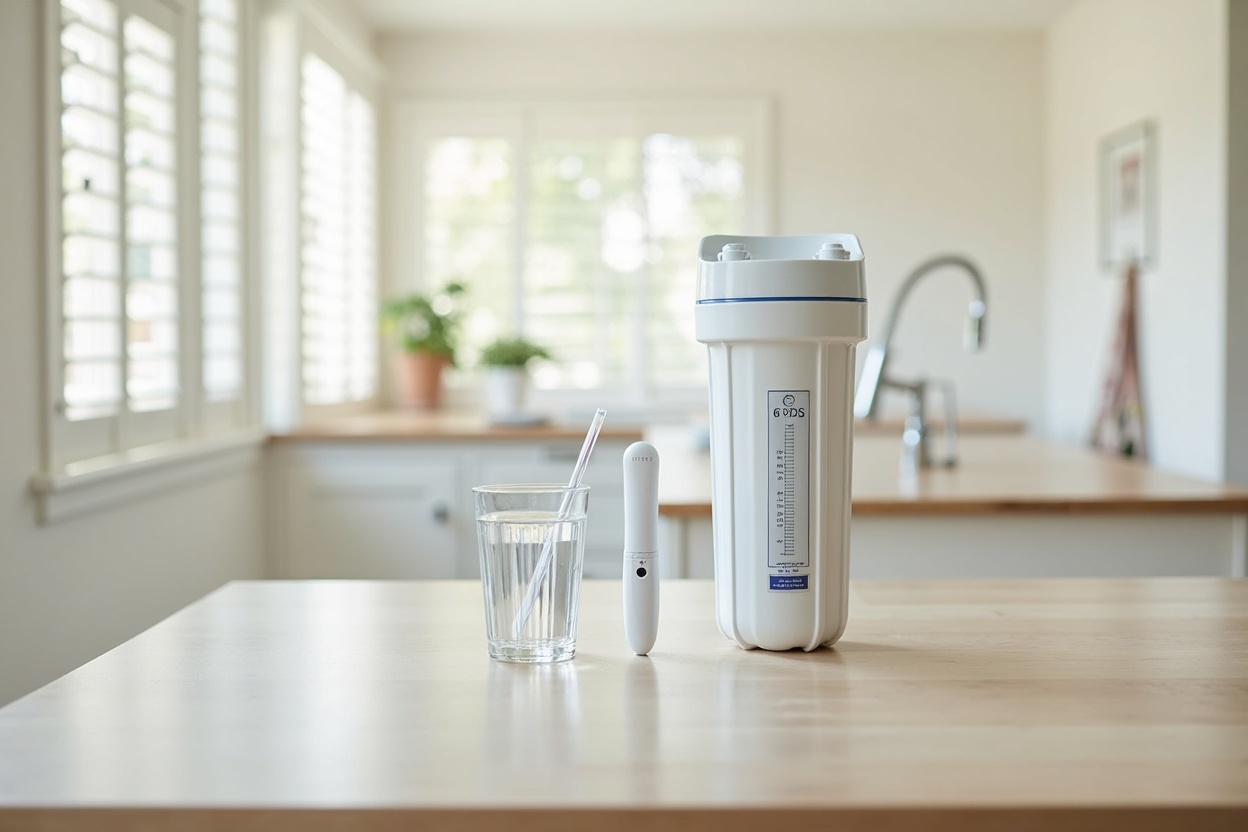
Activated alumina (AA) is an aluminium oxide media with a high surface area that adsorbs fluoride ions via a ligand-exchange mechanism. It is NSF/ANSI 53 certified for fluoride reduction and is the technology used in many community point-of-entry defluoridation systems in India and parts of Africa.
For Australian residential use, AA is relevant in two scenarios:
- You want fluoride removal but do not want the waste water associated with RO (RO systems produce approximately 3–4 litres of concentrate per litre of permeate at typical Australian mains pressures of 200–400 kPa)
- You want to add a fluoride-reduction stage to an existing filtration system without replacing the entire system
Performance caveats for Australian conditions: AA performs best at pH 5.5–6.0. Australian tap water pH ranges from 7.0–8.5 in most capital cities (ADWG aesthetic guideline: 6.5–8.5). At pH 7.5, AA fluoride removal efficiency drops to approximately 80–85%, compared to 95%+ at optimal pH. This is still significant removal but below RO performance. AA media requires replacement every 3–6 months depending on flow rate and fluoride concentration — do not extend replacement intervals.
Fluoride, Infants, and Formula Preparation: The Practical Risk
NHMRC and the Australian Dental Association both acknowledge that infants fed formula reconstituted with fluoridated tap water have a higher risk of mild dental fluorosis than breastfed infants or those on low-fluoride water. The fluoride intake per kg body weight for a formula-fed infant can be 100–200 times higher than a breastfed infant.
This does not mean fluoridated water causes harm to infants at Australian concentrations — the outcome is cosmetic dental fluorosis, not a systemic health event. But it is the strongest evidence-based use case for fluoride removal in an Australian home: families with infants on formula who want to eliminate this specific exposure pathway.
If this is your situation, an NSF 58 certified RO system at the kitchen tap is the most practical solution. Using RO water for formula while using tap water for everything else is a reasonable and targeted approach — you are not required to filter all household water.
The Clean & Native Fluoride Removal Summary
If you are in a fluoridated Australian city and want to reduce your fluoride intake:
- Best performance: Under-bench RO system with NSF/ANSI 58 certification — 90–97% fluoride reduction
- Brisbane/Sydney/Adelaide/Darwin: Specify catalytic carbon pre-filter (not standard GAC) to protect the RO membrane from chloramine damage
- Melbourne/Hobart/Canberra: Standard GAC pre-filter acceptable (free chlorine disinfection)
- Budget / fluoride-only option: NSF 53 certified activated alumina inline filter — 80–90% reduction at Australian pH
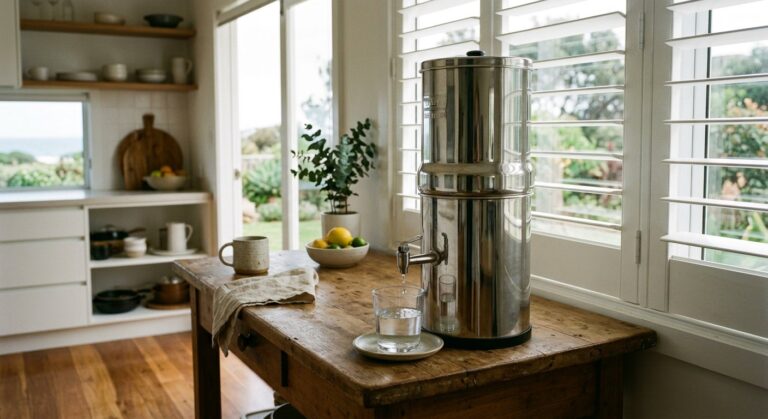
- What does NOT work: Brita, standard jug filters, GAC countertop filters, Berkey-style carbon systems, KDF filters — none remove fluoride at any meaningful rate
How to Verify Your Own Supply: Reading Annual Quality Reports
Every Australian water utility is required under state legislation to publish an annual drinking water quality report (sometimes called an annual quality report or AQR). These reports
Our Top Picks
For most Australian homes, the TAPP EcoPro handles chloramine and heavy metals at the tap. If you need fluoride removal, the iSpring RCC7 RO system is the only realistic option.
Frequently asked questions
Does Australian tap water contain fluoride?
Yes. Approximately 89% of Australians connected to reticulated water supplies receive fluoridated water. Concentrations are maintained at 0.6–1.0 mg/L under the Australian Drinking Water Guidelines 2011, with a maximum of 1.5 mg/L.
What does fluoride in water actually do to your body?
At Australian tap water concentrations (0.6–1.0 mg/L), fluoride reduces tooth decay by strengthening enamel. The primary concern at higher concentrations is dental fluorosis — white spots on teeth — which is a cosmetic issue, not a systemic health risk, at ADWG levels.
Does a Brita filter remove fluoride from water?
No. Standard activated carbon filters including Brita pitchers do not remove fluoride at any meaningful rate. The only technologies with evidence for fluoride removal are reverse osmosis (90–97% removal) and activated alumina (80–95% removal).
What is the best water filter to remove fluoride in Australia?
An NSF/ANSI 58 certified reverse osmosis (RO) system is the most effective option — it removes 90–97% of fluoride. For cities using chloramine (Brisbane, Sydney, Adelaide, Darwin), specify a catalytic carbon pre-filter to protect the RO membrane.
Is fluoride in water safe for babies and infants?
Formula-fed infants consuming water at Australian fluoride concentrations have a higher risk of mild dental fluorosis than breastfed infants, due to higher fluoride intake per kg body weight. NHMRC and the Australian Dental Association acknowledge this. Using RO-filtered water for formula is a targeted approach to reduce this specific exposure.
Which Australian cities have the highest fluoride levels?
Most major Australian cities fluoridate to 0.6–0.8 mg/L. Darwin and Brisbane have historically been at the higher end of the ADWG range. Some rural areas with natural geological fluoride may have variable levels — check your state utility’s Annual Drinking Water Quality Report.
Can I test my tap water fluoride level at home?
Home fluoride test strips are available but have limited accuracy at the concentrations used in Australian water (0.6–1.0 mg/L). For reliable results, send a sample to a NATA-accredited laboratory. Your state water utility’s annual report is also a reliable source for your area’s typical fluoride concentration.
Does boiling water remove fluoride?
No. Boiling water does not remove fluoride — it actually slightly concentrates it as water evaporates. The only effective removal methods are reverse osmosis filtration and activated alumina adsorption media.
Get the Australian Home Environment Checklist
30 checks across water, air and EMF. Most of them free. Ranked by impact.
No spam. Unsubscribe any time.

Former Royal Australian Navy Clearance Diver and TAG-E counter-terrorism operator. Founded Clean and Native to apply the same rigorous thinking to the home environment.
Full biography →