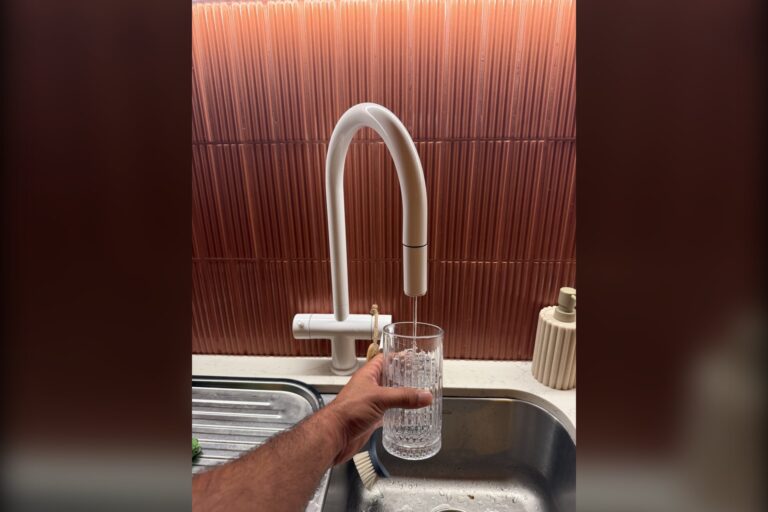
What Is a Reverse Osmosis Water Filter? How It Works, Stage by Stage
Drafted with AI assistance and checked against published specifications and certifications. First-hand measurements appear only where stated. How we make content
How this assessment was made. I own and use a reverse osmosis system: the Pure Water Systems EcoHero 5-stage under my kitchen sink in Palm Beach, QLD, which I check with a TDS meter. The stage-by-stage explanation draws on membrane makers’ data sheets, US EPA and university extension guidance, and the Australian Drinking Water Guidelines. The diagrams are drawn by Clean and Native from membrane makers’ data sheets and extension service schematics. Amazon AU prices were checked on 7 Nov 2026; the EcoHero price is from Pure Water Systems’ own site on the same day.
A reverse osmosis water filter pushes tap water through a semi-permeable membrane often quoted as about 0.0001 microns. Water molecules pass through; most dissolved salts, fluoride, lead and PFAS do not, and they are flushed down a drain line. Home units put sediment and carbon filters before the membrane and a polishing filter after it.
That is the one-paragraph answer. The rest of this guide takes the system apart one stage at a time, the way I was taught to learn any piece of equipment in the Navy: what each part does, what it stops, what wears out, and how you check it is still working. On my own system, the check is simple. Gold Coast tap water went in at 69 ppm on my TDS meter and came out at 3 ppm.
RO is one of only two common home technologies, with distillation, that strip out dissolved solids, including fluoride, as well as PFAS and lead. It costs more than a carbon filter, treats one tap, and sends some water to drain. If you rent, a countertop unit gives you the same membrane with no plumbing.
| Option | Best for | Price |
|---|---|---|
| Waterdrop C1S (countertop) | Trying RO with no plumber; renters | $379.22at Amazon AU · as of 19 Nov 2026, 11:43 pm AEST Details |
| Waterdrop X8 (under-sink, tankless) | Homeowners buying on Amazon AU | $611.29at Amazon AU · as of 19 Nov 2026, 11:43 pm AEST Details |
| Pure Water Systems EcoHero 5-stage | The under-sink unit I own and measured | from $949 (7 Nov 2026) |
Reverse osmosis in plain terms
Most filters work like a sieve or a sponge. A sediment cartridge strains out grit; activated carbon grabs chlorine and many organic chemicals onto its surface. Neither does much to things that are fully dissolved in water, such as salts, fluoride or nitrate, because those exist as single ions far smaller than any gap in a sieve.
Reverse osmosis gets around that with a membrane so tight that, for practical purposes, only water molecules get through. Mains pressure provides the push. Whatever the membrane rejects does not build up in a cartridge; it is rinsed away continuously in a stream of water that goes to the drain. That rinse stream is why RO systems have a drain line, and why they waste some water.
Osmosis first: what RO reverses
Osmosis is the natural tendency of water to move across a semi-permeable membrane from the less salty side to the saltier side, evening out the concentration. It is how roots draw water from soil. As the University of Nevada’s extension service explains it, applying pressure to the salty side reverses that flow: fresh water is pushed through the membrane while the dissolved chemicals stay behind and are flushed away.
In a home system the “salty side” is your tap water, and the push comes from your mains pressure. Membrane makers rate home elements at about 50 psi (roughly 345 kPa); FilmTec’s home membranes, for example, are tested at 50 psi and stabilise at 98% salt rejection in its lab test. City of Gold Coast aims for at least 220 kPa in its water mains, and AS/NZS 3500 caps pressure inside a building at 500 kPa, so most Australian homes sit in a workable range. Low-pressure homes, or tankless units, use a small electric pump.
How a reverse osmosis filter works, stage by stage
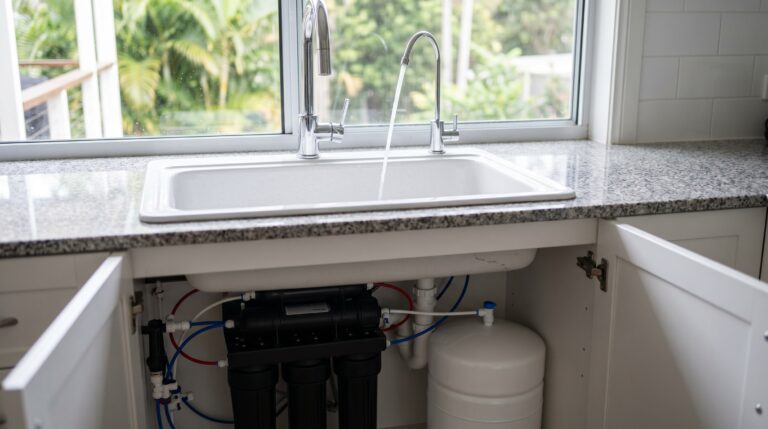
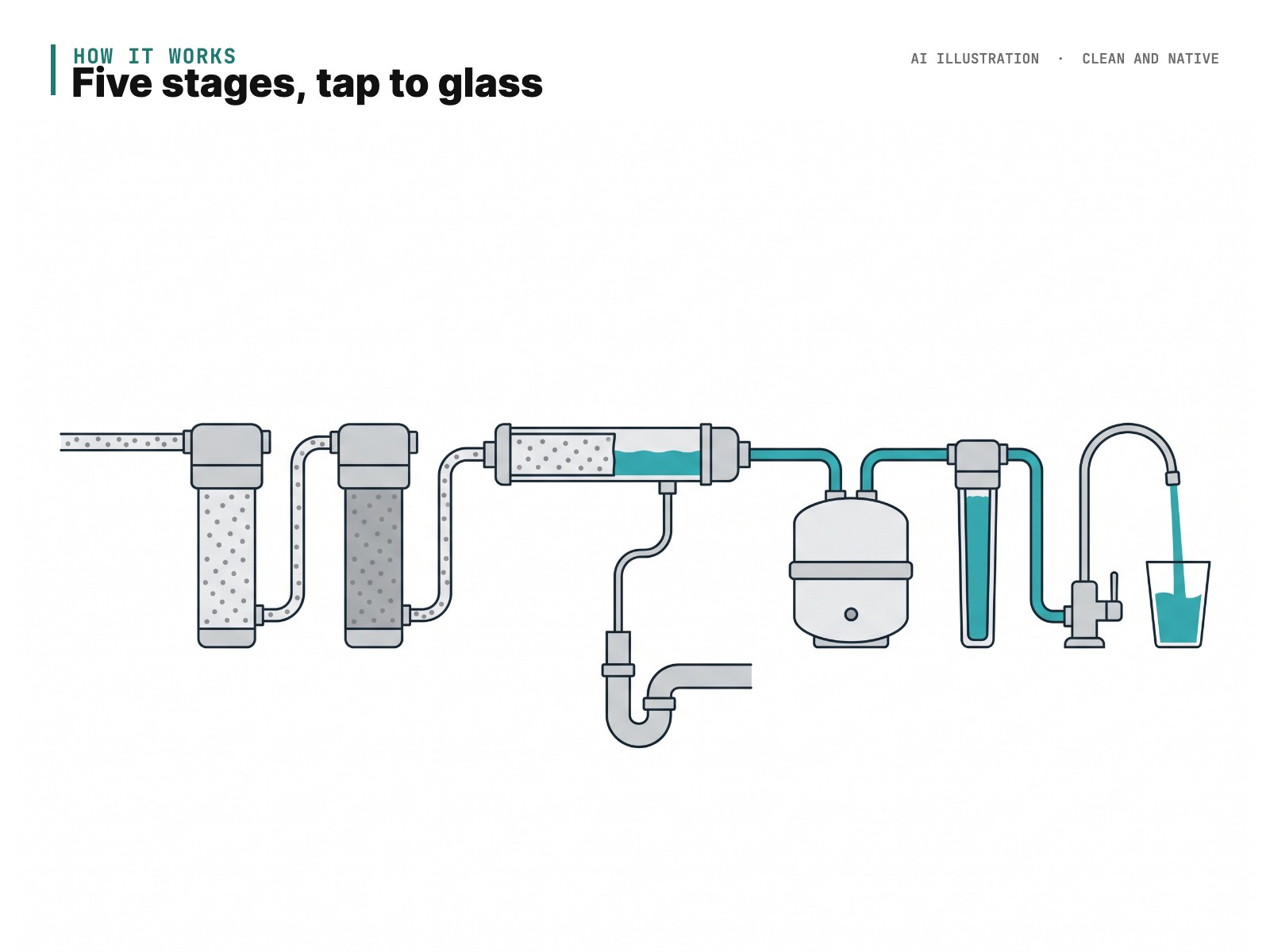
Stage counts vary from three to seven, and the marketing number rarely matters. What matters is that every system has the same three jobs in the same order: protect the membrane, run the membrane, polish the water. Here is the standard five-stage under-sink layout, which is what I run.
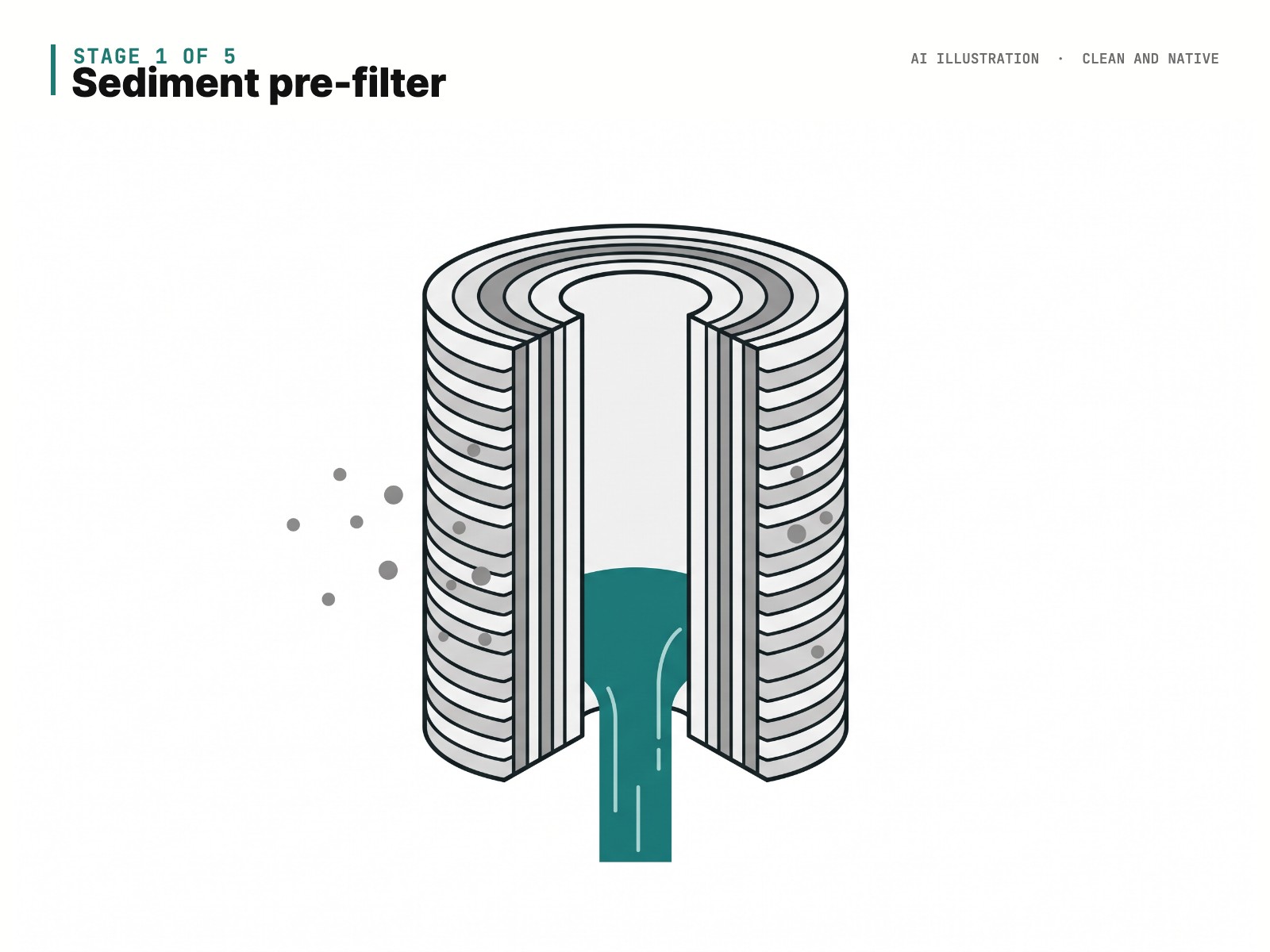
A spun polypropylene cartridge, usually rated at about 5 microns, strains out sand, silt and rust flakes. It is not there to make your water safe; it is there to stop grit from scratching and clogging the carbon and the membrane downstream.
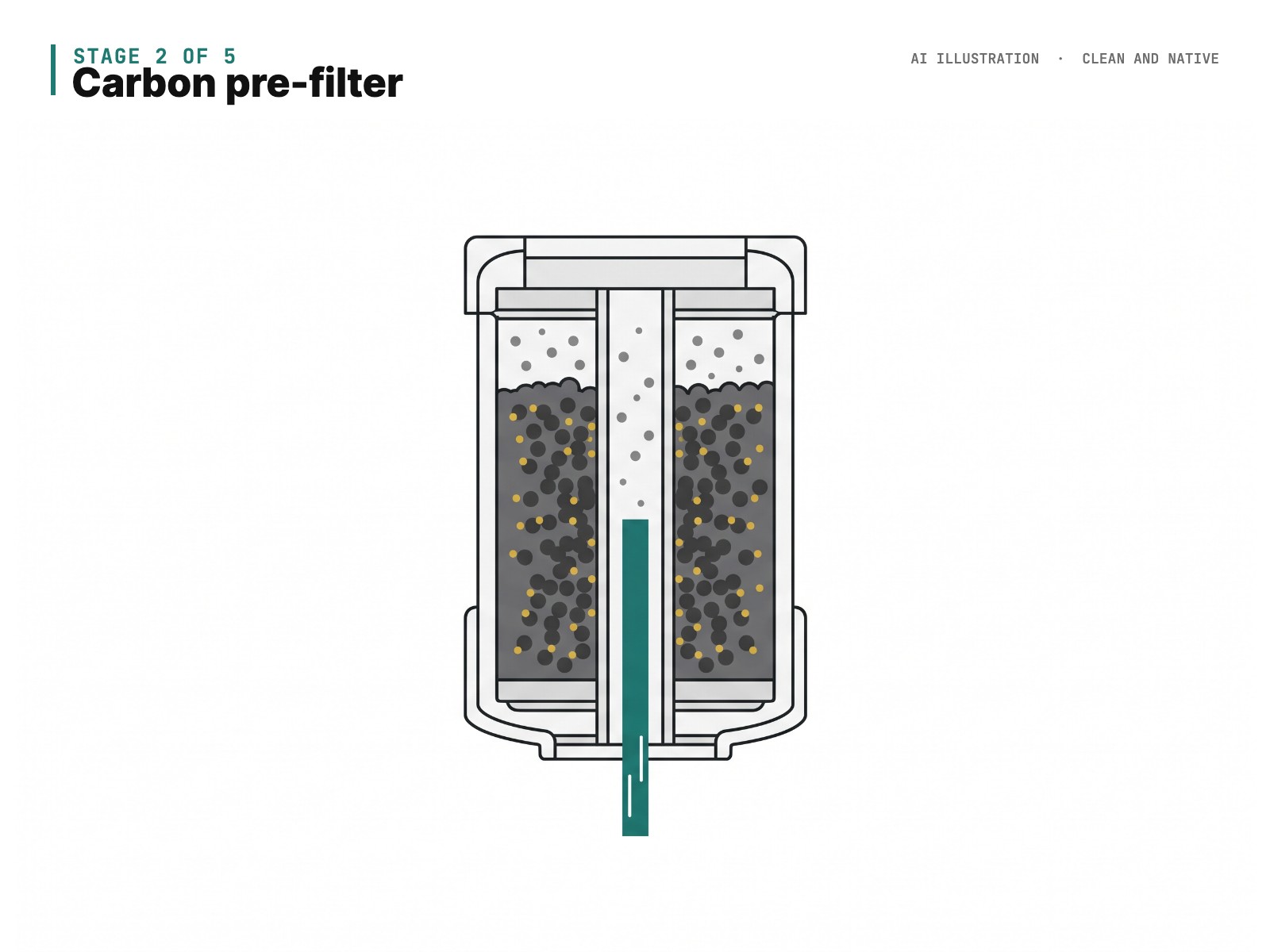
A block of activated carbon takes out chlorine, along with taste and odour compounds and many organic chemicals. This stage exists mainly to protect the membrane: most home membranes are thin-film polyamide, and FilmTec rates its home elements’ free chlorine tolerance at under 0.1 ppm. Several Australian supplies, including Sydney’s and much of Brisbane’s, use chloramine, which is slower to remove, so it is worth asking whether the carbon is rated for it.
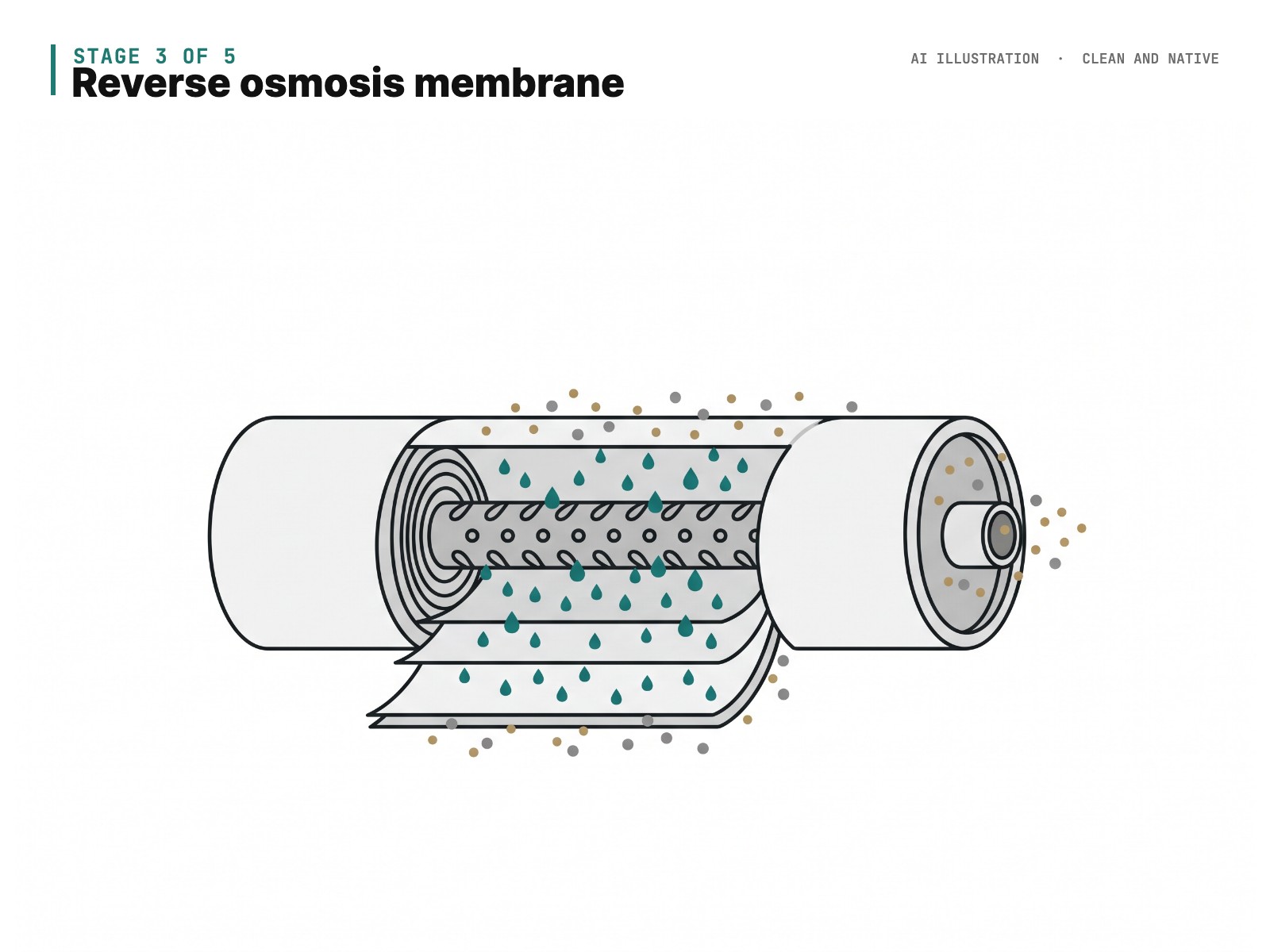
This is the stage that defines the system. The membrane is a sheet of thin-film material rolled around a perforated tube. Tap water flows across the surface rather than straight through it: a share of it is forced through the membrane into the central tube as purified water (the permeate), and the rest keeps flowing across, carrying the rejected salts to the drain (the concentrate). That cross-flow is what keeps the membrane from clogging.
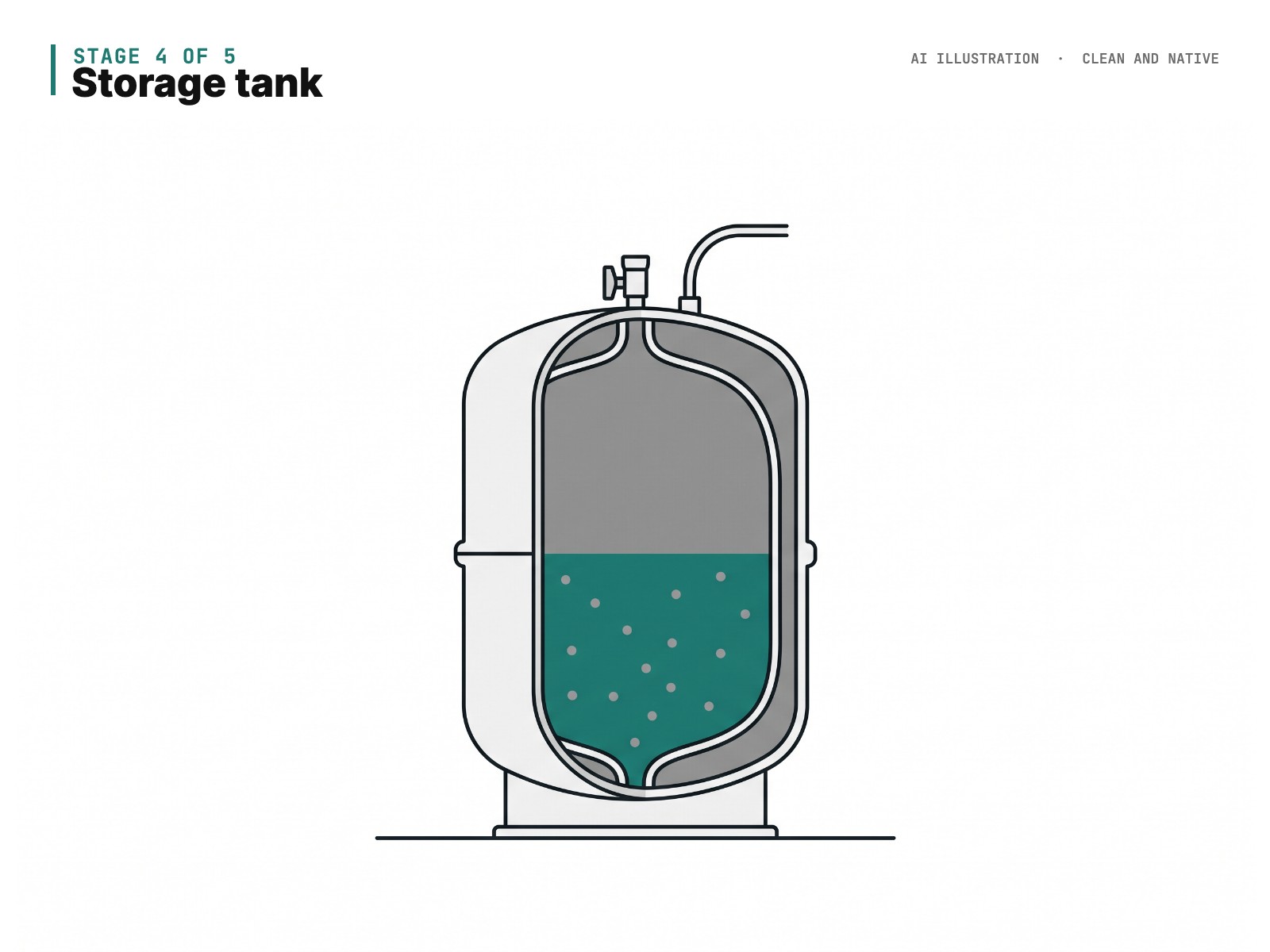
RO is slow, so a traditional system fills a small pressurised tank under the sink and an automatic shut-off valve stops the flow when it is full. Tankless systems, such as the Waterdrop X8, skip the tank and use an electric pump to make water on demand, which saves cupboard space but needs a power point under the sink.
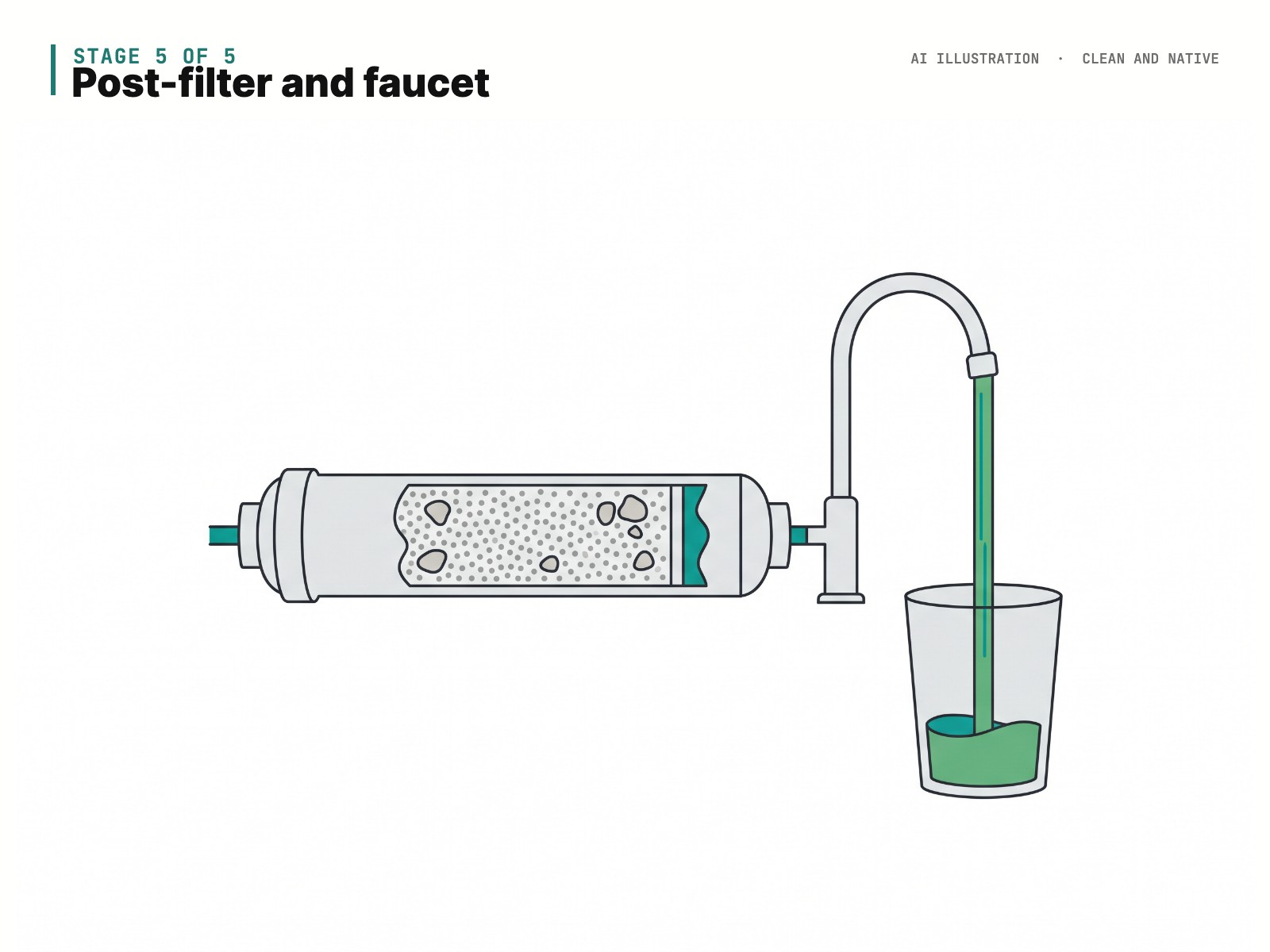
A final cartridge, usually carbon, takes out any taste picked up in the tank before water reaches the faucet. Some systems use this slot for a remineralising cartridge that adds back calcium and magnesium, or, like my EcoHero, a deioniser that pulls the reading down further.
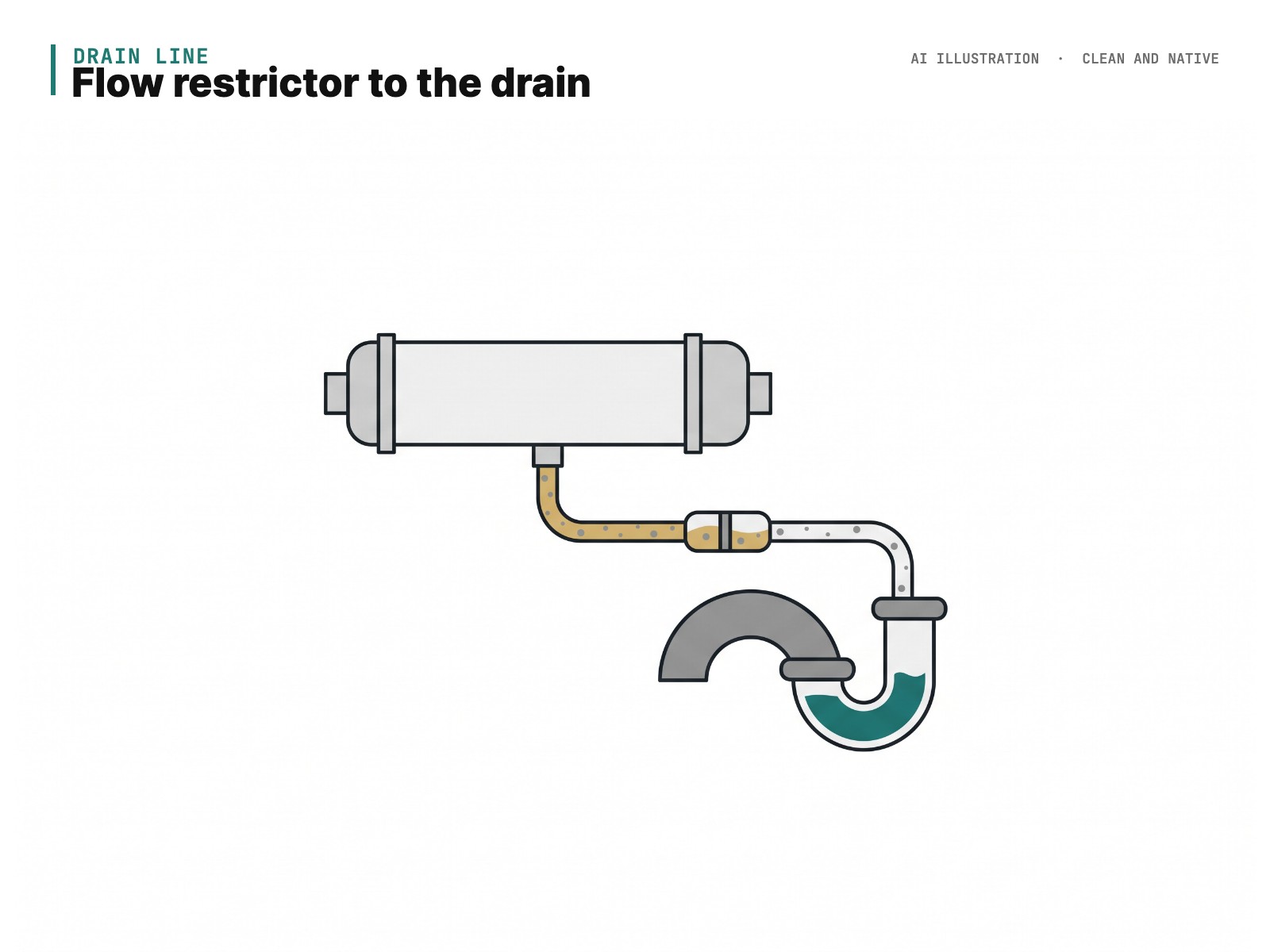
The part most diagrams leave out: the drain line. The concentrate from the membrane runs through a small flow restrictor to a saddle on your sink waste. The restrictor holds back enough pressure for the membrane to work while letting a steady rinse through. It is the reason a modern 2:1 system and an old 1:4 system can use the same membrane but waste very different amounts of water.
What reverse osmosis removes, and what it does not
| Contaminant | Does RO reduce it? | What does the work |
|---|---|---|
| Fluoride | Yes, most of it (American Dental Association) | Membrane |
| PFAS | Yes; the US EPA lists RO as effective, and a 2020 Duke study found near-complete removal by every RO unit it tested | Membrane |
| Lead and other dissolved metals | Yes | Membrane |
| Total dissolved solids (TDS) | Yes; this is what a TDS meter checks | Membrane |
| Chlorine, taste and odour | Yes, but by the carbon stage | Carbon pre- and post-filters |
| Chloramine | Only if the carbon is rated for it | Carbon (catalytic grades) |
| Bacteria and viruses | Not something to rely on unless the unit is certified as a purifier | Treat tank or bore water separately |
Two limits matter in practice. First, RO treats one tap: it does nothing for your shower or washing machine. Second, a home RO unit is not a fix for untreated water. If you are on tank or bore water, test it and disinfect it first, and treat RO as the last step, not the only one. Australia’s guideline values for the contaminants people usually buy RO for are 1.5 mg/L for fluoride, 0.005 mg/L for lead (halved in 2025) and, since June 2025, 8 ng/L for PFOS and 200 ng/L for PFOA.
My test: what RO did to Gold Coast tap water
Clearance divers check their gear before trusting it, and the cheapest check you can run on an RO system is a TDS meter. On the Gold Coast supply at Palm Beach, my kitchen tap read 69 ppm. Water from the EcoHero under my sink read 3 ppm: a 95.7% reduction.
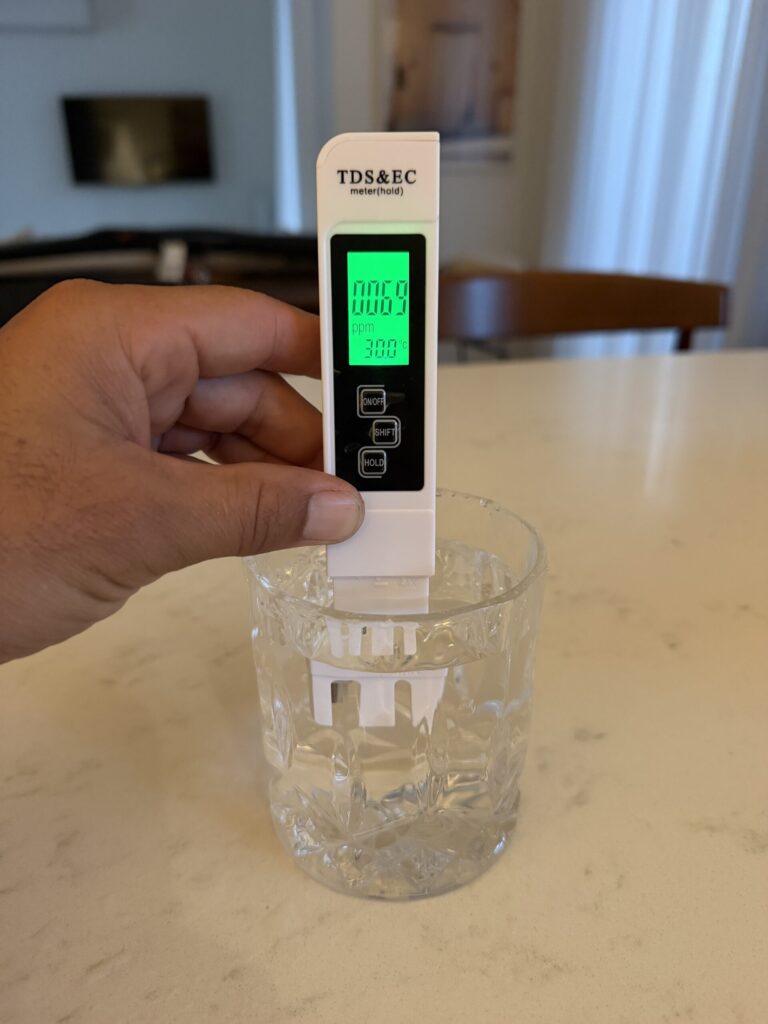
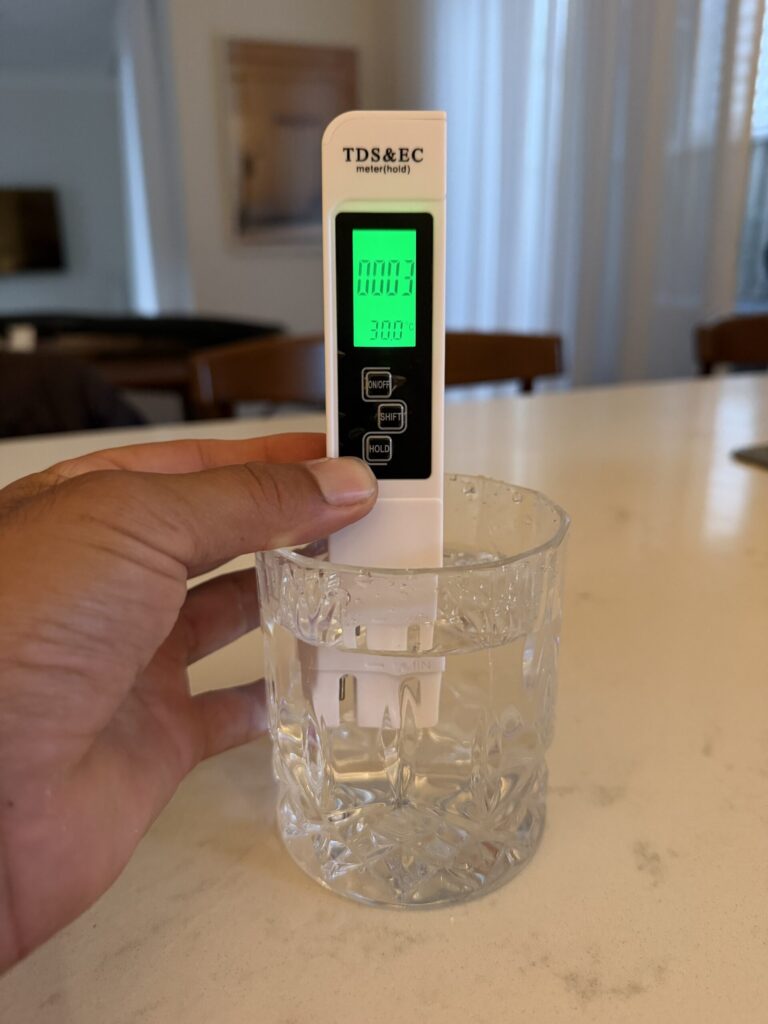
Read that result for what it is. A TDS meter counts total dissolved ions. It confirms the membrane is intact and working, but it cannot see PFAS, which are measured in nanograms per litre, and it cannot tell fluoride from calcium. What it is good for is trend: log your tap and RO readings on day one, check every few months, and when the RO number starts climbing, a membrane or post-filter is due.
Pure water and drain water: the ratio explained
Because the membrane is rinsed constantly, every RO system sends some water to drain. The University of Nevada’s extension service says it takes two to four litres of feed water to make one litre of treated water. Makers rate membranes at 25°C, and colder water means less output and more waste. The US EPA’s WaterSense label for RO systems sets a minimum efficiency of 30%, which works out to no more than about 2.3 litres to drain per litre produced.
| System | Pure: drain (maker) | Drain water per 10 L made |
|---|---|---|
| Waterdrop X8 (under-sink, tankless) | 2:1 | about 5 L |
| Waterdrop C1S (countertop) | 3:1 | about 3.3 L |
| Philips ADD6901 (countertop) | 3:1 (75% recovery) | about 3.3 L |
| Costway countertop RO | 4:1 | about 2.5 L |
| Typical RO in the extension service figures | about 1:1 to 1:3 | 10 to 30 L |
Drinking and cooking water for a household is only a few litres a day, so a modern unit’s drain water is small next to a single shower. With a countertop unit you can collect it for the garden.
Check all seven rooms, not just this one
38 checks, 29 free, ranked by impact. Sent as a 32-page PDF.
We'll email you the audit and a short series of practical guides. Unsubscribe in one click, any time. Privacy.
Sent. Taking you to your download...
Under-sink, countertop or tankless?
| Under-sink with tank | Under-sink tankless | Countertop | |
|---|---|---|---|
| Install | Licensed plumber, extra faucet | Licensed plumber, plus a power point | None: fill and plug in |
| Water on demand | Yes, from the tank | Yes, pump makes it live | Fill the tank by hand |
| Compliance | Plumbed-in units are WaterMark products (AS 3497) | Same | Not connected to the mains |
| Best for | Owners, families | Owners short on space | Renters, apartments, trying RO |
| Example | EcoHero 5-stage, from $949 | Waterdrop X8, about $630 to $720 | Waterdrop C1S, $379.22 |
If you plumb one in, check compliance. Plumbed-in drinking water treatment units are on the WaterMark Schedule of Products, and Victoria’s building regulator says a licensed plumber must not install a product that needs WaterMark and does not have it. The EcoHero I use is listed to AS/NZS 3497 on the national register; I could not find the X8 on it, so ask your plumber before ordering.

Waterdrop C1S Countertop Reverse Osmosis
Sold by WaterdropDirect AU
- No plumbing and no landlord approval: fill the tank, plug it in, pour.
- Six stages including a 0.0001 µm RO membrane, with a live TDS readout so you can check the result yourself.
- 3:1 pure to drain (Waterdrop), with reject water collected for the garden.
The honest part: its certification is NSF/ANSI 372, which covers lead-free materials, not removal. Waterdrop’s reduction figures come from its own third-party (SGS) tests. I have one here for a long-term test; until I publish the results, these figures are Waterdrop’s.
Check today’s C1S price →Amazon AU price: $379.22 · as of 19 Nov 2026, 11:43 pm AEST DetailsAmazon AU · prices change · we may earn a commission
Own your home? The Waterdrop X8 is the under-sink, tankless version: certified by IAPMO to NSF/ANSI 58 for TDS reduction (Waterdrop), 2:1.
See the X8 →Amazon AU price: $611.29 · as of 19 Nov 2026, 11:43 pm AEST DetailsMinerals and taste
RO removes calcium and magnesium along with everything else, which is why the TDS reading drops so far. Most of the minerals in a normal diet come from food rather than water, but very low-TDS water can taste flat to some people. A remineralising post-filter or mineral drops add some back; see how to remineralise RO water and does reverse osmosis remove minerals.
Maintenance: what to replace and when
| Part | Typical interval | Sign it is due |
|---|---|---|
| Sediment pre-filter | 6 to 12 months | Flow slows; cartridge visibly brown |
| Carbon pre-filter | 6 to 12 months | Chlorine taste returns; schedule matters more than signs, as it protects the membrane |
| RO membrane | 2 to 3 years | TDS at the RO tap climbs from its day-one reading |
| Post-filter or remineraliser | About 12 months | Taste changes |
| Storage tank | Years | Weak flow from a full tank: check the air charge |
Makers’ intervals vary with your water. Waterdrop rates the X8’s three filters at 6, 12 and 24 months. Whatever you run, the TDS meter is your early warning, and it costs less than one cartridge.
Is reverse osmosis worth it?
✓ RO is worth it if
- You want fluoride in your drinking water reduced
- You want the strongest common home option for PFAS and lead
- You buy bottled water and want to stop
- Your supply is high in dissolved salts and tastes salty or hard
× Skip RO if
- You only want chlorine taste gone: a carbon filter is cheaper
- You cannot accept any water going to drain
- You want filtered water at every tap (that is whole-house)
- You are on untested tank or bore water: test and treat it first
Final verdict
A reverse osmosis water filter is a membrane system: pre-filters protect it, the membrane separates water from what is dissolved in it, a drain line rinses the rejects away, and a post-filter polishes what you drink. Along with distillation, it is the only common home technology that takes out fluoride and dissolved salts as well as PFAS and lead, which is why it is worth understanding before you buy one. On my own system it took Gold Coast tap water from 69 ppm to 3 ppm.
If you want to try it without a plumber, start with a countertop unit such as the Waterdrop C1S, which took my tap water from 69 to 7 ppm TDS (see my Waterdrop C1S review). If you own your home, compare the under-sink options in the best reverse osmosis systems in Australia, or every option from $188 in affordable reverse osmosis filters. If PFAS is the reason you are looking, see the best water filters for PFAS, and for the full category, the best water filters in Australia. Buying during the sale? Check which Black Friday water filter deals are real first.
Prices change. Check Amazon AU before buying.
Frequently asked questions
What is a reverse osmosis water filter?
A reverse osmosis (RO) water filter uses pressure to push tap water through a semi-permeable membrane often quoted as about 0.0001 microns. Water passes through; most dissolved salts, fluoride, lead and PFAS are rejected and flushed to a drain. Sediment and carbon filters protect the membrane, and a post-filter polishes the water.
How does reverse osmosis work, simply?
Normally water moves through a membrane towards the saltier side (osmosis). Apply pressure to the salty side and the flow reverses: water is pushed out through the membrane and the dissolved material stays behind. In a home system, mains pressure or a small pump does the pushing.
What are the stages of a reverse osmosis system?
A typical 5-stage system has a sediment pre-filter, a carbon pre-filter, the RO membrane, a storage tank (or a pump in tankless models) and a carbon or remineralising post-filter. A drain line carries the rejected water away from the membrane.
Does reverse osmosis remove fluoride?
Yes. The American Dental Association says almost all RO systems remove most fluoride. Most carbon filters do not.
Does reverse osmosis waste water?
Yes, some. The membrane is rinsed continuously and the rinse water goes to drain. Modern units quote 2:1 to 4:1 pure to drain; the US EPA’s WaterSense label requires no more than about 2.3 litres to drain per litre produced.
Is reverse osmosis water safe to drink?
Yes. RO water from a working system on a treated mains supply is safe to drink. It is low in minerals, which most people get from food. Home RO units are not certified as microbiological purifiers unless stated, so treat tank or bore water first.
How do I know my RO filter is working?
Use a TDS meter. Measure your tap and the RO outlet when the system is new, then recheck every few months. On my system the tap read 69 ppm and the RO water 3 ppm. A rising RO reading means a membrane or filter is due.
Do I need a plumber for reverse osmosis?
For an under-sink system, yes: plumbed-in drinking water treatment units are WaterMark products under AS 3497 and need a licensed plumber. Countertop RO units need no plumbing.
- American Dental Association: Fluoridation Facts (home treatment and fluoride)
- US EPA: reducing PFAS in drinking water with treatment technologies (fact sheet, 2024)
- Herkert et al. 2020, Environ. Sci. Technol. Lett.: point-of-use filters and PFAS
- NHMRC: PFAS guideline values (updated 25 June 2025)
- NHMRC ADWG: Fluoride fact sheet
- NHMRC ADWG: Lead fact sheet (0.005 mg/L, 2025)
- NHMRC ADWG: Total dissolved solids
- Cooperative Extension: what a TDS test does and does not tell you
- US EPA WaterSense: point-of-use reverse osmosis systems
- ABCB: WaterMark Schedule of Products (AS 3497 water treatment units)
- Victorian Building and Plumbing Commission: WaterMark and licensed installation
- ABCB product register: Pure Water Systems 5 Stage Undersink RO (AS/NZS 3497)
- Waterdrop: X8 reverse osmosis system specifications
- Waterdrop: C1S countertop RO specifications
- Philips: ADD6901 RO water station leaflet (AU)
- Sydney Water: Potts Hill quarterly water quality report (monochloramine, fluoride)
- Seqwater: Brisbane zone water quality report, September 2026
- University of Nevada Cooperative Extension: Reverse Osmosis (R/O), How It Works (FS-05-08)
- US EPA WaterSense: specification for point-of-use RO systems (30% minimum efficiency)
- DuPont FilmTec: TW30-1812 home RO element data sheet (50 psi, 98% rejection, chlorine under 0.1 ppm)
- City of Gold Coast: water pressure (220 kPa minimum; AS/NZS 3500 500 kPa in buildings)

Former Royal Australian Navy Clearance Diver and TAG-E counter-terrorism operator. Founded Clean and Native to apply the same rigorous thinking to the home environment.
Full biography →The 7-Room Home Audit
Your tap water is one room. The audit covers all seven: 38 checks across water, air and EMF, 29 of them free, ranked by impact against Australian guidelines.
- Morning tap flush: the free lead fix most homes skip
- How to read your utility's water quality report
- Renting or owning: the two reverse osmosis filters I use at home
We'll email you the audit and a short series of practical guides. Unsubscribe in one click, any time. Privacy.
Sent. Taking you to your download...