Waterdrop X8 vs X12: Which Should You Buy for an Australian Home?
The Waterdrop X8 and X12 are both tankless under-sink reverse osmosis systems that remove fluoride, chloramine, PFAS, lead, and heavy metals from Australian tap water. The X8 (800 GPD, 9-stage, no UV) suits most city households of 1 to 3 people, while the X12 (1200 GPD, 11-stage + UV sterilisation) is the better choice for larger families, tank water users, or homes with immune-compromised members.
Product selections in this article are based on manufacturer specifications and independent certification data — no gifted units, no brand payments.
That is the short answer. But short answers cost people money when they buy the wrong unit. As a former Navy Clearance Diver, I am not interested in marketing fluff. I want to know which unit delivers cleaner water per dollar in an Australian context. This article gives you that answer with real specs, honest trade-offs, and a clear decision matrix so you do not overspend on features you do not need.
Why This Comparison Matters for Australian Buyers
You are probably here because you have narrowed your search to Waterdrop’s under-sink RO range and now you are staring at two models wondering if the price jump to the X12 is worth it. That is the right question. The wrong answer wastes your money — either by overpaying for UV sterilisation you do not need, or by skipping it when your water source actually warrants bacterial protection.
Australia’s water chemistry makes this decision different from the US or Europe. If you live in Brisbane, Sydney, Adelaide, or Darwin, your council water is disinfected with chloramine — not free chlorine. According to SEQ Water, Urban Utilities, and Sydney Water’s published treatment data, chloramine is the primary residual disinfectant in these networks. This means your mains water is already bacterially controlled at the tap. The RO membrane in both the X8 and X12 strips chloramine alongside fluoride, PFAS, lead, and heavy metals. Melbourne, Hobart, and Canberra use free chlorine — still a disinfectant, still handled by the RO membrane. The question is whether you need an additional UV kill stage on top of that.
For the vast majority of Australian city households, the answer is no. But there are specific scenarios where UV is not optional — it is essential. Let me walk you through those scenarios, then we will break down every spec difference so you can buy with confidence.
Waterdrop X8: What You Get and Who It Is For

The X8 is Waterdrop’s 800 GPD tankless reverse osmosis system with 9 filtration stages. It carries NSF 42 (aesthetic effects including chlorine taste and odour), NSF 58 (structural integrity and TDS/contaminant rejection for RO membranes), and NSF 372 (lead-free compliance) certifications. NSF 58 is the benchmark standard for reverse osmosis performance — it tests membrane rejection rates under controlled laboratory conditions at specified pressures, verifying that the system actually removes what the manufacturer claims.
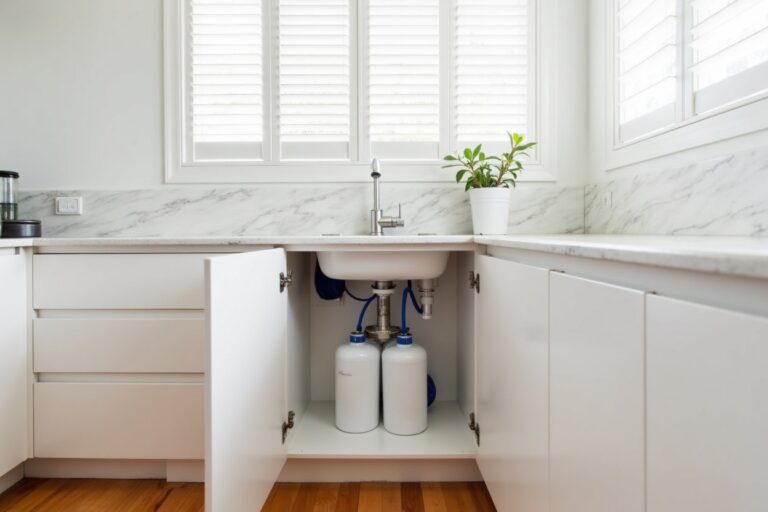
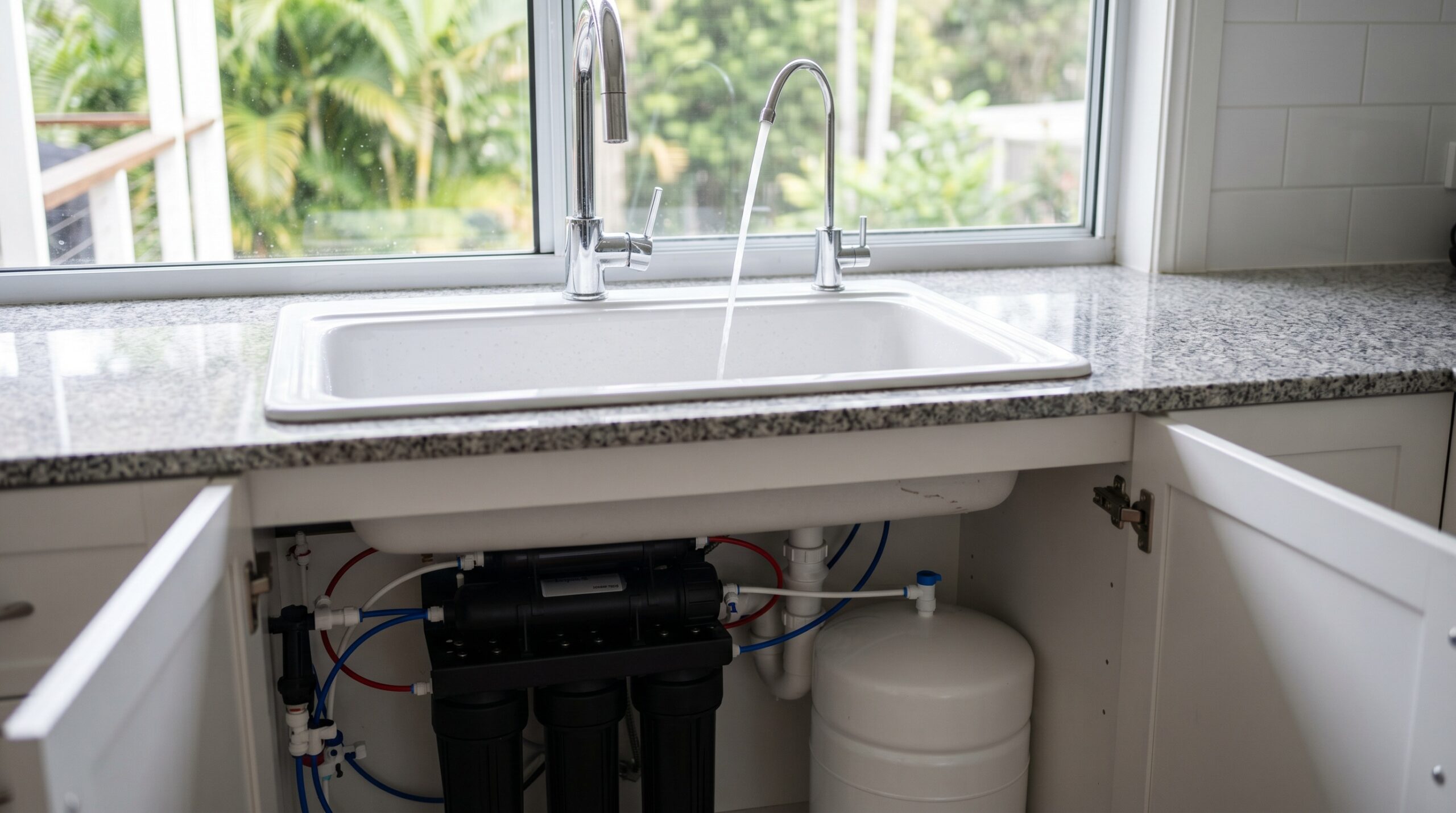
In practical terms, the X8 fills a 250 mL glass in approximately 5 seconds. Its pure-to-drain ratio is 2:1, meaning for every 2 litres of filtered water, roughly 1 litre goes down the drain. That is a solid efficiency figure for a tankless RO system — many older tank-based RO units waste 3 to 4 litres per litre of purified water. No storage tank means the X8 fits neatly under most Australian kitchen sinks without the footprint issues that plague traditional RO systems.
For a household of 1 to 3 people on treated city mains, 800 GPD is more than enough. Even at peak usage — filling water bottles, cooking, making coffee, running a kettle — you will not outpace the flow rate. On SEQ Water’s supply (chloramine-disinfected, TDS typically 80 to 115 mg/L, fluoride added at approximately 0.7 mg/L according to Seqwater’s published data), the X8’s NSF 58-certified RO membrane is rated to reject total dissolved solids within NSF 58 parameters.
Who the X8 Is For
- Couples and small families (1 to 3 people) on city mains water in any Australian capital
- Renters or homeowners who want fluoride, chloramine, PFAS, and heavy metal removal without paying for UV they do not need
- Budget-conscious buyers who want NSF 58-certified RO performance at the lowest total cost of ownership
- Anyone in a chloramine city (Brisbane, Sydney, Adelaide, Darwin) who has realised their benchtop carbon filter was not actually removing chloramine — standard GAC removes chloramine at roughly 1/40th the rate it removes free chlorine, according to Water Quality Association data
Who the X8 Is Not For
- Households on tank water or rainwater — these sources lack municipal disinfection and may contain bacteria, viruses, or protozoa
- Homes with very old galvanised or lead plumbing where biofilm or bacterial contamination is a concern downstream of the meter
- Families with immunocompromised members (chemotherapy patients, transplant recipients, very young infants) where an additional UV barrier adds measurable risk reduction
- Large households (4 to 6+ people) with high simultaneous demand who may notice slower flow during peak usage
If you fit the “for” list, the X8 is the right unit. Save the price difference and put it toward replacement filters. If you fit the “not for” list, keep reading — the X12 addresses every one of those gaps.
Waterdrop X12: What the Extra Stages and UV Actually Do

The X12 steps up to 1,200 GPD with 11 filtration stages plus a UV sterilisation chamber. It holds the same NSF 42, 58, and 372 certifications as the X8. The additional stages refine sediment and carbon pre-filtration before the RO membrane, and the UV lamp provides a final disinfection barrier after the membrane. Fill time drops to approximately 3 seconds per 250 mL glass, and the pure-to-drain ratio improves to 3:1 — meaning less water waste per litre of purified output.
That 3:1 ratio matters if water costs are a concern. In Perth, where Water Corporation charges tiered rates that escalate significantly above 150 kL per year, the X12’s improved efficiency could save you $30 to $60 annually in water costs compared to the X8 — depending on your daily consumption. In Brisbane and south-east Queensland, where SEQ Water’s bulk charges have increased year-on-year, the efficiency difference is less dramatic but still favourable over a 5-year ownership period.
The UV Stage: When It Matters and When It Does Not
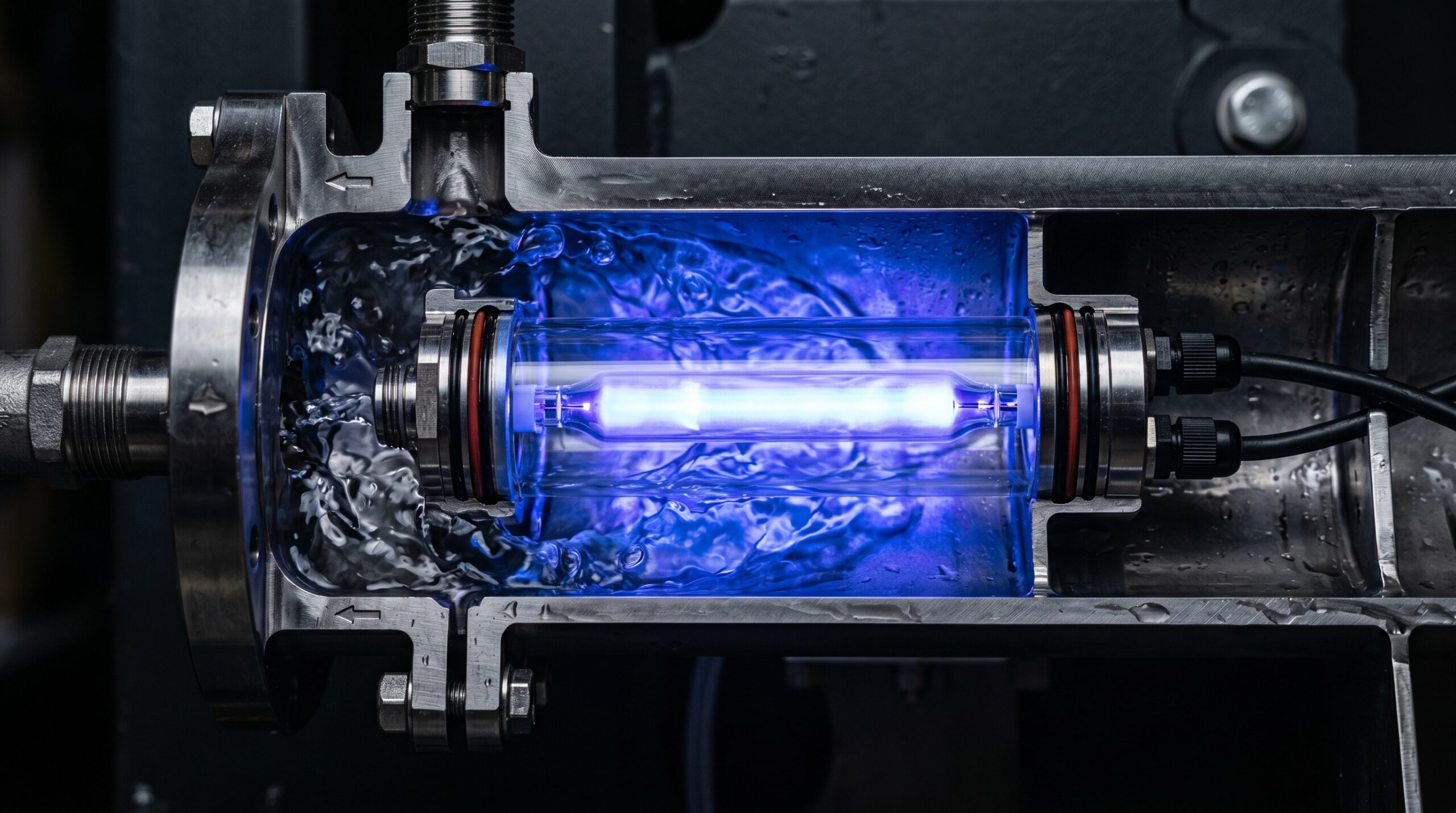
UV sterilisation at 254 nanometres (UV-C) disrupts the DNA of bacteria, viruses, and protozoa, rendering them unable to reproduce. This is the same wavelength used in municipal water treatment plants and hospital sterilisation systems. In the X12, the UV chamber sits after the RO membrane — so it acts as a final kill step for any microorganisms that may have passed through or entered the system downstream of the membrane.
Here is the honest assessment: if your water comes from a chloramine-treated or chlorine-treated municipal supply, UV sterilisation is largely redundant. Brisbane’s SEQ Water network, Sydney Water, Melbourne Water, SA Water in Adelaide, and Water Corporation in Perth all maintain disinfectant residuals specifically to prevent bacterial regrowth in the distribution network. By the time water reaches your tap, it has been disinfected. The RO membrane then provides an additional physical barrier (pore size approximately 0.0001 micrometres — far smaller than bacteria at 0.2 to 5 micrometres). Stacking UV on top of that is belt-and-braces-and-suspenders.
But there are scenarios where UV is not redundant — it is critical:
- Tank water or rainwater: According to enHealth Guidelines for rainwater tank use (published by the Australian Government Department of Health), untreated rainwater can harbour Campylobacter, E. coli, Cryptosporidium, and Legionella. UV provides a necessary kill step that the RO membrane alone may not guarantee at 100% across its lifespan.
- Old plumbing with biofilm risk: If your home has pre-1970s galvanised pipes or dead legs in the plumbing where water sits stagnant, biofilm can develop between the meter and your kitchen. UV handles this.
- Immunocompromised household members: For households with chemotherapy patients, organ transplant recipients, HIV-positive individuals, or very young infants, the marginal risk reduction from UV is clinically meaningful. This is consistent with guidance from the NHMRC’s Australian Drinking Water Guidelines (ADWG 2024), which recommends additional treatment barriers for vulnerable populations.
- Rural or regional water supplies: Some regional Australian water supplies have intermittent disinfection issues or boil-water alerts. If you are on a smaller network — Cairns, Townsville hinterland, rural NSW — UV adds a fixed safety margin.
If none of those apply to you, the UV stage is insurance you are unlikely to claim on. That does not make it worthless — it makes it a personal risk-tolerance decision rather than a technical necessity.
Head-to-Head Specification Comparison
Numbers do not lie, and they do not require interpretation. Here is every meaningful spec difference between the X8 and X12, laid out so you can see exactly what you are paying extra for.
| Specification | Waterdrop X8 | Waterdrop X12 | What It Means for You |
|---|---|---|---|
| Flow Rate | 800 GPD | 1,200 GPD | X12 fills faster — noticeable when filling large pots or multiple bottles |
| Filtration Stages | 9 | 11 + UV | Extra pre-filtration may extend membrane life; UV adds microbial kill |
| UV Sterilisation | ❌ No | ✅ Yes (254 nm UV-C) | Essential for tank water, beneficial for immunocompromised households |
| Fill Time (250 mL) | ~5 seconds | ~3 seconds | 2-second difference adds up when filling a 2L jug or large pot |
| Pure-to-Drain Ratio | 2:1 | 3:1 | X12 wastes less water — saves $30-60/yr on Perth water bills |
| NSF Certifications | 42 / 58 / 372 | 42 / 58 / 372 | Identical certification — same verified contaminant removal |
| Fluoride Removal | 90-97% (RO) | 90-97% (RO) | Identical — both use the same membrane rejection method |
| Chloramine Removal | Yes (RO + carbon) | Yes (RO + carbon) | Critical for Brisbane, Sydney, Adelaide, Darwin households |
| PFAS Removal | Yes (RO membrane) | Yes (RO membrane) | Identical — RO is the gold standard for PFAS according to DCCEEW data |
| Tankless Design | Yes | Yes | Both save space under the sink — no bulky pressure tank |
| Smart Monitoring | LED filter life + TDS | LED filter life + TDS | Both systems tell you when to change filters — no guesswork |
| Best For | 1-3 people, city mains | 4-6+ people, tank water | Match your household to the right model |
The pattern is clear: on contaminant removal, the two systems are identical. The X12 wins on flow rate, water efficiency, and the UV stage. Whether those wins justify the higher price depends entirely on your household size and water source.
The Decision Tree: 3 Questions to Pick Your Model
You do not need to read every spec sheet. Answer three questions and you will know which system to buy.
Question 1: What is your water source?
If you are on tank water, rainwater, bore water, or a small regional supply with intermittent disinfection → X12. The UV stage is non-negotiable.
If you are on treated city mains (any Australian capital or major regional centre) → proceed to Question 2.
Question 2: How many people are in your household?
1 to 3 people: The X8’s 800 GPD handles your demand easily. You will never notice a flow limitation.
4 to 6+ people: The X12’s 1,200 GPD and faster fill time make a noticeable difference when multiple people are filling bottles, cooking, and making drinks simultaneously.
Question 3: Does anyone in your household have a compromised immune system?
Yes (chemo, transplant, HIV, very young infant) → X12. The UV stage provides a measurable additional barrier consistent with ADWG 2024 guidance for vulnerable populations.
No → X8. You are paying for protection you are statistically unlikely to need on treated mains.
That is the entire decision. Three questions, one answer. If you landed on the X8, you are buying the same core water quality for less money. If you landed on the X12, you are buying peace of mind that has a genuine technical basis.
Australian Water Chemistry: Why RO Is the Only Real Option for Fluoride and PFAS
Before you finalise your choice between these two models, it is worth understanding why you are looking at RO systems in the first place — and why cheaper alternatives fail on Australian water.
Fluoride removal requires reverse osmosis (90-97% rejection) or activated alumina (80-95%). Carbon filters — including catalytic carbon, standard GAC, and carbon block — cannot remove fluoride. Not partially. Not with special media blends. They physically cannot do it. If you have seen a benchtop carbon filter claiming fluoride removal, that claim does not hold up against NSF/ANSI 58 testing standards. Both the X8 and X12 use RO membranes that achieve fluoride rejection in the 90 to 97% range, verified under NSF 58 testing protocols.
Chloramine removal is the other critical factor for most Australian capital city households. Brisbane, Sydney, Adelaide, and Darwin all use chloramine as their primary residual disinfectant. Standard granular activated carbon (the kind in Brita jugs and basic benchtop filters) removes chloramine at roughly 1/40th the rate it removes free chlorine, according to published Water Quality Association performance data. This means your Brita is doing almost nothing for chloramine taste, odour, or by-products in these cities. RO membranes reject chloramine completely. Both the X8 and X12 handle this identically.
PFAS contamination has been confirmed at 700+ sites across Australia according to the DCCEEW national register. While municipal water treatment plants monitor for PFAS, RO is the most effective residential treatment method, with rejection rates above 95% for PFOS and PFOA. Suburbs near military bases (Williamtown in NSW, Oakey in Queensland, Edinburgh in South Australia) and industrial sites (Kwinana corridor in Perth, Rockingham) face higher background levels. If you are in one of these areas, an RO system is not a luxury — it is a necessity.
Melbourne households have it slightly different. Melbourne Water uses free chlorine, not chloramine, and the water is naturally very soft at approximately 25 mg/L CaCO3 with TDS around 60 mg/L. Standard carbon filters work fine for taste in Melbourne. But if your goal is fluoride or PFAS removal, you still need RO — the same logic applies regardless of disinfection type.
Flow Rate and Household Sizing: Does 800 GPD vs 1,200 GPD Actually Matter?
GPD stands for gallons per day. 800 GPD converts to approximately 3,028 litres per day. 1,200 GPD is approximately 4,542 litres per day. Neither figure represents how much water you will actually draw — they indicate the system’s maximum production capacity under rated conditions.
The Australian Bureau of Statistics (ABS) estimates that average residential water consumption in capital cities ranges from 170 to 340 litres per person per day — but that includes showers, laundry, toilets, and irrigation. Drinking and cooking water typically accounts for 3 to 5 litres per person per day. For a household of 3, that is 9 to 15 litres daily. For a household of 6, that is 18 to 30 litres daily.
At 800 GPD, the X8 can theoretically produce over 3,000 litres per day. You are never going to hit that limit for drinking water. The real-world difference is felt in instantaneous flow rate — how fast water comes out of the dedicated faucet when you turn it on. The X8 fills a 250 mL glass in about 5 seconds. The X12 does it in about 3 seconds. When you are filling a 4-litre pot for pasta, that is the difference between 80 seconds and 48 seconds. Noticeable, but not transformative for a small household.
For larger families, the flow difference compounds. If four people are filling water bottles before school and work, the X12’s faster flow reduces the morning queue. If you regularly cook with large volumes of filtered water — stock pots, steaming, rice cookers — the 2-second-per-glass advantage stacks up. For 1 to 3 people, you will rarely notice it.
Water Efficiency: The Pure-to-Drain Ratio and Your Water Bill
Every RO system produces waste water — it is an unavoidable part of the membrane filtration process. The question is how much. The X8’s 2:1 ratio means you get 2 litres of purified water for every 1 litre that goes to drain. The X12 improves this to 3:1 — 3 litres of purified water per litre of waste.
Let me quantify that. If your household uses 10 litres of RO water per day:
| Metric | Waterdrop X8 (2:1) | Waterdrop X12 (3:1) |
|---|---|---|
| Daily waste water | 5.0 L | 3.3 L |
| Annual waste water | 1,825 L | 1,204 L |
| Annual water saved (X12 vs X8) | 621 litres per year | |
At current Perth water rates (approximately $3.40 per kilolitre for the first tier), 621 litres saves about $2.11 per year. Hardly a dealbreaker. But at higher tiers (Perth charges up to $6.81/kL above 550 kL), or if your household uses more RO water, the difference scales. For a household of 6 using 25 litres of RO water daily, the annual waste difference is 1,552 litres — meaningful over a 5-year ownership period.
The environmental argument is stronger than the financial one. Less waste water means less strain on sewage systems and less energy used to treat that water downstream. If water conservation matters to you — and it should in Perth, Adelaide, and regional Queensland where supply constraints are real — the X12’s 3:1 ratio is the more responsible choice.
How Both Models Handle Specific Australian Contaminants
Let me be specific about what these systems remove, because vague claims like “removes 1,000+ contaminants” do not help you make a decision. Here is what matters for Australian municipal water based on state utility reports and ADWG 2024 guidelines:
Fluoride
All Australian capital cities except Brisbane add fluoride to their water supply at approximately 0.6 to 1.0 mg/L, in line with NHMRC recommendations. Brisbane re-introduced fluoridation in 2008, with SEQ Water targeting 0.7 mg/L. Both the X8 and X12 RO membranes reject fluoride at 90 to 97%, reducing a 0.7 mg/L input to approximately 0.02 to 0.07 mg/L in the output. Identical performance from both models.
Chloramine and Disinfection By-Products
Chloramine cities (Brisbane, Sydney, Adelaide, Darwin) face trihalomethane (THM) and haloacetic acid (HAA) formation as disinfection by-products. Both models use carbon pre-filtration (which handles free chlorine and some organic by-products) plus the RO membrane (which rejects dissolved by-products). The X12’s additional pre-filtration stages may modestly extend membrane life by catching more sediment and organics before they reach the membrane, but both systems achieve the same endpoint water quality.
Lead and Heavy Metals
According to a 2018 Macquarie University study published in Environmental Research, up to 8% of Australian homes may have lead levels above the ADWG guideline of 10 µg/L at the tap — primarily from pre-1980s solder joints and brass fittings. RO membranes reject lead at 95 to 99%. Both the X8 and X12 handle this equally. NSF 58 certification specifically tests for lead rejection.
PFAS (Per- and Polyfluoroalkyl Substances)
RO membranes achieve PFAS rejection above 95% for PFOS and PFOA, the two most studied compounds. This is consistent with data from the US EPA and Australian DCCEEW assessments. Both models provide identical PFAS protection. If you live near Williamtown (NSW), Oakey (QLD), Edinburgh (SA), or the Kwinana corridor (Perth), this is a primary reason to install an RO system.
How Both Compare to Other Under-Sink RO Systems in Australia
The Waterdrop X8 and X12 are not the only options on the Australian market. Here is how they stack up against two other popular choices, so you can be confident you are not missing a better deal.
Waterdrop D6 Under-Sink RO
The Waterdrop D6 is a more compact, lower-flow-rate option in Waterdrop’s range. It suits very small kitchens and single-person households but lacks the X8’s flow rate and multi-stage refinement. If budget is your absolute ceiling and you live alone on city mains, the D6 is worth a look. But for couples and families, the X8 is the better value per litre filtered. Read our full under-sink water filter comparison for a detailed breakdown.
AquaTru Classic Countertop RO
If you cannot modify your plumbing — you are renting, or your landlord will not allow under-sink installation — the AquaTru Classic is the best countertop alternative. It delivers NSF 58-certified RO filtration without any plumbing work. The trade-off is batch processing (you fill a reservoir and it filters into a jug) rather than on-demand flow. For permanent homes where plumbing modification is not an issue, the X8 or X12 under-sink setup is the superior experience.
Positioning Summary
The X8 sits in the sweet spot: under-sink convenience, strong flow rate, NSF 58 certification, and a competitive price. The X12 occupies the premium tier with UV and better efficiency. Both outperform budget carbon-only under-sink filters on every contaminant that matters for Australian water — because carbon alone cannot touch fluoride, and standard GAC barely dents chloramine.
If you have already read our Waterdrop X8 full review, you have seen the X8’s specifications in detail. The X12 simply adds the UV layer and faster flow for households that need it.
Installation: What to Expect in an Australian Kitchen
Both the X8 and X12 are designed for DIY installation under a standard Australian kitchen sink. The kits include a dedicated faucet, connection hardware, and the filter unit itself. You need access to a cold water supply line (typically a 15mm BSP fitting under the sink) and a drain connection for the waste water line.
A few Australian-specific notes:
- WaterMark compliance: Check that all fittings meet WaterMark AS3497 requirements if you are concerned about compliance for insurance or property sale purposes. Waterdrop’s dedicated faucets are designed for the Australian market but verify the specific model you receive.
- Water pressure: Both systems require inlet pressure between approximately 15 and 90 psi. Australian mains pressure typically sits between 200 and 500 kPa (29 to 72 psi), well within range. If you are on tank water with a pump, ensure your pump delivers at least 200 kPa consistently.
- Cabinet space: Both units are tankless, which is a significant advantage in Australian kitchens where under-sink space competes with garbage bins, cleaning products, and pipes. The X12 is marginally larger due to the UV chamber but still fits comfortably in standard 600mm cabinets.
- Electrical connection: Both require a power outlet under or near the sink for the system electronics and pump. The X12 additionally powers the UV lamp. Most Australian kitchens have a power point under the sink, but check before you order.
If you are not comfortable with basic plumbing, a licensed plumber can install either unit in under 90 minutes. Expect to pay $150 to $250 for a simple installation in capital cities.
Ongoing Costs: Filters, UV Lamp, and 5-Year Total
The upfront price is only part of the equation. RO systems require regular filter replacements, and the X12 adds a UV lamp replacement cycle. Here is a realistic cost comparison over a 5-year ownership period, assuming a household of 3 using approximately 12 litres of RO water per day (4 litres per person for drinking and cooking).
| Cost Component | Waterdrop X8 | Waterdrop X12 |
|---|---|---|
| Upfront Price (approx. AUD) | ~$699 | ~$999 |
| Annual Filter Replacements (approx.) | ~$180-220 | ~$220-280 |
| UV Lamp Replacement (annual) | N/A | ~$50-80 |
| 5-Year Filter/Maintenance Cost | ~$900-1,100 | ~$1,350-1,800 |
| 5-Year Total Cost of Ownership | ~$1,599-1,799 | ~$2,349-2,799 |
| Cost per Litre (at 12 L/day over 5 years) | ~$0.07-0.08 | ~$0.11-0.13 |
At approximately 7 to 8 cents per litre, the X8 delivers NSF 58-certified RO water for less than a quarter of what you would pay for bottled water (typically 30 to 50 cents per litre at supermarket prices, according to ABS household expenditure data). The X12 costs more per litre but still represents significant savings over bottled water — and eliminates the environmental cost of plastic bottles entirely. According to ABS waste data, 373 million plastic bottles go to Australian landfill annually.
The cost difference between the two models over 5 years is approximately $550 to $1,000. That is the real price of UV sterilisation and improved efficiency. If you actually need UV, that cost is justified. If you are on treated city mains with healthy household members, the X8’s lower cost per litre is the smarter financial decision.
Final Verdict: X8 for Most, X12 When You Need It
I will make this simple. If you are on treated city mains in Brisbane, Sydney, Melbourne, Perth, Adelaide, Canberra, Darwin, or Hobart, and your household is 1 to 3 people with no immunocompromised members, buy the Waterdrop X8. You get the same NSF 58-certified RO membrane, the same fluoride rejection, the same chloramine removal, the same PFAS protection — at a lower upfront and ongoing cost. The UV stage in the X12 is solving a problem that treated city water does not have.
If you are on tank water, rainwater, bore water, a regional supply with intermittent disinfection, or if you have 4 to 6+ people in your household, or if anyone in your home is immunocompromised, buy the Waterdrop X12. The UV stage provides a genuine additional barrier that is clinically and technically justified for these scenarios. The faster flow rate and better water efficiency make the price premium worthwhile for larger families.
Both systems are excellent. This is not a good-vs-bad comparison — it is a right-fit comparison. Buy the one that matches your water source, household size, and health requirements, and you will have clean, certified, fluoride-free water for years.
Ready to filter your water?
The Waterdrop X8 is the top-rated under-sink RO for most Australian city households — NSF 58 certified, removes fluoride, PFAS, chloramine, and lead. The X12 adds UV sterilisation for tank water and immunocompromised households.
Last reviewed: June 2025 — Clean and Native
Frequently Asked Questions
Does the Waterdrop X8 remove fluoride from Australian tap water?
Yes. The X8 uses an NSF 58-certified reverse osmosis membrane that rejects fluoride at 90 to 97%. This applies to all Australian municipal water supplies, which typically add fluoride at 0.6 to 1.0 mg/L.
Is the Waterdrop X12’s UV stage necessary for Brisbane or Sydney mains water?
No. Brisbane (SEQ Water) and Sydney (Sydney Water) both use chloramine disinfection, which maintains a bactericidal residual throughout the distribution network. The RO membrane adds a second barrier. UV is an additional layer that is largely redundant on treated city mains.
Can the Waterdrop X8 remove chloramine?
Yes. The X8 uses carbon pre-filtration plus an RO membrane, both of which contribute to chloramine removal. This is critical for Brisbane, Sydney, Adelaide, and Darwin households where chloramine — not free chlorine — is the primary disinfectant.
Which Waterdrop model is better for tank water or rainwater in Australia?
The X12. Tank water and rainwater lack municipal disinfection and may contain bacteria, viruses, and protozoa according to enHealth Guidelines. The X12’s UV sterilisation stage provides a necessary kill step after the RO membrane for untreated water sources.
How much water does the Waterdrop X8 waste compared to the X12?
The X8 has a 2:1 pure-to-drain ratio (2 litres filtered per 1 litre waste). The X12 improves this to 3:1. For a household using 12 litres of RO water daily, the X12 wastes approximately 621 fewer litres per year.
Do I need a plumber to install the Waterdrop X8 or X12?
Both systems are designed for DIY installation under a standard Australian kitchen sink. You need a cold water supply connection and a drain point. If you are not comfortable with basic plumbing, a licensed plumber can install either unit in under 90 minutes for approximately $150 to $250.
Does the Waterdrop X8 remove PFAS?
Yes. The RO membrane in the X8 achieves PFAS rejection rates above 95% for PFOS and PFOA. This is consistent with US EPA and Australian DCCEEW assessment data for reverse osmosis treatment of PFAS-contaminated water.
How often do I need to replace filters on the Waterdrop X8 and X12?
Both systems have built-in LED monitoring that tracks filter life based on actual usage. Typically, sediment and carbon pre-filters need replacement every 6 to 12 months, and the RO membrane every 12 to 24 months depending on water quality and consumption. The X12 also requires annual UV lamp replacement.
Is the Waterdrop X12 worth the extra cost for a Melbourne household?
For most Melbourne households, no. Melbourne Water uses free chlorine (not chloramine) and supplies very soft water at approximately 25 mg/L CaCO3 with TDS around 60 mg/L. The X8 handles fluoride, lead, and PFAS removal at a lower total cost. The X12 is only justified if you have immunocompromised household members or are on a private tank supply.
Can I use a carbon filter instead of RO to remove fluoride from Australian water?
No. Carbon filters — including granular activated carbon (GAC), catalytic carbon, and carbon block — cannot remove fluoride. Only reverse osmosis (90 to 97% rejection) and activated alumina (80 to 95%) are effective for fluoride removal. This is verified by NSF/ANSI 53 and 58 testing standards.
Get the Australian Home Environment Checklist
30 checks across water, air and EMF. Most of them free. Ranked by impact.
No spam. Unsubscribe any time.

Former Royal Australian Navy Clearance Diver and TAG-E counter-terrorism operator. Founded Clean and Native to apply the same rigorous thinking to the home environment.
Full biography →