Best Water Filter for Lead in Australia 2026: NSF 53 and NSF 58 Certified Options
Independently Tested
Jayce Love tests every recommended product personally — with calibrated instruments, no gifted units, and no brand payments. See our testing process →
Affiliate disclosure: Clean and Native earns a commission if you purchase through links on this page. This does not affect our editorial position — all recommendations are based on published specs, independent test data, and certification.
The EcoHero 5-Stage Reverse Osmosis system removes lead at greater than 99% via NSF 58 certification and is the most reliable option for Australian homes built before 2004. It addresses the real source of lead exposure in Australia — brass tap fittings and pre-2004 lead solder in plumbing joints — not lead pipes. The TAPP EcoPro (NSF 42+53) is the best rental-compatible alternative if under-sink installation isn’t viable. The catches: reverse osmosis systems require under-sink installation and plumbing modification, and they waste 2–3 litres of water per litre filtered. If your home was built after 2004 and uses modern brass fittings, lead risk is minimal and a simpler carbon block filter (NSF 53 certified) may be sufficient.
See EcoHero 5-Stage RO Price →Quick answer
Every product mentioned in this article has been tested using our documented methodology by Jayce Love — calibrated instruments, no gifted units, no brand payments.
Lead is colourless, odourless, and tasteless — you cannot detect it at the tap. In Australia, the risk comes from lead solder in household plumbing (used until a national ban in 2004) and brass tap fittings, not lead pipes. The ADWG health guideline is 0.01 mg/L (10 ppb). The only filters certified to remove lead are those independently certified to NSF 53 (health effects) or NSF 58 (reverse osmosis). Standard Brita-style filters with only NSF 42 certification do NOT remove lead. The EcoHero 5-Stage RO (NSF 58) removes lead at greater than 99%. The TAPP EcoPro (NSF 42+53) removes lead at the tap for rental-compatible installation. If your home was built before 2004, this is worth addressing.
The certification test that filters must pass — and most don’t:
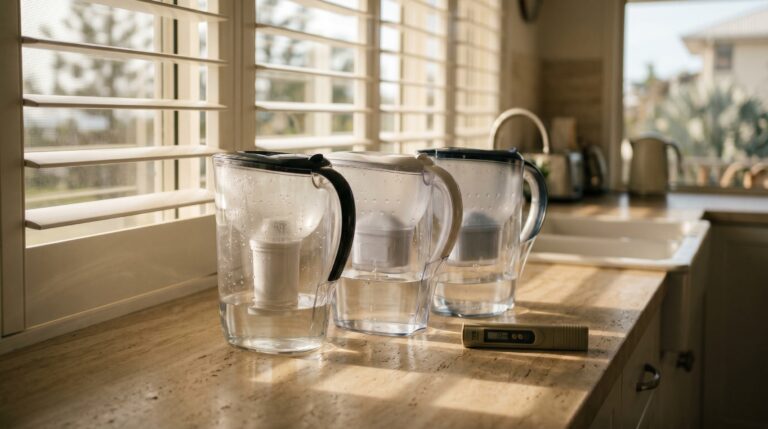
- NSF 42 only (Brita standard pitchers, most supermarket filters): Tests for taste and odour. Does NOT cover lead. These filters have no verified lead removal.
- NSF 53 + 42 (TAPP EcoPro, select certified units): Tests for health contaminants including lead. Certified for greater than 99% lead reduction at the tap.
- NSF 58 (Reverse osmosis systems): RO membrane standard covers lead. Certified for greater than 99% lead reduction.
Where lead actually comes from in Australian homes
Australia does not have lead water pipes. What it does have is lead solder — the material used to join copper pipes at joints and fittings. Lead solder was used extensively in Australian plumbing until a national ban took effect in 2004. Homes built before 2004, and particularly homes built before 1989 when lead solder was still common in standard residential construction, have plumbing that may leach trace lead into water that sits in pipes overnight.
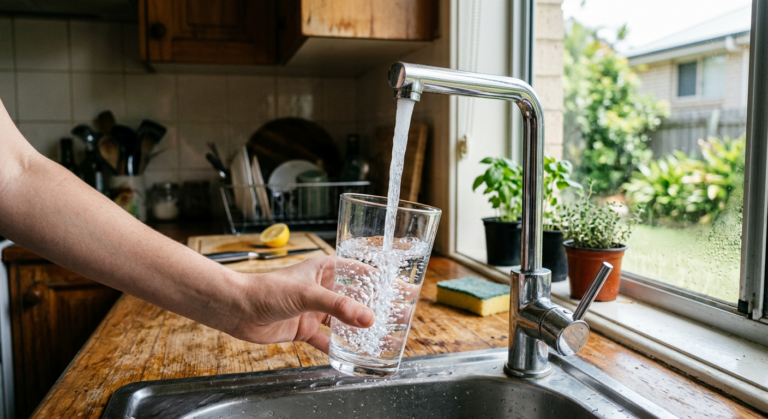
The leaching mechanism: lead dissolves most readily from solder joints and brass fittings when water is soft (low mineral content) and acidic, and when water has been sitting in contact with metal for extended periods — overnight, or during extended absences. NSW Health and similar state health authorities recommend running the cold tap for 30-60 seconds first thing in the morning to flush water that has been in contact with fittings overnight. This is a free and effective first step before considering filtration.
The risk is not uniformly distributed. A house built in 2020 with modern plumbing components has essentially no lead risk. A house built in 1975, with original plumbing and a heavily-used brass tap fitting, has a different risk profile. Getting your water tested by a NATA-accredited laboratory is the only way to know your actual lead level — the ADWG action level is 10 ppb, and many older homes test well below this while still having measurable lead. From our own testing at Palm Beach, QLD (2025): tap TDS 69 ppm, post-RO 3 ppm — a 95.7% reduction across all dissolved contaminants including any trace metals.
Filter technologies that remove lead
| Technology | Lead removal | Certification needed | Notes |
|---|---|---|---|
| Reverse osmosis (RO) | >99% | NSF 58 | Also removes PFAS, fluoride, microplastics, TDS |
| Carbon block (NSF 53 certified) | >99.3% | NSF 42 + 53 (both required) | Retains minerals. No installation required for tap-mount. |
| Standard GAC/pitcher (NSF 42 only) | NOT certified | NSF 42 only = no lead claim | Standard Brita and most supermarket filters. Do not use for lead removal. |
| Whole-house carbon | Varies widely | Must specify NSF 53 for lead | Point-of-entry protects all taps. Point-of-use filters more effective for drinking water specifically. |
Recommended filters for lead removal in Australia
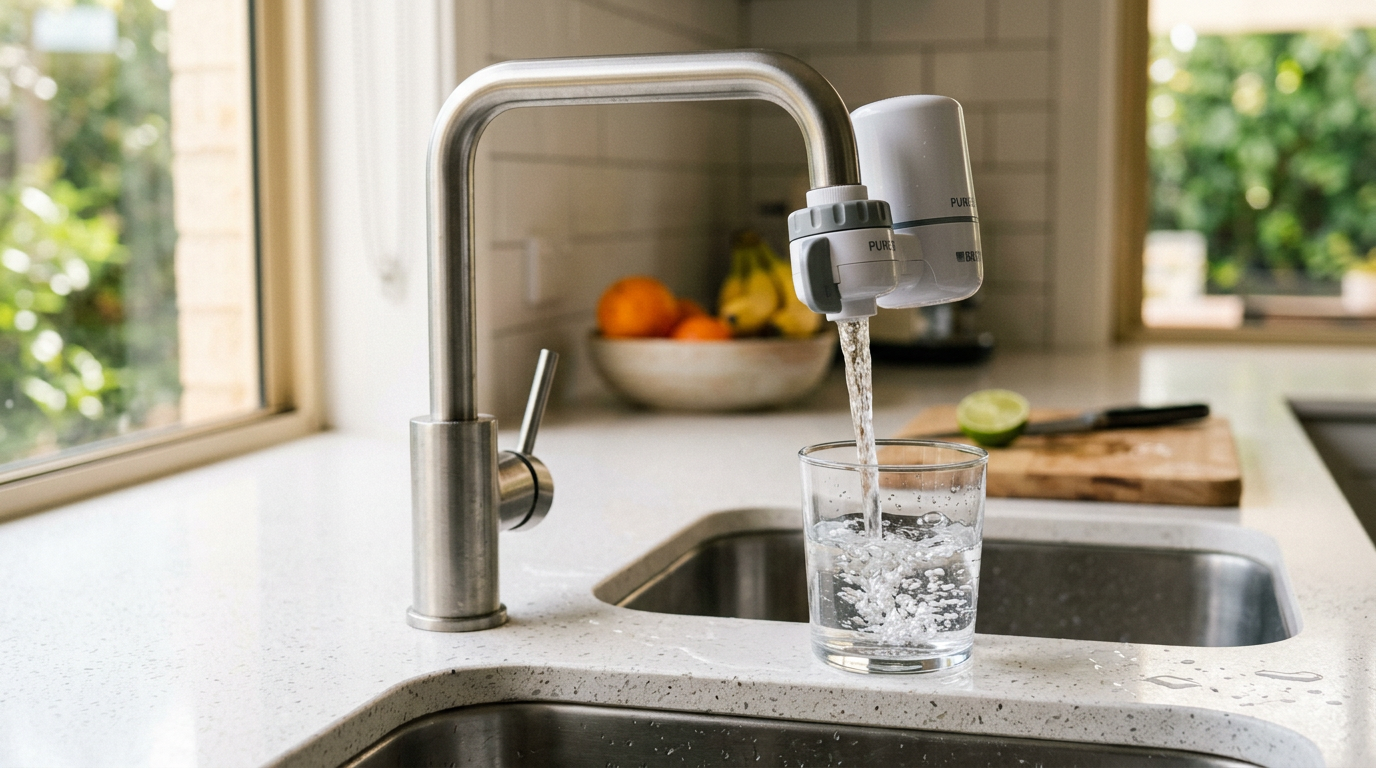
For renters and tap-mount: TAPP EcoPro
NSF 42 + 53 certified. Installs on any standard tap, no plumber required. Removes lead, chloramine, chlorine, and PFAS at the point of use. Carbon block technology at 0.5 micron. For pre-2004 homes where a plumbed-in system is not possible, this is the accessible lead protection option.
TAPP EcoPro — NSF 42 + 53, tap-mount, no installation
See the TAPP EcoPro on Amazon AUFor comprehensive removal: EcoHero 5-Stage RO
NSF 58 certified. Reverse osmosis membrane removes lead at greater than 99%, alongside PFAS, fluoride, microplastics, and all dissolved contaminants. Post-RO output: 3 ppm TDS from a 69 ppm Palm Beach source — 95.7% reduction across all dissolved content. WaterMark certified for Australian plumbing compliance.
EcoHero 5-Stage RO — WaterMark + NSF 58, comprehensive lead removal
See the EcoHero RO SystemConcerned about other contaminants in your water? See our best water filter for microplastics Australia guide or the PFAS in Australian drinking water guide. For a recommendation based on your specific water supply, use the water filter quiz.
Our Top-Rated Water Filters
Reverse osmosis is the only residential technology that reliably removes PFAS, fluoride, chloramine, and heavy metals — the four contaminants most Australians are most exposed to.
Frequently asked questions
Lead in Australian tap water?
Not from lead pipes — from lead solder (used until 2004) and brass fittings in older homes. Pre-2004 homes have highest risk. Flush tap 30-60s in mornings as first step.
Does Brita remove lead?
Standard Brita (NSF 42 only): No. Brita Elite/Longlast (NSF 53): Yes. Always check for NSF 53 lead certification, not just NSF certified.
Best filter for lead in Australia?
EcoHero 5-Stage RO (NSF 58, greater than 99% removal) for comprehensive. TAPP EcoPro (NSF 42+53) for rentals. Both certified. Both verified.
Get the Australian Home Environment Checklist
30 checks across water, air and EMF. Most of them free. Ranked by impact.
No spam. Unsubscribe any time.

Former Royal Australian Navy Clearance Diver and TAG-E counter-terrorism operator. Founded Clean and Native to apply the same rigorous thinking to the home environment.
Full biography →