Canberra Tap Water Quality 2026: Zero PFAS, Softest Capital City, What Icon Water’s Data Shows
Drafted with AI assistance and checked against published specifications and certifications. First-hand measurements appear only where stated. How we make content
Affiliate disclosure: Clean and Native earns a commission if you purchase through links on this page. This does not affect our editorial position — products are recommended based on performance data and certification only.
Canberra’s tap water is the cleanest of any Australian capital city, with zero PFAS detections in 2024, 100% ADWG compliance across 177 parameters, and the softest water at ~43 mg/L CaCO3. Icon Water’s protected Brindabella catchments, UV + chlorine disinfection (not chloramine), and 37,556 annual lab tests make it genuinely safe to drink unfiltered. The catches: fluoride is added at 0.6–0.7 mg/L (deliberate public health measure), and while chlorine is low, taste sensitivity varies by suburb and season.
| Your Priority | What Matters | Verdict |
|---|---|---|
| Taste + fluoride removal | Benchtop RO strips everything | Recommended |
| Budget / chlorine only | Carbon block handles chlorine well | Good alternative |
| Drinking straight from tap | Zero PFAS, soft water, UV treated | Perfectly safe |
Quick answer
The three products we own are measured first-hand by Jayce Love, former Royal Australian Navy Clearance Diver; every other product is assessed on published manufacturer specifications and independent certification using our documented methodology — no gifted units, no brand payments.
Canberra’s tap water, supplied by Icon Water, is among the cleanest of any Australian capital city. The 2024 annual report recorded zero PFAS detections in final treated water, 100% compliance across all 177 tested parameters against ADWG health values, and 37,556 individual test results from a NATA-accredited lab. Hardness is approximately 43 mg/L as CaCO3 — exceptionally soft, the softest of any Australian state or territory capital. Disinfection is UV light plus free chlorine (not chloramine), which is a genuine advantage for filtration. Fluoride is added at approximately 0.6-0.7 mg/L per ACT public health requirements.
Softest capital city
Final treated water
177 parameters
Not chloramine
Most discussions about Canberra’s water begin and end with “it’s fine.” That undersells it. Icon Water’s supply from protected Brindabella Ranges catchments, treated with UV disinfection before chlorine addition, tested across 177 parameters with zero PFAS detections, is by most objective measures the highest-quality major city tap water supply in Australia. This guide covers what the testing data actually shows, what the 2019-20 Black Summer bushfires did to the catchment, why Canberra’s soft water is a meaningful advantage, and what filtration makes sense given this specific supply profile.
Where Canberra’s water comes from
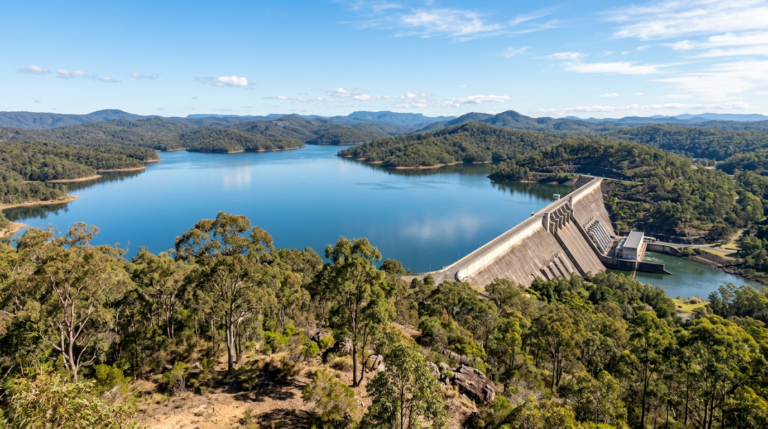
Icon Water — a statutory authority wholly owned by the ACT Government — manages Canberra’s water supply from source to tap. The supply draws from four main dams in the Brindabella Ranges west of the city: Corin Dam and Bendora Dam on the Cotter River system, Cotter Dam (the largest), and Googong Dam on the Queanbeyan River. The dams are supplemented by two aquifer systems — the Namadgi Aquifer in the Tuggeranong Valley and the Jerrabomberra Aquifer in the Molonglo Valley — and by extraction from the Murrumbidgee River during peak demand periods.
The critical quality advantage of Canberra’s catchment: the Brindabella Ranges are predominantly conservation land under Namadgi National Park and ACT nature reserves. There are no industrial activities, no legacy AFFF firefighting foam use, and minimal agricultural activity within the catchment. This is why Icon Water’s PFAS results are so clean — the source water is not exposed to the contamination pathways that affect catchments adjacent to defence bases, airports, and industrial sites elsewhere in Australia.
Water from the Cotter River and Murrumbidgee catchments is treated at Mount Stromlo Water Treatment Plant. Water from Googong Dam is treated at Googong Water Treatment Plant. Both plants supply ACT residents as well as the NSW communities of Queanbeyan, Jerrabomberra, and Googong Township.
What Icon Water’s testing data shows
| Parameter | Canberra level | ADWG guideline | Filtration relevance |
|---|---|---|---|
| Hardness | ~43 mg/L CaCO3 (very soft) | No health guideline | Exceptional. No scale. No softener needed. RO membranes last longer. |
| PFAS | Zero detections (final treated) | Updated June 2025 | Non-issue for Canberra. Conservation catchment, no industrial sources. |
| Disinfection | UV + free chlorine residual | 5 mg/L (health) | Chlorine (not chloramine) — standard carbon filtration removes it. Better than most cities. |
| Fluoride | ~0.6-0.7 mg/L | 1.5 mg/L (health) | Below ADWG limit. RO removes 93%+ if this is a priority. |
| pH | 7.6-8.0 (lime-adjusted) | 6.5-8.5 (aesthetic) | Within range. Lime adjustment post-treatment prevents pipe corrosion. |
| Overall compliance | 100% across 177 parameters | ADWG health values | 37,556 individual test results annually. NATA-accredited lab. |
The UV + chlorine disinfection advantage
Icon Water uses a two-stage disinfection process: ultraviolet (UV) light followed by free chlorine addition. This is a more thorough approach than single-stage chlorination, and crucially it uses free chlorine — not chloramine.
UV disinfection destroys bacteria, viruses, and protozoa at the treatment plant by disrupting their DNA, preventing replication. The subsequent free chlorine addition provides a distribution residual — the small chlorine concentration that remains in the water through the pipe network to prevent microbial regrowth before the water reaches your tap.
Why chlorine not chloramine matters for filtering: Standard activated carbon block filters remove free chlorine effectively. Chloramine — used by Sydney Water in large parts of the network and parts of Adelaide and Melbourne — requires catalytic carbon or much longer contact time. Canberra residents can use any NSF 42-certified carbon block filter and achieve effective chlorine removal. No specialised filter designed for chloramine is required.
PFAS: why Canberra is genuinely different
The ABS confirmed in May 2025 that PFAS was found in the blood of 85% of Australians from cumulative exposure sources. Cities like Newcastle, Geelong, and large parts of NSW have documented PFAS detections in their water supply networks due to proximity to RAAF bases and industrial AFFF use sites.
Canberra is genuinely different. Icon Water has recorded zero PFAS detections in final treated water at either the Stromlo or Googong Water Treatment Plants. Testing has been conducted since 2016 for source water and since 2024 for final treated water, by a NATA-accredited laboratory capable of detecting concentrations equivalent to one drop in ten Olympic swimming pools of water. The reason is structural: Canberra’s catchments are predominantly Namadgi National Park — conservation land with no defence bases, no legacy AFFF firefighting training, and minimal industrial activity that generates PFAS compounds.
This does not mean PFAS exposure is zero for Canberra residents — the ABS data shows most Australians have measurable PFAS from food packaging, non-stick cookware, and other household products. But drinking water is not a meaningful PFAS source for Canberra households, unlike for residents near Williamtown, Oakey, Katherine, or Fiskville. For context on the national PFAS situation, see our comprehensive guide to PFAS in Australian drinking water.
The 2019-20 Black Summer bushfires and catchment recovery
The Black Summer bushfires of 2019-20 burned approximately 80% of the ACT’s Namadgi National Park, including large portions of Canberra’s water catchment. The immediate water quality impact was significant: ash, sediment, dissolved organic carbon, and nutrients flooded into the dam systems following rainfall on burnt catchment areas. Icon Water responded by enhancing treatment protocols, increasing monitoring frequency, and adjusting coagulant dosing to manage the elevated turbidity and organic load.
By 2024, Icon Water’s water quality report confirmed full recovery to pre-fire compliance levels. The catchment revegetation has progressed substantially. However, long-term recovery of mountain ash and sub-alpine vegetation communities is measured in decades, and ongoing monitoring of dissolved organic carbon and natural organic matter — which react with chlorine to form disinfection byproducts (trihalomethanes) — remains part of Icon Water’s enhanced post-fire protocols.
The practical relevance for filtration: in the years immediately following a major catchment fire, elevated organic load can increase chlorine taste and odour compounds as the utility maintains sufficient disinfection. Activated carbon filtration at the point of use is the most effective household response to elevated disinfection byproduct taste and odour.
Canberra’s soft water — what it actually means
At approximately 43 mg/L as CaCO3, Canberra’s water is the softest of any Australian capital city. For comparison: Perth runs 121-180 mg/L (very hard), Adelaide 100-150 mg/L (hard), Geelong 130 mg/L (moderate-hard), Newcastle 77 mg/L (moderate-soft), Sydney 50-80 mg/L (soft). Canberra at 43 mg/L is genuinely very soft — approaching rainwater mineral content.
Practical consequences of very soft water: virtually no scale formation on kettle elements, shower screens, hot water systems, or dishwasher heating elements. Soap lathers easily and rinses completely. Appliances have extended lifespans with less maintenance. For households that install water filtration, soft water is also beneficial — RO membranes face less mineral fouling and last longer between replacements.
The one consideration with very soft water: it is slightly more corrosive to plumbing than moderately hard water, which is why Icon Water adjusts pH upward with lime post-treatment. The lime addition slightly increases hardness from the near-zero level in the dam catchments, bringing it to the approximately 43 mg/L measured at taps.
How Canberra compares to other Australian capitals
| City | Hardness | Disinfection | PFAS (final treated) | Filter priority |
|---|---|---|---|---|
| Canberra | ~43 (very soft) | UV + chlorine | Zero detections | Carbon for taste. RO for fluoride. |
| Newcastle | ~77 (soft) | Chlorine | Low-level detections | Carbon for MIB taste. RO for PFAS. |
| Sydney (most zones) | ~50-80 (soft) | Chloramine | Blue Mountains issue | Catalytic carbon required. RO for PFAS. |
| Melbourne (metro) | ~20-50 (very soft) | Chloramine (most) | Generally low | Catalytic carbon for chloramine removal. |
| Perth | 121-180 (hard) | Chlorine | Generally low | RO for hardness + TDS. Scale is the main issue. |
| Adelaide | ~100-150 (hard) | Chlorine | Generally low | RO for hardness, Murray River taste, TDS. |
What filtration makes sense for Canberra
Given Canberra’s supply profile — very soft, zero PFAS, free chlorine disinfection, high compliance rate — the filtration case is different from most Australian cities. You are not filtering out a serious contaminant problem. You are optimising an already high-quality supply for taste, specific compound removal preferences, or catchment event resilience.
Primary concern: chlorine taste and post-fire organics
An NSF 42-certified activated carbon block filter removes free chlorine, taste compounds, and dissolved organics (including disinfection byproduct precursors that can increase after catchment fire events). Canberra uses free chlorine — standard carbon is fully effective, no catalytic carbon required.
Recommended: TAPP EcoPro — NSF 42 + 53, installs on any standard tap
Comprehensive: fluoride removal and full dissolved contaminant reduction
A 5-stage reverse osmosis system removes fluoride (93.6%), chlorine, all dissolved minerals, and anything else present in the supply. Canberra’s soft water means RO membranes face minimal scaling and last longer. If fluoride removal is the priority, RO is the only effective technology.
Recommended: EcoHero 5-Stage RO — WaterMark + NSF 58 certified
See the EcoHero RO System →Not sure which option suits your situation? Answer four questions about your main concern, setup, and budget at our water filter recommendation quiz, or see the full breakdown of all Australian-market filter options in our best water filters Australia guide.
Frequently asked questions
Is Canberra tap water safe to drink?
Yes. Icon Water’s 2024 annual report recorded 100% compliance across all 177 tested parameters against ADWG health values, from 37,556 individual test results by a NATA-accredited laboratory. Zero PFAS detections were recorded in final treated water. Canberra’s tap water is among the highest quality of any Australian capital city.
Does Canberra water have PFAS?
No. Icon Water has recorded zero PFAS detections in final treated water at both the Stromlo and Googong Water Treatment Plants. This is confirmed by NATA-accredited laboratory testing capable of detecting concentrations equivalent to one drop in ten Olympic swimming pools of water. Canberra’s catchments are predominantly Namadgi National Park conservation land, with no defence bases or industrial AFFF sources that generate PFAS contamination in other Australian cities.
Is Canberra water hard or soft?
Canberra water is very soft at approximately 43 mg/L as CaCO3 — the softest of any Australian capital city. This means virtually no scale on appliances, easy soap lathering, and extended appliance lifespans. No water softener is needed. For households with water filtration systems, soft water also reduces mineral fouling of filters and membranes.
What disinfection method?
UV light + free chlorine (not chloramine). Standard carbon filters are fully effective — no need for specialised catalytic carbon.
Is Canberra tap water safe to drink?
Yes. Icon Water's 2024 annual report recorded 100% compliance across all 177 tested parameters against ADWG health values, from 37,556 individual test results by a NATA-accredited laboratory. Zero PFAS detections were recorded in final treated water. Canberra's tap water is among the highest quality of any Australian capital city.
Does Canberra water have PFAS?
No. Icon Water has recorded zero PFAS detections in final treated water at both the Stromlo and Googong Water Treatment Plants. This is confirmed by NATA-accredited laboratory testing capable of detecting concentrations equivalent to one drop in ten Olympic swimming pools of water. Canberra's catchments are predominantly Namadgi National Park conservation land, with no defence bases or industrial AFFF sources that generate PFAS contamination in other Australian cities.
Is Canberra water hard or soft?
Canberra water is very soft at approximately 43 mg/L as CaCO3 -- the softest of any Australian capital city. This means virtually no scale on appliances, easy soap lathering, and extended appliance lifespans. No water softener is needed. For households with water filtration systems, soft water also reduces mineral fouling of filters and membranes.
What disinfection does Icon Water use?
Icon Water uses a two-stage process: UV (ultraviolet) light disinfection at the treatment plant followed by free chlorine addition for distribution residual. This is not chloramine -- it is free chlorine. Standard activated carbon block filters remove free chlorine effectively, whereas chloramine (used in parts of Sydney, Melbourne, and Adelaide) requires catalytic carbon or much longer contact time.
What is the best water filter for Canberra?
For chlorine taste and odour removal: an NSF 42-certified carbon block filter (such as TAPP EcoPro) is fully effective on Canberra's free chlorine supply. For fluoride removal or comprehensive filtration: a 5-stage reverse osmosis system (such as the EcoHero, WaterMark and NSF 58 certified) removes fluoride at 93.6%, all dissolved minerals, and any trace contaminants. Canberra's soft water means RO membranes last longer with less mineral fouling.
Is Canberra tap water soft enough that I don't need a water softener?
Yes. At 43 mg/L as CaCO3 (Icon Water 2024 annual report), Canberra's water is classified as soft — the softest of any state or territory capital (ADWG threshold: <60 mg/L soft). A softener adds cost and sodium without benefit here. A basic sediment + carbon filter handles chlorine taste; RO handles any residual trace metals if desired.
Why does Canberra use UV disinfection instead of chloramine like other cities?
Icon Water treats with UV light before adding free chlorine — not chloramine. UV is more effective against some Giardia and Cryptosporidium cysts that survive chlorine alone (ADWG). Free chlorine is also simpler to remove with carbon filtration than chloramine, making point-of-use filters more effective for taste/odour reduction.
What does ADWG compliance across 177 parameters actually mean for my health?
Icon Water tested 37,556 individual samples against 177 ADWG health values in 2024, with zero PFAS detections in final treated water and zero exceedances across all tested parameters (Icon Water 2024 annual report). ADWG sets limits on contaminants linked to cancer, organ damage, and developmental harm. Compliance means your tap water passed all safety thresholds; additional filtration is optional, not medically required.
Get the Australian Home Environment Checklist
30 checks across water, air and EMF. Most of them free. Ranked by impact.
No spam. Unsubscribe any time.

Former Royal Australian Navy Clearance Diver and TAG-E counter-terrorism operator. Founded Clean and Native to apply the same rigorous thinking to the home environment.
Full biography →