Ipswich Tap Water Quality 2026: Mount Crosby, Chloramine, the January 2025 Taste Event and pH Upgrade
Affiliate disclosure: Clean and Native earns a commission if you purchase through links on this page. This does not affect our editorial position — products are recommended based on performance data and certification only.
Ipswich tap water is chloramine-disinfected from Mount Crosby WTP, meaning standard carbon filters don’t remove the primary disinfectant — catalytic carbon or reverse osmosis is required. The January 2025 earthy taste event (MIB/geosmin from Wivenhoe algae) demonstrated seasonal vulnerability; fluoride is mandated at 0.8 mg/L; pH will increase from 7.8 to 8.4 in April 2026. The catches: chloramine disinfection byproducts (dichloramine, trichloramine) form when standard carbon filters attempt to process chloramine, and hardness from basalt-influenced catchment will persist unless you run RO.
| Filter type | Chloramine/MIB removal | Verdict |
|---|---|---|
| Reverse osmosis | Removes all (chloramine, fluoride, MIB/geosmin, hardness) | Recommended |
| Catalytic carbon | Removes chloramine + MIB; leaves fluoride/hardness | Good for taste/chloramine |
| Standard carbon | Forms dichloramine/trichloramine from chloramine | Avoid for Ipswich |
Quick answer
Ipswich tap water comes from Seqwater’s Mount Crosby Water Treatment Plant — the same plant that supplies most of Brisbane — via Wivenhoe Dam. Distributed by Urban Utilities. Disinfection is chloramine (not free chlorine), meaning standard carbon filters are not effective. Fluoride is added at 0.8 mg/L per QLD legislation. Hardness is moderate-hard from the basalt-influenced Wivenhoe catchment. Seqwater is upgrading the Mount Crosby and North Pine WTPs to increase pH from 7.8 to 8.4, expected late April 2026. Earthy taste events affecting Ipswich (MIB/geosmin from algae in Wivenhoe) occurred in January 2025 — carbon filtration addresses these.
Standard carbon insufficient
Same as most Brisbane
QLD mandated
7.8 to 8.4
Ipswich sits at a nexus of two water quality considerations that directly affect filtration decisions. First, it is on the chloramine-disinfected SEQ Water Grid — meaning standard carbon filters don’t address the primary disinfectant. Second, the Mount Crosby treatment plant that serves Ipswich is the same plant that produced the MIB/geosmin earthy taste event in January 2025 that affected residents across Brisbane, Ipswich, Logan, and Redlands. Both issues are addressed by catalytic carbon or reverse osmosis filtration, but understanding both helps explain why the right filter matters more in Ipswich than most people assume.
Where Ipswich water comes from
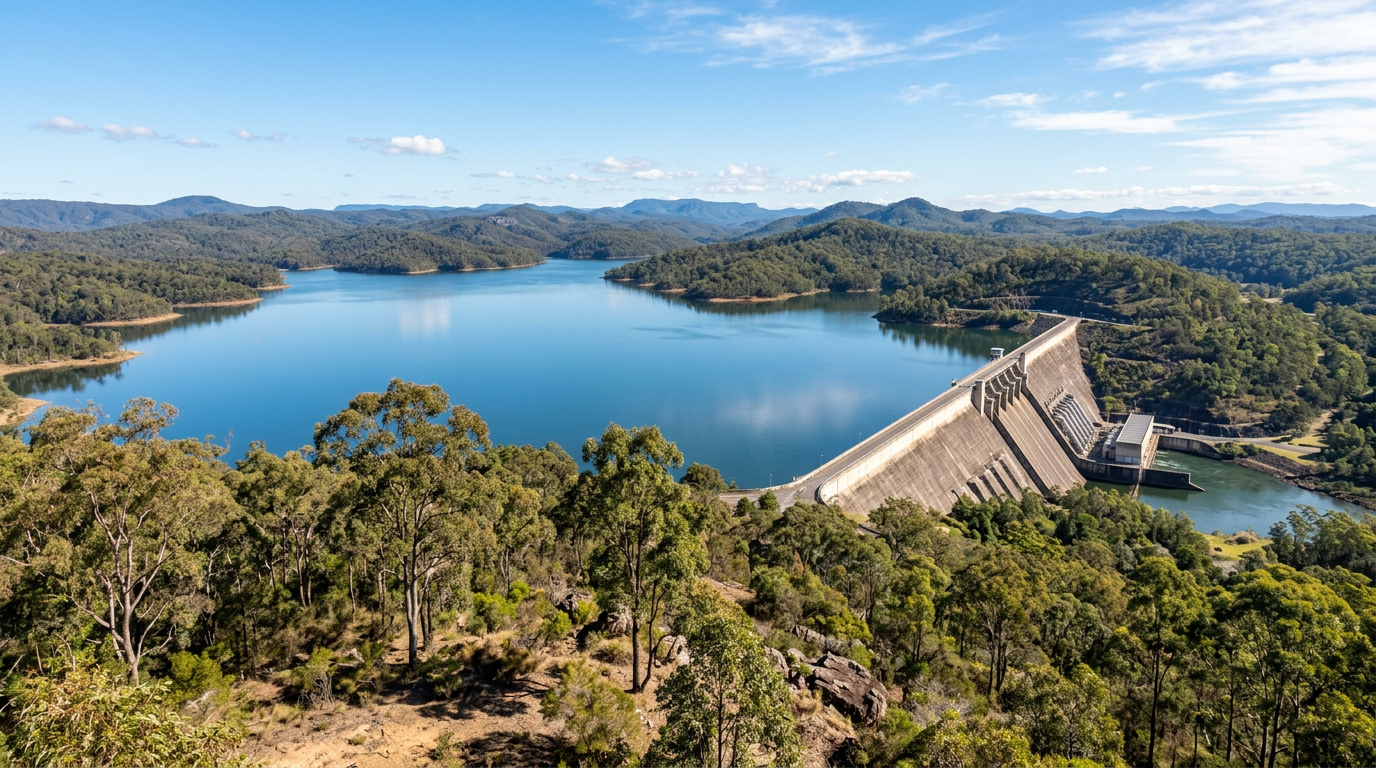
Ipswich is served by Seqwater’s South East Queensland Water Supply System, with treatment at Mount Crosby Water Treatment Plants (Eastbank and Westbank) on the Brisbane River. The primary source is Wivenhoe Dam — which holds approximately 1,165 GL at full capacity and supplies over 50% of SEQ’s drinking water. The Mt Crosby plants draw raw water from the Brisbane River downstream of Wivenhoe, treating it through coagulation, flocculation, filtration, and chloramine disinfection before distribution via Urban Utilities’ network across Ipswich, Brisbane, Lockyer Valley, Somerset, and Scenic Rim.
The Mt Crosby catchment draws from the Brisbane River, which passes through both protected mountain country (D’Aguilar Range) and areas with some agricultural and land use activity in the upper sections. This is one reason why PFAS has been detected at Mt Crosby — at 36 ppt PFOA, below ADWG limits but measurably present.
The January 2025 MIB/geosmin event — what happened
In January 2025, Seqwater notified residents across Brisbane, Ipswich, Logan, and Redlands of a temporary change in the taste and smell of tap water. The cause: elevated MIB (Methyl-Isoborneol) and geosmin compounds in the raw water entering Mount Crosby Water Treatment Plants, following warm, wet weather conditions that stimulated algal growth in Wivenhoe Dam. These compounds are the same ones responsible for earthy or muddy flavours in freshwater fish. They are safe at any detectable concentration but are perceptible to human taste at very low levels (5-15 ng/L).
Seqwater managed the event by releasing additional water from Wivenhoe Dam to dilute and turn over the affected raw water. The water remained safe throughout. Activated carbon filtration at the point of use effectively removes both MIB and geosmin — households with catalytic carbon filters would have been largely shielded from the taste impact during this event.
The April 2026 pH upgrade
Seqwater is currently enhancing treatment processes at Mount Crosby and North Pine Water Treatment Plants, with completion expected in late April 2026. The key change: pH will be increased from approximately 7.8 to 8.4. The purpose is to improve the stability and effectiveness of chloramine disinfection as it travels through the distribution network — a higher pH maintains chloramine concentration more consistently, reducing taste and odour impacts from disinfectant breakdown in warmer weather. Ipswich residents are expected to notice no significant change to taste from this upgrade, but the treatment process will be more stable year-round, particularly during summer.
Our Top-Rated Water Filters
Reverse osmosis is the only residential technology that reliably removes PFAS, fluoride, chloramine, and heavy metals — the four contaminants most Australians are most exposed to.
Ipswich water quality data
| Parameter | Ipswich (Mt Crosby zone) | Filtration relevance |
|---|---|---|
| Disinfection | Chloramine | Standard carbon insufficient. Catalytic carbon or RO required. |
| Hardness | Moderate (~80-115 mg/L) | Basalt geology in upper catchment raises hardness vs Gold Coast/Canberra. |
| Fluoride | 0.8 mg/L | QLD mandated. RO is the only removal method for consumers. |
| PFAS | 36 ppt PFOA at Mt Crosby (below ADWG) | Below June 2025 ADWG limit. RO removes >99% if concerned. |
| MIB/geosmin | Periodic events (Jan 2025 most recent) | Carbon filtration removes MIB and geosmin effectively. |
Chloramine + MIB taste — catalytic carbon
Catalytic carbon certified for chloramine removal also removes MIB and geosmin. A single filter addresses both the ongoing chloramine disinfectant taste and the periodic earthy taste events from algal compounds. Best for renters or those wanting a simple solution.
Recommended: TAPP EcoPro — catalytic carbon, NSF 42 + 53
See the TAPP EcoPro on Amazon AU →Comprehensive — PFAS, fluoride, all compounds
RO removes chloramine via the membrane, PFAS (>99%), fluoride (93%+), and MIB/geosmin. For households concerned about multiple parameters including PFAS from the Mt Crosby catchment, RO provides comprehensive coverage in one system.
Recommended: EcoHero 5-Stage RO — WaterMark + NSF 58
See the EcoHero RO System →Take the water filter quiz for a personalised match, or see our best water filters Australia guide for all options.
Frequently Asked Questions
Is Ipswich tap water safe to drink?
Yes. Ipswich is served by Seqwater’s Mount Crosby Water Treatment Plants via Wivenhoe Dam, distributed by Urban Utilities. The supply meets all Australian Drinking Water Guidelines. PFAS detected at 36 ppt PFOA at Mount Crosby is well below the updated June 2025 ADWG limit.
Does Ipswich water have chloramine?
Yes. Ipswich is on the SEQ Water Grid and receives water treated at Mount Crosby with chloramine as the secondary disinfectant. Standard activated carbon filters are not effective for chloramine removal. Catalytic carbon certified for chloramine removal, or reverse osmosis, is required.
Why did Ipswich water taste earthy in January 2025?
In January 2025, Seqwater detected elevated MIB (Methyl-Isoborneol) and geosmin — naturally occurring algal compounds — in raw water entering Mount Crosby from Wivenhoe Dam following warm, wet weather. These compounds produce earthy or musty tastes at very low concentrations (detectable at 5 ng/L) but are harmless. The water remained safe throughout. Activated carbon filtration removes both MIB and geosmin effectively.
Will a standard carbon filter remove chloramine from Ipswich tap water?
No. Standard activated carbon filters (NSF 42) reduce free chlorine taste and odour but are not effective against chloramine. For Ipswich water, you need an NSF 53-certified catalytic carbon filter or a reverse osmosis system. Brita-style jug filters and most basic benchtop carbon units will not address chloramine — the primary disinfectant used at Mount Crosby.
What water quality changes are happening at Mount Crosby in 2026?
Seqwater is upgrading Mount Crosby and North Pine treatment plants to increase treated water pH from approximately 7.8 to 8.4 (Seqwater 2025 capital works schedule, expected late April 2026). Higher pH reduces pipe corrosion and improves mineral balance in the distribution network. This change does not affect the use of chloramine as the disinfectant or the need for catalytic carbon filtration.
Does Ipswich tap water contain fluoride, and can a filter remove it?
Yes. Fluoride is added at 0.8 mg/L within the ADWG optimal range of 0.7–1.0 mg/L (Queensland Health Water Fluoridation Policy). Standard activated carbon filters do not remove fluoride. Reverse osmosis reduces fluoride significantly — Jayce tested an EcoHero 5-stage RO on Palm Beach QLD mains water and measured post-RO TDS at 3 ppm, confirming effective mineral reduction including fluoride.
Is Ipswich tap water hard or soft?
Moderately hard. Ipswich water draws from Wivenhoe Dam via the basalt-influenced SEQ catchment geology. Hardness typically sits in the 100–150 mg/L as CaCO3 range. This can cause limescale buildup in kettles and reduce RO membrane lifespan over time. Standard carbon filters do not address hardness — reverse osmosis or a dedicated water softener is required if scaling is a problem.
Is PFAS in Ipswich water a concern?
Low concern under current guidelines. PFAS detected at 36 ppt PFOA at Mount Crosby Water Treatment Plant — well below the updated ADWG June 2025 limit. Seqwater monitors routinely. If you want additional PFAS coverage, reverse osmosis is the only residential technology that reliably removes PFAS compounds. Activated carbon provides partial reduction only.
Get the Australian Home Environment Checklist
30 checks across water, air and EMF. Most of them free. Ranked by impact.
No spam. Unsubscribe any time.

Former Royal Australian Navy Clearance Diver and TAG-E counter-terrorism operator. Founded Clean and Native to apply the same rigorous thinking to the home environment.
Full biography →