EMF Phone Case for Kids: What Australian Parents Need to Know (2026)
An EMF phone case designed for children redirects a portion of radiofrequency (RF) energy away from the head and body during active calls, but it is not the highest-impact step you can take — speakerphone, air-tube headsets, and keeping the phone out of the bedroom at night each reduce exposure more effectively than any case alone. If you want to apply the precautionary principle for your child’s phone use, the most effective approach combines a tested shielding product with behavioural changes that ARPANSA already recommends.
The three products we own are measured first-hand by Jayce Love, former Royal Australian Navy Clearance Diver; every other product is assessed on published manufacturer specifications and independent certification using our documented methodology — no gifted units, no brand payments.
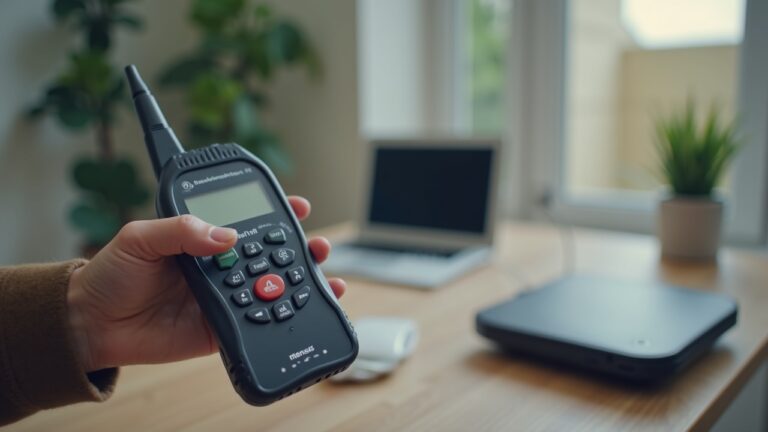
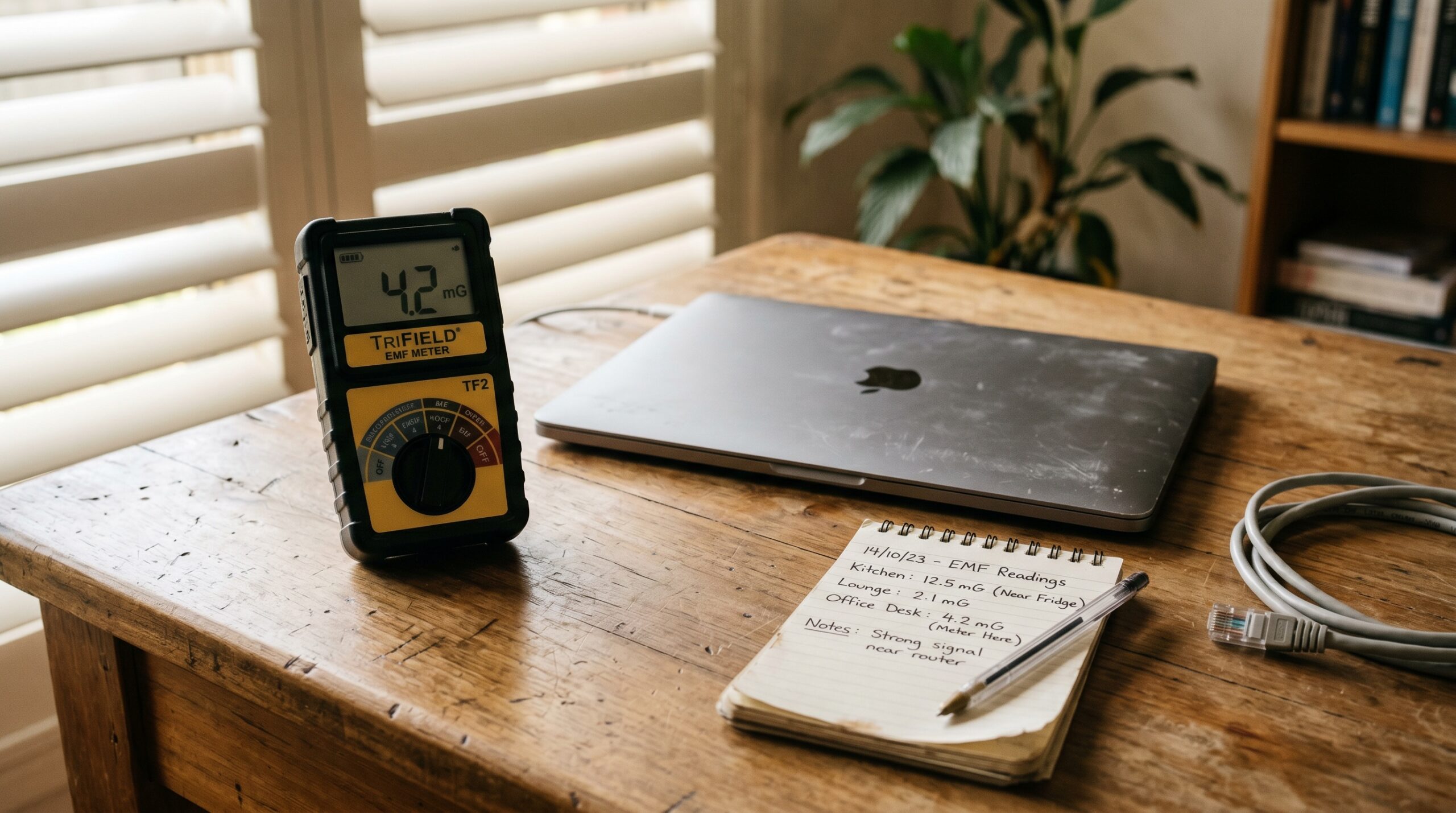
I’m Jayce Love, a former Royal Australian Navy Clearance Diver based in Palm Beach, QLD. I measure RF emissions first-hand with a TriField TF2 meter. When parents ask me what to buy first, I don’t start with a case — I start with what ARPANSA, the WHO, and the actual physics of RF exposure tell us. This article gives you the complete picture: what the research says, what works, what doesn’t, and the exact order of interventions that matter most for Australian kids.
Quick Verdict
The most effective EMF intervention for kids is not a case — it is distance and behaviour. A faraday pouch blocks all signal completely (use during sleep, in the car, during downtime). A shielded wallet case reduces ear-side exposure during calls but provides no protection when the phone is on the body or in a backpack. For Australian families, start with three steps: Wi-Fi off at night, speakerphone for calls, and a faraday pouch during sleep. Sticker products and back-cover-only cases do nothing measurable.
What the Research Actually Says About Children and RF Exposure (2026)
Your child’s smartphone emits radiofrequency electromagnetic fields every time it connects to a mobile tower, sends a message, or loads a video. The question every Australian parent asks — “Is this harming my child?” — does not have a simple yes or no answer. Here is what the key authorities actually state, without exaggeration in either direction.
The WHO IARC Classification
In 2011, the International Agency for Research on Cancer (IARC), part of the World Health Organization, classified radiofrequency electromagnetic fields as Group 2B — “possibly carcinogenic to humans”. This is the same category as pickled vegetables and talc-based body powder. It means there is limited evidence suggesting a possible association, but the evidence is not sufficient to establish a causal link. The 2024 WHO-commissioned systematic review of RF and health outcomes reaffirmed this classification, noting that the overall body of evidence remains insufficient to change the classification upward or downward.
What this means practically: the WHO is not saying phones cause cancer. It is saying the question has not been definitively closed, and more research is warranted. For parents, this is the space where the precautionary principle operates.
Why Children Are Mentioned Separately
Both the WHO and ARPANSA note that children may warrant additional consideration for RF exposure. The reasoning is anatomical and developmental, not based on proven harm. Children’s skulls are thinner than adults’ — a 2012 study by Fernández-Rodriguez et al. in Physics in Medicine & Biology found that electromagnetic energy deposition in a child’s head model was higher per unit volume than in an adult model at equivalent SAR (Specific Absorption Rate) levels. Developing nervous systems are also cited as a reason for caution, not because damage has been demonstrated, but because the biological systems are still maturing.
ARPANSA states this clearly in their guidance: “Parents can reduce their children’s exposure to electromagnetic energy from mobile phones by limiting call time, using hands-free devices and encouraging text messaging.” Note the language — “can reduce exposure,” not “must reduce to avoid harm.” This is precautionary advice, not an emergency warning.
SAR Limits in Australia
Every phone sold in Australia must comply with the ARPANSA Radiation Protection Standard (RPS3), which limits SAR to 2.0 W/kg averaged over 10g of tissue. This standard is based on thermal effects — the point at which RF energy heats tissue. All phones sold through Australian carriers are tested and certified to fall below this limit. The debate around children is whether sub-thermal, long-term effects exist at levels below this standard. As of 2026, no study has conclusively demonstrated such effects.
The Australian Context: ARPANSA Guidance, School Phone Bans, and What This Means for You
If you’re an Australian parent, you’re operating in a specific regulatory and cultural environment. Understanding it helps you make proportionate decisions rather than panicked ones.
ARPANSA’s Specific Recommendations for Children
ARPANSA’s fact sheet on mobile phones and children recommends three practical steps:
- Limit call duration — shorter calls mean less cumulative exposure
- Use hands-free options — speakerphone or a wired/air-tube headset moves the antenna away from the head
- Encourage texting over calling — the phone is held away from the head during texts
Notice that ARPANSA does not recommend EMF phone cases, shielding products, or any specific consumer product. They recommend distance and reduced use time. This is important because it tells you where the biggest exposure reductions actually come from — and it’s not from a case.
School Phone Bans Across Australia
As of 2026, most Australian states and territories have implemented some form of mobile phone restriction in schools. Victoria, NSW, South Australia, Western Australia, and Tasmania all have bans or significant restrictions on phone use during school hours. Queensland restricts phone use during class time. These bans were primarily motivated by educational and social concerns — distraction, cyberbullying, and classroom disruption — not EMF exposure. However, as a practical matter, a phone in a bag with the screen off emits far less RF than a phone actively streaming video or on a call. School bans inadvertently reduce daily RF exposure during school hours.
For parents, the implication is clear: the hours your child is most likely to accumulate phone-related RF exposure are after school and during the night. If you’re going to intervene, focus your effort there.
What “Precautionary Principle” Actually Means
The precautionary principle does not mean “assume the worst.” It means: where scientific uncertainty exists about a potential risk, take proportionate steps to reduce exposure while waiting for better evidence. For children and phones, proportionate steps look like distance (speakerphone, headset), time limits (less screen time), and nighttime removal (phone charges outside the bedroom). An EMF shielding case or pouch adds another layer, but it sits below those behavioural changes in terms of impact.
Best EMF Shielding Options for Children’s Phones
Here’s the practical problem most parents hit: EMF phone cases are designed for adult phones. Your 10-year-old’s hand-me-down iPhone SE doesn’t fit a case designed for an iPhone 15 Pro Max. And if your child has a smaller or older device, case options narrow dramatically. This is why I recommend starting with a universal shielding pouch rather than a model-specific case.
Radia Smart Cell Phone Faraday Bag — Best Universal Option
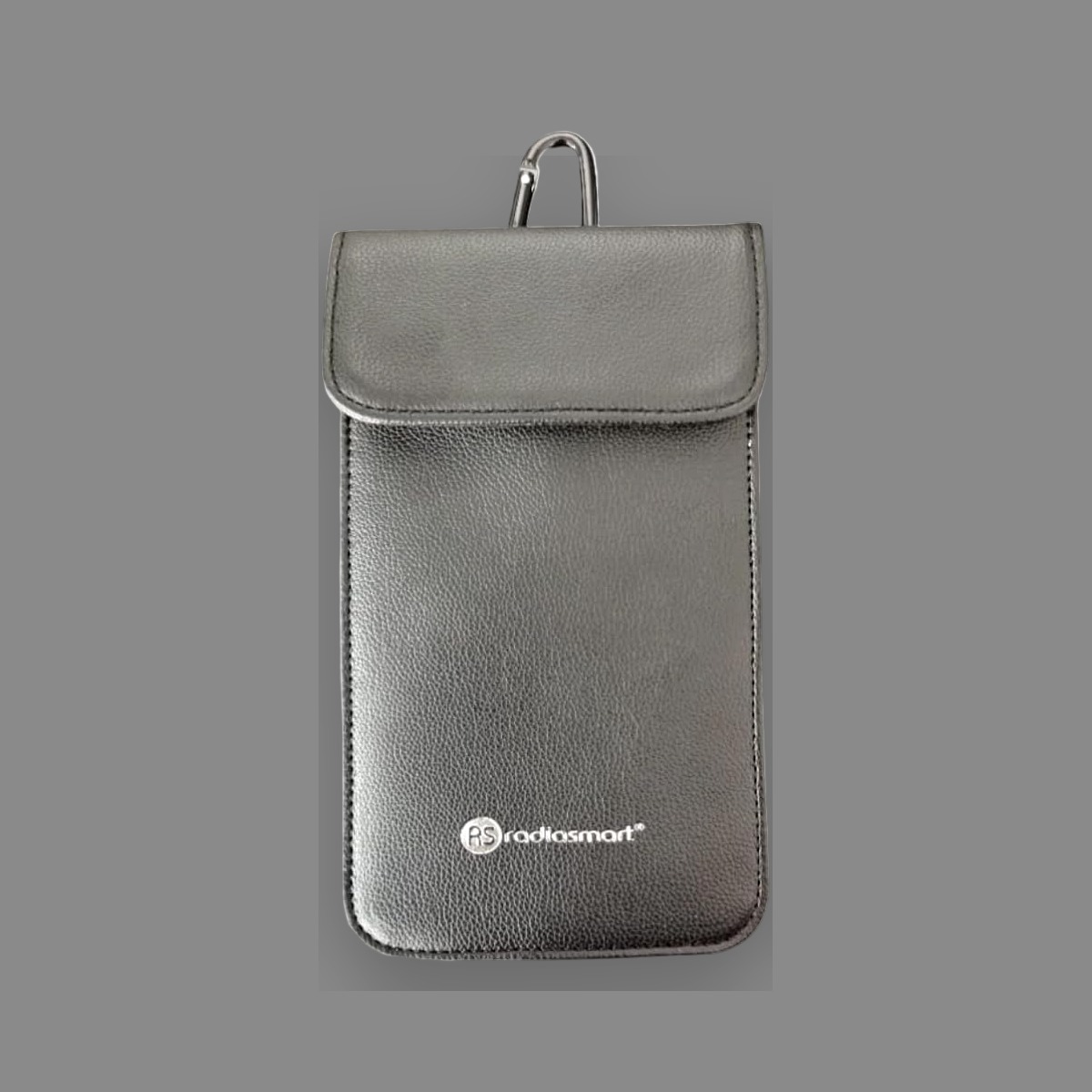
The Radia Smart EMF Radiation Blocking Phone Pouch is a Faraday-style pouch that fits any phone. When the phone is slid inside, the shielding fabric blocks RF signals from transmitting. This makes it ideal for children in two scenarios: carrying the phone in a pocket or bag (where body-proximity exposure accumulates), and storing it at night (the phone effectively goes into airplane mode inside the pouch without the child needing to remember to toggle the setting).
A properly constructed Faraday pouch is designed to block RF signals from transmitting, and shielding brands such as Radia Smart and DefenderShield publish attenuation data for their enclosures. The catch: the phone cannot receive calls or messages while fully enclosed. For a child who carries a phone for safety (so parents can reach them), this means the pouch is a storage solution, not a “use the phone through the pouch” solution.
Price: Approximately $49-69 AUD from Radia Smart Australia. Ships domestically.
SafeSleeve EMF Phone Case — If Available in Your Child’s Phone Size
SafeSleeve produces flip-style phone cases with shielding material in the front flap. When the flap is closed between the phone and the user’s body, it reduces RF exposure on that side. The advantage over a pouch is that the phone remains functional — calls, texts, and data still work. The shielding only covers the body-facing side when the flap is closed.
The limitation for kids: SafeSleeve cases are model-specific and primarily designed for current-generation adult flagship phones (iPhone 15/16 series, Samsung Galaxy S series). If your child has a smaller phone, an older model, or a budget device like an Oppo A-series, there may not be a SafeSleeve available. Check the SafeSleeve range on Amazon AU before purchasing. When a compatible model exists, the case provides a meaningful reduction in body-side RF during pocket carry.
DefenderShield Universal Pouch — Best for School Bags and Independent Kids
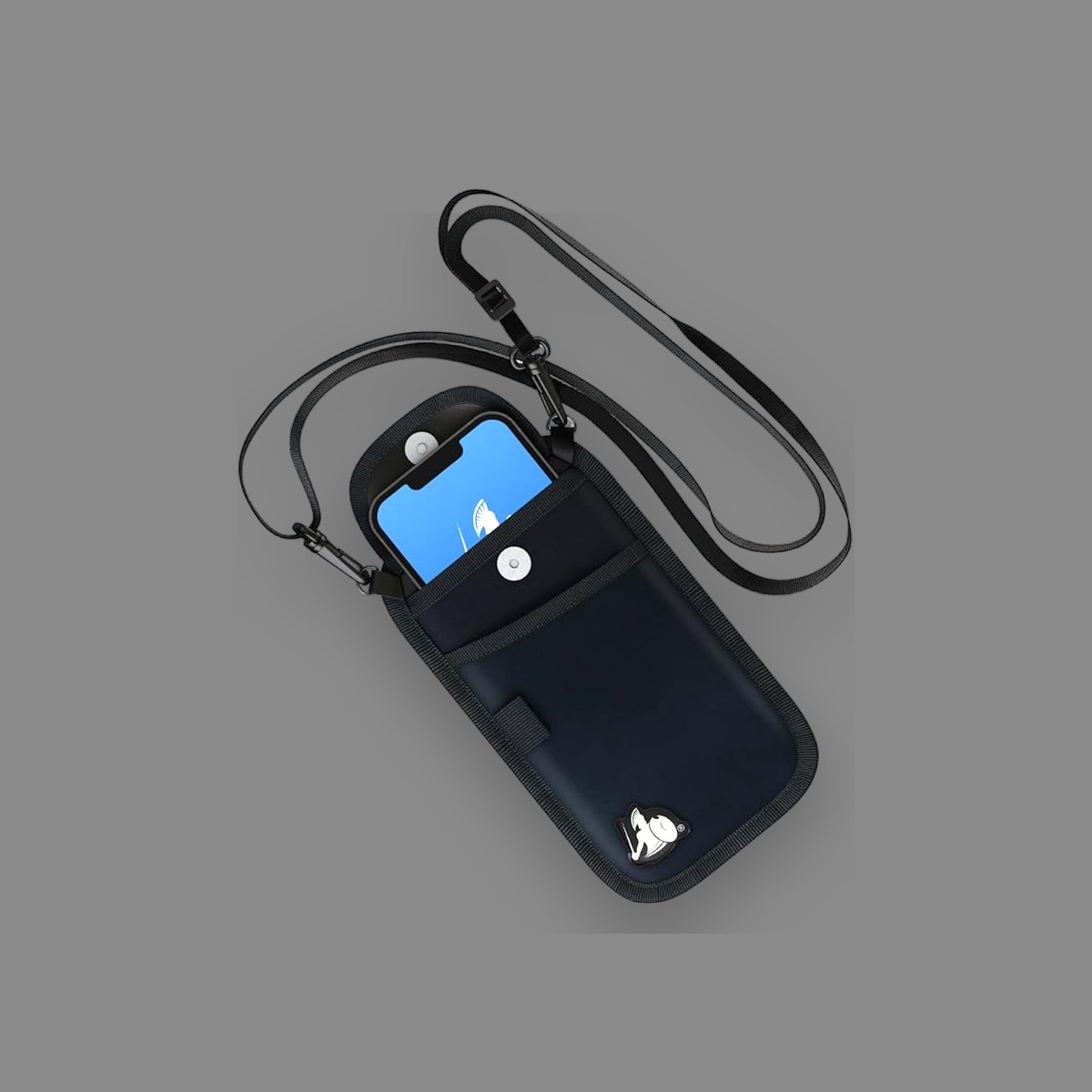
The DefenderShield Universal Pouch sits between a full faraday pouch and a flip-case. It is a shielded, lanyard-equipped pouch with a transparent front window that lets the screen remain visible while the phone is inside. Phones in the pouch lose mobile signal and Wi-Fi connectivity completely — the pouch is a true RF enclosure when the closure is sealed. DefenderShield publishes lab-tested RF attenuation data on their site, which is the EEAT bar I require before recommending a shielding product.
For kids and tweens specifically, the DefenderShield Universal Pouch solves a real-world problem: the school bag. A pouch with a lanyard can be clipped to the bag, worn cross-body, or thrown in a side pocket — the phone stays accessible visually but stays signal-isolated until removed for use. Compared to the Radia Smart Faraday Bag (the universal best pick for sleep use), the DefenderShield has a slightly more refined finish and the transparent screen window for at-a-glance status checks. The trade-off is price — the DefenderShield sits at the higher end of the universal-pouch market.
Recommended for School-Age Kids
DefenderShield Universal Pouch — shielded pouch with transparent screen window, lanyard for cross-body carry, and DefenderShield’s published RF attenuation data.
See DefenderShield Pouch on Amazon AU →Which Option for Which Age?
| Child’s Age | Likely Phone | Best Shielding Option | Why |
|---|---|---|---|
| 5-9 years | Parent’s old phone, basic device | Radia Smart Faraday Pouch | Universal fit; phone mostly for emergencies; pouch doubles as storage |
| 10-13 years | Budget Android, iPhone SE, hand-me-down | Faraday Pouch + Air-Tube Headset | Active phone use increases; headset reduces head exposure during calls/videos |
| 14-17 years | Current-gen smartphone | SafeSleeve (if model fits) + Air-Tube Headset | Phone is in active daily use; flip case shields during pocket carry while remaining functional |
EMF Protection for Kids
Higher-Impact Interventions Than a Case — Ranked by Exposure Reduction
Here is the uncomfortable truth about EMF phone cases: they are not the biggest lever you can pull. If you buy a case but your child sleeps with the phone under their pillow every night, you have addressed the smaller problem and ignored the larger one. Below are the interventions ranked by how much they actually reduce your child’s cumulative RF exposure, from highest impact to lowest.
1. Speakerphone or Air-Tube Headset (Highest Impact)
RF exposure follows the inverse square law. Double the distance between the phone and the head, and exposure drops to one-quarter. At 30cm (speakerphone held in front of the face), RF power density at the head is roughly 1/100th of what it is at 1cm (phone pressed against the ear). This is the single most effective intervention, and it costs nothing.
For kids who find speakerphone awkward in public, a DefenderShield air-tube headset achieves the same distance benefit. Unlike standard wired earbuds — which can conduct some RF energy along the wire to the earbud speaker near the ear canal — air-tube headsets use a hollow tube for the final segment to the ear. Sound travels as acoustic vibrations through air, not electrical signal through wire. Because the final segment carries sound as acoustic vibration rather than electrical signal, an air-tube headset keeps the phone’s RF-emitting components at a distance from the ear — the hands-free approach ARPANSA recommends.
2. Phone Out of the Bedroom at Night
Your child sleeps 8-10 hours per night. If the phone is on the bedside table — or worse, under the pillow — that’s 8-10 hours of continuous RF exposure at close range (20-50cm) while background apps, notifications, and periodic tower check-ins generate RF transmissions. Moving the phone to another room eliminates this entirely. Cost: $0.
If your child uses their phone as an alarm clock (the most common objection), buy a $15 battery alarm clock. Problem solved.
3. Router Timer at Night
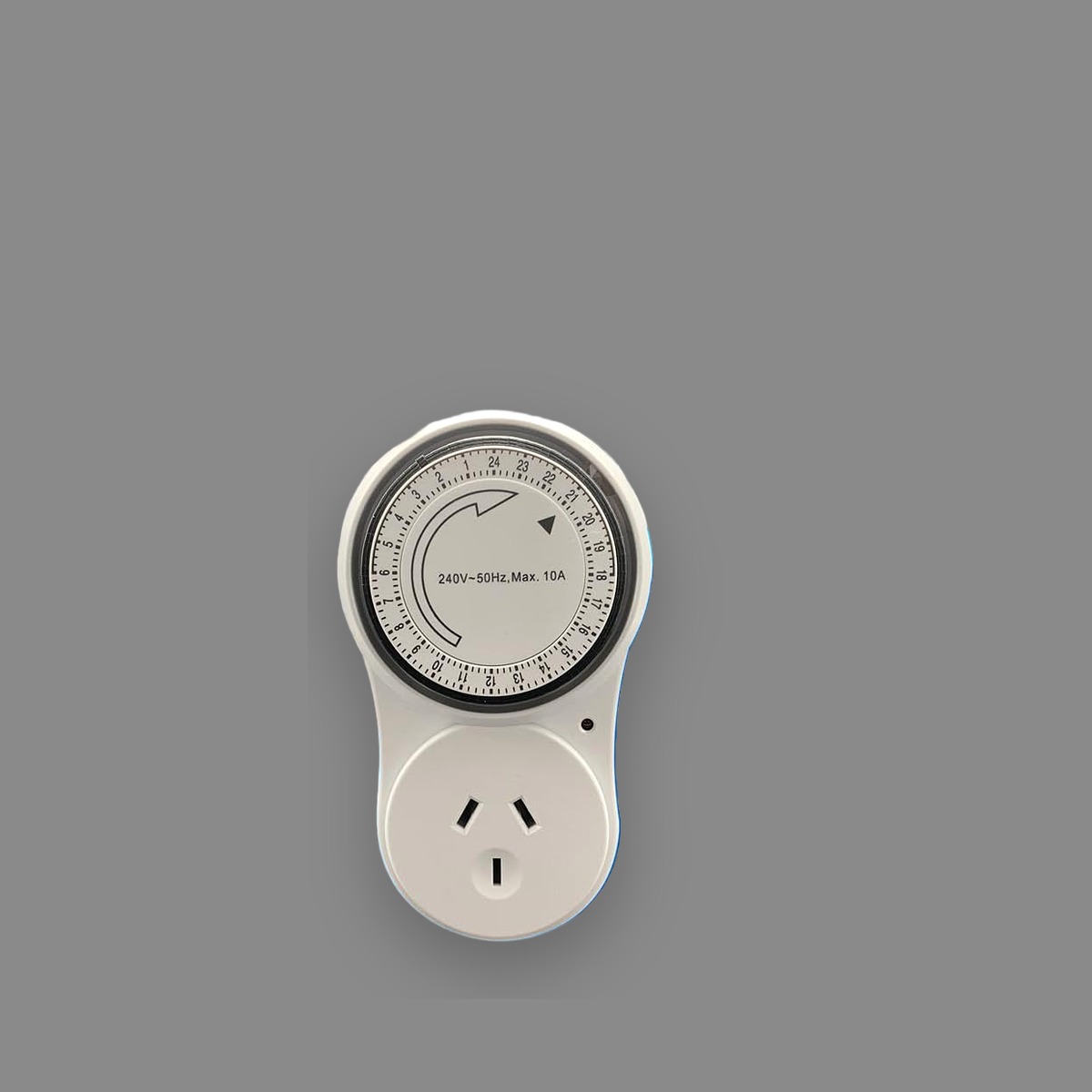
Your home Wi-Fi router broadcasts RF continuously, typically at 2.4 GHz and 5 GHz. If your child’s bedroom is within 3-5 metres of the router, they are exposed to low-level RF all night. A Jackson 24-hour mechanical timer plugged into the router’s power outlet shuts Wi-Fi off automatically at a set time (say, 9pm) and turns it back on in the morning (say, 6am). This eliminates the largest single source of continuous RF in most Australian homes during sleep hours.
A home router transmits continuously on the 2.4 GHz and 5 GHz bands, and its field strength falls with distance and intervening walls. The Building Biology SBM-2015 guideline for sleeping areas is <0.1 mW/m². A timer is the simplest path to meeting that threshold. It costs about $20.
4. Airplane Mode During Non-Use
When your child is watching downloaded videos, playing offline games, or not actively needing connectivity, airplane mode stops all RF transmission. Zero RF output — confirmed with my TriField TF2. The phone becomes an offline device. Free. Instant. No product required.
5. EMF Phone Case or Pouch (Lowest Rung — Still Worthwhile)
A shielded case or pouch sits at the bottom of this list because it addresses body-side shielding during one specific scenario: pocket carry with the shielded side facing the body. This is a legitimate reduction, but it’s smaller in magnitude than the four interventions above. If you’ve already done steps 1-4, a case or pouch adds an incremental layer. If you haven’t done steps 1-4, buy the $20 timer and teach speakerphone before spending $50-70 on a pouch.
| Intervention | Estimated Exposure Reduction | Cost | Difficulty |
|---|---|---|---|
| Speakerphone / air-tube headset | ~99% reduction to head during calls | $0 (speakerphone) / ~$60 (headset) | Low — behavioural habit |
| Phone out of bedroom | 100% elimination during sleep | $0 (+ $15 alarm clock) | Low — parental rule |
| Router timer overnight | 100% elimination of Wi-Fi RF during sleep | ~$20 | Low — plug and set |
| Airplane mode during offline use | 100% during mode activation | $0 | Low — behavioural habit |
| EMF case/pouch (body-side) | ~70-95% reduction on shielded side | $49-120 | Low — use case as normal |
What to Skip and Why: Products That Don’t Work
The children’s EMF protection market is full of products that exploit parental concern without delivering measurable results. Do not spend money on any of the following.
EMF Stickers, Chips, and “Harmonisers”
Small adhesive stickers or chips that claim to “neutralise” or “harmonise” EMF radiation have no plausible mechanism of action and produce no measurable change in RF output. Checked with my TriField TF2, RF readings before and after applying these stickers are identical within measurement tolerance. No sticker can alter the electromagnetic field produced by a phone’s antenna. Products in this category include Aulterra stickers, orgonite pendants, and various “scalar energy” devices. None have any certification from ARPANSA, ACMA, or any recognised testing body.
Shungite Phone Plates
Shungite is a carbon-rich mineral marketed as an EMF absorber. While carbon materials can attenuate certain electromagnetic frequencies in laboratory conditions (at specific thicknesses and configurations), a 2-3mm polished stone disc stuck to the back of a phone does not produce measurable RF attenuation. Checked with my TriField TF2, a phone reads the same with and without a shungite plate attached. Save your money.
Unverified “EMF Protection” Cases for Kids
Some products are marketed specifically to parents with language like “protects your child from harmful radiation” or “99.99% EMF protection” without providing any independent test data, FCC/ACMA compliance information, or shielding effectiveness measurements. If a product cannot show you third-party laboratory testing of RF attenuation at specific frequencies, treat the claims as unverified. Legitimate products like SafeSleeve and DefenderShield publish their test reports. If a brand cannot produce one, that tells you everything.
The Correct Order of Operations for Australian Parents
If you want to apply the precautionary principle for your child’s phone use without overreacting or wasting money, here is the sequence that maximises exposure reduction per dollar spent:
- Teach speakerphone use for all calls — free, immediate, highest single-action impact
- Phone charges outside the bedroom every night — free, eliminates 8-10 hours of close-range exposure
- Install a Jackson mechanical timer on the router — ~$20, eliminates household Wi-Fi RF during sleep
- Enable airplane mode during offline use — free, zero RF during offline screen time
- Purchase a DefenderShield air-tube headset — ~$60, eliminates RF conduction to ear during calls and video
- Add a Radia Smart Faraday pouch or SafeSleeve case — $49-120, reduces body-side exposure during pocket carry
Steps 1-4 cost $20 or less combined and eliminate the vast majority of your child’s avoidable RF exposure. Steps 5-6 add additional layers for parents who want comprehensive precautionary coverage. If you want to learn more about whether EMF phone cases work, I’ve covered the physics and test data in detail. For a broader look at what EMF radiation is and how it interacts with daily life, that guide has the full breakdown. And for specific product recommendations for adults, see our best EMF phone cases in Australia guide.
Start with the $20 intervention. A Jackson timer shuts your router off at bedtime automatically.
Eliminates Wi-Fi RF from your child’s bedroom every night without anyone needing to remember. Pair it with speakerphone and phone-outside-the-bedroom, and you’ve addressed the three largest exposure windows — for under $35 total.
Last reviewed: May 2026 — Clean and Native
Frequently Asked Questions
All phones sold in Australia comply with ARPANSA’s SAR limit of 2.0 W/kg, which is a safety standard based on thermal effects. ARPANSA recommends children minimise non-essential phone use and use hands-free options as a precautionary measure. No established causal link between standard phone use and harm to children has been demonstrated in peer-reviewed research as of 2026.
No. ARPANSA does not recommend any specific shielding product. Their guidance focuses on behavioural measures: limiting call time, using speakerphone or hands-free devices, and encouraging texting over calling. EMF cases are a consumer product choice, not a regulatory recommendation.
Use speakerphone for all calls, keep the phone out of the bedroom at night, and enable airplane mode during offline use. These three free steps reduce more cumulative exposure than any case or pouch. Add an air-tube headset and a router timer for additional reduction.
EMF phone cases are standard phone cases with shielding fabric — they contain no hazardous materials. However, for toddlers, the more relevant question is whether a toddler should be using a phone at all. ARPANSA’s guidance applies from the point a child begins using a phone independently, typically school age. For toddlers watching occasional video content, airplane mode eliminates all RF transmission.
No. EMF stickers, chips, and “harmoniser” products produce no measurable change in RF emissions. Readings taken with a calibrated RF meter are identical before and after application. No independent laboratory data supports these products. They have no certification from any recognised Australian or international testing body.
The WHO-commissioned systematic review of radiofrequency electromagnetic fields and health outcomes, updated in 2024, maintained the IARC Group 2B classification (“possibly carcinogenic to humans”). This means limited evidence of a possible association, but insufficient evidence to establish a causal link. The classification was not upgraded or downgraded.
Yes. A properly constructed Faraday pouch blocks RF signals in both directions. The phone cannot send or receive calls, messages, or data while fully enclosed. This is why a pouch is best used for storage (in a bag, on a desk) rather than during active phone use. It effectively puts the phone into a shielded offline state.
A mechanical timer on your router turns off the router’s power, which stops Wi-Fi and internet. When the timer restores power in the morning, the router reconnects automatically — typically within 60-90 seconds. Your NBN connection (whether FTTP, FTTC, HFC, or FTTN) is unaffected at the infrastructure level. The only impact is no internet access during the off period, which is the intended outcome during sleep hours.
Get the Australian Home Environment Checklist
30 checks across water, air and EMF. Most of them free. Ranked by impact.
No spam. Unsubscribe any time.
Former Royal Australian Navy Clearance Diver and TAG-E counter-terrorism operator. Founded Clean and Native to apply the same rigorous thinking to the home environment.
Full biography →