How I Fixed My Sleep Environment: Water, Air and EMF, Measured in My Gold Coast Home
Drafted with AI assistance and checked against published specifications and certifications. First-hand measurements appear only where stated. How we make content
How this assessment was made. Every reading on this page is mine, taken in my own home in Palm Beach on the Gold Coast, and each one is backed by a photo of the instrument’s display. I own the TriField TF2, the TDS meter, the EcoHero 5-stage RO and the Coway Airmega 150. Where I have not measured something, the page says so. Drafted with AI assistance and checked against the photos and primary sources: how we make content.
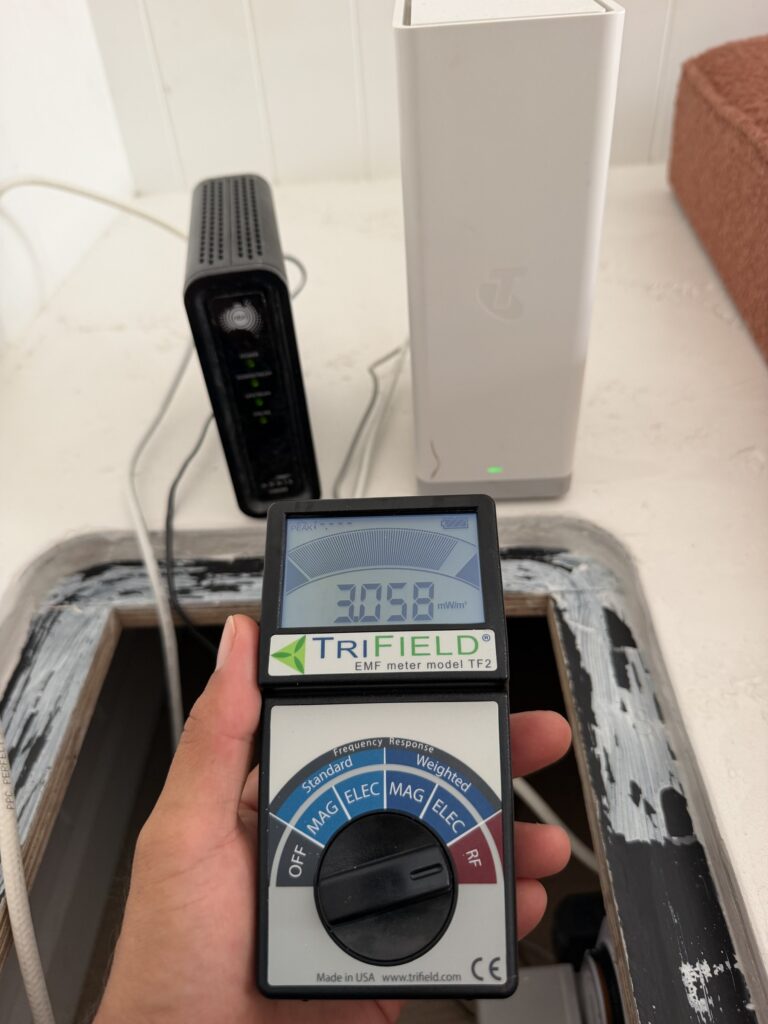
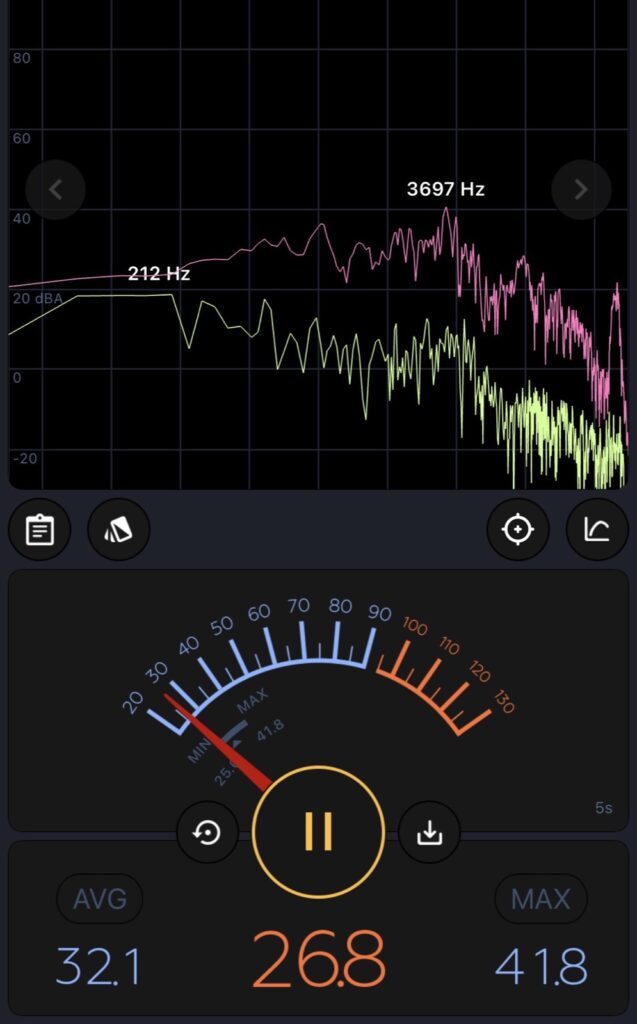
Short answer: I made three changes to my sleep environment, and each one started with a measurement. The Wi-Fi router now runs on a mechanical timer, off from 9 pm to 6 am; with it on, my TriField TF2 read 3.058 mW/m² beside the router and 0.048 mW/m² at my pillow. Drinking water comes from an under-sink EcoHero reverse osmosis system, which took my tap water from 69 ppm to 3 ppm on a TDS meter. And a Coway Airmega 150 runs on Silent in the 12.5 m² bedroom, where a phone sound meter read 32.1 dBA at one metre. What I have not measured is my sleep itself, so this page makes no claims about it.
Measure first, then fix the source you can control. The router timer was the cheapest change and the only one that removes a source completely while I sleep. The RO system and the purifier are bigger spends: worth it if you want the water and air outcomes in their own right, not as a sleep cure.
| Change | What I measured | Price |
|---|---|---|
| Router on a timer, off 9 pm to 6 am | 0.048 mW/m² at the pillow with the router on (TF2) | Low cost |
| Coway Airmega 150 on Silent | 32.1 dBA at 1 m (phone app); pre-filter full of dust after a month | $199.00at Amazon AU · as of 19 Nov 2026, 11:43 pm AEST Details |
| EcoHero 5-stage under-sink RO | 69 ppm tap water to 3 ppm (TDS meter) | $999 (PWS, listed sold out) (1 Nov 2026) |
| TriField TF2 meter | The instrument behind every EMF number here | $299.00at Amazon AU · as of 19 Nov 2026, 11:43 pm AEST Details |
✓ This page is for you if
- You want to check your bedroom with a meter instead of guessing
- You live in south-east Queensland and want local water and EMF numbers
- You want to know which fixes cost nothing before you spend money
- You are sizing a quiet purifier for a small bedroom
× Look elsewhere if
- You want a product that promises better sleep. Nothing here is a sleep treatment
- You have ongoing sleep problems: start with your GP
- You want lab-grade EMF survey results. The TF2 is a consumer meter
- You rent and cannot plumb in an RO system (see the countertop options linked below)
How I ran the audit
Clearance diving teaches you to assess the environment before you act on it, and to trust the instrument over your assumptions. I applied the same approach to the room where I spend a third of my life. Three questions: what is in the water I drink, what is in the air I breathe overnight, and what fields are present where my head sits.
The instruments, and what each can and cannot tell you:
| Instrument | What it measures | Limits |
|---|---|---|
| TriField TF2 | RF power density (20 MHz to 6 GHz), AC magnetic field (milligauss) and AC electric field (V/m) | Consumer meter. RF accuracy is quoted as ±20% at 1 GHz only. Peak readings are held for about 3 seconds; there is no logging |
| TDS meter (TDS-3 style pen) | Total dissolved solids in ppm | Not lab calibrated. TDS says nothing about chlorine, fluoride, lead or PFAS on its own |
| Decibel X phone app | Sound level in dBA | A phone microphone, not a certified sound level meter. Fine for comparing settings, not for compliance |
I took every reading myself and photographed the display each time. Readings without a photo did not make it onto this page. The full set of 19 TF2 readings is in my TriField TF2 review.
EMF at the bed: what the TF2 found
RF from the Wi-Fi router
The router is a Telstra modem-router beside the NBN box. These are the RF readings I photographed around the house, from closest to the router to furthest:
| Position | TF2 RF reading | Building biology band (SBM-2008, sleeping areas) | Share of ARPANSA public limit |
|---|---|---|---|
| Close range to router (highest) | 4.380 mW/m² | Extreme (above 1 mW/m²) | about 0.04% |
| Close range to router | 3.058 mW/m² | Extreme | about 0.03% |
| Same room, 2 to 3 m away | 0.521 mW/m² | Severe (0.01 to 1 mW/m²) | about 0.005% |
| Hallway, router in view | 0.124 mW/m² | Severe | about 0.001% |
| My pillow | 0.048 mW/m² (peak 0.150) | Severe | under 0.001% |
| Living room couch | 0.032 mW/m² | Severe | under 0.001% |
ARPANSA’s general public reference level at Wi-Fi frequencies is 10 W/m² (10,000 mW/m²) averaged over 30 minutes. The SBM-2008 bands are a precautionary building biology guide, not a safety standard, and apply to peak values (my pillow peak of 0.150 mW/m² is still in the severe band). Percentages are rounded.
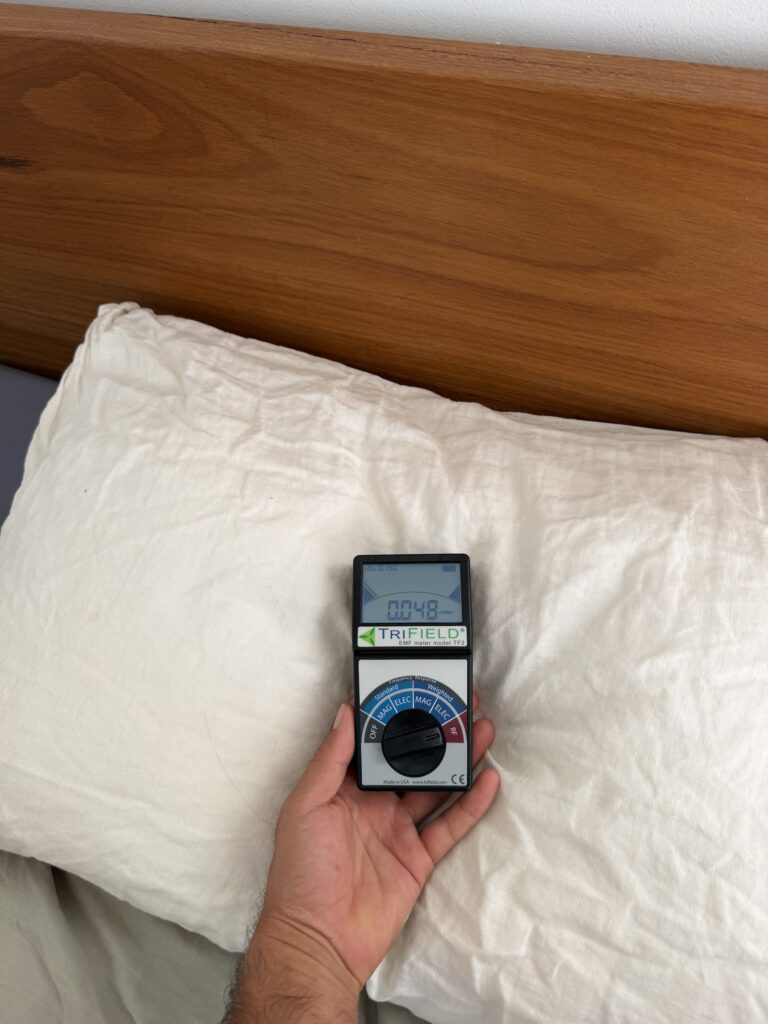
Two ways to read that table, and both are true. By the Australian standard, my pillow reading is a tiny fraction of the limit. ARPANSA states there is no scientific evidence of adverse health effects from low-level RF below the limits in its standard. By the building biology guide, which is deliberately cautious for sleeping areas, the same reading sits in the severe band. I did not need to settle that argument to act on it: the router is a source I control, and turning it off overnight costs almost nothing.
AC electric field at the bedhead
The bigger number in the bedroom was the electric field. Holding the TF2 at the timber bedhead, I photographed three readings: 50, 93 and 105 V/m. Laid flat on the pillow, the same meter read 2 V/m.
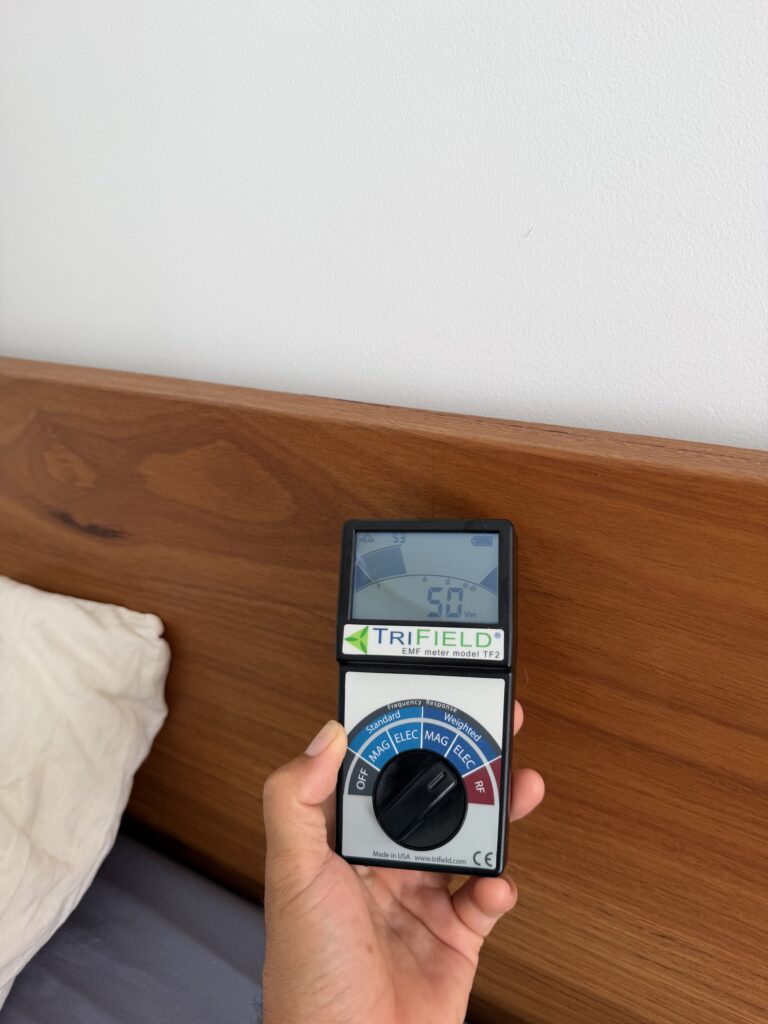
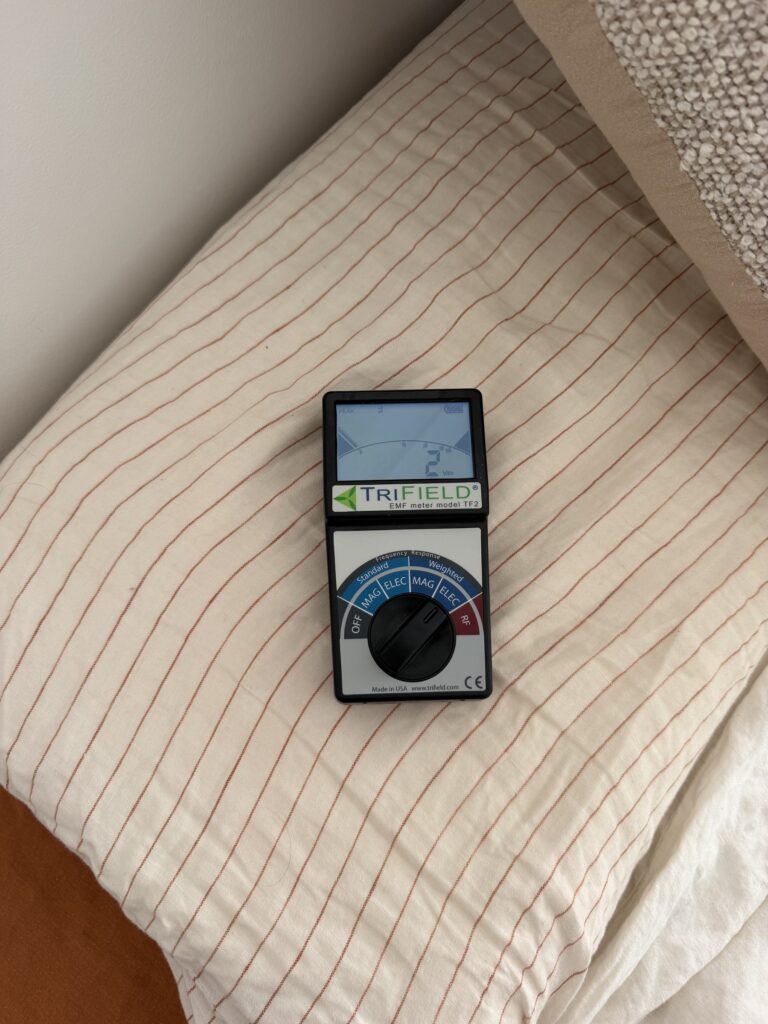
Two caveats keep this honest. First, a hand-held TF2 is body-coupled: your own body changes an electric field reading. The SBM-2008 sleeping-area bands assume a grounded or potential-free probe, not a hand-held meter, so my numbers are not directly comparable with them. Holding the meter changes the reading, so the drop from 105 to 2 V/m is not a measured distance gradient; treat it as a pointer to check the bedhead wall. Second, even 105 V/m is about 2% of the ICNIRP public reference level of 5,000 V/m at 50 Hz.
AC magnetic field
My magnetic readings so far are 8.2 and 11.7 mG at internal walls and 49.8 mG at the gas oven door. I do not have a photographed magnetic reading at the pillow, so I am not putting a number on it here. It is first on my list below. For scale, the ICNIRP public reference level at 50 Hz is 2,000 mG (200 µT).
What I changed for EMF, and what I did not
1. The router runs on a timer
A mechanical 24-hour plug-in timer sits between the power point and the router’s power pack. It switches the router off at 9 pm and back on at 6 am. No app, no account, no radio of its own. The trade-off is real: no Wi-Fi overnight, so anything that needs it (a security camera, a smart lock, an overnight backup) needs a plan.
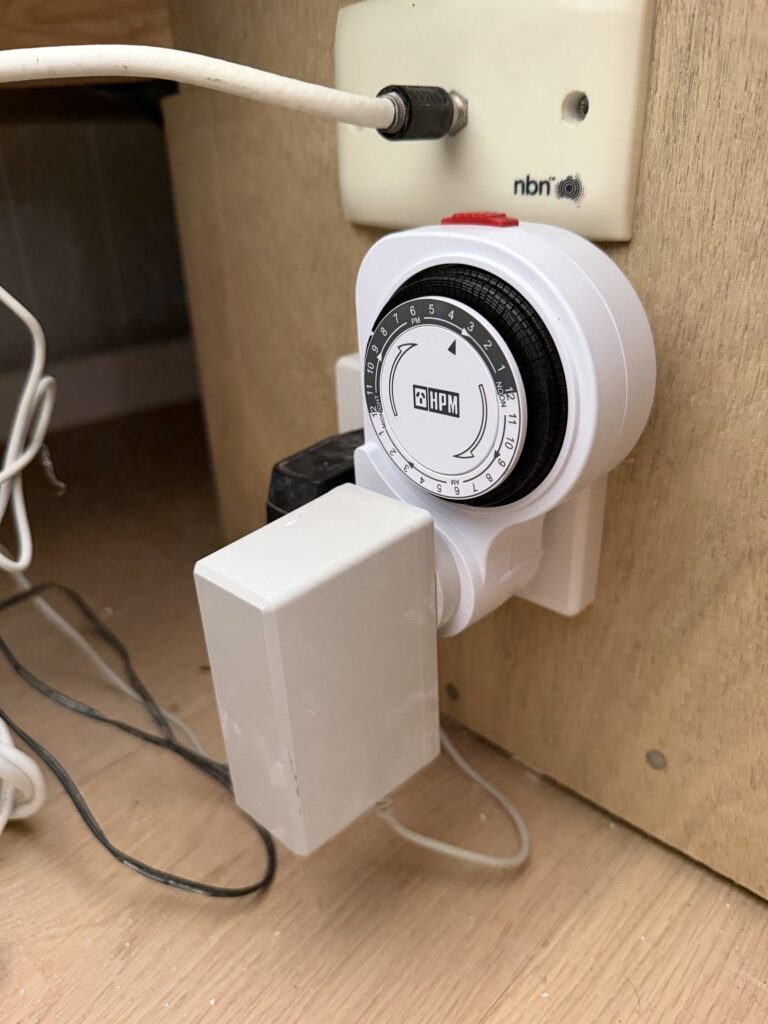
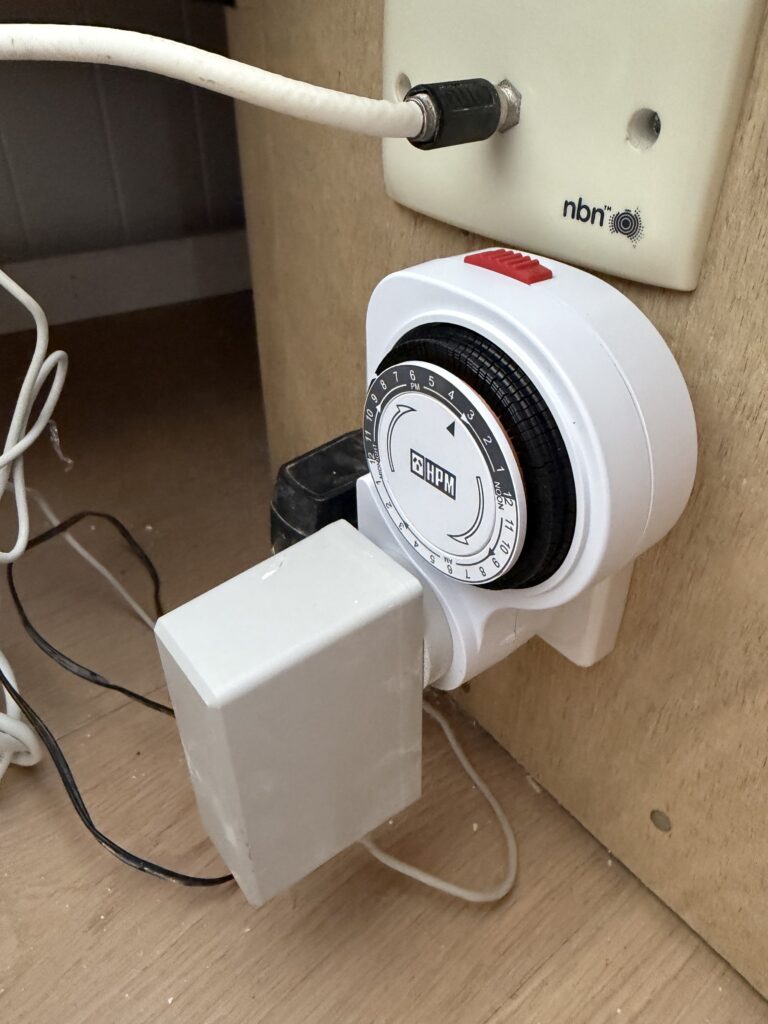
I have not published an overnight reading with the router off, so I am not quoting one. Physics does the work: a router that is switched off transmits nothing. Neighbours’ Wi-Fi and the mobile network will still register on a sensitive meter. More detail in router timer EMF reduction.
2. The phone and the bedhead wall
Two more free actions, offered as advice rather than a measured result: keep the phone out of the bedroom or in aeroplane mode overnight, and keep your head away from the wall that carries the wiring. My own readings show why the second one matters: 50 to 105 V/m at the bedhead against 2 V/m on the pillow.
3. What I did not do
I have not bought shielding paint, a bed canopy or any EMF protection device. Shielding is the last step, not the first: if the source is inside the room, a canopy or painted wall can reflect it back at you. I have also not fitted a demand switch (a device that cuts power to a bedroom circuit when nothing is drawing current). Any switchboard work in Australia is a job for a licensed electrician, so ask one whether it suits your circuit before buying anything.
For the step-by-step version of this process, see the EMF bedroom audit guide, and the research summary in EMF and sleep: what the research shows.
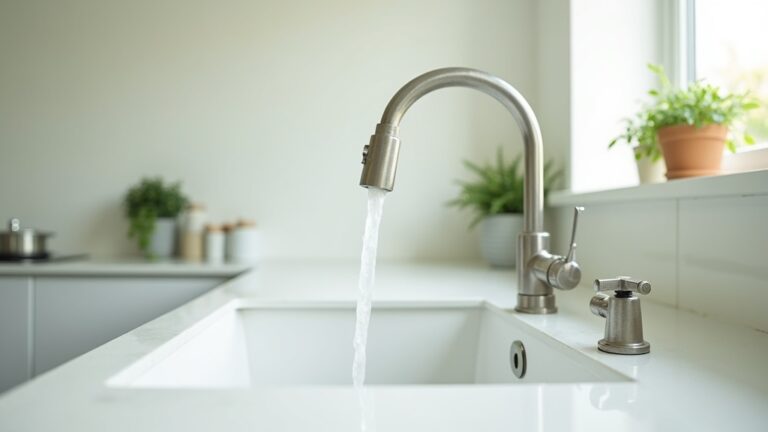
Water: 69 ppm to 3 ppm
Water has no proven direct effect on sleep quality, and I am not claiming one. It is on this page because it was the first thing I measured in the house, and it is what I drink before bed.
Palm Beach is in the Gold Coast supply zone, which Seqwater disinfects with free chlorine (an average of about 1.5 mg/L in the supply network in its September 2026 zone report), not the chloramine used across Brisbane’s central grid. The water is fluoridated: Seqwater reported an average of 0.73 mg/L over the 12 months to September 2026. My tap read 69 ppm on the TDS meter, which is low. The Australian Drinking Water Guidelines treat TDS as a taste issue, not a health one.
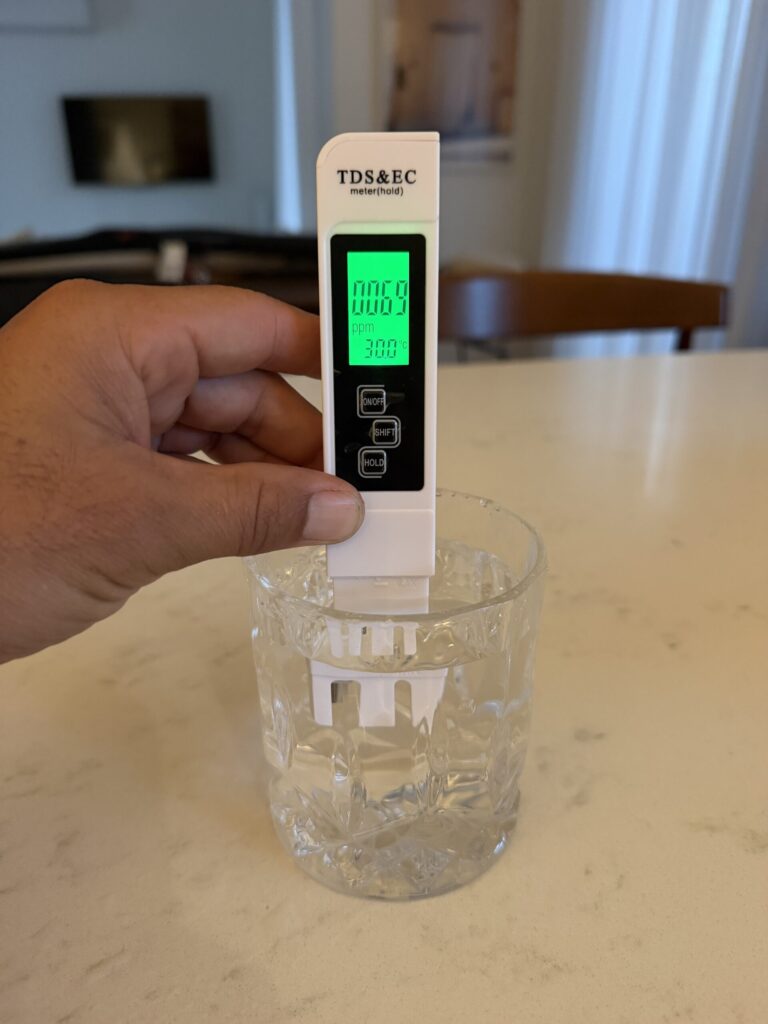
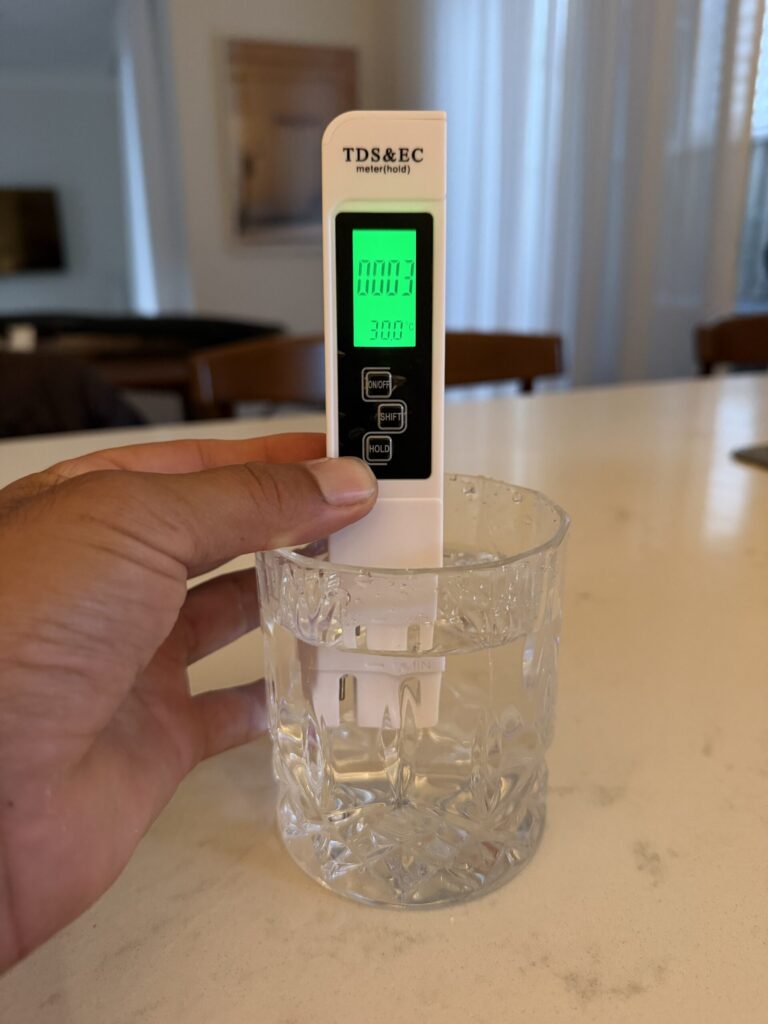
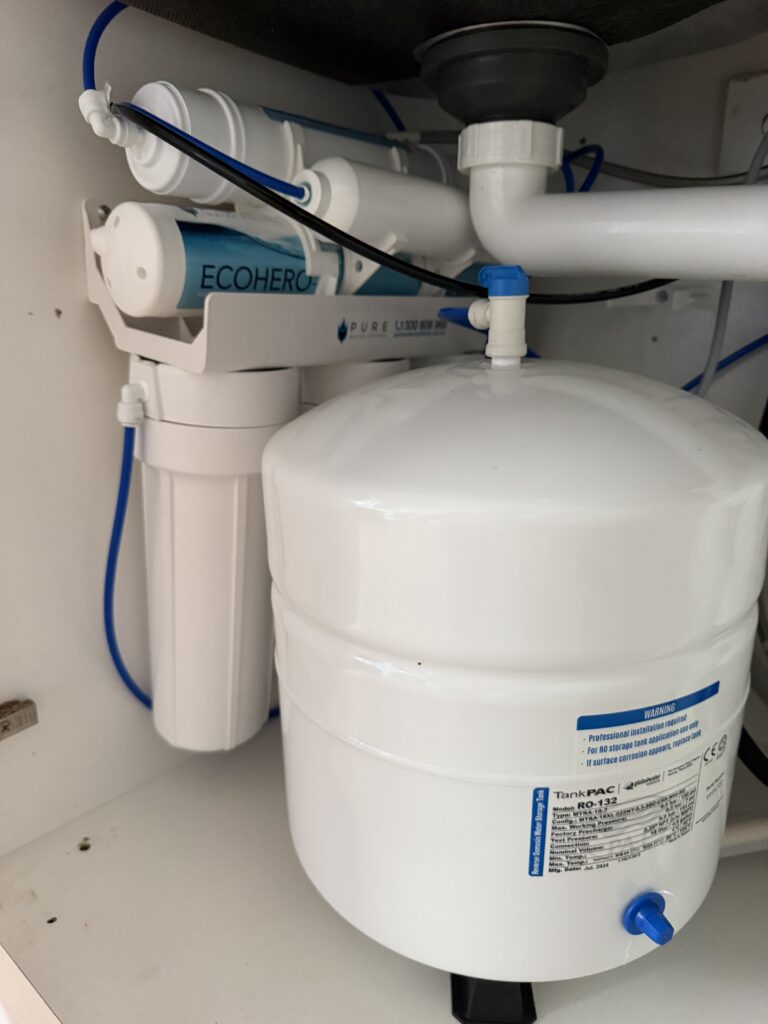
I wanted chlorine, its by-products and fluoride out of my drinking water. Carbon handles chlorine; it does not remove fluoride. Reverse osmosis does both, which is why I went with an under-sink RO system: the EcoHero 5-stage from Pure Water Systems. Its stages, from the manufacturer’s page: a 1 micron sediment filter, a 10 micron carbon block, a 5 micron granular carbon post-filter, the RO membrane, and a deionising (DI) resin cartridge, with a 12 litre tank.
That last stage explains the 3 ppm reading. A DI cartridge strips out the remaining dissolved ions, so the water comes out close to zero TDS. This system does not add minerals back. Pure Water Systems offers an optional calcite pH neutraliser and a separate remineraliser cartridge if you want one.
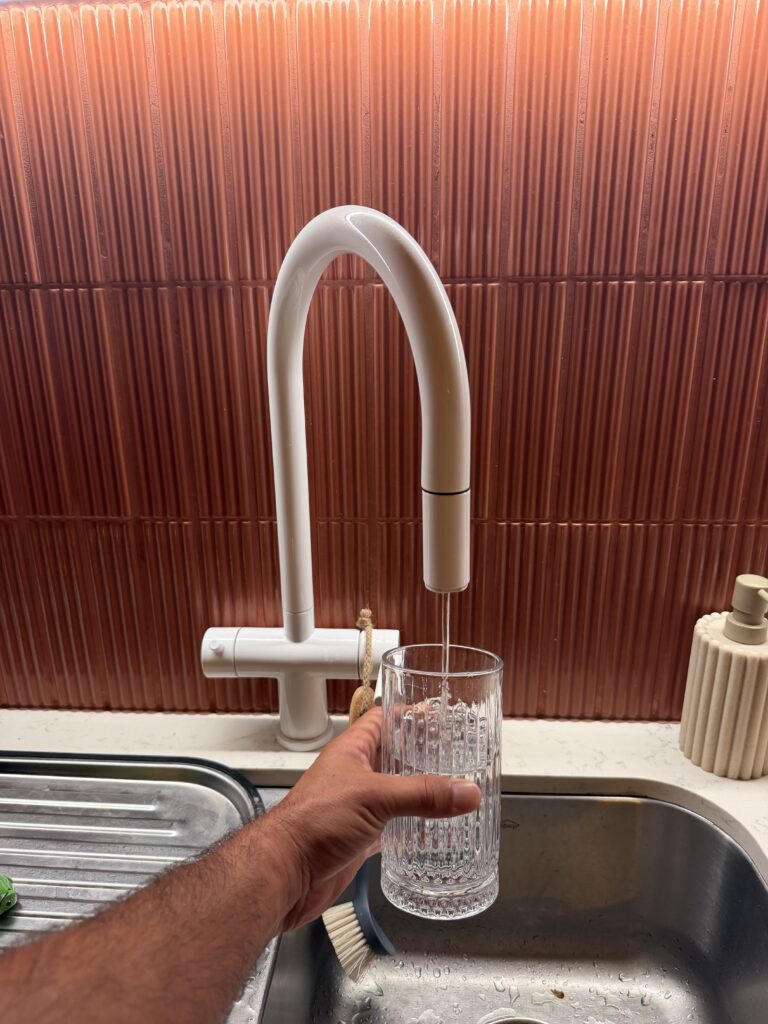
Full detail in my EcoHero 5-stage RO review. Renting or not ready to plumb? See the best water filters for Australia, including countertop options, and the fluoride filter guide.
Check all seven rooms, not just this one
38 checks, 29 free, ranked by impact. Sent as a 32-page PDF.
We'll email you the audit and a short series of practical guides. Unsubscribe in one click, any time. Privacy.
Sent. Taking you to your download...
Air: the purifier in a 12.5 m² bedroom
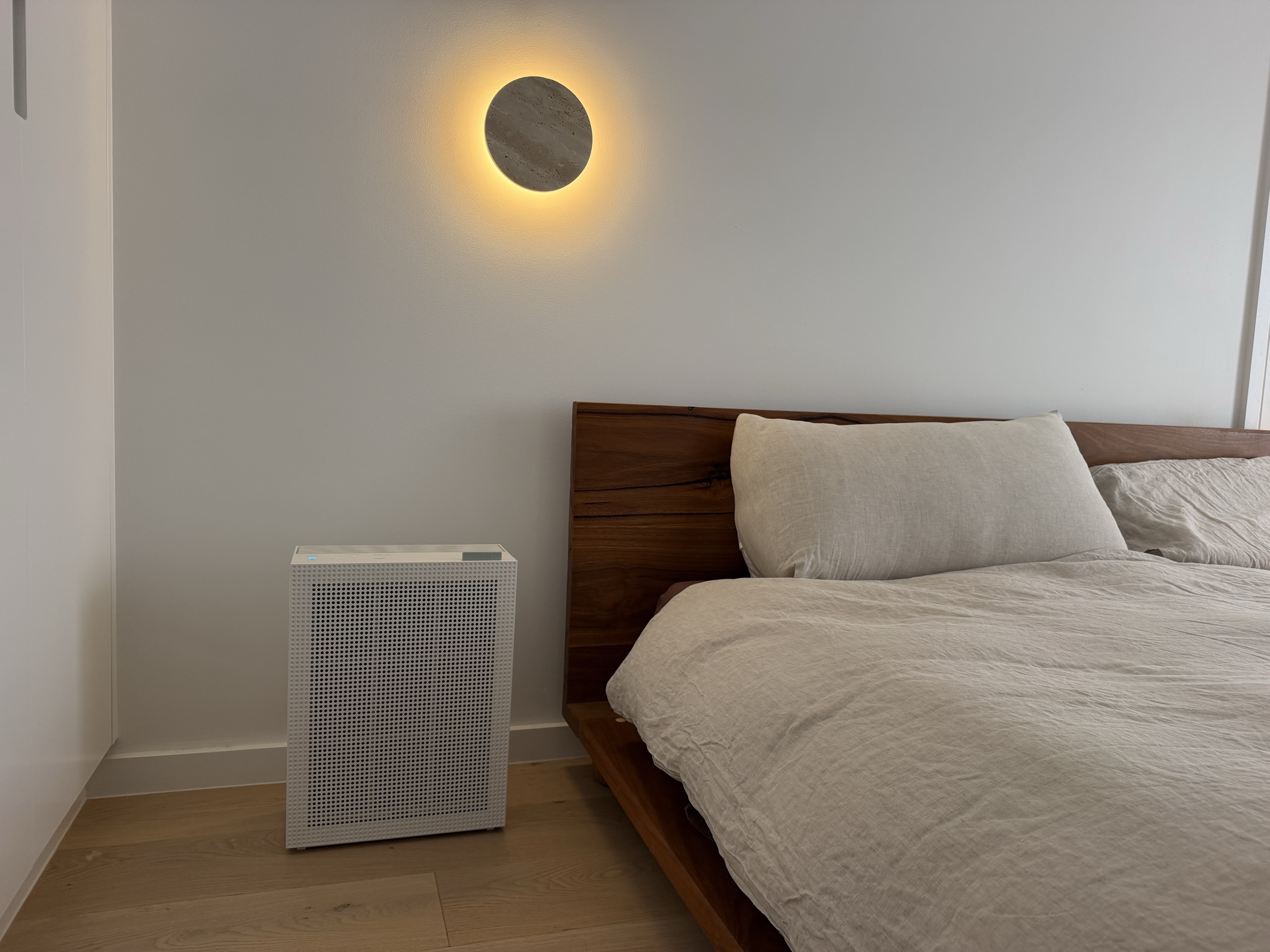
My bedroom is 12.5 m². A Coway Airmega 150 sits beside the bed and runs on Silent overnight. I chose it on two numbers: room size and noise.
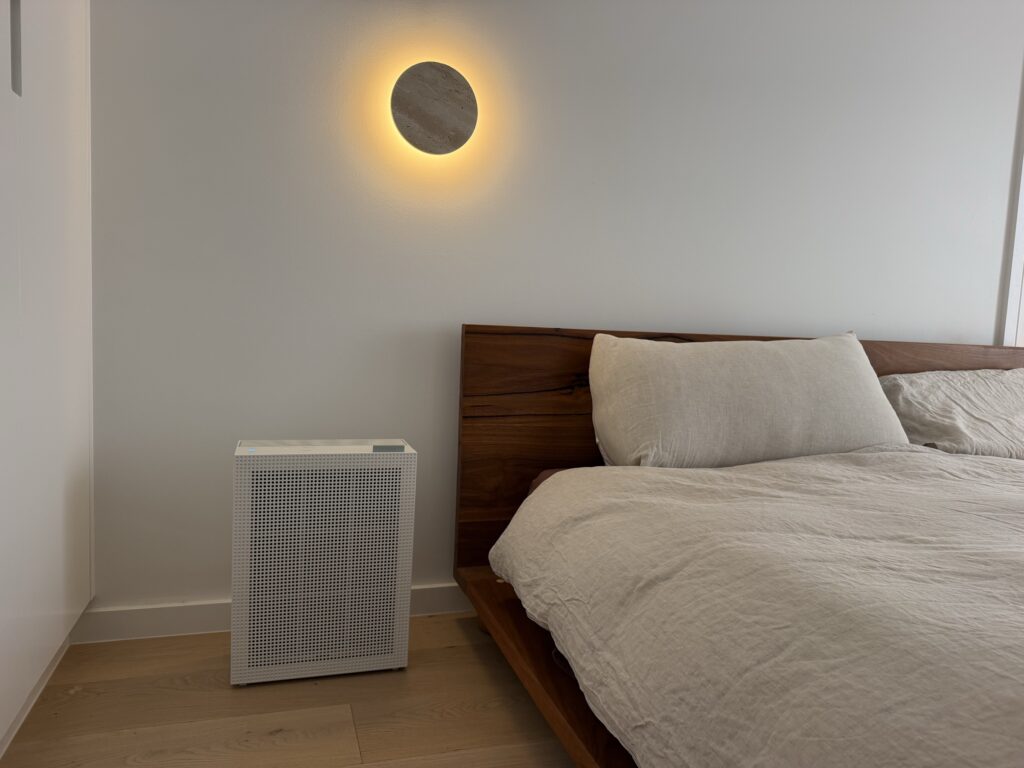
Size. Coway rates the Airmega 150 at a smoke CADR of 153 cfm. The US EPA two-thirds rule of thumb needs about 90 cfm for a 12.5 m² room with a standard ceiling, so the unit has roughly 1.7 times the minimum, and the same rule puts its ceiling at about 21 m². Oversizing is what lets it run quietly and still move enough air.
Noise. On Silent, the Decibel X app on my phone averaged 32.1 dBA at one metre. That is a phone reading, not a calibrated sound meter, but it is a fair comparison point against other units’ published figures.
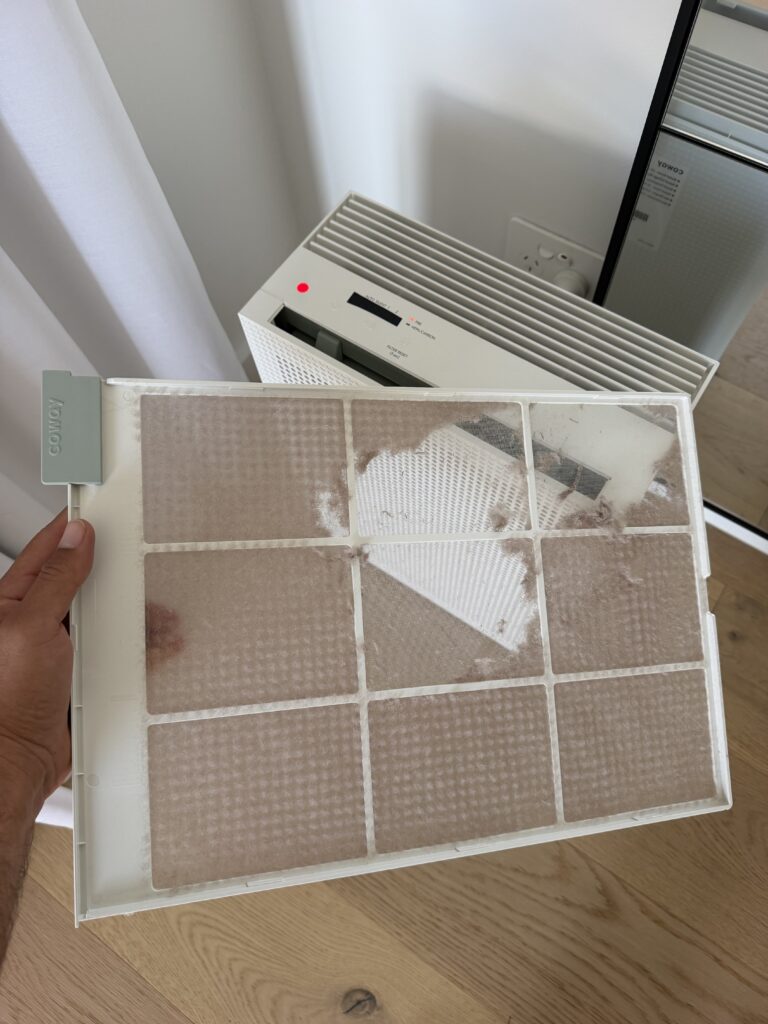
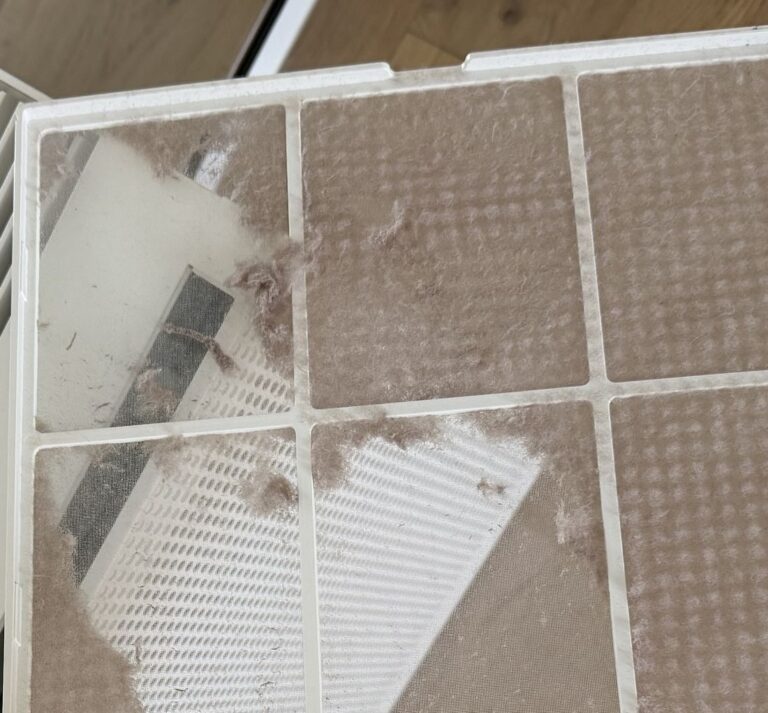
What it caught. The clearest evidence I have is the pre-filter. After one month it was coated in grey dust and hair from my dog. That is the coarse layer; the deodorisation and HEPA filters sit behind it. It does not tell you the PM2.5 level in the room, but it does show how much was moving through the air I sleep in.
I did not log overnight PM2.5 before and after, so I am not giving you a reduction figure. For context, the WHO’s 2021 guideline for long-term PM2.5 exposure is 5 µg/m³ as an annual average. A ceiling fan or air conditioner keeps settled dust moving, so if you run one overnight, vacuum and wipe the fan blades regularly as well as filtering the air.
The full write-up is in my Coway Airmega 150 review. For larger rooms or other budgets, see the best air purifiers for bedrooms.
What I have not measured yet
An audit is only as good as the gaps it admits. These are mine:
| Gap | Why it matters | How I will measure it |
|---|---|---|
| AC magnetic field at the pillow | Wiring, meter boxes and appliances on the other side of a wall can put a steady field at head height | TF2 on the magnetic setting at the pillow, bedhead and floor, with the main circuits under normal load |
| RF at the pillow with the router off | Shows what is left from neighbours and the mobile network | TF2 on RF after 9 pm, photographed |
| Overnight PM2.5 | The pre-filter shows dust load, not concentration | A logging PM2.5 monitor beside the bed, purifier off one night and on the next |
| The meter box | If a smart meter sits on a bedroom wall, its transmissions are short bursts that an average reading can miss | TF2 on RF next to the meter; the 3-second peak hold helps catch bursts |
| Sleep itself | Everything above is the environment, not the outcome | No claim made. A sleep study is the only real measure |
When I add these readings, they will go into this page and the TF2 review with photos.
Your own sleep environment checklist
In order of cost, cheapest first:
- Find your router and phone. Note how far each is from your pillow. If you own a meter, read RF at the router and at the pillow. Put the router on a timer or switch it off at night, and keep the phone out of the room or in aeroplane mode. Cost: a plug-in timer.
- Check the wall behind the bed. If it carries wiring or backs onto a meter box, fridge or switchboard, move the bedhead a little away from it, or move the bed. Cost: nothing.
- Find out what disinfects your water. Chloramine (Brisbane’s central grid, much of Sydney) needs catalytic carbon or RO; free chlorine areas such as the Gold Coast are easier. Check your area in the water filtration guide. If you want fluoride out, look at RO.
- Size a purifier to the room. Measure the bedroom floor area and pick a unit whose smoke CADR clears the EPA two-thirds rule with room to spare, so it can run on a low, quiet setting.
- Measure before you buy shielding. Most homes never need it. Remove internal sources first.
Not sure which meter to start with? The best EMF meter guide compares the TF2 with the alternatives.
What each change costs
| Item | Job | Price | Where |
|---|---|---|---|
| TriField TF2 | Measure RF, magnetic and electric fields | $299.00at Amazon AU · as of 19 Nov 2026, 11:43 pm AEST Details | Amazon AU |
| 24-hour plug-in timer | Router off 9 pm to 6 am | Low cost; check the listing | Amazon AU (similar mechanical timer) |
| Coway Airmega 150 | Bedroom air, rooms up to about 21 m² | $199.00at Amazon AU · as of 19 Nov 2026, 11:43 pm AEST Details | Amazon AU (sold by Coway Australia) |
| EcoHero 5-stage RO | Drinking water: chlorine, fluoride, dissolved solids | $999 (listed sold out) (1 Nov 2026) | Pure Water Systems; plumber needed |
| TDS meter | Check that the RO is working | Low cost | Any electronics retailer |
The free changes (timer aside) are the router schedule, the phone and the bed position. Start there. The meter tells you whether the bigger purchases are worth it in your house.
Prices change and stock moves. Check the listing before buying.
Frequently asked questions
Does turning the Wi-Fi off at night improve sleep?
There is no good evidence that it does, and ARPANSA states there is no scientific evidence of adverse health effects from low-level RF below the limits in its standard. I switch mine off because it removes a source completely while I sleep, costs almost nothing and has little downside if you do not need Wi-Fi overnight.
What EMF level is safe in a bedroom?
Australia’s public limit for RF at Wi-Fi frequencies is 10 W/m² (10,000 mW/m²), averaged over 30 minutes. Building biology guidelines for sleeping areas are far stricter and are precautionary, not regulatory. My pillow read 0.048 mW/m² with the router on: well under the Australian limit, in the building biology severe band.
Why is the electric field high at my bedhead but low on the pillow?
AC electric fields come from wiring in the wall and fall away quickly with distance. A hand-held meter also couples to your body. In my bedroom the TF2 read 50 to 105 V/m at the bedhead and 2 V/m lying on the pillow.
Does reverse osmosis water need remineralising?
Not for safety; most minerals in a normal diet come from food. Some people prefer the taste with minerals added. The EcoHero’s fifth stage is a deioniser, not a remineraliser, which is why my RO water reads 3 ppm. Pure Water Systems sells an optional calcite pH neutraliser and a separate remineraliser cartridge.
Is the Gold Coast water chlorinated or chloraminated?
The Gold Coast supply zone uses free chlorine, an average of about 1.5 mg/L in the network in Seqwater’s September 2026 report. Brisbane’s central grid uses chloramine. Check your own zone before choosing a filter.
How loud is the Coway Airmega 150 on Silent?
My phone sound app averaged 32.1 dBA at one metre on Silent. That is a phone reading, not a certified meter.
Do I need an EMF meter to do this?
No. The router timer, phone placement and bed position cost little and need no meter. A meter tells you where your readings actually are, which stops you buying shielding you do not need.
- ARPANSA: Standard for Limiting Exposure to Radiofrequency Fields, 100 kHz to 300 GHz (RPS S-1)
- ARPANSA, Mobile phone base stations and health
- ICNIRP (2010), Guidelines for limiting exposure to time-varying electric and magnetic fields (1 Hz to 100 kHz)
- Baubiologie Maes / IBN: Building Biology Evaluation Guidelines for Sleeping Areas, SBM-2008
- AlphaLab: TriField TF2 owner’s manual (ranges, accuracy, peak hold)
- Pure Water Systems, EcoHero 5 Stage Reverse Osmosis: stages, tank, WaterMark licence
- Seqwater: Gold Coast zone water quality report, September 2026
- NHMRC, Australian Drinking Water Guidelines
- WHO (2021), Global air quality guidelines: PM2.5 annual guideline of 5 µg/m³
- US EPA, Guide to Air Cleaners in the Home, 2nd edition (CADR two-thirds rule)

Former Royal Australian Navy Clearance Diver and TAG-E counter-terrorism operator. Founded Clean and Native to apply the same rigorous thinking to the home environment.
Full biography →The 7-Room Home Audit
Distance and off-time do most of the work, and they are free. The audit maps every room: 38 checks across EMF, air and water, ranked by impact.
- Our own TF2 readings from router to pillow
- What to check behind the bedhead wall
- ARPANSA limits and precautionary bands, side by side
We'll email you the audit and a short series of practical guides. Unsubscribe in one click, any time. Privacy.
Sent. Taking you to your download...