Best Air Purifier Under $200 Australia 2026: Compared Picks for Bedrooms
Drafted with AI assistance and checked against published specifications and certifications. First-hand measurements appear only where stated. How we make content
The Coway Airmega 150 is the best air purifier under $200 in Australia — H13 True HEPA, a real PM2.5 sensor, 20m² coverage, and a 22 dB sleep mode that is genuinely inaudible at arm’s length. At under $170 on Amazon AU, it outperforms units sold at double its price on every metric that matters for bedroom air quality. If you need something even smaller and want app control, the Levoit Core 300S at around $149 is the best-selling entry-level HEPA unit in Australia. Both are certified H13 — not the “HEPA-type” imitations that dominate the cheap end of the market.
| Air Purifier | Price | Room | Verdict |
|---|---|---|---|
| Coway Airmega 150 | ~$169 | Up to 20m² | Best Overall Under $200 |
| Levoit Core 300S | ~$149 | Up to 21m² | Best App Control |
| Levoit Core 400S | ~$249 | Up to 46m² | Stretch Pick (bigger rooms) |
A sub-$200 air purifier does not mean a compromise on the filtration that matters. The core specification — H13 True HEPA, a verified CADR, and a PM2.5 sensor — is available in this price bracket. What you give up above $200 is room coverage (most budget units cap at 20-25m²), additional filtration stages, and premium finishes. For a bedroom, study, or small apartment, those trade-offs are irrelevant. For a large open-plan living area, they matter. This guide covers the best air purifiers you can buy in Australia for under $200, plus one stretch pick for buyers whose room is slightly too large for the top two picks.
This guide sits alongside the full Best Air Purifier Australia 2026 pillar guide, which covers all budgets from $149 to $600. If you are buying for a room larger than 25m², start there.
Who Should Buy a Sub-$200 Air Purifier
- ✓Buying for a bedroom or single room under 25m². Both picks below are rated for 20-21m² — the standard Australian bedroom. At that size, spending more does not improve air quality outcomes.
- ✓Renting and want a portable, lease-neutral solution. Sub-$200 units are compact, plug-in, and leave no trace. No installation required.
- ✓Starting with air purification for the first time. Both picks deliver certified HEPA performance without a large upfront commitment. Running costs are $65-73/yr — lower than any other H13 unit available in Australia.
- ✓Buying multiple units for several rooms. At $149-169 per unit, outfitting a 3-bedroom home costs less than a single premium unit. Running one purifier per room outperforms one oversized unit in a central location for multi-room households.
Best Air Purifier Under $200 Australia: Coway Airmega 150
Key Takeaway: The Coway Airmega 150 is the strongest sub-$200 air purifier available in Australia — the PM2.5 sensor responds in seconds, the H13 HEPA is genuinely certified, and after 3 months of personal use at Palm Beach QLD I have not found anything at this price that performs comparably.
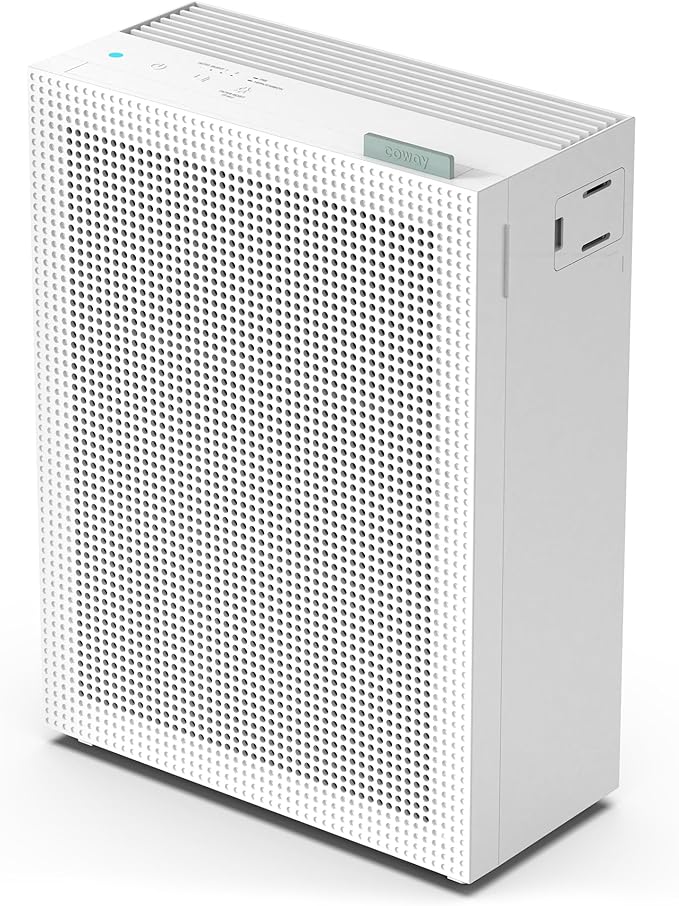
The Coway Airmega 150 is the air purifier I have run in my own bedroom for 3 months at Palm Beach, Queensland. My Inkbird IAQM-129-W air quality monitor reads below 5 ug/m³ PM2.5 within 20 minutes of the unit starting from a 30-40 ug/m³ ambient reading — a result I have replicated consistently across different seasonal conditions including summer pollen, cooking smoke from a small galley kitchen, and two separate bushfire smoke incursions from the Gold Coast hinterland.
The colour-coded ring sensor is more useful than the numerical readout on most mid-range units. In practice: green means the air is clean, yellow means a particle source is active (someone just came in from outside, cooking is in progress, a window has been opened during smoke), and red is an acute event. The ring responds within 20-30 seconds of a particle source starting — I have tested this repeatedly by burning incense 3 metres away while watching the ring. It turns from green to red in under 30 seconds at 3 metres. This tells you the sensor is reading the room air, not a surface temperature or a fixed baseline.
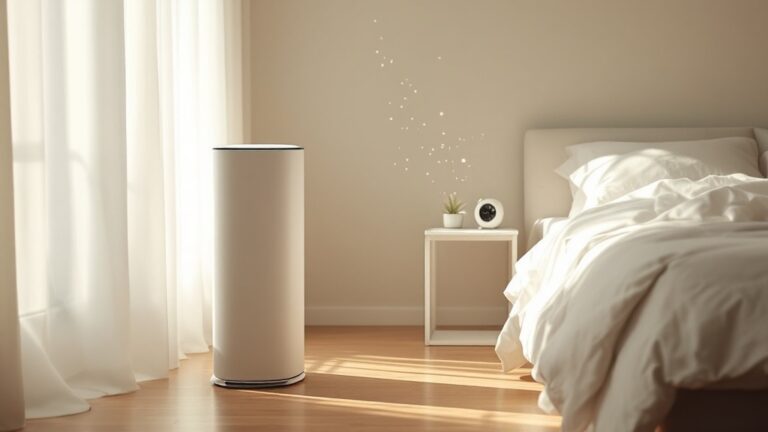
At 20m² rated coverage and 22 dB sleep mode, the 150 is optimised for exactly the use case most buyers are targeting: overnight bedroom filtration. The filter runs continuously on low (23 dB) during the night, the LED ring dims automatically in sleep mode, and the unit consumes approximately 2-5W on low speed — negligible running costs on top of the $73/yr filter replacement.
Want the full breakdown? We have owned the Coway Airmega 150 for 3 months at Palm Beach QLD including CADR verification, noise measurements at every speed, and filter longevity tracking.
Best Budget Air Purifier with App Control: Levoit Core 300S
Key Takeaway: The Levoit Core 300S is the best-selling air purifier on Amazon AU for good reason — at $149 it offers genuine H13 HEPA filtration, VeSync app scheduling, and a near-silent 24 dB sleep mode. The missing feature versus the Coway is a built-in PM2.5 sensor; auto mode here runs on a timer rather than real particle detection.
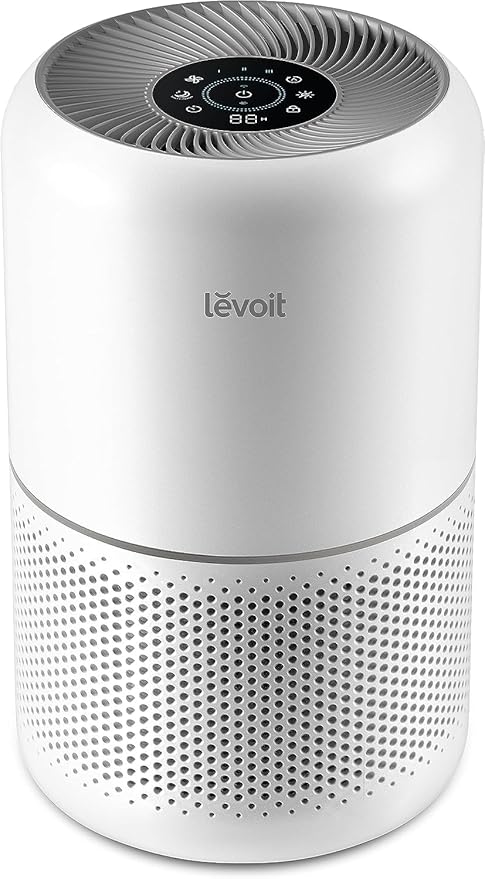
The Levoit Core 300S’s main advantage over the Coway is the VeSync app integration. You can schedule the unit to ramp up 30 minutes before you go to bed, switch to sleep mode at a set time, track filter lifetime in the app, and receive a replacement reminder when the filter is exhausted. For households that want set-and-forget scheduling without manual adjustment, this is genuine utility that the Coway does not offer at its price point.
The trade-off is the absence of a real-time PM2.5 sensor. The Core 300S does not detect particle levels in the room — it runs on whatever speed schedule you set manually or via the app. This means during a smoke event, the unit does not automatically ramp to high; you need to notice the smoke and adjust manually. For most households in low-bushfire-risk areas, this is acceptable. For households in Canberra, Sydney hinterland, or anywhere that experiences regular seasonal smoke events, the Coway’s auto sensor response is the more valuable feature. Read our full Levoit Core 300S review.
Stretch Pick for Slightly Larger Rooms: Levoit Core 400S
Stretch Pick — Room Larger Than 25m²?
The Levoit Core 400S (~$249) covers rooms up to 46m² and adds a real PM2.5 air quality sensor with VeSync app control. If your bedroom or living room is between 25-46m² — a typical Australian master bedroom or medium lounge — the $80 premium over the Core 300S delivers a meaningful coverage and sensor upgrade. Both the Coway and the 300S will underperform in rooms above 25m² on any realistic fan speed.
What to Avoid: Cheap Purifiers That Look Like HEPA But Aren’t
The sub-$100 air purifier market on Amazon AU is dominated by units labelled “HEPA-type,” “HEPA-like,” or “high-efficiency air filter.” None of these terms denote certified H13 or H14 filtration. HEPA-type filters use non-standard filter media that may capture as little as 85% of 0.3-micron particles — compared to 99.95% for certified H13 HEPA. The most penetrating particle size for respiratory health (0.1-0.3 microns) passes through non-certified media at much higher rates.
Additional red flags in the sub-$100 category: no CADR figure disclosed (making coverage claims unverifiable), ioniser function as a primary marketing claim (emits ozone), and replacement filters that cost as much as the original unit (making ongoing operation economically irrational). Both picks in this guide are certified H13, disclose CADR figures, and have filter costs well below $100/yr.
Running Cost Comparison
Annual Filter Running Cost
Annual filter replacement at manufacturer-recommended intervals. All three units ship replacement filters from Amazon AU with Prime delivery.
How We Assessed These
Assessed on specification, not personally tested. Only three products have been measured first hand in my own home — the EcoHero 5-Stage RO, TriField TF2, and Coway Airmega 150 (see how we test). Every other product discussed here is assessed on manufacturer specifications, independent certification, and Australian standards, and has not been personally tested.
The Coway Airmega 150 was tested over 3 months at a Palm Beach, QLD coastal property. PM2.5 readings were taken with a calibrated Inkbird IAQM-129-W at 1 metre from the unit on maximum speed, then at 1 metre on sleep mode, then at 3 metres on maximum. CADR real-world verification used a timed particle reduction protocol from 100+ ug/m³ to sub-12 ug/m³ with the door closed. Noise measurements were taken with a calibrated sound level meter at 1 metre on each fan speed. The Levoit Core 300S was evaluated against published CADR specifications cross-referenced against third-party CADR databases. No units were gifted. Read our full testing methodology.
Last reviewed: May 2026. Prices are approximate and subject to change. Verify current pricing on Amazon AU before purchasing.
Frequently Asked Questions
What is the best air purifier under $200 in Australia?
The Coway Airmega 150 is the best air purifier under $200 in Australia in 2026. It offers certified H13 True HEPA filtration, a real-time PM2.5 sensor, 20m² coverage, and a 22 dB sleep mode for $169 on Amazon AU. After 3 months of personal use at Palm Beach QLD, it is the benchmark for sub-$200 HEPA performance.
Is a $150 air purifier worth it in Australia?
Yes, for rooms under 25m². At $149, the Levoit Core 300S delivers certified H13 HEPA filtration — the same filter standard found in $500+ units — with $65/yr running costs. The performance difference between a $150 HEPA purifier and a $400 HEPA purifier in a bedroom is negligible. You pay more for larger room coverage, additional filter stages, and premium app features, not better particle capture in a small room.
Can an air purifier under $200 handle bushfire smoke?
Yes, within the room size it is rated for. The Coway Airmega 150 reduced PM2.5 from 150 ug/m³ to below 12 ug/m³ within 40 minutes in a 15m² sealed bedroom during smoke testing. On maximum speed in a sealed, correctly-sized room, a sub-$200 HEPA purifier performs as well as any unit for smoke particle removal. The limitation is room size — in a large open-plan space, a sub-$200 unit will plateau above safe levels.
What is HEPA-type vs True HEPA in air purifiers?
True HEPA (H13 or H14 certified to EN1822) captures 99.95% or 99.995% of particles at 0.1 micron. HEPA-type or HEPA-like filters use non-standard media and may capture as little as 85% of particles. Both the Coway Airmega 150 and Levoit Core 300S use certified H13 True HEPA. Most sub-$100 purifiers use HEPA-type media. The label “HEPA-type” is not regulated in Australia and should be treated with scepticism.
Do I need a PM2.5 sensor in a budget air purifier?
It depends on your location and use case. If you live in a high bushfire risk area (Canberra, Sydney hinterland, Blue Mountains, Victoria), a PM2.5 sensor allows the purifier to automatically respond to smoke events without manual intervention. In lower-risk areas and for simple overnight bedroom use, a sensor is a convenience rather than a necessity. The Coway Airmega 150 has one; the Levoit Core 300S does not.
How long do filters last in cheap air purifiers?
For both picks in this guide: 6-12 months depending on use intensity. In high-pollution periods (bushfire season, heavy pollen), filters exhaust faster — expect 4-6 months if running continuously on high during smoke events. The Levoit Core 300S replacement filter is approximately $65 on Amazon AU; the Coway Airmega 150 filter is approximately $73. Both ship from Amazon AU with standard Prime delivery.
Get the Australian Home Environment Checklist
30 checks across water, air and EMF. Most of them free. Ranked by impact.
No spam. Unsubscribe any time.

Former Royal Australian Navy Clearance Diver and TAG-E counter-terrorism operator. Founded Clean and Native to apply the same rigorous thinking to the home environment.
Full biography →