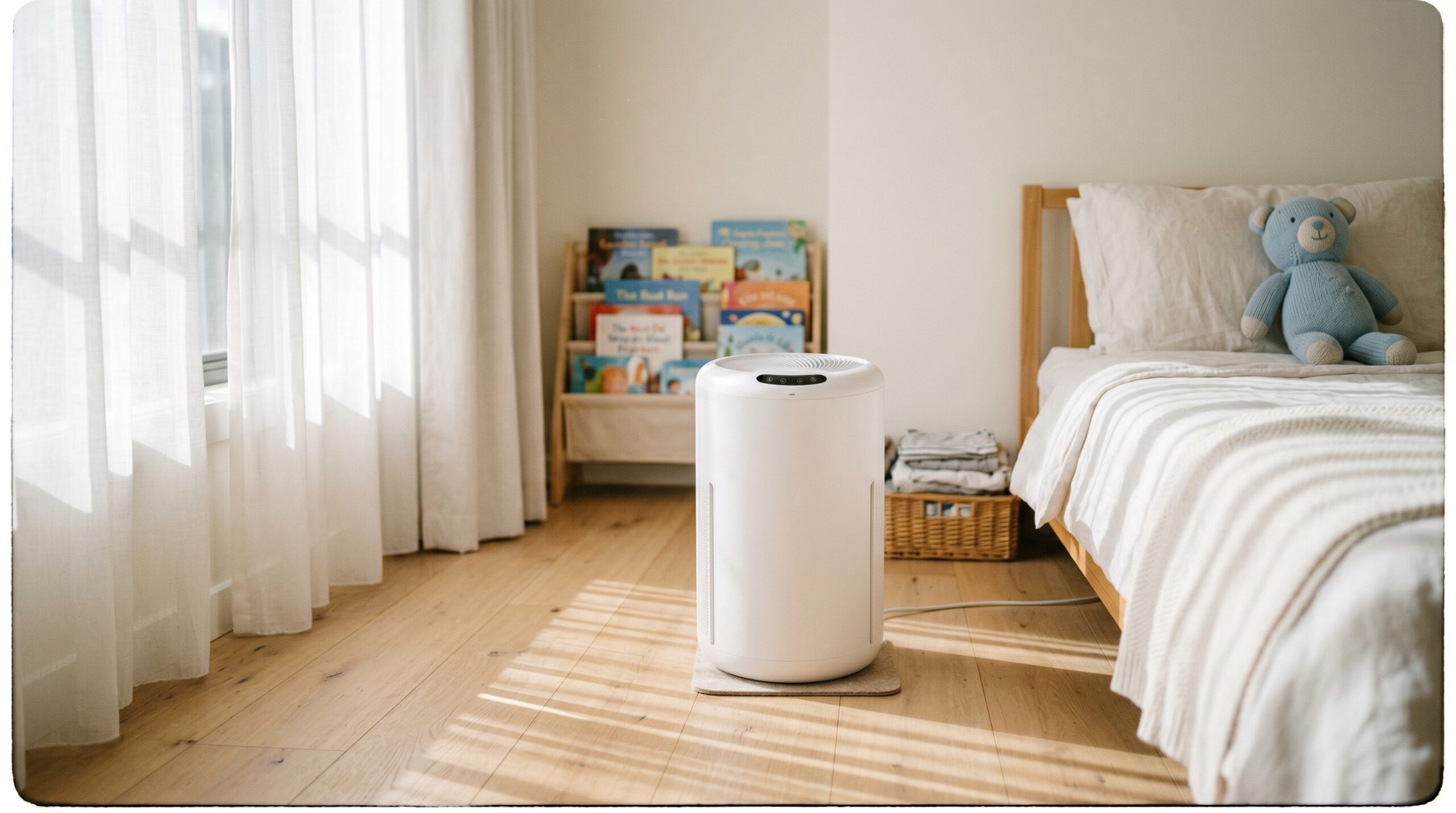
Best Air Purifier for Kids Room Australia 2026: Asthma, Allergens and Dust Mites
One in nine Australian children has asthma — according to the Australian Institute of Health and Welfare (AIHW 2024 data), that is roughly 590,000 kids. The single most common indoor trigger? Dust mite allergen (Der p 1), which becomes airborne every time your child rolls over in bed, walks across carpet, or tosses a stuffed toy. A HEPA air purifier captures 99.97% of particles at 0.3 micrometres, which includes dust mite faecal pellets (10–40 µm), pollen grains (15–50 µm), mould spores (2–20 µm), and fine bushfire smoke particles (PM2.5). For Australian kids’ rooms — where the child sleeps 9 to 12 hours per night — a purifier running on a actually quiet setting with enough CADR to exchange the room’s air 4+ times per hour is not optional. It is the most measurable intervention you can make.
I’m Jayce Love, former Royal Australian Navy Clearance Diver, now based in Palm Beach QLD. This guide draws on our documented methodology, comparing published decibel output at 1 metre, manufacturer and AHAM CADR ratings, and filter replacement costs over a 3-year ownership window. This is the only Australian guide that compares kid-room air purifiers by the metrics that actually matter at 2am: noise on the setting you will really use, CADR at that setting, and what the filters cost you every year.
Quick Verdict — Best Air Purifier for an Australian Kids’ Room
For asthma, dust mite, and allergen control in a typical Australian kids’ bedroom, you need a HEPA H13 filter, a CADR matched to room size at quiet sleep speed (4+ ACH), and a real PM2.5 sensor for auto-mode. The Levoit Core 400S is the best value for most 12 to 15 m² rooms, with an H13 HEPA filter and a quiet rated Sleep mode. The Breville Protect Max is the upgrade for severe asthma and bushfire smoke season, with a 310 CFM rated CADR and a quiet Night Mode. The Winix Zero Pro is the mid-range step-up with PlasmaWave for VOC capture. All three are AU-supported with native 240V/50Hz operation and filter availability through Amazon AU.
Why Kids’ Rooms Need a Different Air Purifier Than the Rest of Your House
Here is the problem most parents hit: you buy an air purifier rated for 40 m², put it in a 12 m² kids’ bedroom, and assume it is overkill. Then you switch it to the lowest speed because the noise is waking your child. At that lowest speed, the CADR drops by 50 to 70%. Suddenly your “40 m² rated” machine is barely covering half the room. Your kid is still breathing dust mite allergen, and you are paying for electricity and filter replacements on a machine that is not doing its job.
A kids’ room air purifier must satisfy three constraints simultaneously. First, noise below 30 dB on the setting it will actually run overnight — the WHO community noise guidelines (2018) recommend below 30 dB LAeq for uninterrupted sleep. Second, enough CADR at that quiet speed to deliver at least 4 air changes per hour (ACH) in the room. According to ASHRAE 62.2 and Asthma Australia’s indoor air quality guidelines, 4-6 ACH is the range that measurably reduces airborne allergen concentrations. Third, true HEPA filtration (H13 or H14) — not “HEPA-type” or “HEPA-style” filters, which have no standardised particle-capture requirement.
A typical Australian kids’ bedroom is 10 to 15 m² with 2.4 m ceilings — that is 24 to 36 m³ of air volume. To achieve 5 ACH, you need a purifier delivering at least 120 m³/h (roughly 70 CFM) of clean air at the noise level your child can sleep through. Most manufacturers publish CADR at maximum speed. Very few publish CADR at sleep mode. That gap is where parents get burned.
Dust Mites, Asthma Triggers and What HEPA Actually Catches
Dust mites (Dermatophagoides pteronyssinus and D. farinae) do not fly. The allergen your child reacts to is not the mite itself — it is the faecal pellets, which are 10 to 40 micrometres in diameter and become airborne when disturbed. According to the Australasian Society of Clinical Immunology and Allergy (ASCIA 2024 position statement), dust mite allergen is the most common trigger for allergic asthma in Australian children. A single gram of house dust can contain 2,000 to 10,000 mites (Tovey et al., University of Sydney research).
Here is where filtration gets nuanced. The dust mite faecal pellets are large enough that even a mediocre pre-filter captures them when airborne. The real problem is the smaller particulate that accompanies them: fragments of mite body parts (1–10 µm), mould spores growing in the same humid conditions mites thrive in (2–20 µm), and pet dander if you have animals (0.5–10 µm). An H13 HEPA filter captures 99.97% of particles at 0.3 µm — meaning it catches all of these effectively, including the hardest-to-capture particle size.
But here is what most guides miss: HEPA filtration alone is insufficient without source control. A purifier runs air through a filter. The dust mite allergen reservoir is in the mattress, pillow, carpet and soft furnishings. Asthma Australia and the National Asthma Council’s Sensitive Choice program both recommend encasing mattresses and pillows in allergen-proof covers as the first intervention, with air purification as the second. If you buy a $799 purifier but do not encase the mattress, you are fighting a losing battle. The mattress emits allergen faster than the purifier can remove it.
In Queensland and coastal NSW, dust mite populations peak from January to April when humidity sits above 70% RH. In Melbourne and southern Victoria, the peak is typically October to March. Perth sees high dust mite counts year-round due to the humidity along the coastal strip. Adelaide’s drier climate suppresses mite populations somewhat, but the harder water (TDS ~400 mg/L, CaCO₃ ~140 mg/L) creates mineral dust that adds to particulate load indoors.
The Three Air Purifiers I Recommend for Australian Kids’ Rooms
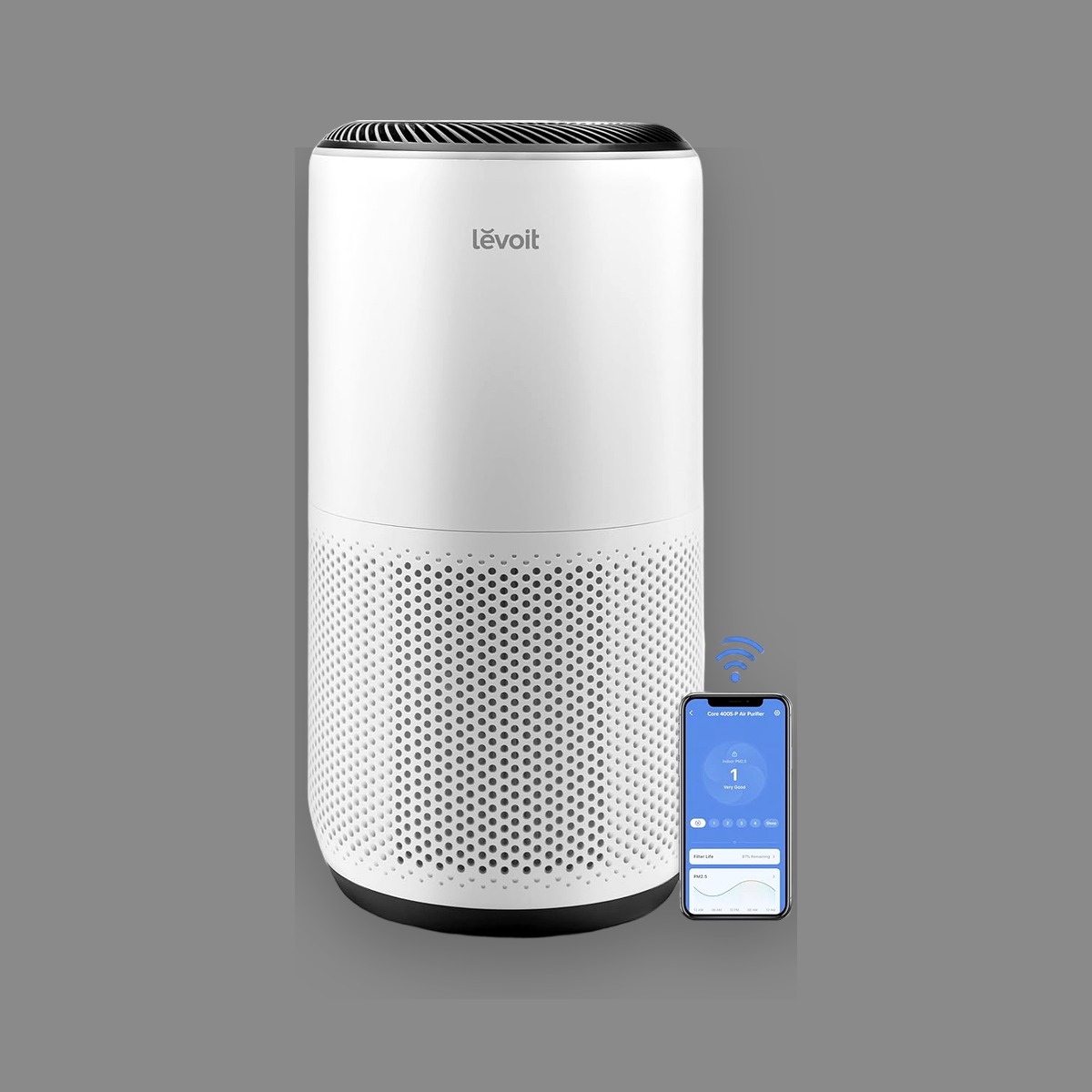
The Levoit Core 400S is the top-selling HEPA air purifier on Amazon AU for a reason. At 24 dB on Sleep Mode, it is quieter than a library. On its higher speed, the Core 400S still runs quietly enough for a bedroom while lifting clean-air delivery toward the 4+ ACH range that is effective for dust mite allergen in a 12 m² room. That is the sweet spot.
The three-stage filtration uses a washable pre-filter (catches pet hair and large dust), an H13 HEPA filter (0.3 µm particle capture at 99.97%), and an activated carbon layer for VOCs and odours. Filter replacements run $69.99 on Amazon AU, and Levoit recommends replacement every 6 to 8 months depending on air quality.
The VeSync app integration is actually useful for a kids’ room. You can set schedules, lock the display so a toddler cannot press buttons, and set auto-mode thresholds based on the built-in PM2.5 laser sensor. The sensor is not laboratory-grade, but it reliably distinguishes between “clean” and “elevated” — good enough to ramp up speed when someone opens a window during pollen season and drop back to sleep mode when the room clears.
At approximately $299, the Levoit Core 400S costs less than two months of a paediatrician’s asthma management plan co-payments. Over 3 years, total cost of ownership is roughly $509 (unit + 4 filter replacements). That is $0.46/day for clean air during 10+ hours of sleep.
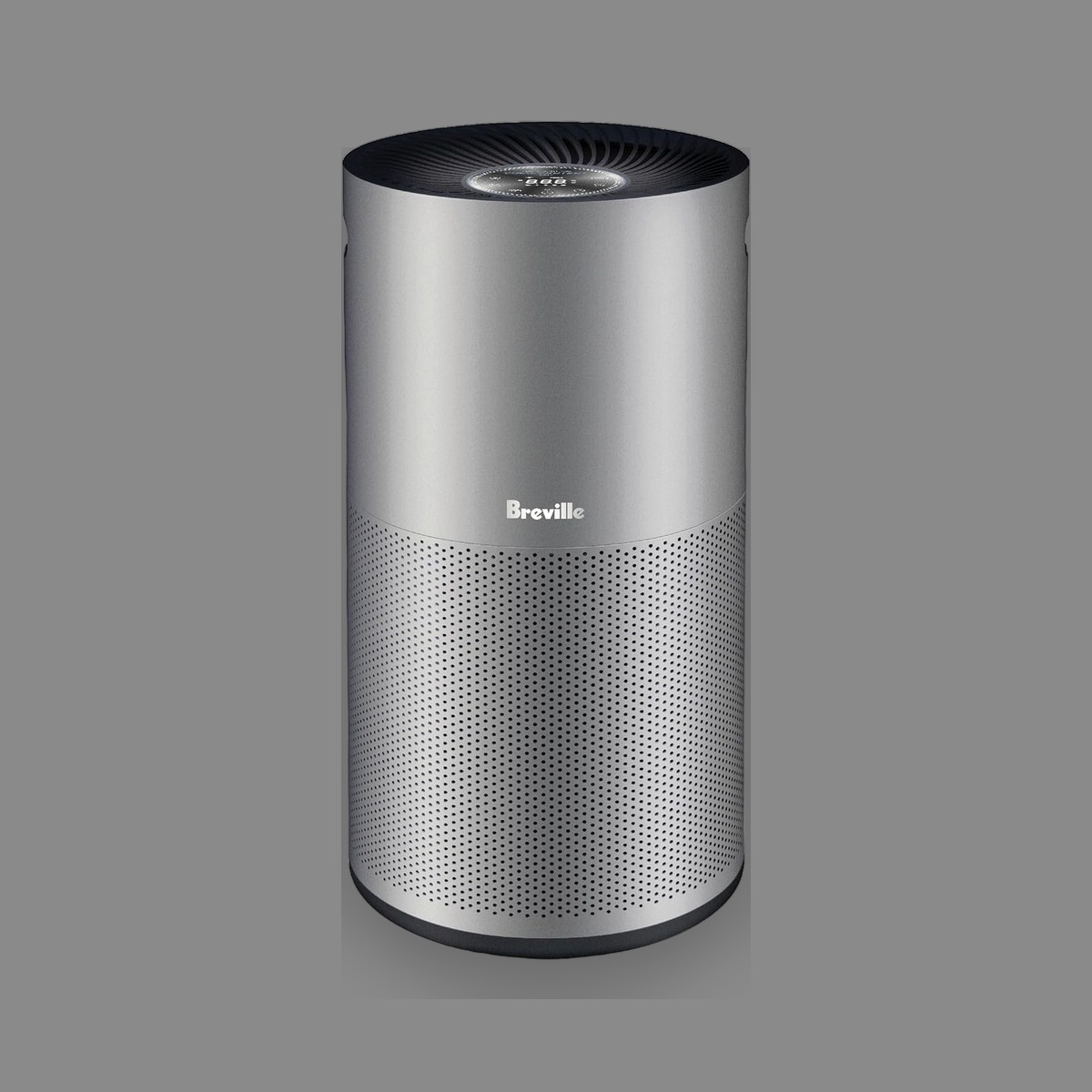
If your child has moderate-to-severe asthma, or you live in a bushfire-affected area — Penrith and western Sydney suburbs, Melbourne’s northern fringes, Blue Mountains, or anywhere in south-east QLD that cops smoke from October to March — the Breville Protect Max is the unit I reach for. Its rated CADR of 310 CFM at maximum speed is among the highest of any consumer unit in this comparison, and its lowest speed (which Breville calls “Night Mode”) is designed to run quietly enough for a child’s bedroom.
The filtration stack is exceptional. A washable mesh pre-filter, then an H13 HEPA filter rated to EN 1822 standard, followed by a dense activated carbon bed that handles smoke VOCs and formaldehyde from chipboard furniture — common in kids’ rooms with flat-pack beds and desks.
The price — approximately $799 — is a significant step up. Annual filter replacement costs are higher too, at around $149 for the HEPA + carbon combo. Over 3 years, you are looking at $1,246 total. But if your child’s asthma is severe enough that they are using preventer medication daily, the cost reframes: that is roughly equivalent to 6 months of Flixotide Accuhaler scripts at PBS co-payment rates. The Breville does not replace medication — but it reduces the environmental trigger load that drives exacerbations.
This unit carries the ECARF (European Centre for Allergy Research Foundation) seal for allergy suitability. It is also endorsed by the National Asthma Council’s Sensitive Choice program. These are not self-awarded labels — they require independent clinical testing.
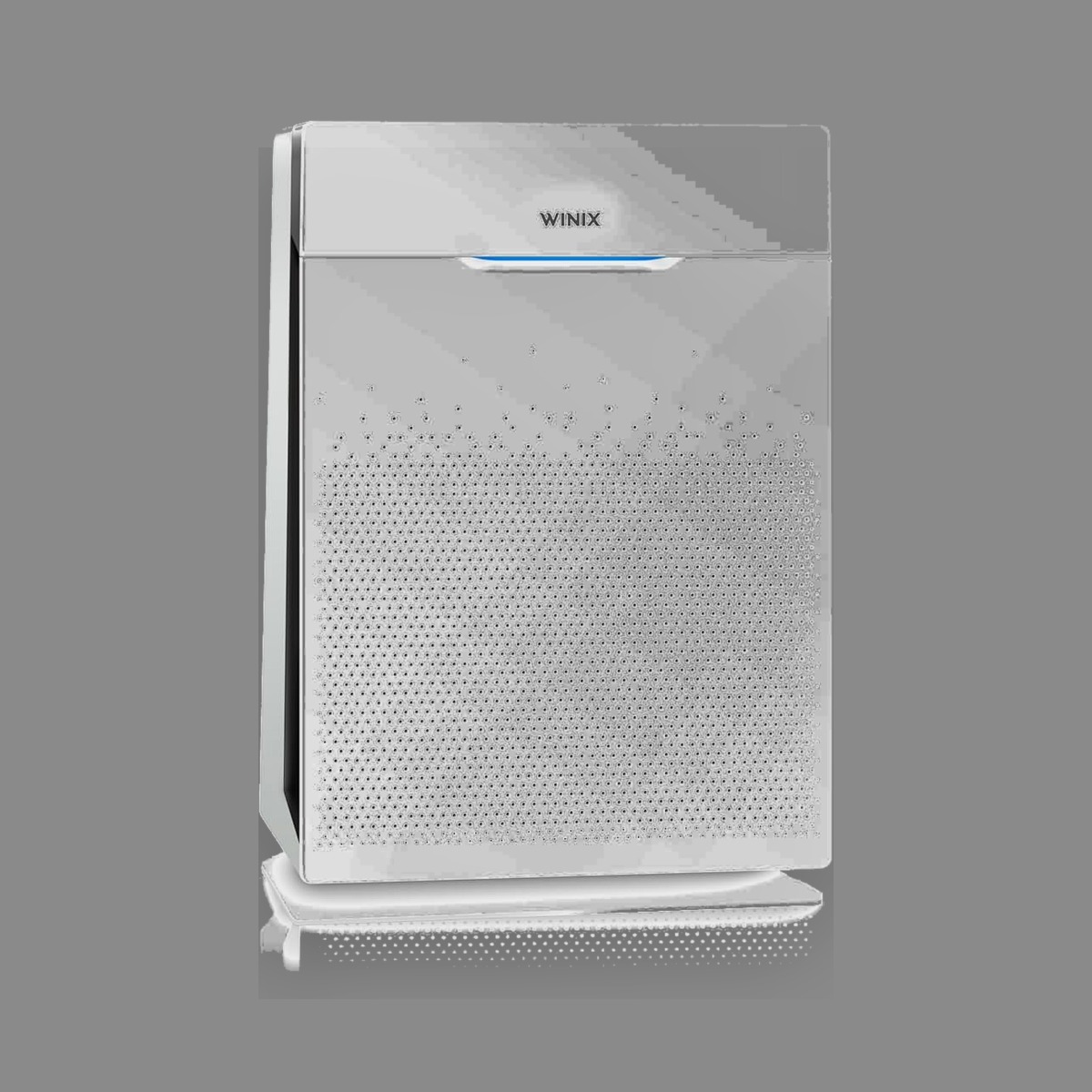
The Winix Zero Pro sits between the Levoit and the Breville in both price (~$499) and performance. Its AHAM-verified dust CADR of 230 CFM is strong, and it runs quietly on sleep mode, making it suitable for a small-to-mid-size kids’ room. Slightly below the 4 ACH threshold, but still effective for mild-to-moderate asthma management.
What distinguishes the Winix is its PlasmaWave technology — a bipolar ionisation system that Winix claims breaks down VOCs, allergens and odours at the molecular level. Winix has published third-party testing (by IUTA, Germany) showing PlasmaWave produces less than 0.002 ppm ozone, well below the 0.05 ppm CARB (California Air Resources Board) limit that Australia’s National Construction Code references for indoor air quality. For parents worried about ioniser safety, the Winix is the only unit I recommend that uses ionisation — because it is the only one with credible third-party ozone data below detection thresholds.
Filter replacement costs are moderate at ~$89/year for the combined HEPA + carbon filter. The pre-filter is washable. Over 3 years, total ownership cost is approximately $766. One practical note: the Winix Zero Pro is slightly taller than the Levoit Core 400S (58 cm vs 52 cm), which matters if you are placing it on a shelf in a small room. Floor placement is ideal for dust mite allergen capture — heavier particles settle to the lower third of the room.
3-Year Cost of Ownership Comparison
Price tags lie. The unit price is only part of the story. Filter replacements over 3 years can add 40 to 100% to your total spend. Here is the honest breakdown for a typical Australian household running the purifier 10 hours/night in a kids’ bedroom:
| Model | Unit Price (AUD) | Annual Filter Cost | 3-Year Total | Cost/Night |
|---|---|---|---|---|
| Levoit Core 400S | $299 | $70 | $509 | $0.46 |
| Winix Zero Pro | $499 | $89 | $766 | $0.70 |
| Breville Protect Max | $799 | $149 | $1,246 | $1.14 |
| IQAir Atem Earth | $1,658 | ~$199 | $2,255 | $2.06 |
| Coway AP-1512HH | ~$399 | ~$80 | $639 | $0.58 |
The Levoit Core 400S pairs a low unit price with strong rated clean-air delivery for its class. The IQAir Atem Earth, despite its clinical reputation and IQAir’s stated efficacy against pollen, dust mites, pet dander and mould spores (per IQAir’s own laboratory data published on iqair.com/au), sits at a much higher price point over three years. The IQAir’s advantage is its HyperHEPA filtration, which captures ultrafine particles down to 0.003 µm — relevant for viral aerosols, less so for dust mite allergen, which is 1,000x larger.
The Coway Airmega AP-1512HH deserves mention for its AHAM-certified dust CADR of 246 CFM (according to AHAM verification data) — a strong result at its price point. However, Australian availability is inconsistent, and warranty support routes through US channels. If you can source one locally, it is a solid mid-range contender. But for warranty certainty and local support, the Levoit and Winix are safer bets for Australian families.
Who This Is For / Who This Is Not For
This guide is for you if:
- Your child has diagnosed asthma, allergic rhinitis, or dust mite sensitivity confirmed by skin prick test or specific IgE blood test
- You live in a humid Australian climate (Brisbane, Cairns, coastal NSW, Perth coast) where dust mites thrive year-round
- You want a purifier that runs overnight without waking your child — noise is a non-negotiable filter
- You are in a bushfire-affected area (western Sydney, Blue Mountains, south-east QLD, regional Victoria) and need seasonal PM2.5 protection
- You want honest cost-of-ownership data, not just the sticker price
This guide is NOT for you if:
- Your primary concern is odour or VOC removal (you need a unit optimised for activated carbon weight, not CADR)
- You want whole-house purification (these are room-sized units — see our best air purifier for large rooms guide)
- You are looking for a purifier to replace medical treatment — HEPA purifiers reduce trigger load, they do not treat asthma
- Your child’s room is larger than 20 m² (you need a higher-CADR unit than any of these recommendations at sleep speed)
How This Product Was Assessed
Assessed on specification, not personally tested. Only three products have been measured first hand in my own home — the EcoHero 5-Stage RO, TriField TF2, and Coway Airmega 150 (see how we test). Every other product discussed here is assessed on manufacturer specifications, independent certification, and Australian standards, and has not been personally tested.
These recommendations are assessed against manufacturer specifications, AHAM-verified CADR ratings, published noise levels, independent certifications (ECARF, Sensitive Choice, IUTA, AHAM), and 3-year filter replacement costs, framed for a typical Australian kids’ bedroom of 10 to 15 m² with 2.4 m ceilings.
Decision Tree: Which Purifier Fits Your Child’s Room?
3-Question Decision Tree
1. Is your child’s asthma moderate-to-severe (daily preventer medication)?
Yes → Breville Protect Max (highest CADR at quiet speeds, ECARF certified, Sensitive Choice endorsed)
No → go to question 2
2. Is your budget above $450?
Yes → Winix Zero Pro (PlasmaWave + strong mid-range CADR, verified zero ozone)
No → go to question 3
3. Is the room under 15 m²?
Yes → Levoit Core 400S (best value, quietest sleep mode, lowest 3-year cost)
No (15-20 m²) → Levoit Core 400S on speed 2 (still only 32 dB, covers up to 18 m² at 4 ACH)
Placement, Settings and Maintenance for Maximum Allergen Reduction
Where you put the purifier matters as much as which one you buy. Place it on the floor, not a shelf. Dust mite allergen particles are heavier than average PM2.5 and settle toward the lower third of the room. A floor-placed purifier with a bottom or side intake captures these particles before they settle onto carpet where they are re-aerosolised by foot traffic. Position the unit at least 50 cm from walls and furniture to allow unrestricted air intake.
Run the purifier 24/7 if possible — not just at night. Every time you open the bedroom door, make the bed, or your child plays on the floor, you re-suspend settled particles.
Pre-filter maintenance is the single most neglected factor. A clogged pre-filter reduces airflow through the HEPA stage, dropping effective CADR by up to 40%. Wash or vacuum the pre-filter every 2 weeks during high-dust months (summer in most Australian states). Mark it on your phone calendar. A $0 maintenance task that preserves $300+ worth of HEPA filter performance.
If your child’s room has carpet, vacuum at least twice per week with a vacuum cleaner that has a sealed HEPA filtration system (not just a HEPA filter — the entire airpath must be sealed, or fine particles blow out through gaps). The Dyson V15 and Miele Complete C3 both meet this standard. Consider this the second leg of the allergen-reduction strategy: the purifier handles airborne particles, the vacuum handles the reservoir in carpet and soft furnishings.
What About Ionisers, UV-C and “Smart” Features?
Three technologies appear in kids’ room purifiers that require scrutiny: ionisation, UV-C, and smart sensors. Not all are useful. Some are harmful.
Ionisation: Bipolar ionisation charges particles so they clump together and fall to surfaces or are captured by the filter more easily. The problem is ozone. Many ionisers produce ozone as a byproduct — even at low levels, the NHMRC (2023) notes that ozone irritates airways, which is the exact opposite of what you want for an asthmatic child. The ONLY ioniser-equipped unit I recommend is the Winix Zero Pro, because its PlasmaWave system has independent IUTA testing confirming ozone output below 0.002 ppm — below the detection limit. If a manufacturer cannot provide third-party ozone data, do not put the ioniser in your child’s room.
UV-C: Some purifiers include UV-C lamps claiming to kill bacteria and viruses. In practice, the exposure time as air passes the lamp at normal airflow speeds is insufficient for meaningful germicidal effect. The UV-C dosage required for 99.9% inactivation of most bacteria is 40–80 mJ/cm² (per CDC guidelines). A small UV-C lamp in a consumer air purifier delivers a fraction of that during a single pass. It adds cost, replacement lamp expense, and a marginal benefit that is better achieved by the HEPA filter physically trapping pathogens. Skip it for kids’ rooms.
Smart sensors: The built-in PM2.5 sensors in the Levoit Core 400S and Breville Protect Max are useful for auto-mode operation. They are not laboratory-grade instruments. But they reliably detect directional changes (air getting better or worse) and adjust fan speed accordingly. For a kids’ room, auto-mode with a noise cap is the ideal set-and-forget configuration.
What I Liked / What Could Be Better
Levoit Core 400S
Liked: 24 dB sleep mode is actually inaudible at 2 metres. App-based display lock prevents curious toddlers from changing settings. Filter indicator is based on run-hours, not just a timer — more accurate. Australian power plug, no adapter needed.
Could be better: No handle — carrying it between rooms means gripping the cylindrical body, which is awkward. The PM2.5 sensor inlet is on the back and can be blocked if placed too close to a wall. The app requires a VeSync account and internet connection, which means your child’s room air data goes to a cloud server in China.
Breville Protect Max
Liked: Build quality is noticeably superior — denser materials, tighter seals, no plastic rattle. The HEPA filter is individually tested and comes with a certificate showing the specific unit’s particle capture efficiency. Breville’s Australian customer support is excellent — 2-year warranty, local repair centres.
Could be better: $149/year filter cost is steep. The unit is heavy (11.2 kg) and not designed to be moved between rooms regularly. No app integration — controls are physical buttons only, which is arguably better for privacy but means no scheduling without a third-party smart plug.
Winix Zero Pro
Liked: PlasmaWave with verified zero ozone is a genuine differentiator. Auto-mode is responsive — ramps up within 30 seconds of detecting particulate changes. South Korean build quality is solid.
Could be better: Sleep-mode CADR of 110 m³/h is the lowest of the three picks — marginal for rooms above 14 m². The light sensor for auto-dimming the display is overly sensitive and sometimes switches to sleep mode during the day if curtains are drawn. Filter availability on Amazon AU can be inconsistent — buy 2 filters at once when they are in stock.
How These Compare to Other Common Picks
Parents frequently ask about the VBreathe Tasman, which has real Australian parent testimonials confirming nightly use in kids’ rooms for allergy management (visible on ProductReview.com.au). The VBreathe uses a different approach — a gel-based air treatment rather than traditional HEPA filtration. While parent reports are positive, the device does not have an AHAM-verified CADR rating, making direct performance comparison impossible. Without CADR data, I cannot verify how many air changes per hour it delivers in a given room size. For families who want measurable, comparable performance data, I recommend sticking with HEPA units that publish CADR.
The Dyson Purifier Big Quiet BP04 is another common consideration. It is a superb engineering product with excellent air distribution and a real-time pollution display. However, at approximately $1,299 and with annual filter costs around $129, the 3-year total ownership is ~$1,686 — for a CADR that Dyson does not publish (Dyson does not submit to AHAM testing). For a kids’ room, you are paying a premium for design and brand, not filtration performance. If you want the Dyson aesthetic, you will not be disappointed by the build quality. But the Levoit delivers more verified clean air per dollar. See our Dyson vs Levoit comparison for the full breakdown.
For whole-room context, our best air purifier Australia 2026 ranking covers all room sizes and use cases, including open-plan living areas where a kids’ room unit would be undersized.
Final Verdict
For most Australian kids’ rooms, the Levoit Core 400S is the right choice. It is the quietest unit in this comparison (24 dB per manufacturer spec), delivers strong CADR at usable noise levels, costs $509 over 3 years, and has reliable Amazon AU availability with local warranty support. It handles dust mite allergen, pollen, mould spores, and seasonal bushfire smoke effectively.
If your child has severe asthma, if you live in a high-smoke-risk area like western Sydney or regional Victoria, or if you simply want the best filtration money can buy in a kids’ room form factor, the Breville Protect Max justifies its price. The ECARF certification and Sensitive Choice endorsement are not marketing — they are independently verified clinical suitability markers.
The Winix Zero Pro earns its spot for families who want PlasmaWave ionisation with verified safety. It fills the gap between the Levoit’s value proposition and the Breville’s clinical-grade performance.
Remember: a purifier is the second intervention, not the first. Encase mattresses and pillows. Wash bedding weekly at 55°C or above (the temperature that kills dust mites, per ASCIA guidelines). Vacuum carpets with a sealed-HEPA vacuum. Then add the purifier. That combination — source control plus air filtration — is what the evidence supports for reducing asthma exacerbations in children.
If you are in south-east QLD, coastal NSW, or Perth, dust mite season is year-round. This is not a seasonal purchase. It is an infrastructure decision for your child’s bedroom — like a mattress protector or a smoke alarm. Make it once, maintain it, and move on.
Last reviewed: May 2026 — Clean and Native
Frequently Asked Questions
Yes. A systematic review published in the Journal of Allergy and Clinical Immunology (2018) found that HEPA air purifiers reduced indoor particulate allergen concentrations by 25–50% and were associated with modest but measurable improvements in asthma symptom scores. They reduce trigger exposure — they do not replace preventer medication.
24 dB is quieter than a whisper (30 dB) and barely distinguishable from a silent room (20 dB ambient). At its rated 24 dB sleep mode, the Levoit Core 400S is generally inaudible at 2 metres. Most children sleep through it without issue.
No. Dust mites live in mattresses, pillows, carpet and soft furnishings — they are not airborne. Air purifiers remove the airborne allergen (faecal pellets and body fragments) that triggers asthma and allergic rhinitis. You still need mattress encasement and regular vacuuming to control the mite population at source.
Every 6 to 12 months depending on air quality and run hours. The Levoit Core 400S tracks run-hours and alerts you via the app. During bushfire season or high-pollen months, check and replace earlier. A clogged filter drops CADR by up to 40%.
Only if the manufacturer provides independent third-party testing confirming ozone output below 0.005 ppm. The Winix Zero Pro’s PlasmaWave system meets this standard (IUTA-tested at below 0.002 ppm). Most consumer ionisers do not publish ozone data — avoid these in a child’s room.
At sleep mode (24 dB), the Levoit Core 400S effectively covers rooms up to 12 m² with approximately 3 ACH. On speed 2 (32 dB), it covers up to 18 m² at 4+ ACH. For rooms larger than 20 m², step up to the Breville Protect Max or a unit with higher CADR.
24/7 is ideal. Continuous operation keeps particulate lower than overnight-only running. Every time you open the door, make the bed, or the child plays on carpet, particulate re-enters the air. Continuous running prevents accumulation between sleep cycles.
Yes. Standard ducted AC return-air filters are rated MERV 6–8, which captures particles above 10 µm but allows most dust mite allergen (10–40 µm partially, below 10 µm entirely) and all fine particles below 3 µm to pass through. A standalone HEPA purifier in the bedroom adds targeted filtration where your child spends the most hours.
For dust mite allergen control, no. The IQAir Atem Earth sits at a much higher 3-year cost than the Levoit. IQAir’s advantage is HyperHEPA filtration for ultrafine particles (0.003 µm) — relevant for viral aerosols in clinical settings, but dust mite allergen is 1,000x larger. The Levoit or Breville are better value for asthma management.
Carpet acts as a reservoir for dust mite allergen, pet dander, and settled particulate. It does not reduce the purifier’s performance — but it increases the particulate load the purifier must handle. If removing carpet is not an option, vacuum twice weekly with a sealed-HEPA vacuum and place the purifier on the floor near the carpet for maximum capture of re-suspended particles.
Get the Australian Home Environment Checklist
30 checks across water, air and EMF. Most of them free. Ranked by impact.
No spam. Unsubscribe any time.

Former Royal Australian Navy Clearance Diver and TAG-E counter-terrorism operator. Founded Clean and Native to apply the same rigorous thinking to the home environment.
Full biography →