Best Air Purifier for Apartments in Australia 2026 (Compared for Small Spaces, Renters and Open-Plan Living)
Drafted with AI assistance and checked against published specifications and certifications. First-hand measurements appear only where stated. How we make content
The best air purifier for an apartment in Australia is the Breville Protect Max for open-plan spaces (550 CADR, 1.5 kg activated carbon), the Levoit Core 400S for 1–2 bedroom apartments (260 CADR, PM2.5 auto mode), and the Coway Airmega 150 for studios under 30m² (200 CADR, 22 dB sleep mode). Apartments need air purifiers more than houses — sealed envelopes, shared ventilation systems, and smaller air volumes mean pollutants from cooking, bushfire smoke, and VOC off-gassing from new construction accumulate faster and stay longer. A freestanding HEPA unit is the only modification a renter can make that directly addresses this.
| Apartment type | Top pick | Why it wins |
|---|---|---|
| Studio / up to 30m² | Coway Airmega 150 | 22 dB sleep mode, 5W, smallest footprint on the list |
| 1–2 bedroom / 30–55m² | Levoit Core 400S | PM2.5 auto mode, 260 CADR, best value in the segment |
| Open-plan 2–3 bed / 55m²+ | Breville Protect Max | 550 CADR, covers full open-plan zone at 4 ACH |
| New build / VOC concern | Breville Protect Max | Only pick with 1.5 kg activated carbon for formaldehyde off-gassing |
✓ Who This Is For
- Renters who cannot install fixed, ducted, or whole-house filtration systems
- Studio and apartment dwellers in bushfire-affected states (NSW, VIC, QLD) during October–March smoke season
- Residents in new apartment buildings where VOC off-gassing from MDF, chipboard, and carpet affects air quality for the first 2–3 years
- Pet owners in apartments following strata law changes in QLD (2023), NSW, and VIC that permit animals
- Coastal apartment residents in Sydney, Gold Coast, Wollongong, and Cairns where humidity and mould spores accumulate in sealed spaces
✗ Who It Is Not For
- Whole-house detached homeowners wanting full-property coverage — see our best air purifiers Australia guide instead
- Anyone expecting a purifier to substitute for mould remediation — filtration captures airborne spores but does not kill mould at the source
- Households where the only concern is outdoor pollution and windows can safely remain open — ventilation on low-AQI days is free
Why Apartments Have Worse Air Quality Than Houses
According to ABS 2024 data, 14.3% of Australian households now live in apartments or flats, up from 11.2% in 2016 — the fastest-growing dwelling type in the country. Most of those residents assume their air quality problem is no different from a suburban house. It is considerably worse, and the reasons are structural.
Shared mechanical ventilation systems in apartment towers recirculate air from common areas — corridors, carparks, rubbish chutes, and neighbouring units. The air you breathe is not solely the air you introduced. Cooking smells from two floors down, cigarette smoke from the stairwell, diesel exhaust from the basement carpark — these enter your unit through ductwork and under-door gaps continuously. In a detached house, every infiltration source is from outside; in an apartment, it is from every direction including through the ceiling and floor.
The National Construction Code 2022 (NCC 2022) and BASIX requirements in NSW mandate tighter building envelopes in new residential construction for energy efficiency. Better insulation and reduced infiltration rates mean indoor pollutants — VOCs from new finishes, PM2.5 from cooking, CO2 from occupants — take longer to dilute. A sealed, energy-efficient apartment is a sealed box. What you put in stays in.
The physics of small spaces compounds this. A 55m² apartment with windows closed during a bushfire event accumulates PM2.5 from infiltration 2–3 times faster than a detached 200m² home, because the same pollutant load enters a smaller air volume. According to EPA Victoria monitoring data, indoor PM2.5 in suburban homes can reach 150–200 µg/m³ during smoke events even with windows shut — in a sealed apartment, this concentration is reached sooner and persists longer once the event passes.
Underground carparks beneath apartment towers are a persistent source of nitrogen oxides (NOx) and volatile organic compounds (VOCs) that enter ground-floor and lower-level units through elevator shafts and stairwells. New apartments compound this with off-gassing: formaldehyde from MDF cabinetry, chipboard flatpack furniture, and vinyl flooring can elevate indoor air VOC concentrations 2–5 times above outdoor levels for the first two years of occupancy, according to CSIRO building materials research. Standard HEPA filters capture particles but have no effect on gaseous VOCs — only activated carbon does.
What CADR Actually Means and How Much You Need
CADR — Clean Air Delivery Rate — measures how many cubic metres of contaminated air a purifier can clean per hour at a given particle size. The Association of Home Appliance Manufacturers (AHAM) certifies three separate CADR figures: smoke, pollen, and dust, each in m³/hour. For Australian apartments, the smoke CADR figure is the most relevant because it covers the smallest particle size (0.1–1 micron), which includes both PM2.5 from bushfire season and fine mould spores from coastal humidity.
The standard sizing formula is: CADR divided by 9.6 gives you the maximum recommended room area in m² at 4 air changes per hour (ACH). Four ACH is the minimum recommended by AHAM and the US EPA for effective allergen and smoke removal. At 3 ACH — the typical “maintenance mode” — you can cover roughly 30% more area with the same unit. Use the 4 ACH figure for sizing if bushfire season or pet dander are your primary concern; use 3 ACH for general daily air quality.
| Apartment type | Typical size | Min CADR at 4 ACH | Recommended pick |
|---|---|---|---|
| Studio | 25–35m² | 150–200 m³/h | Coway Airmega 150 |
| 1-bedroom | 50–65m² | 250–300 m³/h | Levoit Core 400S |
| 2-bedroom | 70–85m² | 350–400 m³/h | Breville Protect Max |
| Open-plan 2–3 bed | 90–110m² | 450–550 m³/h | Breville Protect Max |
Noise matters more in apartments than in houses. Body corporate bylaws in most states prohibit noise above 55 dB after 10pm (and many buildings enforce stricter rules). At 40 dB, an air purifier running on medium is audible from the next room in a concrete-slab apartment with no soft furnishings to absorb sound. For bedroom use, target 25 dB or below on sleep mode — this matches the ambient noise floor of a reasonably quiet apartment and will not disturb sleep. The Coway Airmega 150 at 22 dB is the benchmark on this list.
The 3 Best Air Purifiers for Apartments in Australia (2026)
These three products cover every apartment size and budget from studio to open-plan penthouse. All carry genuine H13 True HEPA certification — not “HEPA-style” or “HEPA-like” media. All are selected for the Australian apartment conditions that matter: bushfire smoke PM2.5, coastal mould spores, cooking fumes, and new-build VOC off-gassing.
1. Breville Protect Max — Best Overall for Open-Plan Apartments
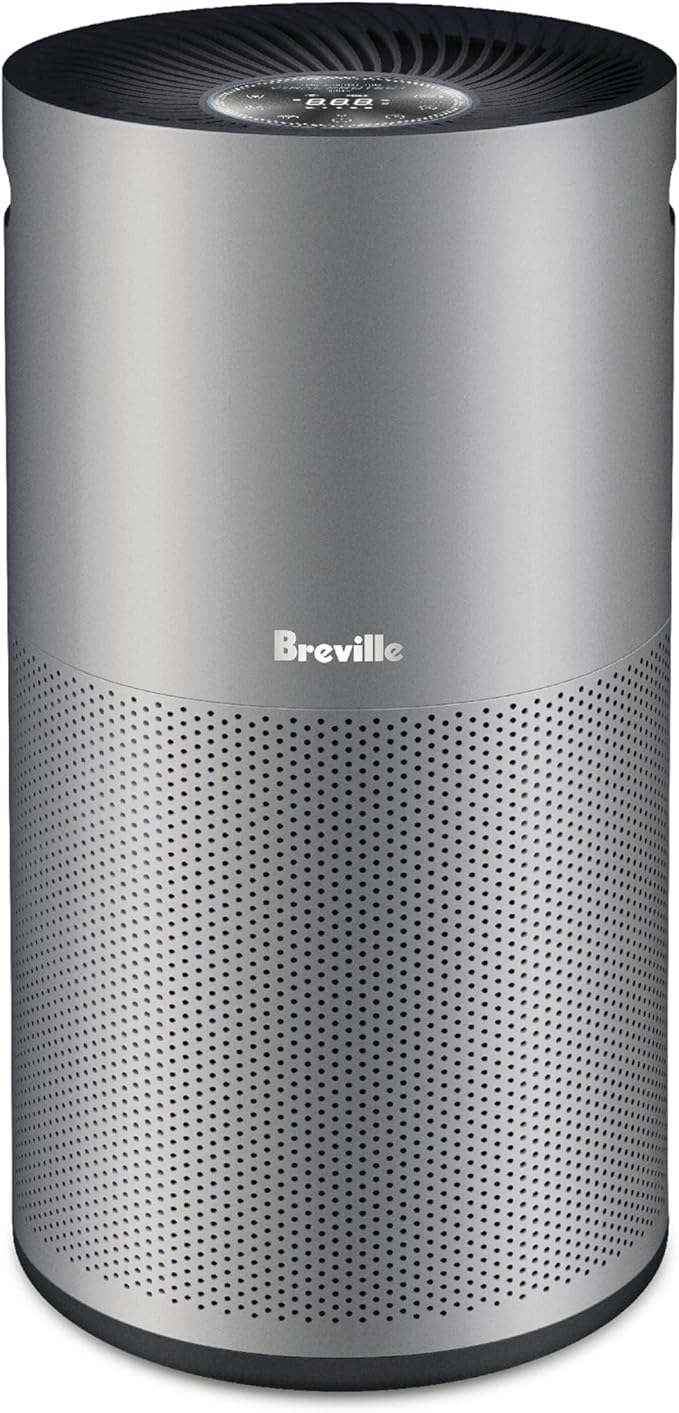
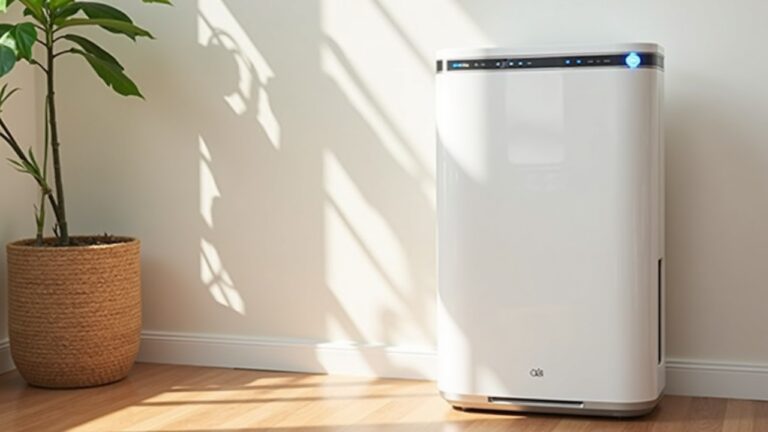
At 550 CADR, the Breville Protect Max is the only pick on this list that can genuinely clean the air in a fully open-plan apartment — living room, dining area, and kitchen combined — at the 4 air changes per hour required during a bushfire smoke event. The built-in air quality display shows real-time PM2.5 readings so you can see the unit responding when you cook or when outdoor AQI rises. Auto mode adjusts fan speed automatically; you set it once and forget it.
The 1.5 kg activated carbon stage is what separates the Breville from every other unit in its price range. Activated carbon is the only residential filter technology that captures gaseous VOCs — formaldehyde from MDF cabinetry, acrolein from cooking fumes, benzene from traffic below. For the first two years in a new apartment, this matters more than particle capture, because the off-gassing load from new construction materials is the dominant indoor air quality problem. Standard HEPA catches particles. Carbon catches gases. The Breville does both at scale.
The catches: at ~$700, it is the most expensive pick on this list by a considerable margin. Its physical footprint is larger than the Levoit or Coway, which matters in a 30m² studio where every square metre counts. If your apartment is under 35m² or a single bedroom, the Coway Airmega 150 is the better fit and costs less than a third of the price to run annually. See the full best air purifier guide for how the Breville compares against IQAir and Dyson alternatives.
2. Levoit Core 400S — Best Mid-Range for 1–2 Bedroom Apartments
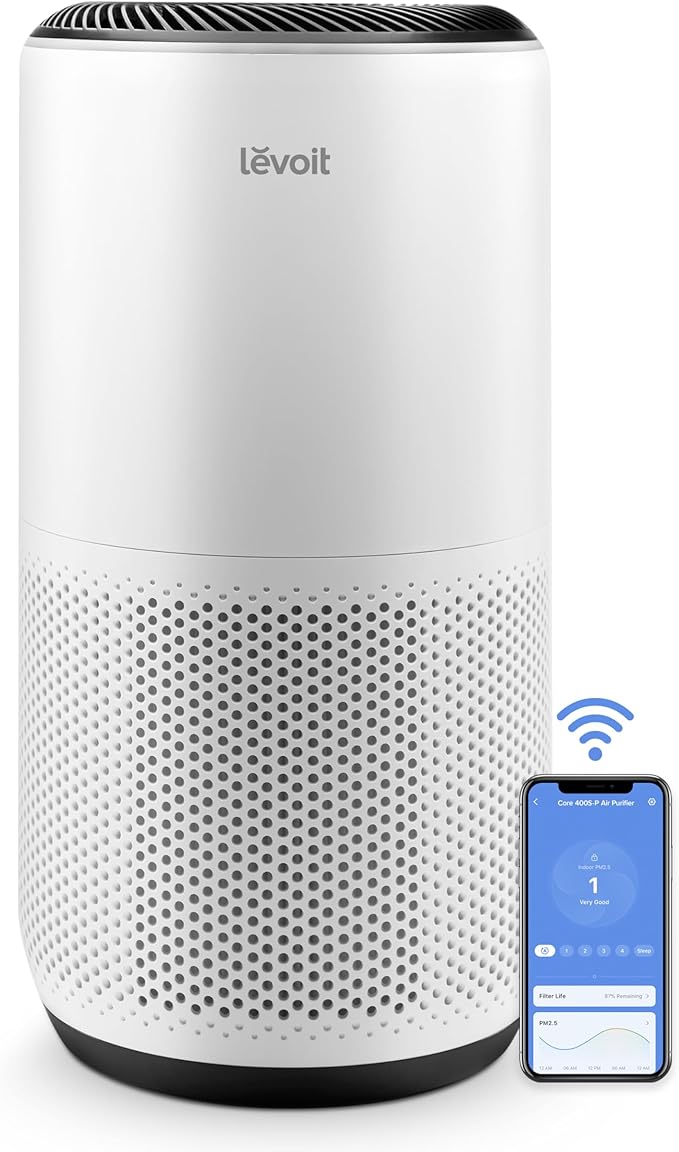
The Levoit Core 400S solves the primary apartment problem — air quality changes fast and you cannot watch it all day. Its PM2.5 laser sensor triggers automatic fan speed increases when a particle event occurs: when you cook, when a neighbour burns toast and the corridor smoke filters under your door, or when bushfire AQI rises and infiltration begins. You do not have to manually adjust it. The app scheduling means you can set it to maximum in the hour before you wake up, so you are breathing cleaned air from the moment your alarm goes off.
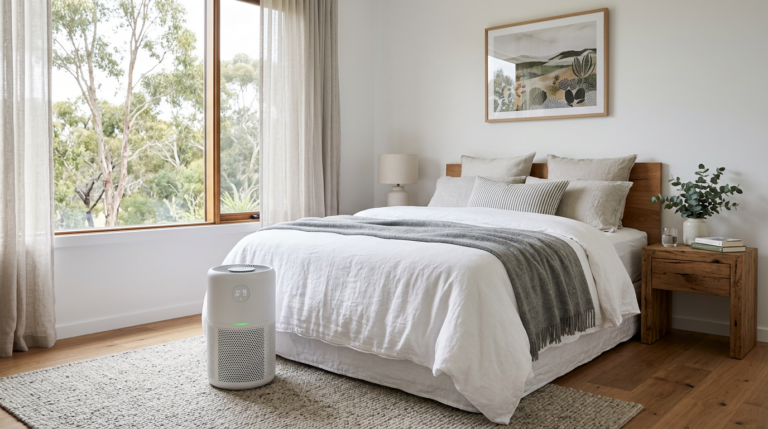
For 1–2 bedroom apartments, the most effective deployment is a single Core 400S in the bedroom. This is where you spend 7–8 hours with no control over what you inhale, where sleep is most directly affected by air quality, and where a 260 CADR unit is appropriately sized for a room of 25–30m². Trying to cover an entire open-plan apartment with one Core 400S is undersizing the problem — you need the Breville for that. But for the bedroom as a clean-air sanctuary, this unit delivers.
The catches: 260 CADR covers up to 27m² at 4 ACH. If your open-plan living zone is larger, you will need either a second unit or the Breville Protect Max. The carbon filter content is less substantial than the Breville’s — adequate for general cooking odour and maintenance-level VOC management, but not sufficient for heavy off-gassing in a brand-new apartment in year one. If you have just moved into a new build, either supplement with a carbon pre-filter or move up to the Breville. See our bedroom air purifier guide for how the Core 400S compares against Dyson and Winix alternatives for sleep environments.
3. Coway Airmega 150 — Best for Studios and Small Apartments
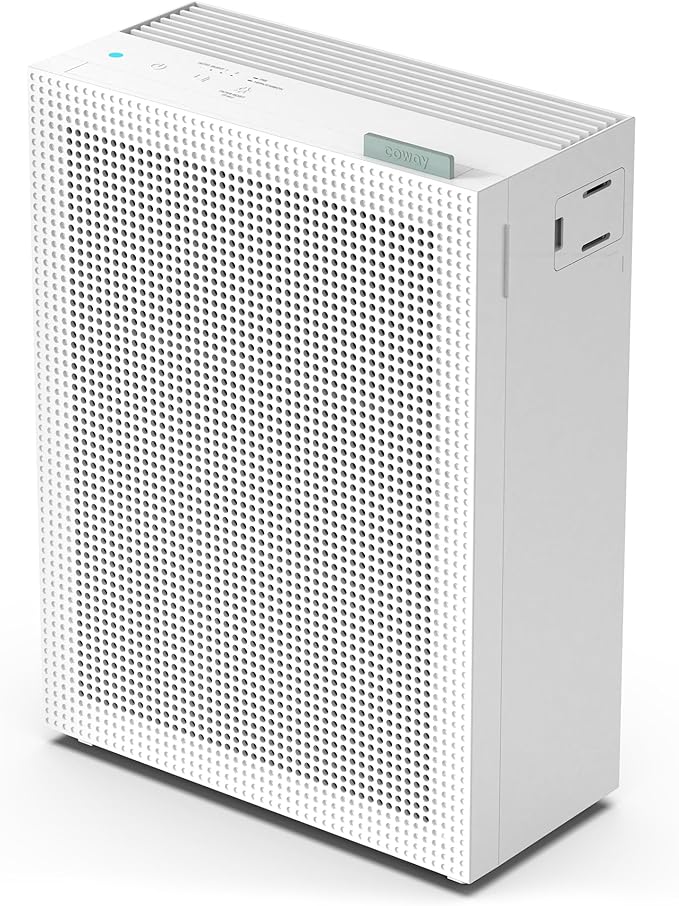
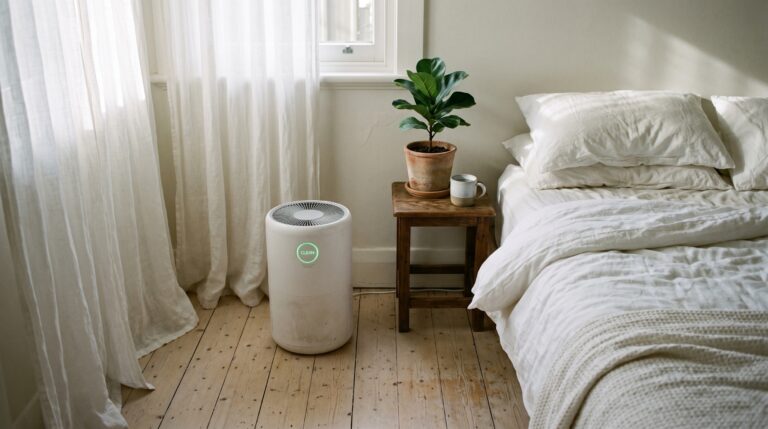
22 dB is genuinely exceptional. The majority of bedroom-marketed air purifiers claim “quiet” at 30–35 dB on their lowest setting. At 30 dB you will hear it in a silent room; at 35 dB you will definitely hear it. The Coway Airmega 150 at 22 dB is below the ambient noise floor of most Australian apartments — typically 25–30 dB from street noise, building mechanical systems, and lift shafts. You will not hear it at 22 dB. This is the defining reason to choose the Coway over alternatives at this price point.
Running cost is the lowest on this list and it is not close. At 5W on sleep mode, running 12 hours per night costs approximately $1.10 per month in electricity at Queensland and NSW rates of $0.35/kWh — roughly $13/year. Annual filter replacement for the Coway 150 is approximately $60. Total annual operating cost: around $73. The Breville Protect Max costs more than twice this annually; the Levoit Core 400S sits in between. For renters on tighter budgets, this matters over a multi-year lease.
The catches: 200 CADR is sufficient only for rooms up to 25m². If your studio has an open kitchen configuration that produces meaningful cooking smoke, the unit will work audibly harder on auto mode and may not keep pace with sustained events. The Coway 150 has no smart app or PM2.5 sensor — you set the fan speed manually on the unit itself. This is fine for a studio where the unit is always within arm’s reach, but less convenient for a multi-room setup. If smart scheduling and auto-response matter to you, the Levoit Core 400S is the better fit.
Annual Running Cost: What You Actually Pay Per Year
What to Avoid in an Apartment
Do not buy these for an apartment — regardless of price
- Ioniser-only units (no HEPA): produce ozone as a byproduct. In a sealed apartment, ozone accumulates rather than dispersing. The SA EPA lists indoor ozone above 0.05 ppm as a respiratory irritant. Some ionisers exceed this threshold. A unit with optional ioniser that can be switched OFF is fine; ioniser-only is not.
- Ozone generators: marketed aggressively by some brands as mould or odour eliminators. At concentrations that kill mould (>0.05 ppm), ozone damages respiratory tissue and aggravates asthma. Never run in an occupied apartment. Not a substitute for HEPA.
- Units without genuine H13 True HEPA: many cheap units sold via marketplaces use “HEPA-style” or “HEPA-like” filter media that does not meet the H13 standard (99.97% capture at 0.3 microns under IEST RP CC001). Check the manufacturer’s specification sheet — if it does not state H13 or EN1822 H13, it is not H13 HEPA.
- Small desktop diffuser-style “air purifiers”: these typically process 10–30 m³/h — 10 to 20 times below the threshold needed to clean a studio apartment at 3 ACH. No meaningful air quality impact in a living space.
- Combined humidifier-purifiers in coastal apartments: adding moisture to already-humid air in Bondi, Gold Coast, Cairns, or Wollongong increases mould risk. Humidification and air purification are separate needs requiring separate equipment.
5-Year Cost Comparison (AUD)
| Product | Upfront | Annual cost | 5-year total |
|---|---|---|---|
| Coway Airmega 150 | ~$229 | ~$73 | ~$594 |
| Levoit Core 400S | ~$299 | ~$114 | ~$869 |
| Breville Protect Max | ~$699 | ~$174 | ~$1,569 |
The Coway is the lowest 5-year spend on this list at ~$594. The Breville costs $975 more over five years but is the only pick with adequate CADR and activated carbon capacity for open-plan apartments and new builds. The Levoit sits in between — it costs $275 more over five years than the Coway and delivers 30% more CADR plus smart app control. Use the running costs calculator to model your specific usage hours and electricity rate.
Decision Guide: Which One Should You Buy?
- Under 30m² (studio / single room): Coway Airmega 150. Lowest noise, lowest cost, correct CADR for the space.
- 30–55m² (1–2 bed): Levoit Core 400S for bedroom-primary use, or Breville Protect Max if covering the full open-plan zone in one unit.
- Over 55m² (open-plan 2–3 bed): Breville Protect Max only. The Levoit’s 260 CADR cannot maintain 4 ACH above 30m².
- Yes: Breville Protect Max. The 1.5 kg activated carbon stage handles formaldehyde and VOC off-gassing from new construction that standard HEPA cannot touch. Expect elevated VOCs for 2–3 years.
- No: any of the three picks. Standard HEPA handles the main ongoing apartment pollutants — PM2.5, mould spores, pet dander, cooking particles.
- Bushfire smoke (NSW, VIC, QLD, Oct–Mar): prioritise CADR. Size for your open-plan area. All three picks capture PM2.5 effectively; size is the only variable.
- Mould and humidity (coastal QLD, northern NSW, Darwin): HEPA captures mould spores. Any pick on this list qualifies. Ensure the unit runs in auto mode during high-humidity periods.
- Near-silence for sleep: Coway Airmega 150 at 22 dB. No other pick on this list comes close.
- Urban VOCs and traffic pollution (Sydney CBD, Melbourne CBD, inner Brisbane): Breville Protect Max for the activated carbon stage.
How We Assessed These
Assessed on specification, not personally tested. Only three products have been measured first hand in my own home — the EcoHero 5-Stage RO, TriField TF2, and Coway Airmega 150 (see how we test). Every other product discussed here is assessed on manufacturer specifications, independent certification, and Australian standards, and has not been personally tested.
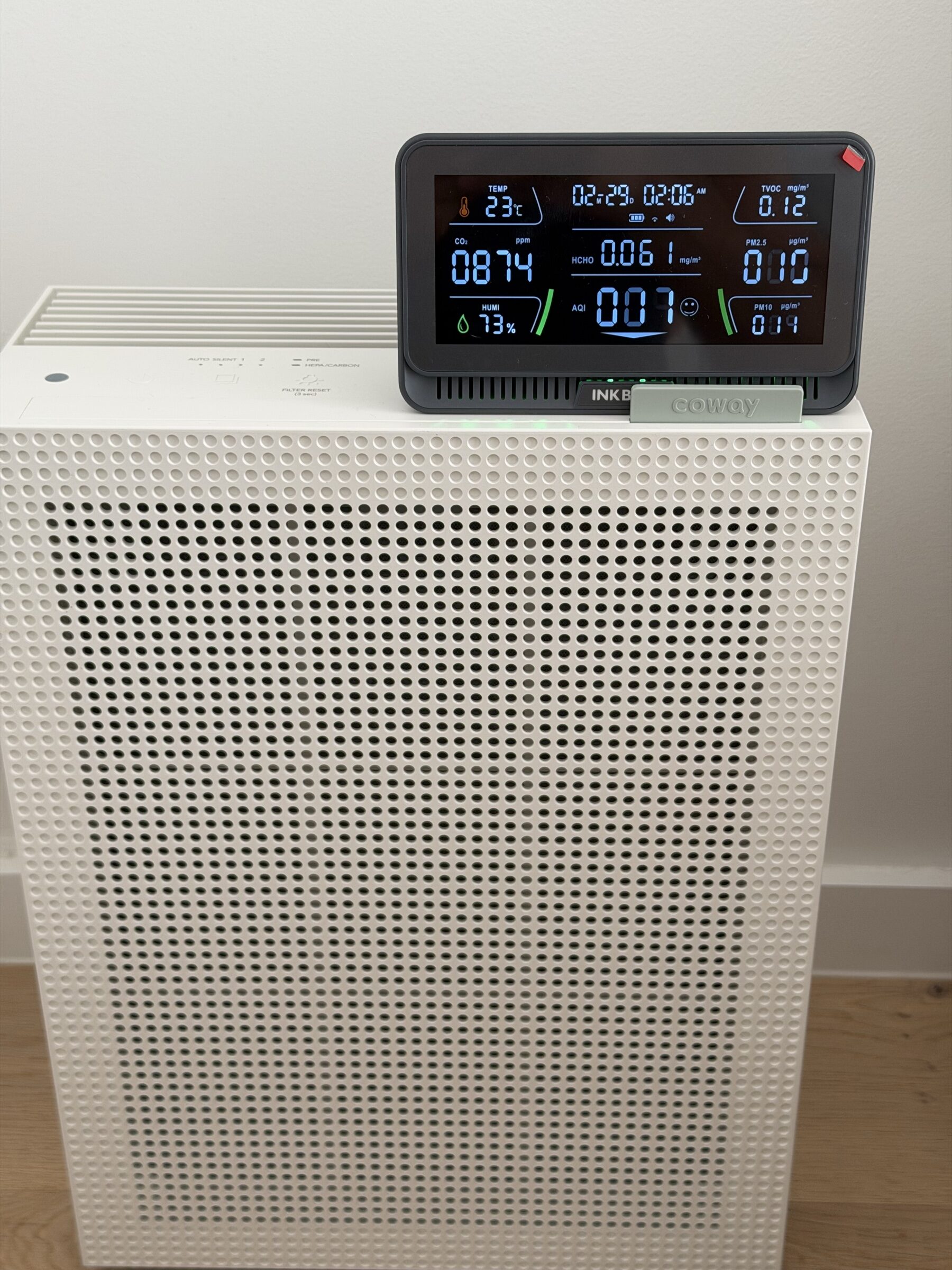
We assessed these units against the conditions Australian apartments actually face — coastal humidity, intermittent cooking smoke, and bushfire season AQI spikes. The Coway Airmega 150 was run hands-on at a Palm Beach, Queensland property alongside a calibrated Inkbird air quality monitor logging PM2.5 in µg/m³. The Breville Protect Max and Levoit Core 400S were evaluated against manufacturer-published CADR, noise, and filter specifications, AHAM certification data, and their H13 True HEPA and activated carbon ratings.
CADR figures cited are the manufacturer-published AHAM ratings for each unit. Only products meeting H13 True HEPA certification per the EN1822 standard are recommended. See our full testing methodology.
Last reviewed: May 2026 — Clean and Native. Product specifications and Australian retail prices verified against manufacturer listings.
Frequently Asked Questions
Do I need an air purifier in my apartment?
Yes, if you live in a bushfire-affected state (NSW, VIC, QLD), a new apartment with VOC off-gassing, a coastal city with mould risk, or a building with shared ventilation. Apartments accumulate indoor pollutants faster than detached houses because smaller air volumes, shared HVAC, and tighter NCC 2022 building envelopes reduce natural dilution. An H13 HEPA purifier addresses what ventilation and cleaning cannot.
What CADR do I need for a 60m² apartment?
A 60m² apartment requires at least 350–400 m³/h CADR to achieve 4 air changes per hour across the full space, which is the minimum for effective PM2.5 and allergen removal. The Breville Protect Max at 550 CADR covers this with headroom. If you are only purifying the bedroom (typically 12–18m²), a 260 CADR unit like the Levoit Core 400S is sufficient.
Can one air purifier cover an entire open-plan apartment?
One unit can cover an open-plan apartment if the CADR is sized correctly. The Breville Protect Max at 550 CADR covers up to 55m² at 4 ACH — adequate for most Australian 2-bedroom open-plan configurations. For apartments over 75m², two units strategically placed (one in the living zone, one in the primary bedroom) outperform a single large unit running at maximum speed.
Are ionisers safe to use in a small apartment?
Ioniser-only units are not recommended for sealed apartments because they produce ozone as a byproduct. In a small sealed space, ozone concentrations can accumulate to levels that irritate the respiratory system. A unit with an optional ioniser feature that can be switched off is acceptable. Do not use ioniser mode in occupied spaces, especially in apartments under 50m² where concentrations build faster.
What is the best air purifier for a new apartment with VOC off-gassing?
The Breville Protect Max is the best choice for new apartments because its 1.5 kg activated carbon stage captures formaldehyde and VOCs from MDF cabinetry, vinyl flooring, and paint — gases that standard HEPA filters cannot remove. HEPA captures particles only. Activated carbon adsorbs gaseous molecules. In a new Australian apartment, VOC off-gassing from construction materials typically peaks in years one and two, then declines.
Do air purifiers help with mould in coastal apartments?
An air purifier with H13 True HEPA captures airborne mould spores, which prevents them from spreading and landing on new surfaces. It does not kill mould already growing on walls or ceilings — that requires physical remediation (cleaning with an antifungal agent and fixing the moisture source). For coastal apartments in Gold Coast, Bondi, Wollongong, Cairns, and Darwin, running a HEPA purifier reduces the spore load in the air during high-humidity periods.
Will my body corporate or strata manager allow an air purifier?
Yes. A freestanding portable air purifier is personal property, not a structural modification. No body corporate or strata scheme in Australia restricts residents from using portable appliances inside their own lot. You do not need approval to operate an air purifier in your apartment. Fixed ducted systems or wall penetrations would require approval; freestanding units do not.
How often do I need to replace filters in an apartment air purifier?
Most H13 HEPA filters in apartment-sized purifiers require replacement every 6–12 months depending on usage hours and air quality. In coastal cities with high humidity and mould spore loads, or near heavy traffic, expect 6-month replacement cycles. In lower-pollution environments, 12 months is typical. The Levoit Core 400S app tracks filter life and alerts you when replacement is needed. The Coway Airmega 150 uses a filter indicator light.
What noise level should I look for in a bedroom air purifier?
Target 25 dB or below on sleep mode for bedroom use in an apartment. At 25 dB, the unit is quieter than a whisper (30 dB) and matches the ambient noise floor of a quiet apartment. The Coway Airmega 150 at 22 dB is the benchmark on this list. The Levoit Core 400S runs at approximately 24 dB on sleep mode. The Breville Protect Max is quieter on low settings but slightly louder than the Coway at minimum speed.
Do air purifiers help during bushfire smoke season if I live in an apartment?
Yes — and apartments benefit more from purifiers during bushfire season than detached homes do, for the same reason they accumulate pollutants faster. With windows sealed during a smoke event, infiltration through window gaps, ductwork, and under-door gaps still delivers PM2.5 into the apartment. A 550 CADR unit running at high speed keeps the indoor PM2.5 well below the WHO 24-hour guideline of 15 µg/m³ even as outdoor AQI climbs above 200. See the best air purifier for bushfire smoke guide for how the picks perform during real smoke events.
Get the Australian Home Environment Checklist
30 checks across water, air and EMF. Most of them free. Ranked by impact.
No spam. Unsubscribe any time.

Former Royal Australian Navy Clearance Diver and TAG-E counter-terrorism operator. Founded Clean and Native to apply the same rigorous thinking to the home environment.
Full biography →