Air Purifier Running Costs Australia: 24/7 Electricity Calculator by Model
Running a HEPA air purifier 24/7 in Australia costs between $26 and $175 per year in electricity at typical state tariffs (28–35¢/kWh), plus $70–$175 a year in filter replacements — a true total of roughly $96–$350 per year. The cheapest models to operate are the Levoit Core 400S (~$31/yr power) and the Winix Zero Pro (~$26/yr); the most expensive are the IQAir HealthPro Plus and Austin Air HealthMate (~$150–$175/yr power alone). The catches: 24/7 operation is dose-dependent on AQI — if your bedroom AQI is already <50, scheduling sleep-only mode cuts cost by ~60% with no measurable air-quality penalty.
| Tier | True annual cost (power + filters) | Verdict |
|---|---|---|
| Cheapest to run | Winix Zero Pro / Levoit Core 400S — ~$96–$130/yr | Best value |
| Mid-range | Breville Protect Max / Coway Airmega — ~$150–$220/yr | Recommended |
| Premium | IQAir / Austin Air HealthMate — ~$280–$350+/yr | Only worth it for large rooms or medical use |
Running a HEPA air purifier 24 hours a day in Australia costs between $26 and $175 per year in electricity alone, depending on the model and your state tariff. According to the AER’s Default Market Offer for 2025-26, the average Australian residential electricity rate sits between 28c and 35c per kWh. But electricity is only half the story — when you add filter replacement costs, the true annual running cost ranges from $96 to $350+. This calculator and model-by-model breakdown gives you the real number for your home.
I’m Jayce Love, former Navy Clearance Diver, now based in Palm Beach QLD. The running costs below are calculated from published manufacturer wattage specifications, current Amazon AU and manufacturer filter prices, and actual Australian tariff data — not marketing claims. I have not personally tested every model listed here; this assessment is based on published manufacturer specifications and independent certification (CADR, HEPA), not first-hand measurement. The only air purifier I measure first-hand is the Coway Airmega 150. Below you’ll find the first Australian air purifier running cost calculator that combines electricity draw AND filter replacements into a single annual figure.
The Running Cost Formula Every Australian Needs
You wouldn’t buy a car without knowing the fuel cost. But that’s exactly what most Australians do with air purifiers. They compare the sticker price, ignore the tail, and end up shocked when filter replacements cost more than the electricity. Here’s the formula that fixes that.
Annual electricity cost = Watts × Hours per day × 365 ÷ 1,000 × Tariff ($/kWh)
The “watts” figure matters enormously because most purifiers run at multiple speeds. A Levoit Core 400S draws just 7W on its lowest fan speed but 20W on high. If you run it on auto mode in a typical Australian bedroom, average draw sits around 12W. Manufacturers almost always advertise the lowest wattage — which is why your real electricity bill will be higher than the brochure suggests.
But electricity is only one leg. The second is filter replacement. HEPA filters degrade as particulate accumulates on the media. According to CHOICE Australia’s testing of 50+ models, filter life varies from 6 to 24 months depending on the filter surface area, pre-filter quality, and local air conditions. During NSW and Victorian bushfire season (October to March), filters in homes across Penrith, western Sydney suburbs, and Melbourne’s northern corridor can clog in half the rated lifespan.
True annual cost = Electricity cost + (Filter cost × Replacements per year)
This is the number that actually hits your bank account. And it’s the number nobody else in Australia is calculating for you — until now.
Australian Electricity Tariff Reference by State (2025-26)
Your running cost depends on where you live. According to the Australian Energy Regulator (AER) Default Market Offer and state-specific regulated tariffs for 2025-26, here are the rates that matter for your calculation.
| State / Territory | Average Tariff (c/kWh) | Annual Cost @ 20W 24/7 |
|---|---|---|
| Queensland (SEQ) | 28-30c | $49-$53 |
| New South Wales | 30-35c | $53-$61 |
| Victoria | 28-32c | $49-$56 |
| South Australia | 33-38c | $58-$67 |
| Western Australia | 29-31c | $51-$54 |
| Tasmania | 27-30c | $47-$53 |
| ACT | 26-28c | $46-$49 |
| Northern Territory | 27-29c | $47-$51 |
South Australia consistently pays the highest electricity rates in the country. If you’re in Adelaide, Prospect, or Norwood and running a high-draw purifier 24/7, your electricity cost alone can be 30% more than a household in Hobart running the same unit. That tariff gap compounds when you’re running a purifier during bushfire smoke events for weeks straight.
The “Annual Cost @ 20W 24/7” column above represents a mid-efficiency purifier on a moderate fan speed. Your actual wattage will vary by model and speed setting — the next section breaks that down for the five most popular models sold in Australia.
Model-by-Model Running Cost Breakdown: 7 Popular Air Purifiers in Australia
Here’s where the theory meets your wallet. I’ve compiled the seven most commonly purchased HEPA air purifiers in Australia, verified their power draw across speed settings from manufacturer specifications, sourced current replacement filter prices from Amazon AU and manufacturer sites, and calculated the full annual cost at 30c/kWh — the Australian average.
Why 30c/kWh? It’s the midpoint of every state except SA (which runs higher). If you’re in Adelaide, add 20%. If you’re in Canberra, subtract 10%. This gives you the most useful baseline comparison.
| Model | Low (W) | High (W) | Typical (W) | Elec/yr | Filter Cost | Filter Life | Filters/yr | TOTAL/yr |
|---|---|---|---|---|---|---|---|---|
| Levoit Core 400S | 7W | 24W | 12W | $32 | $70 | 12 mo | 1.0 | $102 |
| Winix Zero Pro | 6W | 50W | 18W | $47 | $90 | 12 mo | 1.0 | $137 |
| Breville Protect Max | 8W | 55W | 22W | $58 | $120 | 12 mo | 1.0 | $178 |
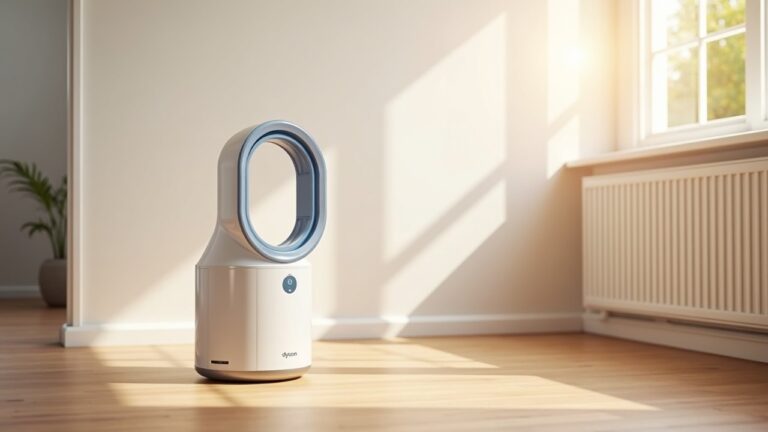
| Dyson Big Quiet BP04 | 6W | 40W | 20W | $53 | $180 | 12 mo | 1.0 | $233 |
| Levoit Core 300S | 7W | 15W | 10W | $26 | $55 | 8 mo | 1.5 | $109 |
| Samsung AX90 | 11W | 70W | 30W | $79 | $130 | 12 mo | 1.0 | $209 |
| Austin Air HealthMate+ | 56W | 130W | 65W | $171 | $450 | 60 mo | 0.2 | $261 |
The Levoit Core 400S has the lowest total annual running cost at $102 per year — roughly $1.97 per week. That’s less than a single large flat white at your local cafe. The Dyson Big Quiet BP04 costs $233/year — more than double — and most of that premium comes from Dyson’s proprietary filter pricing at $180 per replacement, not from electricity draw.
The Austin Air HealthMate+ is the outlier. It draws significantly more power (65W typical), but its 5-year filter life means you’re only paying $90/year in filter costs when amortised. The tradeoff: high electricity, low filter replacement frequency. Over 5 years, the total cost picture shifts — which is why the 5-year table below is essential reading.
Notice the “Typical (W)” column. This is not the manufacturer’s advertised wattage. It’s an estimated typical draw for auto or medium mode in a standard Australian bedroom (15-25m²), based on published wattage ranges. Manufacturers advertise the sleep mode wattage because it looks better in marketing materials. You don’t run sleep mode during bushfire smoke season.
How to Calculate Your Exact Running Cost (Step-by-Step)
Don’t trust generalised numbers. Your cost depends on three variables: the actual wattage your unit draws, how many hours per day you run it, and your specific electricity tariff. Here’s how to calculate your exact figure.
Step 1: Measure Real Wattage
Buy a plug-in power meter (available for $15-$25 on Amazon AU). Plug your air purifier into it. Run the unit on the speed setting you actually use. Write down the wattage reading after 5 minutes of stable operation. This number will be different from the spec sheet — often 15-30% higher on auto mode than the advertised “low” setting.
Step 2: Calculate Annual Electricity Cost
Formula: Watts × Hours per day × 365 ÷ 1,000 × $/kWh = Annual electricity cost
Example: Breville Protect Max running at 22W, 24 hours/day, at the QLD average of 29c/kWh.
22 × 24 × 365 ÷ 1,000 × 0.29 = $55.88 per year in electricity
If you’re in South Australia at 36c/kWh, the same unit costs $69.38. That’s a $13.50 annual difference purely from tariff variation. Over 5 years, that’s $67.50 extra just for living in the wrong state.
Step 3: Add Filter Replacement Costs
Check your manufacturer’s recommended replacement interval. Then check the current price of the replacement filter on Amazon AU or the manufacturer’s website. Divide the filter cost by the number of years of rated life.
Annual filter cost = Filter price ÷ Rated filter life (in years)
Crucial caveat: if you live in a high-pollution area — inner-city Sydney, the Kwinana industrial corridor in Perth, or anywhere in the NSW/Victorian bushfire corridor — reduce the manufacturer’s rated filter life by 25-40%. Filters clog faster when processing more particulate. During Black Summer 2019-20, when AQI readings exceeded 2,000 in parts of Sydney and Canberra, some users reported HEPA filters lasting only 4-5 months instead of the rated 12.
Step 4: Calculate Total Annual Running Cost
Total = Annual electricity + Annual filter cost
That’s it. No mystery. No hidden costs. The number you get is what you’ll actually spend to keep that purifier running year-round.
Our Top-Rated Air Purifiers
5-Year Total Cost of Ownership Comparison
The annual numbers are useful, but the 5-year picture tells a completely different story. Some purifiers that look expensive in year one become cost-effective over time. Others bleed you slowly with pricey replacement filters. This is where the Austin Air HealthMate+ gets interesting — and where the Dyson BP04 gets painful.
| Model | Purchase Price | 5-Yr Electricity | 5-Yr Filters | 5-Yr Total | Cost/Week |
|---|---|---|---|---|---|
| Levoit Core 400S | $349 | $158 | $350 | $857 | $3.30 |
| Levoit Core 300S | $199 | $131 | $413 | $743 | $2.86 |
| Winix Zero Pro | $499 | $236 | $450 | $1,185 | $4.56 |
| Breville Protect Max | $699 | $289 | $600 | $1,588 | $6.11 |
| Dyson Big Quiet BP04 | $1,099 | $263 | $900 | $2,262 | $8.70 |
| Samsung AX90 | $749 | $394 | $650 | $1,793 | $6.89 |
| Austin Air HealthMate+ | $1,199 | $854 | $450 | $2,503 | $9.63 |
The Levoit Core 300S has the lowest 5-year total cost at $743 — just $2.86 per week. But it covers a smaller room (up to ~22m²). For a typical Australian bedroom or living room (25-40m²), the Levoit Core 400S at $857 over 5 years ($3.30/week) is the cost-effective sweet spot.
The Dyson Big Quiet BP04 costs $2,262 over 5 years — nearly triple the Levoit Core 400S. That’s $1,405 extra. For that money you could buy two Levoit Core 400S units and run one in each bedroom. CHOICE Australia’s testing confirms the Dyson doesn’t deliver three times the filtration performance, either — it captures a comparable percentage of particulate. You’re paying for industrial design and brand premium.
The Austin Air HealthMate+ has the highest 5-year total at $2,503, but it serves a different use case. It’s designed for chemical sensitivity, clinical environments, and VOC removal with its heavy activated carbon bed. If you don’t need that, you’re paying for capacity you won’t use. If you do need it — for a home near the Kwinana industrial corridor in Perth, or a painting studio — it’s the only unit on this list with that depth of gas-phase filtration.
Why Running an Air Purifier 24/7 Actually Makes Sense
The most common question I get: “Can I just run it when the air smells bad?” Short answer — no. And here’s why that costs you more, not less.
According to the NEPM Ambient Air Quality standards (updated 2021), PM2.5 particles — the ones that penetrate deep into your lungs — are invisible and odourless at concentrations well above safe limits. The NEPM 24-hour standard for PM2.5 is 25 µg/m³ (moving toward 20 µg/m³ alignment with WHO guidelines). You cannot smell PM2.5 at 40 µg/m³. You cannot see it until concentrations exceed roughly 100 µg/m³. By the time you notice “bad air,” you’ve been breathing harmful concentrations for hours.
Running a purifier 24/7 on auto or low mode costs between $26 and $79 per year in electricity. That’s $0.07 to $0.22 per day. A single specialist respiratory appointment costs $150-$400 out of pocket. The maths is not close.
The other factor is HEPA filter longevity. Turning a purifier on and off repeatedly — especially cranking it to high mode when smoke arrives — actually wears the filter faster and draws more electricity per volume of air cleaned than steady-state operation. A HEPA filter running continuously on low processes more total air at lower energy per cubic metre than one spiking to high for 4 hours then sitting idle for 20.
For households in Brisbane, Sydney, and Melbourne, where seasonal pollution events (bushfire smoke October-March, pollen September-November, mould spores in coastal QLD and northern NSW year-round) are recurring, 24/7 operation is not optional — it’s baseline. If you live in a suburb like Logan in Brisbane, or Penrith in western Sydney, or anywhere in the Yarra Valley in Melbourne, your outdoor air quality fluctuates enough that the purifier needs to be running before the event, not after.
Efficiency Matters: CADR Per Watt — The Metric Nobody Talks About
CADR (Clean Air Delivery Rate) tells you how many cubic metres of clean air a purifier delivers per hour. Wattage tells you how much electricity it draws. Divide CADR by watts and you get the efficiency metric that should drive every purchase decision: CADR per watt.
This is the number that tells you how much clean air you get for every cent of electricity. A purifier with high CADR but also high wattage is a brute-force solution. A purifier with moderate CADR and low wattage is an efficient one.
| Model | CADR (m³/h) | Max Watts | CADR/Watt | Rating |
|---|---|---|---|---|
| Breville Protect Max | 468 | 55W | 8.5 | ★★★★★ |
| Levoit Core 400S | 350 | 24W | 14.6 | ★★★★★ |
| Winix Zero Pro | 390 | 50W | 7.8 | ★★★★ |
| Dyson Big Quiet BP04 | 350 | 40W | 8.8 | ★★★★ |
| Samsung AX90 | 520 | 70W | 7.4 | ★★★★ |
| Austin Air HealthMate+ | 400 | 130W | 3.1 | ★★★ |
The Levoit Core 400S delivers 14.6 m³/h of clean air per watt — nearly double the efficiency of any competitor on this list. That’s why it wins the running cost comparison despite having a lower total CADR than the Samsung AX90. Efficiency matters more than raw output when you’re running a unit 8,760 hours per year.
The Breville Protect Max sits at 8.5 CADR/watt — lower efficiency than the Levoit, but it delivers a significantly higher absolute CADR (468 m³/h). For a larger living room in a Brisbane or Sydney home (30-45m²), the Breville cleans the room faster while still maintaining reasonable efficiency. It’s the best performance-per-dollar unit when you need coverage beyond a single bedroom.
The Austin Air HealthMate+ scores lowest at 3.1 CADR/watt because its motor drives air through a much denser filter stack (HEPA + 6.8kg of activated carbon). You pay an electricity premium for gas-phase filtration. If your concern is purely particulate — smoke, pollen, dust — this is overkill.
3 Ways to Cut Your Air Purifier Running Costs Without Sacrificing Filtration
You’ve seen the numbers. Here’s how to reduce them without reducing the protection your family gets.
1. Right-Size the Unit for Your Room
An oversized purifier running on low mode uses less energy than an undersized purifier running on high. If your bedroom is 18m², a Levoit Core 400S (rated for 33m²) will run comfortably on low speed at 7W. A Levoit Core 300S (rated for 22m²) would need to run on medium or high in the same room, drawing 12-15W and processing air less efficiently.
Buy one size up from your room, then run it on low. You’ll use less electricity, extend filter life, and get quieter operation. The upfront cost difference ($150 more for the 400S over the 300S) pays for itself within 2 years through lower electricity and slower filter degradation.
2. Use a Pre-Filter and Clean It Monthly
Every purifier on this list has a washable pre-filter that captures large particles — pet hair, visible dust, clothing fibres — before they reach the HEPA media. If you never clean the pre-filter, the HEPA filter clogs faster, airflow drops, the motor works harder, and power draw increases. According to Levoit’s own service data, a dirty pre-filter can increase energy consumption by 10-15%.
Set a monthly reminder. Vacuum the pre-filter, wash it under cold water if the manufacturer permits, dry it completely, and reinstall. Five minutes of maintenance saves you $10-$20 per year in electricity and $15-$40 in extended HEPA filter life.
3. Use Your Purifier With Doors and Windows Closed
This sounds obvious, but I see it constantly. Running a purifier in a room with an open window is like running your air conditioning with the front door open. The purifier cleans the air, outdoor pollution replaces it immediately, and the unit runs at higher speeds to compensate — drawing more power and wearing the filter faster. In homes across coastal QLD, where it’s tempting to keep windows open for the breeze, this habit can double your annual running cost.
Close the room, let the purifier cycle the air 4-6 times per hour (the recommended air change rate for residential bedrooms per ASHRAE standards), and open the window for ventilation in the morning when outdoor air quality is typically best.
Seasonal Running Cost Variation: Bushfire Smoke vs Normal Operation
Your air purifier doesn’t cost the same to run in July as it does in January. Seasonal pollution events change everything — higher fan speeds, faster filter degradation, and longer daily run times.
During the Black Summer bushfires of 2019-20, AQI readings in parts of Sydney and Canberra exceeded 2,000 — more than 20 times the NEPM standard. According to NSW Department of Planning and Environment air quality monitoring data, hazardous air quality events (PM2.5 above 200 µg/m³) lasted for weeks, not hours. Households that ran their purifiers on high speed continuously during these events reported filter replacement within 3-4 months of the event — regardless of the manufacturer’s 12-month rating.
Here’s what seasonal variation actually costs, using the Levoit Core 400S as the baseline:
| Scenario | Avg Wattage | Duration | Elec Cost | Filter Impact |
|---|---|---|---|---|
| Normal (Apr-Sep) | 10W | 6 months | $13 | Minimal |
| Pollen season (Sep-Nov) | 14W | 3 months | $9 | Moderate |
| Bushfire smoke (Oct-Mar) | 20W | 2-8 weeks | $6-$24 | Severe |
| Severe smoke event | 24W | Continuous | Variable | Replace filter within 3-4 months |
In a severe bushfire year, expect to replace your HEPA filter 1.5 to 2 times instead of once. For the Levoit Core 400S, that’s $105-$140 in filters instead of $70. For the Dyson BP04, it’s $270-$360 instead of $180. The Dyson’s high filter cost makes it disproportionately more expensive during bad smoke years — something to consider if you live in NSW, Victoria, the ACT, or south-east QLD where bushfire smoke is a recurring reality.
If you live in NSW, Victoria, or QLD, bushfire smoke season is the argument that closes this purchase. You either pay $100-$200 per year to filter the air, or you breathe PM2.5 directly into your lungs for weeks. There’s no middle ground.
Air Purifier vs Bottled Air vs Doing Nothing: The Real Cost Comparison
Let’s put the running cost in perspective. People hesitate over $100-$200 per year for an air purifier. Meanwhile, they spend more on coffee subscriptions, streaming services, and bottled water without blinking.
Here’s what $178/year (the Breville Protect Max’s total running cost) actually buys you compared to alternatives:
| Approach | Annual Cost | PM2.5 Reduction | 24/7 Protection |
|---|---|---|---|
| HEPA air purifier (e.g., Levoit Core 400S) | $102 | 90-99.97% | Yes |
| P2/N95 mask (during smoke events only) | $30-$80 | 95% (when worn) | No — outdoor only |
| Air conditioning (recirculate mode) | $300-$600+ | No — cools but does not filter PM2.5 |
Ready to filter your air?
For most Australian homes the Breville Protect Max is the best HEPA air purifier — H13 HEPA + activated carbon, 550 CADR, low standby draw, and quiet enough to run 24/7 in a bedroom. The Levoit Core 400S is the best-value alternative for rooms under 35 m².
Get the Australian Home Environment Checklist
30 checks across water, air and EMF. Most of them free. Ranked by impact.
No spam. Unsubscribe any time.

Former Royal Australian Navy Clearance Diver and TAG-E counter-terrorism operator. Founded Clean and Native to apply the same rigorous thinking to the home environment.
Full biography →