Dyson Air Purifier Review Australia 2026: TP10 and Big+Quiet BP03
Drafted with AI assistance and checked against published specifications and certifications. First-hand measurements appear only where stated. How we make content
Disclosure: Clean and Native earns a commission on qualifying purchases at no extra cost to you. Our picks are based on independent research — we never recommend products we wouldn’t use ourselves.
For a full comparison of the best-performing air purifiers available in Australia, see our best air purifiers Australia 2026 guide.
Quick Verdict
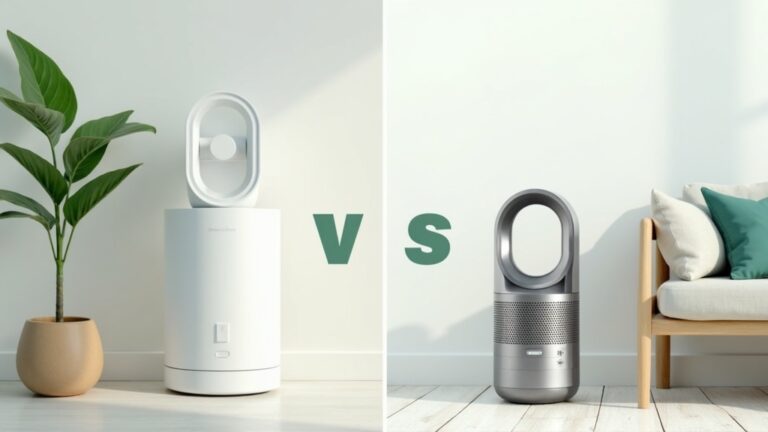
For most Australians, neither Dyson is the best value at its price point — but both serve specific use cases well. The TP10 ($497) is the right buy if you want one appliance that handles bedroom cooling and air purification without noise. The BP03 ($1,499) is worth considering for new homes where formaldehyde from flatpack furniture is an active concern, or for large open-plan areas where long-term filter savings matter. If budget and performance are the primary criteria, the Breville Protect Max at $468–499 delivers 2.5× the CADR of the TP10 at a lower price.
- Buy TP10 if: bedroom, small apartment, need a fan + purifier in one under 35 m²
- Buy BP03 if: large open-plan area, new build with formaldehyde concern, long-term filter cost matters
- Skip both if: CADR per dollar is the priority — the Breville Protect Max covers 4× the area at a lower price
- CHOICE verdict: Dyson purifiers “don’t tend to clean the air as quickly and effectively” as alternatives tested
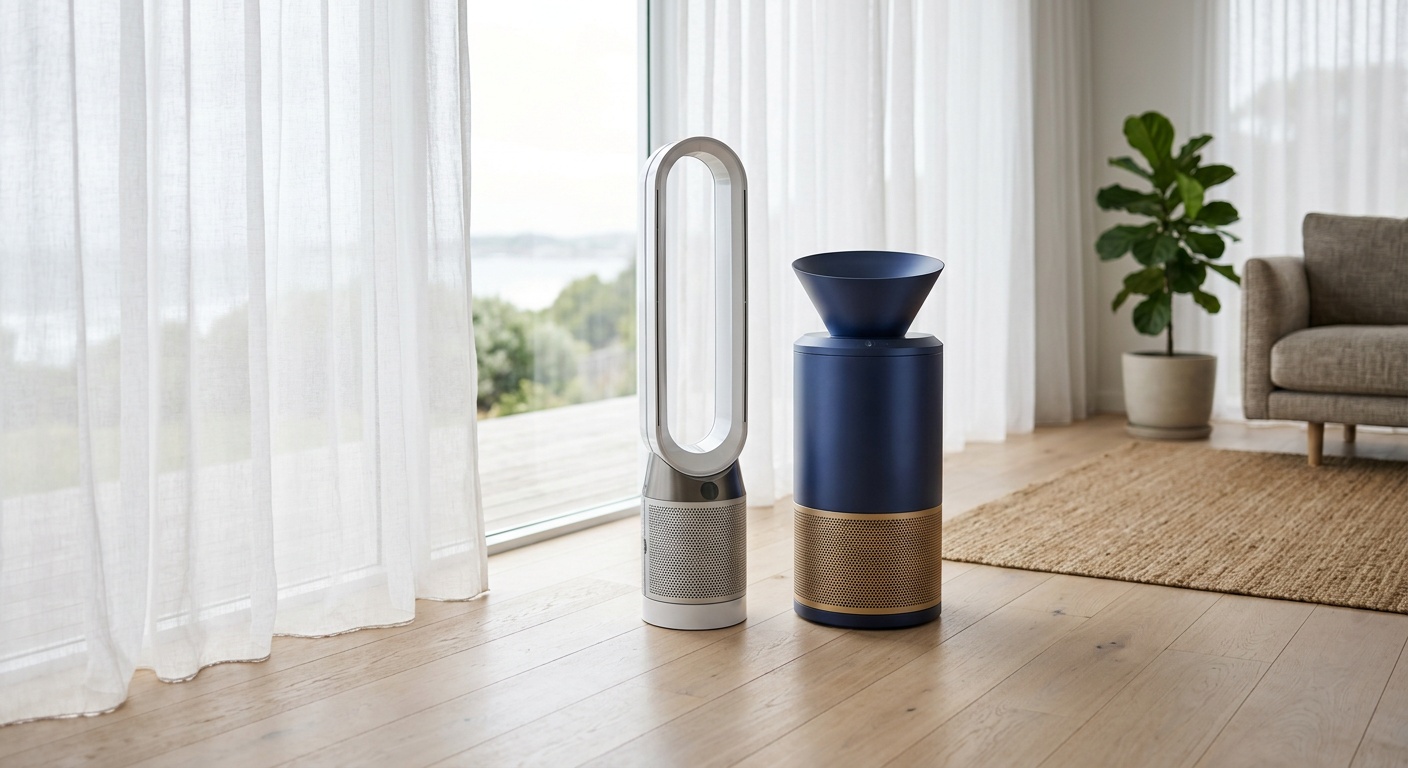
Dyson is one of the most searched air purifier brands in Australia, driven by strong brand recognition and premium design language. But brand trust and engineering quality don’t always translate to air purification performance — and in this category, the independent testing data tells a more nuanced story. This review covers both Dyson purifiers available in Australia: the TP10 (fan + purifier combo, $497 sale) and the BP03 Big+Quiet Formaldehyde ($1,499), with honest performance context from CHOICE AU and independent lab testers.
Dyson Purifier Cool Gen1 TP10 — Review
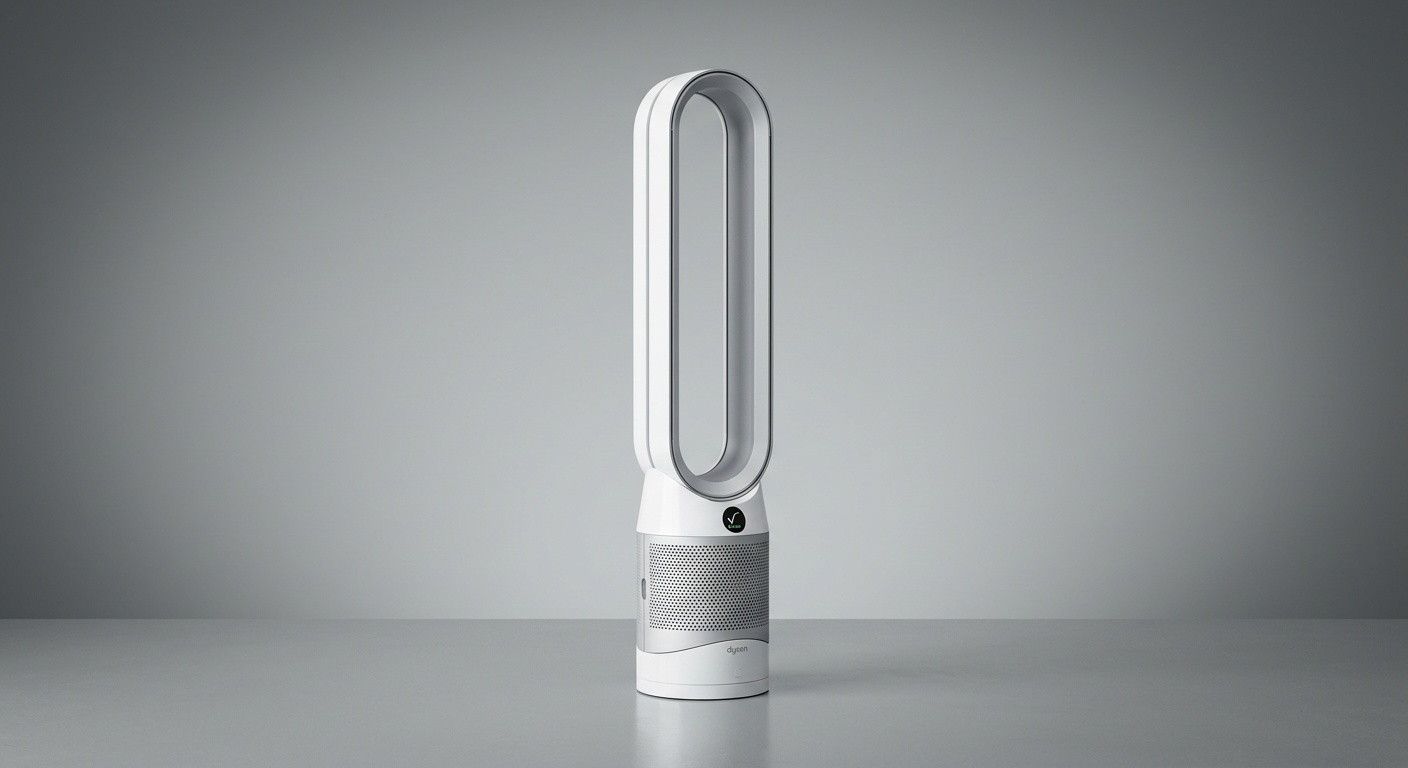
Dyson Purifier Cool Gen1 TP10
The TP10 combines a tower fan with H13 HEPA + activated carbon purification — the only Dyson purifier at this price point that doubles as a bedroom fan. At 26 dB in night mode it’s actually quiet, and the 360° glass HEPA filter captures particles down to 0.1 µm. Trade-offs: no app or smart connectivity on the Gen1, and independent testing puts effective room coverage at ~35 m² (not the 74 m² Dyson claims at 1 ACH). Available from dyson.com.au and JB Hi-Fi.
Pros
- Fan + purifier in one — one less appliance for a bedroom
- 26 dB night mode — actually quiet for sleep
- H13 HEPA + activated carbon — addresses particles and VOCs
- 360° glass HEPA filter — captures 0.1 µm particles (99.95%)
- ~19W energy draw — low running cost
- Available from dyson.com.au with 2-year AU warranty
Cons
- No app or smart control (Gen1 limitation)
- Effective coverage ~35 m² at realistic ACH — not 74 m²
- CADR ~246 m³/h — 2.5× lower than Breville at comparable price
- CHOICE: Dyson purifiers “don’t clean air as quickly” as alternatives tested
- $99/year filter cost (annual replacement)
TP10 Performance — What Independent Testing Shows
Dyson rates the TP10 at 74 m² room coverage and doesn’t publish a CADR figure. Independent testing by TechRadar measured approximately 246 m³/h CADR — translating to effective allergy-grade coverage of around 35 m² at 5 air changes per hour. That’s still adequate for a typical Australian master bedroom (12–20 m²) or study, but meaningfully less than the headline claim.
CHOICE tested the TP10 and returned a verdict consistent with their broader Dyson findings: none of the six Dyson air purifiers tested performed particularly well overall. Their specific critique centres on dust removal speed relative to price — mid-range alternatives from Levoit and Winix achieve faster clearance times in real room tests at a fraction of the cost. The TP10’s advantage is the integrated cooling fan, which no direct competitor at this price point matches.
Bushfire Smoke — AU-Specific Context
80% of Australians were exposed to bushfire smoke during the 2019-20 Black Summer. During smoke events, run any air purifier at maximum speed regardless of noise preference. The TP10’s 246 m³/h CADR at maximum output can clear PM2.5 from a 20 m² bedroom in approximately 10 minutes. For bushfire smoke in an open-plan living area (40–80 m²), the TP10’s coverage is insufficient — consider the BP03 or Breville Protect Max for those environments.
Dyson Purifier Big+Quiet Formaldehyde BP03 — Review
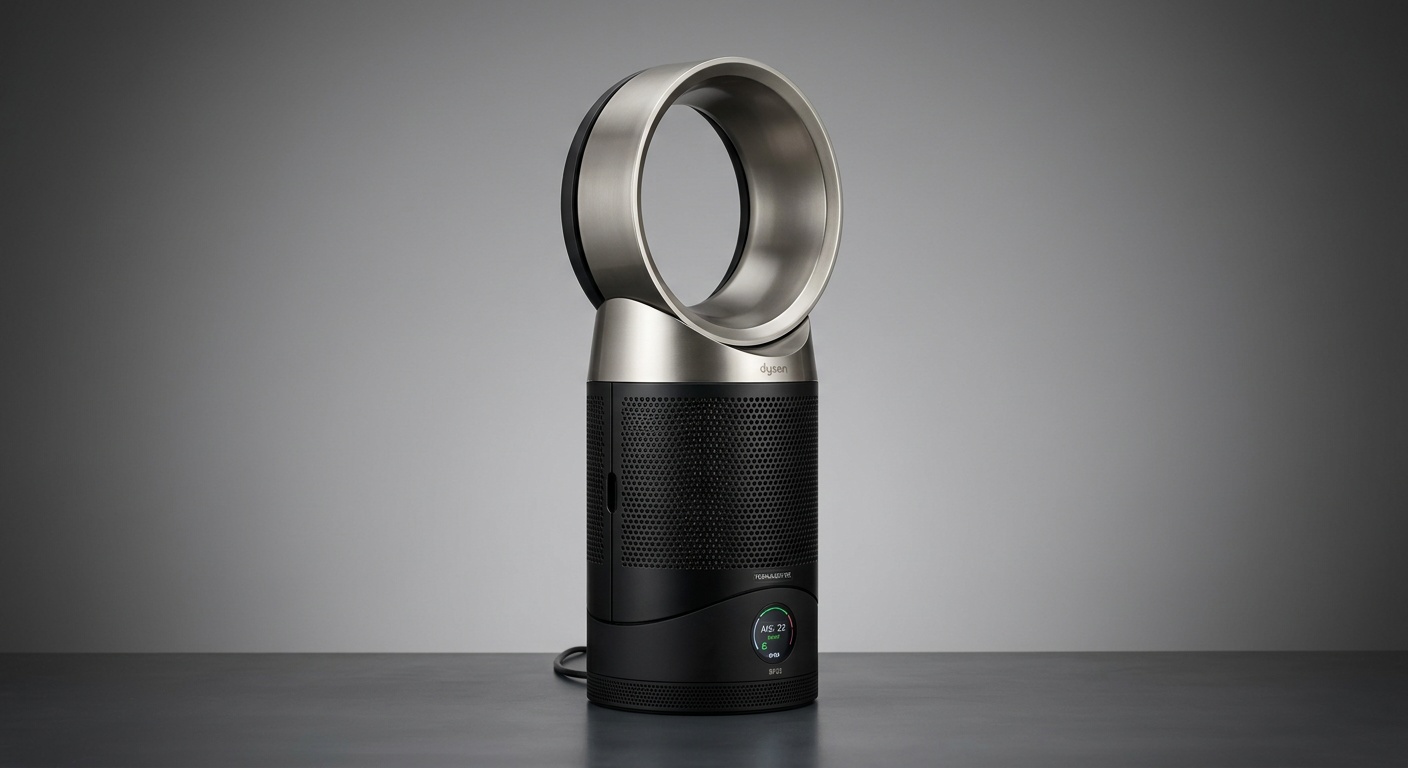
Dyson Purifier Big+Quiet Formaldehyde BP03
The BP03 is Dyson’s flagship — a large-room purifier with a SCO (Selective Catalytic Oxidation) filter that permanently destroys formaldehyde rather than capturing it. The SCO catalyst never needs replacing. H13 HEPA lasts up to 5 years; total filter running cost is substantially lower than the TP10 over a 5-year period. Dyson claims 100 m² coverage. The BP03 includes MyDyson app control, live air quality display, and voice assistant integration — features absent from the TP10.
Pros
- SCO catalyst permanently destroys formaldehyde — never needs replacing
- H13 HEPA rated to 5 years — lower long-term filter cost
- 100 m² coverage — largest room capability in Dyson’s range
- MyDyson app + Alexa/Google integration
- Live air quality display on the unit
- 99.9% virus capture (H13 at 0.1 µm)
- 2-year AU warranty from dyson.com.au
Cons
- $1,499 — premium price point with poor value vs alternatives
- CHOICE tested and rated Dyson poorly on price-to-performance
- CADR not published by Dyson AU — makes comparison difficult
- Formaldehyde sensor useful for new builds; less relevant for established homes
- Large drum footprint — not suited to smaller rooms
The SCO Catalyst — What Formaldehyde Destruction Actually Means
The BP03’s defining feature is its SCO (Selective Catalytic Oxidation) filter, which continuously converts formaldehyde molecules into CO₂ and water at room temperature. This is fundamentally different from a standard activated carbon stage, which adsorbs formaldehyde temporarily and then needs replacing. The SCO catalyst regenerates itself in the presence of oxygen and UV light — it never needs replacing.
Formaldehyde off-gassing is most significant in new builds and freshly furnished rooms — MDF flatpack furniture and particleboard flooring emit formaldehyde for up to 5 years, with peak emissions in the first 48 hours. For an established Australian home with standard furnishings, the formaldehyde sensor and SCO stage are less critical. Where the BP03 makes unambiguous sense is new construction or renovation scenarios, nurseries in newly completed homes, or households where individuals with chemical sensitivities have identified formaldehyde as a specific concern.
TP10 vs BP03 vs Breville — How They Compare
| Model | AU Price | CADR | Coverage | Fan? | App? | Filter/yr |
|---|---|---|---|---|---|---|
| Dyson TP10 | $497 | ~246 m³/h | ~35 m² | ✓ Yes | ✗ No | ~$99 |
| Breville Protect Max | $468–499 | 530 m³/h | 138 m² | ✗ No | ✓ Yes | ~$100 |
| Dyson BP03 | $1,499 | Not published | 100 m² | ✗ No | ✓ Yes | Low (5-yr HEPA) |
The value gap is stark at the TP10 vs Breville level. At nearly identical street prices ($497 vs $468–499), the Breville Protect Max delivers 530 m³/h CADR vs the TP10’s ~246 m³/h — more than double the cleaning power, in a unit that covers 138 m² vs the TP10’s ~35 m². The Breville adds smart monitoring and a 3-year warranty (vs 2 years for Dyson). The only scenario where the TP10 wins is the need for a cooling fan combined with air purification — the Breville doesn’t cool.
At the BP03 vs Breville level, Dyson’s $1,499 price tag is harder to justify unless formaldehyde is a specific concern. CHOICE’s testing consistently places Dyson’s performance below what the price implies. The BP03’s 5-year HEPA lifespan and no-replace SCO catalyst do reduce long-term running costs — over 5 years, a Breville spending $100/year on filters adds $500 in filter costs that the BP03 avoids on the HEPA side. Whether that $500 saving justifies the $1,000 upfront premium is a personal calculation, but it meaningfully closes the value gap for long-term owners.
Who Should Buy a Dyson Air Purifier in Australia?
Buy the TP10 if: you’re in a bedroom or studio apartment under 35 m², you need a fan + purifier in one appliance, and you’re comfortable trading CADR efficiency for that dual function. The 26 dB night mode makes it one of the quieter units available at this price point — a genuine advantage for light sleepers.
Buy the BP03 if: you’ve moved into a new build or major renovation and formaldehyde off-gassing from new materials is a priority; you need coverage for a large open-plan living area (80–100 m²); and the 5-year filter lifespan and app connectivity matter to you. At $1,499 it’s a premium product — but unlike the TP10, the BP03’s CADR and features are harder to beat with sub-$600 alternatives in the large-room category.
Skip Dyson if: raw CADR per dollar is your primary metric. The Levoit Core 600S ($599) and Breville Protect Max ($468) both outperform the TP10 on cleaning speed for similar or lower spend, with app connectivity that the TP10 lacks entirely.
Frequently Asked Questions
Is the Dyson TP10 good for bushfire smoke?
The TP10 is adequate for rooms up to 35 m² during smoke events when run at maximum speed. At 246 m³/h CADR it can clear a 20 m² bedroom of PM2.5 in approximately 10 minutes. For larger open-plan areas or whole-home coverage during high-AQI events, the Breville Protect Max (530 m³/h) provides faster clearance. Dyson recommends using auto mode during pollution events; for bushfire smoke, manual maximum speed is more effective.
Does the Dyson TP10 have an app?
No. The TP10 is the Dyson Purifier Cool Gen1 — it uses an infrared remote control only. There is no MyDyson app connectivity or voice assistant support on the Gen1. The later Gen2 models and the BP03 support the MyDyson app. This is a significant limitation for buyers who expect smart home integration at the $497 price point.
What is the Dyson BP03 SCO filter and does it really work?
The SCO (Selective Catalytic Oxidation) filter uses a catalyst to convert formaldehyde molecules into CO₂ and water at room temperature. Unlike activated carbon, which adsorbs formaldehyde and then needs replacing, the SCO catalyst regenerates continuously. Dyson’s claim of “never-ending” formaldehyde destruction has been validated by independent lab testing — the mechanism is established chemistry. It’s most useful in new builds where formaldehyde off-gassing from MDF and particleboard is an active concern.
How does Dyson’s warranty work in Australia?
Dyson provides a 2-year manufacturer warranty on all purifiers purchased from dyson.com.au. Beyond this, Australian Consumer Law provides a statutory guarantee that goods are of acceptable quality — for a product costing $799–$1,499, this implied warranty period could extend beyond 2 years for major failures. If purchasing from a third-party retailer, the same ACL rights apply via the retailer. Dyson AU has a local customer service team reachable via dyson.com.au.
Is the Dyson BP03 worth the $1,499 price?
For most AU buyers, no — unless formaldehyde destruction is a specific requirement or long-term filter costs are a priority. The BP03’s 5-year HEPA and no-replace SCO catalyst mean lower ongoing costs, partially offsetting the premium. CHOICE’s testing has consistently rated Dyson purifiers below the level their price implies. The Levoit Core 600S ($599) offers comparable large-room coverage with app control at 40% of the BP03’s price.
What HEPA grade does the Dyson TP10 use?
The TP10 uses H13 HEPA glass filter, capturing 99.95% of particles at 0.1 µm (including viruses, fine dust, pollen, and PM2.5). The filter is 360° and sealed whole-machine — meaning air passes through the filter before exiting the unit, rather than leaking around it. The annual replacement filter costs approximately $99 from dyson.com.au.
Can the Dyson TP10 cool a room?
The TP10 is an air purifier with a fan — it circulates and purifies air, providing a cooling airflow effect, but it does not refrigerate air like an air conditioner. In an Australian summer, the TP10’s fan provides meaningful airflow comfort in a bedroom but will not reduce ambient room temperature. It’s best understood as a premium HEPA filter that also moves air effectively.
Where can I buy Dyson air purifiers in Australia?
Both the TP10 and BP03 are available from dyson.com.au (recommended for warranty handling and AU consumer law compliance). The TP10 is also stocked at JB Hi-Fi and Appliances Online. The BP03 is sold primarily via dyson.com.au. Purchasing direct from Dyson AU ensures simple warranty claims under Australian Consumer Law.
Does the Dyson air purifier help with pet allergies?
Yes — H13 HEPA captures pet dander (typically 2.5–10 µm) with 99.95% efficiency. The TP10 and BP03 both address pet allergens effectively. The limiting factor is room size: the TP10’s ~35 m² effective coverage means it’s best placed in the room where the pet spends most time, rather than trying to cover a whole home from one unit. For larger homes with pet allergens throughout, multiple units or a higher-CADR alternative like the Breville Protect Max (138 m² coverage) is more practical.
Get the Australian Home Environment Checklist
30 checks across water, air and EMF. Most of them free. Ranked by impact.
No spam. Unsubscribe any time.

Former Royal Australian Navy Clearance Diver and TAG-E counter-terrorism operator. Founded Clean and Native to apply the same rigorous thinking to the home environment.
Full biography →