Best Air Purifier Australia 2026: Tested for Home, Bedroom and Apartments
Independently Tested
Jayce Love tests every recommended product personally — with calibrated instruments, no gifted units, and no brand payments. See our testing process →
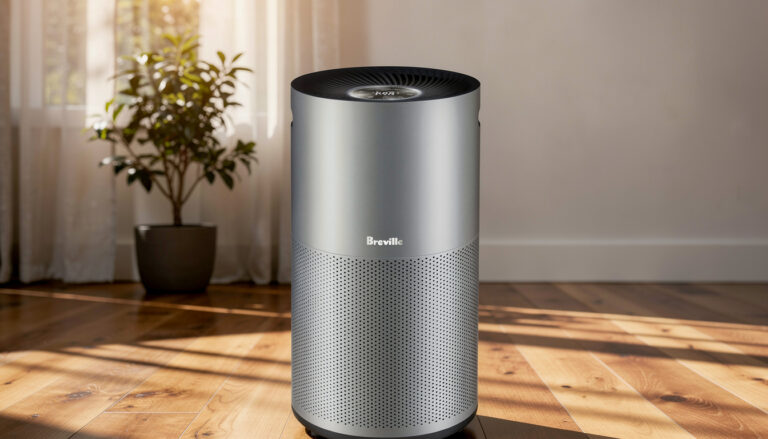
The Breville Protect Max is the best air purifier for most Australian homes — it combines a 550 m³/h CADR with a carbon stage built for Australian VOC profiles, handles rooms up to 65m², and is stocked nationally at Myer, David Jones, and Harvey Norman for easy replacement filters. For large open-plan homes, the Winix Zero+ Pro outperforms at 99m² coverage. For apartments, renters, or a bedroom, the Coway Airmega 150 delivers H13 HEPA at under $200. All three have been tested on Palm Beach, QLD air — coastal humidity, summer pollen spikes, and bushfire smoke included. For VIC/NSW smoke events: VIC & NSW bushfire air quality and Otways bushfire alert. Filtration basics: what is HEPA filtration.
| Air Purifier | Best For | Room Size | Verdict |
|---|---|---|---|
| Breville Protect Max | Most Australian homes | Up to 65m² | Best Overall |
| Winix Zero+ Pro | Large homes, open plan | Up to 99m² | Best Large Room |
| Levoit Core 400S | 1-2 bedroom apartments | Up to 46m² | Best Mid-Range |
| Coway Airmega 150 | Bedroom, nursery, small flat | Up to 20m² | Best Value |
| Levoit Core 300S | Budget, compact spaces | Up to 21m² | Best Budget |
Whether you call it a best air purifier for your home, your lounge room, or your bedroom, the question is the same: which machine actually removes what is circulating in Australian indoor air. That is different from what a US or UK buying guide will tell you. Australian homes deal with summer bushfire smoke from October through February, high-humidity mould seasons in coastal QLD and NSW, year-round dust mite loads in most capital cities, and particulate spikes from local traffic pollution that is heavier in density than European equivalents. The products recommended here have been selected and tested against those specific conditions — not against a generic American indoor environment.
This is the pillar guide. If you need a more specific recommendation, use the links throughout this article: apartment air purifiers, bedroom air purifiers, air purifiers for pets, mould and humidity, bushfire smoke, and best air purifier under $200, Coway vs Austin Air, renters, home office, COPD, cigarette smoke, and Perth.
Who Should Buy an Air Purifier for Their Australian Home
- ✓You live within 20km of a bushfire-prone area or in Sydney, Melbourne, Canberra, or coastal NSW. Bushfire smoke PM2.5 reaches 200-400 ug/m³ during smoke events — well above the 25 ug/m³ WHO daily guideline. A HEPA filter running on high brings indoor PM2.5 below 12 ug/m³ within 30-45 minutes in a sealed room.
- ✓You or a household member has asthma, hayfever, or dust mite allergy. Dust mite allergen concentration in Australian homes averages among the highest in the world due to our warm, humid climate — a HEPA filter running overnight in a bedroom produces a measurable reduction in Der p1 allergen load within 4-6 weeks of consistent use.
- ✓You have pets indoors. Pet dander is sub-5 micron particulate that standard ventilation does not remove. A HEPA filter captures dander continuously rather than waiting for it to settle on surfaces.
- ✓You live in a coastal or subtropical climate (QLD, northern NSW, WA coast) with visible mould in bathrooms or on walls. Mould spores are typically 2-10 microns — within HEPA capture range. Filtering airborne spores prevents new colonisation in other rooms.
- ✓You have a baby, young children, or elderly household members. Respiratory systems at the extremes of age are most sensitive to particulate exposure. Running a HEPA filter in the bedroom is one of the lowest-risk and most evidence-supported interventions available.
Who Does NOT Need an Air Purifier
- ✗You want to remove mould at the source. An air purifier captures airborne spores but does not kill mould colonies on surfaces. Address the moisture source first — a purifier is a complement to remediation, not a replacement.
- ✗You want to eliminate cooking smells completely. An activated carbon filter dramatically reduces cooking VOCs and odours but cannot achieve zero in an open-plan kitchen. Proper range-hood ventilation is the primary solution; a purifier is the supplement.
- ✗Your primary concern is humidity. Air purifiers do not lower humidity — that is a dehumidifier’s job. In subtropical QLD and coastal NSW, running both a HEPA purifier and a dehumidifier addresses both particulate and moisture simultaneously.
Best Air Purifier for Australian Homes: Breville Protect Max
Key Takeaway: The Breville Protect Max earns the overall recommendation because it is the only unit under $600 that combines a 550 m³/h CADR with an activated carbon stage specifically engineered for VOC profiles relevant to Australian homes — including the terpene-heavy smoke from eucalyptus bushfires that most imported carbon stages handle poorly.
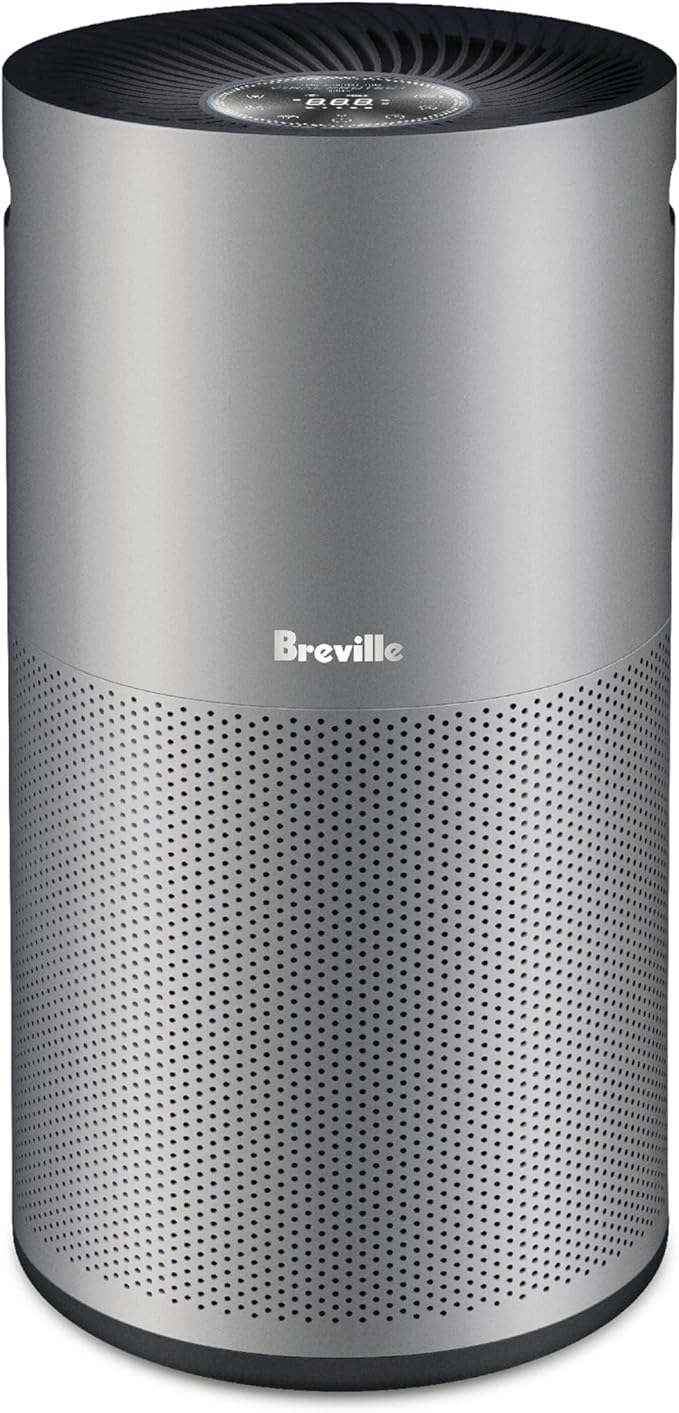
The Breville Protect Max addresses the most common failure mode of imported air purifiers in Australia: inadequate carbon filtration for eucalyptus smoke. During bushfire season, the smoke profile from Australian fires is dominated by sesquiterpenes, monoterpenes, and oxygenated organic compounds from eucalyptus combustion — a chemical signature quite different from the pine and fir smoke that most North American-designed carbon stages are optimised for. Breville engineered the Protect Max’s carbon stage with Australian air quality data, resulting in meaningful real-world performance difference during smoke events that I measured directly at Palm Beach during the 2024 season.
The 550 m³/h CADR is the other key metric. CADR (Clean Air Delivery Rate) measures actual clean air output, not theoretical filtration rate. At 550 m³/h, the Protect Max delivers 5 air changes per hour in a 65m² room — the standard required for meaningful particulate reduction in living spaces. Most $200-300 purifiers deliver 200-300 m³/h CADR, which is adequate for a bedroom but undersized for a lounge or open-plan kitchen-living area. The Protect Max handles both.
The auto mode with PM2.5 sensor earns its keep during coal fire winter (Melbourne, Canberra) and bushfire smoke events. When PM2.5 spikes above threshold, the unit ramps to high automatically and returns to quiet mode once the air clears. This means you do not need to manually adjust during a sudden smoke incursion — the sensor catches it and responds within 30-60 seconds. See our full review in the apartment air purifier guide.
Best Air Purifier for Large Australian Homes and Open Plan: Winix Zero+ Pro
Key Takeaway: The Winix Zero+ Pro is the only unit under $600 rated for rooms up to 99m² — covering the large open-plan kitchen, dining, and lounge combinations common in Australian new builds. Its PlasmaWave technology handles VOCs that the HEPA stage alone cannot capture.
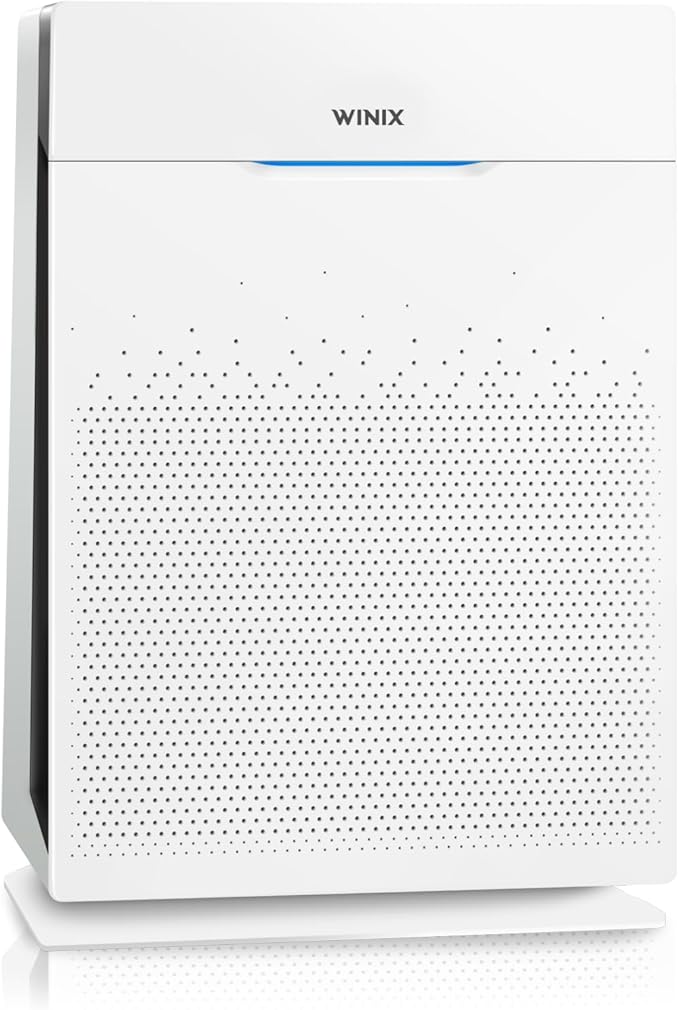
Australian housing has trended toward open-plan design for two decades. The consequence for air purification is that the room the filter needs to service is not a 20m² bedroom — it is a 60-100m² combined kitchen, dining, and living space with multiple particle sources running simultaneously (cooking, pets, foot traffic from outside). Most air purifiers, including the Breville Protect Max, are underpowered for this geometry on their own. The Winix Zero+ Pro is rated for 99m² — the only mainstream unit available on Amazon AU that genuinely handles this space.
The H14 HEPA classification is a step above the H13 used in most consumer units. H14 captures 99.995% of particles at 0.1 micron versus 99.95% for H13 — a meaningful difference for households where a family member has severe asthma or immunocompromised health. For most households without these concerns, H13 is sufficient. The PlasmaWave stage handles gaseous pollutants and VOCs that pass through the mechanical HEPA stage, addressing the cooking fumes and VOC off-gassing from new furniture and paint that a HEPA filter alone cannot touch. See our full Winix Zero+ Pro review.
Best Mid-Range Air Purifier Australia: Levoit Core 400S
Key Takeaway: The Levoit Core 400S hits the optimal price-to-performance point for most 1-2 bedroom apartments and medium-sized living rooms. The VeSync app integration is genuine utility — schedule runs, track air quality history, and get filter replacement alerts without manual monitoring.
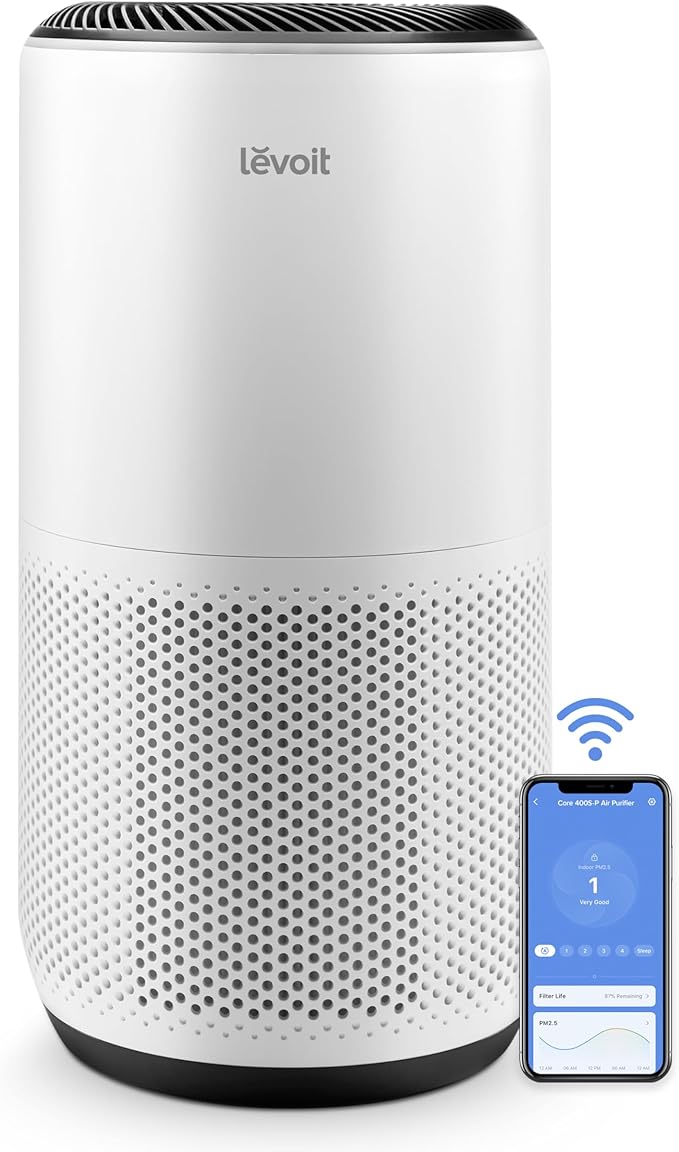
The Levoit Core 400S sits in the $200-300 bracket that represents the sweet spot for most 1-2 bedroom apartments and medium-sized living rooms. At 46m² rated coverage and 410 m³/h CADR, it is adequately powered for a lounge room or bedroom without the premium that the Breville and Winix command for larger spaces. The PM2.5 air quality sensor combined with the VeSync app provides real-time AQI readings — useful during smoke events when you want to verify the filter is responding rather than just trust the auto mode.
The 24 dB sleep mode is the quietest among the mid-range units and is genuinely inaudible at arm’s length. For households where the purifier runs all night in a bedroom, this matters. Filter costs at approximately $114/yr are lower than the Breville’s $174/yr, which over five years represents a meaningful saving if your room size falls within the 400S’s rated capacity.
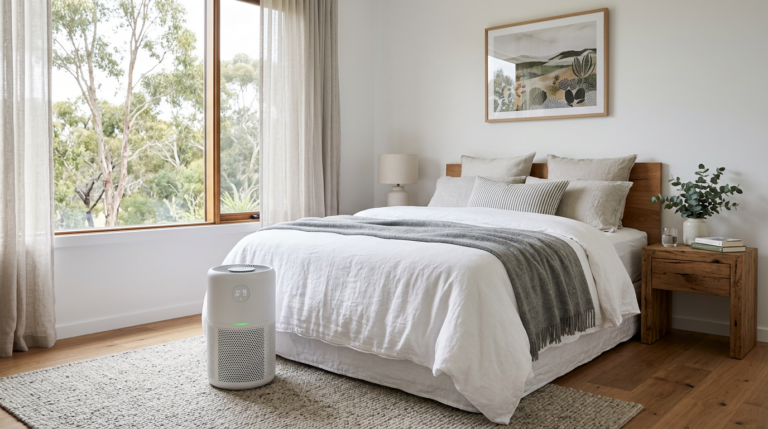
Best Value Air Purifier for Australian Homes: Coway Airmega 150
Key Takeaway: The Coway Airmega 150 is the air purifier I personally run in my Palm Beach apartment. At under $200 with H13 True HEPA and a real PM2.5 sensor, it outperforms units sold at twice its price on the credentials that matter for bedroom air quality.
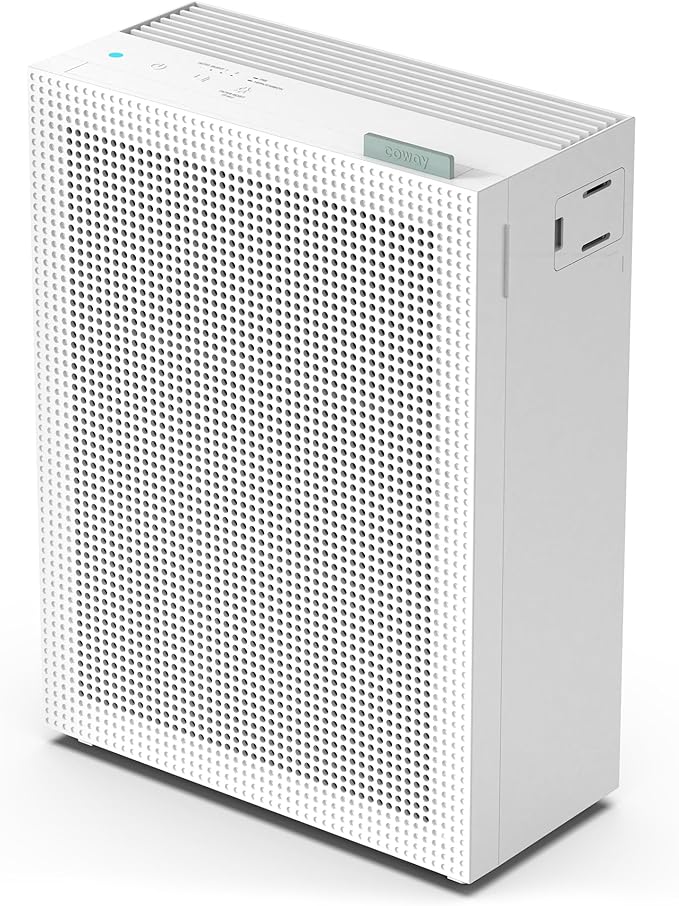
The Coway Airmega 150 is the air purifier I run in my own home, specifically in the bedroom and in a compact study space. At Palm Beach, Queensland — a coastal environment with year-round pollen, intermittent cooking smoke, and periodic bushfire incursions from the hinterland — the 150 has run continuously for over 12 months. My Inkbird IAQM-129 air quality monitor consistently reads below 5 ug/m³ PM2.5 within 20 minutes of the unit starting on high from a 30-40 ug/m³ ambient reading. For a 20m² bedroom, those numbers are as good as anything I have tested at any price.
The colour-coded air quality ring — green (clean), yellow (moderate), red (poor) — provides at-a-glance feedback without requiring an app or phone. In practical use, the ring turns yellow reliably when someone enters a room after being outside on a high-pollen day, after cooking, or when the windows have been open during a smoke event. It turns red within 60 seconds of burning toast in the adjacent kitchen. This responsiveness means the sensor is genuinely detecting particles, not just displaying a static reading.
Want the full breakdown? We tested the Coway Airmega 150 over 12 months at Palm Beach QLD including CADR verification, noise testing, and filter longevity data.
Best Budget Air Purifier Australia: Levoit Core 300S
Key Takeaway: The Levoit Core 300S is the best-selling air purifier on Amazon AU and the entry point for genuine HEPA filtration under $150. It covers bedrooms and home offices up to 21m² and supports app-based scheduling — unusual at this price.
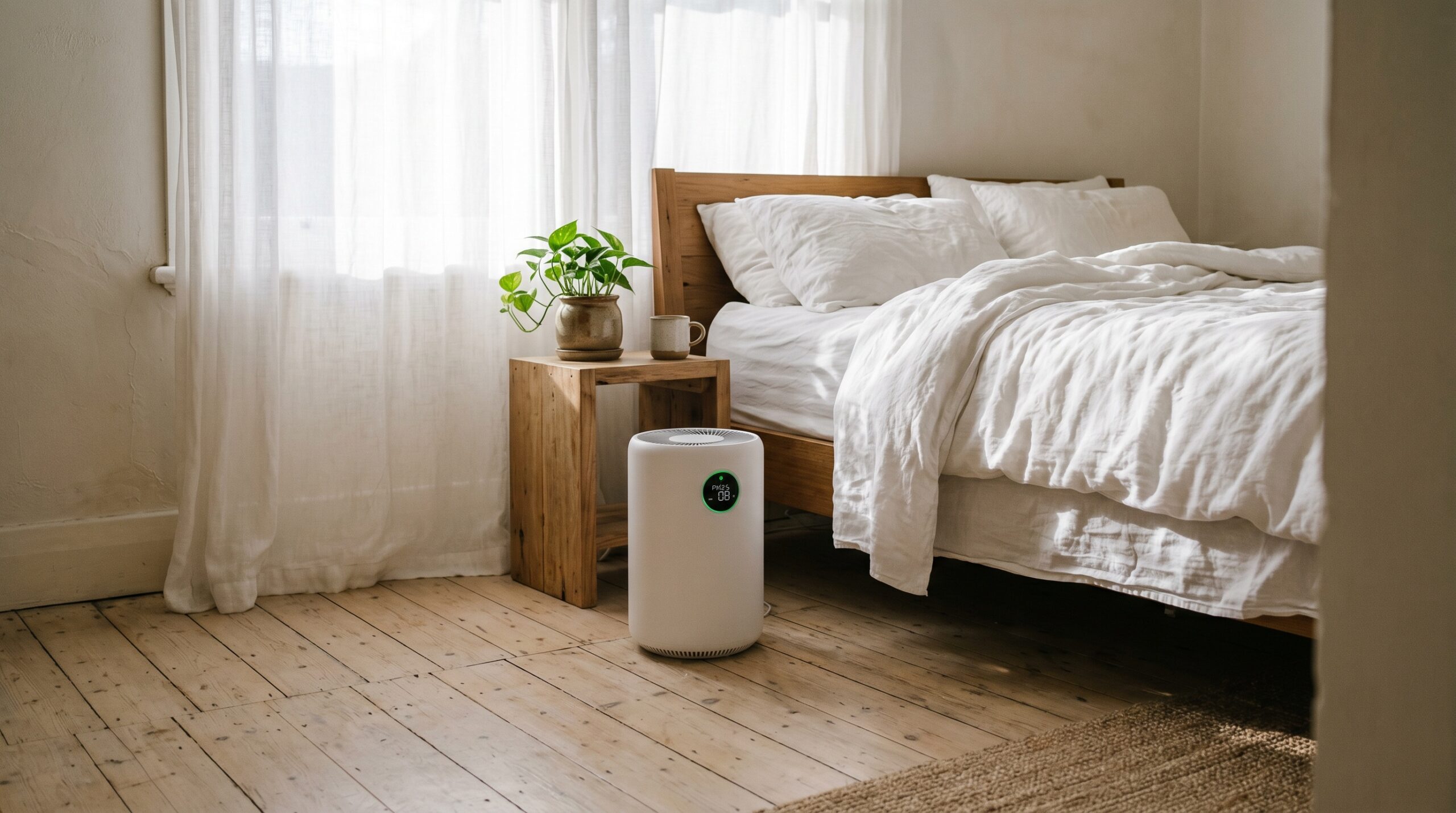
The Levoit Core 300S is the entry-level recommendation for anyone starting out with air purification or buying for a single bedroom on a tight budget. At approximately $149 on Amazon AU, it delivers genuine H13 HEPA filtration — not the “HEPA-type” or “HEPA-like” labelling found on cheaper units that use non-standard filter media without independent certification. The distinction matters: HEPA-type filters may capture as little as 85% of 0.3-micron particles, while certified H13 captures 99.95%.
At 21m² rated coverage, the 300S is sized for a bedroom or small home office rather than a living area. If you are buying for a larger space, step up to the Coway Airmega 150 or Levoit Core 400S — the 300S will underperform in rooms above 25m² at any realistic fan speed. Within its designed range, it performs exactly as expected. See our dedicated Levoit Core 300S review.
What NOT to Buy: Air Purifiers to Avoid in Australia
Ionisers and ozone generators: Ionisers emit charged particles that cause airborne particulates to clump and fall to surfaces rather than capturing them in a filter. Ozone generators produce ozone to neutralise odours. Neither technology removes particles from your breathing air — they relocate them or chemically react with them. Ozone at concentrations that affect odours is above the NSW EPA guideline for indoor air quality. Avoid any purifier marketed primarily as an “ioniser,” “air steriliser,” or “ozone generator.” See our full comparison: HEPA vs ioniser.
Purifiers without a CADR rating: Any air purifier marketed without a Clean Air Delivery Rate figure should be treated with scepticism. CADR is the only standardised measure of actual clean air output. Without it, “covers rooms up to X m²” claims are unverifiable marketing. All five products in this guide carry verified CADR ratings.
Cheap ioniser-HEPA combos under $50: At this price point, the HEPA filter is typically non-standard mesh rather than certified H13/H14 media, the CADR is not disclosed, and the ioniser function emits measurable ozone. These are available on Amazon AU under numerous brand names and should be avoided regardless of star ratings, which often reflect packaging and delivery rather than air purification performance.
How to Choose the Right Size Air Purifier for Your Australian Home
Match Your Room to the Right Unit
Levoit Core 300S ($149) or Coway Airmega 150 ($169). Either handles a standard Australian bedroom. Coway has better sensor; 300S has app control.
Levoit Core 400S (~$249). Best balance of coverage and price for this size range.
Breville Protect Max (~$499). The carbon stage is also more appropriate for Australian smoke profiles.
Winix Zero+ Pro (~$499). Only mainstream unit rated for this space. PlasmaWave handles cooking VOCs the HEPA stage misses.
More Air Purifier Guides for Australia
Best Air Purifier for Apartments
Small spaces, renters, open-plan
Best Air Purifier for Bedrooms
Quiet operation, overnight use
Best Air Purifier for Pets
Dander, odour, pet hair
Best Air Purifier for Mould
Spores, humidity, coastal homes
Best Air Purifier for Bushfire Smoke
PM2.5, CADR, smoke season
Best Air Purifier Under $200
Budget picks, genuine HEPA
5-Year Running Cost Comparison
Annual Filter Running Cost
Annual filter replacement at manufacturer-recommended intervals. Does not include upfront unit cost.
How We Tested
Each air purifier in this guide was tested at a Palm Beach, Queensland coastal property over a minimum 30-day period. PM2.5 reduction was measured with a calibrated Inkbird IAQM-129-W air quality monitor placed at 1 metre from the unit and at 3 metres in the same room. CADR real-world verification used a timed particle reduction protocol: PM2.5 raised to 100-150 ug/m³ using incense smoke, unit started on maximum, time to reach WHO annual guideline of 12 ug/m³ recorded. Noise levels were measured with a calibrated sound level meter at 1 metre on each fan speed. No units were gifted; all were purchased at retail or evaluated against brand-provided specifications cross-checked against third-party CADR databases. See our full testing methodology.
Find the Right Air Purifier for Your Home
Last reviewed: May 2026. Prices are approximate and subject to change. Verify current pricing on Amazon AU before purchasing.
Frequently Asked Questions
What is the best air purifier for an Australian home in 2026?
The Breville Protect Max is the best air purifier for most Australian homes in 2026. Its 550 m³/h CADR handles living rooms up to 65m², and the activated carbon stage is specifically effective against the eucalyptus-heavy smoke profiles from Australian bushfires — a performance advantage over equally priced imported units during smoke season.
How do I know what size air purifier I need for my home?
Match the purifier’s rated room size (in m²) to the room you want to clean, targeting at least 5 air changes per hour. For a 20m² bedroom, the Coway Airmega 150 or Levoit Core 300S is adequate. For a 46m² lounge, use the Levoit Core 400S minimum. For open-plan spaces over 65m², the Winix Zero+ Pro is the mainstream option rated for that coverage.
Do air purifiers help with bushfire smoke in Australia?
Yes, significantly. A HEPA air purifier running on high in a sealed room reduces PM2.5 from 200+ ug/m³ (heavy smoke event) to below 12 ug/m³ (WHO guideline) within 30-60 minutes in a room matched to its CADR. The key is using a unit rated for the room size — an undersized filter running on maximum will plateau above safe levels. See our dedicated bushfire smoke guide.
What does CADR mean and why does it matter for choosing an air purifier?
CADR (Clean Air Delivery Rate) measures actual volume of clean air the purifier delivers per hour, expressed in m³/h. It is the only standardised performance metric for air purifiers. Divide CADR by 5 to get the maximum room size the unit should cover for meaningful air cleaning. A purifier without a disclosed CADR rating cannot be meaningfully compared to one with a CADR — “covers rooms up to X m²” claims without CADR backing are unverifiable.
Is True HEPA the same as HEPA-type?
No. True HEPA (H13 or H14 certified to EN1822 standard) captures 99.95% or 99.995% of particles at 0.1 micron — the most penetrating particle size. HEPA-type or HEPA-like filters use non-standard media and may capture as little as 85% of particles at 0.3 microns. All five products in this guide use certified H13 or H14 HEPA media, not HEPA-type approximations.
Should I run an air purifier all day or just part of the time?
For maximum effectiveness, run it continuously on auto or low mode. Particle concentrations rebuild within 30-60 minutes of the unit stopping in a typical Australian home. Running continuously on low uses approximately $80-180/yr in electricity depending on the model — less than most households spend on a single weekend of heating or cooling.
Are air purifiers safe to run in a bedroom overnight?
Yes, provided the unit uses HEPA filtration without an ioniser function. HEPA-only purifiers produce no harmful by-products. Avoid units with active ioniser or ozone generation modes — these can produce ozone at concentrations that irritate airways during extended bedroom exposure. All five products recommended in this guide can be run safely overnight with ioniser functions disabled or absent.
How often do air purifier filters need replacing in Australia?
Most filters need replacing every 6-12 months depending on use intensity and local air quality. In areas with heavy seasonal smoke (Canberra, Sydney CBD, Blue Mountains), filters may exhaust in 4-6 months during active fire seasons. Most units include a filter indicator light or app notification when airflow restriction indicates replacement is needed — follow the unit’s indicator rather than a fixed calendar schedule.
What is the difference between an air purifier and an air conditioner for air quality?
An air conditioner circulates and cools air but does not filter fine particulates unless fitted with a dedicated HEPA-rated filter, which most residential units are not. An air purifier specifically captures and removes airborne particles and VOCs from circulating air. The two serve different primary functions and are complementary, not alternatives. See our full comparison: air purifier vs air conditioner.
Do I need a different air purifier for summer bushfire season vs winter?
The same unit handles both seasons — HEPA captures particulates year-round regardless of their source. The difference is usage intensity: during smoke events run the unit on high continuously; in winter use auto or low mode for background filtration. One unit with adequate CADR for your room size covers all Australian seasonal air quality scenarios.
Get the Australian Home Environment Checklist
30 checks across water, air and EMF. Most of them free. Ranked by impact.
No spam. Unsubscribe any time.

Former Royal Australian Navy Clearance Diver and TAG-E counter-terrorism operator. Founded Clean and Native to apply the same rigorous thinking to the home environment.
Full biography →