Best Earthing Products Australia 2026: Mats, Sheets, Pillowcases and Bands Compared
Independently Tested
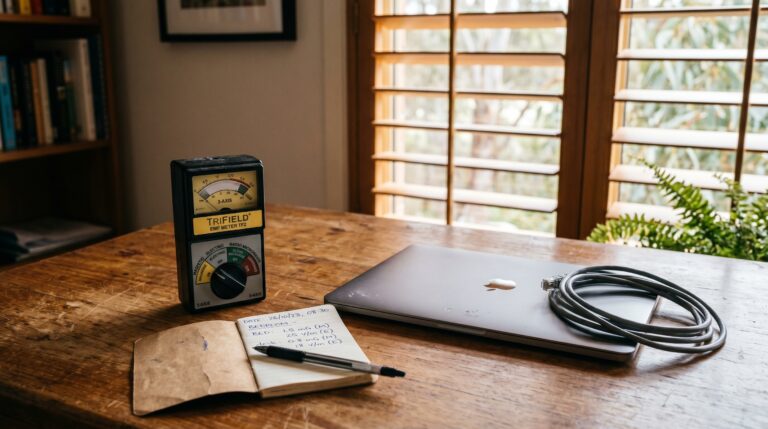
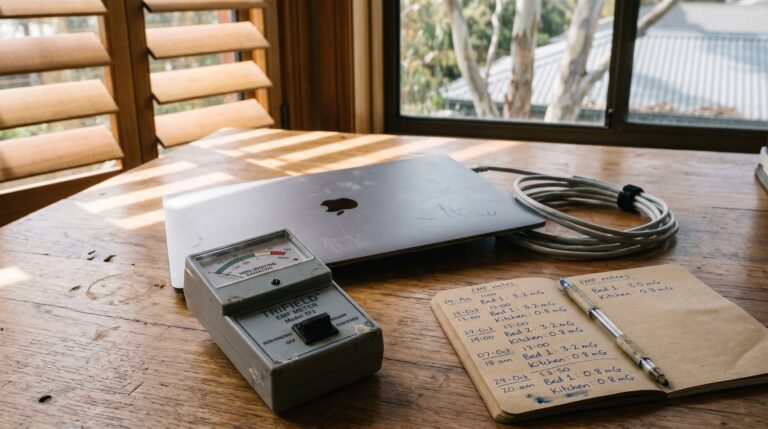
Jayce Love tests every recommended product personally — with calibrated instruments, no gifted units, and no brand payments. See our testing process →
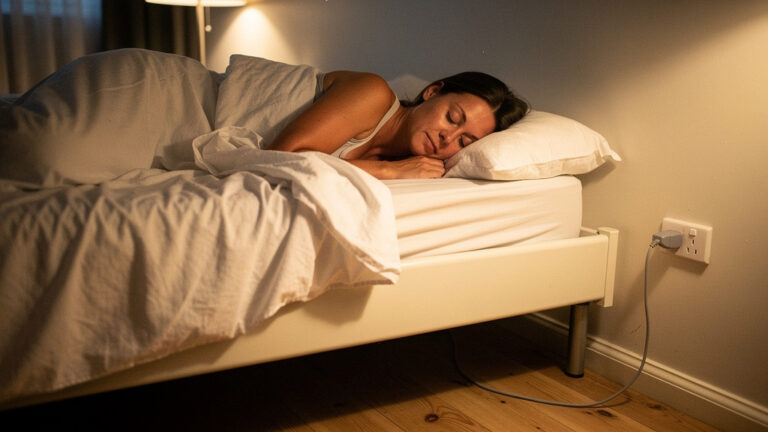
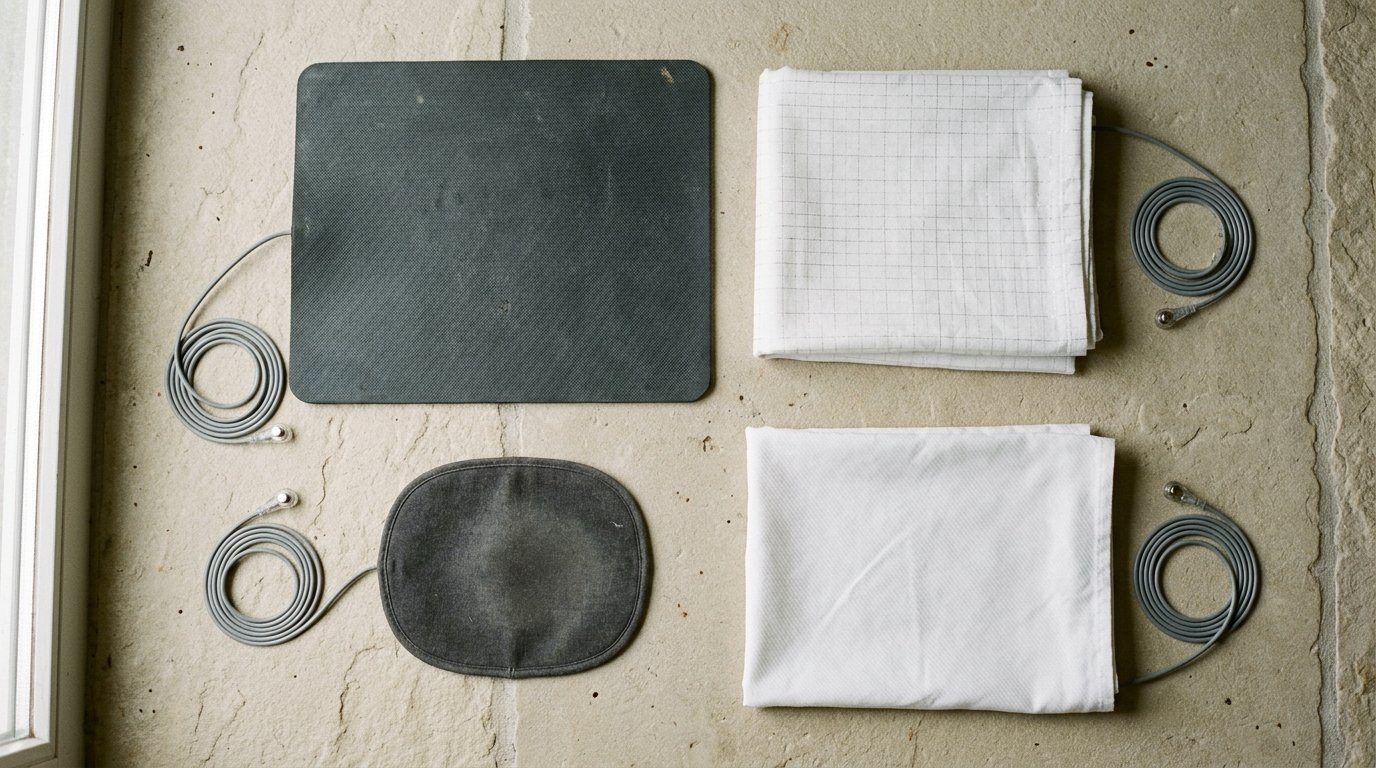
The best earthing products for Australians in 2026 are stainless-steel grounding mats, fitted grounding sheets, and conductive pillowcases that connect to your home’s earth pin via a current-limiting safety cord — allowing your body to equalise with the ground’s negative electrical potential without leaving your desk or bed. Early research suggests regular skin contact with grounded conductive surfaces may reduce inflammatory markers and improve sleep quality, though the evidence base remains preliminary and these products are not a replacement for professional medical advice or treatment.
Quick Verdict — Best Earthing Products Australia 2026
| Product | Category | Price | Verdict |
|---|---|---|---|
| Premium Grounding Mat | Desk / floor mat | ~$129 | Best overall — stainless steel, versatile |
| Premium Grounding Sheet | Sleep grounding | ~$249 | Best sheet — AU cord, washable steel |
| Premium Grounding Pillowcase | Sleep / head contact | ~$165 | Best pillowcase — surgical steel, 3-yr warranty |
| Premium Grounding Mouse Pad | Desk entry point | ~$79 | Best budget start — desk use only |
| Hooga Grounding Mat | Budget mat | ~$59 | 4.1-star Amazon AU pick for tight budgets |
✓ Who This Is For
- Desk workers spending 6+ hours at a computer who want passive daytime grounding
- Anyone prioritising sleep quality who wants to start grounding while they sleep
- EMF-aware households looking to equalise body voltage during the night
- People in Brisbane, Sydney, Perth, or Adelaide who cannot easily walk barefoot on soil daily
- Budget-conscious beginners who want to test earthing before committing to a full sheet setup
✕ Who It Is Not For
- Anyone expecting a medically proven treatment — the science is still preliminary
- Those living in apartments with no earth pin in outlets (older pre-1980s wiring without earth)
- Anyone on blood-thinning medication — consult your GP before grounding regularly, as early studies note potential effects on blood viscosity
- Buyers expecting identical results to barefoot outdoor grounding — indoor products approximate, not replicate, direct soil contact
What Is Earthing and Why These Products Work
Earthing — also called grounding — is the practice of making direct electrical contact between your body and the Earth’s surface. The Earth carries a mild negative electrical charge due to ongoing lightning activity, solar wind, and atmospheric electricity. Your body, insulated from the ground by rubber-soled shoes and suspended floors, accumulates a positive charge over time. When you make direct contact with the earth — barefoot on grass, sand, or soil — electrons flow from the ground into your body, neutralising this charge imbalance. Earthing products replicate this transfer indoors by connecting a conductive surface (a mat, sheet, or pillowcase) to the earth pin in your standard Australian power outlet via a grounding cord that includes a 100-kilohm current-limiting resistor.
That 100-kilohm resistor is the critical safety feature. It limits the maximum current that could flow through the cord to a level that is imperceptible and harmless to humans, while still allowing the free flow of electrons needed for grounding. The mechanism is analogous to a tree root in contact with soil — electrons can move slowly and continuously without any risk of electrical shock. The earth pin in Australian Standard AS/NZS 3112 outlets is specifically designed to be connected to the physical earth, not the live or neutral conductors. A properly designed grounding cord only ever connects to this earth pin, which in correctly-wired Australian homes carries no voltage under normal conditions.
The emerging science behind earthing centres on inflammation and free radical neutralisation. A 2015 review published in the Journal of Inflammation Research (Oschman, Chevalier, and Brown) proposed that free electrons from the Earth act as antioxidants, neutralising reactive oxygen species that accumulate during tissue damage and inflammatory processes. A 2010 study published in the Journal of Alternative and Complementary Medicine (Chevalier et al.) found that grounding during sleep significantly reduced night-time cortisol levels in participants over six weeks — but it is essential to frame this correctly: the evidence base is preliminary, sample sizes have been small, and these findings have not been replicated in large randomised controlled trials. Early research suggests a mechanism and some measurable effects; it does not establish earthing products as a treatment for any specific condition. This page contains no medical claims and earthing products are not a replacement for professional medical advice or treatment.
Best Earthing Mat Australia 2026
A grounding mat is the most versatile earthing product you can buy. You can use it under your desk (feet resting on it while you work), in front of a couch, or on the floor beside your bed for a few minutes of morning or evening grounding. The key spec to look for is the conductive material: carbon or stainless steel. Stainless steel conducts more evenly, resists corrosion, and wipes clean without degradation. Carbon-based mats tend to develop hot spots and lose conductivity unevenly over months of use. If you’re comparing mats for daily use in a humid Brisbane or coastal QLD environment, stainless steel is the only material that holds up long-term.
Two mats stand out for Australian buyers in 2026. The Premium Grounding Mat is the recommended primary pick for anyone prioritising durability and even conductivity. The Hooga Grounding Mat (available on Amazon AU, ASIN B07VSRK68V) is a solid budget alternative rated 4.1 stars across hundreds of reviews, though it uses a carbon-infused PU surface rather than steel thread. For a deeper comparison across the grounding mat category, see our best grounding mat Australia 2026 guide.
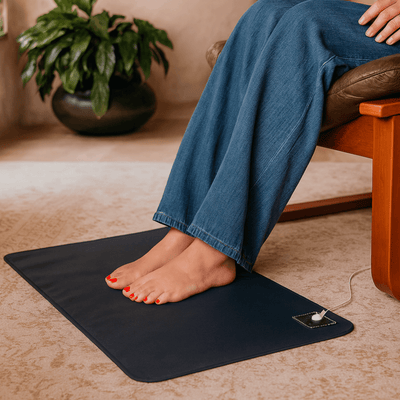
Premium Grounding Earthing Mat (Stainless Steel)
Woven stainless steel construction delivers even, consistent conductivity across the full mat surface — no carbon degradation, no hot spots. Comes with an Australian-compatible grounding cord, cord tester, and instruction guide for straightforward setup.
View on Premium Grounding (~$129) →Pros
- Stainless steel — lasts years without conductivity loss
- Large enough for both feet flat on the mat
- AU-compatible safety cord included
- Works as desk mat, floor mat, or yoga supplement
- 15% commission goes back to support this site
Cons
- ~$129 is twice the price of budget carbon mats
- Feels firm underfoot — not cushioned like a yoga mat
- Ships from overseas; allow 7–14 days to AU addresses
Buy if:
You plan to use a mat daily at a standing desk or in a home office and want a product that will still be conducting evenly in three years. The stainless steel construction is the only material that justifies daily use without concern about conductivity drift. If your budget is under $70, skip to the Hooga option below — it’s a genuine 4.1-star product.
#2 Budget Pick: Hooga Grounding Mat (Amazon AU B07VSRK68V, ~$59.98) — For buyers who want to test earthing before committing to a premium mat, the Hooga is the most reviewed budget option on Amazon AU. It uses a carbon-infused conductive surface, includes a cord, and ships domestically with Prime. The trade-off is that carbon surfaces lose conductivity unevenly over 12–18 months of daily use, and the mat is smaller than the Premium Grounding option. For occasional use or travel, it’s excellent value. For daily 8-hour desk use, budget for the steel version within a year.

Hooga Grounding Mat
Carbon-conductive surface with 4.1-star rating on Amazon AU, cord included. A solid entry point for first-time earthing product buyers who want to test the concept without a large outlay — best for occasional or desk-only use rather than daily 8-hour sessions.
View on Amazon AU (~$59.98) →Pros
- Ships from Amazon AU — 1–3 day delivery
- 4.1 stars across a large review pool
- Cord and grounding tester included
- Great price for testing the concept
Cons
- Carbon conductivity degrades with daily use
- Smaller surface area than premium mats
- No manufacturer warranty clarity for AU buyers
Best Grounding Sheet Australia 2026
Sleeping grounded is the most-studied application of earthing products. A 2015 pilot study by Ghaly and Teplitz published in the Journal of Alternative and Complementary Medicine found that eight weeks of grounded sleep significantly normalised cortisol rhythms in participants who had previously shown disrupted circadian patterns — though this remains preliminary evidence, not a proven clinical outcome. The reasoning behind sleep grounding makes intuitive sense: your body is in contact with a conductive surface for 6–9 hours straight, giving electrons a long, uninterrupted window to equalise your charge. A grounding mat used for 30 minutes at a desk provides only a fraction of that contact time. If you are serious about earthing, the sheet is the most impactful single purchase.
The main specification to scrutinise in grounding sheets is the conductive thread type and density. Silver thread is common in budget sheets but tarnishes in humid Australian coastal conditions (Brisbane, Cairns, coastal NSW) and requires careful washing with no fabric softener or bleach. Stainless steel thread is corrosion-resistant, handles standard Australian washing conditions better, and maintains conductivity over more wash cycles. The Premium Grounding Sheet uses stainless steel thread, ships with an Australian-compatible cord, and is designed to fit standard Australian bed sizes. For those with a higher budget, Better Earthing (an Australian-made brand) produces sheets in the $397–$579 range with a strong local reputation — no affiliate relationship exists, but they are worth considering if you want a premium AU-manufactured option. For a full comparison of sheet options, see our best grounding sheets Australia 2026 roundup.
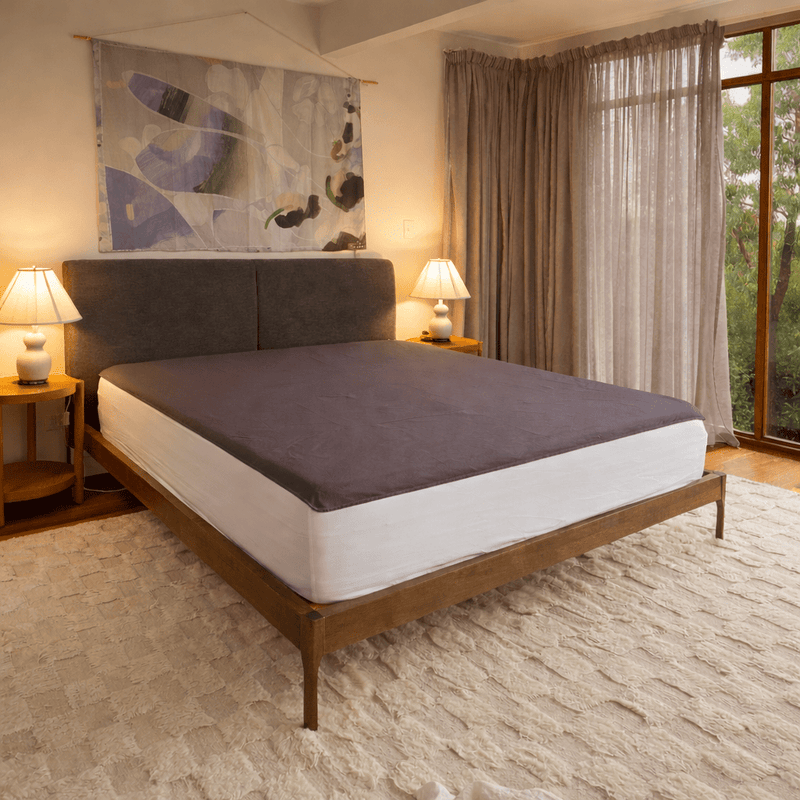
Premium Grounding Earthing Sheet (Stainless Steel)
Stainless steel conductive thread woven into a cotton base — more durable in humid Australian conditions than silver-thread alternatives that tarnish over time. Includes an Australian-compatible grounding cord and a continuity tester to verify connection before first use.
View on Premium Grounding (~$249) →Pros
- Stainless steel thread — resists tarnish in coastal AU humidity
- AU-compatible cord; no adaptor required
- Longest daily contact window of any earthing product (full sleep cycle)
- Continuity tester included for setup verification
- Machine washable — no special detergent needed (avoid softener)
Cons
- $249 is a meaningful outlay
- Cannot use fabric softener — alters thread conductivity
- Better Earthing (AU-made, $397+) may suit those preferring a local-brand premium
- Grounding effect requires direct skin contact — pyjamas reduce efficacy
Buy if:
You want the maximum daily grounding contact time and you’re committed to sleeping without heavy pyjama layers (shorts and a singlet work fine). This is the product most aligned with the sleep-quality earthing research. If you’re new to earthing, start with the mat first; upgrade to the sheet once you’ve confirmed you notice a difference.
Best Grounding Pillowcase Australia 2026
The grounding pillowcase is the product category most people overlook, and it is arguably the most important for people concerned about electromagnetic fields during sleep. Your head and face are the most electrically sensitive surfaces of your body — your scalp and facial skin sit millimetres from your brain, and many Australians sleep with their phones on the bedside table or with Wi-Fi routers in adjacent rooms. A conductive pillowcase in direct contact with your face and scalp provides grounding at the point of highest neurological sensitivity. Some practitioners also use grounding pillowcases alongside full grounding setups for people who are particularly sensitive to electrical fields in the sleep environment.
The Premium Grounding Pillowcase uses 30% surgical-grade stainless steel thread woven into a cotton base. That 30% steel ratio is high enough to maintain full skin contact conductivity across the pillow surface without the scratchy feel of higher-thread-density industrial conductive fabrics. It comes in Regular and Queen sizes, includes the grounding cord, and carries a 3-year warranty — the longest warranty in this product category from a non-AU brand. The surgical-grade steel designation means the thread alloy meets ISO 10993 biocompatibility standards, which is relevant if you have any metal sensitivities. Early research suggests grounding may support inflammatory reduction (Oschman et al., 2015, Journal of Inflammation Research), though this is not established as a treatment for any specific condition and is not a replacement for professional medical advice.
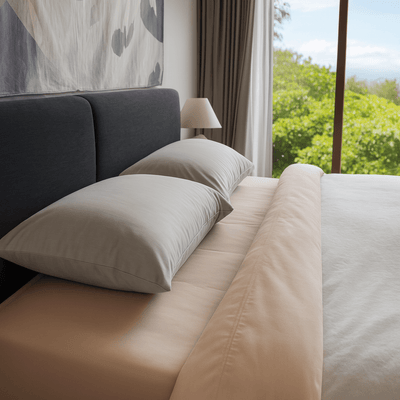
Premium Grounding Earthing Pillowcase
30% surgical-grade stainless steel thread in a cotton base — soft enough for face contact, conductive enough for consistent grounding at the scalp and face surface. Available in Regular and Queen; 3-year warranty covers thread continuity.
View on Premium Grounding (~$165) →Pros
- Surgical-grade steel — biocompatible, no skin irritation for most users
- 30% steel ratio balances conductivity with soft feel
- 3-year warranty — industry-leading for the category
- Regular and Queen sizing available
- Connects to the same cord as the mat or sheet (one cord system)
Cons
- $165 for a pillowcase requires commitment to earthing practice
- King size not available
- No fabric softener in wash — same care requirement as the sheet
- Those with confirmed metal hypersensitivity should patch-test first
Buy if:
You already own or plan to buy a grounding sheet and want to extend grounding contact to your face and scalp. The pillowcase pairs naturally with the sheet — one outlet, two cords, full-body and head contact for the entire sleep window. If you’re buying only one product, start with the mat or sheet first.
Best Budget Entry Point: Desk Pads and Mouse Pads
If $129 for a mat is too much to start with, or you specifically want a desk-only grounding solution for your wrists and forearms during computer work, the grounding mouse pad is the right entry point. The Premium Grounding Mouse Pad (~$79) uses a carbon-conductive surface sized for wrist and forearm contact during typing, plugs into the same earth-pin grounding cord system, and is compact enough to sit on any desk setup without replacing your existing mouse pad surface. It is specifically designed for desk use — not floor or sleep applications. The smaller surface area means less total body contact than a full mat, but for computer workers who spend hours with wrists resting on a surface, it provides consistent forearm and wrist grounding throughout the workday.
The Hooga Grounding Mat (Amazon AU B07VSRK68V, ~$59.98) is worth a second mention here. At its price point, it can also double as a desk mat for those who want more foot-contact surface than a mouse pad provides. If you’re choosing between the two at this budget tier, the Hooga gives more square footage for the money; the Premium mouse pad is the better choice if you specifically want wrist/forearm contact at the keyboard. Both are solid starting points for anyone curious about earthing who isn’t ready to commit to a sheet or full premium mat. The larger grounding pad from Premium Grounding (~$159) bridges the gap between mouse pad and full mat — it’s large enough for both desk and floor use and is worth considering if you want a single product for multiple contexts. See the how grounding sheets work guide for a detailed explanation of the electrical mechanism behind all conductive earthing products.
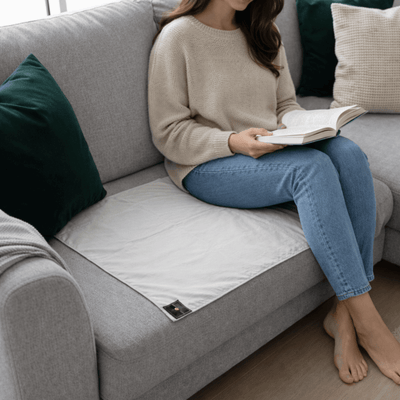
Premium Grounding Multi-Purpose Pad
Larger-surface grounding pad that works both on the desk surface and on the floor — sits between the mouse pad (desk-only) and the full mat in size and price. Useful if you want one product that can serve both desk and floor grounding without buying two separate items.
View on Premium Grounding (~$159) →How to Choose the Right Earthing Product for Your Needs
The decision comes down to three variables: where you want to ground, how long per day, and your budget. Here is the decision logic used by most buyers who end up happy with their purchase.
Are you a desk worker or do you want to start while sleeping? If you spend 6+ hours at a desk, a mat or mouse pad delivers grounding during hours you are already stationary — no behaviour change required. If your priority is sleep quality or sleep-related inflammation, a sheet or pillowcase delivers 6–9 hours of uninterrupted contact, which is the scenario most closely studied in the earthing literature. Many buyers eventually own both: a mat for work hours and a sheet for sleep. If you can only afford one, the sheet delivers more total contact time per day. If you want the lowest-friction starting point, the mat or mouse pad lets you test without changing your sleep setup.
What is your budget? Under $80: Premium Grounding Mouse Pad (~$79) or Hooga Mat (~$59). $80–$130: Premium Grounding Mat (~$129) — the stainless steel step-up that justifies daily use. $130–$250: the Multi-Purpose Pad (~$159) bridges desk and floor, or spend $249 for the full grounding sheet. Above $250: sheet plus pillowcase combination for full-night head-and-body contact. The most common entry path is mouse pad first, upgrade to mat, then add sheet — each step increasing daily contact time and total earthing exposure without redundancy in the product stack.
Do you live in a high-humidity location? Brisbane, Cairns, coastal QLD, and the NSW coast experience significant seasonal humidity. In these environments, silver-thread sheets and carbon mats degrade faster — silver tarnishes and carbon can absorb moisture unevenly. For buyers in humid coastal Australian cities, prioritise stainless steel construction across all product categories. The Premium Grounding range uses stainless steel or carbon formulations that are more stable in these conditions than some cheaper alternatives. If you’re in Melbourne (lower humidity, very soft Yarra Valley water) the silver-thread options from brands like Better Earthing may hold up better than in Brisbane or coastal NSW.
Australian Setup — Outlet Safety and AS/NZS Compliance
Every earthing product sold in Australia must connect only to the earth pin of an Australian AS/NZS 3112 outlet — the round pin at the top of the standard three-pin plug configuration. A properly designed grounding cord has a plug that fits only the earth pin socket and includes a 100-kilohm (100,000-ohm) resistor in series. This resistor is the critical safety component: at 100k ohms, even if the earth circuit developed an unexpected fault voltage, the maximum current through the resistor at 240V would be 2.4 milliamps — well below the 5mA threshold at which electrical current becomes perceptible to humans, and far below the 30mA threshold at which cardiac risk begins. Australian homes with correctly wired earthing circuits — all homes built after AS/NZS 3000 wiring standards took full effect — will have the earth pin referenced to physical ground potential. Older homes built before 1966 may have two-pin outlets with no earth pin at all, which makes earthing product use impossible without first having an electrician add a proper earth to the outlet.
Every Premium Grounding product ships with a continuity tester — a small device you plug into your outlet before attaching the mat or sheet. The tester has three indicator lights: a functional earth pin shows a specific light pattern, and an absent or open-circuit earth shows another. Always run the tester before first use, and run it again if you move the product to a different outlet. As a former Royal Australian Navy Clearance Diver — where electrical safety in wet environments was a professional-grade concern — I treat the continuity tester as non-negotiable, not optional. Do not use any grounding product on a circuit that has not been verified as correctly earthed. If the tester indicates no earth connection at an outlet, use a different outlet or have the circuit inspected by a licensed electrician before proceeding.
There is one additional Australian-specific consideration: surge protectors and powerboards. Many Australian surge protectors isolate or filter the earth pin as part of their surge-suppression circuit. If you plug a grounding cord into a surge-protected powerboard, you may not be connected to a true earth at all — the continuity tester will catch this, but the simple rule is to plug grounding cords directly into a wall outlet, not through a surge protector or powerboard extension. This applies to all earthing products regardless of brand or price point.
Final Verdict: The Best Earthing Products for Australians in 2026
The Premium Grounding Mat is the best single earthing product for most Australian buyers in 2026. Stainless steel construction, Australian-compatible cord, and versatile desk/floor use justify the ~$129 price over any carbon budget alternative. For sleep-focused grounding, the Premium Grounding Sheet at ~$249 delivers the longest daily contact window and the construction quality to survive years of machine washing. The Pillowcase at ~$165 is the natural complement to the sheet for anyone wanting full head-and-body coverage during sleep. If you’re starting from zero with a tight budget, the mouse pad at ~$79 or the Hooga mat at ~$59.98 let you test the concept before committing to a full setup.
One honest framing before you buy: the earthing research is genuinely interesting and the safety profile of a well-designed grounded product is excellent. But the clinical evidence is preliminary. Pilot studies are not the same as double-blind RCTs with large samples. Buy these products because you want to experiment with an evidence-adjacent wellness practice that has a solid theoretical mechanism and a very low risk profile — not because you expect them to treat a medical condition. If you have a specific health concern driving this purchase, speak to your GP or a practitioner familiar with the earthing literature. These products are not a replacement for professional medical advice or treatment.
Last reviewed: June 2026 — Clean and Native
Frequently Asked Questions
Do earthing products actually work?
Early research suggests earthing products can transfer electrons from the Earth’s surface to your body in the same way direct barefoot contact does, and preliminary studies have measured changes in cortisol levels, inflammatory markers, and sleep quality. However, the evidence base is small — mostly pilot studies with limited sample sizes — and earthing has not been validated in large randomised controlled trials for any specific health condition. The mechanism is scientifically plausible; the clinical claims remain preliminary. These products are not a replacement for professional medical advice or treatment.
Is it safe to use a grounding mat plugged into an Australian power outlet?
Yes, when properly designed. All reputable earthing products include a 100-kilohm current-limiting resistor in the grounding cord that limits maximum current to 2.4 milliamps at 240V — well below any threshold of harm. The cord connects only to the earth pin of a standard AS/NZS 3112 outlet, never to live or neutral. Always verify your outlet has a functional earth using the included continuity tester before first use, and plug directly into a wall outlet, not a surge protector or powerboard.
What is the difference between an earthing mat and a grounding sheet?
An earthing mat is a rigid or semi-rigid conductive pad used on a desk, floor, or as a yoga supplement — typically 60x40cm to 90x60cm. A grounding sheet is a full-sized fitted or flat sheet woven with conductive thread that covers a mattress, providing grounding contact during sleep. The key difference is contact duration: a mat is typically used for 30–90 minutes at a desk; a sheet provides 6–9 hours of uninterrupted contact overnight. Most research on health outcomes from earthing relates to overnight sleep grounding.
How do I know if my Australian home outlet has a functional earth?
Use the continuity tester included with any reputable earthing product. It plugs into your wall outlet and indicates via LED lights whether the earth pin is connected and functional. Australian homes built after 1966 are required to have earthed three-pin outlets under AS/NZS 3000 wiring rules, but older homes and some rental properties may have two-pin outlets or faulty earth connections. If the tester shows no earth, do not use the grounding product on that circuit — use a different outlet or have a licensed electrician inspect the wiring.
Can I use an earthing mat if I wear socks?
Standard cotton or synthetic socks insulate your feet from the conductive surface and will significantly reduce or eliminate the electron transfer. Thin cotton socks have some porosity and may allow minimal conductivity, but the grounding effect is substantially reduced compared to bare skin contact. For effective grounding, bare feet or bare skin on the mat surface is required. Some manufacturers produce conductive socks with silver or steel thread, but these are not necessary — bare skin is the simpler solution.
Should I choose a silver-thread or stainless steel grounding sheet?
For most Australian buyers, stainless steel is the better long-term choice. Silver thread is highly conductive but tarnishes in humid conditions — relevant for Brisbane, Cairns, coastal QLD, and coastal NSW — and requires careful washing without chlorine bleach or fabric softener to prevent accelerated degradation. Stainless steel thread is corrosion-resistant, handles standard Australian washing conditions better, and maintains conductivity across more wash cycles. If you live in Melbourne or Hobart (lower humidity, softer water), silver-thread options from Australian-made brands like Better Earthing may hold up adequately and offer a local-made premium.
Can I use a grounding sheet if I have a memory foam or latex mattress?
Yes. Grounding sheets sit on top of your mattress and connect to the outlet via the cord — the mattress material does not affect the electrical connection. Memory foam, latex, innerspring, and hybrid mattresses all work equally well with grounding sheets. The only requirement is that the sheet’s grounding cord reaches your wall outlet without excessive tension. If your outlet is on the opposite wall from your bed, a longer extension cord (non-surge-protected) may be needed.
Are earthing products the same as EMF protection?
They are related but distinct. Earthing products reduce the body voltage induced by the electric fields present in standard home wiring (AC electric fields at 50Hz). When you are connected to a functional earth, your body voltage relative to earth drops to near zero, which eliminates the oscillating electric field effect from household wiring on your body. This is measurable with a body voltage meter. Earthing products do not block or absorb radiofrequency (RF) radiation from Wi-Fi, 5G, or mobile phones — that requires RF shielding materials (Faraday fabrics, shielding paint). For a full overview of the EMF reduction toolkit, see our Complete EMF Guide for Australian Homes.
What is the best earthing product for someone on a tight budget in Australia?
The Hooga Grounding Mat (Amazon AU ASIN B07VSRK68V, ~$59.98) is the most accessible entry point for Australian buyers with a tight budget. It ships domestically via Amazon AU Prime, includes a cord and tester, and has a 4.1-star rating across a large review base. The trade-off versus premium stainless steel mats is conductivity durability — carbon surfaces degrade faster with daily use. For under $80 with stainless steel construction, the Premium Grounding Mouse Pad (~$79) is the better long-term option for desk workers who want wrist and forearm grounding specifically.
Get the Australian Home Environment Checklist
30 checks across water, air and EMF. Most of them free. Ranked by impact.
No spam. Unsubscribe any time.

Former Royal Australian Navy Clearance Diver and TAG-E counter-terrorism operator. Founded Clean and Native to apply the same rigorous thinking to the home environment.
Full biography →