Grounding for Sleep Australia: What the Research Actually Shows
Drafted with AI assistance and checked against published specifications and certifications. First-hand measurements appear only where stated. How we make content
Quick Verdict
Early research suggests sleeping grounded may help normalise cortisol rhythms and reduce self-reported sleep disruption. The evidence is preliminary — not RCT-level proof — but the setup is low-cost and low-risk for most Australians.
If you want to try it, a certified earthing sheet connected to the earth pin of a standard Australian GPO outlet is the most practical starting point.
Try grounding for sleep if you…
- Wake frequently or feel unrested despite adequate hours
- Have elevated cortisol at night (confirmed by test or strong suspicion)
- Are already addressing sleep hygiene basics
- Want a passive, no-effort intervention
Consider a different approach if you…
- Have a pacemaker or implanted electrical device
- Are on blood-thinning medication (speak to your GP first)
- Expect guaranteed, fast results — the evidence does not support that
- Have untreated sleep apnoea driving your disruption
Sleep is the single most common reason Australians reach out about earthing. The premise is straightforward enough: connect your body to the earth while you sleep, and something in that connection may shift the way your nervous system regulates overnight. As a former Navy Clearance Diver who now spends a lot of time reading the primary literature on recovery modalities, I have worked through every relevant study I could find — and I want to give you an honest picture of what the science actually says, rather than the breathless claims you’ll find on most supplement-adjacent sites.
The short version: early research suggests grounding during sleep — via an earthing sheet connected to the earth pin of a standard outlet — may normalise cortisol diurnal rhythms and reduce self-reported sleep disruption. The proposed mechanism is free electron transfer from the earth’s surface into the body. The evidence is preliminary, the studies are small, and we cannot yet say grounding is “proven” to improve sleep. What we can say is that the existing data is promising enough to warrant trying, particularly given that the setup costs under $150 and carries minimal risk for healthy adults.
This article covers the mechanism, the research, the Australian-specific setup considerations, and a realistic timeline so you know what to expect.
What Is Grounding During Sleep?
Grounding — also called earthing — refers to direct or conductive contact between the human body and the earth’s surface. Outdoors, this means bare skin on grass, soil, sand, or unsealed concrete. For indoor sleep applications, it means a conductive sheet, mat, or body band connected via a cord to the earth (ground) pin of a power outlet, which is itself connected to a grounding rod buried in the earth beneath your home.
The proposed mechanism centres on free electron transfer. The earth’s surface carries a subtle negative charge — a near-unlimited reservoir of free electrons generated continuously by lightning strikes and solar radiation interacting with the ionosphere. The hypothesis, advanced by researchers including James Oschman, is that when the body makes conductive contact with the earth, these electrons flow inward, neutralising positively charged free radicals involved in inflammation and oxidative stress (Oschman JL et al., Journal of Inflammation Research, 2015). Earthing sheets work by weaving conductive fibres — typically silver-threaded or carbon-based — into cotton fabric. The conductive threads connect to a snap that attaches to a grounding cord, which plugs into the earth pin of your wall outlet. No current flows from the active or neutral pins. The earth pin in an Australian GPO outlet carries no voltage under normal conditions; it simply provides a path to the buried grounding system of your home’s electrical installation.
For a detailed breakdown of how the sheet-to-outlet connection works and what to look for in Australian-compliant products, see our guide on how grounding sheets work in Australia. For a comparison of the top options currently available here, our best grounding sheets Australia 2026 roundup covers the full field.
The Research on Grounding and Sleep
The most cited study specifically examining grounding during sleep is Ghaly M and Teplitz D (2004), published in the Journal of Alternative and Complementary Medicine. Twelve subjects slept grounded for eight weeks using a conductive mat. The primary finding was a normalisation of cortisol diurnal rhythms: at baseline, several participants showed cortisol peaks misaligned with the normal morning pattern (elevated in the evening or flattened across the day). After eight weeks of grounded sleep, cortisol secretion profiles shifted to align more closely with the expected physiological pattern, with the peak occurring in the morning hours. Secondary self-reported outcomes included improvements in sleep quality, pain levels, and perceived stress. These are meaningful findings — cortisol is a central regulator of the sleep-wake cycle, and a dysregulated cortisol curve is consistently associated with insomnia, early waking, and non-restorative sleep.
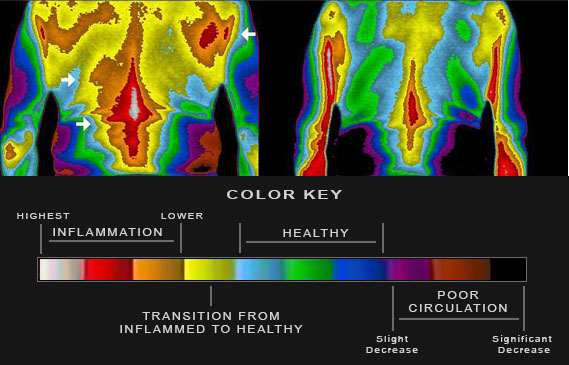
Here is where intellectual honesty matters: the Ghaly and Teplitz study had twelve subjects. There was no randomised control group. Participants knew they were in a grounding study, which introduces expectancy bias. The study cannot rule out placebo effects, regression to the mean, or the simple benefit of sleeping on a new, firmer surface. The authors themselves described their findings as preliminary. In the two decades since, larger, properly randomised controlled trials on grounding and sleep specifically have not been published in high-impact journals. The 2015 Oschman et al. review in the Journal of Inflammation Research provides a theoretical framework and surveys supporting mechanistic data, but it is a narrative review, not a clinical trial. The honest position is that we have a plausible biological mechanism, a small but positive signal from preliminary human data, and a gap in the RCT literature that has not yet been filled.
That does not mean the research is meaningless. A normalised cortisol curve in a real group of people over eight weeks is a measurable physiological change, not merely a subjective report. The free electron transfer mechanism is biologically plausible — antioxidants operate on the same principle of donating electrons to neutralise free radicals, and the earth’s electron reservoir is effectively inexhaustible. Several smaller studies on adjacent outcomes — inflammation markers, autonomic nervous system tone, pain — have shown consistent directional effects (Brown R et al., Journal of Alternative and Complementary Medicine, 2010; Chevalier G et al., Journal of Alternative and Complementary Medicine, 2012). The picture that emerges is of a real but modest, and not yet rigorously proven, effect on physiological regulation during sleep.
How to Set Up Grounding for Sleep in Australia
The practical setup for Australian homes is straightforward, but a few steps matter. The first is verifying your outlet is properly earthed. In older Australian homes — particularly pre-1980s builds in parts of Sydney, Melbourne’s inner suburbs, or regional Queensland — some GPO outlets may lack a functional earth connection despite having three pins. An outlet tester, available from Bunnings for under $20, will confirm whether your outlet is live, neutral, and earthed correctly. Do not skip this step. Plugging a grounding sheet into an unearthed outlet means you are simply not connected to anything — no benefit, but also no harm. The outlet tester removes all guesswork.
Once your outlet checks out, sheet selection matters. Look for products that specify their conductive thread material (silver is preferred for durability and conductivity), thread count sufficient for consistent skin contact, and a cord that plugs into the earth pin only — not into a USB adapter or two-pin power pack, which would defeat the purpose entirely. The cord should have a built-in resistor (typically around 100k ohms) as a safety measure that limits current flow in the extremely unlikely event of an electrical fault. Australian-compliant products from reputable suppliers will include this as standard.
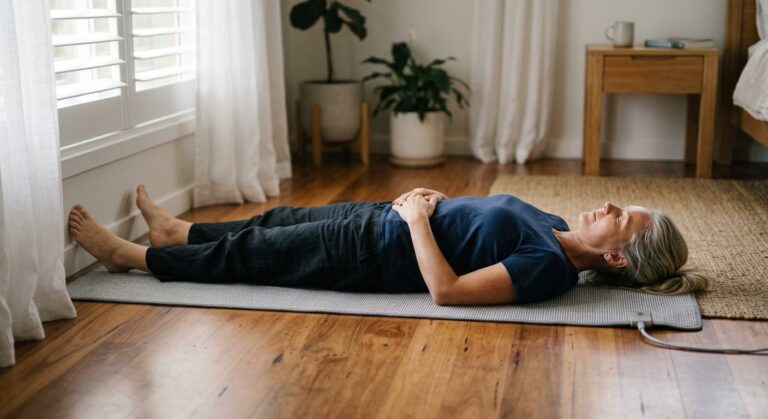
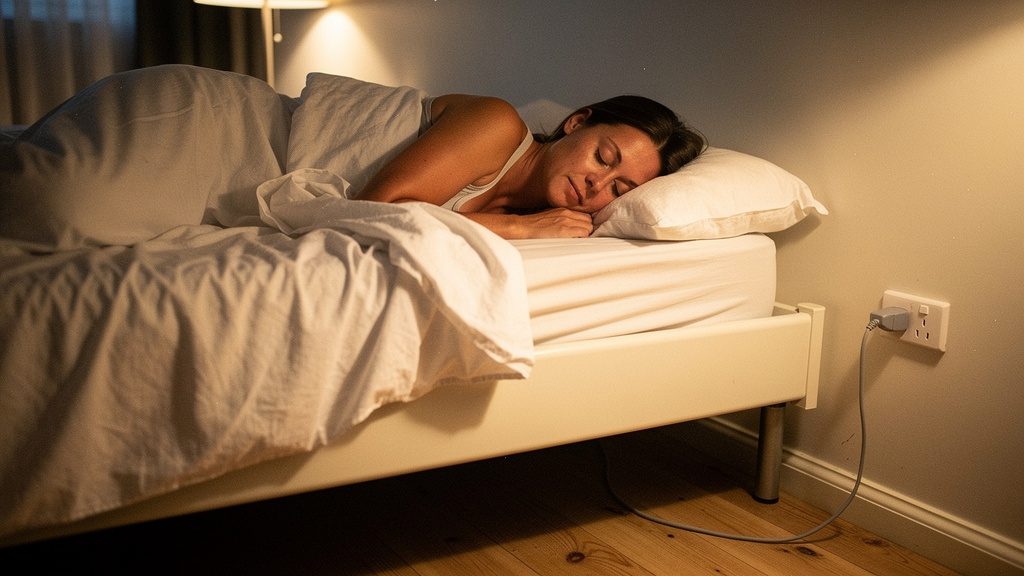
Positioning the sheet matters for effect. The sheet needs to be in direct contact with bare skin — at minimum your feet, legs, or torso. Sleeping in thick winter pyjamas with the sheet pulled over them reduces or eliminates conductivity. Many users place the sheet across the lower half of the bed so bare feet or legs maintain contact throughout the night, while heavier bedding covers the upper body for warmth. This is particularly practical in Melbourne, Hobart, or the Southern Tablelands of New South Wales during winter months.
Australian-Specific Considerations
Australia’s electrical standard (AS/NZS 3000, the “Wiring Rules”) requires that all new and renovated residential installations include a functional earthing system. The earth pin on a standard Australian GPO outlet connects via the earth wire in the circuit back to the main earthing conductor, which terminates at the main switchboard and from there to an earth electrode driven into the ground outside the property. This is the same path a grounding sheet cord uses. In a properly installed system, the earth pin is at or near zero volts relative to true earth potential — meaning plugging in your grounding cord is genuinely connecting you to the ground beneath your home, not to an arbitrary electrical reference point.
Climate introduces a subtlety that matters more in Australia than in, say, Northern Europe. Conductivity between your body and the sheet improves with skin moisture. In Brisbane and coastal Queensland, nighttime humidity often sits between 60 and 80 per cent, which means skin surface moisture is naturally higher and conductivity is relatively strong throughout the night. In Melbourne and Adelaide, lower winter humidity (sometimes below 30 per cent indoors with heating running) can reduce skin surface conductivity. If you are in a dry climate, a light application of water-based skin lotion before bed can help. This is not a major variable, but it explains why some users in humid coastal areas report a stronger subjective response than those in drier inland regions or southern states in winter. In Perth, where summer nights are warm and dry and winter nights are cool and moderately humid, the effect will be more season-dependent than in subtropical Queensland.
There is also a practical consideration around mattress type. Memory foam and latex mattresses create a raised, insulated sleeping surface that does not interact with the sheet’s grounding function — the sheet simply needs to be on top, in contact with skin, and it will work regardless of what is beneath it. However, electrically heated mattress pads or electric blankets introduce an EMF exposure variable that is worth noting: if you are pursuing grounding partly to reduce EMF exposure during sleep, running a mains-connected heating element under or over you simultaneously partially offsets that goal. Switching to a hot water bottle for winter warmth in those final pre-sleep minutes, then removing it, is a cleaner approach.
What to Expect — Timeline and Realistic Outcomes
The Ghaly and Teplitz (2004) study ran for eight weeks, and the cortisol rhythm changes were measured at the end of that period. This timeline is consistent with anecdotal reports from long-term earthing users: most people who notice subjective improvements describe changes occurring over two to six weeks, not overnight. If you try grounded sleeping for three nights, notice nothing, and conclude it does not work, you are likely not giving the intervention enough time. Sleep architecture is slow to shift, cortisol rhythms are slower still, and any anti-inflammatory or autonomic-regulatory mechanism that operates cumulatively will take weeks to produce a detectable signal.
Realistic outcomes that the available evidence supports — framed honestly — include: a gradual shift toward feeling more alert in the morning and less wired in the evenings (consistent with cortisol rhythm normalisation); reduced frequency of nighttime waking, particularly in people whose waking pattern suggests a cortisol spike in the early hours (3 to 5 am); and a mild reduction in morning joint stiffness or muscle soreness, consistent with the anti-inflammatory mechanism proposed by Oschman et al. (2015). What the evidence does not support is claiming that grounding will cure insomnia, eliminate the need for sleep hygiene practices, or produce dramatic results in everyone who tries it. The effect size in the existing literature is modest. Some people will notice nothing.
A practical tracking approach: note your sleep quality subjectively on a 1-10 scale each morning for two weeks before starting, then continue tracking for eight weeks after. This gives you a personal baseline against which to assess any change. It is not a controlled experiment, but it is more informative than vague impressions. If you are in a city with variable weather — Melbourne being the obvious example — also note the humidity or temperature, since these may interact with your conductivity and subjective response.
The Best Earthing Sheet for Sleep in Australia
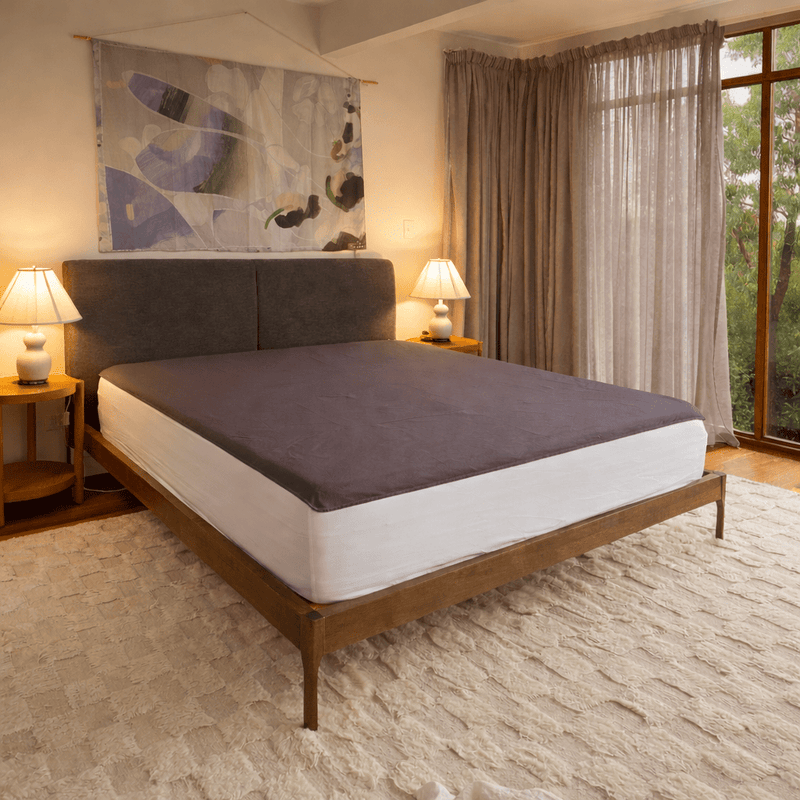
Premium Grounding Earthing Sheet
Silver-threaded cotton sheet with built-in safety resistor on the grounding cord. Ships to Australia with a compatible adapter for standard GPO outlets. Suitable for use across the lower half of the bed for continuous foot and leg contact during sleep.
View on Premium GroundingPros
- Silver-thread construction for reliable conductivity
- Safety resistor on cord included as standard
- Cotton base fabric — breathable in Queensland summers
- Compatible with standard Australian GPO outlets
Cons
- Silver threads require careful washing to maintain conductivity
- Sheet must be in direct skin contact — not over thick pyjamas
- Outlet must be verified earthed before use
If you are still deciding between sheet formats and mat options, our best grounding mat Australia 2026 guide compares flat mats, half-sheets, and full fitted sheets across price points, with notes on which formats suit different sleeping positions and bed sizes.
Frequently Asked Questions
Is grounding for sleep supported by scientific evidence?
Early research suggests it may be beneficial. The most directly relevant study — Ghaly and Teplitz (2004), published in the Journal of Alternative and Complementary Medicine — observed cortisol rhythm normalisation and improved self-reported sleep in 12 subjects who slept grounded for eight weeks. The study was small and lacked a randomised control group. Larger RCTs have not yet been published. The honest position is that the evidence is preliminary but directionally positive, and the biological mechanism (free electron transfer, as described by Oschman et al. in the Journal of Inflammation Research, 2015) is plausible.
How does an earthing sheet connect to the ground in an Australian home?
The sheet’s conductive cord plugs into the earth pin of a standard Australian GPO outlet. That earth pin connects via the home’s wiring to the main earthing conductor at the switchboard, which terminates at a grounding electrode in the soil beneath the property. No current flows from the active or neutral pins — the earth pin carries no voltage under normal conditions. This is the same earth path that protects you from electrical faults in appliances. AS/NZS 3000 (the Australian Wiring Rules) mandates a functional earthing system in all residential installations.
Is it safe to sleep on a grounding sheet connected to a wall outlet?
For healthy adults in a properly wired home, yes — with appropriate precautions. Reputable earthing sheet cords include a built-in resistor (typically around 100,000 ohms) that limits current to a safe level even in the unlikely event of a wiring fault. The first step is testing your outlet with an outlet tester to confirm it is correctly earthed. If the outlet tester shows an earth fault, do not use the grounding sheet from that outlet. People with pacemakers, implanted defibrillators, or those on anticoagulant medication should consult their doctor before trying grounding products.
How long does it take for grounding to improve sleep?
The Ghaly and Teplitz (2004) study measured outcomes at eight weeks. Anecdotal reports from regular users typically describe noticeable subjective changes over two to six weeks. Three nights is not a sufficient trial period. If you are tracking sleep quality, keep a daily score for two weeks before starting, then continue for at least six to eight weeks after, to give yourself a meaningful personal baseline. Some people notice nothing — the existing evidence does not suggest grounding works for everyone.
Does humidity affect how well grounding sheets work in Australia?
Skin surface moisture affects conductivity between your body and the conductive sheet threads. In high-humidity environments like coastal Queensland and the Northern Territory, conductivity is naturally higher at night. In lower-humidity environments — Adelaide in summer, Melbourne with heating running in winter, or inland areas — skin surface conductivity is lower. A water-based moisturiser applied before bed can help. The effect of humidity on outcomes has not been formally studied, but the physics of conductivity supports this as a real variable worth managing.
Can I use a grounding sheet with any type of mattress?
Yes. The grounding sheet works independently of the mattress beneath it. Memory foam, latex, innerspring, and hybrid mattresses do not interfere with the sheet’s function — the conductive threads in the sheet only need to be in contact with your bare skin. What matters is that the sheet (not your mattress) makes skin contact. Avoid running an electric blanket or mains-connected heating pad simultaneously if part of your goal is reducing EMF exposure during sleep, as these devices emit alternating magnetic fields close to the body.
Do I need to sleep with bare skin touching the sheet?
Direct skin contact with the conductive threads is necessary for the earth connection to work. Thick cotton pyjamas or flannel sleepwear will block conductivity. Many Australians place the earthing sheet across the lower third of the bed — covering the area where their feet and lower legs rest — so bare skin maintains contact throughout the night while heavier clothing or bedding covers the torso for warmth. In Queensland and northern New South Wales, sleeping with bare legs or arms in contact with the sheet is comfortable for most of the year.
What does cortisol normalisation actually mean for sleep?
Cortisol follows a diurnal rhythm: it should peak in the early morning (roughly 6 to 8 am AEST) to assist waking, then decline through the day, reaching its lowest point in the late evening to allow sleep onset. When this rhythm is disrupted — with cortisol peaking in the evening or remaining elevated at night — it makes falling asleep harder, causes early-morning waking (often around 3 to 4 am), and reduces restorative sleep quality. The Ghaly and Teplitz (2004) study found that grounded sleep shifted cortisol secretion profiles toward this normal morning-peak pattern. Normalised cortisol rhythm is associated with easier sleep onset, fewer nighttime awakenings, and feeling more alert on waking.
Are there any Australian regulations I should know about for earthing products?
Earthing sheet products sold in Australia should comply with relevant electrical safety requirements. The grounding cord — specifically its connection to the GPO outlet — should be designed for the Australian three-pin outlet configuration. Products that use only a two-pin adapter to connect to a USB charger or similar device are not providing a genuine earth connection and should be avoided. When purchasing, confirm the product description specifies that the cord connects to the earth pin of a standard wall outlet. The outlet itself must be compliant with AS/NZS 3000 — verified by your outlet tester.
Ready to Try Grounded Sleep?
Early research suggests sleeping grounded may support cortisol normalisation and reduce sleep disruption. The setup is simple and low-cost — start with a quality earthing sheet and a verified outlet.
Last reviewed: June 2026 — Clean and Native
Best Earthing Products Australia 2026: Mats, Sheets, Pillowcases & Bands
Compare every earthing product category tested in Australia →Get the Australian Home Environment Checklist
30 checks across water, air and EMF. Most of them free. Ranked by impact.
No spam. Unsubscribe any time.

Former Royal Australian Navy Clearance Diver and TAG-E counter-terrorism operator. Founded Clean and Native to apply the same rigorous thinking to the home environment.
Full biography →