
PFAS in Drinking Water: Infant Mortality Risk Explained
PFAS contamination in Australian drinking water is a confirmed public health issue, with over 700 sites on the DCCEEW national register and peer-reviewed research now linking prenatal PFAS exposure to increased infant health risk — yet most Australian parents have no idea whether their tap water exceeds the NHMRC’s 8 ng/L guideline. This article explains the science, identifies the highest-risk postcodes, and gives you a clear filtration protocol.
What PFAS Is and Why It Ends Up in Australian Drinking Water
PFAS — per- and polyfluoroalkyl substances — is a family of over 12,000 synthetic chemicals used since the 1940s in products ranging from non-stick cookware to waterproof clothing to aqueous film-forming foam (AFFF). The carbon-fluorine bond that makes PFAS useful is also what makes it dangerous: it is one of the strongest chemical bonds in organic chemistry. PFAS does not break down in the environment, in water treatment processes, or in the human body. That is why toxicologists call it a “forever chemical.”
In Australia, the dominant contamination pathway is AFFF used for firefighting training and emergency response at defence bases, airports, and industrial sites. The Department of Defence has confirmed PFAS contamination at dozens of current and former base sites including Williamtown (NSW), Oakey (QLD), Katherine (NT), Edinburgh (SA), and Pearce (WA). Contaminated groundwater from these sites migrates into local bores and, in some cases, municipal water supplies. According to the DCCEEW national PFAS contamination register, over 700 sites across Australia have confirmed or suspected PFAS contamination.
The two PFAS compounds of greatest regulatory concern in Australian drinking water are PFOS (perfluorooctane sulfonate) and PFHxS (perfluorohexane sulfonate). A third compound, PFOA (perfluorooctanoic acid), is also regulated and was the subject of much early research. All three are classified as long-chain PFAS and are the most persistent in human tissue. Short-chain PFAS compounds are increasingly used as substitutes, but their long-term health profiles are not yet fully characterised.
The Infant Mortality and Adverse Birth Outcome Research: What the Science Actually Says
The link between prenatal PFAS exposure and infant health outcomes has moved from hypothesis to peer-reviewed evidence. A 2025 study published in the Proceedings of the National Academy of Sciences (PNAS) confirmed that PFAS exposure in pregnant women disrupts placental function — the mechanism by which nutrients and oxygen are delivered to the developing foetus. The placenta is particularly vulnerable to PFAS accumulation because it is highly vascularised and acts as a lipid-rich interface between maternal and foetal circulation. PFAS, being highly protein-bound, concentrates in this tissue.

The PNAS study found that PFAS compounds interfere with trophoblast cell function — the placental cells responsible for invasion and vascular remodelling. Impaired trophoblast function is associated with foetal growth restriction, preterm birth, and pre-eclampsia, all of which elevate infant mortality risk. This is not a speculative association. The mechanistic pathway is now documented at the cellular level.
Earlier epidemiological evidence from the United States reinforced the population-level signal. A study examining New Hampshire birth records found associations between elevated PFAS in residential water supplies and reduced birth weight and gestational age. Reduced birth weight below 2,500g is independently associated with higher neonatal mortality in the first 28 days of life. The New Hampshire findings are significant not because Australia’s water chemistry is identical, but because they demonstrate a consistent population-level signal at PFAS concentrations comparable to levels found in some Australian contamination zones.
The immunological pathway is equally concerning. PFAS exposure in early life has been associated with suppressed antibody response to vaccinations, including diphtheria and tetanus, in multiple prospective cohort studies. The Faroe Islands cohort, one of the most closely studied populations for PFAS health effects, found that children with higher prenatal PFAS exposure mounted significantly weaker vaccine responses. For Australian infants on the National Immunisation Program schedule, this is a direct clinical concern, not a theoretical one.
To be precise about what the science does and does not show: no study has definitively established PFAS in drinking water as a direct cause of infant mortality in Australian populations. The evidence base is strongest for biological mechanism (placental disruption), moderate for adverse birth outcomes (growth restriction, preterm birth), and inferential for infant mortality as a downstream consequence of those outcomes. That distinction matters. But for a pregnant woman deciding what water to drink, “not yet definitively proven to cause infant mortality in Australia” is not the reassurance it sounds like.
Australia’s PFAS Drinking Water Guidelines: What the NHMRC Limit Actually Means
Australia’s drinking water PFAS guidelines are set by the National Health and Medical Research Council (NHMRC) and published within the Australian Drinking Water Guidelines (ADWG). The current limits, as confirmed by the Water Services Association of Australia (WSAA) fact sheet, set a combined guideline value of 8 ng/L (nanograms per litre, equivalent to 8 parts per trillion) for PFOS and PFHxS. PFOA carries a separate guideline of 560 ng/L — a figure that reflects its different toxicokinetic profile, not a judgment that it is safe at high concentrations.
These numbers require careful interpretation. The 8 ng/L limit is not a bright line between safe and unsafe. It is a risk-management value derived from tolerable daily intake calculations, body weight assumptions, and drinking water contribution factors. The NHMRC methodology applies a 10% allocation factor — meaning the guideline assumes drinking water contributes only 10% of total daily PFAS exposure. For populations with higher drinking water consumption relative to other exposure pathways (infants consuming formula made with tap water, for example), the real-world exposure may be substantially higher than the model assumes.
The US Environmental Protection Agency took a harder line in April 2024, setting enforceable maximum contaminant levels (MCLs) of 4 ng/L for PFOA and PFOS individually — half the Australian guideline for PFOS and 140 times stricter for PFOA. The European Food Safety Authority has proposed even lower values. Australian guidelines have not been revised downward to match this international trend. Whether that reflects the evidence base or regulatory inertia is a legitimate policy debate. What it means practically: water that complies with Australian guidelines may still exceed thresholds that other comparable nations now consider unacceptable.
Critically, not all Australian water utilities are required to test for PFAS under mandatory national monitoring programmes. Testing varies by state and by proximity to known contamination sources. Sydney Water, Melbourne Water, and SEQ Water conduct routine PFAS surveillance. But smaller regional utilities and many private bores are untested. If you are in a regional area near a defence base, an airport, or an industrial firefighting training site, your water may not be tested at all — and you will not know unless you test it yourself.
Test Your Water First — Then Filter
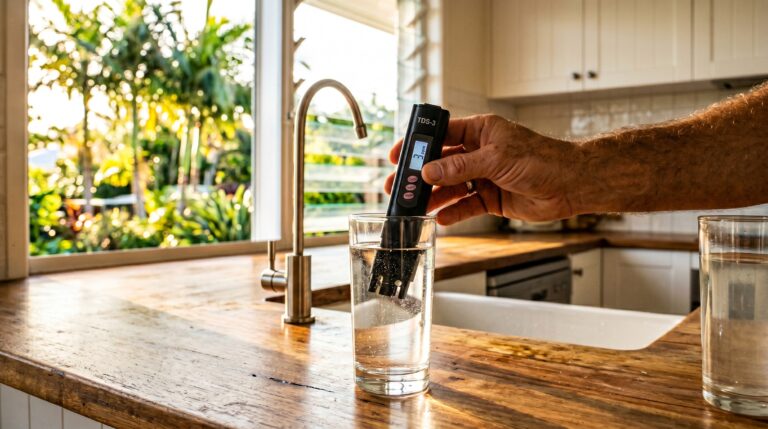
Note: The VARIFY kit screens for common contaminants including heavy metals and chlorine but does not test for PFAS specifically. For PFAS-specific testing, commission a NATA-accredited laboratory analysis — costs approximately $150–$400 depending on the panel. Your state environment authority may provide subsidised testing near known contamination zones.
Which Australian Communities Face the Highest PFAS Exposure Risk
The highest-risk communities are those located near confirmed AFFF contamination sites. Based on the DCCEEW register and state government contamination investigations, these are the areas where independent PFAS testing is most warranted.
In New South Wales, RAAF Base Williamtown near Newcastle is the most documented case. State government investigations confirmed PFAS contamination in groundwater and surface water across a defined investigation area covering parts of Williamtown, Fullerton Cove, and Grahamstown Dam. Some residential bores in this zone returned PFAS readings well above the NHMRC guideline. Residents were advised not to use bore water for drinking or food preparation. While town water supply from Hunter Water is not the source of contamination, households relying on private bores in this zone remain at risk.
In Queensland, Oakey Army Aviation Centre contamination has affected groundwater in the Oakey township area and surrounds. PFAS has been detected in some privately owned bores. The Queensland government established a community support program and provided alternative water supplies during the investigation period. In southeast Queensland — Brisbane, Ipswich, and Logan — municipal water is sourced via SEQ Water from Wivenhoe and other major catchments with no confirmed PFAS issue at the source level, but chloramine is used as the disinfectant across the SEQ grid.
Katherine in the Northern Territory saw PFAS contamination from RAAF Base Tindal migrate into the town’s drinking water supply bores. NT Health confirmed PFAS in the Katherine town water supply in 2016, with PFOS concentrations exceeding the then-guideline in some samples. A remediation and alternative supply program was implemented. The Katherine situation remains the clearest Australian case of confirmed municipal supply contamination at scale.
In South Australia, Edinburgh Defence Precinct has been the subject of contamination investigations affecting surrounding groundwater. In Western Australia, RAAF Base Pearce near Bullsbrook and the Gingin area has been investigated. Perth metropolitan reticulated water from the Water Corporation is sourced from a different supply chain and has not returned PFAS readings of concern in published monitoring data, but Perth’s groundwater-dependent surrounding areas carry more risk.
For parents in urban areas on major reticulated supplies — Sydney, Melbourne, Brisbane, Adelaide, Perth city — the PFAS risk from municipal water is currently at or below guideline values in published testing. That does not mean undetectable. It means the utility is managing to the NHMRC threshold. Whether that threshold is adequate for pregnancy and infancy, given the international regulatory trend, is the question this article addresses.
The Only Filtration Technologies That Actually Remove PFAS
This is where a lot of consumer misinformation circulates. Not all filters remove PFAS. The technology matters precisely.
Reverse Osmosis — The Primary Recommended Technology
Reverse osmosis (RO) forces water under pressure through a semi-permeable membrane with pore sizes around 0.0001 micrometres. PFAS molecules, while small by human standards, are large relative to this pore size and are rejected at rates of 90–97% depending on the specific compound and membrane quality. NSF/ANSI Standard P473 is the certification specifically covering PFAS removal (PFOA and PFOS) in drinking water treatment systems. Any RO unit claiming PFAS removal should carry NSF/ANSI P473 certification or NSF/ANSI 58 (which covers the membrane rejection performance broadly).
RO also removes fluoride (90–97%), lead, nitrates, arsenic, and a wide range of other contaminants in a single treatment stage. For Australian families concerned about both PFAS and fluoride — which is added to drinking water in most Australian states at 0.6–1.0 mg/L — RO is the only technology that addresses both simultaneously. Carbon filters cannot remove fluoride. This is a hard chemistry fact, not a marketing claim.
The tradeoff with RO is water waste. Most residential RO units produce 2–4 litres of wastewater per litre of filtered water (a 3:1 or 4:1 waste ratio). Higher-efficiency tankless models reduce this, but some waste is inherent to the membrane process. For Queensland and other water-restricted states, this is worth considering.
Activated Carbon — Partial and Inconsistent
Granular activated carbon (GAC) and carbon block filters adsorb some PFAS compounds, particularly longer-chain PFAS like PFOS and PFOA, under optimal flow conditions and when the carbon is fresh. However, this removal is partial, inconsistent as the carbon ages, and not certified under any Australian or NSF standard for reliable PFAS removal. A standard Brita-style pitcher filter will reduce PFAS to some degree. It will not reduce it to the levels achievable with RO. For a general household looking to reduce chlorine taste, carbon is fine. For a pregnant woman in a PFAS-affected area, it is not sufficient as the sole treatment stage.
Ion Exchange Resin — Specialist Application
Certain anion exchange resins can selectively remove PFAS and are used in municipal-scale treatment. Residential-scale ion exchange cartridges for PFAS are available but are not widely stocked in Australia and carry a higher running cost than RO. They are worth investigating for households that cannot accommodate a standard RO installation, but RO remains the more accessible and better-validated option for residential use.
What Does Not Work for PFAS
Boiling water does not remove PFAS — it concentrates it by reducing water volume. KDF-55 media does not remove PFAS. UV treatment does not remove PFAS. Standard pitcher filters (including Brita and equivalent) provide only partial reduction with no certified performance standard. If someone tells you their filter “reduces PFAS” without citing NSF P473 or a specific membrane rejection rate with a source, treat that claim with scepticism.
Practical Protocol for Australian Parents: What to Do Right Now
If you are pregnant, planning to conceive, breastfeeding, or preparing formula for an infant, this is the action sequence. It is systematic, not anxious.
Step 1: Determine your risk level
Check the DCCEEW PFAS contamination register for your postcode. If you are near a confirmed contamination site and rely on a private bore, commission a NATA-accredited laboratory PFAS analysis. Cost is approximately $150–$400 for a full PFAS panel. Contact your state environmental authority — in some contamination zones they provide subsidised testing. If you are on a major reticulated supply in a capital city and not near a defence base, your utility’s published annual water quality report is the starting point. Sydney Water, Melbourne Water, SEQ Water, SA Water, and Water Corporation WA all publish PFAS monitoring data.
Step 2: Install point-of-use RO for drinking and cooking water
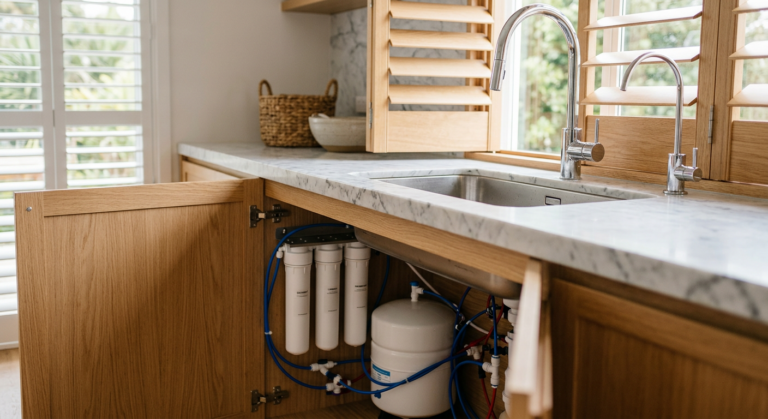
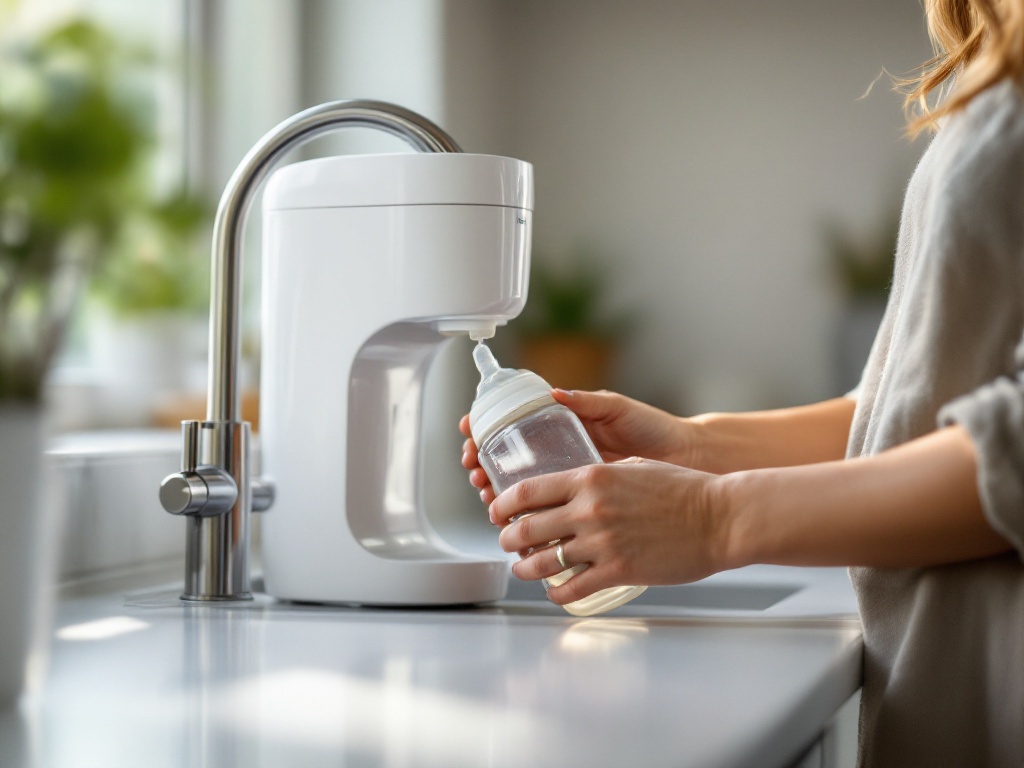
You do not need to filter every litre of water in your home. PFAS risk is primarily through ingestion. A point-of-use RO unit covering your kitchen tap — whether countertop or under-sink — is the targeted intervention. This covers drinking water, water used for cooking, and water used to prepare infant formula.
The AquaTru Classic Smart Alkaline is the best countertop option for renters or those who cannot modify plumbing. It is NSF P473 certified, requires no installation beyond plugging into power, and produces approximately 4 litres per 15-minute cycle. It removes PFAS, fluoride, chloramine, lead, and nitrates in a four-stage process. At approximately $0.04 per litre of filtered water, it is the lowest cost-per-litre option in the countertop segment.
For homeowners with a dedicated kitchen circuit, the PWS EcoHero 5-Stage Under-Sink RO from Pure Water Systems Australia is the stronger long-term investment. It carries NSF/ANSI 58 certification and WaterMark accreditation (AS/NZS 4348), which is the Australian plumbing standard confirming it is legal to install on your mains supply. The five-stage system includes a dedicated alkaline remineralisation stage that restores calcium and magnesium after the RO membrane strips the water to near-zero TDS. This is directly relevant to infant formula preparation — WHO guidelines recommend remineralised RO water rather than pure RO permeate for formula due to the mineral contribution to infant nutrition.
Step 3: Filter the water used for infant formula specifically
The infant formula preparation step carries concentrated exposure risk. Formula-fed infants consume large volumes of water relative to body weight — at 3–6 months, formula may represent 100% of fluid intake. At a body weight of 5–7 kg, the same PFAS concentration in drinking water delivers a proportionally far higher dose per kilogram than it would to an adult. This is why the NHMRC allocation factors used to set the 8 ng/L guideline may underestimate exposure in exclusively formula-fed infants. Use filtered RO water for every formula preparation, every time.
Step 4: Do not rely on bottled water as the permanent solution
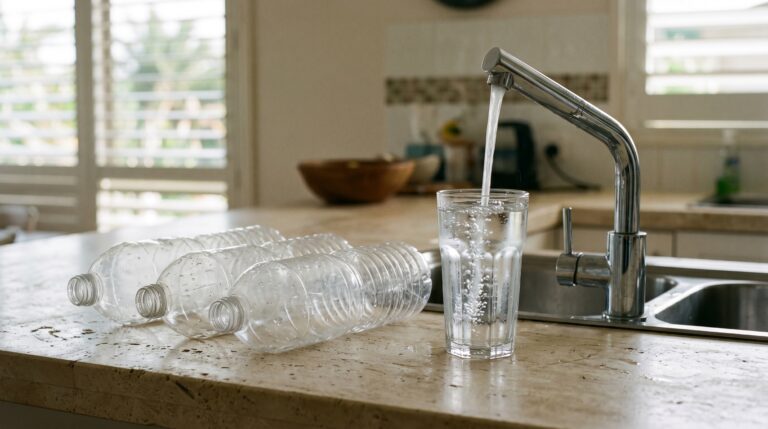
Bottled water is not a reliable PFAS-free source. Australian bottled water brands are not required to test for or declare PFAS content. Some independent testing has detected PFAS in bottled water products. Beyond the PFAS question, bottled water costs $1–$3 per litre compared to $0.04–$0.07 per litre for RO-filtered tap water. Over the course of a pregnancy and the first two years of infant formula feeding, the cost difference is measured in thousands of dollars. A quality RO system pays for itself within 12–18 months against bottled water costs.
Cost Per Litre of Safe Drinking Water — Australian Households
Based on 4L/day household consumption; RO costs amortised over 5 years including filter replacements; bottled water at $2.00/L average retail.
Formula: unit cost / total litres over 5 years at 4L/day. Sources: AquaTru AU, PWS AU, Brita AU retail. Bar fill #3A8A5A = top recommendation; #1A3326 = peer products; #999999 = benchmark. Bottled water cost: $2.00/L average supermarket retail.
Brisbane and Southeast Queensland: Chloramine Plus PFAS — A Dual Concern
Southeast Queensland deserves specific mention because Brisbane and the SEQ grid use chloramine as the primary drinking water disinfectant — not free chlorine. Chloramine is a combination of chlorine and ammonia added at the treatment plant. This distinction matters for filtration because standard granular activated carbon (GAC) removes chloramine at approximately 1/40th the rate it removes free chlorine. A standard Brita filter or a standard under-sink carbon filter provides negligible chloramine reduction in Brisbane water.
This means a Brisbane household concerned about both chloramine and PFAS needs a filtration solution that addresses both simultaneously. RO does. A countertop RO or an under-sink RO system will reduce chloramine via the carbon pre-filter stage (catalytic carbon is most effective) and then remove PFAS at the membrane stage. One system handles both concerns.
Sydney is the same — Sydney Water has used chloramine since 2008, and the chloramine/PFAS dual concern applies equally to western Sydney suburbs including Penrith, Blacktown, Parramatta, and Campbelltown. Adelaide, Gold Coast, and Darwin also use chloramine. Melbourne, Hobart, Canberra, and Townsville use free chlorine — standard carbon works for chloramine in those cities, but RO remains the only reliable PFAS solution regardless of disinfection type.
A Note on Breastfeeding and Maternal PFAS Body Burden
Filtering your drinking water reduces ongoing PFAS ingestion. It does not eliminate PFAS that has already accumulated in body tissue. PFAS compounds have elimination half-lives ranging from 3.8 years (PFOA) to 8.5 years (PFOS) in adult humans. Bioaccumulation from years of unfiltered water exposure cannot be reversed quickly by filtration alone. This is a hard biological reality.
For breastfeeding mothers, PFAS transfers from maternal blood to breast milk. Studies including those from the Odense Child Cohort have detected PFAS in breast milk samples at concentrations that reflect maternal body burden. This does not mean breastfeeding should be stopped — the evidence consistently shows that the immunological, nutritional, and developmental benefits of breastfeeding outweigh the PFAS risk in most cases. It does mean that reducing maternal PFAS ingestion through filtered water going forward is a meaningful incremental reduction in ongoing exposure, even if it cannot undo past accumulation.
For formula feeding, the calculus is more direct: if you control the water used to prepare formula, you control the PFAS delivered through that route. An RO filter at the kitchen tap is a direct intervention with a measurable outcome.
Last reviewed: June 2026 — Clean and Native
Filter PFAS from your family’s drinking water
The PWS EcoHero 5-Stage RO and the AquaTru Classic are the two filtration systems we recommend for Australian families during pregnancy and infancy. Both are NSF/ANSI 58 certified, both remove PFAS, fluoride, and chloramine, and both are available for Australian households now.
Final Verdict
Final Verdict: This article is most relevant for Australian parents concerned about PFAS exposure, revealing that tap water contamination poses documented infant health risks that many families remain unaware of. The most important action is to test your household water for PFAS levels against NHMRC guidelines and consider installing a certified water filtration system See Pure Water Systems if contamination is detected.
Frequently Asked Questions
Yes, many Australian tap water supplies contain detectable levels of PFAS. The DCCEEW national register lists over 700 sites with confirmed or suspected contamination. Major urban supplies in Sydney, Melbourne, Brisbane, Adelaide, and Perth are monitored and generally reported at or below the NHMRC combined guideline of 8 ng/L for PFOS and PFHxS, but detection does not equal zero. Communities near defence bases and airports face higher risk. Private bore users in contamination zones may have significantly elevated PFAS levels.
The NHMRC Australian Drinking Water Guidelines set a combined guideline value of 8 ng/L (nanograms per litre) for PFOS and PFHxS. PFOA has a separate guideline of 560 ng/L. These are risk-management thresholds, not zero-risk values. The US EPA now enforces a stricter 4 ng/L limit for PFOS. Australian guidelines have not been updated to match this international shift.
Peer-reviewed research published in PNAS (2025) confirmed that PFAS exposure in pregnant women disrupts placental function, which is the biological mechanism linking PFAS to adverse birth outcomes including foetal growth restriction and preterm birth. Multiple epidemiological studies have associated prenatal PFAS exposure with reduced birth weight. No study has definitively established PFAS in Australian drinking water as a direct cause of infant mortality, but the mechanistic and epidemiological evidence supports precautionary filtration during pregnancy.
No. Boiling water does not remove PFAS. It concentrates PFAS by evaporating water and leaving the contaminant behind in a smaller volume. The only residential technologies that reliably remove PFAS are reverse osmosis (90–97% removal) and certain specialist ion exchange resins. Activated carbon provides partial, uncertified reduction only.
For urban households on major reticulated supplies with no confirmed PFAS contamination above NHMRC guidelines, tap water is considered compliant with current Australian standards. However, formula-fed infants consume large volumes of water relative to body weight, meaning the same PFAS concentration delivers a proportionally higher dose per kilogram than in adults. Filtering formula water through a certified RO system is the lowest-risk approach for the first 12 months of formula feeding, regardless of geographic location.
Standard pitcher filters including Brita provide partial PFAS reduction under optimal conditions, but this removal is inconsistent, degrades as the carbon ages, and is not certified under any standard (NSF, ADWG, or otherwise) for reliable PFAS removal. A Brita filter is not a defensible PFAS removal solution for pregnant women or infants. Certified reverse osmosis is required for reliable removal.
Communities near confirmed contamination sites carry the highest risk: Williamtown and surrounds (NSW), Oakey (QLD), Katherine (NT), Edinburgh (SA), and Bullsbrook/Pearce area (WA). Katherine had confirmed PFAS in its municipal water supply above guideline levels in 2016. Major capital city reticulated supplies are monitored and currently report PFAS at or below NHMRC guideline values, but regular monitoring data should be checked via your state water utility’s annual report.
Standard home test kits (including the VARIFY 17-in-1 and similar products) do not test for PFAS. PFAS requires laboratory analysis using liquid chromatography-mass spectrometry (LC-MS), which is performed by NATA-accredited environmental laboratories. A full PFAS panel typically costs $150–$400 depending on the number of compounds tested. If you live near a known contamination site, contact your state environmental authority — subsidised or free testing may be available in defined investigation zones.
Yes. PFAS transfers from maternal blood into breast milk. The concentration in breast milk reflects maternal body burden accumulated over years of exposure. Multiple studies, including the Odense Child Cohort, have detected PFAS in breast milk samples. Health authorities including the WHO and NHMRC continue to recommend breastfeeding because the established benefits outweigh the PFAS risk in most circumstances. Reducing ongoing maternal PFAS ingestion by filtering drinking water is a practical, incremental step to reduce transfer over time.
Get the Australian Home Environment Checklist
30 checks across water, air and EMF. Most of them free. Ranked by impact.
No spam. Unsubscribe any time.

Former Royal Australian Navy Clearance Diver and TAG-E counter-terrorism operator. Founded Clean and Native to apply the same rigorous thinking to the home environment.
Full biography →