Waterdrop G3P800 Review Australia 2026: 800 GPD, UV Sterilisation, IAPMO Certified
Drafted with AI assistance and checked against published specifications and certifications. First-hand measurements appear only where stated. How we make content
Disclosure: Clean and Native earns a commission on qualifying purchases at no extra cost to you. Our picks are based on independent research — we never recommend products we wouldn’t use ourselves.
Quick Verdict
The Waterdrop G3P800 is the strongest value proposition in Australian under-sink reverse osmosis: 800 GPD flow, integrated UV sterilisation, IAPMO-certified NSF 42/53/58 performance, and 96.6% fluoride removal — at roughly half the price of the Frizzlife PD600. If you want independently verified RO performance without paying a premium, this is the pick.
- AU price: ~$470–545 AUD on
- 240V? Yes — universal 100–240V adapter included
- Fluoride removal: 96.6% (independent lab tested)
- PFAS: All 14 analytes non-detected
- Chloramine: Yes — relevant for Brisbane, Sydney, Melbourne zones
- Consider instead: Frizzlife PD600 if built-in alkaline remineralisation matters; AquaTru if you’re renting and can’t install under-sink
Waterdrop is one of the most-searched water filter brands in Australia, and for good reason: the brand consistently delivers IAPMO-certified performance at price points well below comparable systems. The G3P800 is the top of the Waterdrop under-sink range — stepping up from the D6 with 200 GPD more flow, integrated UV sterilisation, and a better waste ratio. For Australian households in chloramine-dosed cities looking for the best independently verified RO at under $600, it is the default recommendation.
Waterdrop G3P800 Review
Waterdrop G3P800
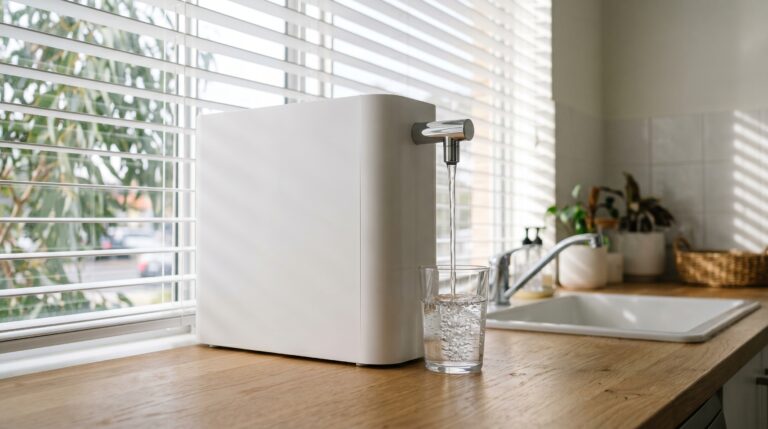
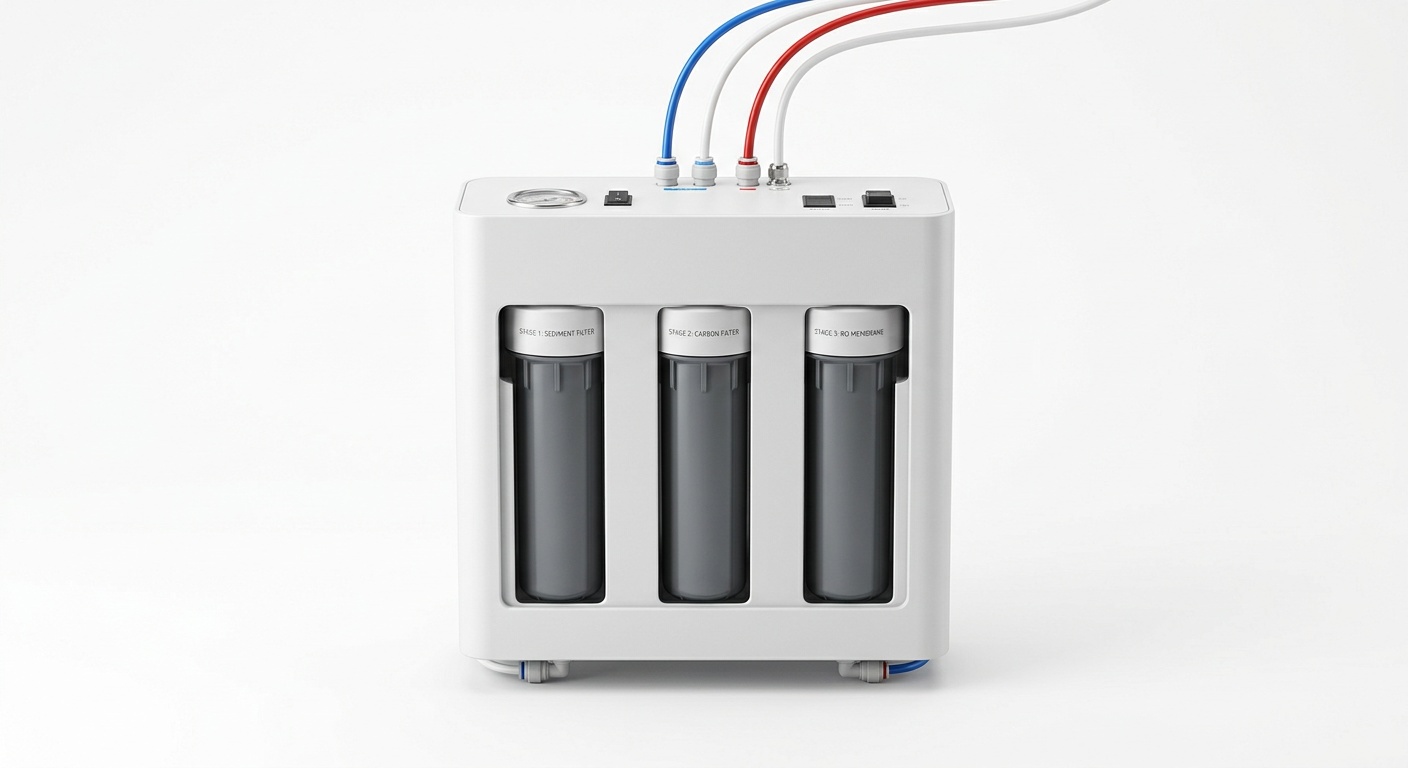
The Waterdrop G3P800 is the value benchmark for under-sink tankless RO in Australia: 800 GPD flow (200 more than the D6), integrated UV sterilisation for 99.9% bacteria and virus kill, IAPMO-certified NSF 42/53/58, and 96.6% fluoride removal — all at roughly half the price of the Frizzlife PD600. Available on Amazon AU with a 240V-compatible power adapter.
Pros
- 800 GPD — fastest flow of any AU-listed under-sink RO
- UV sterilisation — 99.9% bacteria and virus kill
- IAPMO certified NSF 42/53/58 — strongest third-party validation
- 96.6% fluoride removal (lab tested)
- PFAS: all 14 analytes non-detected
- Removes chloramine (Sydney, Brisbane, Melbourne zones)
- 240V universal adapter — AU-ready
- Tankless — no biofilm risk from stagnant tank water
- Available on Amazon AU (ASIN B0987FCQQW)
Cons
- 3:1 pure-to-waste ratio — less water-efficient than Frizzlife PD600 (1.5:1)
- No built-in remineralisation — optional add-on required
- Under-sink only — not suitable for renters
- No AU-specific distributor — Amazon AU only
- Annual filter cost ~$150–$200 AUD
Performance: What the Lab Testing Shows
Independent lab testing by Quality Water Lab confirmed 96.6% fluoride removal — above the 95% threshold for clinical fluoride reduction and well ahead of the 90–95% range typical of entry-level RO membranes. PFAS testing showed all 14 tested analytes at non-detected levels, including PFOA and PFOS — the two PFAS chemicals subject to Australia’s revised NHMRC drinking water guidelines (June 2025: PFOS 8 ng/L, PFOA 200 ng/L). TDS rejection measured at 85–99% across testing conditions.
The IAPMO certification to NSF/ANSI 42, 53, and 58 means these claims have been independently verified — not just asserted. NSF 42 covers aesthetic effects (chlorine, taste, odour); NSF 53 covers health effects (lead, cysts, VOCs); NSF 58 covers reverse osmosis system performance. This certification stack is the same as the Waterdrop D6 and more comprehensive than the Frizzlife PD600’s NSF/ANSI 53-only claim.
UV Sterilisation — Why It Matters in Australia
The G3P800 includes integrated UV sterilisation (99.9% effectiveness) that activates with each draw. This is the only feature that addresses biological re-contamination after the RO membrane — relevant for Australian households on tank water, properties with older plumbing, or those who store filtered water overnight. The Waterdrop D6 and Frizzlife PD600 do not include UV at this price point.
Chloramine Removal — Critical for Australian Cities
Brisbane, Adelaide, Sydney metro, and Melbourne’s Greater Western Water zone all disinfect with monochloramine rather than standard chlorine. Chloramine is more persistent than chlorine and harder to remove — standard carbon filters reduce but don’t eliminate it at typical flow rates. The G3P800’s multi-stage carbon pre-filter (NSF 42 certified) combined with the RO membrane provides effective chloramine reduction. This is explicitly confirmed in Waterdrop’s contaminant list and validated by the NSF 42 certification covering taste and odour compounds including chloramines.
Installation: Under-Sink DIY
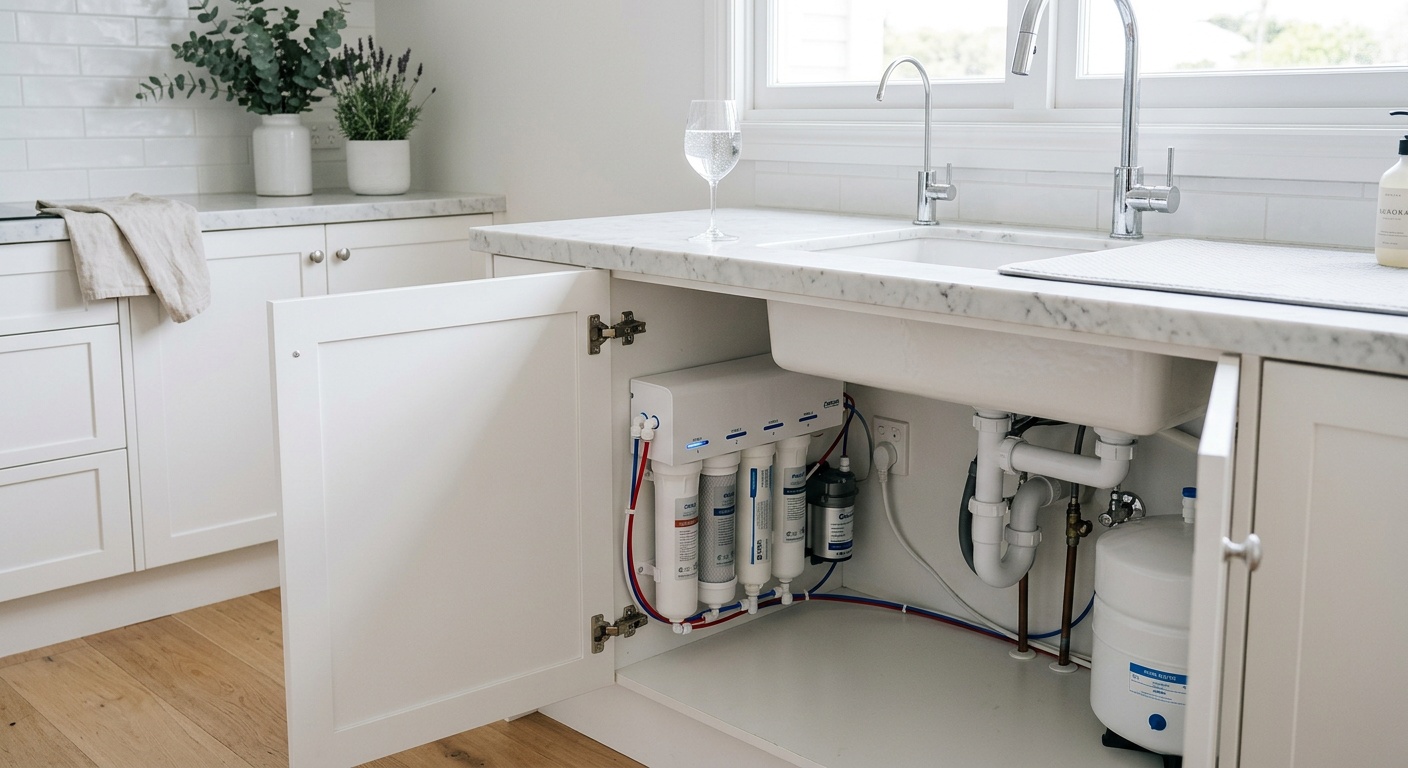
The G3P800 installs under the kitchen sink via a standard cold water supply line connection. No plumber is required for a typical Australian under-sink setup — the unit connects to the cold supply line via the included saddle valve, a drain line connects to the sink drain, and the included smart faucet mounts through a 3/8-inch hole in the sink or benchtop. The 24V DC power adapter runs on a universal 100–240V AC input — fully compatible with Australian 240V power without a transformer.
Dimensions are 45.9 × 14.4 × 45.1 cm — compact enough to fit most Australian under-sink cabinets without modification. The unit stands upright and does not require wall mounting, though mounting brackets are included for stability.
G3P800 vs Competitors
| System | GPD | Waste | UV | Remineralise | Certification | AU Price |
|---|---|---|---|---|---|---|
| Waterdrop G3P800 | 800 | 3:1 | ✓ Yes | Optional add-on | IAPMO NSF 42/53/58 | ~$470–545 |
| Waterdrop D6 | 600 | Varies | ✗ No | No | IAPMO NSF 42/53/58 | ~$350–450 |
| Frizzlife PD600 | 600 | 1.5:1 | ✗ No | ✓ TAM3 | NSF/ANSI 53 | $1,199 |
| AquaTru Classic | ~50 | ~4:1 | ✗ No | No | IAPMO NSF 42/53/58/401 | ~$900–1,100 |
G3P800 vs Waterdrop D6: The G3P800 is the upgrade within the Waterdrop range. The D6 suits tight-budget households at ~$350–450; the G3P800 adds 200 GPD extra flow (filling a glass in ~5 seconds), integrated UV sterilisation, and a better waste ratio. If the D6 is the entry RO, the G3P800 is the family RO — recommended for households of 3 or more drawing filtered water frequently throughout the day.
G3P800 vs Frizzlife PD600: The Frizzlife PD600 has two advantages: a 1.5:1 waste ratio (versus the G3P800’s 3:1 — meaning the PD600 wastes less water per litre produced) and built-in TAM3 alkaline remineralisation. The G3P800 counters with 33% higher flow, UV sterilisation, stronger IAPMO certification, and roughly half the price. For water-efficiency-conscious households or those who want alkaline remineralised water without an add-on, the PD600 is worth the premium. For everyone else, the G3P800 wins on value.
Annual Filter Replacement Cost (Australia)
| Filter | SKU | Interval | Est. AU Price | Annualised |
|---|---|---|---|---|
| CF Pre-filter (carbon+PP) | WD-G3P800-CF | 6 months | ~$35–$45 | ~$70–$90/yr |
| CB Carbon Block | WD-G3P800-CB | 12 months | ~$35–$45 | ~$35–$45/yr |
| RO Membrane | WD-G3P800-N2RO | 24 months | ~$218 | ~$109/yr |
| Total (annual estimate) | — | — | — | ~$215–$245/yr |
Replacement filters are available on Amazon AU. The RO membrane (WD-G3P800-N2RO, ASIN B0CP3L6MZS) replaces every 24 months at approximately $218 AUD — the largest single filter cost, annualised to ~$109/year. Pre-filters replace every 6 months. Total annual spend of $215–$245 is mid-range for this category and lower than the Frizzlife PD600’s estimated ~$235–$250/year.
Who Should Buy the Waterdrop G3P800 in Australia
Buy the G3P800 if: you’re a homeowner wanting the best independently certified under-sink RO in Australia under $600. It suits families of 3 or more, households in chloramine-dosed cities (Brisbane, Sydney, Adelaide, Melbourne western suburbs), and anyone prioritising IAPMO-verified performance and UV sterilisation over alkaline remineralisation.
Choose the Frizzlife PD600 instead if: you want built-in alkaline remineralisation (the G3P800 requires an optional MNR35 add-on for this) and the better 1.5:1 waste ratio is important — for example if water bills are a concern or you’re in water-restricted areas of SA or WA.
Don’t buy the G3P800 if: you’re renting or need a countertop solution — under-sink installation requires drilling. For renters, the AquaTru Carafe or a quality countertop filter for renters is the correct category. Also not recommended for rainwater tank or bore water — the RO membrane requires pre-treated water without high sediment loads.
Frequently Asked Questions
Is the Waterdrop G3P800 available in Australia?
Yes. The Waterdrop G3P800 is listed on Amazon Australia (ASIN B0987FCQQW) with standard delivery. There is no dedicated Australian distributor — Amazon AU is the primary purchasing channel. Replacement filters are also available on Amazon AU. Estimated price: AU$470–545; verify the live price at time of purchase as it fluctuates with exchange rates.
Does the Waterdrop G3P800 work on 240V in Australia?
Yes. The G3P800 uses a 24V DC power adapter with a universal 100–240V AC input at 50–60Hz — fully compatible with Australia’s 240V mains power. No step-down transformer is required. Confirm the plug type included with your Amazon AU order; an AU plug adapter may be needed if the unit ships with a US plug.
Does the Waterdrop G3P800 remove fluoride?
Yes — independent lab testing confirmed 96.6% fluoride removal. The RO membrane stage removes fluoride by rejecting it across the 0.0001-micron membrane. This is relevant for all fluoridated Australian cities: Brisbane (0.7 mg/L target), Sydney (1.0 mg/L), Melbourne (0.9 mg/L), and Adelaide. IAPMO certification to NSF 58 validates the RO system performance independently.
Does the Waterdrop G3P800 remove chloramine?
Yes. The multi-stage activated carbon pre-filter (NSF 42 certified) and RO membrane both reduce chloramine. Chloramine is used as a disinfectant in Brisbane, Adelaide, Sydney metro, and Melbourne’s Greater Western Water zone. The NSF 42 certification covers taste and odour compounds including chloramine, and Waterdrop confirms chloramine in its contaminant removal list.
Does the Waterdrop G3P800 remove PFAS?
Yes. Independent testing confirmed all 14 PFAS analytes tested — including PFOA and PFOS — at non-detected levels. This is relevant to Australian buyers in PFAS-affected postcodes, particularly in NSW (Blue Mountains area) and Victoria. Australia’s revised NHMRC PFAS guidelines (June 2025) set PFOS at 8 ng/L and PFOA at 200 ng/L — the G3P800 removes both below detectable limits.
What is the Waterdrop G3P800 waste ratio?
The G3P800 has a 3:1 pure-to-waste ratio — for every 3 litres of purified water produced, approximately 1 litre goes to drain. This is more water-efficient than older RO systems at 5–10:1, and better than some competing tankless systems, though not as efficient as the Frizzlife PD600’s 1.5:1 ratio. In practical terms, a household drawing 6L of filtered water per day will send approximately 2L to drain.
Waterdrop G3P800 vs D6: which should I buy?
Choose the G3P800 if you have a household of 3 or more drawing filtered water frequently, want UV sterilisation, or if you notice the D6 struggling to keep up with demand. Choose the D6 if you have a smaller household and budget is the primary concern. Both carry the same IAPMO certification and use the same RO membrane technology — the G3P800 adds flow speed and UV; the D6 is the budget entry point.
How long do the Waterdrop G3P800 filters last?
CF pre-filter (carbon + PP): every 6 months. CB carbon block: every 12 months. RO membrane (WD-G3P800-N2RO): every 24 months. Total annual filter cost is approximately $215–$245 AUD, with the RO membrane being the largest single cost at ~$218 AUD every two years. All replacement filters are available on Amazon AU.
Can I install the Waterdrop G3P800 myself in Australia?
Yes, for most standard Australian kitchens. The unit connects to the cold water supply line under the sink (saddle valve included), a drain line connects to the sink waste, and the smart faucet mounts through a 3/8-inch hole in the sink or benchtop. No plumber is required for the filter connection itself, though drilling the faucet hole may require a professional if you don’t have existing access. The 240V power adapter plugs into a standard under-sink power point.
Get the Australian Home Environment Checklist
30 checks across water, air and EMF. Most of them free. Ranked by impact.
No spam. Unsubscribe any time.

Former Royal Australian Navy Clearance Diver and TAG-E counter-terrorism operator. Founded Clean and Native to apply the same rigorous thinking to the home environment.
Full biography →