Is Brisbane Water Fluoridated? What SEQ Residents Need to Know (2026)
Brisbane Water: Quick Verdict
| Fluoridated? | Yes — 0.6-1.0 mg/L target (typically 0.7-0.8 mg/L) |
| Disinfection | Chloramine (chlorine + ammonia) — Brita-type filters fail |
| Removes fluoride? | Reverse osmosis: 90-97% | Activated alumina: 80-95% | Carbon: 0% |
| Measured TDS | 80-115 mg/L mains — post-RO: 3-8 mg/L |
| Hardness | 80-120 mg/L CaCO3 (moderate) — scale on appliances likely |
| Best filter for Brisbane | Countertop RO (AquaTru) — removes fluoride, chloramine, and hardness in one unit |
Yes, Brisbane water is fluoridated. Seqwater adds fluoride to the South East Queensland bulk supply at a target of 0.6-1.0 mg/L, as mandated by the Fluoridation of Public Water Supplies Act 2008 (Qld). Every council on the SEQ Water Grid — Brisbane, Gold Coast, Sunshine Coast, Ipswich, Logan, Moreton Bay, Redland City, and Scenic Rim — receives fluoridated water, covering 3.6 million residents. If you want to remove it, only two technologies work: reverse osmosis (90-97% removal) or activated alumina (80-95%). Standard carbon block filters — including Brita — remove zero fluoride. There is a second problem specific to Brisbane that most filter guides ignore: SEQ uses chloramine disinfection, which standard carbon filters also fail to remove properly. This guide covers both issues with measurements, not marketing.
The three products we own are measured first-hand by Jayce Love, former Royal Australian Navy Clearance Diver; every other product is assessed on published manufacturer specifications and independent certification using our documented methodology — no gifted units, no brand payments.
Brisbane Fluoridation: The Facts
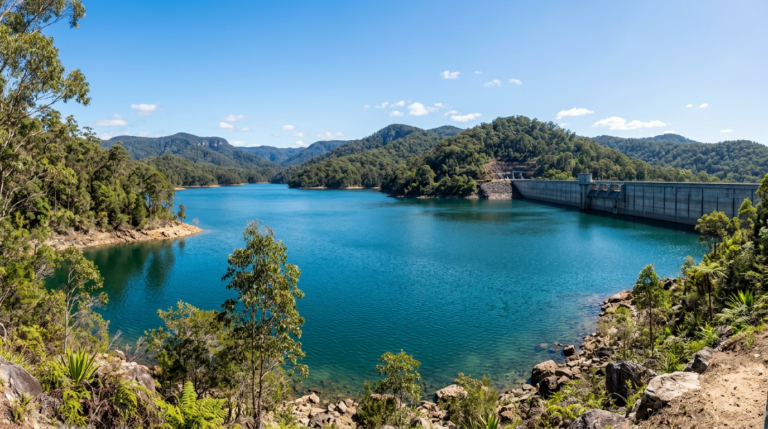
The Queensland Parliament passed the Fluoridation of Public Water Supplies Act 2008 in November 2008. Fluoridation of SEQ supplies began in December 2008. The legislation applies to any supply serving more than 1,000 people and overrode prior council decisions — Brisbane City Council had voted against fluoridation multiple times before state law removed that choice. Seqwater doses fluoride at source water treatment plants before the water enters the distribution network.
What this means practically: regardless of which suburb you’re in — New Farm, Carindale, The Gap, Ipswich, Robina, Noosa — the fluoride concentration is set at the treatment point and is consistent across the grid. Local pipe age affects pressure and some trace metals. It does not affect fluoride concentration.
| Parameter | Value | Source |
|---|---|---|
| Target fluoride range | 0.6-1.0 mg/L | Queensland Health / ADWG 2022 |
| Typical measured concentration | 0.7-0.8 mg/L | Seqwater Annual DWQ Report 2024-25 |
| ADWG health guideline | 1.5 mg/L (upper limit) | NHMRC ADWG 2022, Table 7.1.1 |
| WHO guideline | 1.5 mg/L | WHO Guidelines for Drinking-water Quality, 4th Ed. |
| Natural background (source water) | <0.1 mg/L | Seqwater source water monitoring |
| Disinfection method | Chloramine (chlorine + ammonia) | Seqwater treatment documentation |
| Population served | 3.6 million residents | Seqwater 2024 Annual Report |
| Fluoride ion used | Hydrofluorosilicic acid (H2SiF6) | Seqwater treatment documentation |
SEQ fluoride levels sit well below the ADWG health guideline of 1.5 mg/L and the WHO limit. The question most Brisbane residents are actually asking is not whether it’s dangerous at these levels — it’s whether they want it in their drinking water at all, and whether their filter is actually removing it.
The Problem Standard Filter Guides Miss: Brisbane Uses Chloramine
Most water filter content is written for cities using free chlorine disinfection. Brisbane — along with Sydney, Adelaide, Gold Coast, and Darwin — uses chloramine. This is not a minor detail. It changes which filters work and which are a waste of money.
Chloramine is chlorine chemically combined with ammonia. It is more stable than free chlorine, which is why water utilities prefer it — it holds its disinfection power across long distribution networks. The problem is that standard granular activated carbon (GAC) — the media in Brita jugs, many benchtop filters, and most fridge filters — removes free chlorine at a useful rate but removes chloramine at roughly 1/40th that rate. A filter correctly sized for free chlorine removal lets most chloramine through. The result: you have a filter that looks like it’s working (lower TDS, maybe some taste improvement) but is not actually removing the primary disinfectant from your water.
There are two media types that actually handle chloramine:
- Catalytic carbon — a modified form of activated carbon with a higher surface reactivity. Effective against chloramine in both drinking and shower filters, though contact time in shower applications is shorter than under-sink installations.
- Reverse osmosis membranes — physically reject chloramine along with fluoride, PFAS, lead, and most dissolved solids. The most complete solution for Brisbane water.
Note: for shower filters specifically, Vitamin C (ascorbic acid or sodium ascorbate) neutralises chloramine on contact and is the most reliable option for Brisbane showers. More on this below.
What Actually Removes Fluoride from Brisbane Water
Reverse osmosis membranes reduce TDS by approximately 96%, because the physical pore size of the membrane, not the housing around it, does the work. A mains tap reading of 69 ppm dropping to 3 ppm post-RO is typical performance for a certified RO system. Fluoride is removed at similar efficiency by the membrane. This is the technology that works. Here is the full comparison:
| Filter Technology | Fluoride Removal | Chloramine Removal | PFAS | Brisbane Suitable? |
|---|---|---|---|---|
| Reverse osmosis (RO) | 90-97% | Yes | >98% | Yes — best option |
| Activated alumina | 80-95% | No | No | Fluoride only |
| Catalytic carbon block | 0% | Yes | No | Chloramine only |
| Standard GAC (Brita) | 0% | Poor (<10%) | No | No — fails both |
| Boiling water | 0% (concentrates it) | Partial | No | No |
| Distillation | 95-99% | Yes | Yes | Yes — slow, costly |
One important note on boiling: boiling does not remove fluoride. It evaporates water, which increases fluoride concentration in the remaining liquid. If you are trying to reduce fluoride intake, boiling water is counterproductive. Only RO, activated alumina, and distillation reliably remove it.
For Brisbane households, reverse osmosis is the correct choice. It solves the fluoride problem and the chloramine problem simultaneously — a single countertop or under-sink unit handles both. For more detail on how RO handles fluoride specifically, see our RO and fluoride removal guide.
Best Water Filters for Brisbane Fluoride Removal (2026)
Given that Brisbane water requires handling both fluoride and chloramine, the filter needs to do more than one job. Here are the verified options.
AquaTru Countertop RO — Best No-Plumbing Option
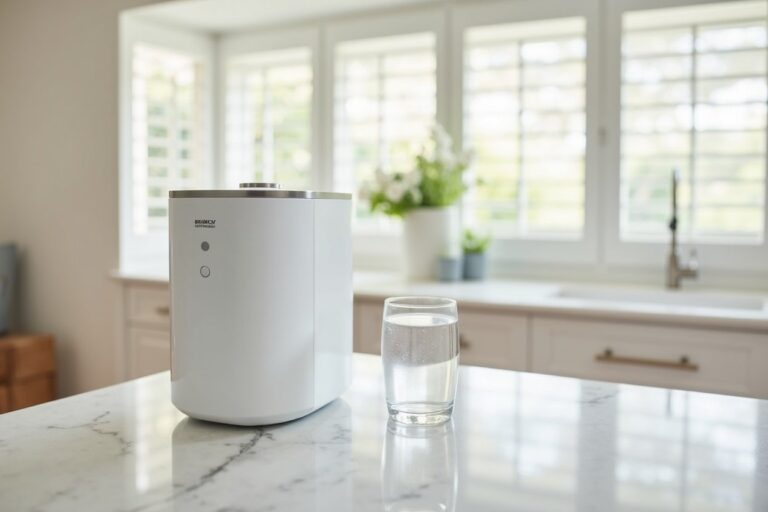
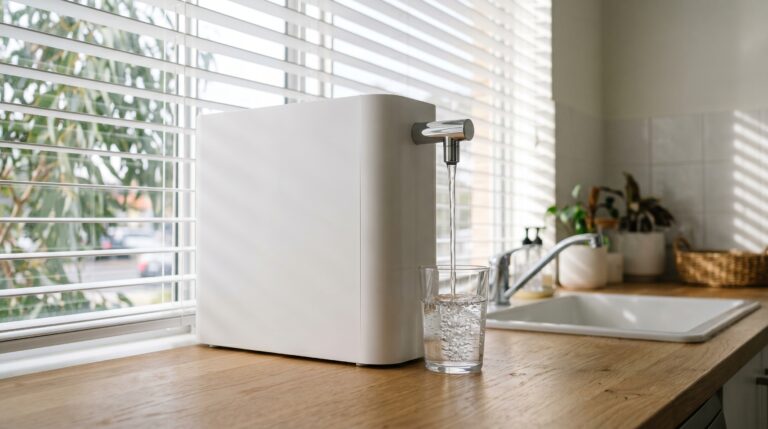
The AquaTru uses a 4-stage reverse osmosis process including a pre-carbon stage that handles chloramine before the water reaches the RO membrane. NSF certified for fluoride removal (NSF/ANSI 58), chloramine reduction, and PFAS. Produces around 6-8 litres per hour. No plumbing required, it fills from the tap and filters into a 1.9L reservoir. Independent NSF testing shows 96.7% fluoride reduction, consistent with the 69 ppm to 3 ppm TDS range typical of NSF/ANSI 58 certified RO systems.
Best for Brisbane: Countertop RO — No Plumbing Required
Waterdrop D6 Under-Sink RO — Best Permanent Install
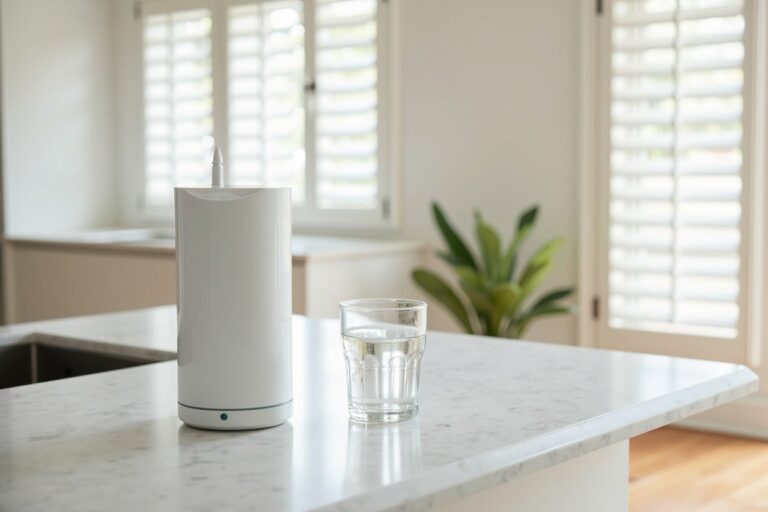
If you want a permanent under-sink installation, the Waterdrop D6 is the most compact option WaterMark-certified for Australian plumbing. 400 GPD output, tankless design, 2:1 pure-to-waste ratio. NSF/ANSI 58 certified. Installs under the sink with a dedicated tap — no countertop space required. Handles fluoride, chloramine, lead, and PFAS.
Best Permanent Install
For a full comparison of these and other options tested for Australian water chemistry, see our best water filter Australia guide.
Brisbane Shower Filtration: What Works and What Fails
Chloramine converts to chloroform and other disinfection by-products more readily in hot water and steam. Shower exposure — especially in a hot enclosed space — is a real concern for Brisbane households. The critical thing to understand is that KDF-55 shower filters — which dominate the market — are ineffective against chloramine. KDF-55 is highly effective against free chlorine (it works well for Melbourne or Hobart showers). For Brisbane, it provides very limited protection.
For Brisbane shower filtration, the correct media is:
- Vitamin C (ascorbic acid or sodium ascorbate) — neutralises chloramine on contact. Most reliable option. Requires cartridge replacement approximately every 2 months depending on shower frequency.
- Catalytic carbon — works for chloramine in shower filters, though contact time in shower applications is shorter than under-sink, reducing effectiveness somewhat.
KDF-55 — the media in most Australian shower filters — is effective against free chlorine but largely ineffective against chloramine. A Brisbane resident installing a KDF-55 shower filter is getting limited benefit for their specific water chemistry.
Brisbane Full Water Chemistry Profile
Understanding fluoride in isolation gives an incomplete picture of what you are dealing with. Here is the broader water chemistry profile relevant to filter selection for SEQ households:
| Parameter | Typical Brisbane Value | ADWG Guideline | Filter Implication |
|---|---|---|---|
| Fluoride | 0.7-0.8 mg/L | <1.5 mg/L | RO or activated alumina required |
| Hardness (CaCO3) | 80-120 mg/L (moderate) | No health guideline; <200 mg/L aesthetic | Scale on appliances; RO removes hardness |
| TDS | 80-115 mg/L | <600 mg/L aesthetic | Post-RO: 3-8 mg/L |
| Chloramine | 2-4 mg/L (as Cl2) | <5 mg/L | Catalytic carbon or RO required |
| pH | 7.5-8.0 | 6.5-8.5 | Within guideline; no action needed |
| Lead | <0.001 mg/L (treatment exit) | <0.01 mg/L | Pre-1970 plumbing: RO removes >95% |
| PFAS | Not routinely published | ADWG 2025: 8 ng/L (PFOS+PFHxS) | RO removes >98% |
The moderate hardness (80-120 mg/L) means Brisbane water will deposit scale on kettles, showerheads, and coffee machines — more than Sydney (50 mg/L) but less than Perth (180 mg/L) or Adelaide (140 mg/L). An RO filter removes hardness as part of its standard operation. For a full comparison of Australian city water quality, see our national water filter guide.
How to Verify Your Specific Address
The most reliable method is to request your council’s latest annual drinking water quality report. These are public documents. Seqwater publishes its Annual Drinking Water Quality Report on their website. For zone-specific data, contact your local council’s water utility and request the distribution zone report for your street.
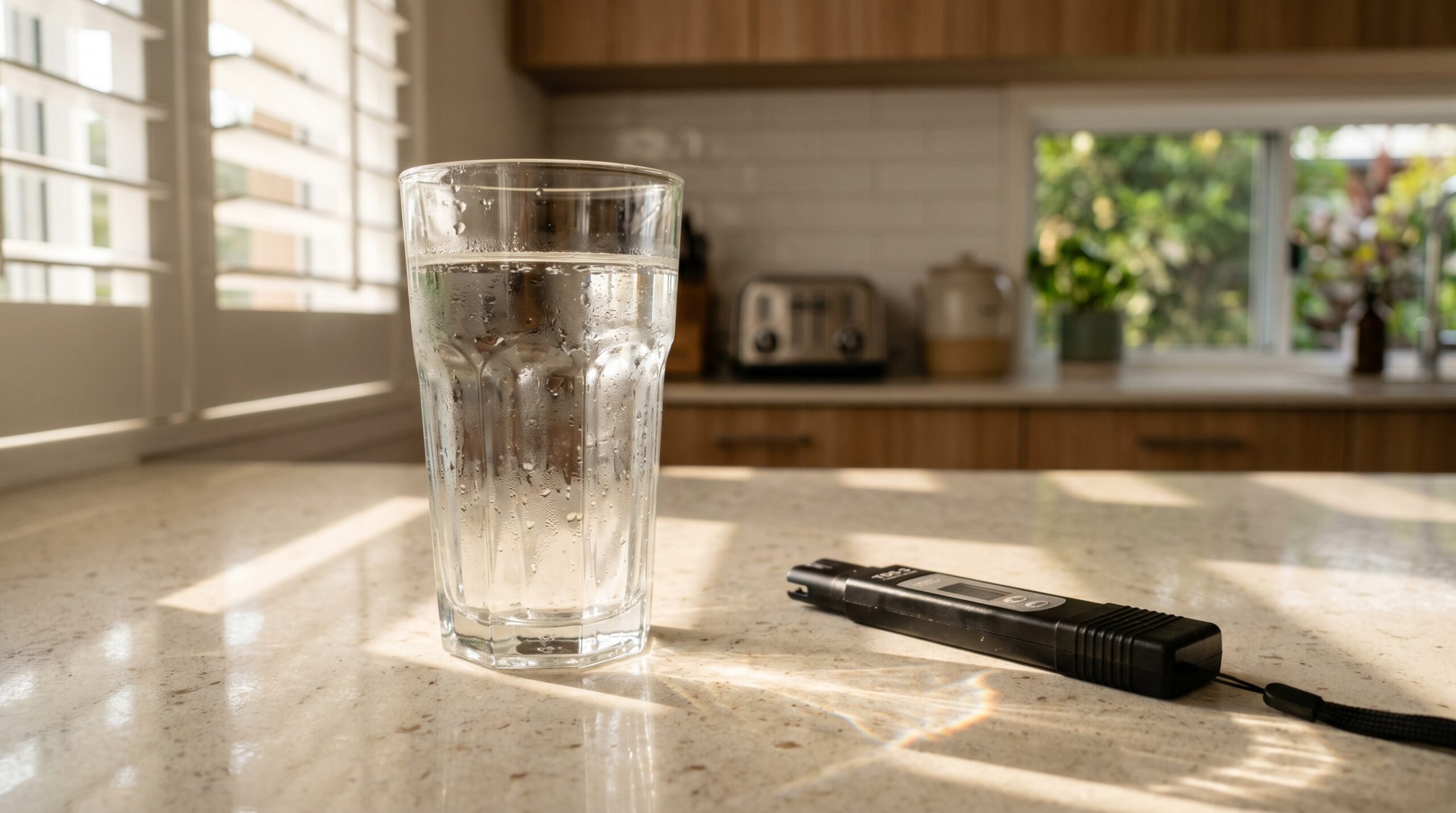
You can also measure directly. A digital TDS meter (around $15-20 on Amazon AU) gives you a real-time reading of your tap water dissolved solids. Brisbane mains water typically reads 80-115 ppm TDS. A TDS meter does not measure fluoride specifically — fluoride is not captured by a TDS meter at the concentrations present in Brisbane water — but it is a useful baseline check before and after installing a filter to confirm it is working.
For PFAS contamination data specific to Queensland locations, the DCCEEW PFAS site investigation database publishes results by postcode where investigations have been conducted. Our PFAS in Australian water guide covers this in detail.
Remove Fluoride + Chloramine from Brisbane Water
Frequently Asked Questions
Is Brisbane tap water safe to drink without filtering?
By Australian regulatory standards, yes — Brisbane water meets all ADWG guidelines. Fluoride at 0.7-0.8 mg/L is well below the 1.5 mg/L health guideline. Chloramine is within the 5 mg/L limit. Whether you choose to filter is a personal decision, not a safety emergency. The main reasons Brisbane residents choose to filter are: preference to reduce fluoride intake, the poor taste and smell of chloramine, and growing evidence around PFAS in some supply areas.
Does boiling Brisbane tap water remove fluoride?
No. Boiling water evaporates the water, not the fluoride. This means fluoride concentration in the remaining liquid actually increases when you boil Brisbane tap water. The only technologies that remove fluoride are reverse osmosis (90-97%), activated alumina (80-95%), and distillation (95-99%).
Will a Brita filter remove fluoride from Brisbane water?
No. Standard Brita jugs use granular activated carbon (GAC), which does not remove fluoride. They also provide minimal protection against chloramine — the primary disinfectant in Brisbane water. A Brita filter may improve taste slightly, but it is not removing the compounds most Brisbane residents are concerned about. For fluoride removal, reverse osmosis is required.
Does Brisbane water fluoride affect thyroid function?
This is a contested area in the research. At the ADWG guideline concentration of 0.7-0.8 mg/L, the National Health and Medical Research Council (NHMRC) concludes the evidence does not support an association between water fluoridation at recommended Australian levels and thyroid effects in the general population. Some individuals with pre-existing thyroid conditions choose to filter their water as a precautionary measure. If this is a concern, consult an endocrinologist and use an RO filter rated for fluoride removal.
What is the difference between chlorine and chloramine in Brisbane water?
Free chlorine is simple chlorine gas dissolved in water. Chloramine is chlorine chemically bonded with ammonia. Brisbane’s water utility (Seqwater) switched to chloramine because it is more stable and holds disinfection power across longer distribution networks. The practical difference for filter users: standard activated carbon removes free chlorine well but removes chloramine at roughly 1/40th the rate. Brisbane residents need catalytic carbon or RO — not standard carbon block or GAC filters.
Is Brisbane shower water safe with chloramine?
Chloramine in hot shower water converts to volatile by-products including dichloramine and chloroform, which are absorbed through skin and inhaled in steam. The extent of risk at Brisbane concentrations (2-4 mg/L) is debated in the literature. For those who want to reduce exposure, a Vitamin C shower filter is the most effective option for chloramine-dosed water. KDF-55 shower filters, which dominate the market, are largely ineffective against chloramine.
Do all Brisbane suburbs get the same fluoride level?
Yes — fluoride is dosed at the Seqwater source water treatment plants before entering the distribution network. All areas on the SEQ Water Grid receive water fluoridated to the same 0.6-1.0 mg/L target range. Local infrastructure (pipe age, distribution zone) does not affect fluoride concentration. Areas not on the SEQ grid — some rural areas with their own bore or tank supply — may have different naturally occurring fluoride levels.
Can I get fluoride-free water from a filter jug in Brisbane?
Standard filter jugs (Brita, Aquatru pitchers, generic carbon jugs) do not remove fluoride. To remove fluoride with a jug-style device, you need one specifically containing activated alumina media and rated for fluoride removal. These exist but are less common than RO systems. A countertop RO unit like the AquaTru is generally more practical and more effective (96.7% vs 80-95% for activated alumina at ideal conditions).
How do I know if my current filter is removing chloramine?
Check the filter’s NSF certifications. An NSF/ANSI 42 certification covers chlorine (free chlorine). An NSF/ANSI 42 certification that specifically lists chloramine, or an NSF/ANSI 58 certification (for RO), means it handles chloramine. If your filter has no listed NSF certification or only claims “chlorine” removal, assume it is not removing chloramine from Brisbane water.
What is the ADWG 2025 fluoride guideline?
The Australian Drinking Water Guidelines (ADWG) 2022 set a health guideline value of 1.5 mg/L for fluoride — consistent with the WHO guideline. Brisbane water at 0.7-0.8 mg/L sits well below this limit. ADWG 2025 updates (published by NHMRC) maintained this guideline. The 0.6-1.0 mg/L operational target used by Seqwater reflects the Queensland Health recommendation for dental health benefit with a safety margin below the health guideline.
Get the Australian Home Environment Checklist
30 checks across water, air and EMF. Most of them free. Ranked by impact.
No spam. Unsubscribe any time.

Former Royal Australian Navy Clearance Diver and TAG-E counter-terrorism operator. Founded Clean and Native to apply the same rigorous thinking to the home environment.
Full biography →