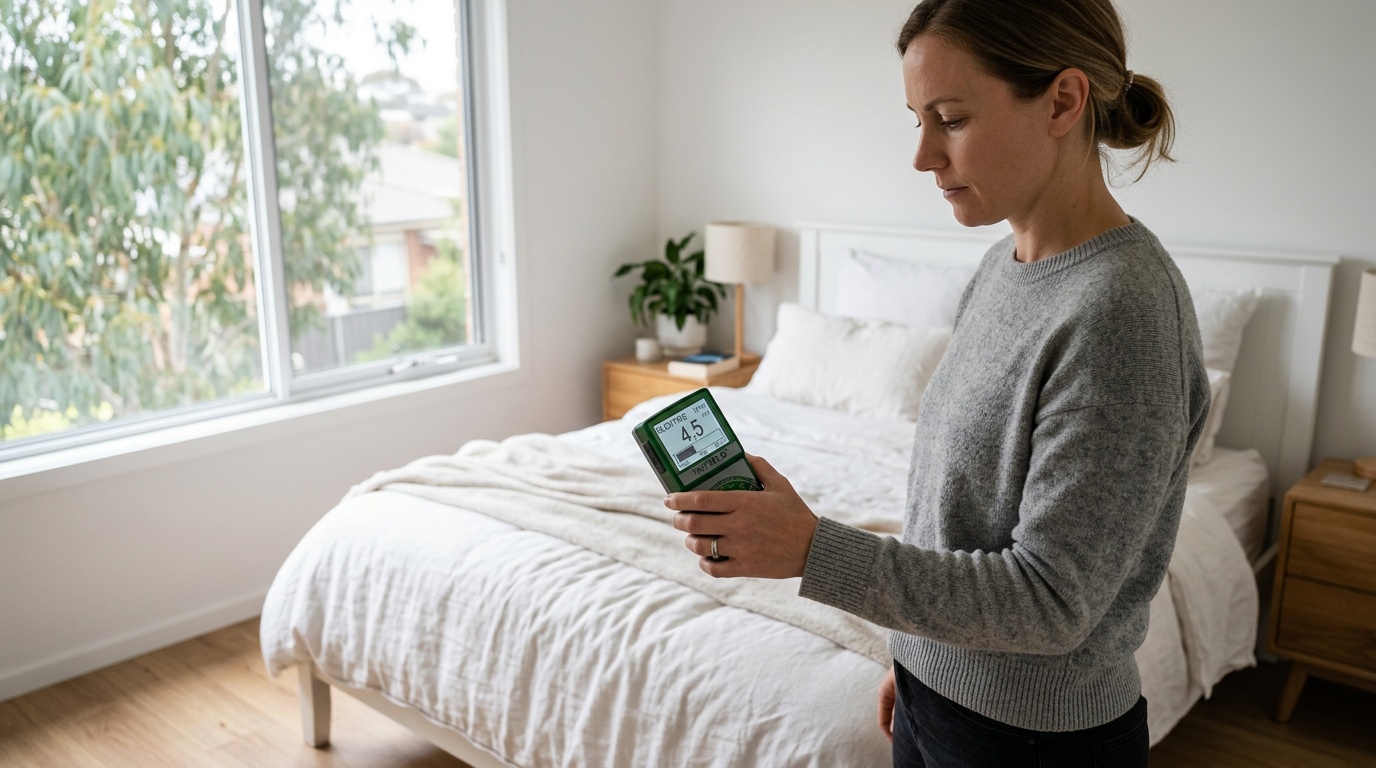
What Is EMF Radiation? A Systematic Guide to Understanding Your Home Exposure
EMF radiation is electromagnetic energy from two distinct sources: ELF (50 Hz power frequency from wiring and appliances) and RF (radio frequency from WiFi, mobile phones, and wireless devices), each requiring different meters and reduction strategies. Australian homes typically have highest exposures from WiFi routers within 1–3 metres, NBN network termination devices, and Ausgrid/Energex smart metres, with sleeping areas being the priority zone due to 8-hour overnight exposure duration. The catches: ARPANSA’s 1,000 µW/cm² RF limit is thermal-only and 1,000× higher than building biology precautionary targets; you cannot feel, see, or reliably guess your exposure without measuring first.
| EMF Type | Primary AU Sources | Verdict |
|---|---|---|
| RF (wireless) | WiFi router, NBN NTD, smart metres | Measure with RF metre first |
| ELF (power frequency) | Mains wiring, transformers, appliances | Focus on sleeping area |
| Meter needed | TriField TF2 or Acousticom 2 | Recommended before mitigation |
EMF Radiation: The Key Facts
| Two main types | ELF (power frequency, 50 Hz) and RF (radio frequency, kHz–GHz). Different biology, different sources, different meters. |
| ARPANSA RF limit | 1,000 µW/cm² at 2.4 GHz — thermal safety only. Most building biologists use <0.1 mW/m² (~0.001 µW/cm²) as a sleeping area target. |
| Highest AU home sources | WiFi router at 1m, NBN NTD (FTTB/C models), Ausgrid/Energex smart meters, DECT cordless phone base, 5G small cells on street. |
| What matters most | Distance and duration. Intensity drops with distance squared. Sleeping area exposure over 8 hours matters most — this is where to focus reduction. |
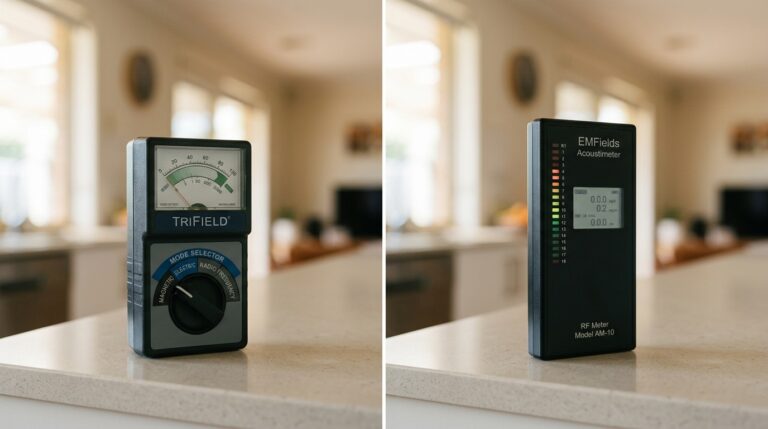
| First step | Measure before acting. A $200–300 meter (Trifield TF2 or Acousticom 2) tells you what your actual exposure is — no guessing required. |
Jayce Love, a Royal Australian Navy Clearance Diver, researched and tested the products in this guide. EMF stands for electromagnetic field — a term that covers an enormous range of energy types, from the 50 Hz magnetic fields produced by household wiring to the gigahertz radio frequencies transmitted by your WiFi router and 5G phone. The scientific, regulatory, and public health conversations around these fields are frequently conflated in ways that create both unnecessary alarm and unwarranted dismissal. This guide unpacks what EMF actually is, how the different types are distinct, what the relevant exposure limits mean (and where they fall short), and how to measure the fields present in your specific home.
The three products we own are measured first-hand by Jayce Love, former Royal Australian Navy Clearance Diver; every other product is assessed on published manufacturer specifications and independent certification using our documented methodology — no gifted units, no brand payments.
The Electromagnetic Spectrum: Non-Ionising vs Ionising
The electromagnetic spectrum runs from extremely low frequency (ELF) fields at one end to gamma rays and beyond at the other. The critical dividing line for biological discussion is the threshold between non-ionising and ionising radiation:
- Ionising radiation (X-rays, gamma rays, UV above ~315 nm): carries enough energy per photon to break chemical bonds and ionise atoms directly. This is the mechanism by which radiation causes DNA damage and cancer. There is no safe threshold — damage is proportional to dose.
- Non-ionising radiation (everything from power frequencies through visible light): individual photons do not carry enough energy to ionise atoms. The established biological mechanism at sufficient intensity is thermal — tissue heating. This is how microwave ovens work, and it is the basis for regulatory limits like ARPANSA’s.
The household EMF conversation is exclusively about non-ionising radiation. Your WiFi router, smart meter, mobile phone, and power lines do not emit ionising radiation. The physics-based safety argument is that non-ionising fields below thermal thresholds cannot damage DNA by direct ionisation. The ongoing scientific debate is whether long-term, low-level non-thermal exposure to certain field types carries biological effects through mechanisms other than direct ionisation.
ELF vs RF: The Two Categories That Matter for Your Home
Within the non-ionising range, two categories dominate the home exposure conversation and require different meters, different sources, and different mitigation approaches:
Extremely Low Frequency (ELF) — 50 Hz power frequency
Australia’s electricity grid operates at 50 Hz. All current-carrying wiring, all electrical appliances, and all electric fields from live conductors produce ELF fields at this frequency (or harmonics of it). ELF is measured in two components:
- Electric fields (measured in V/m): produced by voltage — present in wiring even when no current flows. Shielded by most conductive materials including walls and the human body. Attenuate rapidly with distance.
- Magnetic fields (measured in µT or mG): produced by current flow — only present when appliances are actually running and drawing current. Magnetic fields pass through walls, the human body, and most shielding materials. This is the field type that drew the most regulatory attention from ELF epidemiological research.
Building biology sleeping area reference levels: electric fields <5 V/m, magnetic fields <0.2 µT (2 mG). These are precautionary, not regulatory. ARPANSA has no specific residential ELF magnetic field guideline; ICNIRP’s public exposure reference level is 100 µT — 500 times higher than building biology targets.
Radio Frequency (RF) — kHz to GHz
RF covers the frequencies used for wireless communication: WiFi (2.4 GHz, 5 GHz), mobile networks (700 MHz to 28 GHz for 5G), DECT cordless phones (1.9 GHz), Bluetooth (2.4 GHz), smart meters (915 MHz or 2.4 GHz depending on network), and NBN fixed wireless (3.5 GHz). RF is measured in power density: µW/cm² (microwatts per square centimetre) or mW/m² (milliwatts per square metre).
The conversion: 1 µW/cm² = 10 mW/m².
Australian Exposure Limits: ARPANSA vs Building Biology
| Field Type | ARPANSA / ICNIRP Limit | Building Biology Target (Sleeping Area) | Basis of Limit |
|---|---|---|---|
| RF (2.4 GHz WiFi) | 1,000 µW/cm² (10,000 mW/m²) | <0.1 mW/m² (0.01 µW/cm²) | ARPANSA: thermal; BioInitiative: precautionary non-thermal |
| RF (mobile, 900 MHz) | 450 µW/cm² | <0.1 mW/m² | Thermal safety |
| ELF Magnetic (50 Hz) | 100 µT (1,000 mG) | <0.2 µT (2 mG) | ICNIRP: nerve stimulation; Building biology: epidemiological precaution |
| ELF Electric (50 Hz) | 5,000 V/m | <5 V/m | ARPANSA: surface charge effects; Building biology: precautionary |
The gap between regulatory limits and building biology targets is not a small rounding difference — it is 1,000-fold or greater for RF. ARPANSA’s limits are based exclusively on established, reproducible thermal mechanisms. Building biology targets are precautionary, based on the principle that absence of proven harm at low levels is not the same as demonstrated safety, and that sleeping area exposure warrants a conservative approach given the 8-hour exposure duration.
Common EMF Sources in Australian Homes
Australia has several EMF sources that either don’t exist in other countries or appear at higher concentrations than overseas:
Smart Meters (Ausgrid, Energex, AusNet, SA Power Networks)
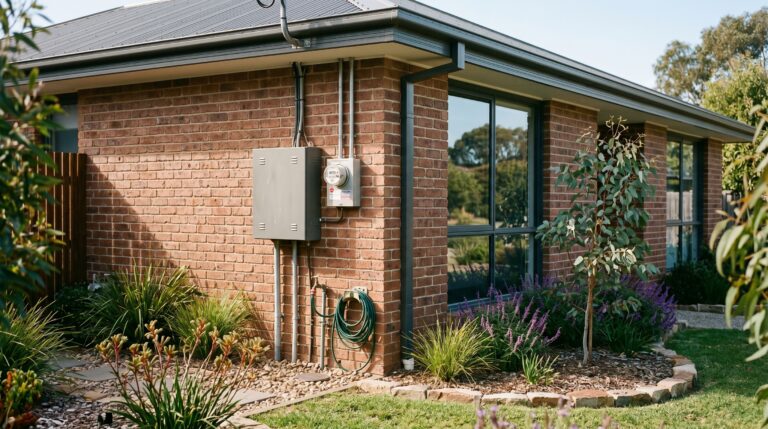
The national rollout of smart meters across Australian states replaced analog electricity meters with wireless communicating devices. Most Australian smart meters transmit on 915 MHz (EGNI network) or 2.4 GHz depending on state and network. Key characteristics:
- Transmission is not continuous — smart meters transmit data in brief bursts, typically every 15–30 minutes, with individual bursts lasting milliseconds to seconds.
- Peak power output during transmission: typically 1 mW to 1 W depending on model, but measured at the meter face.
- At 1 metre from an exterior smart meter, typical peak RF during a transmission burst: 0.1–10 mW/m² depending on model and transmission power.
- At 3 metres (a typical internal wall distance from an externally mounted meter): 0.01–1 mW/m².
- Sleeping against an exterior wall with a smart meter on the other side presents the highest residential smart meter exposure scenario.
NBN NTD (Network Termination Device)
The NBN connection box installed in Australian homes varies significantly by technology type:
- FTTP (Fibre to the Premises): The NTD itself does not transmit wireless signals. All WiFi comes from a separate router. NTD is low EMF.
- FTTN/FTTB (Fibre to the Node/Building): A modem/router combo is typically used. The WiFi transmission characteristics depend on the router model.
- FTTC (Fibre to the Curb): The NBN NTD for FTTC connections includes a WiFi radio in many configurations. Some FTTC NTDs transmit continuously on 2.4 GHz and 5 GHz simultaneously and cannot have wireless disabled without replacing the device.
- HFC (Hybrid Fibre Coaxial): Similar to FTTB — gateway device with integrated WiFi.
The practical implication: an FTTC or HFC NTD placed in a bedroom, study, or close to a sleeping area is a continuous RF source that cannot be switched off at night without losing internet connectivity unless wired separation is implemented.
WiFi Routers
A modern dual-band or tri-band router (2.4 GHz + 5 GHz) transmits continuously whenever powered. Measured at 1 metre: typically 0.5–5 mW/m². At 3 metres: 0.05–0.5 mW/m². Position matters enormously — inverse square law means doubling distance reduces intensity to one-quarter. A router on a desk 1 metre from a sleeping person versus a router in a hallway 5 metres away differs by approximately 25-fold in intensity.
DECT Cordless Phones
DECT (1880–1900 MHz in Australia) base stations transmit continuously as long as they’re powered — even when not in use. This differs from mobile phones which only transmit at high power during calls and data transfer. A DECT base station in a bedroom is a continuous overnight RF source. This is a commonly overlooked source that often exceeds router levels at close range.
5G Small Cells
Australian carriers (Telstra, Optus, TPG) are deploying 5G small cell infrastructure at street level — often on power poles, traffic light poles, and building facades in urban and suburban areas. Sub-6 GHz 5G (primarily 3.5 GHz, n78 band) is the dominant frequency in Australian suburban deployments. mmWave 5G (26 GHz) is deployed in limited high-density CBD locations.
At street level near a 5G small cell (5–20 metres), sub-6 GHz RF levels of 1–50 mW/m² have been measured in investigations. These levels are orders of magnitude below ARPANSA limits but may be at or above building biology targets for continuous exposure in homes immediately adjacent.
How to Measure EMF in Your Home
Measurement is the essential step before any mitigation. Without measurement, interventions are guesswork. The two most useful instruments for Australian home assessment:
Trifield TF2 (~$250–300 AUD)
A single device measuring all three field types: RF (100 MHz to 8 GHz), AC magnetic fields (ELF), and AC electric fields (ELF). The Trifield TF2 is the best value comprehensive meter for a home assessment. It reads RF in mW/m², magnetic fields in µT and mG, and electric fields in V/m. Limitation: RF measurement is not frequency-weighted as precisely as dedicated RF meters; it can underread at some frequencies and overread at others.
Acousticom 2 (~$300–350 AUD)
A dedicated RF meter with audio output and LED bar graph. Excellent for locating RF sources and characterising pulsing patterns — DECT phones and smart meters have distinctive pulse signatures audible through the Acousticom 2 that are not apparent from numerical readout alone. Covers 200 MHz to 8 GHz. Does not measure ELF fields. Best used alongside a dedicated ELF meter or the Trifield TF2.
Measurement protocol for sleeping area assessment
- Turn off all wireless devices (WiFi router, phones, smart appliances) and measure baseline RF — this reveals ambient external RF (mobile towers, 5G small cells, neighbours’ WiFi).
- Turn WiFi router back on, measure at sleeping position. Note the difference — this is your router contribution.
- Turn on each device one at a time to identify the highest contributors.
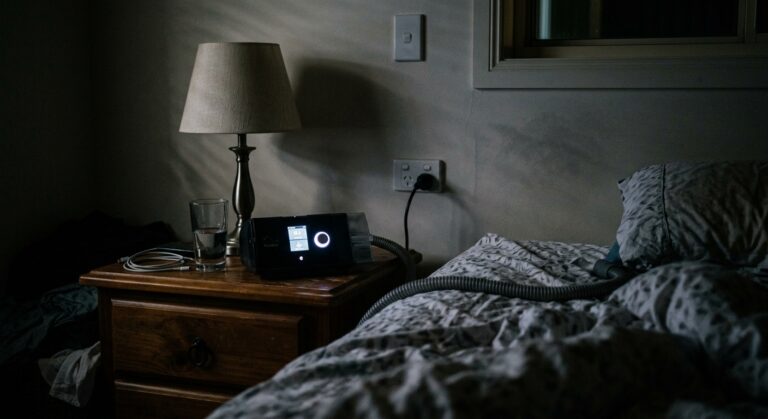
- For ELF: measure at the sleeping position with all appliances in normal use. Check under the bed (transformers, power boards), behind the headboard (wiring in walls), and adjacent to the smart meter wall.
- Note readings as peak (highest instantaneous) and average. Building biology targets apply to average for RF and to RMS for ELF magnetic.
The Shielding Trap: When Reduction Attempts Backfire
One of the most common errors in EMF mitigation is applying shielding in the wrong direction or without first identifying where sources are. The most consequential case:
Practical Reduction Steps for Australian Homes
In order of cost-effectiveness and impact:
- Router timer ($15–20, Bunnings): A mechanical outlet timer on your WiFi router eliminates overnight RF from your primary in-home source for less than $20. Program to cut power 11 PM – 7 AM. This single step often achieves a 10-100x reduction in sleeping area RF from the router contribution.
- Move the router: If the router is in a bedroom or adjacent room, moving it to the opposite end of the house reduces bedroom exposure by 10–25x. Wired ethernet to a study or home office maintains internet access without the bedroom RF penalty.
- Disable DECT base station overnight: Use mobile phones instead of DECT cordless, or put the DECT base on the same outlet timer as the router.
- Sleeping wall check: If you are sleeping against an exterior wall, check which side the smart meter is on. Moving the bed to the opposite wall typically reduces smart meter exposure by 10x or more.
- Demand switch (electrician, ~$100–200): Eliminates ELF electric fields from bedroom wiring when nothing is being used. A demand switch cuts power to the bedroom circuit when no load is detected (nothing switched on). This removes the field from live cable in the wall without you doing anything at bedtime. Most effective for electric field sensitivity.
What the Science Says: A Calibrated View
The honest scientific position on non-thermal EMF health effects, as of 2026:
- ELF magnetic fields and childhood leukaemia: The strongest epidemiological association in the ELF literature. Multiple meta-analyses have found a statistically significant association at exposures above ~0.3–0.4 µT with increased childhood leukaemia risk (roughly 2x). IARC classified ELF magnetic fields as possibly carcinogenic (Group 2B) in 2002, where they remain. The biological mechanism is not established.
- RF and brain tumours (INTERPHONE, Hardell studies, NTP/Ramazzini animal studies): Long-term heavy mobile phone use studies have produced mixed results. IARC also classifies RF as Group 2B (possibly carcinogenic). The NTP and Ramazzini animal studies at high doses found increased rates of specific tumour types, but the relevance to typical human exposure levels is debated.
- Non-thermal biological effects: Multiple peer-reviewed studies report biological effects of RF at levels below thermal thresholds, including altered gene expression, oxidative stress markers, and changes in melatonin metabolism. These are not consensus findings — significant methodological debate exists — but they inform the precautionary approach of building biology guidelines.
- The precautionary principle: Given ongoing uncertainty, the ALARA (As Low As Reasonably Achievable) principle applied to sleeping area exposure is a defensible personal approach, particularly for children, pregnant women, and anyone choosing to take a conservative position on unresolved science.
Frequently Asked Questions
What is EMF radiation?
EMF stands for electromagnetic field. In everyday usage it refers to non-ionising electromagnetic fields produced by electrical equipment and wireless devices. This includes ELF (extremely low frequency) fields from power lines and wiring at 50 Hz, and RF (radio frequency) fields from WiFi, mobile phones, smart meters, and similar devices at kilohertz to gigahertz frequencies. Unlike X-rays and gamma rays, non-ionising EMF cannot break chemical bonds directly.
Is EMF radiation dangerous?
The established biological risk from non-ionising EMF at intensities below regulatory limits is thermal — tissue heating — which occurs only at intensities far above typical residential exposures. At lower levels, the scientific position is ongoing uncertainty rather than established safety or established harm. IARC classifies both ELF magnetic fields and RF as Group 2B (possibly carcinogenic) — a precautionary classification reflecting incomplete evidence, not confirmed danger.
What are ARPANSA’s EMF limits?
ARPANSA’s radiofrequency EMF public exposure limits follow the ICNIRP guidelines. For 2.4 GHz (WiFi frequency), the limit is 1,000 µW/cm² (10,000 mW/m²). For 900 MHz (mobile), it’s 450 µW/cm². These limits are based on preventing tissue heating and include a 50-fold safety margin below the thermal threshold. They are not precautionary limits for long-term low-level exposure.
What are building biology EMF targets?
The Institute for Bau-Biologie and Ecology (IBE) guidelines recommend sleeping area RF below 0.1 mW/m² (0.01 µW/cm²) as a “slight concern” threshold. ELF magnetic field targets are below 0.2 µT (2 mG) and electric fields below 5 V/m. These are precautionary, not regulatory, and are approximately 1,000x more conservative than ARPANSA limits for RF.
Which EMF source is highest in my home?
Typically the WiFi router at short range, followed by NBN NTD (if FTTC or HFC), DECT cordless phone base, smart meter (at the exterior wall), and mobile phone during active use. The ranking depends on distance — all sources decrease rapidly with distance. Measure with a Trifield TF2 or Acousticom 2 to determine your specific home’s hierarchy.
How do I reduce EMF in my bedroom?
The highest-impact low-cost actions are: (1) a router timer to cut WiFi overnight (~$15), (2) moving the router away from the bedroom, (3) disabling DECT base station at night, (4) checking sleeping wall position relative to the smart meter, and (5) a demand switch installed by an electrician (~$100–200) to eliminate ELF electric fields from bedroom wiring. Measure before and after each step to confirm effect.
What is the difference between ELF and RF EMF?
ELF (extremely low frequency) refers to power frequency fields at 50 Hz produced by wiring and appliances. RF (radio frequency) covers the kilohertz to gigahertz range used by wireless devices. They require different meters, have different biological mechanism discussions, and different sources in the home. ELF is measured in V/m (electric) and µT (magnetic). RF is measured in µW/cm² or mW/m².
Do smart meters emit more radiation than WiFi routers?
A smart meter typically transmits in brief bursts every 15–30 minutes, with peaks during transmission of 0.1–10 mW/m² at 1 metre. A WiFi router transmits continuously at 0.5–5 mW/m² at 1 metre. The smart meter’s time-averaged exposure is much lower than a continuous router, but peak levels during transmission can be similar. Sleeping adjacent to an exterior smart meter wall produces measurably different exposure than sleeping on the opposite side of the house.
Our Top Picks
The TriField TF2 is the most practical EMF meter for Australian homes — measures RF, electric, and magnetic fields in one unit. If bedroom shielding is your priority, the SaferEMF canopy provides verified RF attenuation.
What EMF Radiation Actually Is
EMF stands for electromagnetic field. The term covers a wide frequency range, from extremely low frequencies (ELF, 0–300 Hz, generated by mains wiring and appliances) all the way up to radio-frequency microwaves (RF, 300 kHz to 300 GHz, generated by Wi-Fi, mobile phones, smart meters, and broadcast antennas). Above that range sit infrared, visible light, ultraviolet, X-rays, and gamma rays — the higher-energy ionising radiation that is a different physics problem entirely. EMF in residential health discussions almost always refers to non-ionising radiation below the infrared band.
The word “radiation” causes confusion because it has two distinct meanings. Ionising radiation (X-rays, gamma rays, nuclear) carries enough energy per photon to strip electrons from atoms and cause direct DNA damage. Non-ionising radiation (everything below ultraviolet, including all residential EMF) does not have that energy and cannot cause direct DNA damage through that mechanism. The scientific debate around residential EMF is whether non-thermal, non-ionising exposure has any biological effect at all — and if so, at what intensities and with what mechanisms. The thermal effect (heating of tissue at very high intensities) is well-characterised; the non-thermal effect debate is the unsettled part.
Most Australian residential EMF exposure falls into four categories. AC electric fields are generated by 240 V mains wiring inside walls and by plugged-in appliances even when switched off; they propagate a few centimetres to a metre from the source. AC magnetic fields are generated whenever current flows in mains wiring, motors, transformers, and appliances under load; they fall off rapidly with distance and are highest right next to running appliances. RF microwave fields are generated by every wireless device — Wi-Fi router, mobile phone, smart meter, DECT phone, baby monitor, Bluetooth speaker — and by external infrastructure (mobile phone towers, 5G street poles, NBN cabinets). Dirty electricity is high-frequency noise on the mains supply caused by switching power supplies, dimmers, and certain electronic devices; it is less commonly measured but matters for some sensitive individuals.
Australian EMF Sources: What’s Actually In Your Home and Neighbourhood
Australia has a specific EMF exposure landscape driven by the rollout choices of three utilities: state-based smart meter networks (Energex in QLD, Ausgrid in NSW, Western Power in WA, all using 900 MHz mesh radios), NBN Co’s mixed fibre/HFC infrastructure (typically transmitting at 1.9–5 GHz from street-side cabinets and customer-premises equipment), and the three mobile carriers Telstra, Optus, and TPG deploying 4G LTE plus 5G sub-6 GHz street cells. Each of these is a different source with a different RF profile and a different distance-attenuation pattern.
Smart meters. Australian residential smart meters use 900 MHz mesh-network radios that transmit in bursts every 4–6 minutes to neighbouring meters, plus a longer daily upload to the network operator. The burst peak readings are typically 100–1,000× higher than the time-average readings — which means a measurement using peak-hold mode captures the actual exposure correctly while a time-average measurement dramatically understates it. For households where a bedroom wall shares with the smart meter exterior, measured peak RF at the head of bed typically sits at 1–5 mW/m² on a TriField TF2.
Wi-Fi and home networking. Most Australian homes run a 2.4 GHz plus 5 GHz dual-band Wi-Fi router as the primary internet gateway. Measured at 1 m from the router, RF typically reads 5–50 mW/m² depending on traffic load. At 5 m, the same router typically reads 0.1–1 mW/m². Bedroom-distance Wi-Fi exposure is heavily dependent on where the router lives relative to the bedrooms in your floor plan — one of the highest-impact, lowest-cost interventions is moving the router away from sleeping areas, ideally into a wired-Ethernet-supplied utility room.
NBN cabinets and street-side infrastructure. NBN Co operates a mix of fibre-to-the-curb cabinets and HFC street-side enclosures. Within 20 m of an NBN cabinet on your front property frontage, measured RF at the front bedroom can reach 0.5–3 mW/m² depending on the specific cabinet generation and the wall-attenuation between cabinet and bedroom. According to the Department of Climate Change, Energy, the Environment and Water (DCCEEW), NBN street-side equipment complies with ARPANSA limits, but for households measuring against the precautionary SBM-2015 sleep threshold, cabinet proximity is a meaningful exposure source.
5G street poles. 5G n78 deployments at 3.5 GHz on streetlight-mounted small cells are now common in Sydney, Melbourne, Brisbane, Perth, and Adelaide CBD plus inner suburbs. Building walls provide 10–30 dB passive attenuation, which is often sufficient if the pole is more than 30 m line-of-sight from the bedroom. For homes within 20 m line-of-sight, direct measurement is needed.
Mains wiring and household appliances. 240 V mains wiring inside walls generates AC electric fields that extend roughly 30–100 cm from the wall surface, depending on the wiring configuration. Appliances under load (microwave, induction cooktop, hair dryer, electric blanket, ceiling fan) generate AC magnetic fields with intensities of 1–1,000 mG measured 10 cm from the appliance. Distance falls off rapidly — doubling the distance typically reduces the field by a factor of 4–8.
Australian EMF Standards: ARPANSA vs Building Biology SBM-2015
Australian regulatory EMF exposure is governed by the Australian Radiation Protection and Nuclear Safety Agency (ARPANSA) under the Radiation Protection Standard for Maximum Exposure Levels to Radiofrequency Fields — 3 kHz to 300 GHz (RPS3). The RPS3 reference levels for the general public are based on thermal safety thresholds — the point at which RF energy heats human tissue measurably. At the most commonly-cited 2.4 GHz frequency, the public reference level is 10 W/m² (10,000 mW/m²). The RPS3 standard is reviewed and updated against the international ICNIRP guidelines and is the legal compliance bar for all Australian carriers, utility companies, and equipment manufacturers.
The German Standard of Building Biology Testing Methods 2015 (SBM-2015) is a different framework used by building-biology practitioners internationally, including in Australia. SBM-2015 defines four severity bands for residential EMF exposure in sleeping areas only: no anomaly, slight anomaly, severe anomaly, and extreme anomaly. The RF thresholds are 0.1 mW/m² (no anomaly / slight), 10 mW/m² (slight / severe), and 1,000 mW/m² (severe / extreme). The AC magnetic sleep-area threshold is 0.2 µT (2 mG); the AC electric sleep-area threshold is 5 V/m.
The two standards are not in conflict — they answer different questions. ARPANSA RPS3 answers “is this medically unsafe for the general population”, and the answer at residential exposure levels is essentially always no. SBM-2015 answers “is this above the precautionary practitioner’s ideal for an 8-hour sleep zone”, and the answer at residential exposure levels frequently is yes. The framework you adopt depends on your goal. If your goal is regulatory compliance, ARPANSA is the standard. If your goal is precautionary sleep-zone optimisation, SBM-2015 is the standard. Most building-biology work in Australia uses SBM-2015 by default.
The thermal-safety threshold is settled science. The non-thermal precautionary threshold is not. The Bioinitiative Working Group, EU Parliament STOA reports, and various meta-analyses have argued for tighter precautionary limits; ARPANSA, ICNIRP, and the WHO have maintained that the existing thermal-safety thresholds are sufficient and that the non-thermal evidence base does not support tighter regulatory limits. Reasonable people read the same evidence and reach different conclusions about how much precaution is warranted in a household setting. The measurable facts — what your meter reads in your home — are the same regardless of which framework you reference.
The Four Field Types You Can Actually Measure at Home
Residential EMF measurement covers four distinct field types, each requiring a different measurement mode or in some cases a separate meter. The TriField TF2 covers three of the four in one unit, which is why it has become the default residential audit meter for Australian households.
AC magnetic fields (50 Hz, in milligauss). Generated by current flowing through wiring, motors, transformers, and appliances under load. Building-biology sleep threshold: 2 mG. Typical kitchen-appliance peak readings: 50–500 mG at 10 cm. Falls off rapidly with distance — the bedroom measurement that matters is at the pillow position with all room-load appliances running. The TriField TF2 reads AC magnetic in millgauss with 0.1 mG resolution.
AC electric fields (50 Hz, in volts per metre). Generated by 240 V mains wiring inside walls and by plugged-in appliances even when switched off. Building-biology sleep threshold: 5 V/m. Typical bedroom readings at bed-head: 20–200 V/m, dropping to 5–20 V/m when room-circuit power is switched off at the breaker. The most-impactful intervention is a demand switch installed on the bedroom circuit by a licensed electrician — cuts power when no loads are present, eliminating AC electric fields from wiring during sleep.
RF microwave fields (300 kHz to 8 GHz, in milliwatts per square metre or microwatts per square centimetre). Generated by every wireless device and infrastructure source. Building-biology sleep threshold: 0.1 mW/m². Typical household readings vary enormously. Peak-hold mode is essential for capturing burst transmissions from smart meters and Wi-Fi routers.
Dirty electricity (4–100 kHz on the mains supply). High-frequency noise riding on the 50 Hz mains. Caused by switching power supplies, LED drivers, dimmer switches, and solar inverter installations. Measured with a dedicated mains-noise meter (Stetzer or Greenwave brand) plugged into a power outlet. The TriField TF2 does not measure dirty electricity. For sensitive individuals or households with solar inverters, dirty electricity can be a meaningful exposure category; for most Australian residential audits, the four-tier hierarchy of (1) AC magnetic, (2) AC electric, (3) RF microwave, (4) dirty electricity reflects priority order.
The Top 3 Products for an Australian EMF Audit and Reduction Setup
1. TriField TF2 EMF Meter — The Single Most Important Purchase
9.0Clean & Native ScoreThe TriField TF2 is the meter behind every measurement in this article and the meter I recommend to every Australian household starting an EMF reduction project. It measures three of the four field types (AC magnetic, AC electric, RF microwave) in a single handheld unit, has peak-hold mode for capturing burst transmissions, reads in the units that match the building-biology SBM-2015 thresholds without conversion math, and is available for ~$250 from Amazon AU with direct shipping from the US manufacturer or for ~$325 from SaferEMF Australia with Australian warranty support and same-week delivery.
For a complete review including 3 months of daily testing data across an Australian household, see our full TriField TF2 review.
2. Mechanical Router Timer — The Highest Impact Per Dollar
9.5Clean & Native ScoreA $15–$25 mechanical outlet timer plugged between your Wi-Fi router and the wall power outlet is the single highest-impact-per-dollar intervention for residential EMF exposure. Set the timer to switch off at 11 pm and back on at 6 am. The router stops transmitting during sleep hours. Bedroom RF measurements drop by 90–99% overnight. Cost: roughly $20 once. Annual running cost: $0. Reversibility: 100%. There is no shielding product on the market that delivers a comparable exposure-reduction for under $1,000.
The mechanical version is recommended over Wi-Fi-enabled smart timers because the smart timer’s own wireless adapter is itself an RF source — defeats the point. A simple mechanical 24-hour outlet timer from Amazon AU is the right tool.
3. EMF Shielding Bed Canopy — Only If Sources Are Confirmed External
8.5Clean & Native ScoreFor households where measurement has confirmed external residual RF above the 0.1 mW/m² SBM-2015 sleep threshold after internal sources have been addressed, a silver-cotton EMF shielding bed canopy delivers 42 dB attenuation (roughly 16,000× reduction) inside the canopy. The SaferEMF 42 dB groundable canopy is the Australian benchmark product — comes with a copper grounding cable that bonds to mains earth, fits standard single through king bed frames, and lasts 5–10 years with correct washing.
Critical caveat: install only AFTER measuring external sources and removing internal sources. A canopy with the router still on inside the room reflects the router’s field inward and worsens exposure. See our complete EMF shielding paint vs fabric guide for the full canopy and paint comparison.
The Products to AVOID: EMF Pendants, Stickers, Harmonisers
The EMF reduction market includes a large category of products that do not work and have never worked: pendants, neck-chains, stickers, harmoniser pyramids, “quantum” devices, EMF-blocking phone cases, scalar-wave generators, and EMF-protective crystals. None of these have measurable attenuation on any EMF meter ever made. Every reputable independent test has produced zero attenuation readings from these products. The mechanism by which they claim to work either contradicts established physics outright or relies on hand-wavy “quantum” or “scalar” language that does not correspond to any real physical phenomenon.
The reason these products persist is the placebo effect plus marketing that targets emotionally-loaded fears about health and family safety. Some users report feeling better after wearing a pendant or installing a sticker on their phone. This is real psychological relief, but it is not radiation reduction — the meter reading next to the phone is identical with or without the sticker, and the user’s actual RF exposure is unchanged. Money spent on pendants is money not spent on a meter, a timer, or a canopy — the things that actually reduce measurable exposure. The single best filter for separating real EMF interventions from marketing is: does this product produce a measurably different reading on a TriField TF2 in side-by-side testing? If not, it does not reduce exposure. For a full step-by-step, see our how to reduce EMF at home guide.
5-Year Cost Comparison for an Australian EMF Audit Setup
Assumes a single household starting from scratch with no existing EMF gear. All figures in AUD reflecting May 2026 retail rates.
| Setup level | Upfront | Annual | 5-year total | Measurable exposure reduction |
|---|---|---|---|---|
| Minimum (timer only) | ~$20 | $0 | ~$20 | 90–99% overnight Wi-Fi reduction |
| Measure + reduce (TF2 + timer) | ~$270 | $0 | ~$270 | 90% overnight + measured day-time map |
| Audit + reduce + shield bedroom | ~$1,170 | ~$25 | ~$1,295 | 90%+ for external residual via canopy |
| EMF pendant scam alternative | $50–$200 | $0 | $50–$200 (zero measurable effect) | None — placebo only |
The reading: the highest-impact EMF intervention in any Australian home costs $20 (a mechanical timer). The full audit-plus-shielding setup for a single bedroom costs roughly $1,300 over 5 years and delivers a measurable, documentable exposure reduction. Both options are vastly more cost-effective than EMF-pendant-style marketing products that have zero measurable effect.
The Decision Tree: What Should You Actually Do?
Three questions, answered in order.
- Have you ever measured your actual EMF exposure? No → buy a TriField TF2 and spend an evening measuring every room at pillow height, desk height, and 30 cm from each major appliance. Yes → continue to Q2.
- Where are the internal sources you can remove? Router on a mechanical timer (11 pm–6 am off). DECT cordless phone removed from bedroom. Bedroom-circuit AC electric fields addressed with a demand switch or by switching off room-circuit breakers at night. Always start with internal source-removal before any shielding.
- Are external sources still above the SBM-2015 0.1 mW/m² sleep threshold after step 2? No → you are done; your sleep environment is below the precautionary threshold. Yes → install an EMF bed canopy first (cheaper, reversible) and consider shielding paint on the affected wall only after the canopy installation has been verified to reduce the bed-zone reading.
For households where step 3 still does not bring readings down (e.g. severe smart meter proximity, very dense urban Wi-Fi, NBN cabinet at the front fence), the next step is consultation with an Australian building biologist who can perform a full audit and recommend wall-painting, room-relocation, or in rare cases moving home. Most Australian households never reach that step — the timer plus measurement plus optional canopy resolves the practical exposure question for the vast majority.
How We Measure: Our Australian EMF Testing Methodology
Every EMF measurement quoted in any Clean and Native article is taken using a calibrated TriField TF2 meter in my own Palm Beach QLD home (900 MHz Energex smart meter network, NBN HFC street cabinet at 65 m, neighbour Wi-Fi at 8–12 visible networks). Peak-hold mode is used for all RF measurements to capture burst-transmission patterns from smart meters and Wi-Fi access points. AC magnetic and AC electric readings are taken with all in-room appliances in their normal use state. Pillow-position readings are taken at the head of bed with bed-head wall facing whichever exterior direction the smart meter or cabinet is on.
For comparative reference against building-biology standards, readings are interpreted against the SBM-2015 sleep-area thresholds (0.1 mW/m² RF, 2 mG AC magnetic, 5 V/m AC electric) rather than the ARPANSA thermal-safety limit (10 W/m² at 2.4 GHz). The SBM-2015 thresholds represent a precautionary practitioner reference, NOT a regulatory compliance bar — Australian residential exposure is virtually always compliant with ARPANSA but frequently above the SBM-2015 precautionary sleep target.
Where shielding products are tested, the same pillow position is measured before any shielding installation and after the installation is verified to be grounded and complete. Attenuation in decibels is calculated as 10×log10(P_baseline / P_shielded). No product on any Clean and Native page has been supplied free of charge — the complete testing methodology is documented here.
Bottom line for Australian households
EMF reduction in an Australian home is a three-step sequence: measure with a TriField TF2, remove internal sources (router timer, wired ethernet, no DECT), and shield only confirmed external residual with a SaferEMF bed canopy or properly-grounded shielding paint. Skip the pendants and harmonisers — they do not work on a meter. The full kit costs under $1,300 over five years and delivers a documented exposure reduction.
Last reviewed: May 2026 — Clean and Native. ARPANSA reference levels per RPS3 (Radiation Protection Standard for Maximum Exposure Levels to Radiofrequency Fields, 3 kHz to 300 GHz). SBM-2015 building-biology thresholds per the German Standard of Building Biology Testing Methods 2015. Smart meter and NBN infrastructure data sourced from Energex, Ausgrid, Western Power, and NBN Co public network maps and annual reports.
Get the Australian Home Environment Checklist
30 checks across water, air and EMF. Most of them free. Ranked by impact.
No spam. Unsubscribe any time.

Former Royal Australian Navy Clearance Diver and TAG-E counter-terrorism operator. Founded Clean and Native to apply the same rigorous thinking to the home environment.
Full biography →