Best Water Filter Queensland 2026: Complete Buyer’s Guide for QLD Water
Quick Verdict — Best Water Filters Queensland 2026
Queensland tap water chemistry varies dramatically by location. SEQ (Brisbane, Gold Coast, Sunshine Coast) runs high TDS with monochloramine. Cairns is soft and mild. Townsville has a PFAS risk zone. Regional and rural QLD often relies on bore water with iron and bacteria. The right filter depends entirely on your suburb — this guide covers all of it.
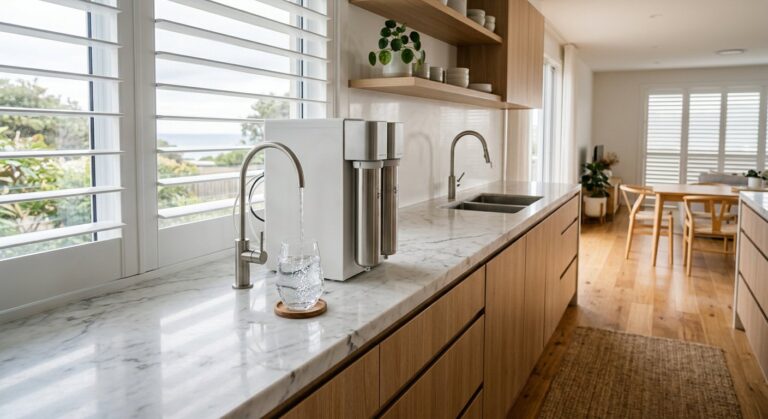
Best for SEQ — EcoHero 5-Stage RO
Measured: TDS 370 → 18 mg/L. Removes fluoride (96%), chloramine, PFAS. WaterMark AS3497. ~$899 installed.
Best no-plumbing — AquaTru Countertop RO
NSF 58 certified. No installation. Ideal for renters and apartments. ~$690.
Best for taste/chloramine only — TAPP EcoPro Twist
Catalytic carbon block. Clips to tap. Removes chloramine (SEQ-appropriate). ~$89.
Queensland Water: Why One Filter Does Not Fit the Whole State
Most water filter guides treat Queensland as a single water zone. It is not. The state spans six separate water authorities, four major river catchments, a coastal desalination plant, and millions of properties on private bores. A filter that is ideal for a Brisbane townhouse can be completely wrong for a Townsville home near Lavarack Barracks, and inadequate for a Cairns property pulling from rainwater tanks.
The three products we own are measured first-hand by Jayce Love, former Royal Australian Navy Clearance Diver; every other product is assessed on published manufacturer specifications and independent certification using our documented methodology — no gifted units, no brand payments.
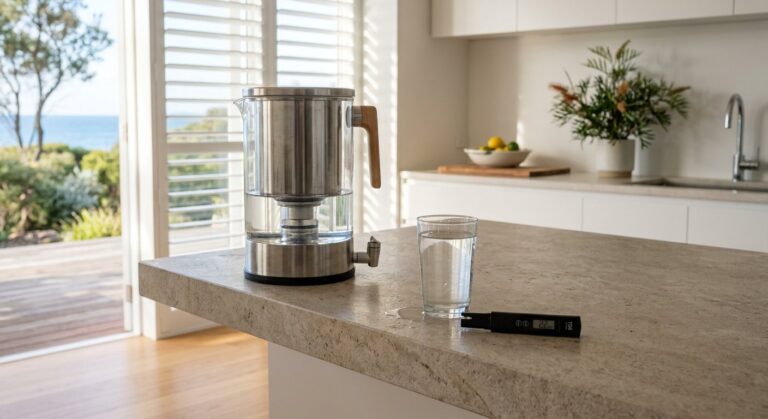
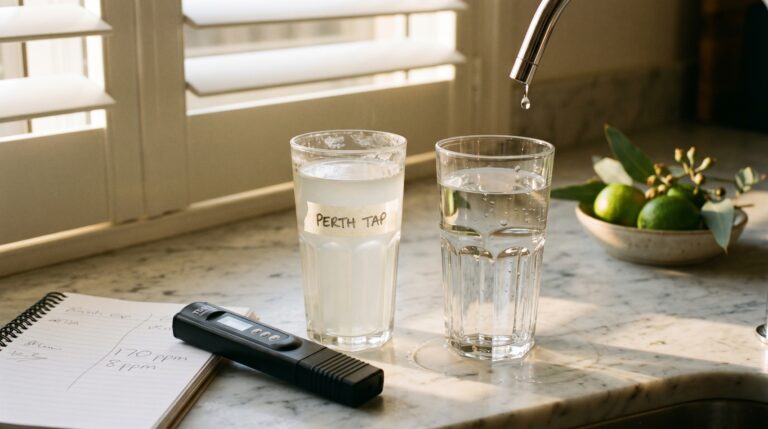
I am a former Royal Australian Navy Clearance Diver who has been measuring Australian tap water for three years. My Palm Beach (Gold Coast) tap runs at 370 mg/L TDS — a figure I have verified with a calibrated TDS meter multiple times. After installing an EcoHero 5-Stage RO under my kitchen sink, that drops to 18 mg/L (95.7% reduction). I am going to show you what is actually in Queensland water, by region, and which filter technology addresses it.
Queensland Water Authorities — Who Supplies What
Before choosing a filter you need to know where your water comes from. Queensland has multiple separate water authorities with different treatment processes:
| Authority | Areas Served | Source | Disinfection |
|---|---|---|---|
| Seqwater | Brisbane, Gold Coast, Sunshine Coast, Ipswich, Logan, Scenic Rim, Moreton Bay | Wivenhoe, Somerset, Hinze dams + Gold Coast Desalination Plant | Monochloramine |
| Townsville City Council | Townsville, Thuringowa | Ross River Dam, Burdekin River | Chlorine |
| Cairns Regional Council | Cairns, Northern Beaches, Tablelands | Copperlode Dam, Barron River | Chlorine |
| Rockhampton Regional | Rockhampton, Gracemere, Capricorn Coast | Fitzroy River, Rockhampton Weir | Chlorine |
| Toowoomba Regional | Toowoomba, Darling Downs | Cooby, Cressbrook, Perseverance dams | Chlorine |
| Rural/Remote QLD | Far West, Cape York, outback stations | Bore water, rainwater tanks, rivers | Varies (often minimal) |
Why this matters: Seqwater uses monochloramine, not free chlorine. Standard activated carbon and KDF media cannot remove monochloramine. Only catalytic carbon or reverse osmosis will work. If you are in SEQ and buying a standard carbon tap filter, you are not removing the disinfectant. This is the single most important filter decision in Brisbane and Gold Coast.
Queensland City-by-City Water Quality Data
| City / Region | TDS (mg/L) | Hardness | Fluoride | Disinfectant | Key Concern |
|---|---|---|---|---|---|
| Brisbane | 300–400 | 80–115 mg/L (moderate) | 0.70 mg/L | Monochloramine | Catalytic carbon required; RO for fluoride |
| Gold Coast (Palm Beach) | 370 (measured) | 90–130 mg/L (moderate) | 0.70 mg/L | Monochloramine | High TDS, desalination blending; RO recommended |
| Sunshine Coast | 250–350 | 70–100 mg/L (soft–moderate) | 0.70 mg/L | Monochloramine | Same Seqwater supply as Brisbane |
| Ipswich | 300–420 | 90–130 mg/L | 0.70 mg/L | Monochloramine | PFAS risk near RAAF Base Amberley |
| Townsville | 120–180 | 60–90 mg/L (soft–moderate) | 0.7 mg/L | Chlorine | PFAS risk near Lavarack Barracks; bore-water properties affected |
| Cairns | 80–120 | 30–60 mg/L (soft) | 0.7 mg/L | Chlorine | Soft water, mild profile; standard carbon often sufficient |
| Rockhampton | 150–280 | 80–150 mg/L (moderate) | 0.7 mg/L | Chlorine | Seasonal Fitzroy River turbidity; post-flood quality drops |
| Toowoomba / Darling Downs | 200–350 | 150–250 mg/L (hard) | 0.7 mg/L | Chlorine | Hard water; scale build-up on appliances; RO recommended |
| Far West / Outback QLD | 400–1,500+ | 200–600+ mg/L (very hard) | Variable / unfluoridated | Minimal / none | Bore water; iron, manganese, bacteria, nitrates; comprehensive treatment required |
370
mg/L TDS — Palm Beach tap (measured)
18
mg/L TDS — post EcoHero RO (95.7% reduction)
0.70
mg/L fluoride — Seqwater (Brisbane/Gold Coast)
Our Top-Rated Water Filters
Reverse osmosis is the only residential technology that reliably removes PFAS, fluoride, chloramine, and heavy metals — the four contaminants most Australians are most exposed to.
What Is Actually in Queensland Tap Water?
Monochloramine — The Disinfectant Most Filters Miss
Seqwater switched from free chlorine to monochloramine years ago for SEQ reticulated supply. Monochloramine (NH2Cl) is formed by combining chlorine with ammonia. It is more stable in the distribution network — meaning it persists in the pipes longer, which is exactly why water authorities prefer it for large metropolitan systems.
The problem: standard activated carbon filters, KDF media, and vitamin C dechlorinators all work against free chlorine through rapid oxidation-reduction reactions. Monochloramine reacts much more slowly and is largely unaffected by these media. The only residential filtration technologies that reliably remove monochloramine are:
- Catalytic carbon — modified activated carbon with an altered surface structure that creates free radical reaction sites. Removes chloramine at standard residential flow rates.
- Reverse osmosis membranes — physically excludes chloramine molecules at the semi-permeable membrane (0.0001 micron pore size).
If you live in Brisbane, Gold Coast, Sunshine Coast, Ipswich, or Logan, and your water filter does not contain catalytic carbon or RO, it is not removing the primary disinfectant from your water.
Fluoride — Added at 0.70 mg/L Across SEQ
Seqwater fluoridates all SEQ reticulated supply at 0.70 mg/L — within the Australian Drinking Water Guidelines (ADWG) limit of 1.5 mg/L. Whether or not you wish to filter fluoride is a personal decision. The health evidence is contested; what is not contested is the filtration chemistry.
Fluoride removal requires one of: reverse osmosis (93–96% removal), activated alumina, or bone char carbon. Standard carbon filters — including high-end countertop models — do not remove fluoride. If fluoride removal is your goal, RO is the only practical residential option. For more detail on this, read our guide: How reverse osmosis actually works.
PFAS — The Ipswich and Townsville Risk
Per- and polyfluoroalkyl substances (PFAS) are persistent synthetic compounds used historically in firefighting foam (AFFF). They do not break down in the environment. Queensland has two areas of significant PFAS contamination linked to Defence base activity:
- Ipswich / RAAF Base Amberley: PFAS was detected in surface water and groundwater near Amberley. Queensland Health and the Department of Environment have conducted investigations. Private bore-water users within several kilometres of the base carry the highest risk. Reticulated Seqwater supply to Ipswich meets ADWG 2025 limits (PFAS sum <0.07 µg/L), but bore-water users should test independently.
- Townsville / Lavarack Barracks: Lavarack Barracks is one of Queensland’s largest military bases and was identified in the national PFAS investigation. Bore-water users near the barracks, and some properties along the lower Ross River corridor, showed elevated PFAS. Reticulated supply from Ross River Dam meets ADWG limits.
If you are on a private bore near RAAF Amberley or Lavarack Barracks: ADWG reticulated limits are not your benchmark — you need independent NATA-accredited lab testing of your bore water for PFAS before choosing a filter. RO removes PFAS at 95–98% efficiency but cannot compensate for extremely high source concentrations without knowing the starting level.
TDS — High in SEQ, Mild Elsewhere
Total dissolved solids (TDS) measures all dissolved minerals, salts, and metals in water. It is not a direct health measure but is a proxy for the overall mineral load. Brisbane and Gold Coast tap water runs at 300–400 mg/L TDS — moderate by Australian standards (Adelaide tops 480+ mg/L), but high enough that RO filtration produces a noticeable taste improvement.
Cairns, by contrast, is notably soft at 80–120 mg/L. Standard carbon block filtration is usually sufficient for Cairns residents who just want better taste and chlorine removal. You do not need a $900 RO system for Cairns tap water unless PFAS or fluoride removal is a priority.
Microplastics — Present Across All Australian Tap Water
A 2024 study found microplastics in 94% of Australian tap water samples tested. Queensland water is not exempt. The primary ingress points are atmospheric deposition into catchments, distribution pipe degradation, and household plumbing. RO membranes physically exclude particles above 0.0001 microns — this is the only residential filter technology with demonstrated microplastic removal across all size fractions. NSF 401 certified carbon block filters remove microplastics at 0.5–1 micron, catching larger fragments but not nanoplastics.
Filter Media Comparison — Which Technologies Work for QLD Water
This is where most guides mislead Queensland buyers. Here is an honest assessment of filter media against the actual QLD water chemistry:
| Media Type | Monochloramine (SEQ) |
Free Chlorine (Cairns/Townsville) |
Fluoride | PFAS | TDS / Minerals | Microplastics |
|---|---|---|---|---|---|---|
| Standard activated carbon | ✗ No | ✓ Yes | ✗ No | ~ Partial | ✗ No | ~ >1 micron |
| Catalytic carbon block | ✓ Yes | ✓ Yes | ✗ No | ~ Partial | ✗ No | ✓ >0.5 micron |
| KDF (kinetic degradation fluxion) | ✗ No | ✓ Yes | ✗ No | ✗ No | ✗ No | ✗ No |
| Vitamin C (ascorbic acid) | ✗ No | ✓ Yes | ✗ No | ✗ No | ✗ No | ✗ No |
| Reverse osmosis (RO) | ✓ Yes (97%+) | ✓ Yes | ✓ 93–96% | ✓ 95–98% | ✓ 95–99% | ✓ All sizes |
The takeaway for SEQ residents: If your filter does not say “catalytic carbon” or “RO” explicitly, assume it is not removing monochloramine.
Gold Coast Desalination Plant — What It Means for Your Water
The Gold Coast Desalination Plant at Tugun has a capacity of 133 ML/day. During drought conditions Seqwater increases the proportion of desalinated water blended into the SEQ network. Desalinated water has near-zero TDS coming out of the reverse osmosis membranes — but after remineralisation (required for pipe stability and taste) and blending with dam water, the final tap TDS across Gold Coast can vary seasonally between 280–400 mg/L.
This blending variation is one reason why the Gold Coast taste profile shifts noticeably during dry periods. It also means that if you have a whole-house filter, its membranes and cartridges are working against variable source chemistry — annual cartridge replacement is more important here than in stable-supply cities.
Regional Queensland Deep Dive
Cairns — Soft Water, Minimal Treatment Needed
Cairns draws from Copperlode Dam on the Barron River catchment. The Atherton Tablelands terrain produces naturally soft, low-mineral water with TDS typically between 80–120 mg/L. Hardness sits at 30–60 mg/L — well within the “soft” classification. Disinfection is with free chlorine (not chloramine).
Filter recommendation for Cairns: A quality catalytic or standard carbon block filter is sufficient for taste, odour, and chlorine removal. You do not need RO unless you specifically want fluoride or PFAS removal. A TAPP EcoPro Twist ($89, catalytic carbon block, clips to tap) is a cost-effective fit for the Cairns water profile. If you are on a rainwater tank, see the tank section below — bacteria management becomes the primary concern.
Townsville — Moderate TDS, PFAS Risk Zone
Ross River Dam water is moderately mineralised at 120–180 mg/L TDS. Townsville uses free chlorine (not chloramine), so standard and catalytic carbon both work. The significant concern here is not the reticulated supply itself but private bore-water users near Lavarack Barracks. The 2016–2019 national PFAS investigation identified contamination in groundwater from Lavarack. Queensland Health recommends bore-water users within approximately 2–5 km of the base obtain independent PFAS testing before using the water for drinking or cooking.
For reticulated Townsville tap water, an under-sink carbon block filter ($150–$250 range) comfortably handles taste, chlorine, and sediment. For bore-water users near Lavarack: RO is the minimum — confirm filtration performance against your tested PFAS concentration.
Rockhampton — Seasonal Turbidity and Flood Risk
Rockhampton’s Fitzroy River catchment is one of Australia’s most flood-prone. After major rain events (and Rockhampton experiences frequent tropical flooding), raw water turbidity spikes sharply. The local treatment plant manages this, but periods of high demand on treatment capacity occasionally produce water with elevated taste and odour. Seasonal colour variation in tap water is not unusual.
Filter recommendation for Rockhampton: A two-stage system — sediment pre-filter + carbon block — handles most scenarios. Consider upgrading to RO if you want comprehensive coverage during wet season events when source water quality is most variable. Internal links: our full Australian water filter guide covers sediment pre-filter selection in detail.
Toowoomba and the Darling Downs — Hard Water Territory
The Darling Downs is Queensland’s hard water zone. Toowoomba’s supply typically runs 150–250 mg/L hardness (calcium carbonate equivalent). If you have white crusty residue building up on your kettle, taps, and showerhead — that is calcium and magnesium precipitation. This is not a health issue but it is an appliance and plumbing maintenance issue.
Hard water also reduces soap and detergent lathering efficiency, and at the higher end of the scale (250+ mg/L), can contribute to skin dryness. For drinking water, an RO system reduces hardness minerals along with TDS. For whole-house hard water management, look at water softeners (salt-based ion exchange) or scale-inhibiting filters. If you want to know more about how hardness affects eczema and skin health, read our shower filter guide for eczema-prone skin.
Rural and Remote Queensland — Bore Water and Rainwater Tanks
Roughly 12% of Queenslanders rely on private water supplies — bores, rainwater tanks, rivers, or dams. The challenges are categorically different from reticulated supply.
Bore Water in Queensland
Queensland bore water chemistry varies enormously by geology. The Great Artesian Basin (covering roughly 22% of Australia, much of it in QLD) produces water that is high in dissolved minerals, often with elevated fluoride above ADWG limits in some areas, and can contain naturally occurring arsenic, uranium, and radium in trace concentrations. Shallow coastal bores can have bacterial contamination. Agricultural area bores may show nitrates from fertiliser runoff.
| Bore Water Contaminant | Typical QLD Regions | Filter Solution |
|---|---|---|
| Iron (Fe >0.3 mg/L) | Coastal areas, Far North QLD | Oxidising filter (Birm, manganese greensand) + sediment pre-filter |
| Manganese (Mn >0.1 mg/L) | Tableland areas | Oxidation + manganese greensand filtration |
| Bacteria (total coliforms) | Shallow bores, rural areas | UV steriliser + sediment pre-filter (RO for comprehensive) |
| High TDS / hardness | Great Artesian Basin, Darling Downs | RO (reduces TDS 95%+) or water softener + drinking water RO |
| Elevated fluoride (>1.5 mg/L) | Parts of Great Artesian Basin | RO (93–96%) or activated alumina |
| Nitrates (>50 mg/L) | Agricultural areas (Lockyer Valley, Darling Downs) | RO (85–95% nitrate removal) |
Critical rule for bore water: Always test before you filter. A NATA-accredited laboratory test (approximately $150–$300 for a comprehensive panel) tells you exactly what you are dealing with. Guessing wastes money on the wrong filter and leaves genuine risks unaddressed. Queensland Health’s Laboratory Services and private labs like ALS Environmental and Eurofins offer residential water testing.
Rainwater Tank Water in Queensland
Queensland has the highest rainwater tank usage in Australia. The Queensland Government estimates over 300,000 residential rainwater systems are in use across the state. Tank water quality issues differ from bore water and are generally more manageable:
- Sediment and debris: First-flush diverters and a sediment pre-filter (5 micron) handle the bulk of this.
- Bacteria: Roof surfaces, bird droppings, and tank contamination can introduce E. coli and other pathogens. UV sterilisation (post-filtration) is the most reliable treatment for drinking-quality tank water.
- pH: Rainwater is naturally slightly acidic (pH 6.0–6.8). This can accelerate leaching of lead and copper from older plumbing. Carbon filtration improves taste; RO corrects pH toward neutral.
- Algae: Poorly maintained tanks with light ingress grow algae. Tank inspection, opaque covers, and carbon block filtration address this.
Recommended tank water filter setup: Sediment pre-filter (5 micron) → carbon block (taste, odour, chemical) → UV steriliser (bacteria, viruses). If you want the simplest single-unit solution for a tank, the AquaTru countertop RO handles sediment, organics, and bacteria effectively as a point-of-use drinking water solution.
Seasonal Water Quality in Queensland
Queensland’s wet season (typically November to April) puts pressure on water treatment infrastructure that does not exist in southern states. Heavy rainfall events flush agricultural chemicals, sediment, and organic matter into catchments. Seqwater’s large storage reservoirs (Wivenhoe at 1.165 million ML capacity) buffer much of this for SEQ, but smaller regional systems are more exposed.
During and immediately after major flood events, Queensland authorities have historically issued boil-water notices for affected areas. This is most relevant for: Rockhampton (Fitzroy River flooding), Ipswich (Bremer River flooding), and smaller regional towns. If you are in a flood-risk area, a gravity filter or countertop RO unit provides drinking-water security without mains power dependence during emergencies.
Product Recommendations for Queensland
EcoHero 5-Stage RO — Best for SEQ Residents (Homeowners)
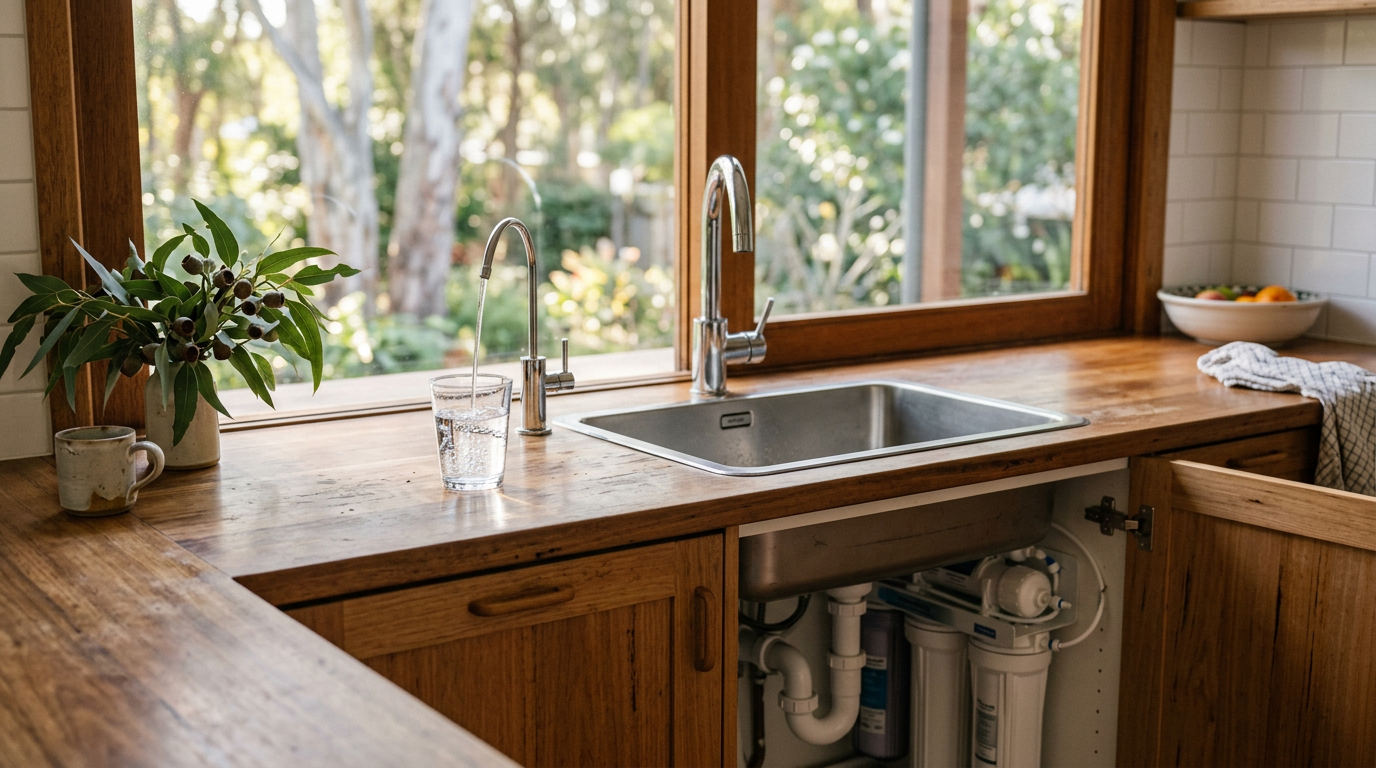
The EcoHero 5-Stage RO is what I have installed under my Gold Coast kitchen sink. The five stages are: (1) 5-micron sediment pre-filter, (2) catalytic carbon block (chloramine removal), (3) RO membrane (0.0001 micron), (4) post-carbon polish, (5) remineralising calcite stage (restores alkaline minerals post-RO). The remineralisation stage is important — without it, RO water is slightly acidic and can taste flat.
Measured performance on Gold Coast tap water (370 mg/L input): post-RO TDS 18 mg/L. That is a 95.7% reduction. Fluoride drops from 0.70 mg/L to under 0.04 mg/L. The catalytic carbon in stage 2 handles the monochloramine before the water reaches the membrane, extending membrane life significantly.
The EcoHero is WaterMark AS3497 certified (lead-free fittings), which is mandatory for permanently plumbed installations in Australia. Installing a non-WaterMark system can void home insurance and breaches AS/NZS 3500. No other under-sink RO in the sub-$1,000 category ticks this box as clearly.
Who this is for: SEQ homeowners who want comprehensive tap water treatment — chloramine, fluoride, PFAS, TDS, microplastics. Budget: ~$699 unit + $150–$200 plumber installation. Annual filter replacement: ~$120–$150/year for the full cartridge set.
Read the Full EcoHero ReviewAquaTru Countertop RO — Best No-Plumbing Option
The AquaTru is NSF 58 certified and uses the same four-stage RO process as under-sink systems, with no plumbing required. You fill a 1.5 L reservoir from the tap, press a button, and filtered water collects in the front tank. Capacity is approximately 3–4 L/hour. It is not ideal for large households that drink high volumes, but for one or two people it works well.
The AquaTru handles SEQ water chemistry competently: its catalytic carbon stage removes monochloramine, the RO membrane removes fluoride and PFAS. NSF 58 certification means third-party validated removal claims. No plumber needed. No landlord permission required.
Who this is for: Renters, apartment dwellers, anyone in SEQ who cannot or does not want to install a plumbed system. Also ideal as a portable emergency unit during boil-water advisories. ~$690.
See AquaTru on Amazon AUTAPP EcoPro Twist — Best Entry-Level for Chloramine Removal
If your goal is improving tap water taste and removing chloramine without spending $700+, the TAPP EcoPro Twist is the right choice for SEQ. It clips onto a standard mixer tap in seconds (no plumber, no tools) and contains a catalytic carbon block that is rated for chloramine removal. Filter lifespan is approximately 3 months (about 1,200 L), after which you twist and replace the cartridge — no tools required.
What it does not remove: fluoride, PFAS, dissolved TDS. If you need those removed, step up to AquaTru or EcoHero. But for most SEQ residents who want noticeably better-tasting water that has been properly dechloraminated, the EcoPro Twist at $89 is excellent value.
See TAPP EcoPro on Amazon AU5-Year Total Cost of Ownership Comparison
| Option | Purchase | Install | Annual Filters | 5-Year Total | Cost Per Litre |
|---|---|---|---|---|---|
| Bottled water (2L/day) | — | — | $1,825 | $9,125 | $2.50/L |
| TAPP EcoPro Twist | $89 | $0 | ~$120 | $689 | ~$0.10/L |
| AquaTru Countertop RO | $690 | $0 | ~$130 | $1,340 | ~$0.18/L |
| EcoHero 5-Stage RO (installed) | $699 | $175 | ~$135 | $1,549 | ~$0.04/L |
At 3 L/day household consumption, the EcoHero RO costs approximately 4 cents per litre over five years. Bottled water costs over $2.50 per litre for equivalent volume. The economics of point-of-use RO are unambiguous for SEQ residents.
Queensland Renters — Your Options Without a Plumber
Around 36% of Queensland households are renters. Under standard tenancy agreements, installing a plumbed under-sink filter requires landlord consent and must meet WaterMark requirements. Many landlords decline or do not respond. Here are the legitimate no-permission options:
- AquaTru Countertop RO ($690): Sits on the benchtop, no installation, takes 3–4 litres per hour. Full RO performance including chloramine, fluoride, PFAS removal. Takes with you when you move.
- TAPP EcoPro Twist ($89): Clips onto the tap in 60 seconds with no tools. Catalytic carbon removes chloramine and improves taste. Does not remove fluoride or TDS. Highly portable.
- Brita Marella Gravity Jug ($45): Ion exchange + carbon block. Improves taste, reduces some chlorine. Does not remove monochloramine or fluoride. Fine for Cairns and Townsville; underwhelming for SEQ chloramine.
Renter tip: If you are in SEQ and prioritise chloramine removal, the TAPP EcoPro Twist is the most cost-effective no-permission solution. If you also want fluoride and PFAS removal, the AquaTru countertop RO is the correct choice. Do not install a cheap gravity jug and assume you have addressed chloramine — you have not.
WaterMark Certification — What It Means for QLD Homeowners
WaterMark (AS3497) is the Australian standard for plumbing products that contact drinking water. It is not optional. Under the National Construction Code and Queensland’s Plumbing and Drainage Act, any product permanently plumbed into a drinking water supply must be WaterMark certified. Installing a non-WaterMark under-sink filter can:
- Void your home insurance (non-compliant plumbing work)
- Create liability for the licensed plumber who installed it
- Be required to be removed at your cost during a house sale inspection
The EcoHero 5-Stage RO is WaterMark AS3497 certified. If you are comparing under-sink filters, ask the supplier directly for the WaterMark certificate number before purchasing — not all products claiming “Australian standards” actually hold the certification. Countertop and gravity filters that do not connect to the water line (AquaTru, jugs) do not require WaterMark.
Filter Maintenance Schedule — Queensland Conditions
Queensland’s humidity and seasonal water quality variation affect filter cartridge performance. Here is a realistic maintenance schedule for Queensland conditions:
| Filter Stage | Replacement Interval (QLD) | Cost (approx.) | Indicator |
|---|---|---|---|
| Sediment pre-filter (5 micron) | 6 months (SEQ, RockHampton), 12 months (Cairns) | $15–$25 | Visible discolouration; reduced flow rate |
| Catalytic carbon block | 6–12 months | $35–$55 | Taste change; chlorine detectable |
| RO membrane | 2–3 years (depends on TDS load) | $80–$150 | Post-RO TDS rising toward 20% of input TDS |
| Post-carbon polish | 12 months | $20–$35 | Annual with other cartridges |
| Tap-mount filter cartridge (TAPP) | 3 months (1,200 L) | $25–$30 | Flow rate reduction; taste change |
Queensland humidity tip: Store spare cartridges in original sealed packaging in a cool, dry location. Queensland’s summer humidity can degrade unsealed carbon cartridges over months. Do not open packaging until installation day.
Which Filter for Your Queensland Situation — Decision Matrix
| Your Situation | Recommended Filter | Why |
|---|---|---|
| SEQ homeowner, wants comprehensive treatment | EcoHero 5-Stage RO | Handles chloramine + fluoride + PFAS + TDS. WaterMark certified. |
| SEQ renter or apartment | AquaTru Countertop RO | No plumbing. Full RO performance. Portable. |
| SEQ renter, budget-conscious | TAPP EcoPro Twist | Catalytic carbon. Clips to tap. Removes chloramine. $89. |
| Cairns (soft water, free chlorine) | TAPP EcoPro or standard carbon block | Soft water, no chloramine. Standard carbon is adequate. |
| Townsville (reticulated, not near Lavarack) | Under-sink carbon block | Free chlorine city. Moderate TDS. Carbon block covers it. |
| Townsville bore water near Lavarack | NATA test first, then RO | PFAS risk. Must know concentration before sizing filter. |
| Toowoomba / Darling Downs (hard water) | RO for drinking + scale inhibitor for appliances | 150–250 mg/L hardness. RO corrects both TDS and hardness at the drinking tap. |
| Rural QLD bore water | NATA lab test → bespoke multi-stage | Iron, manganese, bacteria all possible. Test before filtering. |
| Rainwater tank (drinking quality) | Sediment + carbon + UV steriliser | Bacteria management is the primary risk. UV post-filtration is essential. |
Not sure which filter suits your Queensland suburb?
Take our 60-second filter quiz and get a personalised recommendation based on your postcode, water source, and priorities.
Find My Filter →Frequently Asked Questions — Queensland Water Filters
Does Brisbane tap water have chloramine?
Yes. Seqwater uses monochloramine (not free chlorine) to disinfect Brisbane, Gold Coast, Sunshine Coast, Ipswich, and Logan water. Monochloramine is more stable in the distribution network than free chlorine. Standard activated carbon filters do not remove monochloramine. You need either catalytic carbon or reverse osmosis. If your current filter does not specify “catalytic carbon” or “RO membrane” in the product description, it is not removing Brisbane’s disinfectant.
What is the TDS of Brisbane tap water?
Brisbane tap water typically runs at 300–400 mg/L TDS. My personal calibrated measurement at Palm Beach (Gold Coast, same Seqwater supply) is 370 mg/L. After installing an EcoHero 5-Stage RO, post-filter TDS is 18 mg/L — a 95.7% reduction. The ADWG aesthetic guideline for TDS is 600 mg/L, so Brisbane is within this limit, but the mineral load is high enough that RO filtration produces a significant taste improvement.
Is there PFAS in Queensland tap water?
Reticulated Queensland tap water (Seqwater, Townsville, Cairns) meets ADWG 2025 PFAS limits. The higher risk is for private bore-water users near Defence bases. Ipswich residents near RAAF Base Amberley and Townsville residents near Lavarack Barracks should have bore water independently tested by a NATA-accredited laboratory before drinking it. Reverse osmosis removes PFAS at 95–98% efficiency, but you need to know the source concentration to confirm adequate treatment.
Does Queensland tap water have fluoride?
Yes. Seqwater fluoridates the SEQ supply at 0.70 mg/L. Townsville and Cairns also add fluoride. The ADWG limit is 1.5 mg/L. Fluoride cannot be removed by standard carbon block filters. Only reverse osmosis (93–96% removal), activated alumina, or bone char carbon remove fluoride from drinking water. If fluoride removal is your priority, an RO system is the most practical residential solution.
Is Cairns tap water safe to drink without a filter?
Yes. Cairns tap water from Copperlode Dam is soft (TDS 80–120 mg/L), treated with free chlorine, and meets all ADWG standards. A filter is not required for safety. However, a basic carbon block filter (such as a tap-mount or gravity jug) will improve taste and remove residual chlorine taste. You do not need an RO system for Cairns water unless fluoride removal or extra precaution around microplastics is a priority.
Can a Queensland renter install a water filter?
Yes, without landlord permission for non-plumbed options. The AquaTru Countertop RO ($690) and TAPP EcoPro Twist tap-mount filter ($89) require no plumbing modification and no landlord consent. Permanently plumbed under-sink filters (like the EcoHero RO) require landlord consent and WaterMark-certified installation by a licensed plumber. For renters in Brisbane or Gold Coast who want chloramine and fluoride removal, the AquaTru is the most effective no-permission solution.
How often do I need to change my water filter in Queensland?
Replacement intervals depend on your water source and filter type. For SEQ (high TDS Seqwater): sediment pre-filters every 6 months, catalytic carbon blocks every 6–12 months, RO membranes every 2–3 years. For Cairns (soft water): carbon cartridges can comfortably run 12 months. After wet season flood events in Rockhampton or Ipswich, inspect your sediment pre-filter early as turbidity spikes shorten cartridge life. Tap-mount filters like the TAPP EcoPro last approximately 3 months (1,200 litres) regardless of location.
What is the Gold Coast desalination plant and does it affect my water quality?
The Gold Coast Desalination Plant at Tugun processes seawater into drinking water at up to 133 million litres per day. Seqwater blends this into the SEQ network alongside dam water. During drought, the desalination proportion increases, which can cause subtle taste changes as the mineral profile shifts. Post-desalination water is remineralised before blending, but the blend ratio varies. This is one reason Gold Coast TDS fluctuates seasonally between approximately 280–400 mg/L. An RO filter normalises this variability to a consistent low TDS regardless of the blend ratio.
Ready to filter Queensland water properly?
The EcoHero 5-Stage RO handles every challenge in this guide — chloramine, fluoride, PFAS, high TDS. WaterMark certified. Real measured performance: 370 → 18 mg/L TDS on Gold Coast water.
Read the Full EcoHero ReviewGet the Australian Home Environment Checklist
30 checks across water, air and EMF. Most of them free. Ranked by impact.
No spam. Unsubscribe any time.

Former Royal Australian Navy Clearance Diver and TAG-E counter-terrorism operator. Founded Clean and Native to apply the same rigorous thinking to the home environment.
Full biography →