Coway Airmega 200M vs Austin Air Australia 2026: Which Air Purifier Is Better?
Drafted with AI assistance and checked against published specifications and certifications. First-hand measurements appear only where stated. How we make content
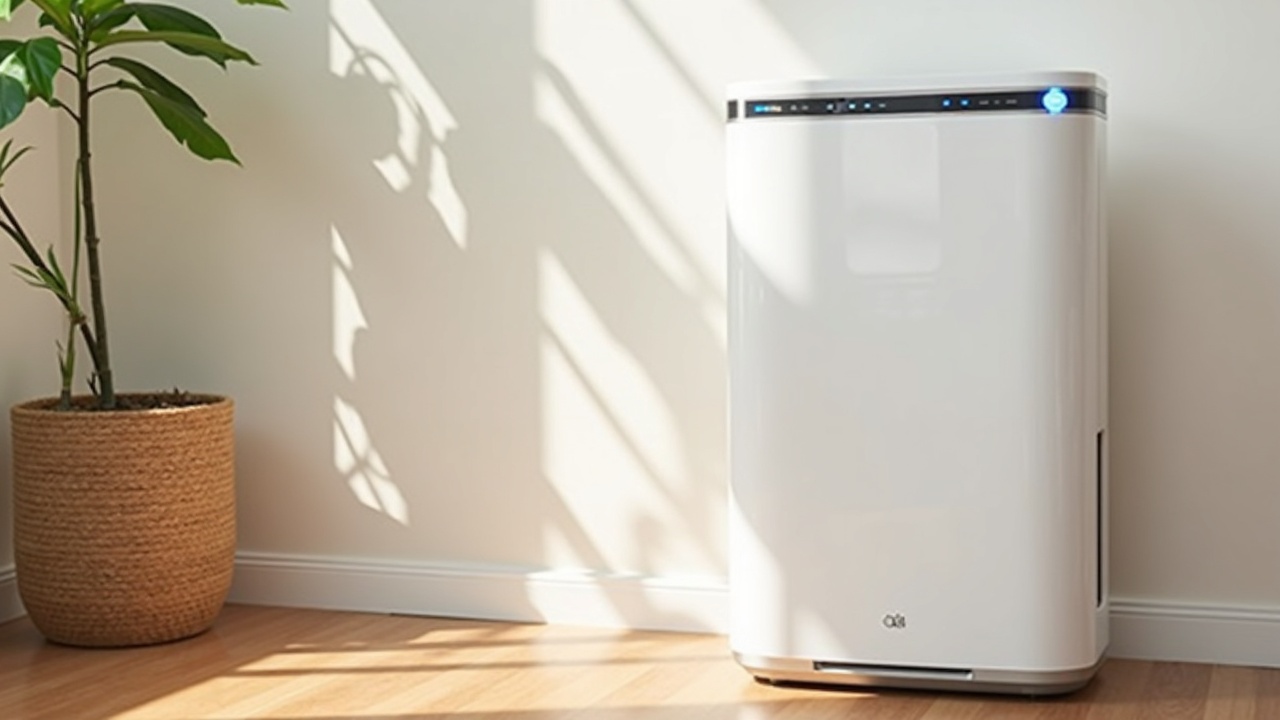
The Coway Airmega 200M is the better choice for most Australian households — True HEPA filtration, auto mode, real-time PM2.5 monitoring, and coverage up to 112m² at a fraction of the Austin Air price. Austin Air’s strength is its enormous activated carbon bed (6.8 kg), which makes it the superior choice for chemical off-gassing, VOC-heavy environments, and new-build renovations. The catch: Austin Air costs 2-3x more, covers less floor area, and has no automation or air quality display.
| Brand | Best For | Verdict |
|---|---|---|
| Coway Airmega 200M | Particles, bushfire smoke, most households, large rooms | Recommended |
| Austin Air HealthMate Plus | VOC/odour removal, new builds, chemical sensitivity | Good for gas/odour |
| Austin Air standard models | General dust/pollen on a budget | Limited coverage, no auto mode |
This article contains affiliate links. We may earn a commission at no extra cost to you.
Both Coway and Austin Air have loyal followings in Australia, and both earn that loyalty for legitimate reasons. But they are built around different priorities — and the right choice depends heavily on what you are actually trying to filter out of your air. This comparison cuts through the marketing to give you the data you need.
Filtration Technology Compared Side by Side
The most significant technical difference between these two brands is not filtration depth — both use True HEPA rated to 0.3 microns at 99.97% efficiency — it is activated carbon volume. The Coway Airmega 200M uses a standard carbon deodorization filter alongside its True HEPA stage. Austin Air’s HealthMate Plus takes carbon to a different level: 15 pounds (6.8 kg) of activated carbon and zeolite, making it one of the highest-capacity gas filtration units available in Australia.
That distinction matters for specific households. In a newly built or recently renovated Australian home, engineered timber, adhesives, carpets, and paints off-gas formaldehyde, acetaldehyde, and other VOCs for months after installation. Standard carbon filters address this only partially. Austin Air’s deep carbon bed maintains meaningful VOC reduction across a 5-year filter lifespan.
Air Purification
Both units use True HEPA. The difference is what happens after the particles are caught.
For most Australian households — particles, pollen, bushfire smoke — the Coway’s HEPA stage does the job at a fraction of the price. For chemical-sensitive households or new builds, Austin Air’s carbon volume is genuinely different.
See the Full Air Purifier Roundup →For particle filtration, the Coway Airmega 200M holds its own. Its True HEPA filter captures 99.97% of particles at 0.3 microns — the same standard as the Austin Air HealthMate Plus. For bushfire PM2.5, pollen, dust mites, and pet dander, both units deliver equivalent particle removal. The Coway’s auto mode also responds to real-time PM2.5 readings from its built-in sensor, ramping up fan speed when air quality drops and backing off when the air is clean — a feature the Austin Air lacks entirely.
The three products we own are measured first-hand by Jayce Love, former Royal Australian Navy Clearance Diver; every other product is assessed on published manufacturer specifications and independent certification using our documented methodology — no gifted units, no brand payments.
Where the two units diverge significantly is room coverage. The Coway Airmega 200M is rated for up to 112m², giving it enough capacity for large open-plan living areas, master bedrooms, or multi-room coverage when run continuously. Austin Air’s HealthMate Plus is rated for approximately 46m² — suitable for a bedroom or study but not a large living space without a second unit. For broader Australian homes, the Coway’s coverage advantage is practically significant.
| Feature | Coway Airmega 200M | Austin Air HealthMate Plus |
|---|---|---|
| Particle filtration | True HEPA (0.3 microns, 99.97%) | True HEPA (0.3 microns, 99.97%) |
| Activated carbon | Standard carbon deodorization filter | 15 lbs (6.8 kg) carbon + zeolite |
| Room coverage | Up to 112m² | Up to 46m² |
| Auto mode | Yes — adjusts based on PM2.5 sensor | No — manual 4-speed control |
| Eco mode | Yes — turns off when air is clean | No |
| Air quality display | Yes — LED ring indicator (blue/green/red) | No |
| Filter replacement cycle | 6-12 months (HEPA + carbon) | 5 years (all-in-one filter) |
| Approx. filter cost (AU) | ~$50-80 per cycle | ~$350-420 per 5-year cycle |
| Australian RRP (approx.) | ~$300-400 | ~$950-1,150 |
| Country of manufacture | South Korea | USA |
Price and Running Costs Over Five Years
Upfront price is only part of the equation. Over a five-year period, running costs — electricity draw and filter replacement — can add up significantly.
The Coway Airmega 200M retails in Australia for approximately $300 to $400 depending on the retailer. Its HEPA and carbon filters typically need replacing every 6 to 12 months depending on air quality in your area. Filter sets cost approximately $50 to $80 per cycle. At 12-month replacement intervals, that is roughly $350 to $500 in filter costs over five years. Running at medium speed, the unit draws under 40W — at an Australian electricity rate of approximately $0.30 per kWh, around $50-$70 per year for continuous 24/7 use.
Austin Air’s HealthMate Plus carries a higher upfront cost — roughly $950 to $1,150 in Australia — but its all-in-one filter is rated for five years, with replacements costing around $350 to $420 per cycle. The five-year filter lifespan reduces replacement frequency considerably. Power draw is approximately 30-45W depending on speed.
Over five years: Coway total cost of ownership runs roughly $750 to $1,200 (unit + filters + electricity). Austin Air comes in at approximately $1,600 to $2,000. For households where VOC removal is not a primary concern, the Coway delivers comparable particle filtration at materially lower lifetime cost. For households dealing with significant chemical sensitivity or renovation off-gassing, Austin Air’s deep carbon bed may justify the premium. See our air purifier running costs guide for Australian households for more detail.
Best Pick for Australian Homes and Climates
Australia’s air quality challenges are specific and seasonal. Bushfire smoke is the most acute concern across southern and eastern states — Victoria, NSW, South Australia, and Tasmania see repeated smoke events each summer. For PM2.5 from smoke, both units perform equivalently: True HEPA at 0.3 microns captures the particles that matter. The Coway’s advantage in coverage (112m² vs 46m²) means it handles larger living spaces without needing a second unit.
For year-round use in a typical Australian home — particularly newer builds subject to mandatory energy efficiency standards that reduce natural ventilation — VOC load from building materials, cleaning products, and synthetic furnishings is often the dominant air quality issue. Here, Austin Air’s 6.8kg activated carbon bed genuinely outperforms the Coway’s standard carbon filter. If your household includes chemically sensitive individuals, or if you have recently renovated, this distinction is worth the price difference.
Humid coastal environments (Brisbane, Cairns, Darwin, coastal NSW and WA) benefit from units with robust pre-filtration. Both units handle this adequately.
Our recommendation: most Australian households — regardless of city or climate zone — will be better served by the Coway Airmega 200M. Broader coverage, automated operation, real-time air quality feedback, and lower lifetime cost make it the practical default. Austin Air is the right call specifically when deep gas and VOC filtration is the priority — new builds, renovation dust, or medically diagnosed chemical sensitivity. For a broader look at how these units compare to other options, see our full roundup of the best air purifiers available in Australia for 2026.
What to do about your indoor air.
Our indoor air quality guide covers the hierarchy of fixes — from free (ventilation) to practical (air purifiers) — ranked by impact and cost for Australian homes.
Our Top Air Purifier Picks
True H13 HEPA with activated carbon is the only technology that removes particles AND gases from your indoor air. For bushfire smoke, pollen, and VOCs — HEPA is non-negotiable.
Frequently Asked Questions
Is the Coway Airmega 200M good for bushfire smoke?
Yes. The Airmega 200M uses True HEPA filtration that captures 99.97% of particles at 0.3 microns — this includes the PM2.5 particles that make up bushfire smoke. Its auto mode will ramp fan speed automatically when PM2.5 levels rise. For severe or prolonged smoke events, run it on maximum speed with windows sealed.
Does Austin Air remove more VOCs than Coway?
Yes, significantly. Austin Air’s HealthMate Plus contains 6.8kg of activated carbon and zeolite compared to the Coway’s standard carbon deodorization layer. For formaldehyde, acetaldehyde, ammonia, and other gases from new furniture, paint, or renovation materials, Austin Air’s carbon volume provides substantially longer-lasting and deeper VOC removal.
Why does the Coway cover more room area if Austin Air is more expensive?
Coverage and price are not always correlated in air purifiers. The Coway Airmega 200M is rated to 112m² — driven by a high CADR fan — while Austin Air prioritises filter capacity over fan power. Austin Air’s strength is in depth of filtration (particularly gas removal), not speed of air circulation.
Which is better for asthma sufferers in Australia?
For most asthma triggers — dust mite waste, pollen, pet dander, and mould spores — either unit’s True HEPA stage provides equivalent filtration. The Coway’s auto mode and larger coverage area make it more practical for daily whole-home use. Austin Air is preferred for asthma triggered specifically by chemical or gas exposure (cleaning products, scents, renovation fumes).
How often do Coway Airmega 200M filters need replacing?
Coway recommends replacing the True HEPA filter every 12 months and the pre-filter washing every 2 weeks. In areas with heavy bushfire smoke or high dust load, replace the HEPA filter at 6 months. Filter replacement indicators alert you when action is needed.
Get the Australian Home Environment Checklist
30 checks across water, air and EMF. Most of them free. Ranked by impact.
No spam. Unsubscribe any time.

Former Royal Australian Navy Clearance Diver and TAG-E counter-terrorism operator. Founded Clean and Native to apply the same rigorous thinking to the home environment.
Full biography →