
Darwin Tap Water Quality 2026: What’s Actually In It?
Darwin Water Quality: Quick Verdict
| TDS | ~100–250 mg/L (wet season lower, dry season higher) |
| Hardness | ~60–130 mg/L CaCO₃ — moderate, season-dependent |
| Fluoride | ~0.6–0.7 mg/L — lower end of NHMRC guideline |
| Disinfection | Chloramine — standard carbon (Brita) does NOT remove it |
| PFAS risk | HIGH — RAAF Darwin, Robertson Barracks, Darwin Airport fire training |
| Wet season | Tropical runoff increases NOM, slight taste variation Nov–Apr |
| Bottom line | Chloramine + elevated PFAS risk near military sites makes Darwin one of the stronger cases for RO filtration among Australian capitals. Carbon filtration alone is insufficient for the primary concerns. |
Jayce Love, a Royal Australian Navy Clearance Diver, researched and tested the products in this guide. Darwin tap water presents a combination of water quality challenges that is unique among Australian capital cities: chloramine disinfection (which standard carbon filters cannot address), a documented PFAS contamination risk near multiple military installations, and seasonal variation that shifts water quality noticeably between the Wet and Dry seasons. Understanding these factors is essential for Darwin residents selecting filtration.
The three products we own are measured first-hand by Jayce Love, former Royal Australian Navy Clearance Diver; every other product is assessed on published manufacturer specifications and independent certification using our documented methodology — no gifted units, no brand payments.
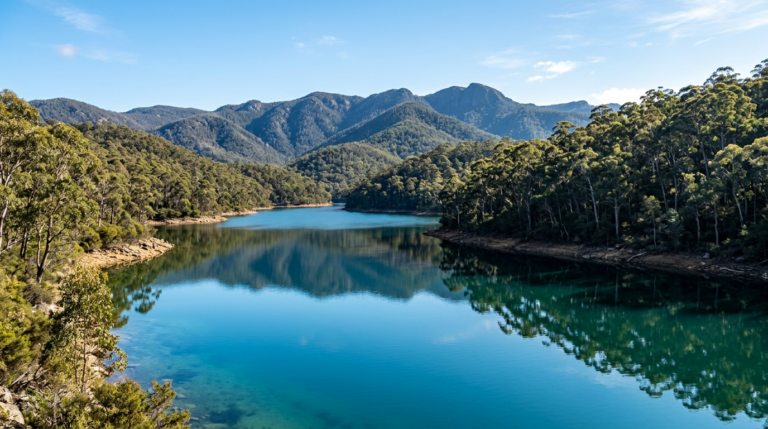
The Power and Water Corporation (PWC) manages Darwin’s supply from four primary sources — Darwin River Dam, Manton Dam, the Oolloo aquifer, and Howard Springs — and consistently meets Australian Drinking Water Guideline standards for regulated parameters. But meeting the guidelines, which are set for safety not optimal quality, and providing the best possible drinking water are different standards. Darwin’s chloramine, seasonal turbidity variation, and PFAS proximity concern make filtration more justified here than in Hobart or Melbourne.
Darwin’s Water Supply: Tropical Sources and Seasonal Dynamics
Darwin’s water supply is unlike any other Australian capital due to the Northern Territory’s stark two-season climate — the Wet (approximately November to April) and the Dry (May to October). This seasonality significantly affects both the available source water quantity and its quality:
- Darwin River Dam: The primary storage for greater Darwin, approximately 60 km southeast of the city. Capacity around 95 GL. The dam receives the majority of its inflow during the Wet season. During late Dry periods, storage levels can fall significantly, reducing supply security in extended dry years.
- Manton Dam: A supplementary source approximately 60 km southeast of Darwin, used when Darwin River Dam supply is constrained. Manton Dam was the original primary source before Darwin River Dam was constructed.
- Oolloo Aquifer: A significant groundwater source in the Daly River region. Groundwater typically has more stable and higher mineral content than surface water, contributing to Darwin’s TDS increase toward the end of the Dry season when surface water storage is lower and groundwater reliance increases.
- Howard Springs: A spring-fed source near Palmerston with relatively stable year-round output, historically used for potable supply.
The seasonal blend effect: during and immediately after the Wet season, surface water dominates supply and TDS is often 100–140 mg/L. By late Dry season (September–October), higher groundwater dependence can push TDS toward 200–250 mg/L. Darwin residents who test their water may notice this seasonal variation on a TDS meter.
Darwin Water Quality Data 2026
| Parameter | Darwin Level | ADWG Guideline | What It Means |
|---|---|---|---|
| TDS | ~100–250 mg/L (season-dependent) | <600 mg/L | Moderate — varies with Wet/Dry season blend |
| Hardness (CaCO₃) | ~60–130 mg/L | No guideline | Moderate — some scale on appliances |
| Fluoride | ~0.6–0.7 mg/L | 0.6–1.1 mg/L | Lower end; added by PWC |
| pH | 7.0–7.8 | 6.5–8.5 | Normal range |
| Disinfection | Chloramine (monochloramine) | <3 mg/L | NOT free chlorine — standard carbon inadequate |
| Turbidity (Wet season) | Elevated post-heavy rainfall | <5 NTU | Treated before supply; normally compliant |
| PFAS | Elevated near military sites | <0.56 µg/L PFOA | Risk areas: RAAF Darwin, Robertson Barracks, airport fire training |
| E. coli | 0 / 100 mL | 0 / 100 mL | Compliant — microbiologically safe |
Sources: Power and Water Corporation Annual Drinking Water Quality Report 2024–25; NT Environment Protection Authority PFAS investigations; ADWG 2011 (updated 2022).
Darwin’s PFAS Risk: Why This Is Australia’s Most Serious Capital City Concern
PFAS (per- and polyfluoroalkyl substances) contamination from historical use of aqueous film-forming foam (AFFF) in military firefighting training is a documented environmental issue across multiple Darwin and Palmerston area sites. Darwin has a higher concentration of military installations than any other Australian capital, and multiple sites have active PFAS investigations:
- RAAF Base Darwin / Darwin Airport: Fire training areas at the base and airport have documented PFAS groundwater contamination. Darwin Airport is adjacent to the civilian airport — both share the same fire training footprint. The NT EPA and Department of Defence have investigated contamination in the surrounding area.
- Robertson Barracks, Palmerston: One of Australia’s largest army bases, approximately 20 km from Darwin CBD. PFAS investigations have found contamination in groundwater around the base perimeter. Palmerston residential areas closest to the base have been subject to water quality advisories.
- Larrakeyah Defence Precinct: Inner Darwin waterfront base with historical AFFF use. Investigations ongoing.
- Howard Springs: The Howard Springs supply source is in proximity to areas with documented Defence PFAS contamination. PWC has monitored this source specifically for PFAS.
For Darwin mains water, PWC monitors PFAS in treated tap water and the current data does not indicate levels above ADWG health guideline values in the treated metropolitan supply. The primary risk is to residents on private bores or rainwater tanks in contamination proximity zones, not mains supply. However, given Darwin’s multiple contamination sites and the well-documented limitations of PFAS monitoring programs at detecting emerging compounds, a precautionary approach is reasonable for Darwin residents who want comprehensive water quality assurance.
Reverse osmosis with NSF P473 or NSF 58 certification provides over 98% PFAS removal and is the most reliable mitigation for any Darwin resident concerned about trace PFAS in mains supply or who uses any supplementary water source (bore, tank).
Chloramine in Darwin: Why Standard Carbon Filters Fail
Darwin uses chloramine (monochloramine) as its disinfectant, alongside Brisbane, Gold Coast, Adelaide, and Sydney. This has a significant and widely misunderstood implication for filter selection.
Standard granular activated carbon (GAC) — the media in Brita pitchers, most fridge filters, and many cheap under-sink cartridges — removes free chlorine through a rapid catalytic reaction. The same GAC removes chloramine at approximately 1/40th the rate. At any practical contact time in a residential filter, standard GAC does not meaningfully reduce chloramine in Darwin water. The filter will flow, it will remove some organic compounds, but it will not address the primary disinfectant responsible for any taste and odour complaints.
Darwin residents with chloramine taste concerns need: catalytic carbon block (purpose-designed for chloramine, e.g. TAPP EcoPro, Puretec catalytic carbon series), compressed carbon block (extended contact time), or reverse osmosis (catalytic carbon pre-stage plus membrane). KDF-55 shower filters, commonly sold at hardware stores, are similarly ineffective for chloramine in Darwin showers — use vitamin C or catalytic carbon shower filters instead.
Wet Season Water Quality: What Changes
Darwin’s tropical monsoon season (November to April) brings intense rainfall events — often 1,500+ mm in a single season — that significantly increase catchment runoff into Darwin River Dam. The practical effects on tap water quality:
- Natural organic matter (NOM) and tannins: Tropical forest floor runoff carries humic and fulvic acids, increasing NOM levels in raw water. PWC’s treatment process handles this, but trace NOM increases in finished water are possible during peak Wet season events. Some Darwin residents notice slightly different taste in January–February.
- Turbidity spikes: After extreme rainfall events (>100mm/day), catchment input turbidity increases. PWC’s treatment capacity is designed for tropical conditions, but very extreme events can temporarily stress treatment.
- Chloramine dosage adjustment: Higher organic load in raw water during Wet season may require adjusted disinfectant dosing to maintain residuals through the distribution network.
For most Darwin residents, the Wet season water quality difference is subtle. A carbon block filter or RO system handles NOM-related taste variation. A sub-micron sediment pre-filter or the RO membrane pre-filter addresses any turbidity fluctuation.
Best Water Filters for Darwin: By Concern
Chloramine taste and odour: Catalytic carbon block
For Darwin residents whose primary concern is chloramine taste and odour, a catalytic carbon block under-sink filter is the correct, cost-effective choice. The TAPP EcoPro clip-on tap filter uses catalytic carbon rated for chloramine and is ideal for Darwin renters who cannot modify under-sink plumbing. Puretec’s PureMix Z series provides under-sink catalytic carbon block performance. Both are significantly more effective than Brita or any standard GAC filter in Darwin’s chloramine supply.
PFAS, fluoride, and comprehensive treatment: Reverse osmosis
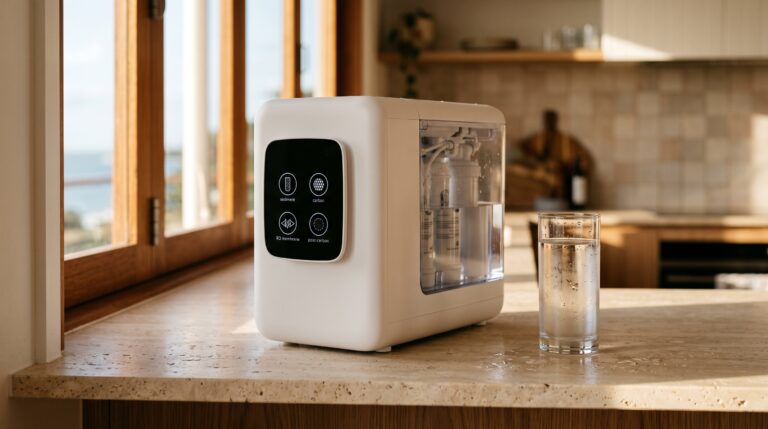
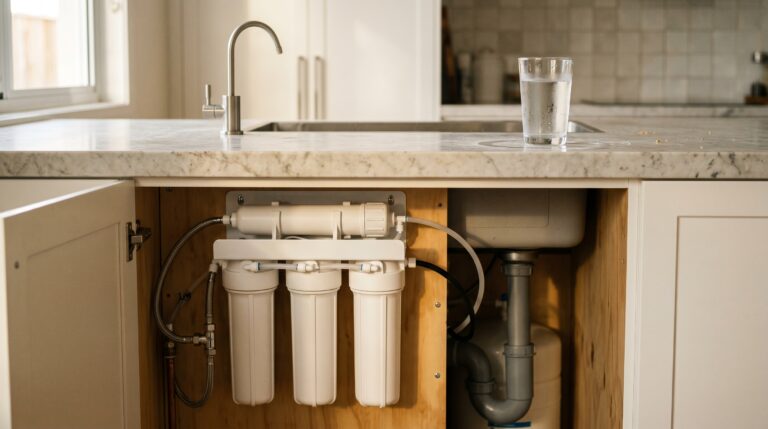
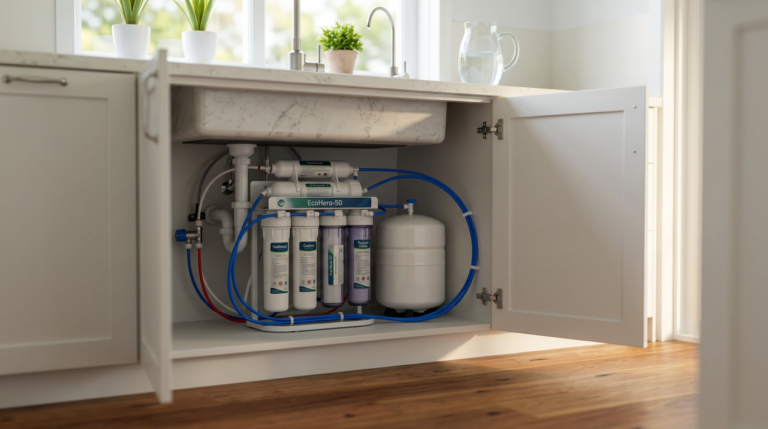
For Darwin residents wanting comprehensive water quality improvement — addressing chloramine, PFAS risk, fluoride, TDS, and NOM simultaneously — reverse osmosis is the definitive solution. A 5-stage under-sink RO system (catalytic carbon pre-filter + sediment pre-filter + RO membrane + post-carbon polish) handles all of Darwin’s water quality concerns in one system. The EcoHero 5-stage under-sink RO (~$490 installed) or the AquaTru benchtop RO (for renters) are appropriate options. Look for NSF P473 certification specifically for PFAS removal assurance.
Shower filter: Vitamin C or catalytic carbon (NOT KDF-55)
Darwin’s chloramine makes standard KDF-55 shower filters ineffective. Vitamin C (ascorbic acid) inline shower filters and catalytic carbon showerhead filters are the correct technologies. Vitamin C neutralises both free chlorine and chloramine instantly. In Darwin’s warm, humid climate, vitamin C cartridges may need more frequent replacement (every 3–4 months) due to higher flow rates from more frequent showering. Budget $40–120 for a quality vitamin C inline shower filter.
Darwin vs Other Australian Capitals: Water Quality Comparison
| City | TDS (mg/L) | Disinfection | PFAS Risk | Filter Need |
|---|---|---|---|---|
| Darwin | ~100–250 | Chloramine | High (multiple military sites) | Moderate-high |
| Adelaide | ~300–500 | Chloramine | Low | Highest |
| Perth | ~170 | Chloramine | Moderate (RAAF Pearce) | High |
| Brisbane/SEQ | ~100 | Chloramine | Low | Moderate-high |
| Melbourne | ~60 | Free chlorine | Low | Low |
| Hobart | ~15–25 | Free chlorine | Very low | Very low |
Frequently Asked Questions
Is Darwin tap water safe to drink?
Yes. The Power and Water Corporation monitors Darwin’s supply against Australian Drinking Water Guidelines and consistently meets all regulated safety parameters. Chloramine levels, turbidity, and microbiological quality are within guidelines. The PFAS concern is precautionary for mains supply — monitored levels are currently below guideline values in treated metropolitan water. People on private bores or tanks near military sites should seek specific testing advice.
Does Darwin water have chloramine?
Yes. PWC uses chloramine (monochloramine) as Darwin’s primary disinfectant. Standard carbon filters including Brita pitchers cannot effectively remove chloramine. Darwin residents need catalytic carbon block, compressed carbon block, or reverse osmosis to address chloramine taste and odour.
What PFAS risk is there in Darwin water?
Darwin has more documented PFAS contamination sources near the metropolitan area than any other Australian capital, primarily from RAAF Base Darwin, Robertson Barracks at Palmerston, and Darwin Airport fire training areas. Mains metropolitan tap water is monitored by PWC and currently within ADWG guidelines. The primary risk is to residents using private bores or rainwater tanks near contamination zones. For precautionary PFAS removal in mains supply, RO with NSF P473 certification removes over 98%.
Does Darwin water quality change between Wet and Dry seasons?
Yes, noticeably. During the Wet season (November–April), tropical catchment runoff increases natural organic matter and can cause slight taste changes. Toward late Dry season (September–October), higher groundwater reliance can push TDS from ~100 toward ~200–250 mg/L. A TDS meter test will reflect your current season’s water quality. Filtration with carbon block or RO addresses both seasonal variations.
Will a Brita filter help with Darwin water?
Not for the main concerns. Darwin uses chloramine, and Brita’s standard GAC removes chloramine at approximately 1/40th the rate of free chlorine — negligible effect at practical flow rates. A Brita cannot address PFAS, TDS, or fluoride either. Darwin residents need catalytic carbon block for chloramine or RO for comprehensive treatment.
What shower filter should I use in Darwin?
Vitamin C (ascorbic acid) or catalytic carbon shower filters. KDF-55 shower filters — commonly sold at Bunnings — are largely ineffective against chloramine, which is Darwin’s disinfectant. Vitamin C neutralises chloramine instantly. In Darwin’s tropical climate with high shower frequency, replace vitamin C cartridges every 3–4 months rather than the standard 6-month recommendation for temperate cities.
Does Darwin water have fluoride?
Yes, approximately 0.6–0.7 mg/L added by PWC — at the lower end of the NHMRC recommended range of 0.6–1.1 mg/L. Standard carbon filters cannot remove fluoride. Only reverse osmosis (90–97%) or activated alumina (80–95%) removes it.
What is the best water filter for Darwin?
Given Darwin’s combination of chloramine and elevated PFAS risk context, reverse osmosis provides the most comprehensive protection. A 5-stage under-sink RO system addresses chloramine (pre-carbon stage), PFAS (NSF P473-rated membrane), fluoride (90–97% via membrane), TDS variation, and Wet season NOM. For renters, the AquaTru benchtop RO is an appropriate option. If PFAS is not a concern and taste improvement is the only goal, a TAPP EcoPro catalytic carbon filter is a cost-effective alternative. See our best water filter for Darwin guide for full ranked picks, and check for Darwin boil water advisories during wet season flood events.
Our Top Picks
For most Australian homes, the TAPP EcoPro handles chloramine and heavy metals at the tap. If you need fluoride removal, the iSpring RCC7 RO system is the only realistic option.
Get the Australian Home Environment Checklist
30 checks across water, air and EMF. Most of them free. Ranked by impact.
No spam. Unsubscribe any time.

Former Royal Australian Navy Clearance Diver and TAG-E counter-terrorism operator. Founded Clean and Native to apply the same rigorous thinking to the home environment.
Full biography →