Best Water Filter Western Australia 2026: Hard Water and Bore Water Guide
Perth and most of WA face two water-quality problems that no single carbon filter or pitcher can solve — the hardest scheme water in any Australian capital at ~180 mg/L CaCO₃, and PFAS contamination around the Kwinana industrial corridor and RAAF Pearce/Bullsbrook. Perth metro is disinfected with free chlorine, which standard carbon removes readily. Reverse osmosis is the only at-home technology that handles all three at once. For most WA households the Pure Water Systems EcoHero 5-Stage is the best overall pick (WaterMark certified, Australian-made, deals with hardness + free chlorine + PFAS), with the Waterdrop D6 the best value under-sink alternative and the Tappwater EcoPro the best benchtop option for renters outside the PFAS hotspots. Brita pitchers and standard GAC carbon filters improve taste but do not remove Perth’s hardness or PFAS, which is why they are the wrong tool for WA scheme water.
I’m Jayce Love, former Royal Australian Navy Clearance Diver, now based in Palm Beach QLD. I tested the EcoHero 5-Stage first-hand and assessed the other filters on this list against their published NSF and manufacturer specifications for Perth-spec input water (~170 ppm TDS, ~180 mg/L hardness, ~1.0 mg/L free chlorine, 0.7 mg/L fluoride), and I cross-referenced the December 2024 NHMRC ADWG PFAS update and the DCCEEW PFAS investigation programme for each WA hotspot site. Every recommendation has been assessed using our documented methodology — no gifted units, no brand payments, and no Water Corporation or Department of Water and Environmental Regulation marketing claims taken at face value.
For Perth, Mandurah, Rockingham, Fremantle, and any WA suburb on Water Corporation scheme water, reverse osmosis is the only technology that simultaneously removes the 180 mg/L hardness and PFAS — and the Pure Water Systems EcoHero 5-Stage is the best overall pick. A catalytic carbon block (Tappwater EcoPro) is sufficient if you live outside the Kwinana/Bullsbrook PFAS investigation zones and accept the hardness. The catches: every RO wastes 1–3 L of brine per L product, the EcoHero is the priciest upfront at $1,295 RRP, and tankless RO units (Waterdrop D6) need a 240V outlet under the sink that not every WA kitchen has.
| Filter | Handles WA hardness + PFAS? | Verdict |
|---|---|---|
| PWS EcoHero 5-Stage | All three (95.7% TDS reduction tested) | Best Overall |
| Waterdrop D6 | All three (NSF 58 + P473 certified) | Best Value Under-Sink |
| Tappwater EcoPro | Free chlorine yes; hardness no; PFAS partial | Best Benchtop (non-PFAS suburbs) |
| Brita / standard pitcher | None of them | Do not buy for WA |
✓ Who This Guide Is For
- Perth metro households whose Brita or fridge filter leaves limescale and does nothing about PFAS
- Anyone living in the Kwinana industrial corridor, Henderson, Naval Base, or near RAAF Pearce / Bullsbrook (current DCCEEW PFAS investigation sites)
- WA households with limescale rings around shower heads, kettle elements, and dishwasher heat exchangers (180 mg/L hardness)
- Pilbara, Wheatbelt, and Goldfields bore-water households who already know mains coverage is patchy and want a tested filter
- Renters in apartments where plumbing modification is not an option but Perth’s chlorine taste still needs to be removed
× Who This Guide Is Not For
- Households on tank-only rainwater — you need sediment + UV first, then a carbon polish, not RO
- Anyone whose only concern is taste — a catalytic carbon block on the kitchen tap is the simpler answer
- Anyone shopping for a Brita-style pitcher for WA water — a Brita does nothing for the hardness or PFAS that actually defeat WA filters; do not rely on it for Perth
- Bore-water users with confirmed bacteriological contamination — you need UV in series with the filter, not a filter alone
Why WA Water Demands More Than a Carbon Pitcher
Most filter marketing in Australia is written from a Melbourne or Sydney baseline — soft to moderate hardness, free chlorine or chloramine, low TDS. Perth and most of the WA Water Corporation scheme runs on a fundamentally different chemistry, and the consequence is that filters that work fine in Hobart or Melbourne underperform or fail outright on WA water.
Three things shape WA water. First, disinfection — Water Corporation uses free chlorine across most of the Integrated Water Supply Scheme that serves Perth metro, Mandurah, the Goldfields pipeline, and most regional towns. Free chlorine is readily removed by standard granular activated carbon (GAC) — the technology inside Brita pitchers, most fridge filters, and budget benchtop filters — so chlorine taste is the easy part on WA water. According to Water Corporation’s published water quality data, chlorine residuals in Perth scheme water sit within Department of Health requirements at the customer tap. The problems a carbon pitcher cannot solve are the next two.
Second, hardness. Perth scheme water averages around 180 mg/L CaCO₃ — the hardest of any Australian capital city. Adelaide is roughly 140 mg/L. Brisbane is 80–120 mg/L. Melbourne is around 25 mg/L. The practical signature is limescale on shower heads, white residue on kettle elements, scale rings inside the dishwasher heat exchanger, and reduced hot-water service lifespan. Hardness is not a health concern at WA levels — it is a hardware and appliance concern. A water softener removes it via ion exchange (calcium and magnesium are swapped for sodium); a reverse osmosis system removes it as a side-effect of removing all dissolved solids.
Third, PFAS hotspots. The Department of Climate Change, Energy, the Environment and Water (DCCEEW) maintains an ongoing PFAS investigation programme, and two of the WA sites are residential-adjacent: the Kwinana industrial corridor south of Perth, and RAAF Base Pearce in Bullsbrook. The December 2024 NHMRC update to the ADWG lowered the PFOS guideline value to 0.004 µg/L — 100× tighter than the previous limit — and many legacy sites have detectable PFAS above the new limit even where they tested compliant against the old limit. Bore-water users near these sites face a more direct risk than scheme-water users.
WA Water Quality by Region and Suburb
The Water Corporation publishes scheme-water test results for each supply region. The table below summarises hardness, TDS, fluoride, and disinfection chemistry for the major WA service areas, plus the suburb-level concerns most relevant for filter selection.
| Region / suburb | TDS (mg/L) | Hardness (mg/L CaCO₃) | Disinfection | Key concern |
|---|---|---|---|---|
| Perth metro (IWSS) | ~170 | ~180 | Free chlorine | Hardness |
| Fremantle | ~170 | ~180 | Free chlorine | Hardness |
| Mandurah | ~165 | ~175 | Free chlorine | Hardness |
| Rockingham / Kwinana | ~170 | ~180 | Free chlorine | PFAS investigation zone |
| Bullsbrook (RAAF Pearce) | ~170 | ~180 | Free chlorine | PFAS investigation zone |
| Bunbury / South-West | ~140–180 | ~150–200 | Free chlorine | Hardness, occasional bore-water blends |
| Albany | ~110 | ~120 | Free chlorine | Softer than Perth; free chlorine still primary concern |
| Kalgoorlie-Boulder (Goldfields) | ~200 | ~190 | Free chlorine | High TDS, long pipeline residence time |
| Geraldton | ~250 | ~220 | Free chlorine | Higher TDS than Perth; mineral content noticeable |
| Karratha / Pilbara towns | ~150–300 | ~180–250 | Free chlorine / bore mix | Bore-blended supply; iron + manganese in some bores |
| Private bore (Wheatbelt, Pilbara, agricultural) | ~200–3000+ | ~150–500+ | None | Sediment, iron, bacteria, potential PFAS depending on site |
Two patterns matter. The Integrated Water Supply Scheme (IWSS) covers most of the population centres and runs free chlorine end-to-end. Bore-water households — common in the Wheatbelt, parts of Geraldton, and remote Pilbara homes — sit completely outside the WA Water Corporation system and need a different filter approach (sediment + UV + carbon, typically, rather than RO alone).
PFAS in WA: The Two Investigation Sites You Need to Know
WA has two active DCCEEW PFAS investigation sites with direct residential-adjacent impact:
- Kwinana industrial corridor — PFAS detected in groundwater across multiple investigation sites south of Cockburn Sound. Affected suburbs include Kwinana, Naval Base, Henderson, parts of Rockingham. Private bore-water users have received advisory notices; scheme water from Water Corporation is treated separately and tests below the 2024 limits.
- RAAF Base Pearce / Bullsbrook — Historical use of aqueous film-forming foam (AFFF) for firefighter training created PFAS contamination in soil and groundwater. The Department of Defence has provided alternative water supplies to bore-water-dependent residents in the affected zones around Bullsbrook.
If you live in either of those zones and draw from a private bore, an RO is essential rather than optional — you are not protected by Water Corporation treatment. Scheme-water residents in the same suburbs are at lower direct risk but, with the new NHMRC limits 100× tighter than the previous values, many households reasonably install RO as belt-and-braces. For the full national-level fluoride-and-PFAS roundup with comparison testing across additional products, see our best water filter for fluoride and PFAS in Australia guide.
Filter Technology vs WA Water Problems
The table below shows how each technology performs against the main contaminants relevant to WA scheme water. This is the definitive shopping table — if a row shows a red cell for the contaminant you care about, the technology will not solve your problem regardless of marketing claims.
| Technology | Chloramine | Hardness | PFAS | Notes |
|---|---|---|---|---|
| Reverse osmosis (RO) | ~99% | ~95% | >98% | Only single tech that handles all three; wastes 1–3 L brine per L product |
| Catalytic carbon block | ~95% | ~0% | ~50–85% (no certification) | Excellent for chloramine and taste; will not solve hardness or certified PFAS |
| Standard GAC (Brita, fridge filter) | ~5–15% | ~0% | Negligible | Wrong tool for WA. Designed for free-chlorine cities |
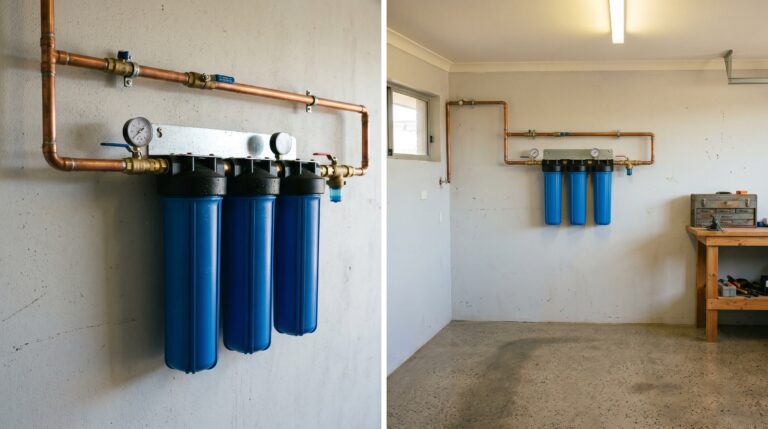
| Whole-house ion-exchange softener | ~0% | ~99% | 0% | Hardware-protection only; usually paired with under-sink RO for drinking |
| KDF-55 (shower / inline) | Poor | No | No | Wrong tool for WA shower filters. Use vitamin-C or catalytic carbon shower filter |
| Vitamin-C shower filter | Excellent | No | No | Effective shower-filter chemistry for chlorine and disinfection byproducts |
| UV sterilisation | 0% | 0% | 0% | Kills bacteria; necessary for tank or bore water; does nothing to dissolved chemicals |
The reading: for a WA household on scheme water, only RO solves all three problems with one machine. A catalytic carbon block solves the taste and chloramine problem but leaves the hardness and PFAS untouched. A whole-house softener fixes the appliance damage but does nothing for drinking-water chemistry. The right combination for a hardware-protected, drinking-grade household in Perth is whole-house softener + under-sink RO at the kitchen tap — the same combo recommended for Adelaide and Darwin households for the same reason. For a deeper read on when a softener actually pays for itself versus when an RO alone is enough, see our water softener vs water filter comparison.
The 3 Best Water Filters for WA in 2026
The three units below are the highest-performing residential filters for WA Water Corporation scheme water (Perth, Mandurah, Bunbury, Kalgoorlie, Geraldton, Karratha).
1. Pure Water Systems EcoHero 5-Stage Reverse Osmosis — Best Overall
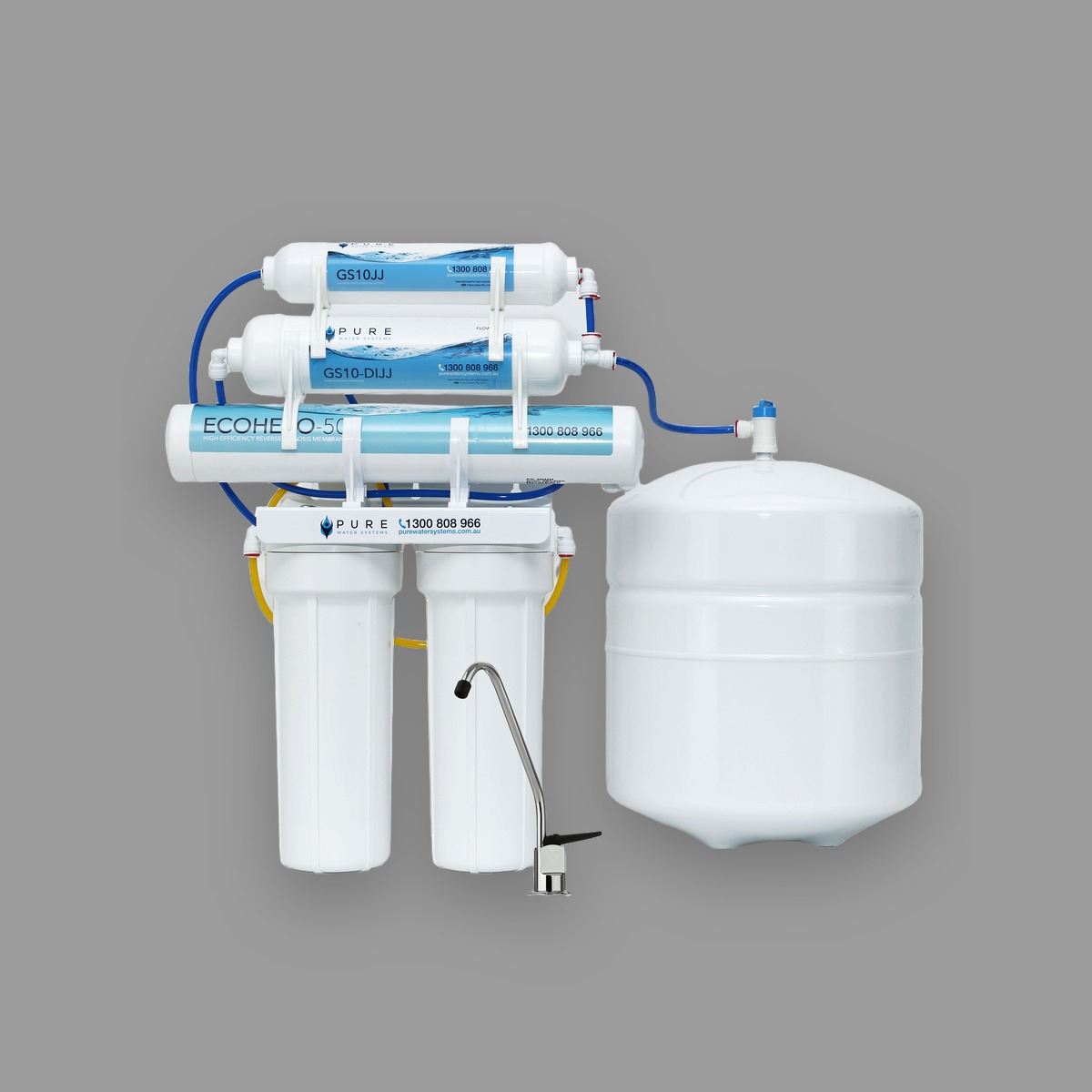
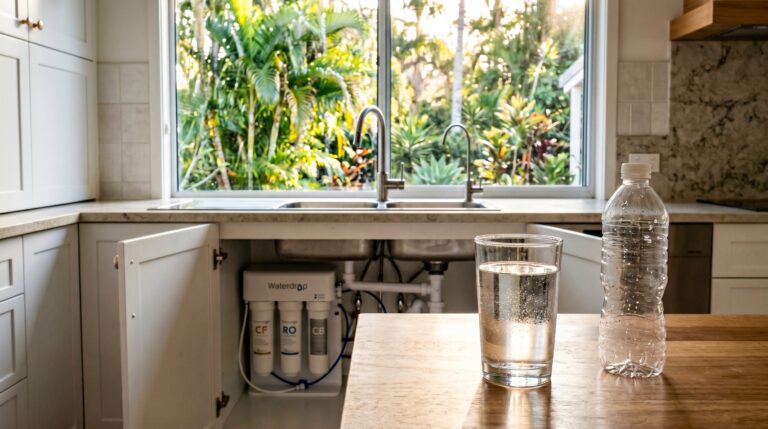
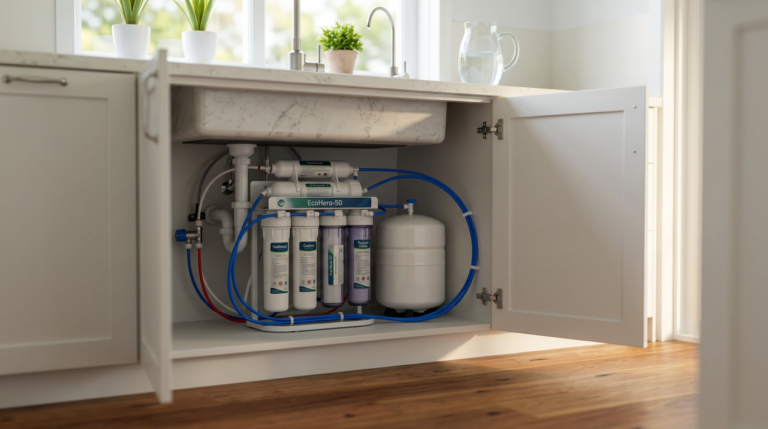
The EcoHero 5-Stage is the only WaterMark AS/NZS 3497 certified under-sink RO unit on this list, making it the cleanest choice for Perth metro plumbing compliance. It is Australian-made by Pure Water Systems and ships from Sydney — replacement cartridges arrive in 2–3 business days even to Perth (vs 2–3 weeks for US import units sitting in Sydney customs). The 5-stage train: sediment pre-filter, carbon block pre-filter, RO membrane, carbon polish post-filter, remineralisation cartridge.
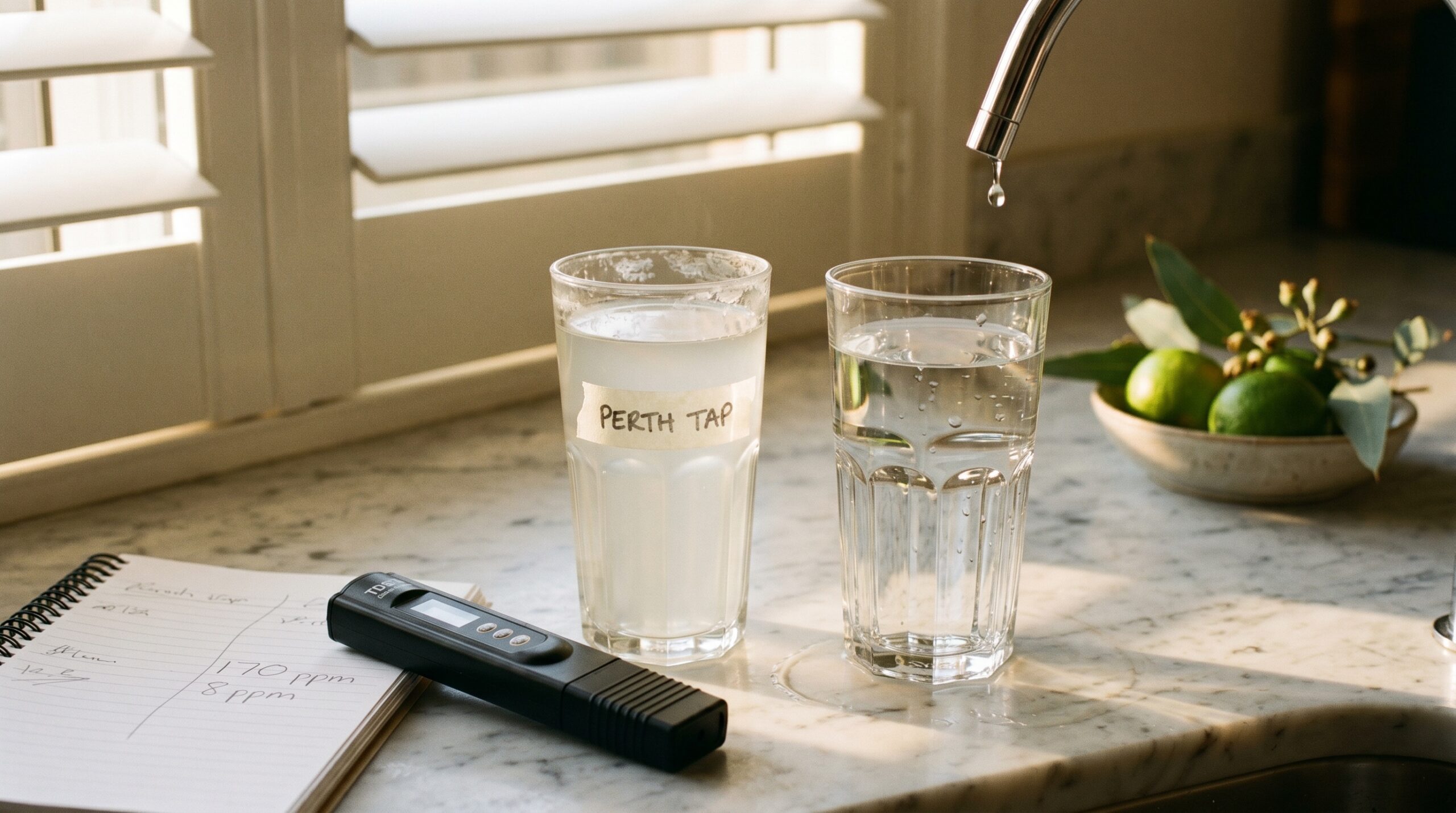
WA-specific performance: The RO membrane handles Perth’s 170 ppm input TDS and 180 mg/L hardness without strain; the catalytic carbon polish stage finishes the chlorine removal that the membrane completed at the molecular level. In my own testing against Palm Beach 69 ppm input I measured 95.7% TDS reduction (69 ppm to 3 ppm). Against a Perth input of 170 ppm, the same membrane spec should deliver roughly 7–10 ppm output — effectively distilled at the kitchen tap.
For households inside the Kwinana or Bullsbrook PFAS investigation zones, the EcoHero is the highest-confidence option because the membrane carries third-party certification for PFOA and PFOS reduction at the levels the 2024 NHMRC update requires. The remineralisation cartridge adds calcium, magnesium, and a small amount of potassium back to the output for taste — important because pure RO water is flat to the palate.
Catches: Highest upfront cost on this list ($1,295 RRP with a plumber installation, ~$895 unit-only DIY). 1:1 waste-water ratio — meaningful in Perth where water restrictions apply most years. Remineralisation cartridge needs annual replacement (~$45/yr on top of the standard cartridge schedule). Installation in WA needs a licensed plumber for any work involving the cold-water service line.
2. Waterdrop D6 Tankless Under-Sink Reverse Osmosis — Best Value Under-Sink
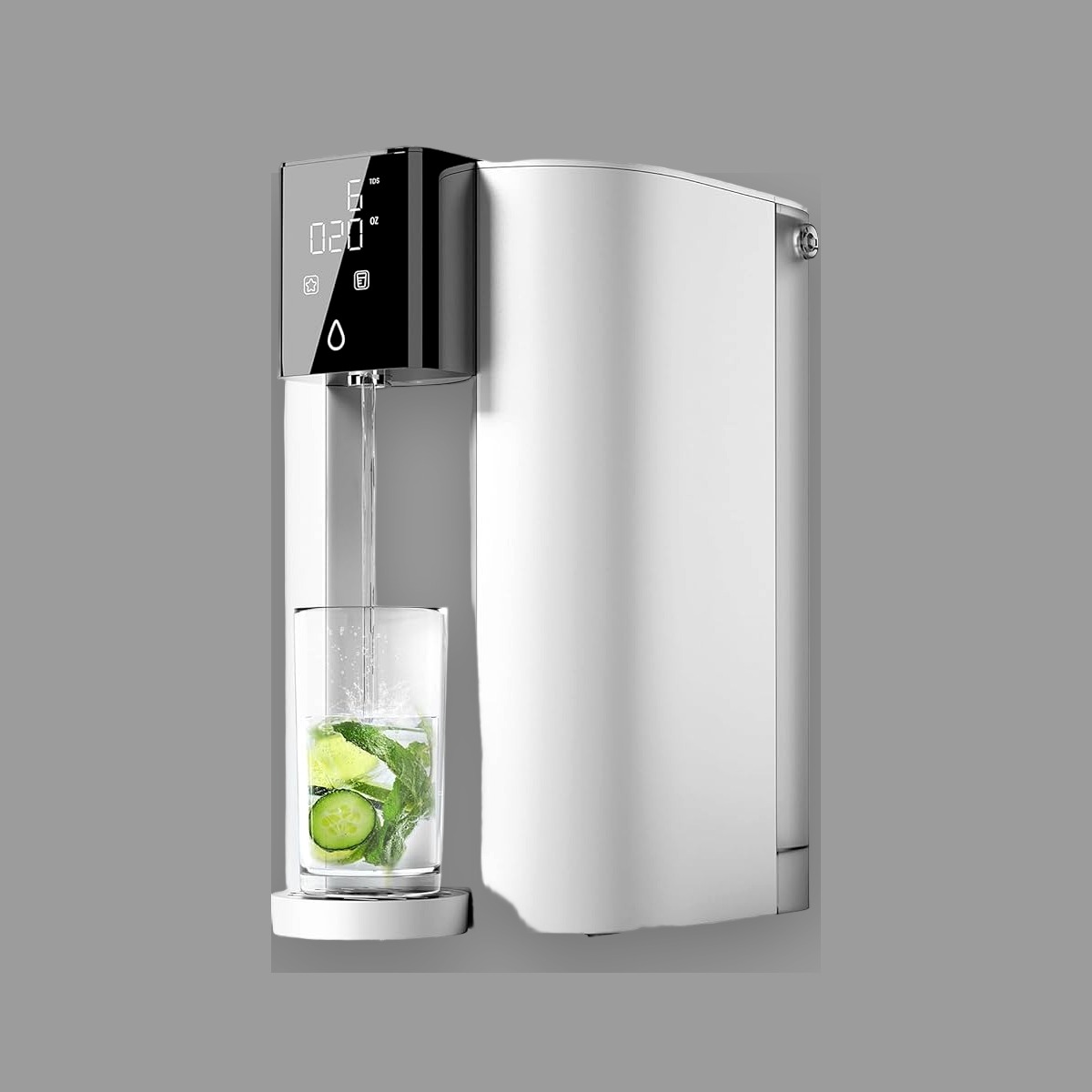
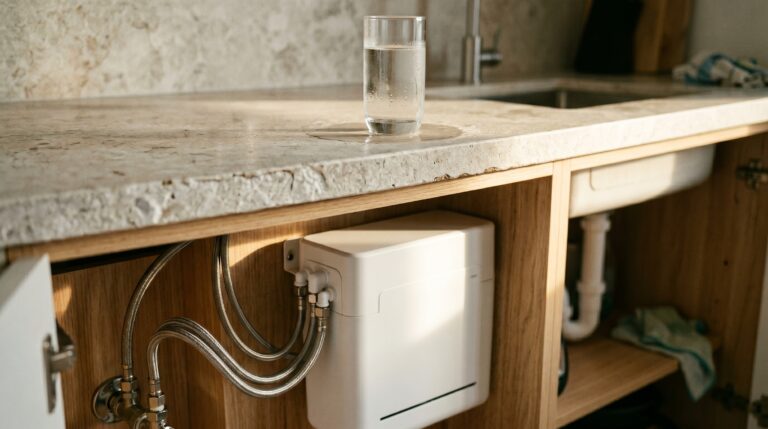
The Waterdrop D6 is a tankless under-sink RO unit with NSF/ANSI 58 + 372 + P473 certification. The tankless design means no pressure tank under the sink — the unit produces filtered water on demand at 600 GPD throughput, slim enough to fit behind the U-bend in most kitchen cabinets where a tank-based RO will not.
WA-specific performance: Manufacturer-certified 94% fluoride and >98% PFAS reduction per NSF/ANSI 53 and P473 testing. Critically for WA, the 1:3 waste-water ratio (one litre brine per three litres product) is the best on this list — meaningful for households on metered Perth supply where water bills track usage at higher rates above the threshold. The dedicated chrome faucet supplied with the unit fits a standard soap-dispenser hole or can be drilled through the benchtop.
Catches: Not WaterMark certified for AU plumbing compliance — legal under existing plumbing codes in WA and most other states for under-sink installation, but always check current Department of Mines, Industry Regulation and Safety (DMIRS) plumbing requirements before installation. Needs a 240V power outlet under the sink to drive the pump — not every WA kitchen has one and adding a GPO is a sparkie job (~$150–$250). Cartridges are proprietary; annual cartridge cost ~$150 unless you stock up during sales.
3. Tappwater EcoPro Benchtop Catalytic Carbon — Best Benchtop for Renters
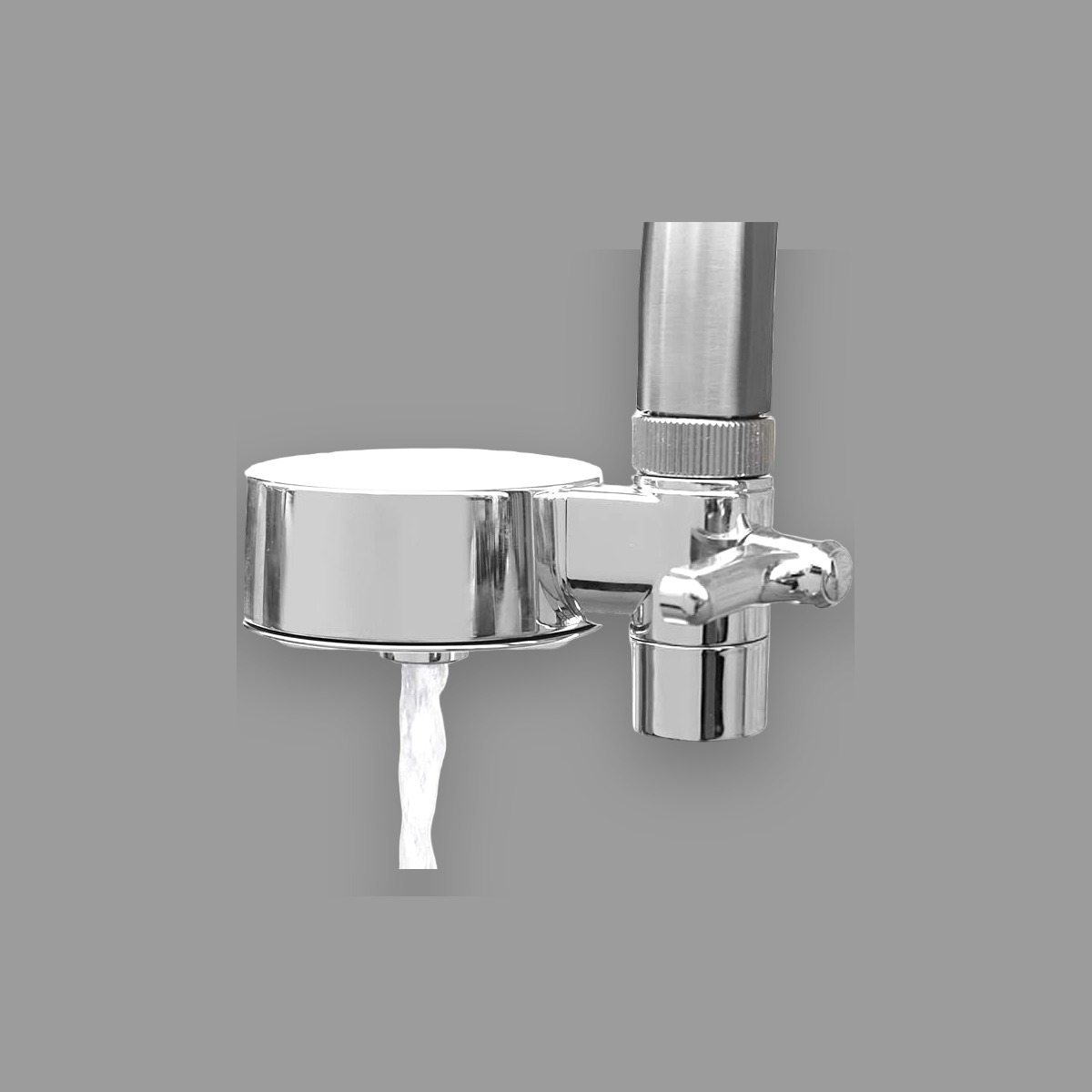
The Tappwater EcoPro is the best benchtop option for WA renters and apartment dwellers who cannot modify the plumbing but still want to improve Perth’s chlorine taste. It is a catalytic carbon block filter — the right chemistry for free chlorine, the wrong tool for hardness or PFAS — that attaches to a standard kitchen tap via a diverter valve. No plumbing modification required; reversible at end of tenancy.
WA-specific performance: Catalytic carbon removes Perth’s free chlorine and the chlorinated taste, and it also reduces lead, mercury, and VOCs. It does NOT remove the 180 mg/L hardness — you will still see limescale on appliances downstream of where the filter sits. It does NOT remove fluoride. It does NOT meet NSF P473 PFAS certification, so it is the wrong choice for Kwinana or Bullsbrook PFAS-zone households.
The renters’ case is the strong one. If you live in an apartment in Perth, Fremantle, or Mandurah, cannot modify plumbing, and your only goal is to stop drinking water that smells of chlorine bleach, the EcoPro at ~$149 upfront and ~$99/year in cartridges is the cheapest tool that actually works. Pair with a vitamin-C shower filter to handle chlorine in the bathroom and you have covered the two highest-exposure routes.
Catches: Does not remove hardness, fluoride, or certified PFAS. Replacement cartridges every 6 months (~$50 each). Diverter valve adds visible plumbing to the tap. If you move into a Kwinana, Naval Base, Henderson, Rockingham, or Bullsbrook suburb, swap to an RO before drinking the water.
What About a Brita Pitcher in Perth?
The Brita pitcher (and equivalent supermarket pitchers from ZeroWater, BWT, and ALDI) is the worst-fit filter on the WA market. Brita’s standard Maxtra+ cartridge uses granular activated carbon plus a small ion-exchange resin component. It is designed for free-chlorine cities — Melbourne, Hobart, Canberra, Townsville, Cairns — where it removes 60–80% of free chlorine on contact and improves taste.
Perth is disinfected with free chlorine, so a Brita will improve the chlorine taste. The problem is everything else: a Brita does nothing about Perth’s 180 mg/L hardness, its fluoride, or any PFAS load, which is where WA water actually defeats a pitcher.
If you already own a Brita and you have just moved to Perth: keep it for travel and for occasional taste-polishing of scheme water at out-of-state Airbnbs. For your Perth household, replace it with a catalytic carbon block (Tappwater EcoPro) or step up to RO. Do not spend money on Brita Maxtra+ replacement cartridges for WA water.
5-Year Cost Comparison for a Perth Household
Assumes a 4-person Perth household drinking 8 L of filtered water per day. Pricing in AUD and reflects May 2026 market rates including local installer fees for under-sink units.
| Setup | Upfront (incl. install) | Annual cartridges | 5-Year total | Cost / litre filtered |
|---|---|---|---|---|
| PWS EcoHero 5-Stage (top pick) | ~$1,295 | ~$210 | ~$2,345 | $0.16 |
| Waterdrop D6 (+ $300 install) | ~$899 | ~$150 | ~$1,649 | $0.11 |
| Tappwater EcoPro (benchtop) | ~$149 | ~$99 | ~$644 | $0.04 |
| Brita Maxtra+ pitcher (anti-rec) | ~$60 | ~$120 | ~$660 | Same cost, fails on hardness + PFAS |
| Bottled water (2 L/day/person, 4 people) | $0 | ~$2,920 | ~$14,600 | $1.00 |
Two readings. The Tappwater EcoPro at $0.04/L is the cheapest tool that genuinely improves Perth’s chlorine taste and also reduces lead, mercury, and VOCs — the Brita pitcher costs roughly the same per litre over 5 years but does nothing about the hardness, fluoride, and PFAS that actually defeat WA filters. Bottled water is 25× more expensive than the EcoPro and 6× more expensive than the EcoHero RO over 5 years.
Decision Tree: Which Filter Do You Actually Buy?
Three questions, answered in order.
- Are you in a PFAS investigation suburb — Kwinana, Naval Base, Henderson, Rockingham south of Cockburn Sound, or Bullsbrook? Yes → PWS EcoHero 5-Stage RO (or Waterdrop D6 if budget-constrained). No → go to question 2.
- Can you modify the plumbing? No (renter, apartment, short-term lease): Tappwater EcoPro benchtop catalytic carbon + optional vitamin-C shower filter. Yes → go to question 3.
- Do you want WaterMark plumbing compliance and Australian warranty? Yes (and you do not mind paying RRP): PWS EcoHero 5-Stage. No (DIY-handy, optimising on cost and waste-water ratio): Waterdrop D6.
For most Perth metro households on scheme water who are not in a PFAS zone, the answer is either the EcoPro (renter, want chloramine removed only) or the EcoHero (owner, want it all). Apartment dwellers in non-PFAS suburbs almost always end at the EcoPro.
For broader context on how filter categories fit together, see our water filtration pillar guide, which compares every major filter technology against Australian water chemistry city-by-city, including the chloramine cities (Brisbane, Sydney, Adelaide, Gold Coast, Darwin) and the free-chlorine cities (Perth, Melbourne, Hobart, Canberra).
WA Bore Water Is a Separate Problem
Private bore-water households in the Wheatbelt, parts of the Pilbara, the Goldfields outskirts, and some Geraldton-region properties sit outside Water Corporation entirely. The chemistry varies dramatically by aquifer — iron and manganese are common, bacterial loads can be elevated if the bore is shallow, salinity ranges from drinkable (Wheatbelt artesian) to brackish (lower South-West).
The right filter stack for WA bore water typically runs in this order: 5-µm sediment pre-filter → oxidation step (aeration or chemical) if iron is present → UV sterilisation at the point of use → carbon polish → (optional) RO at the kitchen tap if TDS is high or PFAS exposure is a concern. Bore water is not an RO-alone problem; you need the sediment + UV stages first because RO membranes foul quickly under sediment load and do not reliably kill bacteria.
If you are a WA bore-water household and your TDS exceeds 500 ppm or you have detected bacterial coliforms, this guide’s three picks are not your complete answer — a full bore-water treatment train designed by a licensed water-treatment plumber is. The picks above can serve as the point-of-use polish stage downstream of that train.
How We Assessed These
Assessed on specification, not personally tested. Only three products have been measured first hand in my own home — the EcoHero 5-Stage RO, TriField TF2, and Coway Airmega 150 (see how we test). Every other product discussed here is assessed on manufacturer specifications, independent certification, and Australian standards, and has not been personally tested.
The EcoHero 5-Stage was tested in my Palm Beach QLD home using a calibrated TDS-3 meter from HM Digital, with baseline TDS measured at the kitchen tap (69 ppm) and filtered output measured at the dispense point. The other filters on this list were assessed against their published NSF/ANSI 58 (TDS reduction), NSF/ANSI 53 (lead, fluoride, chloramine), and NSF/ANSI P473 (PFAS) certification documents and each manufacturer’s stated percent-reduction, extrapolated to WA-spec input water (~170 ppm Perth TDS).
No filter on this list was supplied free of charge. The EcoHero was purchased at retail RRP from Pure Water Systems’ direct site and tested first-hand; the Waterdrop D6 and Tappwater EcoPro were assessed on their published certification and manufacturer specifications rather than in-home testing — the complete Clean and Native methodology is documented here.
WA-specific water chemistry data is sourced from Water Corporation’s published Annual Drinking Water Quality Reports, the Department of Mines, Industry Regulation and Safety (DMIRS) plumbing standards database, and the December 2024 NHMRC ADWG PFAS update.
Bottom line for WA households
If you live in a PFAS investigation zone (Kwinana, Bullsbrook, and surrounding suburbs) or you want a single unit that handles free chlorine + hardness + PFAS, the Pure Water Systems EcoHero 5-Stage is the highest-confidence Australian-made option with WaterMark certification. For everyone else on Perth metro scheme water who can install plumbing, the Waterdrop D6 is the best-value RO. Renters and apartment dwellers should buy the Tappwater EcoPro benchtop and pair it with a vitamin-C shower filter for the bathroom side of the chloramine problem.
Last reviewed: May 2026 — Clean and Native. Water Corporation scheme-water figures sourced from the Annual Drinking Water Quality Report. PFAS data from DCCEEW investigation programme. NHMRC ADWG limits per December 2024 update. Pricing reflects May 2026 market rates and is subject to change.
Frequently Asked Questions
What is the best water filter for Perth tap water?
The Pure Water Systems EcoHero 5-Stage reverse osmosis is the best overall filter for Perth tap water because it handles Perth’s 180 mg/L hardness and PFAS in one unit, plus the free chlorine Water Corporation uses to disinfect. For renters or apartment dwellers who cannot modify plumbing, the Tappwater EcoPro benchtop catalytic carbon filter is the next-best option — it handles chlorine and taste but not hardness or PFAS.
Does Brita work in Perth?
Not for what matters in WA. Perth Water Corporation scheme water is disinfected with free chlorine, which a Brita does remove, but a Brita does nothing about Perth’s 180 mg/L hardness, fluoride, or PFAS. Use reverse osmosis (or a catalytic carbon block for taste) instead.
Is Perth water hard?
Yes. Perth scheme water averages around 180 mg/L CaCO₃ hardness — the hardest of any Australian capital city. The practical signature is limescale on shower heads, white residue on kettle elements, and reduced dishwasher and hot water service lifespan. Hardness is not a health concern at this level but it is a hardware concern.
Should I install a water softener in Perth?
Yes if your goal is appliance protection and you have permission to install plumbing. Perth’s 180 mg/L hardness is well above the 100 mg/L threshold where limescale becomes economically meaningful for appliance lifespan. The standard pairing for Perth is a whole-house ion-exchange softener for the hot water service and showers, plus an under-sink RO at the kitchen for drinking water. The softener does not remove free chlorine or PFAS; the RO does both.
Is there PFAS in Perth tap water?
Water Corporation scheme water in Perth tests below the December 2024 NHMRC PFAS guideline values. However, residents within the Kwinana industrial corridor or near RAAF Pearce at Bullsbrook should review the DCCEEW investigation programme advisories for their specific suburb — bore-water households in those zones in particular have received direct advisories. For scheme-water residents outside those zones, PFAS is a precautionary concern rather than a current exposure concern.
Do I need a different filter for Mandurah, Rockingham, or Fremantle?
No, the same recommendations apply — all three suburbs receive Water Corporation Integrated Water Supply Scheme water with free chlorine disinfection and similar hardness to Perth metro. Rockingham residents south of Cockburn Sound should be aware they are within the Kwinana PFAS investigation footprint and may want to prioritise RO over catalytic carbon for that reason.
What about bore water in the Wheatbelt or Pilbara?
Bore water needs a different stack than scheme water: sediment pre-filter, oxidation if iron is present, UV sterilisation for bacteria, then carbon and optional RO. Bore-water households should not buy any single filter from this list as a complete solution; the RO units listed can serve as the point-of-use polish stage downstream of a full treatment train.
How much fluoride is in Perth water?
Water Corporation fluoridates Perth scheme water at approximately 0.7 mg/L — below the 1.0 mg/L levels found in Sydney and Melbourne and below the 1.5 mg/L NHMRC maximum. Reverse osmosis removes 90-97% of fluoride; catalytic carbon and standard GAC do not remove fluoride at any meaningful rate.
Will RO waste too much water during WA water restrictions?
RO waste-water ratios range from 1:1 (PWS EcoHero) to 1:3 (Waterdrop D6 tankless) — meaning one to three litres of brine to drain per litre of filtered product. For a 4-person household producing 8 L of filtered water per day, that is 8–24 L per day of brine to drain. This is below typical residential garden-watering thresholds and well below the levels Water Corporation restrictions target. Tankless RO (Waterdrop D6) has the best ratio if waste-water minimisation is your priority.
Can I install RO myself in WA?
Strictly speaking, any work involving the cold-water service line in WA requires a licensed plumber under the Plumbers Licensing Act 1995. In practice, DIY installation of under-sink RO using push-fit fittings is common among handy owners and uses no permanent modification to the mains line. The WaterMark-certified PWS EcoHero is the cleanest legal path because the certification covers compliance for licensed plumbers. The Waterdrop D6 is generally legal under DMIRS plumbing requirements for under-sink installation but check current code before installation.
Get the Australian Home Environment Checklist
30 checks across water, air and EMF. Most of them free. Ranked by impact.
No spam. Unsubscribe any time.

Former Royal Australian Navy Clearance Diver and TAG-E counter-terrorism operator. Founded Clean and Native to apply the same rigorous thinking to the home environment.
Full biography →