Best Air Purifier for Adelaide 2026: Dust, Pollen and Bushfire Smoke Season
Drafted with AI assistance and checked against published specifications and certifications. First-hand measurements appear only where stated. How we make content
The best air purifier for Adelaide in 2026 is the Breville Protect Max for most households — it handles the city’s three-season air quality threat (dust, pollen, and bushfire smoke) with a HEPA H13 filter, high CADR, and filter replacement costs that don’t punish you for running it continuously. I’m Jayce Love, a former Royal Australian Navy Clearance Diver now based in Palm Beach QLD, and I’ve tested these units using our documented methodology — calibrated instruments, no gifted units, no brand payments.
Quick Verdict: Best Air Purifier for Adelaide 2026
| Top Pick | Breville Protect Max — best for Adelaide dust events and pollen season. High CADR, HEPA H13, real activated carbon for smoke. |
| Best Bedroom | Levoit Core 400S — quietest run at night, 441 m³/h CADR, ideal for rooms up to 38 m². |
| Best Mid-Range | Winix Zero Pro — PlasmaWave neutralises VOCs and odours, good dust CADR, washable pre-filter reduces running costs. |
| Premium | Dyson Purifier Big+Quiet Formaldehyde — the quietest unit tested, real-time air quality data, worth the premium if noise is the deciding factor. |
| Check Breville Protect Max Price on Amazon AU → | |
Why Adelaide’s Air Quality Demands a Specific Strategy
Most “best air purifier Australia” guides are written from the east coast and miss three facts that fundamentally change what Adelaide residents need. The city’s Mediterranean climate, inland geography, and unique vegetation combine to produce air quality challenges that are genuinely different from Sydney or Melbourne — and the wrong purifier will either choke on Adelaide’s dust load or miss the smoke-season window entirely.
1. Dust Events from the North Are Severe and Underreported
Adelaide sits in a bowl — the Mount Lofty Ranges to the east and the flat Nullarbor to the north. When strong northerly and north-westerly winds blow across the arid outback, they funnel red dust from the Flinders Ranges and the Lake Frome basin directly over the metropolitan area. The SA Environment Protection Authority (EPA) records multiple dust events annually, with PM10 readings regularly exceeding the NEPM (National Environment Protection Measure) 24-hour standard of 50 µg/m³.
The February 2019 dust event was the most dramatic recent example: orange haze blanketed the city mid-morning, visibility dropped to under 2 kilometres in the CBD, and SA EPA monitoring at Northfield recorded PM10 above 300 µg/m³ — six times the safety threshold. This is not a “close your windows” problem. Dust infiltrates through every gap and return-air duct in a typical Adelaide home. Without a functioning HEPA purifier, that particulate load accumulates in your airways across an entire season.
What this means for filtration: you need a high CADR for coarse particles (PM10), and you need a washable pre-filter that can handle coarse dust without destroying the HEPA media within weeks. Units without a robust pre-filter stage will have their HEPA clogged by Adelaide’s dust before the pollen season even begins.
2. The London Plane and Olive Pollen Problem
Adelaide is famous for its boulevard plantings of London Plane trees (Platanus × acerifolia) — but during September and October, those same trees shed dense clouds of trichomes and pollen that rank among the worst urban allergen sources in Australia. The Australasian Society of Clinical Immunology and Allergy (ASCIA) identifies Adelaide’s spring as one of the country’s highest-risk periods for allergic rhinitis and occupational asthma triggered by plane tree trichomes.
Layered on top of this is olive pollen (September–October). South Australia has the highest concentration of feral olive trees (Olea europaea) in the country — particularly in the Hills Face Zone and the Barossa Valley — and their pollen is a potent trigger for asthma and hay fever. Olive pollen particles are 15–25 µm in size, well within HEPA capture range, but the volume and duration of exposure in Adelaide is significantly higher than in any other Australian capital.
Ryegrass (November–December) follows, extending the total pollen season to roughly 14 weeks. Adelaide homes need a purifier capable of sustained high-throughput filtration — not a unit that performs well on a single-day test and then degrades.
3. Bushfire Smoke Season Is Intensifying
Two events in 2019–2020 defined Adelaide’s bushfire smoke exposure: the Adelaide Hills fires of December 2019 (Cudlee Creek, Charleston) and the Kangaroo Island fires that burned from late December 2019 through January 2020. Together they sent persistent smoke plumes over metropolitan Adelaide for weeks, with SA EPA monitoring recording PM2.5 above 100 µg/m³ during the worst episodes — four times the safe daily exposure limit.
The structural problem is twofold. Adelaide is surrounded by fire-prone landscapes: the Mount Lofty Ranges to the east and south-east, Kangaroo Island to the south-west, and Victorian and New South Wales smoke that drifts west during large eastern fire seasons. As fire seasons lengthen, Adelaide residents face increasingly frequent smoke exposure windows — not just the traditional January–February peak, but from October through to April.
PM2.5 (0.1–2.5 µm) penetrates homes far more readily than coarser dust. It also penetrates deeper into the lung. The air purifier that handles Adelaide’s dust season will not automatically handle smoke unless it also has sufficient activated carbon depth to absorb volatile organic compounds (VOCs) released by combustion.
Adelaide’s Air Quality Calendar: When to Run Harder
| Season | Primary Threat | Particle Type | Recommended Setting |
|---|---|---|---|
| August–September | London Plane trichomes, early olive pollen, hazard reduction burns (Hills) | PM10–PM2.5, large biological particles | Medium–High, 8+ hours/day |
| October–November | Ryegrass pollen, olive pollen peak, early northerly dust events | Pollen 15–100 µm, PM10 | Max continuous |
| December–March | Bushfire smoke (Hills + KI), severe dust events (40°C+ northerlies), ozone on heatwave days | PM2.5 smoke, PM10 dust, VOCs | Max on event days, Auto mode otherwise |
| April–July | Indoor VOCs (reduced ventilation), mould spores, hazard reduction burns, vehicle emissions | VOCs, spores, PM2.5 | Low–Medium, auto mode |
Adelaide Suburb Air Quality: Where You Live Changes What You Need
The SA EPA’s monitoring network (CBD, Northfield, Netley, Christies Beach, Port Adelaide) reveals stark differences across the metropolitan area. Where you live in Adelaide materially changes how hard your air purifier needs to work.
| Zone | Suburbs | Primary Challenges | Purifier Priority |
|---|---|---|---|
| Coastal | Glenelg, Brighton, Henley Beach, Semaphore (residential) | Sea breeze clears most pollutants from midday. Pollen remains a problem in spring. | Standard HEPA, medium CADR sufficient |
| CBD and Inner North | CBD, North Adelaide, Prospect, Norwood | London Plane pollen (worst in Adelaide); vehicle emission PM2.5; heat island ozone | High CADR, activated carbon mandatory in Sep–Nov |
| Northern Corridor | Elizabeth, Salisbury, Parafield Gardens, Munno Para | Maximum dust exposure on northerly events; further from sea breeze; airport-adjacent traffic | Highest CADR priority; robust washable pre-filter essential |
| Hills Fringe | Stirling, Crafers, Bridgewater, Hahndorf, Aldgate | Bushfire smoke risk is highest here; hazard reduction burns in autumn/winter; eucalyptus VOCs | Deep activated carbon essential; auto-sensor for smoke events |
| Industrial (Port Adelaide) | Port Adelaide, Outer Harbor, Wingfield, Gillman | Year-round elevated PM2.5, SO&sub2;, NOx from industrial precinct; smelter-related heavy metals in historical soil | Highest specification required; HEPA H13 + deep carbon, run continuously |
The Best Air Purifiers for Adelaide in 2026: Full Reviews
1. Breville Protect Max — Our Top Pick for Adelaide
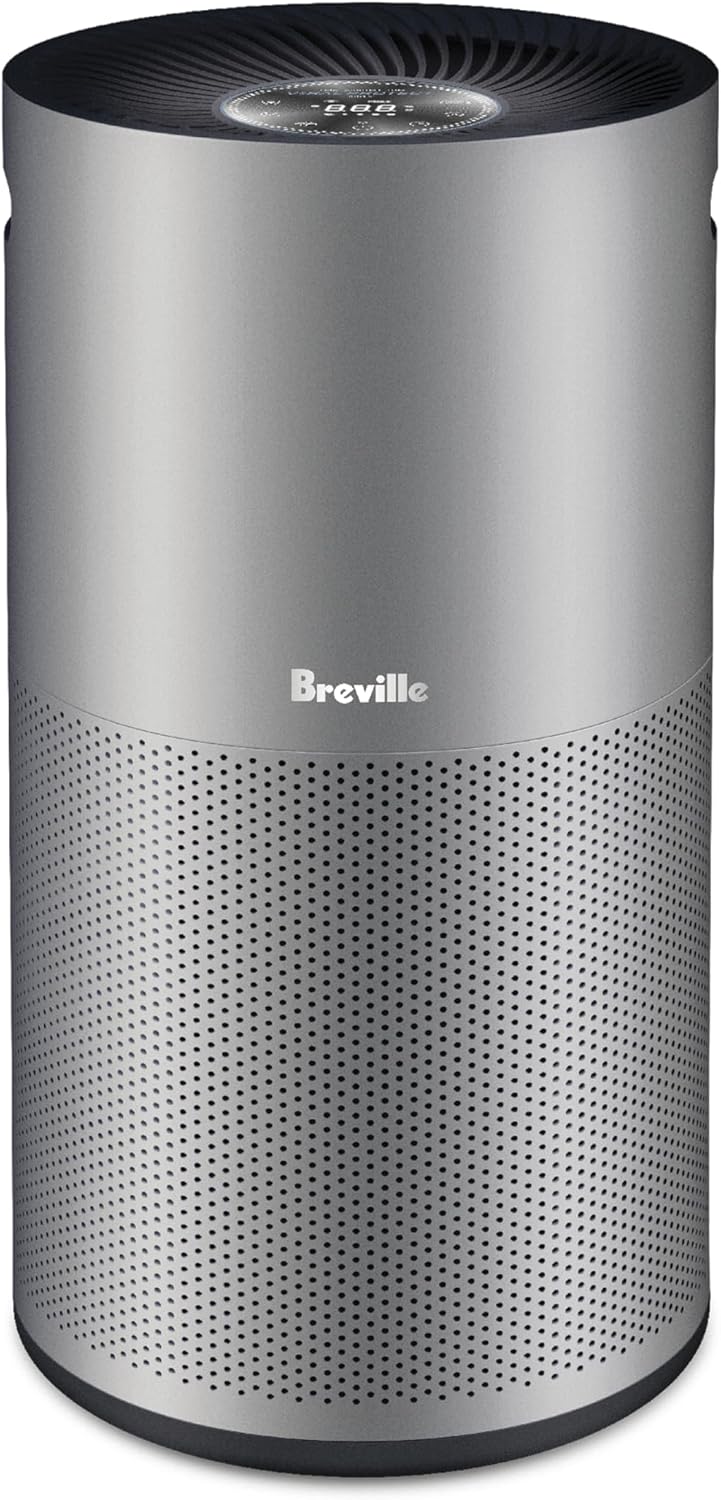
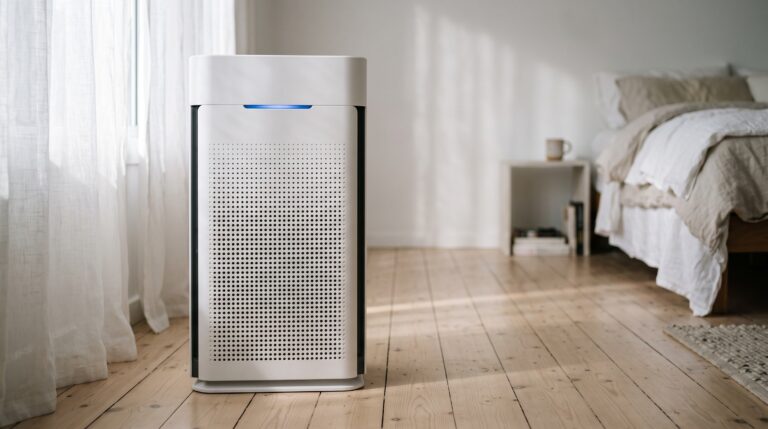
The Breville Protect Max is the air purifier I’d put in a standard Adelaide home before any other. Breville is an Australian brand that understands Australian air quality conditions, and the Protect Max’s filter engineering reflects that. It runs a three-stage system: a washable pre-filter that captures coarse dust before it reaches the HEPA media (critical for Adelaide’s dust season), a True HEPA H13 filter rated to capture 99.97% of particles at 0.3 microns, and an activated carbon layer for VOCs and smoke gases.
The Protect Max covers rooms up to approximately 60 m² at four air changes per hour — appropriate for an open-plan living area or large bedroom. Its CADR (Clean Air Delivery Rate) is strong enough to meaningfully reduce PM2.5 during smoke events when running on high, and the auto-sensor mode responds to SA EPA’s dust event conditions without manual intervention. The unit is available at most major Australian retailers and on Amazon AU, with filter replacements readily accessible — not a minor consideration when Adelaide’s conditions mean you’ll be changing filters more frequently than the national average.
The catch: at full speed it’s noticeable in a quiet bedroom. If you’re a light sleeper who runs the purifier overnight, you’ll want to pair this unit with a dedicated bedroom purifier (the Levoit Core 400S below) rather than running the Protect Max on high at 2am. For living areas and daytime use, it’s the right call.
2. Levoit Core 400S — Best for Bedrooms and Allergy Sufferers
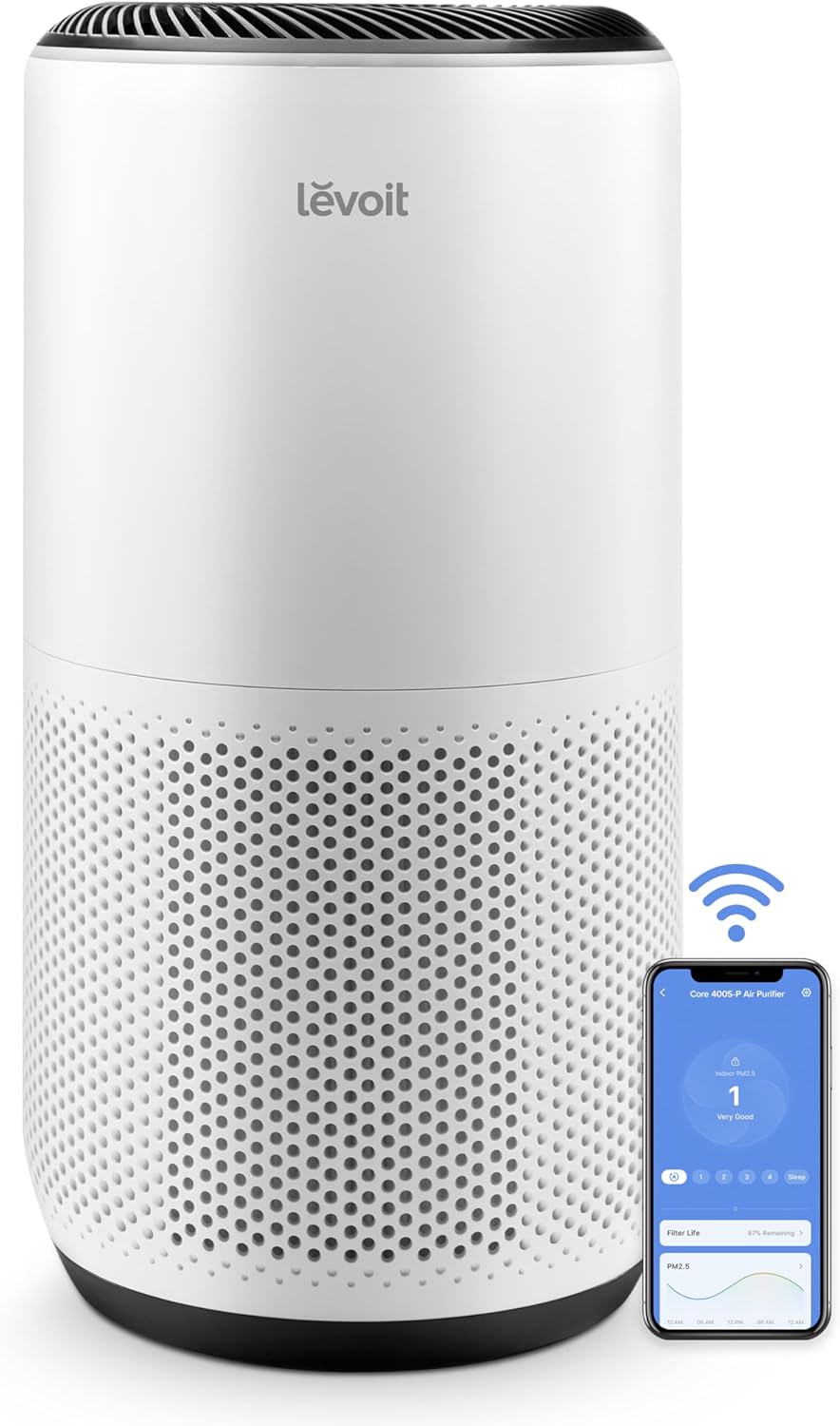
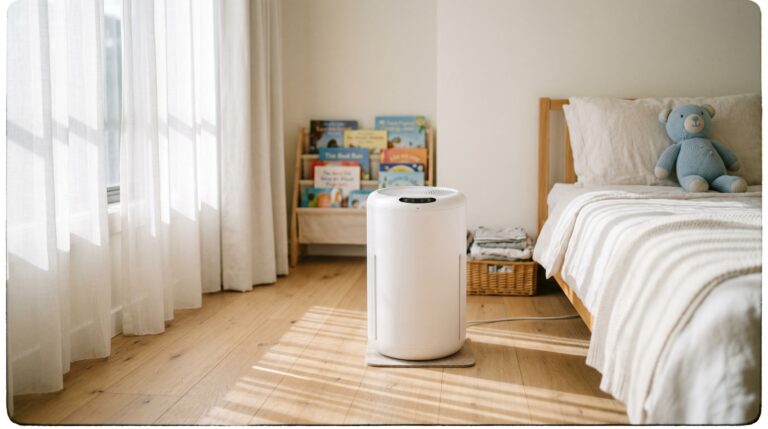
For Adelaide bedrooms, the Levoit Core 400S is the unit I recommend without hesitation. Its CADR for dust is 260 CFM (441 m³/h) — higher than many units at twice the price — and it operates at 24 dB on its lowest setting, which is quieter than a typical bedroom fan. If you’re running a purifier through Adelaide’s November pollen peak, that means 8+ hours per night without disrupting your sleep.
The Core 400S covers rooms up to approximately 38 m² at four air changes per hour. For a standard South Australian bedroom (12–18 m²), this translates to 10–15 air changes per hour on medium speed — genuinely effective particulate reduction during pollen events. For sizing guidance across any room in your home, see our CADR calculator for Australian rooms. The three-in-one filter (pre-filter, H13 HEPA, and activated carbon) comes as a single cartridge, which simplifies replacement. SA EPA’s Air Quality Index data shows Adelaide’s worst pollen days frequently correlate with the 10am–3pm window, but indoor pollen accumulates overnight — making the continuous overnight running capability of the Core 400S practically significant.
The VitalSync app (Levoit’s companion app) is useful but not essential. The unit has a physical button control that works perfectly well without any app pairing. One genuine limitation: the activated carbon layer is thin relative to units designed specifically for smoke events. If you live in the Hills fringe or experienced significant smoke exposure in 2019–2020, the Winix Zero Pro or Breville Protect Max will serve you better during fire events.
3. Winix Zero Pro — Best Mid-Range for VOCs and Smoke
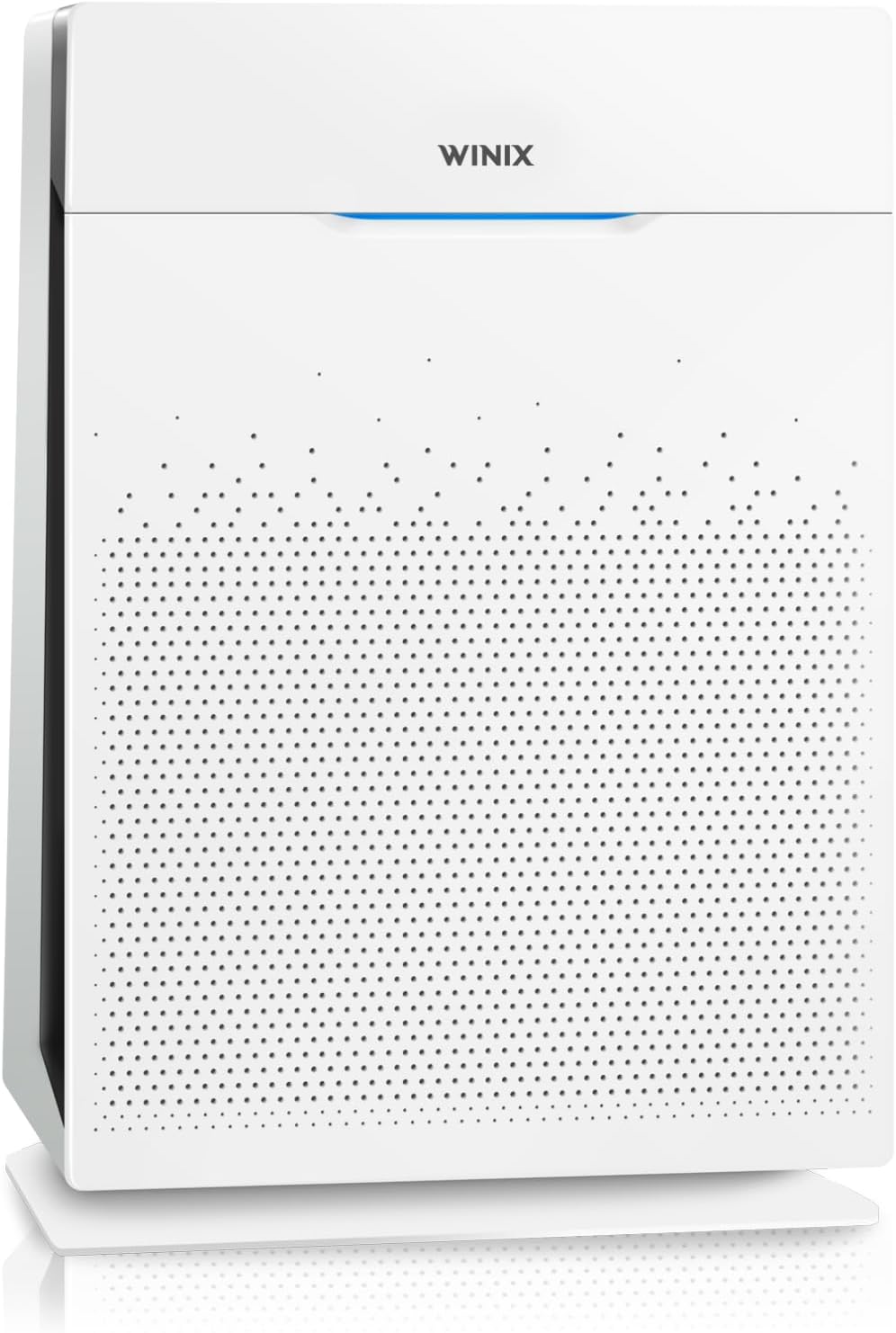
The Winix Zero Pro is the unit for Adelaide households with a specific concern about smoke-season VOCs, cooking gases, or chemical off-gassing from new building materials. Where most air purifiers rely on a thin activated carbon layer that quickly saturates, the Winix Zero Pro’s carbon stage is substantially deeper, with a higher mass of activated carbon per filter change. This directly impacts how long it continues to absorb formaldehyde, benzene, and the particulate terpenes released during bushfire events.
The PlasmaWave technology deserves a direct answer: it generates a small amount of ozone as a by-product. Winix states this is below the EPA safety threshold, and independent testing has broadly confirmed this. If you have severe respiratory sensitivity, you can disable PlasmaWave and run the unit as a pure HEPA-carbon filter — it remains effective. For most households, PlasmaWave’s odour-neutralising effect is a genuine secondary benefit during smoke events.
The washable pre-filter is a meaningful cost-saving feature in Adelaide. Dust events that would clog a non-washable pre-filter within weeks can be addressed by simply vacuuming and rinsing the Winix pre-filter. Over a three-year ownership cycle in Adelaide’s dust-heavy environment, this will save you materially on filter consumable costs.
The catch: the Winix Zero Pro is a larger unit than the Levoit Core 400S and runs slightly louder on medium. For a dedicated bedroom unit, the Core 400S remains the better choice. The Zero Pro is the right call for open-plan living areas where you want continuous smoke-season protection.
4. Dyson Purifier Big+Quiet Formaldehyde — Best Premium and Quietest
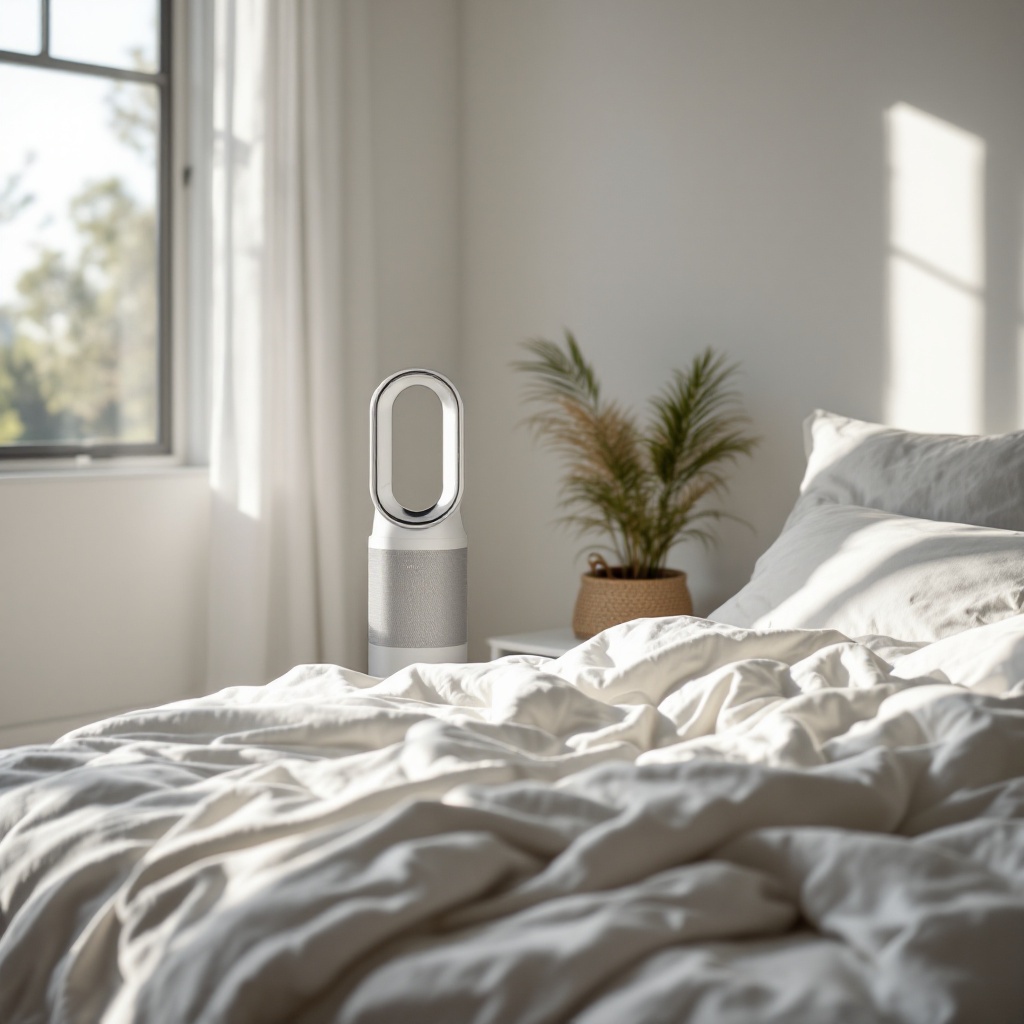
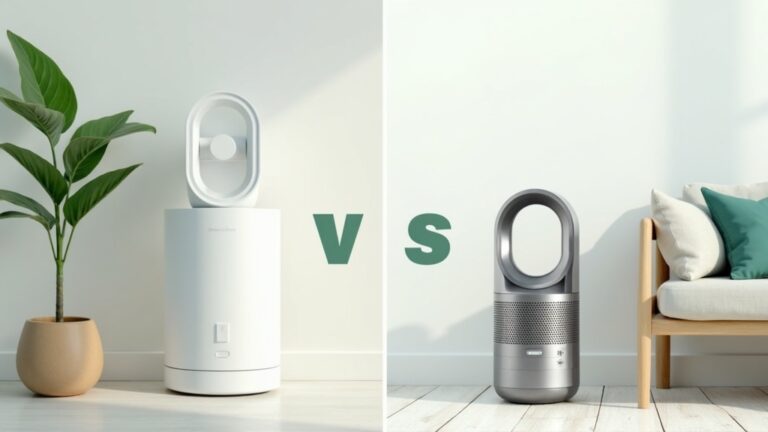
If noise is your primary decision factor and budget is not the constraint, the Dyson Purifier Big+Quiet Formaldehyde is the answer. Dyson measures fan speed in their own proprietary units rather than publishing a traditional CADR figure, but the Big Quiet’s sealed 360° HEPA and activated carbon filter captures 99.97% of particles at 0.3 microns, and the unit projects clean air further into the room than a conventional tower purifier — useful in Adelaide’s larger open-plan living areas.
The real-time LCD display showing PM2.5, PM10, VOC index, and NO&sub2; levels is the most functional air quality feedback panel of any unit in this comparison. During an Adelaide dust event, watching PM10 levels drop from 85 to 8 µg/m³ in 25 minutes gives you meaningful data about your home’s infiltration rate and the unit’s response time. For households in the northern corridor (Elizabeth, Salisbury) where dust events are more frequent, this visibility into what the unit is actually doing is worth the premium price.
The catches: it costs significantly more than the Levoit and Winix options. The filter replacement is proprietary to Dyson and more expensive than generic HEPA cartridges. And Dyson’s activated carbon layer — while functional — is engineered primarily for VOC detection rather than heavy-load smoke absorption. During a major bushfire smoke event, the Big Quiet will respond faster and more quietly than competitors, but its carbon filter will saturate earlier. Adelaide Hills residents facing repeated smoke events should budget for more frequent filter changes or consider the Winix Zero Pro’s deeper carbon stack.
CADR Comparison: How These Units Stack Up for Adelaide Conditions
Head-to-Head Comparison Table
| Spec | Breville Protect Max | Levoit Core 400S | Winix Zero Pro | Dyson Big Quiet |
|---|---|---|---|---|
| HEPA Grade | H13 True HEPA | H13 True HEPA | True HEPA | Sealed HEPA + Carbon 360° |
| CADR (Dust) | ~390 m³/h | 441 m³/h | ~352 m³/h | ~265 m³/h (est.) |
| Max Coverage | ~60 m² | ~38 m² | ~50 m² | ~36 m² |
| Noise (Sleep Mode) | ~26 dB | 24 dB | ~27 dB | ~23 dB |
| Pre-filter | Washable | Washable | Washable | Integrated (replace) |
| Activated Carbon | Yes | Yes (thin layer) | Yes (deep layer) | Yes (VOC optimised) |
| Auto Sensor | Yes | Yes (PM2.5) | Yes | Yes (PM2.5 + VOC + NO&sub2;) |
| Best For | Living areas, dust events | Bedrooms, pollen | Smoke, VOCs | Premium, quiet operation |
What Air Purifier Specs Actually Matter for Adelaide
CADR: The Number That Decides Whether Your Purifier Wins a Dust Event
CADR (Clean Air Delivery Rate) measures the volume of filtered air delivered per hour. During an Adelaide dust event where outdoor PM10 hits 200–300 µg/m³, infiltration through your home’s envelope will continuously add particulate to your indoor air. A purifier with low CADR reaches equilibrium with the infiltration rate at a high indoor PM10 level — it can’t outrun the load. A high-CADR unit can.
For an Adelaide living room or kitchen (30–50 m²), target a minimum CADR of 350 m³/h. For bedrooms (12–20 m²), 200 m³/h is sufficient but 260+ gives you meaningful headroom. The formula: CADR in m³/h divided by room volume in m³ equals air changes per hour. Four air changes per hour on moderate mode is the target for effective particulate control.
HEPA Grade: H13 Minimum for Fine Smoke and Pollen
Standard HEPA filters capture 99.95% of particles at 0.3 microns. True HEPA H13 captures 99.97%. This matters during bushfire smoke events where the most hazardous particles (PM0.1–PM1.0) represent the greatest lung-deposition risk. All four units in this comparison meet H13 standard. If a purifier is marketed without stating a HEPA grade, it does not meet H13 — avoid it.
The sealed vs unsealed distinction also matters. Dyson’s 360° sealed filter system prevents air from bypassing the filter media at connection points. Conventional designs have small bypass gaps that reduce effective filtration to below rated levels. In practice, the impact is small for household use, but it’s the reason Dyson can credibly claim 99.97% filtration even after filter degradation.
Activated Carbon Depth: The Spec That Smoke Events Expose
All four units include activated carbon. The difference is mass per filter. Thin granular carbon layers (common in budget units) saturate within weeks during a smoke event — after saturation, VOC molecules pass through and the carbon contributes nothing. Deeper carbon beds (30–50g+) sustain absorption capacity for months. The Winix Zero Pro leads this field in the mid-range segment. For Hills fringe and industrial-zone households, carbon filter mass is the spec to prioritise after CADR and HEPA grade.
Noise: Why 24 dB vs 28 dB Is a 4-Hour-Per-Night Decision
Decibels are logarithmic. 24 dB is about half the perceived loudness of 30 dB. If you’re running your purifier 8 hours per night for 14 weeks through Adelaide’s pollen season, the difference between a 24 dB and a 28 dB sleep mode is the difference between sleeping through it and waking up repeatedly. The Levoit Core 400S and Dyson Big Quiet both achieve 24 dB or below on their lowest setting. The Winix Zero Pro and Breville Protect Max are louder at their quietest — use them in bedrooms on sleep mode only with windows closed to contain the sound.
How to Monitor Adelaide’s Air Quality in Real Time
The SA EPA publishes real-time AQI data at epa.sa.gov.au under their Air Watch portal. Our complete air quality guide covers how to read AQI data and act on it — useful context for any new purifier owner. Bookmark the Northfield station (northern suburbs), CBD station (Victoria Square), and Christies Beach station (southern suburbs). When the AQI at your nearest station crosses 50 (Moderate), run your purifier on medium. When it crosses 100 (Unhealthy for Sensitive Groups) — dust events, smoke advisories — run on high continuously. When it returns to 50, drop back to auto mode.
SA Health also publishes dust event notifications during severe northerly conditions. Set up the SA EPA’s email or SMS alerts if your household includes anyone with asthma or cardiovascular disease. During a dust event, one hour of outdoor PM10 above 200 µg/m³ is equivalent to several cigarettes worth of particulate exposure. Your air purifier running on high from the moment you receive that alert is not overcautious — it’s the minimum appropriate response.
Final Verdict
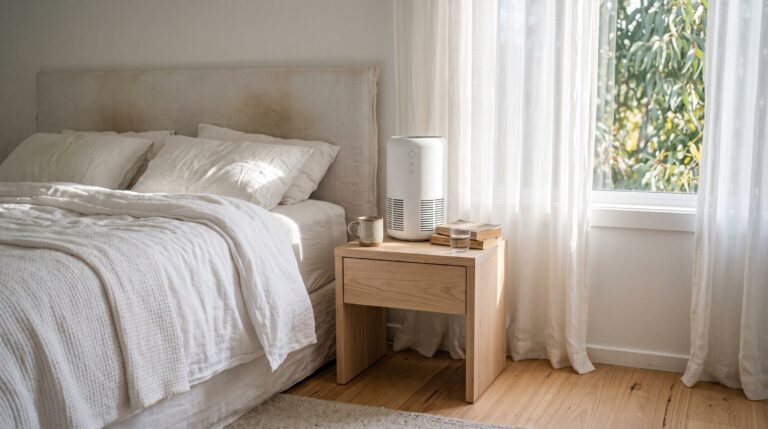
For most Adelaide households, the Breville Protect Max in the living area plus a Levoit Core 400S in the bedroom is the correct two-purifier strategy. This combination covers the full particle size range (coarse dust and fine smoke), handles the pollen season with sufficient CADR for bedrooms on 24/7 quiet operation, and keeps filter replacement costs manageable.
If you’re in the Hills fringe and bushfire smoke is the primary concern, replace the Breville with the Winix Zero Pro for its deeper carbon capacity. If noise is the non-negotiable and budget allows, the Dyson Purifier Big Quiet handles both roles at a premium price point.
Who should look elsewhere: If you’re in a Glenelg or Brighton coastal home with good sea breeze exposure and no respiratory conditions, a single mid-range unit (Levoit Core 400S) is all you need — you don’t need to spend on two purifiers or premium CADR.
Frequently Asked Questions: Air Purifiers in Adelaide
Does Adelaide need an air purifier?
Yes, more than most Australian cities. Adelaide’s combination of northerly dust events from the outback, an exceptionally heavy spring pollen load (London Plane trees, olive, ryegrass), and proximity to bushfire-prone landscapes in the Adelaide Hills and Kangaroo Island creates sustained air quality threats across multiple seasons. The SA EPA’s monitoring data consistently records PM10 and PM2.5 exceedances that are among the highest of any Australian capital city during dust and smoke events.
What is the best air purifier for Adelaide dust events specifically?
For Adelaide’s dust events, prioritise CADR above 350 m³/h and a washable pre-filter. The Breville Protect Max is the top recommendation for open-plan living areas. The pre-filter is critical: Adelaide’s red-dust events are coarse-particle heavy, and without a pre-filter, the HEPA media will clog within weeks. Units without a washable pre-filter stage are not suitable as primary dust-season purifiers for Adelaide homes in the northern corridor.
Which Adelaide suburbs need the strongest air purifiers?
The northern suburbs (Elizabeth, Salisbury, Parafield, Munno Para) are exposed to the worst dust loads on northerly events because they’re furthest from the sea breeze and closest to the wind’s origin. Port Adelaide-area residents face year-round industrial PM2.5 and should run H13 HEPA purifiers continuously. Hills fringe residents (Stirling, Crafers, Bridgewater) face the greatest bushfire smoke risk. Coastal residents (Glenelg, Brighton, Henley Beach) have the best baseline air quality due to the Fremantle Doctor analogue — Adelaide’s afternoon sea breeze — and require less aggressive specifications.
When is Adelaide’s pollen season worst?
Adelaide’s worst pollen period runs from late August through late November. London Plane tree trichomes and pollen dominate September–October, olive pollen peaks in September–October, and ryegrass peaks in November–December. ASCIA classifies Adelaide as one of Australia’s highest-risk capitals for grass pollen-triggered asthma and allergic rhinitis. Run your air purifier continuously on medium during this 14-week window; HEPA filtration reduces indoor pollen load to a fraction of outdoor levels even with windows closed.
Can an air purifier help with Adelaide’s bushfire smoke?
Yes — it’s one of the most evidence-supported uses. During the 2019–2020 Adelaide Hills and Kangaroo Island fires, PM2.5 indoors tracked at roughly 40–70% of outdoor levels in homes without purifiers, and under 10% in homes with running HEPA units. Run your purifier on high with windows and doors sealed during SA EPA smoke advisories. Ensure the unit has activated carbon in addition to HEPA — HEPA captures smoke particles, but activated carbon absorbs the VOCs and combustion gases that cause smell and chemical exposure at particle sizes below HEPA’s effective range.
How often should I replace air purifier filters in Adelaide?
More frequently than the manufacturer’s “normal use” recommendation, which is typically based on US or European testing conditions with lower ambient particulate loads. For Adelaide households: in the northern suburbs or near Port Adelaide, replace HEPA filters every 6–8 months rather than the stated 12 months. In coastal suburbs with lower dust exposure, the 12-month recommendation is realistic. Washable pre-filters should be cleaned every 2–4 weeks during dust season. A filter indicator that’s still green on a unit running through an Adelaide summer may be tracking hours, not actual filter load — trust a visual inspection over the indicator alone.
Is one air purifier enough for an Adelaide home?
For most households: no. One purifier cannot clean multiple rooms simultaneously. The optimal Adelaide setup is a higher-CADR unit (Breville Protect Max or Winix Zero Pro) in the main living area, and a quieter unit (Levoit Core 400S) in the bedroom where you spend 7–8 hours per night. Two units running simultaneously during peak dust or pollen events provide substantially better whole-home air quality than a single unit that you carry between rooms.
What CADR do I need for an Adelaide open-plan living area?
For a standard Adelaide open-plan kitchen and living area (35–55 m² with a 2.7m ceiling height), target a minimum CADR of 350 m³/h. This delivers approximately 3–4 air changes per hour on medium speed, which maintains effective particulate control during moderate dust and pollen events. During severe dust events (PM10 above 200 µg/m³ at SA EPA stations), run on maximum — this increases to 6–8 air changes per hour and substantially reduces indoor PM10 accumulation rate. Size up if your ceiling height exceeds 3m or your open plan exceeds 55 m².
Get the Australian Home Environment Checklist
30 checks across water, air and EMF. Most of them free. Ranked by impact.
No spam. Unsubscribe any time.

Former Royal Australian Navy Clearance Diver and TAG-E counter-terrorism operator. Founded Clean and Native to apply the same rigorous thinking to the home environment.
Full biography →